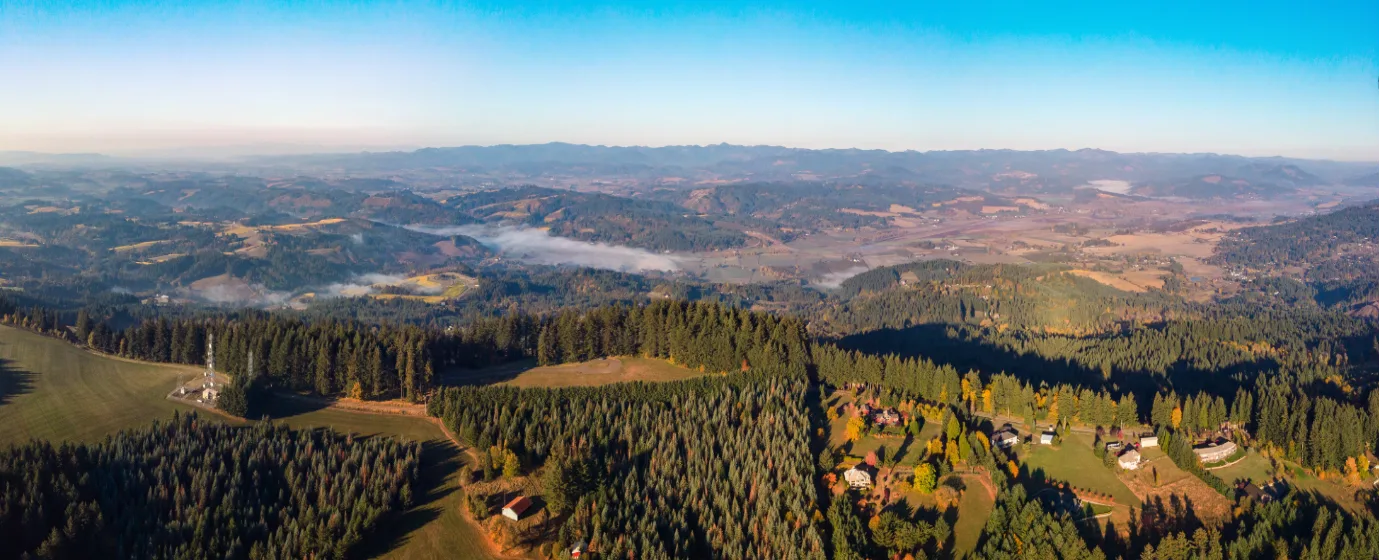
Maybe your company is relocating you to Intel. Maybe you've been priced out of Beaverton and someone said Hillsboro is worth a look. Either way, the first thing most newcomers get wrong is treating Hillsboro as one coherent place. At 111,126 residents — the 5th-largest incorporated city in Oregon — it spans everything from a nationally recognized transit-oriented development in the east to brand-new solar-mandatory neighborhoods still under construction in the south, with a handful of settled, mid-century subdivisions in between. The corridor you choose will shape your commute, your on-foot access, and your day-to-day life in ways that the zip code alone never tells you.
The economic engine here is semiconductors. Intel's campus is the gravitational center of the local economy, and the Hillsboro School District — with 18,521 students enrolled in 2025-26 — reflects a workforce that skews educated and international. Washington County government, a regional health system, and a dense cluster of tech-adjacent employers in the AmberGlen and Tanasbourne corridor round out the job base. Families moving from California's Bay Area frequently cite a familiar employment landscape with a dramatically lower cost of entry.
The typical home price in Hillsboro was $518,047 as of July 2026 — noticeably below what you'd pay in Lake Oswego or Portland's west hills, and roughly in line with Beaverton and Forest Grove. Cornelius, just to the west, runs somewhat lower. The cost of living page covers all of that in depth. What matters for neighborhood selection: that city-wide median masks real spread — from entry-level infill housing near downtown to new construction in Reed's Crossing that pushes well above it. On-foot access ranges from genuinely walkable at Orenco Station and parts of downtown to almost entirely car-dependent in Reedville and Witch Hazel.
Whether you're considering a move or comparing Hillsboro against the rest of the Portland Metro, the sections below break down each neighborhood's character, who it suits, the trade-offs buyers consistently miss, and where renters get the best value.
The Hillsboro Reality
The East-to-West Divide
Hillsboro's neighborhoods do not exist on a single spectrum — they exist on two different grids that rarely overlap. The eastern corridor, anchored by the MAX Blue Line and the AmberGlen employment center, runs high-density, transit-accessible, and increasingly urban. The newer southern and western neighborhoods — Reed's Crossing, Witch Hazel Village, Jackson School — are almost entirely car-dependent suburbs, however well-planned they are internally. Buying without understanding this divide is the single most common mistake relocating buyers make in Hillsboro.
School Boundaries and the Hillsboro School District
Nearly all of the neighborhoods on this list fall within the Hillsboro School District, which Niche gives a B rating. The district serves 18,521 students enrolled in 2025-26 and runs a full complement of active OSAA athletics programs. One important caveat: the Tanasbourne side of the AmberGlen corridor sits closer to the Beaverton city line, and school boundary assignments in that area deserve verification before you make an offer — the district line does not always follow what the marketing materials suggest. See the full schools guide for boundary and rating detail.
What Locals Know That Listings Don't Show
Hillsboro gets 142 sunny days a year — fewer than the Portland Metro is often marketed on, and worth knowing before you fall in love with a neighborhood because of its outdoor access. The rainy season is long, and the neighborhoods with the best trail systems (South Hillsboro, Jackson School) are also the ones furthest from a coffee shop you can walk to. The compromise between green space and on-foot convenience runs through almost every decision here.
Neighborhoods at a Glance
| Neighborhood | Best For | Vibe |
|---|---|---|
| Orenco Station | Walkable Transit Commuter | Urban village; plaza, MAX, and a farmers market at your doorstep |
| South Hillsboro (Reed's Crossing) | Families Nature First-Time | Master-planned new construction with trails, solar panels, and room to grow |
| Witch Hazel Village | Families Quiet | Newer suburban; owner-occupied and settled, with expansion on the south edge |
| AmberGlen / Tanasbourne | Commuter Renter Tech | Employment hub with retail density; mix of apartments, condos, and single-family |
| Jackson School | Families Quiet School | Low-key suburban; historic school, parks, and a genuine neighborhood feel |
| Reedville | Families Value | Established mid-century; tight-knit, near-zero vacancy, no pretension |
| Brookwood | Commuter Tech Transit | Suburban grid near Intel; MAX-accessible and unpretentious |
| Downtown Hillsboro / West End | Walkable Transit First-Time | Evolving urban core; farmers market, arts center, minor-league baseball |
Hillsboro typical home price: $518,047 (Zillow ZHVI, July 2026). Typical rent: $1,946/mo (Zillow ZORI, July 2026). Neighborhood tiers on this page are relative to these figures.
Best Neighborhood by Buyer Type
| Buyer Type | Best Neighborhood | Why |
|---|---|---|
| First-Time Buyer | South Hillsboro (Reed's Crossing) | New construction with solar and EV hookups built in, plus the most trail access of any new neighborhood in the city. |
| Luxury Buyer | Orenco Station | The most refined streetscape in Hillsboro, with the strongest combination of walkability, plaza life, and transit access. |
| Walkability Seeker | Orenco Station | The only neighborhood in Hillsboro where you can reach a farmers market, a café, and a MAX platform on foot without a car. |
| Families with Kids | Jackson School | Quiet streets, well-maintained parks, and a neighborhood school that anchors a genuine community identity. |
| Commuters | Brookwood | Close to Intel campuses and on the MAX Blue Line for carless trips to Beaverton and Portland. |
| Large-Lot Buyers | Reedville | Established homes from the 1970s–1990s on larger lots in one of the city's most stable, low-turnover corners. |
| Renters | AmberGlen / Tanasbourne | The densest rental inventory in the city, close to major employers and the Tanasbourne retail corridor. |
Looking to buy in Hillsboro? Estimate your payment.
Enter your numbers to see an estimated monthly mortgage payment.
Estimate only. Excludes HOA fees and mortgage insurance. The interest rate above is a starting point, not a quoted rate — replace it with your own to see real numbers. Insurance is a flat placeholder, not a Hillsboro quote.
Most Popular Neighborhoods
Orenco Station
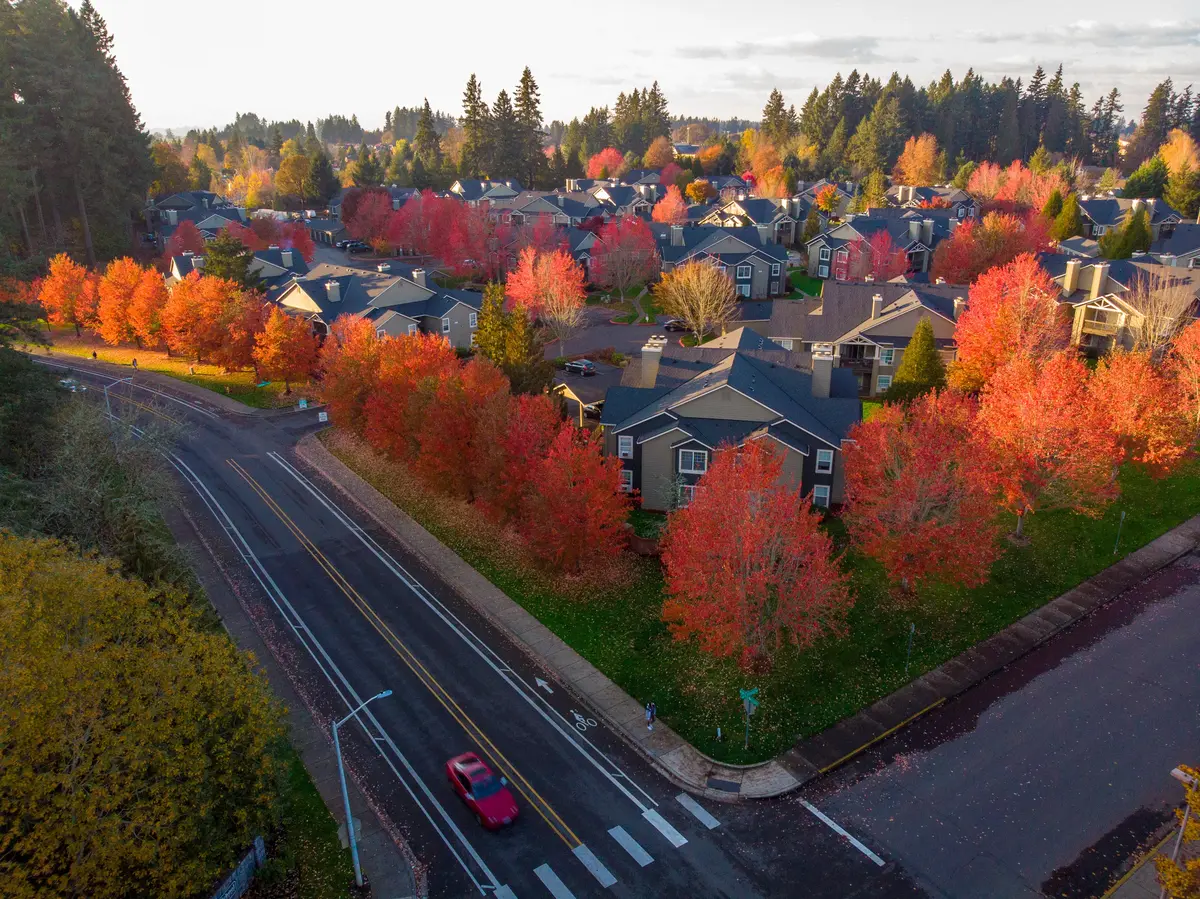
Built on 209 acres around the MAX Blue Line, Orenco Station is the closest thing Hillsboro has to an urban neighborhood — roughly 1,800 homes clustered around a genuine town center with retail, offices, and Orenco Station Plaza, which runs year-round events from outdoor yoga to open-air ice skating. The transit access is real: the MAX station here is one of the busier stops on the Blue Line west of Beaverton, with a park-and-ride that fills on busy commute days. The catch is that this on-foot-access premium is fully priced in, and the neighborhood's form — grid streets, attached housing, smaller yards — surprises buyers expecting a traditional Oregon suburb.
Best for: Commuters, walkability seekers, and buyers who want the Portland urban experience without Portland prices.South Hillsboro (Reed's Crossing)
Reed's Crossing is the residential centerpiece of the South Hillsboro master plan — a 474-acre development built to Oregon's most demanding green-build standard for a project of its scale. Every home is required to include solar panels, EV station hookups, and meet an Earth Advantage solar certificate. The 286 acres of parks and 15 miles of pedestrian trails are genuine, and the Reed's Crossing Town Center, anchored by Market of Choice, welcomed customers in spring 2025 and now provides the daily-errand infrastructure the area needed. Construction continues on the outer edges, which means buying here means accepting an active building site around you for the near term.
Best for: Families with kids, environmentally minded buyers, and first-time buyers who want new construction with infrastructure already in the ground.Witch Hazel Village
Witch Hazel Village is overwhelmingly owner-occupied, with most homes built in 2000 or later and a vacancy rate of just 4.3% — a signal that people who buy here tend to stay. The housing stock runs toward medium-to-large single-family homes and townhomes, and the neighborhood has a settled suburban feel that contrasts with the still-forming energy of Reed's Crossing to the south. The city adopted a Witch Hazel Village South expansion plan in November 2022, covering a 150-acre area immediately south with up to 850 additional units; that construction activity will change the neighborhood's quiet edge over the coming years.
Best for: Families and established buyers who want newer construction in a stable, low-turnover neighborhood.AmberGlen / Tanasbourne
This 1,200-acre regional center at Hillsboro's east end is less a residential neighborhood than an employment and retail zone that happens to have housing in it — approximately 1.25 million square feet of commercial office space, with major tech and athletic apparel employers among the anchors. AmberGlen Park sits at the center of the residential portion, with more than a half-mile of paved pathways, ponds with fountains, a terraced picnic area, and a public art installation called Elemental Sequence. The Tanasbourne side bleeds toward Beaverton, and school district boundaries here require verification before you commit; do not assume Hillsboro School District assignment without checking.
Best for: Commuters, renters, and tech-sector buyers who want to minimize drive time to work.Jackson School
Jackson School has the feel of a neighborhood that was never really discovered — well-maintained homes, lush parks including the Jackson Bottom Wetlands Preserve nearby, and a historic school that gives the area its name and its community anchor. OR-8 (Tualatin Valley Highway) and US-26 (Sunset Highway) are accessible without much drama, which makes it practical for buyers who work in the western suburbs or Forest Grove corridor. The downside is that you are buying into a car-dependent daily life; the neighborhood's small-town feel comes partly from not having much walkable retail close by.
Best for: Parents with school-age children who want quiet streets, nearby wetlands access, and a genuine neighborhood identity.Reedville
Named for 19th-century Oregon entrepreneur Simeon Gannett Reed — whose estate later became the endowment for Reed College in Portland — Reedville is one of the more established corners of Hillsboro, with housing stock that skews toward medium-to-large single-family homes built between 1970 and 1999. NeighborhoodScout's analysis puts the vacancy rate at essentially 0.0%, which tells you something real: this is a neighborhood where homes are quietly absorbed before most buyers know they were listed. The housing is older, which means deferred-maintenance surprises are more common here than in Reed's Crossing, and the settled streetscape appeals to buyers who prefer a neighborhood with roots over fresh drywall.
Best for: Buyers who want a settled, established neighborhood — and who don't need a brand-new kitchen.Brookwood
Brookwood delivers a straightforward suburban proposition: proximity to Intel's campuses, MAX Blue Line access for carless commutes to Beaverton and Portland, and a neighborhood scale that never gets overwhelming. It lacks the plaza energy of Orenco Station and the green-build credentials of Reed's Crossing, which is exactly the point — this is a practical neighborhood for people whose priority is the commute, not the lifestyle brand. Brookwood sits at the city median for pricing, making it one of the more predictable entry points into Hillsboro's ownership market.
Best for: Tech-sector commuters, MAX-dependent households, and buyers who want median-priced suburban stability near Intel.Downtown Hillsboro / West End
Downtown Hillsboro is an urban core in active evolution — the Walters Cultural Arts Center and the Gordon Faber Recreation Complex anchor the civic side, while Ron Tonkin Field brings a minor-league baseball season that draws the whole city in. The Hillsboro Farmers' Markets - Downtown Hillsboro runs seasonally and is one of the genuine walkable amenities the area can claim. The honest caveat: downtown Hillsboro is still catching up to its own ambitions, and buyers expecting the density and street life of a mature urban center will find a work in progress rather than an arrival.
Best for: Buyers who want walkable streets, MAX access, and a front-row seat to a downtown that is genuinely changing.Common Mistakes Buyers Make in Hillsboro
Assuming the Whole City Commutes the Same Way
Buyers who work at Intel or in the AmberGlen corridor often choose South Hillsboro or Witch Hazel Village because the new construction looks appealing — and then discover that a surface-street commute through the OR-8 (Tualatin Valley Highway) corridor during morning rush adds meaningful time that a Brookwood or Orenco buyer simply doesn't face. The MAX is not an option from the southern neighborhoods. Map the actual commute route before you fall in love with a floor plan.
Chasing Square Footage Instead of School Boundaries
The Hillsboro School District is the primary district for most of these neighborhoods, but boundaries shift at the edges, particularly in the AmberGlen and Tanasbourne area near the Beaverton city line. A home on one side of a boundary street can feed into a different school than an identical home across the road. Parents who buy based on a neighborhood's general reputation and skip the boundary check are the ones who call an agent six months later asking what happened.
Treating Reed's Crossing as a Finished Neighborhood
South Hillsboro's Reed's Crossing is genuinely impressive — 474 acres, 15 miles of trails, solar-mandatory construction — but it is still being built. Buyers who purchase now are accepting construction traffic, unfinished amenities, and a daily-errand situation that depends on the newly opened Town Center establishing itself. That's a reasonable trade for some buyers and a frustrating one for others; know which one you are before you sign.
Underestimating How Car-Dependent Most of the City Is
Orenco Station and downtown get the most attention for on-foot access, and they deserve it — but they represent a small fraction of Hillsboro's housing stock. Reedville, Witch Hazel Village, Jackson School, and much of Brookwood require a car for virtually every errand. Buyers moving from walkable urban neighborhoods frequently underestimate this, particularly if they toured Orenco Station first and assumed the rest of the city matched. It doesn't.
Best Areas to Rent in Hillsboro
| Area | Ideal For | Trade-off |
|---|---|---|
| AmberGlen / Tanasbourne | Tech workers, couples, and professionals who want retail and employers nearby | Traffic on the OR-8 corridor can be heavy; less neighborhood character than residential areas |
| Orenco Station | Transit-dependent renters, remote workers, and anyone prioritizing walkable streets | The premium location commands the highest rents in Hillsboro; inventory is limited |
| Downtown Hillsboro / West End | Renters who want urban amenities, MAX access, and proximity to arts and events | Downtown is still evolving; retail density lags behind the neighborhood's ambitions |
| Brookwood | Intel and tech commuters who want suburban calm with transit as a backup | Quieter than Tanasbourne with fewer walkable amenities; car still needed for most errands |
| South Hillsboro (Reed's Crossing) | Families and renters who want newer construction, trails, and green-build standards | Commercial infrastructure is newly established and still proving itself; no MAX access |
The city-wide typical rent and the full breakdown live on the cost of living page. Orenco Station and Tanasbourne consistently draw the most rental demand, which keeps vacancy low in both areas and gives landlords little reason to negotiate on price.
Local Expert Takeaway: The buyers who end up happiest in Hillsboro are the ones who pick a neighborhood based on their actual commute route and their tolerance for car-dependence — not on which area photographs best. Orenco Station is the only place in the city where you can skip a car for daily life; everywhere else, you'll drive. If you're drawn to new construction, Reed's Crossing delivers green-build standards and trail access that nothing in the Portland Metro currently matches at scale, but go in knowing it's still being finished around you. And if you want established homes in a settled streetscape without the construction noise, Reedville's near-zero vacancy rate tells you what longtime residents have already decided — while Brookwood, sitting at the city median, is the most predictable entry point for buyers who want suburban stability near Intel.
Quick Takeaways & FAQs
✅ Orenco Station is the only neighborhood in Hillsboro where MAX transit, a farmers market, and walkable retail genuinely converge in one place.
⚠️ Most of Hillsboro — including Reedville, Witch Hazel Village, and Jackson School — is car-dependent for daily errands, regardless of how green or well-planned the subdivision is.
📍 Reed's Crossing mandates solar panels and EV hookups on every home, a green-build standard that no other large-scale Oregon development currently matches.
Which Hillsboro neighborhood is closest to Intel?
Is Orenco Station actually walkable, or is it just marketed that way?
What is Reed's Crossing, and is it a good place to buy right now?
What are the best neighborhoods in Hillsboro for families with kids?
How does Hillsboro compare to Beaverton for buyers on a similar budget?
Moving to Oregon?
Tell us what you need help with and we'll connect you with local resources.
