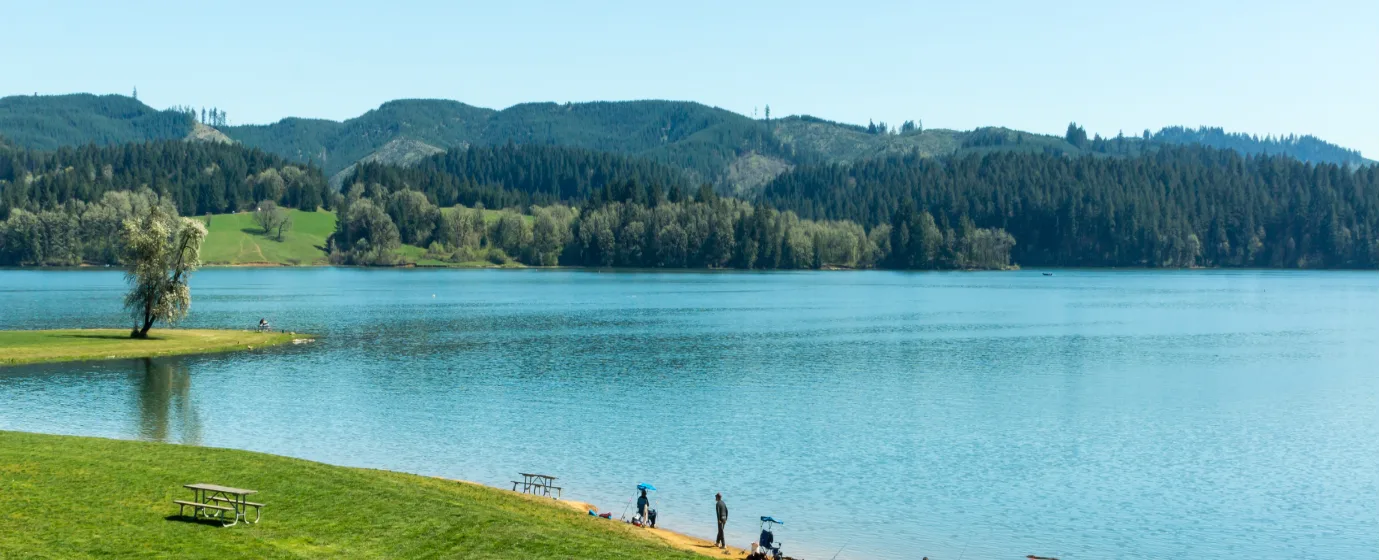
What Is Living in Forest Grove, Oregon Like?
Maybe you've been priced out of closer-in Portland suburbs and someone mentioned Forest Grove as the place where the numbers still work. Maybe you drove through the Tualatin Valley on a clear day and thought, wait — what is this town? Either way, the city tends to surprise people. Forest Grove, population 26,529, sits roughly 25 miles west of Portland, at the point where the suburban grid gives way to working farmland and vineyard country. It was the first incorporated city in Washington County — in 1872 — and it still feels like a place with its own identity rather than an extension of the metro. Pacific University anchors the downtown, keeps the coffee shops full, and gives the city an intellectual undercurrent you don't find in most towns this size.
Pacific University is, by a wide margin, the city's largest private employer. The Forest Grove School District 15, with 5,639 students enrolled in 2025-26, is the dominant public employer alongside City Hall itself. Intel's massive semiconductor campus in Hillsboro draws a significant share of local residents eastward every weekday morning — that commute pattern shapes the city as much as anything else. The median household income stands at $87,933, though it is worth understanding upfront that the typical home price has moved above what that income can comfortably carry at current rates. That gap is real, and it's discussed in the housing section below.
Cost of living here runs noticeably below what you'd pay in Lake Oswego, Beaverton's more desirable pockets, or anywhere close to the Portland core. The effective property tax rate is approximately 0.84% — low by Oregon standards. Fernhill Wetlands, a nationally recognized birding site with a flat loop trail around Fernhill Lake, sits within the city limits and functions as both a nature escape and a community gathering place. The B Street Trail and Rogers Park fill out the everyday outdoor life. Walkability in the downtown core is genuine — you can cover the coffee shops, the farmers market, the galleries, and the university on foot without getting back in your car.
Whether you're considering a move or just trying to understand what Forest Grove is before you commit to a showing, the sections below break down the neighborhoods, housing market, commute realities, local employers, and what weekends here actually look like.
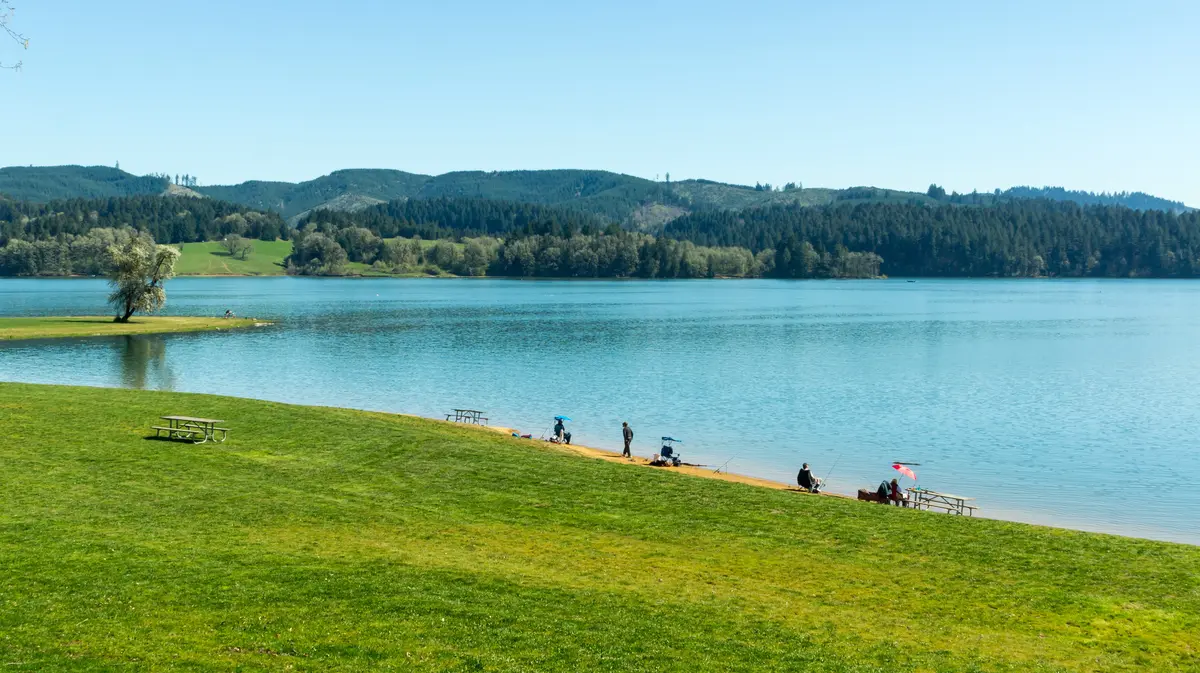
Forest Grove at a Glance
Looking to buy in Forest Grove? Estimate your payment.
Enter your numbers to see an estimated monthly mortgage payment.
Estimate only. Excludes HOA fees and mortgage insurance. The interest rate above is a starting point, not a quoted rate — replace it with your own to see real numbers. Insurance is a flat placeholder, not a Forest Grove quote.
Why Are People Moving to Forest Grove?
The honest answer is price — and then people stay for reasons that have nothing to do with price. Forest Grove offers something increasingly rare in the Portland metro: a real downtown that functions, a university that keeps the energy up, and a price point noticeably below most of Washington County. Hillsboro runs about the same on home prices; Cornelius and Banks come in somewhat lower. Forest Grove sits in the middle of that range while offering more walkable character than either neighbor.
The University Effect
Pacific University — founded in 1849 as the Tualatin Academy — does something meaningful for a city of 26,529: it imports energy. The 55-acre main campus brings graduate students, faculty, visiting lecturers, and the kind of foot traffic that keeps independent coffee shops and restaurants viable. Oregon's only optometry school is here, which also means a steady rotation of health-sciences professionals who often put down roots.
For families with school-age children, Forest Grove School District 15 holds a B- rating, according to Niche. On 2024-25 state assessments, 20.4% of students reached math proficiency and 32.2% reached reading proficiency — figures that are below state averages and worth understanding clearly before you move. The district runs active OSAA athletics programs, and Friday night football at Forest Grove High School fills the stands in a way that reminds you this is a genuine community, not a bedroom development. For more on individual schools and boundary details, see the schools page.
The Intel Corridor Factor
Intel's Hillsboro campus is the region's gravitational pull for tech workers, and a meaningful share of Forest Grove residents drive east to it every weekday morning. That commute — roughly 15 to 20 minutes when traffic cooperates — is one of the main reasons tech-sector households land here rather than paying Hillsboro's prices for the same drive in reverse. The city's economy also benefits from the municipal utility's own ambitions: Forest Grove Light and Power has secured federal grants for grid resilience, low-income solar, and public EV charging, signaling that the city is investing in infrastructure rather than coasting.
What Growth Looks Like Here
A new residential development west of the city's main north-south corridor, proposed for 221 homes, is moving through the land-use process. Buyers who arrive now are getting in ahead of that growth curve, which cuts both ways: the city will change, and that is either a reason to come or a reason to pause depending on what you're looking for.
Longtime residents note a seasonal surprise that newcomers rarely anticipate: the stretch from November through February is genuinely gray and wet, with only 141 sunny days a year on the annual average. People who move from sunnier climates without experiencing a full Tualatin Valley winter sometimes reconsider. The ones who stay — and most do — say the summers, which run warm and dry through September, more than compensate.
What Daily Life Feels Like in Forest Grove
Daily life in Forest Grove has a texture you don't often find in suburbs that grew up around a freeway interchange. The downtown core — centered on Pacific Avenue — functions as an actual main street: walkable, with genuine local businesses, a working gallery in Valley Art Gallery, and the Forest Grove History Museum for when you want to understand why this place feels older and more settled than most of its Washington County neighbors.
The Morning Routine
A weekday morning might start at an independent café before a drive east toward Hillsboro. The Adelante Farmers Market brings a Latin-flavored market energy to the city, reflecting a Latino community that is woven into Forest Grove's cultural fabric in a way that makes the food scene here more interesting than the city's size would suggest. What you notice after a few months is that the city has enough variety to rotate through without driving anywhere — which is not something every town of 26,529 can honestly say.
Where People Actually Gather
Fernhill Wetlands is the city's most distinctive civic asset. The approximately 1.25-mile gravel trail around Fernhill Lake is flat and accessible, and on a clear winter morning the two covered viewing platforms overlook concentrations of waterfowl — and that resident pair of Bald Eagles — that birders drive from Portland specifically to see. Thatcher Park and Rogers Park fill the everyday neighborhood park role. Hare Field is where youth sports happen on weekends, which means the parking situation on a Saturday morning in fall tells you everything about how many families live here.
What People Move Away From
The most common reason people leave Forest Grove is the commute. If your job is in inner Southeast Portland or on the east side of the city, the roughly 40-minute drive each way adds up fast. The state highway connecting Forest Grove to the east is a surface road — not a freeway — so it is subject to signal timing, local traffic, and the occasional slow-moving vehicle. People who expected a quick jump to Portland and got a real commute instead are the ones who end up in Beaverton within two years. The city's walkability within its own core does not translate to car-optional living if your job and your social life are both in Portland.
The parks and recreation page covers the trails and outdoor amenities in full detail. For the full picture on crime — Forest Grove carries a violent crime rate of 4 per 1,000 residents and a property crime rate of 14 per 1,000 residents — the safety page has the complete breakdown and context.
The Forest Grove Housing Market Right Now
The typical home price in Forest Grove is $526,407 (Zillow Home Value Index, July 2026). That figure lands noticeably below what you'd pay in Beaverton's established westside neighborhoods or anywhere near Lake Oswego, while running roughly even with Hillsboro. The city's effective property tax rate of approximately 0.84% is one of the lower rates in the metro, which matters for monthly carrying costs.
The affordability picture is honest: the median household income in Forest Grove — $87,933 — does not comfortably carry that typical home price at current rates. The gap between what most households earn here and what the typical home costs is real and approximately $49,000 short of what lenders would want to see. That means buyers are either bringing equity from a prior sale, dual-income households pooling resources, or stretching. First-time buyers navigating that math should look at the first-time homebuyer page for program and financing guidance.
What the Market Looks Like on the Ground
The housing stock runs from Craftsman-era bungalows near the university to newer construction subdivisions on the city's north and western edges. Some areas carry prices above the city-wide typical; others come in below it. The full neighborhood-by-neighborhood character breakdown lives on the best neighborhoods page.
Rental inventory runs tight. The typical two-bedroom rent in Forest Grove falls between $1,610 and $1,960 per month, with the city-wide typical rent at $1,753 per month (Zillow, July 2026). That range reflects a market where Pacific University generates consistent rental demand from students and faculty, and where new multifamily supply has not kept pace. Renters weighing costs across the metro will find more detail at the cost of living page.
New housing supply is coming. A proposed 221-home development on the city's edge represents one of the larger near-term additions to inventory, and it will likely stabilize some pressure on prices in that part of the city once it delivers.
Forest Grove Neighborhoods
Forest Grove has several distinct areas — each with its own character and appeal. Here’s a breakdown to help you narrow down where to focus your home search.
🏡 Downtown Forest Grove
The walkable core anchored by Pacific Avenue and the Pacific University campus — coffee shops, galleries, and the city's most concentrated historic housing stock make this the neighborhood that sells Forest Grove to newcomers on the first visit.
🏠 Gales Creek Terrace
A quieter residential pocket that appeals to buyers looking for a neighborhood pace without sacrificing proximity to the downtown; established tree canopy and single-family homes define the feel here.
🌳 Clark District
An established mid-city neighborhood with a mix of housing types and easy access to the school district's facilities — a practical choice for families with kids in multiple schools at once.
🏘 Painter's Woods District
One of Forest Grove's more settled residential areas, with a slightly more spacious lot feel than the downtown-adjacent blocks — suits buyers who want suburban room without going far from the city's core.
🏔 Walker-Naylor District
A primarily residential district with a neighborhood feel distinct from the university energy of the downtown — tends to attract families and longtime residents who want stability over activity.
🌆 Northwest Forest Grove
The growing northwest edge of the city where newer construction has filled in over the last decade — closer to the main north-south corridor and increasingly a landing spot for buyers priced out of Hillsboro who want new-build quality.
Pros & Cons of Living in Forest Grove
The Pros
- Walkable, historic downtown with local shops, breweries, and restaurants
- Home to Pacific University, adding cultural events and a youthful energy
- Surrounded by Tualatin Valley wine country and the Fernhill Wetlands for outdoor recreation
- Home prices and rents remain more affordable than closer-in Portland suburbs
The Cons
- Longer commute into central Portland (roughly 35-45 minutes without traffic)
- Limited public transit options compared to inner-metro suburbs
- Property crime rates run somewhat above national and state averages
Getting Around & Commuting in Forest Grove
Forest Grove sits at the western end of the Tualatin Valley, connected to the rest of Washington County by a pair of state highways. OR-8 is the primary east-west route out of the city, and OR-47 runs north-south through the city's western edge. These two routes are the backbone of every commute and errand run — understanding how they behave at different times of day is one of the first things you learn after moving here.
The Drive to Portland
The drive to Portland is about 40 minutes under normal conditions. What changes that estimate: eastbound travel through Cornelius and into Hillsboro compresses during the weekday morning rush, and the stretch from Hillsboro into Beaverton adds time that the mileage doesn't suggest. Reverse commuters — people driving westbound into Forest Grove in the evening — have a smoother experience most days. The key insight for anyone considering this commute is that OR-8 is a surface highway, not a controlled-access freeway, and surface highways behave differently when traffic thickens.
Getting to Intel and the Tech Corridor
Intel's campus in Hillsboro is roughly 15 to 20 minutes east under good conditions — the corridor's most traveled commute by a significant margin. Nike's Beaverton campus draws Forest Grove residents as well, adding another 10 minutes or so beyond Hillsboro. The tech sector's culture of early start times means eastbound OR-8 can be moving well by 6:30 a.m. and congested by 8:00.
Transit Options
A TriMet bus route connects Forest Grove to the Hillsboro Transit Center, where riders can transfer to the MAX Blue and Red lines into Portland. Total travel time by transit runs roughly one hour and twenty minutes to over an hour and a half depending on connections. That's a workable option for downtown Portland commuters who are comfortable with a long transit ride — but most Forest Grove residents drive, and most weekday errands require a car.
Portland International Airport (PDX) is approximately 35 miles from Forest Grove. That drive — east through Hillsboro and then north — runs about 45 to 55 minutes depending on time of day, and airport-area traffic can add time on the return leg. It is not an airport-adjacent city in the way that some inner-ring suburbs experience PDX, but it is a manageable distance for occasional travel.
Living Without a Car
Within the downtown core — Pacific Avenue, the university neighborhood, the nearest parks — walking works well. Grocery runs, medical appointments, and most school-related driving require a car. The city's transit connection exists and functions, but frequency and coverage are limited enough that car-free living is a meaningful constraint rather than a minor inconvenience for most households.
Schools in Forest Grove
Families relocating to Forest Grove have public, private, and higher-education options nearby. Here’s a quick overview.
🎓 School District
Forest Grove School District 15 serves K–12 students across Forest Grove and the surrounding area. Rated B- (source: Niche.com).
🏆 Graduation Rate
The 4-year high-school graduation rate here is approximately 81.2%.
📚 Higher Education
Oregon’s public universities — the University of Oregon, Oregon State University, and Portland State University — offer four-year degrees statewide, with a network of 17 community colleges providing two-year and workforce programs.
🌐 Online Learning
Oregon State University Ecampus and Portland State University Online offer fully accredited online degrees for remote learners across the state.
Safety in Forest Grove
A quick look at how Forest Grove compares on the numbers that matter most when weighing a neighborhood or a move.
🛡 Violent Crime
Approximately 4 per 1,000 residents.
🔒 Property Crime
Approximately 14 per 1,000 residents.
Compared to the most recent national figures from the Bureau of Justice Statistics (2024), Forest Grove’s violent crime is above the national average (about 3.7 per 1,000), and property crime is below the national average (about 18.4 per 1,000).
Against Oregon as a whole, Forest Grove’s violent crime is somewhat above the state average, and property crime is roughly half the state average (Bureau of Justice Statistics, Crime Known to Law Enforcement, 2024 (tables 2 and 3)).
Crime rates can vary a lot within a single city, so the citywide numbers above are only a starting point. Some neighborhoods in Forest Grove run well below these averages, while others run higher — the kind of block-by-block detail that matters most when you’re actually choosing where to live. The full guide below breaks it down neighborhood by neighborhood.
Working in Forest Grove
Forest Grove’s largest employers span several industries — here are some of the anchors of the local job market.
🎓 Pacific University
Education
🎓 Forest Grove School District
Education
🏛 City of Forest Grove
Municipal government
💻 Intel
Semiconductor manufacturing, located in Hillsboro
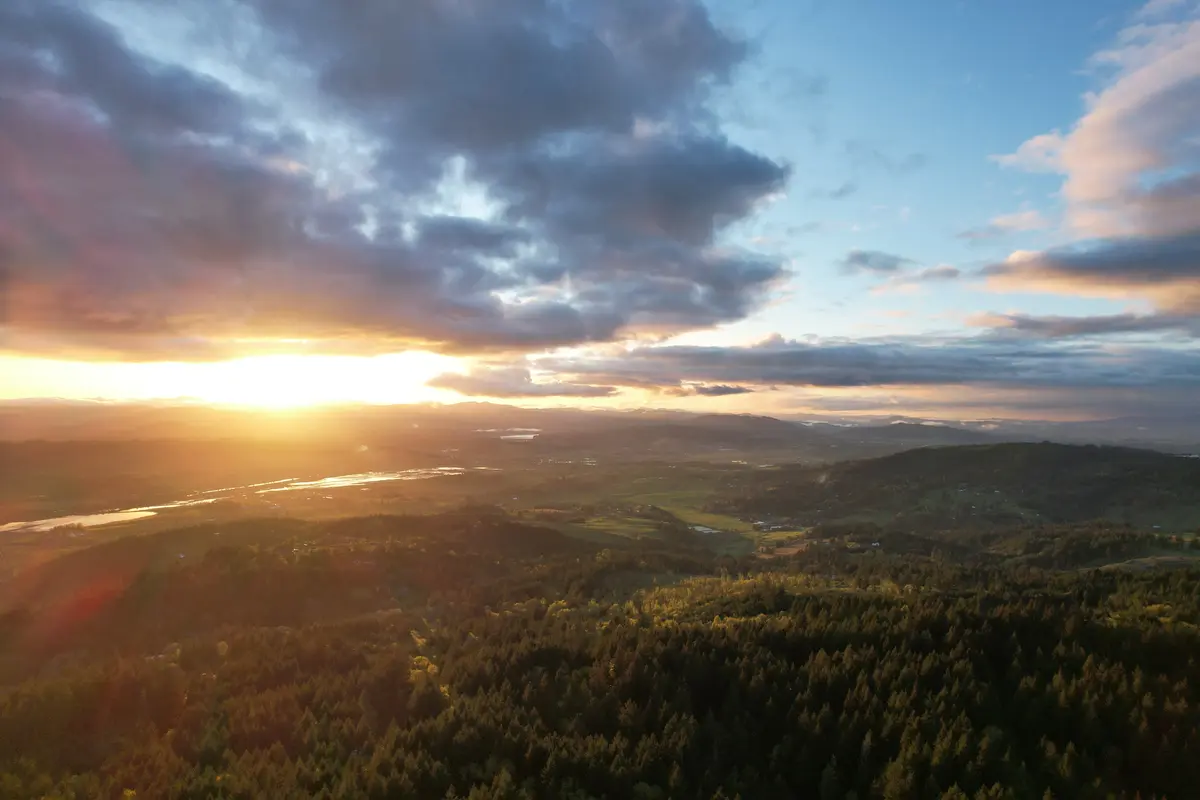
Retiring in Forest Grove
Forest Grove draws retirees for its balance of amenities, outdoor access, and cost. Here’s what to weigh.
🌤 Climate
Forest Grove sees all four seasons, with warm and dry summers running into September — a genuine draw for retirees who want outdoor time without extreme heat. Winters are overcast and rainy, and the city averages 141 sunny days a year, so retirees coming from sunnier climates should experience a full winter before committing. Spring comes slowly but the Tualatin Valley is genuinely green when it arrives.
🍴 Lifestyle
The walkable downtown core — with the Valley Art Gallery, Forest Grove History Museum, Pacific University events, and an active local dining scene — gives retirees genuine daily activity without requiring a car. Fernhill Wetlands, with its flat loop trail and birding platforms, is a year-round resource that draws retirees as much as any demographic. The sister-city cultural programming and the university's public lecture series add an intellectual dimension unusual in a city this size.
🏚 55+ Communities
No 55+ communities were found in Forest Grove. Retirees looking for that structure typically look toward Hillsboro or other parts of the metro. That said, Forest Grove has a range of single-level homes and smaller-footprint housing near the downtown core that retirees find practical without needing a designated community. The retiring in Forest Grove page covers healthcare access and lifestyle options in full detail.
✈ Getting Around
Most daily errands in the downtown area can be handled on foot. For anything beyond the core — medical appointments or larger shopping runs — a car is the practical choice. Portland International Airport (PDX) is approximately 35 miles away, a manageable drive for retirees who travel periodically but not daily.
🏛 Oregon Taxes for Retirees — What to Know
- Social Security is not taxed — Oregon does not tax Social Security or Railroad Retirement benefits. Any amount included in your federal adjusted gross income is subtracted back out on the Oregon return.
- But other retirement income IS taxed — This is the trade-off that surprises people moving from Washington or Texas. Pension distributions and 401(k)/IRA withdrawals are taxed as ordinary income at Oregon’s regular rates — there is no blanket retirement-income exclusion.
- Graduated income tax — Oregon has four brackets — 4.75%, 6.75%, 8.75% and 9.9%. The 4.75% rate covers the first $10,000 of taxable income for a single filer ($20,000 filing jointly); the 8.75% rate starts at $125,000 ($250,000 jointly); and the top 9.9% rate applies above $250,000 ($500,000 jointly).
- No sales tax — Oregon levies no general sales tax.
- Property taxes, with senior deferral — Oregon’s Senior and Disabled Property Tax Deferral lets qualifying homeowners have the state pay their county property taxes, with a lien recorded against the home. The 2026 household income limit is $70,000, and deferred balances accrue 6% simple interest — it defers the bill rather than forgiving it.
- Estate tax — the one to plan for — Oregon has its own estate tax with a $1 million filing threshold — far below the federal exemption, and NOT indexed for inflation, so it reaches more estates every year in real terms. Retirement accounts and a long-held home count toward the taxable estate, so estates that feel modest can cross the line without the owner expecting it.
- No inheritance tax — Oregon has no separate inheritance tax and no gift tax.
Tax laws change frequently and individual situations vary. This is general information, not tax advice — always consult a qualified Oregon tax professional or CPA for personalized retirement tax planning.
Weekends & Local Favorites in Forest Grove
Weekends in Forest Grove have a distinctly local rhythm — one that reflects both the university town energy and the agricultural surroundings of the Tualatin Valley.
Food and Coffee
Prime Time Restaurant & Sports Bar draws a loyal crowd for casual nights out. Black Dog Bar & Grill leans into a neighborhood-pub feel that regulars treat as their living room. La Sierra serves the kind of Mexican food the city's substantial Latino community takes seriously. Zesti Carts & Bar brings the Pacific Northwest food-cart culture to Forest Grove — an outdoor cart pod with a covered bar, which works better than you'd expect for an Oregon city that sees real winter.
SaWa's Donburi adds Japanese rice-bowl cooking to a dining scene that punches above its weight for a city this size. On the coffee front, Maridon's Cafe & Malt Shop doubles as a malt shop — a genuine nod to the city's older commercial character. Slow Rise Bakehouse earns its weekend line. Telvet Coffee, Forest Grove Coffee Co., and La Panadera fill out a scene where you can rotate through independent spots for weeks without repeating.
Outdoors
Fernhill Wetlands is the weekend anchor for anyone who bird-watches — or who simply wants a flat, easy loop around a lake without driving anywhere. The two covered viewing platforms make it usable even in the rain, which matters. The B Street Trail connects neighborhoods to the downtown core. Rogers Park and Thatcher Park handle the everyday version of outdoor life — pickup sports, afternoon runs, kids on the playground after school.
A short drive southwest leads to Henry Hagg Lake, a day-trip destination outside the city limits that draws Forest Grove residents for warm-weather afternoons. It is not in the city, but it is genuinely close — and it is the kind of outdoor resource that makes the Tualatin Valley feel like more than a commuter corridor.
Arts and Culture
Valley Art Gallery in the downtown core is a working community gallery — not a tourist attraction, but a place where local artists actually show. The Forest Grove History Museum tells the story of why this city feels older and more rooted than most of its Washington County neighbors. The sister-city relationship with Nyuzen, Japan — now more than three decades old — surfaces in occasional cultural events that give the city an international undercurrent most suburbs never develop. The Adelante Farmers Market brings a distinctly Latin-flavored market energy that reflects who Forest Grove actually is, as opposed to a generic Pacific Northwest farmers market aesthetic.
Pacific University's Old College Hall — the landmark building anchoring the campus — and the city's claim to the World's Tallest Barber Pole (yes, it is real, and yes, it is a legitimate local landmark) give Forest Grove the kind of specific, slightly eccentric identity that makes people proud to tell others where they live. That sense of place is harder to manufacture than a new park, and Forest Grove came by it honestly.
Local favorites in Forest Grove
Restaurants
- Prime Time Restaurant & Sports Bar
- Black Dog Bar & Grill
- La Sierra
- Zesti Carts & Bar
- SaWa's Donburi
Outdoors
- Fernhill Wetlands
- B Street Trail
- Thatcher Park
- Rogers Park
- Hare Field
Coffee
- Maridon's Cafe & Malt Shop
- Telvet Coffee
- Slow Rise Bakehouse
- La Panadera
- Forest Grove Coffee Co.
Farmers Markets
- Adelante Farmers Market - Forest Grove
Top Things Locals Say About Forest Grove
The best intel about a city comes from the people who actually live there. Here’s what Forest Grove residents say when newcomers ask the questions everyone’s thinking.
“I thought the commute would feel like 25 miles — it doesn't, it feels like 40 minutes, which is its own thing. But six months in, I stopped thinking about Portland and started thinking about what I could do here on a Saturday. That shift happened faster than I expected.”
— Recent Forest Grove home buyer
“What's the most surprising thing about living in Forest Grove?”
How much the city functions on its own. Before I moved here I assumed I'd be driving to Hillsboro for everything — coffee, dinner, a weekend errand. The reality is that the downtown core on Pacific Avenue has enough that most weeks I'm not leaving Forest Grove until Monday morning. Pacific University makes a real difference for that. And Fernhill Wetlands — I walk that trail more than I expected to. It's not a nature preserve you drive to for a special occasion. It's just part of a Tuesday.
“What do locals love most about Forest Grove?”
The scale feels right. It's big enough to have real restaurants and coffee shops — La Sierra, Zesti Carts, Slow Rise — but small enough that you start recognizing people. The sister-city relationship with Nyuzen, Japan gives the city a cultural layer that surprises people from outside. And the agricultural surroundings — you're a short drive from working vineyards and farmland — keep it from feeling like just another suburb that happened to stop expanding at this particular edge.
“What should newcomers to Forest Grove know?”
Get on the main highway eastbound at 7:30 a.m. before you commit. That commute defines the experience for a lot of people who work in Portland or Beaverton — it's not a freeway, and once you're on it in traffic you're on it. The gray winters here are also real. November through February runs overcast and wet, and the city gets 141 sunny days a year, which is not a lot. The people who thrive here either work locally, work remotely, or have made peace with the drive. The people who struggle are the ones who expected it to feel closer.
“How much do you need a car in Forest Grove?”
Within the downtown core — the university blocks, the coffee shops on Pacific Avenue, the Adelante Farmers Market — you can manage on foot. Beyond that, most daily life requires a car. Grocery runs, medical appointments, and anything that takes you east toward Hillsboro or beyond means driving. A TriMet bus route connects to the MAX at Hillsboro, so a car-free commute to Portland is possible — but it adds significant time each way, and most residents drive. A car is not optional for most households here.
Cities Near Forest Grove
Other communities near Forest Grove worth a look — each with its own character and price point.
| City | Distance | Best For | Vibe | Median Rent | Median Buy |
|---|---|---|---|---|---|
| Cornelius | 3 mi | Value-conscious buyers, first-timers | Quiet, working-class, compact | $2,357 | $485,070 |
| Hillsboro | 6 mi | Tech workers, larger amenity base | Growing, diverse, job-rich | $1,946 | $518,047 |
| Banks | 10 mi | Privacy seekers, rural lifestyle | Small-town, agricultural, quiet | $1,500 | $490,000 |
More Helpful Guides for Forest Grove
Going deeper on Forest Grove? Our blog series covers everything from first-time buying to retiring here — explore the guides below.
Local Expert Takeaway: Forest Grove rewards buyers who want genuine small-city character without paying for a ZIP code closer to Portland. The Pacific University campus keeps the downtown alive in a way that most cities this size can't sustain on their own, Fernhill Wetlands is a nationally recognized birding site that happens to be free and within the city limits, and the dining scene — anchored by spots like La Sierra, Zesti Carts & Bar, and SaWa's Donburi — is more interesting than the population count suggests. The catch is the commute: the main route east is a surface highway, not a freeway, and 40 minutes to Portland on a good day can become a daily grind. Know that going in, and Forest Grove is one of the most livable cities in Washington County.
Quick Takeaways & FAQs
✅ Pacific University anchors a walkable downtown that supports independent coffee shops, galleries, and restaurants that would struggle to survive in a comparably sized city without that foot traffic.
⚠️ The commute to Portland is about 40 minutes under normal conditions — but the main route east is a surface highway, and buyers who underestimate how that feels at 7:45 a.m. are the ones who leave within two years.
📍 Forest Grove was the first incorporated city in Washington County (1872) and is home to the World's Tallest Barber Pole — the kind of specific local identity that is harder to manufacture than a new subdivision.
How far is Forest Grove from Portland?
Is Forest Grove a good place for families?
What is the typical home price in Forest Grove?
What are the best neighborhoods in Forest Grove?
Does Forest Grove have public transit?
Helpful Links for Moving to Forest Grove
Moving to Oregon?
Tell us what you need help with and we'll connect you with local resources.
