About Elizabeth
What Forest Grove Is Really Like as a Place to Live
Forest Grove has a population of 26,529 and sits at the western edge of Washington County, far enough from Portland to feel genuinely separate and close enough that the connection isn't severed. Pacific University anchors the downtown in a way that shapes the whole city — the 55-acre campus, founded in 1849 and home to Oregon's only optometry school, brings a steady residential population, keeps the downtown economically alive, and gives the city a cultural energy that towns this size rarely have on their own.
The civic calendar is real. A regional antique car show draws collectors from across the area annually. Forest Grove UnCorked raises money for local public safety and veteran organizations through a festival that fills the downtown with Oregon wineries, craft beer, and live music. The Sidewalk Chalk Art Festival and Oktoberfest run every year without fail. First Wednesday brings people downtown on a weeknight, which is something most suburban cities in this price range simply cannot say.
The wine country access is something buyers from outside the valley consistently underestimate. There are wineries in every direction within a short drive, including some of the Willamette Valley's oldest Pinot Noir vineyards. SakéOne, America's first craft saké brewery, founded in 1997, is right here in the city. That is not background scenery — for many of my clients who love that kind of life, it becomes a daily reality rather than a weekend outing.
The honest tradeoff is the commute and the rainfall. Forest Grove averages 141 sunny days a year, which is Oregon, not California. And getting to Portland takes about 40 minutes on a good day, which on a bad one means more. Buyers who have made peace with both of those things tend to love it here.
Forest Grove Neighborhoods: Where to Focus Your Search
One of the most important things I do for buyers early in a Forest Grove search is help them understand that "Forest Grove" is not one market — it's several, and the right one depends entirely on what matters to you.
Downtown Forest Grove
Downtown is where the Pacific University campus meets the city's commercial core. You get older housing stock — bungalows, craftsmans, homes that were built when the university was already decades old — and a walkable stretch that has restaurants, coffee, the Valley Art Gallery, and the Forest Grove History Museum within reach. Buyers who want to walk to a First Wednesday event or the Adelante Farmers Market without getting in a car tend to anchor here. The trade-off is that older homes need more maintenance attention, and I always recommend thorough inspections in this part of the city.
Clark District and Painter's Woods District
These two areas tend to attract buyers who want newer construction without paying Hillsboro prices. The housing stock is more recent, the lots tend to be larger than what you find closer to downtown, and the neighborhoods have a quieter, more residential character. Families with school-age children often land here after touring the area — the layouts work for them, and the neighborhood feel is what they pictured when they started the search.
Gales Creek Terrace and Walker-Naylor District
Gales Creek Terrace has a more established feel, with tree-lined streets and a mix of price points that draws buyers at different stages. Walker-Naylor is one I'd call the sleeper of the group — buyers sometimes overlook it because it isn't the first thing people mention, but it offers good value relative to other parts of the city and tends to attract buyers who have done more homework.
Northwest Forest Grove and Pacific Avenue Area
Northwest Forest Grove sits closest to the hills and open land, which means more privacy and views for buyers who want space between them and their neighbors. The Pacific Avenue Area is the corridor I watch most carefully for buyers on a tighter budget — it's accessible, practical, and gives people a foothold in a market where the typical home price is $526,407 as of July 2026.
Davis Estates and Bailey Meadows
These are among the newer pockets in the city and draw buyers who want a contemporary floor plan, lower maintenance, and a neighborhood that still feels like it's taking shape. The flip side is less established tree canopy and community texture that is still developing. Best for: Families First-Time Buyers looking for newer construction at a relative value to the metro.
Schools in Forest Grove: What Buyers Need to Know
Forest Grove School District 15 serves the city, with 5,639 students enrolled in 2025-26, according to figures the Oregon Department of Education publishes. On 2024-25 state assessments, 20.4% of students reached math proficiency and 32.2% reached reading proficiency — figures that, according to the Oregon Department of Education, sit below statewide averages and are worth taking seriously when you're making a decision of this scale.
I am honest with buyers about this. The proficiency numbers are low, and the district knows it. What I also tell buyers is that published averages don't capture the full picture at the classroom level, the individual school level, or the program level. The district runs active OSAA athletics programs, and the community genuinely shows up for them — the Bulldog mascot is everywhere on game nights.
My advice, said once and meant seriously: before you close on any home in Forest Grove, confirm the specific school assigned to that address with the district office directly. Boundary lines do not always follow neighborhood names, and I've seen buyers surprised by the assignment they got. Review the data the Oregon Department of Education publishes yourself rather than relying on anyone's summary of it — including mine. That is the diligence that protects you.
Buyers relocating from strong-district suburbs tend to find the school picture the most significant factor to work through. Those buyers typically come in, ask the right questions, do the boundary research, and make an informed decision about what works for their family — which is exactly the right approach regardless of where you're moving from.
Looking to buy in Forest Grove? Estimate your payment.
Enter your numbers to see an estimated monthly mortgage payment.
Estimate only. Excludes HOA fees and mortgage insurance. The interest rate above is a starting point, not a quoted rate — replace it with your own to see real numbers. Insurance is a flat placeholder, not a Forest Grove quote.
The Commute Reality and Daily Logistics
The commute to Portland is about 40 minutes under normal conditions — and I say that carefully, because normal conditions on OR-8 heading east in the morning are not guaranteed. OR-47 gives you another route through the valley, but for most buyers who work in the city or in the Intel campus area of Hillsboro, the drive is real and it adds up.
A regional medical center is about 6 miles from Forest Grove, which matters more than people initially think — it's the question that comes up most often with buyers who have young children or aging parents in the equation. Portland International Airport is about 35 miles out, which on a normal day is manageable and on a bad traffic day is an hour or more.
TriMet bus route 57 connects Forest Grove to the broader Portland metro transit network, which is genuinely useful for buyers who want a transit option and don't need to be downtown on a rigid schedule. It's not a light rail connection, and I don't oversell it — but it exists, and for the right buyer it changes the daily math.
One thing that surprises people after six months: the grocery and errand logistics. Forest Grove has what it needs for daily life, but a serious shopping run often means driving toward Hillsboro. Buyers who move here from denser Portland neighborhoods sometimes underestimate how much the car becomes the default — not just for the commute but for everything. Knowing that going in makes the adjustment easier than discovering it in month three.
The effective property tax rate is 0.84%, which is one of the things that actually works in buyers' favor here. At the typical home price, that math stays manageable relative to what buyers pay in other parts of the metro.
Forest Grove vs Nearby Cities
| City | Typical Home Price | Typical Rent | Cost vs Forest Grove |
|---|---|---|---|
| Forest Grove (this city) | $526,407 | $1,753/mo | — |
| Cornelius | $485,070 | $2,357/mo | 8% lower |
| Hillsboro | $518,047 | $1,946/mo | About the same |
| Banks | $490,000 | $1,500/mo | 7% lower |
Source — home prices: Zillow ZHVI, July 2026; rent: Zillow ZORI, July 2026. Nearby-city figures are the same series, refreshed together.
The comparison I have most often is Forest Grove versus Hillsboro, because that's the one buyers land on first when they're looking at western Washington County. Hillsboro's typical home price runs about the same as Forest Grove's — the markets are close enough that you're not making a dramatic financial choice between them. What you're making is a lifestyle choice. Hillsboro has more retail, more transit options, and the Intel campus as a direct employer. Forest Grove has the university, the wine country access, the smaller-town feel, and a downtown that has more soul than anything Hillsboro's commercial corridors offer. I tell buyers this plainly: if walkable amenities and community events are the priority, Forest Grove wins. If you need to minimize your commute to Hillsboro specifically, the math may flip.
Cornelius sits between Forest Grove and Hillsboro, and home prices there run somewhat lower than Forest Grove. It's a smaller, more residential city with fewer amenities within walking distance, and buyers who choose it are typically doing so because the budget requires it rather than because the lifestyle draws them. I respect that choice entirely — but I want buyers to make it with eyes open, because Cornelius and Forest Grove feel quite different on the ground despite being adjacent.
Banks is farther out and runs somewhat lower on price as well. I work with buyers who move to Banks specifically because they want rural land, space, and privacy at a price point that gets them all three. If that's the priority, Banks delivers. If you want an actual town around you — restaurants, a university, a farmers market, a community calendar — Forest Grove is the right call.
Gaston is at the outer edge of where this conversation typically goes. It is a small community where the value proposition is almost entirely about land and space, with minimal services. I send buyers there when that is exactly what they want, and I steer them away from it when they want the conveniences of a real city at a rural price, because that combination does not exist in this valley.
Weekends and What Life Here Actually Looks Like
The texture of a weekend in Forest Grove is one of the things I find hardest to communicate to buyers who haven't spent time here. The downtown is genuinely active in a way that feels earned rather than engineered. The Valley Art Gallery and the Forest Grove History Museum give the city cultural anchors that feel local rather than chain-driven.
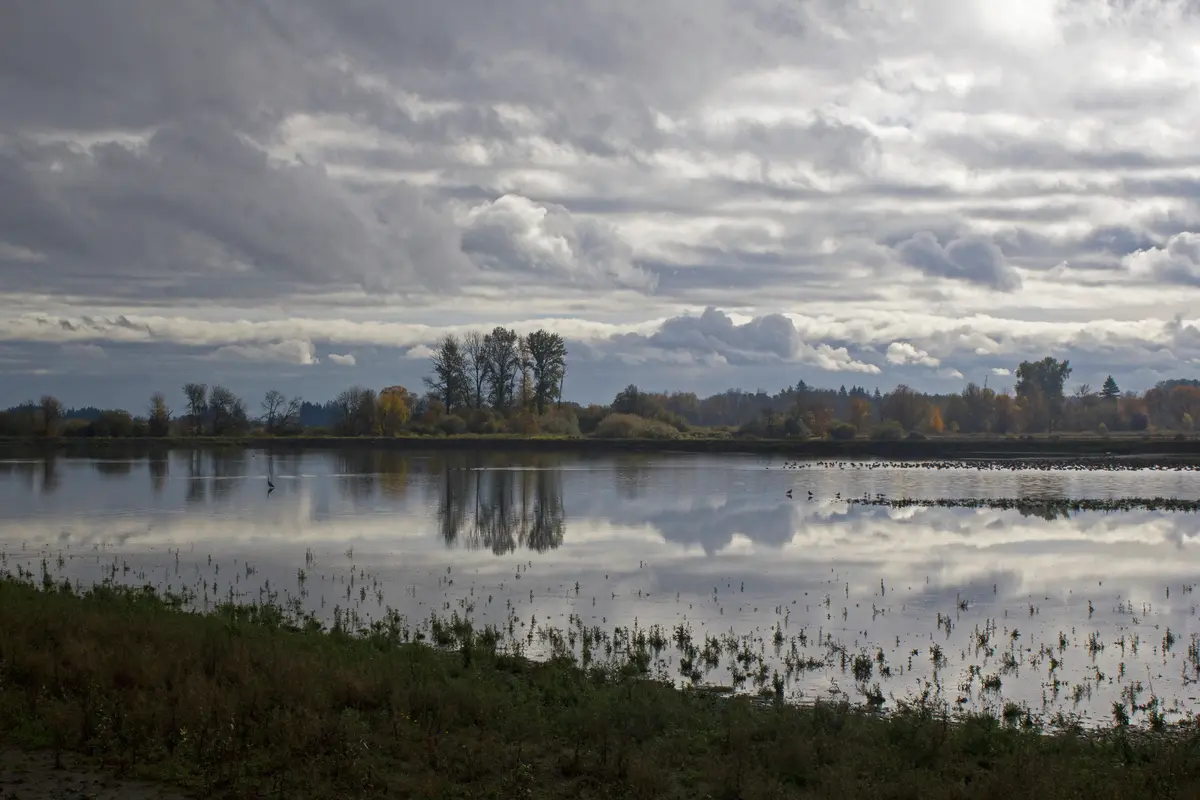
Fernhill Wetlands is 243 acres of birding habitat recognized by the Audubon Society of Portland, with a 1.25-mile gravel trail around Fernhill Lake, two covered viewing platforms, and nearly 200 bird species documented there. My clients who are birders light up when they hear this — it's an unusual amenity for a city this size. Rogers Park, Thatcher Park, and Hare Field round out the parks picture, and the city maintains 170.5 acres of parkland and open space overall, including a BMX dirt track and a skateboard park.
The B Street Trail connects downtown to a regional multi-use trail that is planned to eventually link Forest Grove to Haag Lake and the broader Portland metro trail network. The city's Parks Master Plan has funded concepts for a Forest Grove Loop Trail, with a northern corridor through the hills and a southern corridor along Gales Creek of approximately 3.1 miles. These are planned rather than finished, but the direction is clear.
For food and coffee, my clients regularly mention Prime Time Restaurant & Sports Bar, Black Dog Bar & Grill, La Sierra, Zesti Carts & Bar, and SaWa's Donburi for meals — and for coffee, Maridon's Cafe & Malt Shop, Telvet Coffee, Slow Rise Bakehouse, La Panadera, and Forest Grove Coffee Co. give you real options that are locally rooted rather than chain-dependent. The Adelante Farmers Market brings a distinct cultural energy to the local market scene, and the wine country at your doorstep — with wineries spread across the valley in every direction — means that Saturday afternoon has a lot of directions it can go.
Final Advice From Elizabeth
Quick Takeaways & FAQs
✅ Forest Grove's typical home price of $526,407 (July 2026) gives buyers real space and a genuine small-city feel that most western Washington County suburbs at similar price points can't match.
⚠️ The commute to Portland runs about 40 minutes, and daily errands often mean driving toward Hillsboro — buyers relocating from denser Portland neighborhoods consistently underestimate how car-dependent life here is.
📍 Pacific University's presence — including Oregon's only optometry school and a campus founded in 1849 — gives Forest Grove a downtown energy and cultural calendar that nearby cities at this price range simply don't have.
What is the commute from Forest Grove to Portland actually like day to day?
How do the Forest Grove schools compare, and what should I know before choosing a neighborhood?
Which Forest Grove neighborhoods are best for families with kids?
What does the typical home price in Forest Grove actually buy you?
What surprises people most after they move to Forest Grove?
How does Forest Grove compare to Hillsboro for a buyer weighing both?
How fast do homes move in Forest Grove, and what should buyers be prepared for?
Is Forest Grove right for someone who wants outdoor access without going fully rural?
Moving to Oregon?
Tell us what you need help with and we'll connect you with local resources.
