
Most people who retire to Forest Grove didn't plan on it. They were priced out of Beaverton or Hillsboro, or they followed an adult child to Washington County, and then they drove through downtown on a weekday afternoon — Pacific University students on bikes, an independent café doing brisk business, a gallery open on a Tuesday — and something clicked. This is a working small city, not a retirement enclave, and that distinction matters more than it sounds. A population of 26,529 keeps the streets active without the congestion of larger suburbs, and the presence of Pacific University gives the downtown a cultural texture that most cities this size never develop.
The economic backbone here is education and municipal government — Pacific University and the Forest Grove School District are the dominant employers, with Intel's Hillsboro campus pulling a significant share of the working-age population on their daily commute. That commuter dynamic has a silver lining for retirees: much of the daytime foot traffic downtown belongs to people who aren't rushing anywhere. The arts community, the Adelante Farmers Market, and the Valley Art Gallery create a calendar of low-key engagement that holds up well against what you'd find in a city three times the size.
Cost of living is Forest Grove's most honest selling point. The typical home price of $526,407 (July 2026, Zillow Home Value Index) sits noticeably below what you'd pay closer to Portland, and Oregon's tax treatment of Social Security income is genuinely favorable — more on that in the budget section. The catch is the rain. Forest Grove averages 141 sunny days a year, which is honest Pacific Northwest math: you will have long grey stretches from November through March, and newcomers from sunnier states frequently underestimate the psychological weight of that. A decade of winters in the Willamette Valley feels different from one.
Whether you're considering a move or doing early research, the sections below break down Forest Grove's healthcare access, retiree tax picture, walkability, downsizing options, and how this city stacks up against nearby retirement alternatives across the region.
Why Retirees Are Choosing Forest Grove
Forest Grove fits a specific kind of retiree well: someone who wants genuine small-city character without the isolation of a truly rural town, who values walkable access to a real downtown, and who doesn't need a Costco or a specialty hospital within ten minutes. The typical home price of $526,407 (July 2026, Zillow Home Value Index) is meaningful — it allows retirees arriving with equity from a higher-priced market to buy outright or with a small mortgage, and to keep monthly carrying costs reasonable on a fixed income. For full details on how that price fits into Forest Grove's broader cost picture, the cost-of-living page has the complete breakdown.
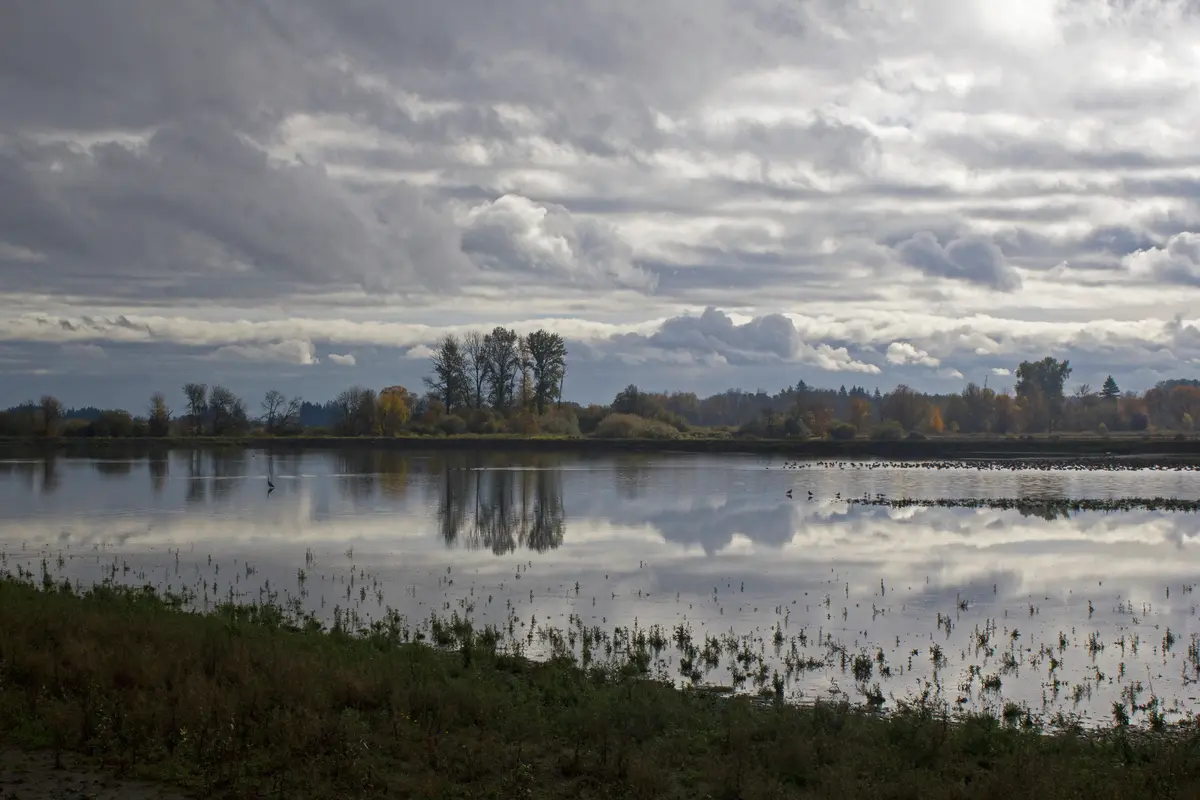
The college-town energy is a genuine draw for a certain buyer. Pacific University runs public lectures, gallery events at the Valley Art Gallery, and an ongoing arts calendar that spills into the surrounding blocks. Retirees who thrived professionally in education, healthcare, or the arts tend to find this atmosphere energizing rather than irrelevant. The Fernhill Wetlands draws serious birders and casual walkers alike, and the Tualatin Valley Scenic Bikeway puts cycling on working farmland and past vineyard country within reach for anyone still active on two wheels.
The honest counterpoint: retirees who need a large medical campus nearby, frequent specialist visits, or the cultural density of a metro area will find Forest Grove's support structure thin. The city is about 40 minutes to Portland, which is fine for a quarterly appointment but a real constraint for ongoing treatment. Anyone who needs the full range of downtown Portland's healthcare, dining, or transit options on a near-daily basis should consider whether Forest Grove's distance actually works in practice — or whether a closer-in city is the more honest answer.
Healthcare & Medical Access in Forest Grove
The nearest hospital to Forest Grove is Hillsboro Medical Center (OHSU), located about 6 miles away. That proximity is meaningful — a short drive rather than a highway haul — and Hillsboro Medical Center carries full OHSU academic affiliation, which means specialist depth well beyond what a standalone community hospital typically offers.
What sets Forest Grove apart from other small cities its size is that you don't have to drive to Hillsboro for routine care. Hillsboro Medical Center runs a primary care clinic directly in Forest Grove, staffed by OHSU-affiliated physicians. That means a retiree managing hypertension, diabetes, or routine preventive care can see an OHSU-network doctor without leaving the city. The same system also operates a rehabilitation clinic in Forest Grove, offering physical therapy services that include vestibular rehabilitation, neurologic rehabilitation, and pelvic floor PT — a range that serves the specific recovery and maintenance needs of older adults better than a generic sports-medicine clinic would.
The honest limitation is advanced specialty care. Cardiac catheterization, oncology, complex orthopedic surgery, and neurosurgery are concentrated at OHSU's main Portland campus and the larger Hillsboro hospital. If you are managing a serious or escalating chronic condition that requires frequent specialist appointments, the 40-minute drive to Portland becomes a real factor in your daily life — not an emergency problem, but a logistical one worth planning around before you commit to living here. For most healthy retirees with a primary care relationship and occasional specialty needs, the in-city clinic and the proximity to Hillsboro Medical Center make this a workable picture.
Mental Health and Rehabilitation
The OHSU-affiliated rehab clinic in Forest Grove addresses one of the gaps that often makes small-city retirement harder than expected. Vestibular and neurologic rehabilitation — services that matter enormously after a stroke, a fall, or a balance disorder diagnosis — are available without a long drive. That is not a standard feature of a city this size, and it is worth weighing against options in smaller nearby towns that lack any in-city outpatient therapy at all.
The Retiree Budget in Forest Grove
Oregon's treatment of Social Security income is one of the best in the West. The state fully exempts Social Security and Railroad Retirement benefits from Oregon taxable income — even if a portion of those benefits is taxed at the federal level, Oregon subtracts them entirely from the state return. For a retiree whose income is primarily Social Security, the Oregon income tax exposure on that stream is zero.
The picture is less favorable for pension, IRA, and 401(k) income. Oregon taxes those at the state's graduated income tax rates, which run from 4.75% to 9.9%. A retiree drawing $60,000 from a traditional IRA will pay Oregon income tax on all of it. This is the part of the Oregon tax picture that financial advisors often shorthand as a reason to compare carefully against lower-income-tax states. What Forest Grove does offer is Washington County location: residents here are not subject to Multnomah County's separate income surtax, which applies to Portland-area residents in that county. That is a meaningful, real-money distinction for anyone comparing Forest Grove to a similar property inside the Multnomah County line.
Oregon has no statewide sales tax. For retirees on fixed incomes who watch every grocery and hardware-store purchase, the absence of a sales tax reduces the daily cost burden in a way that adds up across a full year of spending.
Property Tax Reality
The effective property tax rate in Forest Grove is approximately 0.84% — low by national standards and manageable against a $526,407 typical home price. For qualifying homeowners aged 62 or older, Oregon offers an income-qualified property tax deferral program that allows you to defer county property taxes until the home is sold. Applicants must meet a household income threshold and have owned and occupied the home for a minimum period — eligibility details shift with each legislative session, so check current Oregon Department of Revenue guidance before planning around it. The deferred taxes accrue as a lien rather than disappearing, but the program preserves monthly cash flow for retirees whose equity is high and whose income is moderate. The engine's calculator below can help you model what carrying costs look like at current rates; any specific monthly figures depend on your down payment, rate, and insurer.
For a full comparison of utilities, groceries, and transportation costs, the cost-of-living page goes deeper on the day-to-day numbers that matter on a fixed income.
Looking to buy in Forest Grove? Estimate your payment.
Enter your numbers to see an estimated monthly mortgage payment.
Estimate only. Excludes HOA fees and mortgage insurance. The interest rate above is a starting point, not a quoted rate — replace it with your own to see real numbers. Insurance is a flat placeholder, not a Forest Grove quote.
Walkability, Community & Staying Active in Forest Grove
Forest Grove's overall walkability is limited — most of the city requires a car for errands, and the topography in areas away from downtown can be hilly enough to make walking less comfortable for anyone with mobility considerations. The exception is the downtown core and the Pacific Avenue corridor, where the concentration of independent shops, restaurants, the Valley Art Gallery, and Pacific University creates genuinely on-foot access to daily life. If you buy or rent within that pocket, you can manage a meaningful number of daily tasks without a car.
GroveLink, the city's free shuttle service, extends that access across Forest Grove for residents who don't drive or prefer not to. TriMet bus service reaches the city with connections to Hillsboro, where MAX light rail continues into the broader Portland metro. For retirees who sold a car as part of downsizing, these routes are the practical lifeline — not a replacement for a car in all situations, but a genuine option for medical appointments in Hillsboro or a day trip into Portland without fighting for parking.
Community Texture
Pacific University's presence gives Forest Grove a built-in civic and intellectual life that most cities of 26,529 cannot match. The Valley Art Gallery hosts rotating exhibitions that draw from the broader regional arts community, and the university's public programming brings lectures, performances, and seasonal events into downtown. Retirees who want to stay mentally engaged — and who find golf courses and shuffleboard insufficient — tend to find this energy genuinely useful.
Fernhill Wetlands is among the region's best birding sites, drawing enthusiasts from across the Portland metro. The B Street Trail and Rogers Park give walkers and cyclists low-key daily routes, and the Tualatin Valley Scenic Bikeway puts longer rides through vineyard country within reach. For retirees whose definition of staying active runs toward nature rather than a gym, the outdoor infrastructure here punches well above what you'd expect for a city this size.
Where Retirees Gather
The Adelante Farmers Market draws a mix of Pacific University faculty, longtime residents, and newer arrivals — and functions as an informal neighborhood gathering point through the warmer months. The downtown restaurant and coffee scene provides the kind of low-stakes social infrastructure that makes retirement in a small city sustainable. These are the spots where you start recognizing faces within a few months of moving in — which, for retirees moving from somewhere else, is often the most important thing a city can offer.
Right-Sizing: Downsizing in Forest Grove
No 55+ communities were found in Forest Grove. That is the most important planning fact for retirees who want a purpose-built active-adult setting with age-restricted neighbors, shared amenities, and no exterior maintenance. Forest Grove does not currently offer that option within city limits.
What the city does have is a small but meaningful range of senior living options across the care continuum. The Elms Residential Retirement Community offers independent senior living with an age-restricted environment, social programming, and no maintenance responsibilities — the closest thing in the city to an active-adult community for retirees who are healthy and self-sufficient but done with homeownership burdens. Pacific Grove Senior Living provides assisted living and memory care. The Beehive is a 44-apartment assisted living community with adjacent memory care. Jennings-McCall covers the full progression from independent living through assisted living and memory care under one roof. That depth across the care spectrum is unusual for a city this size and reflects Forest Grove's longer history as a retirement-friendly community.
Single-Level and Lower-Maintenance Inventory
For retirees who want to own a home — not move into a managed community — the single-level inventory in Forest Grove is real but not abundant. The Pacific Avenue Area and parts of Downtown Forest Grove have older ranch-style homes and smaller bungalows that can work well for aging in place. The newer subdivisions in Davis Estates and Bailey Meadows include some single-level construction, though the mix varies. Anyone prioritizing no-step entry, wide doorways, and a single-floor plan should plan to work with an agent who knows which streets and subdivisions carry that stock rather than assuming it's widespread.
Condos and townhomes represent a smaller share of Forest Grove's housing mix than you'd find in Hillsboro or Beaverton, which limits the options for retirees who want the ownership benefits without the yard. For a full picture of which neighborhoods fit which downsizing priorities, the neighborhoods page maps out the housing stock across the city's distinct areas.
Forest Grove vs Nearby Retirement Destinations
| City | Cost vs Forest Grove | Primary Hospital | Walkability | Senior Living Depth | Overall Retirement Fit |
|---|---|---|---|---|---|
| Forest Grove | Anchor | Hillsboro Medical Center (OHSU), ~6 mi; in-city OHSU clinic | Car-dependent overall; walkable downtown core | Multiple assisted living, memory care, independent living; no 55+ communities | Strong for active retirees wanting college-town culture and lower cost |
| Hillsboro | About the same | Hillsboro Medical Center (OHSU) on-campus | More walkable corridors; transit-rich | Broader inventory of senior communities and care facilities | Better for those needing on-campus hospital proximity and more retail options |
| Cornelius | Somewhat lower | Hillsboro Medical Center (OHSU), similar distance | Limited; very car-dependent | Thin; fewer senior-specific options | Value play for budget-focused buyers; fewer amenities and less community infrastructure |
| Banks | Somewhat lower | Hillsboro Medical Center (OHSU), farther drive | Minimal; rural setting | Very limited | Best for retirees who want rural quiet and outdoor access; not for those needing services nearby |
| Gaston | Somewhat lower | Farther from any hospital campus | Minimal; rural | Very limited | Rural lifestyle appeal; real trade-off on healthcare proximity and services |
| Beaverton | Noticeably higher | Hillsboro Medical Center (OHSU) and regional health facilities closer | More walkable; better transit connections | Broader senior living inventory | More infrastructure and transit but at a higher price point than Forest Grove |
Hillsboro is the clearest alternative for retirees who want hospital proximity without a drive — being near Hillsboro Medical Center changes the healthcare calculus meaningfully, and the city's broader retail and transit infrastructure reduces car dependence. The catch is that prices run about the same as Forest Grove, so you gain access without gaining affordability.
Cornelius, Banks, and Gaston each come in somewhat cheaper, but the service depth and community infrastructure drop significantly. Cornelius is effectively a bedroom community without Forest Grove's downtown energy; Banks and Gaston are genuinely rural, which suits some retirees perfectly and isolates others. For buyers weighing rural quiet against real-world access, the honest answer is that Forest Grove sits at the practical edge of small-city life — one step further out and the trade-off on services becomes hard to ignore.
Forest Grove's strongest differentiator against all of these options is the combination of the in-city OHSU-affiliated clinic, the Pacific University community texture, and a price point that doesn't require compromise on the home itself. No nearby town at a lower price point replicates that combination.
Local Expert Takeaway: Forest Grove works best for retirees who arrive with a plan: know that downtown walkability is real but geographically limited, that the OHSU-affiliated primary care clinic in the city handles routine needs well, and that a serious hospital visit means Hillsboro Medical Center about 6 miles out. The college-town energy around Pacific University and the Valley Art Gallery gives the city a social and intellectual life that punches well above its size, and Oregon's income-qualified property tax deferral program can meaningfully ease the carrying-cost picture for retirees who qualify. What this city does not offer is a 55+ community or a large-format senior campus — retirees who need that setting will need to look to Hillsboro or the broader Portland metro.
Quick Takeaways & FAQs
✅ Oregon fully exempts Social Security income from state income tax, a real advantage for retirees whose income is primarily from that source.
⚠️ No 55+ communities exist within Forest Grove city limits, which is a genuine gap for retirees seeking an age-restricted active-adult setting.
📍 Hillsboro Medical Center (OHSU) runs both a primary care clinic and a rehabilitation clinic directly in Forest Grove — rare for a city of 26,529.
Is Forest Grove a good place to retire on Social Security alone?
What hospital is closest to Forest Grove?
Are there 55+ or active adult communities in Forest Grove?
How does Oregon tax retirement income beyond Social Security?
Can I get around Forest Grove without a car as a retiree?
Moving to Oregon?
Tell us what you need help with and we'll connect you with local resources.
