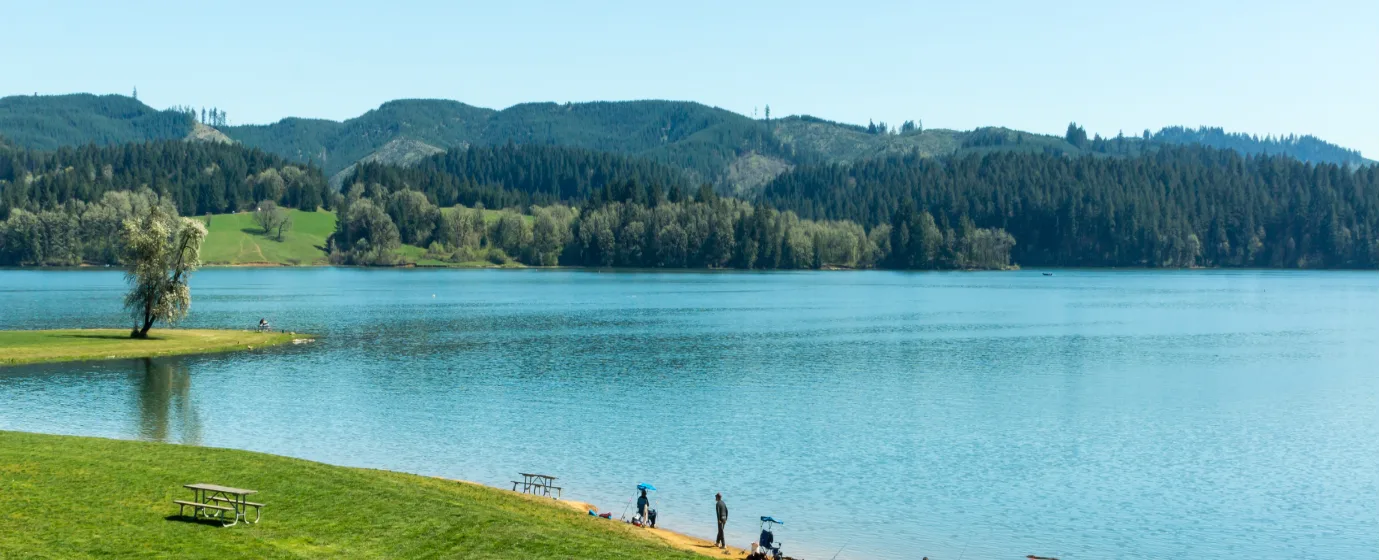
Most people driving through Forest Grove on OR-8 see a compact college town bracketed by nursery fields and think they understand the place. They are missing almost all of it. Forest Grove sits at the western edge of the Tualatin Valley where the valley floor meets the foothills of the Oregon Coast Range — a position that gives its 26,529 residents access to a genuinely unusual mix of recreation: internationally recognized bird habitat within city limits, a state-designated scenic bikeway passing through downtown, and a 2,500-acre reservoir park a short drive along OR-47.
What sets Forest Grove apart from other small Oregon cities its size is that the outdoor assets are not afterthoughts — they are the reason many people choose the city in the first place. Fernhill Wetlands, designated an Important Bird Area by Portland Audubon, is a 700-plus-acre restored wetland complex that transformed from former wastewater treatment ponds into one of the most productive migratory bird sites in the Portland metro. That is not marketing language; birders from across the Pacific Northwest drive here specifically for it.
The city's parks network fills in the everyday middle ground: a dog park with separate sections for large and small breeds at Thatcher Park, dedicated outdoor pickleball courts at Rogers Park, a city-operated aquatic center with a spray park for summer afternoons, and the B Street Trail for on-foot access through town. Cycling infrastructure connects it all outward, placing Forest Grove on the map for road cyclists and casual riders alike. For neighborhood-level context on how proximity to these parks affects home values, the neighborhoods guide covers that in detail.
Whether you are weighing a move and wondering how outdoor recreation fits into daily life, or simply researching what the city actually offers, the sections below break down Forest Grove's signature parks, its bird habitat, its cycling and trail network, and the seasonal recreation that defines the year here.
Fernhill Wetlands: The City's Most Serious Natural Asset
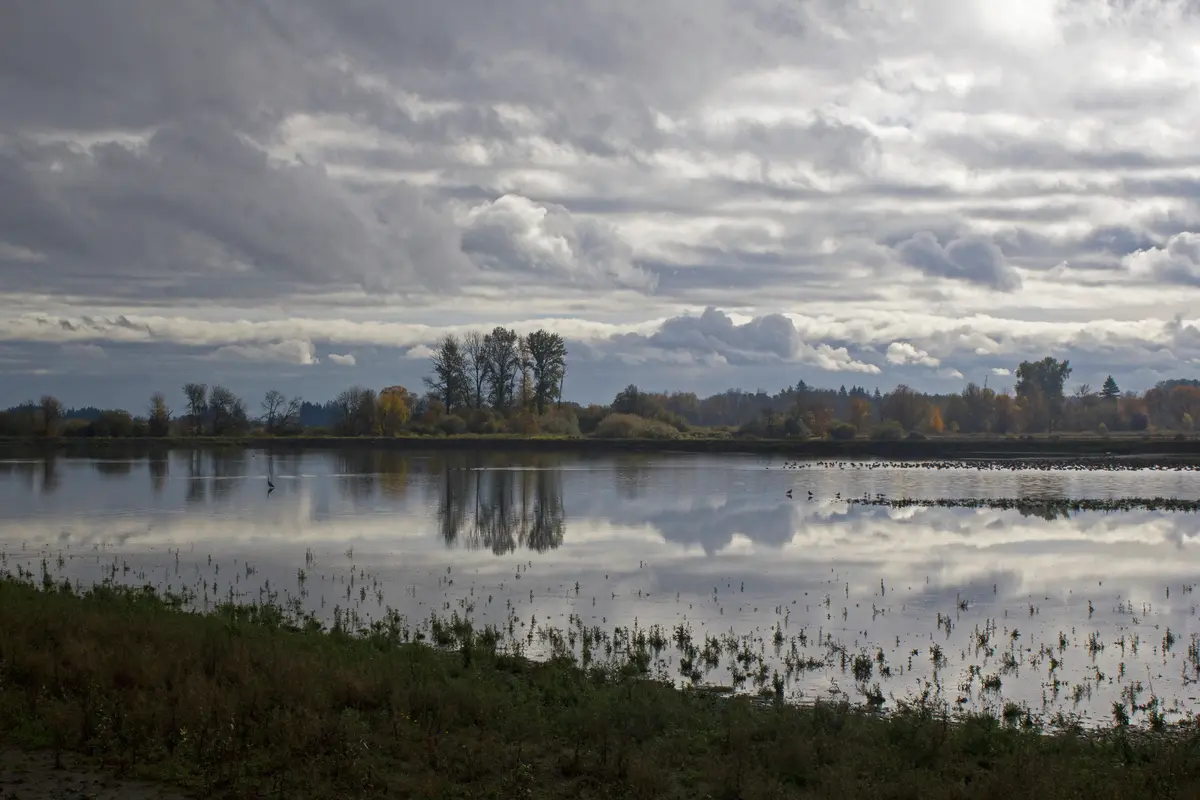
Nothing else in Forest Grove's parks system competes with Fernhill Wetlands for sheer ecological ambition. The site covers more than 700 acres managed by Clean Water Services, sitting near the confluence of Gales Creek and the Tualatin River just minutes from downtown. What looks like a mature natural wetland is actually a deliberate, large-scale restoration — Clean Water Services converted former wastewater treatment ponds into functioning wetland cells, installing native plants by the hundreds of thousands, seeds broadcast across the full acreage, and logs and snags hauled in to rebuild structural habitat from the ground up.
Portland Audubon designated Fernhill an Important Bird Area, and the numbers justify it. At least 245 bird species have been recorded on site. From November through March, waterfowl populations reach into the thousands daily — the kind of density that makes it worth putting on a list before you even unpack your moving boxes. Herons, hawks, bald eagles, and beavers are year-round residents. At least 17 shorebird species have been documented here, which is an unusually high count for an inland Willamette Valley site.
What the Trails Are Actually Like
There are three distinct trail options, and they suit different kinds of visitors. The 1-mile loop around Fernhill Lake is paved and fully ADA-accessible — it is genuinely flat, genuinely smooth, and one of the better universally accessible birding routes in the region. The 1.6-mile Dabblers Marsh Loop travels chip paths and gravel roads through thickets and open fields for a more immersive experience. A paved path along the treatment ponds gives a third option. All of it is free.
One thing to know before you go: dogs are not permitted on any of the Fernhill Wetlands trails. This is a firm rule, not a suggestion, and it matters for the habitat quality that makes the site worth visiting. If you are planning a morning that combines birding and a dog walk, you will need to sequence those at different locations.
A practical friction point that catches newcomers: the site is extraordinary in wet-season months — October through April — when both the bird diversity and sheer numbers are at their peak. But that is also when the trails are muddiest on the gravel and chip sections, and the Oregon overcast can make photography genuinely difficult. Locals who bird here regularly know to bring waterproof shoes and to manage expectations for the light.
City Parks: From the Dog Park to the Pickleball Courts
The everyday parks network in Forest Grove is more purposefully built than you might expect for a city of 26,529. The two parks that come up most in local conversation are Thatcher Park and Rogers Park — they serve different crowds but together cover a wide range of what residents actually use parks for.
Thatcher Park and the Dog Park
Thatcher Park is a 13.6-acre space on the city's northwest edge. The athletic facilities cover the basics well — baseball fields, a soccer field, a walking path, playground equipment, picnic shelter, and restrooms. The adjacent Thatcher Dog Park is the detail that draws residents from across the city. It is fully fenced, with separate sections for large and small dogs, double-gated entrances, a water fountain, shaded seating, and enrichment obstacles. For a city this size, having a dog park with that level of infrastructure is a genuine amenity, and it shows in how much it gets used on weekend mornings.
Rogers Park and Pickleball
Rogers Park is smaller at 4.4 acres, but it carries one specific draw: two free outdoor pickleball courts with permanent lines and nets. The city's Parks & Recreation department held its inaugural Dash Paddle Bash Pickleball Tournament at Rogers Park in August 2026, which signals how seriously the city is treating pickleball as a programming priority rather than an afterthought. For anyone coming from a larger metro area where court time requires reservations or fees, the free and open-access model here is a noticeable difference.
Aquatic Center and Summer Recreation
The Forest Grove Aquatic Center is city-operated and anchors summer recreation for families. A seasonal spray park associated with the center has been a consistent draw for younger kids during warm months — one of those amenities that parents discover quickly after moving here and end up at more than they anticipated.
| Park | Size | Key Features | Best For |
|---|---|---|---|
| Fernhill Wetlands | 700+ acres | Three trail loops, ADA lake loop, birding habitat | Nature |
| Thatcher Park | 13.6 acres | Baseball, soccer, playground, dog park with large/small sections | Families |
| Rogers Park | 4.4 acres | Free outdoor pickleball courts (permanent nets) | Active Adults |
| Hare Field | Named asset | Open recreation space | Families |
| B Street Trail | Linear trail | On-foot access through the city | Walkers |
| Forest Grove Aquatic Center | City facility | Pool, seasonal spray park | Families |
Cycling and the Tualatin Valley Scenic Bikeway
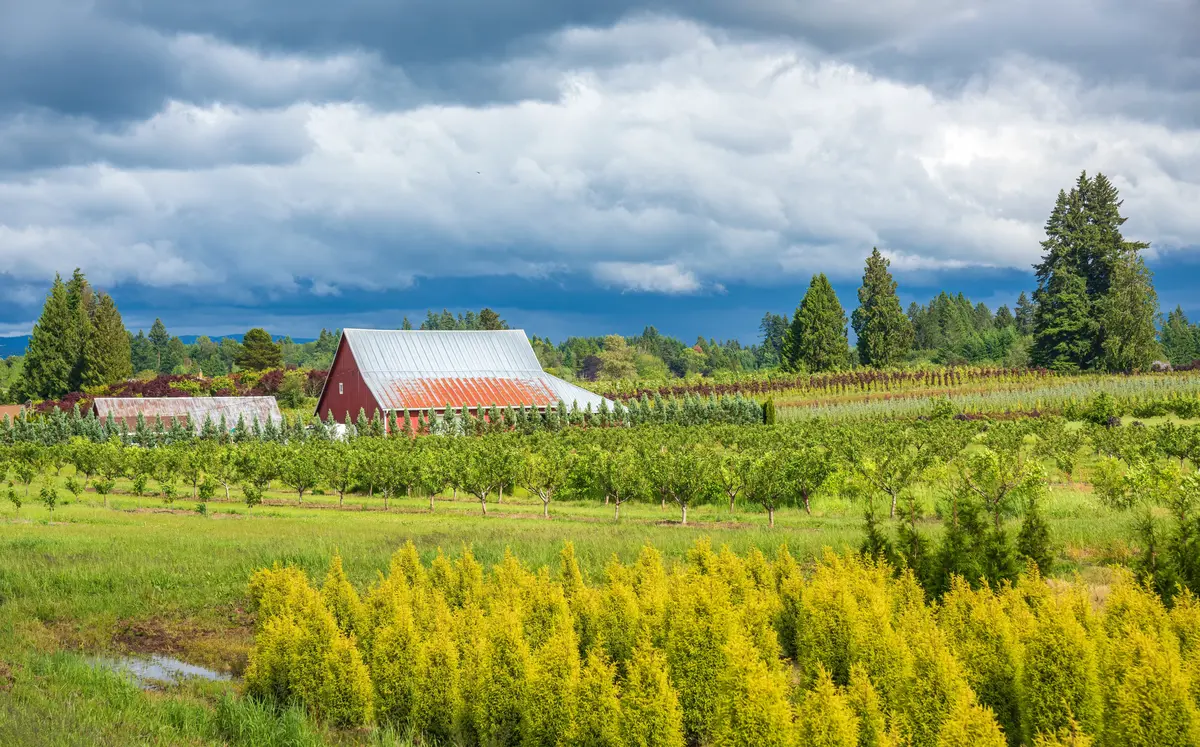
Forest Grove is one of the better-positioned small cities in the Portland metro for cycling, and that is not because of its internal trail network — it is because of where the city sits on a much larger system. The Tualatin Valley Scenic Bikeway, designated by Oregon State Parks, passes directly through Forest Grove, placing the city on the official route map and giving it a role as a rest and services hub for the bikeway's riders.
The Route, Explained
The bikeway's southern section covers approximately 30 miles of relatively flat riding from Hillsboro through Forest Grove. The northern section follows 21 miles of the Banks-Vernonia State Trail, which is car-free and one of the better rail-trail conversions in Oregon. Forest Grove sits between the two, which means you can ride in either direction from downtown and find yourself on a designated, well-supported route within minutes.
The loop that Travel Oregon calls the Forest Grove to Coast Range Tour covers 36 miles total: out from Forest Grove on the bikeway, a circuit around Henry Hagg Lake, and a return through Fernhill Wetlands. It is doable in a half-day for a reasonably fit cyclist and gives you three of the city's best outdoor assets in one ride. That is a well-designed route, not an accident.
Bike Hubs and Infrastructure
Tualatin Valley was the first destination in Oregon to launch a bike hub program — a network of stations with pumps, fix-it tools, maps, and restrooms positioned along the bikeway. That network was refreshed in 2026. For cyclists who ride regularly, the practical value of a mid-ride fix-it station is something you appreciate the first time you need it and never forget.
One honest caveat: Forest Grove gets 141 sunny days a year, which is fewer than Portland's eastern suburbs. The Tualatin Valley Scenic Bikeway is at its best in dry conditions, and the riding season in this part of Oregon is meaningfully shorter than the calendar might suggest if you are moving from a drier climate. October through February, the flat valley sections near Fernhill and along the bikeway can be genuinely soggy. Locals plan around this; newcomers often don't.
Looking to buy in Forest Grove? Estimate your payment.
Enter your numbers to see an estimated monthly mortgage payment.
Estimate only. Excludes HOA fees and mortgage insurance. The interest rate above is a starting point, not a quoted rate — replace it with your own to see real numbers. Insurance is a flat placeholder, not a Forest Grove quote.
Henry Hagg Lake: The Weekend Destination Worth Knowing
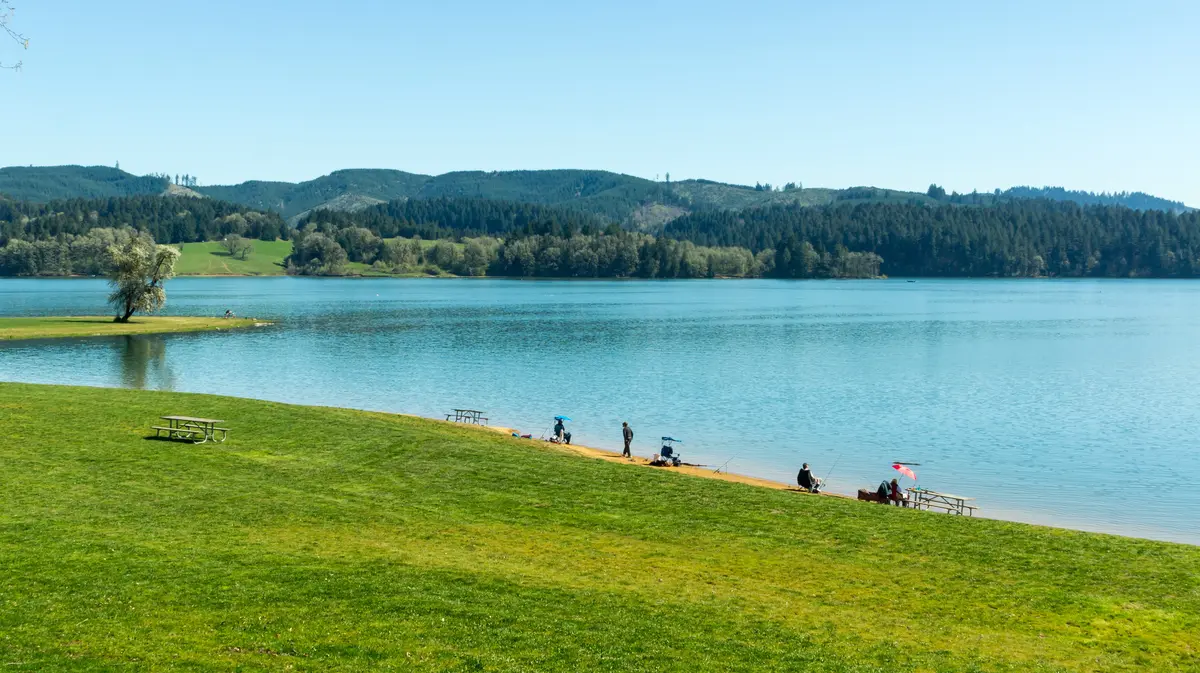
Henry Hagg Lake is not within Forest Grove's city limits — it sits in Scoggins Valley, southwest of the city off OR-47, addressed in Gaston — but every outdoor recreation conversation among Forest Grove residents eventually includes it. Washington County operates Scoggins Valley Park there on behalf of the U.S. Bureau of Reclamation, and the park's 2,500 acres function as the region's primary reservoir recreation destination.
What the Park Actually Offers
The scope is larger than most people expect the first time they visit. More than 14 miles of multi-use trails circle the reservoir. Two boat launch facilities serve motorized and non-motorized watercraft. Fishing covers rainbow trout, bass, and yellow perch. Swimming and stand-up paddleboarding are both legitimate draws when the water is warm. An 18-hole disc golf course sits within the park and is a consistent draw for a demographic that skews younger and more active than a typical county park.
Overnight camping is not permitted, which keeps the crowds on a manageable daily cycle — the park fills on summer weekends but empties out each evening.
The Cycling Connection
What makes Henry Hagg Lake particularly relevant to Forest Grove residents rather than just Washington County residents generally is the cycling connection. The 36-mile Forest Grove to Coast Range Tour loop treats the lake circuit as its centerpiece. Cyclists who live in Forest Grove have a practical, well-mapped reason to ride there and back rather than drive, which is the kind of recreational infrastructure that makes a city feel larger than its population suggests.
For anyone moving to Forest Grove from a metro area where lake recreation means a two-hour drive, the proximity to Hagg Lake is a genuine and frequently underappreciated advantage. Families who buy here and discover it in their first summer tend to build a lot of warm-season weekends around it.
| Activity | Where | Season / Notes |
|---|---|---|
| Birding (245+ species) | Fernhill Wetlands | Year-round; peak Nov–Mar |
| ADA-accessible trail loop | Fernhill Wetlands | 1-mile paved loop around Fernhill Lake |
| Pickleball (free, outdoor) | Rogers Park | Permanent courts, no reservation needed |
| Off-leash dog area | Thatcher Dog Park | Large/small dog sections, fenced |
| Swimming & paddleboarding | Henry Hagg Lake | Warm-season draw; day use only |
| Fishing | Henry Hagg Lake | Trout, bass, perch |
| Disc golf (18-hole) | Scoggins Valley Park | Within the Hagg Lake park area |
| Scenic road cycling | Tualatin Valley Scenic Bikeway | Best April–September; year-round capable |
| Rail trail (car-free) | Banks-Vernonia State Trail | 21-mile segment north of Forest Grove |
| Spray park | Forest Grove Aquatic Center area | Seasonal summer draw for families |
Local Expert Takeaway: Forest Grove's outdoor recreation is structured around two genuinely strong anchors: Fernhill Wetlands inside city limits and Henry Hagg Lake a short drive along OR-47. The wetlands give you serious birding — 245 recorded species, Portland Audubon-designated, free and accessible — while the lake gives you swimming, paddling, fishing, and disc golf through the warm months. The city parks fill in the daily middle: a well-built dog park at Thatcher, free pickleball at Rogers, and a spray park at the aquatic center for summer afternoons with kids. The cycling infrastructure through the Tualatin Valley Scenic Bikeway ties all of it together. What most newcomers underestimate is how much the 141 sunny days a year shapes when you use these assets — the outdoor season here is real but compressed, and the residents who get the most from it are the ones who don't wait for perfect weather.
Quick Takeaways & FAQs
✅ Fernhill Wetlands is a Portland Audubon-designated Important Bird Area with 245 recorded species and a free ADA-accessible trail loop — one of the most significant birding sites in the Portland metro, right inside city limits.
⚠️ Forest Grove averages only 141 sunny days a year, which meaningfully compresses the outdoor season — the lakes, trails, and bikeway are best from April through September, and newcomers from drier climates are often caught off guard by how quickly the rainy season arrives.
📍 Dogs are not permitted on any Fernhill Wetlands trails — a detail that matters if you are planning a combined birding and dog-walk morning, since Thatcher Dog Park is the go-to for off-leash time in the city.
Are dogs allowed at Fernhill Wetlands?
Is Fernhill Wetlands worth visiting if I am not a serious birder?
How far is Henry Hagg Lake from Forest Grove?
What cycling routes are accessible from Forest Grove?
Does Forest Grove have free pickleball courts?
Moving to Oregon?
Tell us what you need help with and we'll connect you with local resources.
