What Is Living in Lake Oswego, Oregon Like?
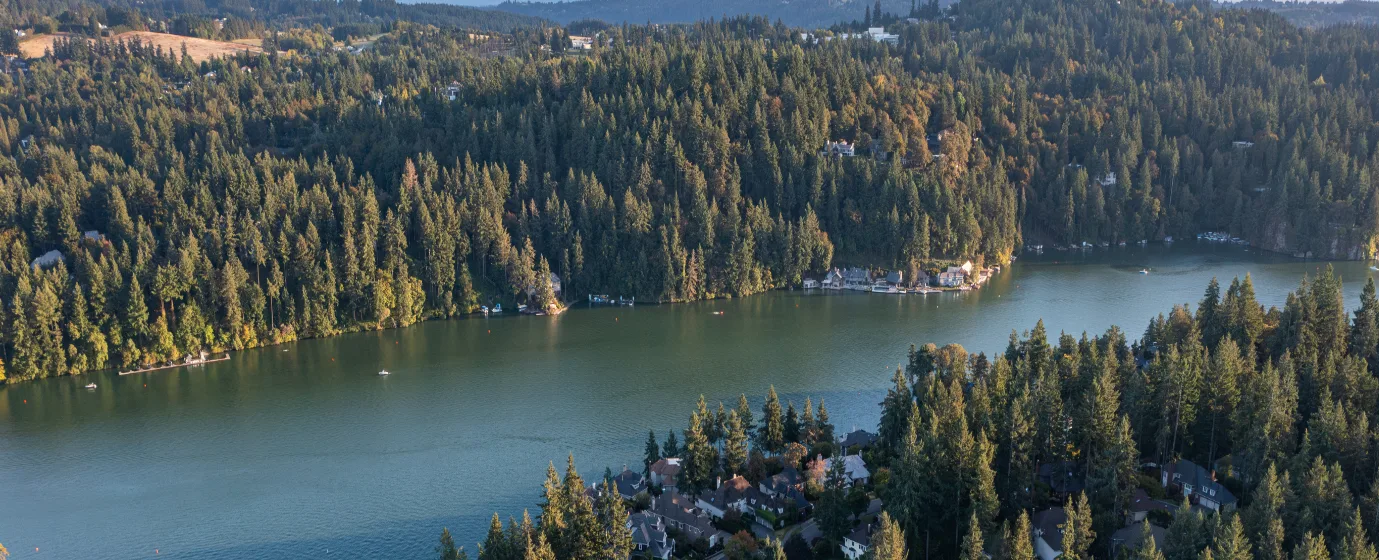
People moving to Lake Oswego from Portland often say the same thing in the first few weeks: they can't quite believe how much quieter it is. Oswego Lake sits at the center of the city — not as a backdrop, but as the thing the whole place orients around. The lake, the tree-lined hills, the compact downtown along First Street — none of it reads like a suburb in the ordinary sense. What surprises people is that Lake Oswego is genuinely self-contained: restaurants worth driving to, a farmers' market, a performing arts center, and a school district that pulls families here from across the metro. It sits about 20 minutes from Portland via OR-43, close enough to Portland for easy access, far enough to feel like its own place.
The economic backbone here is professional. The Kruse Way corridor — a stretch of corporate office parks to the west — holds more than 2.3 million square feet of office space, concentrated with finance, insurance, real estate, and technology tenants. The Lake Oswego School District, with 6,782 students enrolled in 2025-26, holds an A+ rating, according to Niche, and is consistently cited as one of the primary reasons families relocate here. The city's median household income of $141,549 reflects a population that skews toward dual-income professional households, and the community has a strong civic infrastructure — municipal golf, an indoor tennis center that has been running since 1974, and a riverfront sports center on the Willamette.
Housing here runs noticeably above the Portland metro average, reflecting the schools, the setting, and the demand that follows both. The typical home price was $889,944 in July 2026, and a two-bedroom rental typically runs $2,030–$2,470 per month — see the full cost breakdown at cost of living in Lake Oswego. That price point is the honest entry cost for what the city offers: walkable neighborhoods, established tree canopy, low crime, and a community that shows up for Friday night football and the summer concert series alike. Oregon's lack of a sales tax helps offset some of the cost of living relative to California metros, but the property tax effective rate of 0.98% is worth factoring in.
Whether you are considering a move or just researching the area, the sections below break down Lake Oswego's neighborhoods, housing market, commute patterns, major employers, and what daily life here actually looks and feels like.
Lake Oswego at a Glance
Looking to buy in Lake Oswego? Estimate your payment.
Enter your numbers to see an estimated monthly mortgage payment.
Estimate only. Excludes HOA fees and mortgage insurance. The interest rate above is a starting point, not a quoted rate — replace it with your own to see real numbers. Insurance is a flat placeholder, not a Lake Oswego quote.
Why Are People Moving to Lake Oswego?
The Schools Pull Hard
It is hard to overstate how much the Lake Oswego School District drives inbound moves. The district holds an A+ rating, according to Niche, and on 2024-25 state assessments, 65.6% of students reached math proficiency and 74.9% reached reading proficiency — figures that sit well above Oregon averages. Parents with school-age children regularly cite the district as the non-negotiable that narrowed their search to this city and nowhere else. For a full look at individual schools, boundaries, and what the district actually delivers day-to-day, see the Lake Oswego schools guide.
The Professional Class Fits Here
Lake Oswego works particularly well for households where at least one person works in finance, law, technology, or professional services — the kinds of jobs concentrated in the Kruse Way corridor and in downtown Portland alike. The city's median household income of $141,549 isn't an accident; it reflects who has been drawn here for decades. Remote workers find the quality of life compelling: good coffee, walkable neighborhoods in some parts of town, and easy access to Portland when it's needed.
Safety and Stability
Lake Oswego reports a violent crime rate of 0.7 per 1,000 residents and a property crime rate of 11 per 1,000 residents — both significantly below the state violent rate of 3.3 per 1,000 and state property rate of 24.5 per 1,000. For a full safety picture, see the Lake Oswego safety page.
Who Tends to Move Here
| Buyer Type | What Lake Oswego Offers Them | Best Fit? |
|---|---|---|
| Families with school-age children | Top-rated public schools, safe neighborhoods, strong youth sports infrastructure | Families School |
| Portland commuters | about 20 minutes to Portland via OR-43 or I-5, TriMet bus connections | Commuter |
| Remote professionals | High-quality residential neighborhoods, good local amenities, quiet working environment | Tech Quiet |
| Move-up buyers from Portland | More space, better schools, lower crime — at a premium price | Luxury Families |
| Retirees and downsizers | Walkable downtown, arts center, river access, civic amenities | Views Walkable |
| California transplants | Oregon has no sales tax, strong schools, prices below Bay Area or SoCal — see the California comparison guide | Value School |
The city has a population of 41,474, and it has grown each of the last three years after a brief dip earlier this decade — steady enough that the community feels established, not stagnant.
Why People Move Out
The exit stories tend to follow a pattern: buyers who stretched to afford Lake Oswego find the property tax and HOA costs (in neighborhoods like Mountain Park) leave less room than expected. Some couples who moved here for the schools find that once the kids graduate, the premium no longer pencils out against what they could afford elsewhere. A second common reason is the weather: Lake Oswego gets 141 sunny days a year, and the gray winters catch some transplants genuinely off guard after month three.
What Daily Life Feels Like in Lake Oswego
A City That Functions on Its Own
Lake Oswego is primarily residential in character, with its commercial life concentrated in a walkable downtown core and small neighborhood commercial pockets scattered through the hills. The downtown along First Street has the density of a real town center — independent restaurants, coffee shops, a bakery, a farmers' market at Millennium Plaza Park — without feeling manufactured or over-curated. On a warm Saturday morning the market draws a genuine crowd, not a tourist one.
Arts, Parks, and Civic Life
The Lakewood Center for the Arts anchors the cultural calendar with theater, dance, and visual arts programming that a city twice this size would be proud of. George Rogers Park — built on the site of the city's original 1867 iron smelter — sits along the Willamette River and draws families, runners, and anyone who wants a riverside afternoon. The city maintains 23.7 miles of walking-loop pathway networks, and the Gallery Without Walls sculpture walk threads public art through the downtown blocks. The Summer Concerts, Movies in the Park, and the Festival of the Arts are community fixtures that feel local rather than municipal.
The Seasonal Reality
Newcomers from sunnier climates should take the 141 sunny days a year figure seriously. November through February is genuinely gray, and the hills that make Lake Oswego beautiful in summer trap fog and drizzle in winter. Longtime residents build around it — the indoor tennis center, the arts programming, and the restaurant scene all benefit from a community that has learned to stay engaged year-round. By May, when the Oswego Lake water comes alive and the hillside rhododendrons bloom, it becomes obvious why people stay.
Employers and the Local Economy
The city's own institutions anchor the local job base: the Lake Oswego School District, the City of Lake Oswego, and a regional health center are among the largest employers within city limits. Greenbrier Companies, a railroad freight car manufacturer, represents the manufacturing side of the economy. The Kruse Way corridor sits in the western part of the city and is the address of choice for corporate headquarters and professional-service firms across finance, insurance, and technology — a significant employment hub in its own right. Post-pandemic office softening has prompted at least one developer to file a proposal converting Kruse Woods Corporate Park acreage to high-density residential, which reflects the corridor's current transition but does not diminish its importance as a local economic anchor.
Many residents also commute to Portland — to employers in the Pearl District, at the university medical campus, or in the Lloyd District — making the about-20-minutes-to-Portland drive one of the most relevant daily facts about living here.
What Locals Know About Getting Around Day-to-Day
Most errands in the hills neighborhoods mean a drive — Mountain Park residents in particular live five or ten minutes from the nearest grocery run. The downtown core and First Addition neighborhoods are the exception: coffee, lunch, the farmers' market, and a hardware run are all genuinely walkable from there. Understanding this distinction before you buy is not a minor detail.
The Lake Oswego Housing Market Right Now
The Price Point, Honestly Stated
The typical home price in Lake Oswego was $889,944 in July 2026 — a figure that reflects the school district, the setting, and two decades of consistent demand from Portland-area professionals. Entry-level inventory, when it appears, tends to be older construction in neighborhoods that run below the city median, primarily Mountain Park and Lake Forest. The upper end of the market — Uplands, Palisades, the lakefront blocks — runs well above that figure. For the complete picture on what the price means relative to your budget and monthly costs, see the cost-of-living guide.
What the Market Feels Like Right Now
Well-priced homes in desirable neighborhoods do not sit long. The city's strong school district and limited housing supply keep demand relatively stable even when the broader Portland metro softens. Some areas of the city cost considerably more than others — a qualitative reality that matters more than any single median figure, and one worth exploring in detail on the neighborhoods page.
Rental Supply and Trajectory
The typical city-wide rent runs $2,209 per month (Zillow ZORI, July 2026), with two-bedroom units typically ranging from $2,030 to $2,470. Rental supply is thin by design — Lake Oswego is an ownership-oriented city, and apartment inventory is concentrated near the transit center and along commercial corridors rather than dispersed through the residential hills. The city's Housing Production Strategy has targeted roughly 2,000 additional units over the next 20 years, which may gradually increase supply, but the near-term picture remains tight.
Neighborhood Price Tiers at a Glance
The tier data gives you a reliable orientation without the false precision of a dollar range attached to a neighborhood. First Addition, Lake Grove, Westlake, Uplands, and Palisades all run above the city-wide typical home price. Mountain Park and Lake Forest run below it — which makes them the most common entry point for buyers who want Lake Oswego schools without paying the full lakefront premium. Country Club District pricing sits in a range the data does not tier, so the city-wide figure is the best available reference there.
Lake Oswego Neighborhoods
Lake Oswego has several distinct areas — each with its own character and appeal. Here’s a breakdown to help you narrow down where to focus your home search.
🏡 First Addition
Lake Oswego's most walkable neighborhood, with tree-lined streets and historic homes on small lots within easy reach of downtown First Street. It runs above the city median and suits buyers who want the city's full amenity package — farmers' market, restaurants, the lake — without a car for daily life.
🏠 Mountain Park
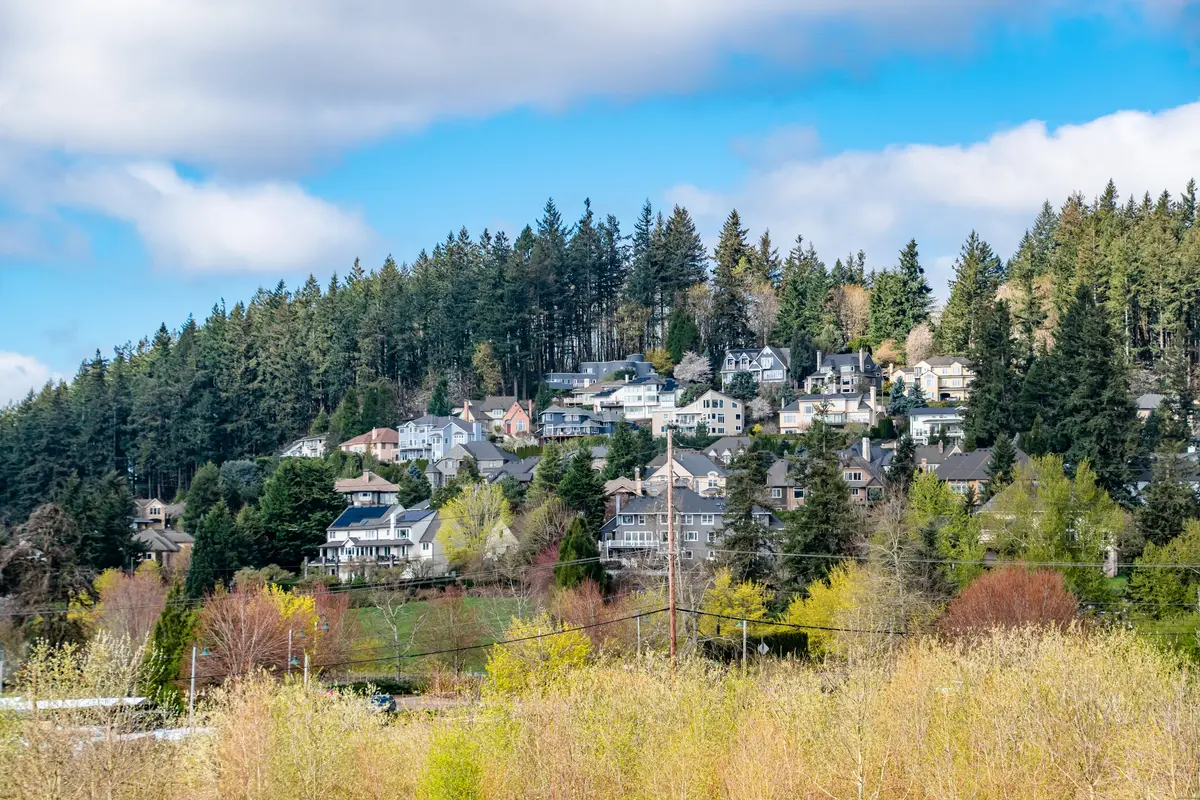
A planned community in the hills above the city, with HOA-managed amenities and a winding road network that gives it an almost self-contained feeling. It sits below the city median, making it one of the more accessible entry points into Lake Oswego's school district.
🌳 Lake Grove
A neighborhood with its own commercial pocket and a community identity distinct from the downtown core. It runs above the city median and appeals to buyers who want a neighborhood feel with proximity to both Lake Oswego and Tualatin.
🏘 Westlake
A residential neighborhood running above the city median, with established homes and a quieter feel than the busier downtown blocks. It suits buyers who want Lake Oswego's school district and safety profile in a lower-traffic setting.
🏔 Country Club District
A prestigious area centered around the lake and the golf course, with the kind of established landscaping and home scale that signals long-term ownership. It draws buyers who want the full Lake Oswego experience in its most residential form.
🌆 Uplands
The neighborhood that defines the upper end of the Lake Oswego market, with grand estate-style homes and deep-set lots well above the city median. It attracts buyers for whom privacy and scale matter as much as the school district.
Pros & Cons of Living in Lake Oswego
The Pros
- Top-rated public schools with a district Niche grade of A+
- Scenic lake and riverfront parks with 645+ acres of green space and 23+ miles of pathways
- Walkable, upscale downtown with dining, shopping, and a year-round arts scene
- Quick access to Portland via I-5 and Hwy 43
The Cons
- Home prices and rents run well above the Portland-metro average
- Property crime (much of it tied to retail-corridor theft) keeps overall crime index above some neighboring suburbs
- Heavy winter rainfall and traffic congestion on the main commute corridors during peak hours
Getting Around & Commuting in Lake Oswego
The Drive to Portland
The core commute fact: about 20 minutes to Portland under normal conditions via OR-43, which follows the west bank of the Willamette through a genuinely scenic stretch of river road. I-5 offers a faster path when OR-43 backs up, though the I-5 interchange south of the city can slow during peak hours. Most Portland-bound commuters learn quickly that leaving before 7:30 a.m. or after 9:00 a.m. makes a material difference.
TriMet Bus Service
TriMet operates bus service into Lake Oswego through the Lake Oswego Transit Center, with Line 35 running along OR-43 and connecting the city to downtown Portland and Oregon City. Line 37 serves Lake Grove. A newer Line 153 connects Lake Oswego with West Linn to the south. Bus transit works well for commuters near the downtown core or along the OR-43 corridor; residents deeper in the hills neighborhoods will find that a car remains a practical necessity for most trips.
The Willamette Shore Trolley
The Willamette Shore Trolley runs a historic streetcar route between Lake Oswego and Portland's southern edge along the river's edge — a genuinely enjoyable seasonal ride that connects the city to the southern edge of Portland's urban core. It is not a daily commuter line, but it is the kind of civic amenity that makes Lake Oswego feel distinct from other suburbs its size.
Who Commutes Where
| Destination | Typical Route | Approximate Drive | Transit Option |
|---|---|---|---|
| Downtown Portland | OR-43 north | About 20 minutes | TriMet Line 35 |
| Portland's university medical campus | OR-43 north | 15–18 minutes | TriMet Line 35 |
| Kruse Way corridor | Within city limits | 5–10 minutes | Limited |
| Beaverton / Hillsboro | I-5 north to OR-217 west | 25–35 minutes | Drive only |
| West Linn | OR-43 south or I-5 south | 10–15 minutes | TriMet Line 153 |
| Portland International Airport (PDX) | I-5 north | About 20 miles / 30–40 minutes | Drive or rideshare |
Portland International Airport (PDX) sits approximately 20 miles from Lake Oswego — close enough that early-morning flights don't require an overnight stay in an airport hotel, which frequent business travelers appreciate.
Living Without a Car
Car-free living is realistic in one narrow slice of the city: the downtown core and First Addition, where coffee, the farmers' market, restaurants, and basic errands are all on foot. Everywhere else — Mountain Park, Palisades, Westlake, the hills neighborhoods generally — a car is not optional. The terrain alone makes cycling a committed choice rather than a casual one.
Schools in Lake Oswego
Families relocating to Lake Oswego have public, private, and higher-education options nearby. Here’s a quick overview.
🎓 School District
Lake Oswego School District serves K–12 students across Lake Oswego and the surrounding area. Rated A+ (source: Niche.com).
🏆 Graduation Rate
The 4-year high-school graduation rate here is approximately 96.6%.
📚 Higher Education
Oregon’s public universities — the University of Oregon, Oregon State University, and Portland State University — offer four-year degrees statewide, with a network of 17 community colleges providing two-year and workforce programs.
🌐 Online Learning
Oregon State University Ecampus and Portland State University Online offer fully accredited online degrees for remote learners across the state.
Safety in Lake Oswego
A quick look at how Lake Oswego compares on the numbers that matter most when weighing a neighborhood or a move.
🛡 Violent Crime
Approximately 0.7 per 1,000 residents.
🔒 Property Crime
Approximately 11 per 1,000 residents.
Compared to the most recent national figures from the Bureau of Justice Statistics (2024), Lake Oswego’s violent crime is below the national average (about 3.7 per 1,000), and property crime is below the national average (about 18.4 per 1,000).
Against Oregon as a whole, Lake Oswego’s violent crime is roughly a quarter of the state average, and property crime is roughly half the state average (Bureau of Justice Statistics, Crime Known to Law Enforcement, 2024 (tables 2 and 3)).
Crime rates can vary a lot within a single city, so the citywide numbers above are only a starting point. Some neighborhoods in Lake Oswego run well below these averages, while others run higher — the kind of block-by-block detail that matters most when you’re actually choosing where to live. The full guide below breaks it down neighborhood by neighborhood.
Working in Lake Oswego
Lake Oswego’s largest employers span several industries — here are some of the anchors of the local job market.
🎓 Lake Oswego School District
Education
🏛 City of Lake Oswego
Municipal government
🏭 Greenbrier Companies
Manufacturing
🏥 Lake Oswego Health Center
Healthcare
💼 The Lake Oswego Corporation
Services
Parks & Recreation in Lake Oswego
Some of the outdoor spaces that shape everyday life in Lake Oswego.
🌱 Oswego Lake
🌱 Millennium Plaza Park
🌱 George Rogers Park
Lake Oswego residents don’t have to go far for green space — spots like Oswego Lake and Millennium Plaza Park are part of everyday life here, whether that’s a morning walk, a weekend hike, or just somewhere to unwind outside. The full guide below covers more of what Lake Oswego has to offer for parks and outdoor recreation.

Retiring in Lake Oswego
Lake Oswego draws retirees for its balance of amenities, outdoor access, and cost. Here’s what to weigh.
🌤 Climate
Lake Oswego gets 141 sunny days a year — honest Pacific Northwest numbers that mean mild summers and genuinely gray winters. Temperatures rarely drop below freezing and snow is uncommon, but November through February brings consistent overcast and rain. Retirees who invest in the indoor arts calendar and the restaurant scene tend to find the winters manageable; those counting on sunshine often don't.
🍴 Lifestyle
The Lakewood Center for the Arts, the Gallery Without Walls sculpture walk, an 18-hole municipal golf course, an indoor tennis center, and a riverfront sports center on the Willamette give retirees a genuinely full cultural and active calendar. The Lake Oswego Farmers' Market and the Summer Concerts series are community anchors. Downtown dining runs from French pastry to long-established neighborhood restaurants, all within a compact and largely walkable core.
🏚 55+ Communities
Condolea is the established active-adult community in Lake Oswego — a condominium development that has served the 55+ market for decades. It is not a large resort-style campus, but it provides the low-maintenance ownership structure that many retirees prioritize. For retirees open to exploring nearby options or additional downsizing pathways, the full picture is on the retiring in Lake Oswego page.
✈ Getting Around
Most retirees in Lake Oswego drive — the city is not designed to be car-free outside the downtown core. Those near First Addition or the transit center have TriMet bus access to Portland for medical appointments and day trips. Portland International Airport (PDX) is approximately 20 miles away, making it practical for retirees who travel regularly without requiring a long pre-dawn drive.
🏛 Oregon Taxes for Retirees — What to Know
- Social Security is not taxed — Oregon does not tax Social Security or Railroad Retirement benefits. Any amount included in your federal adjusted gross income is subtracted back out on the Oregon return.
- But other retirement income IS taxed — This is the trade-off that surprises people moving from Washington or Texas. Pension distributions and 401(k)/IRA withdrawals are taxed as ordinary income at Oregon’s regular rates — there is no blanket retirement-income exclusion.
- Graduated income tax — Oregon has four brackets — 4.75%, 6.75%, 8.75% and 9.9%. The 4.75% rate covers the first $10,000 of taxable income for a single filer ($20,000 filing jointly); the 8.75% rate starts at $125,000 ($250,000 jointly); and the top 9.9% rate applies above $250,000 ($500,000 jointly).
- No sales tax — Oregon levies no general sales tax.
- Property taxes, with senior deferral — Oregon’s Senior and Disabled Property Tax Deferral lets qualifying homeowners have the state pay their county property taxes, with a lien recorded against the home. The 2026 household income limit is $70,000, and deferred balances accrue 6% simple interest — it defers the bill rather than forgiving it.
- Estate tax — the one to plan for — Oregon has its own estate tax with a $1 million filing threshold — far below the federal exemption, and NOT indexed for inflation, so it reaches more estates every year in real terms. Retirement accounts and a long-held home count toward the taxable estate, so estates that feel modest can cross the line without the owner expecting it.
- No inheritance tax — Oregon has no separate inheritance tax and no gift tax.
Tax laws change frequently and individual situations vary. This is general information, not tax advice — always consult a qualified Oregon tax professional or CPA for personalized retirement tax planning.
Weekends & Local Favorites in Lake Oswego
Where Locals Actually Spend Time
George Rogers Park on the Willamette River is where the city gathers on a warm weekend — families, dogs, kids running the open grass while parents watch the river. Tryon Creek State Natural Area on the city's western edge offers a genuine old-growth canyon experience within minutes of residential neighborhoods: fern-lined trails, seasonal creek crossings, and a quiet that is hard to believe given how close Portland sits. Iron Mountain Park draws hikers and trail runners year-round, and Millennium Plaza Park is the civic heart of downtown — farmers' market on one end, Oswego Lake views on the other.
Food and Coffee
The dining and coffee scene runs deeper than a city of 41,474 has any right to expect. Oswego Grill Lake Oswego is a longtime local anchor for weekend dinners and special occasions. La Provence Boulangerie & Patisserie brings genuine French pastry technique to the morning routine. Babica Hen Cafe draws a loyal brunch crowd. Nicoletta's Table and Marketplace does Italian in a neighborhood-institution way, and Gubanc's Restaurant has been feeding the community for longer than most current residents have lived here.
For coffee: Kyra's Bake Shop is equal parts bakery and gathering place, with a cult following for its gluten-free pastries. Ava Roasteria - Meadows brings serious coffee-roasting credentials to a neighborhood setting. Happy Sparrow Café, Lola's Cafe Bar, and Morse Coffee Company round out a coffee scene that punches well above the city's size.
Arts and Community Events
The Lakewood Center for the Arts runs year-round theater and visual arts programming — this is not a community theater in the modest sense; it draws performers and audiences from across the metro. The Festival of the Arts, the Summer Concerts series, Movies in the Park, and the annual Tree Lighting Ceremony are free events that the community actually shows up for, not just city calendar filler. The Lake Oswego Farmers' Market at Millennium Plaza Park runs through the warm months and is, by most accounts, among the better metro-area markets for produce and local vendors.
The Gallery Without Walls
The Gallery Without Walls outdoor sculpture walk threads public art installations through the downtown blocks in a way that rewards slow walking. It is the kind of amenity that reads as a pleasant surprise to visitors and becomes an orientation landmark for newcomers — most longtime residents can navigate by the sculptures without realizing it.
History Underfoot
George Rogers Park isn't just a riverside green space — it sits on the site of the Lake Oswego Iron Company smelter, active from 1867, which gave the city its industrial identity before the residential suburb took over. The historical markers there are worth reading on a first visit. The Willamette Shore Trolley runs the old rail corridor along the river, connecting the city's past to its present in a way that is hard to replicate elsewhere in the metro.
Local favorites in Lake Oswego
Restaurants
- Oswego Grill Lake Oswego
- La Provence Boulangerie & Patisserie
- Babica Hen Cafe
- Nicoletta's Table and Marketplace
- Gubanc's Restaurant
Outdoors
- Tryon Creek State Natural Area
- Oswego Lake
- George Rogers Park
- Iron Mountain Park
- Millennium Plaza Park
Coffee
- Kyra's Bake Shop
- Ava Roasteria - Meadows
- Happy Sparrow Café
- Lola's Cafe Bar
- Morse Coffee Company
Farmers Markets
- Lake Oswego Farmers' Market
Top Things Locals Say About Lake Oswego
The best intel about a city comes from the people who actually live there. Here’s what Lake Oswego residents say when newcomers ask the questions everyone’s thinking.
“I thought I understood what I was buying — the schools, the lake, the drive to Portland. What I didn't expect was how much the neighborhood I chose would shape everything. Living near First Addition is a completely different day-to-day experience from being up in the hills, and I wish someone had made that distinction concrete before I started making offers.”
— Recent Lake Oswego home buyer
“What's the most surprising thing about living in Lake Oswego?”
How different the neighborhoods feel from each other. Mountain Park is its own world — HOA, community amenities, roads that wind up into the hills — and it barely feels connected to the downtown blocks on First Street. People who buy in Uplands and people who buy near First Addition are essentially choosing two different lifestyles within the same city boundary. A lot of newcomers don't realize that until they've already signed.
“What do locals love most about Lake Oswego?”
The combination of Oswego Lake at the center of town and a downtown that actually functions — real restaurants, a farmers' market, an arts center, coffee worth walking to. You don't feel like you gave up city life to get good schools. Most suburbs that claim to have both are exaggerating one of them. Here, both are genuinely real.
“What should newcomers to Lake Oswego know?”
The OR-43 corridor heading north into Portland can slow significantly between 7:30 and 9:00 a.m. on weekdays — it's not I-5 bad, but it is consistent. The other thing worth knowing: if you're buying in the hills, budget for the fact that every errand involves a drive, even if you're only five minutes from downtown. The terrain makes that distance feel longer.
“How much do you need a car in Lake Oswego?”
If you're in the downtown core or First Addition, you can genuinely cover a lot on foot — coffee, the farmers' market, dinner, a weekend errand. Everywhere else in the city, a car is a practical requirement. The hill neighborhoods are not designed for walking to anything, and the terrain makes cycling a real commitment rather than a casual option. TriMet bus service to Portland works well from near the transit center, but does not solve the last-mile problem for most hill residents.
Cities Near Lake Oswego
Other communities near Lake Oswego worth a look — each with its own character and price point.
| City | Distance | Best For | Vibe | Median Rent | Median Buy |
|---|---|---|---|---|---|
| West Linn | 4 mi | Families seeking newer construction & space | Quiet, suburban, hillside views | $2,376 | $779,602 |
| Tualatin | 6 mi | Value-focused families & commuters | Accessible, growing, practical | $1,890 | $635,314 |
| Tigard | 7 mi | Commuters & first-time buyers | Busy, transit-connected, affordable | $1,850 | $607,011 |
More Helpful Guides for Lake Oswego
Going deeper on Lake Oswego? Our blog series covers everything from first-time buying to retiring here — explore the guides below.
Local Expert Takeaway: Lake Oswego's real value proposition is the combination of genuinely good public schools, a compact and functional downtown, low crime, and a 20-minute drive to Portland — wrapped in a setting that still feels like a lake town rather than a suburb. The catch is the price: at $889,944 typical home price in July 2026, this is one of the most expensive cities in Oregon, and the cost reflects real quality rather than speculation. Buyers who understand that trade-off tend to stay. Buyers who don't anticipate the gray winters or the car-dependency in the hill neighborhoods sometimes find the reality harder than the listing photos suggested.
Quick Takeaways & FAQs
✅ Lake Oswego School District holds an A+ rating, according to Niche, and routinely draws families from across the Portland metro who prioritize public school quality above all else.
⚠️ The typical home price of $889,944 (July 2026) makes Lake Oswego one of Oregon's most expensive cities — entry-level buyers will find limited inventory and should budget accordingly.
📍 The Kruse Way corridor, a business district within city limits holding more than 2.3 million square feet of office space, means many residents can commute to a corporate job without ever touching I-5.
Is Lake Oswego a good place to raise a family?
How far is Lake Oswego from downtown Portland?
What is the typical home price in Lake Oswego, Oregon?
What are the best neighborhoods in Lake Oswego?
Does Lake Oswego have public transportation?
Helpful Links for Moving to Lake Oswego
Moving to Oregon?
Tell us what you need help with and we'll connect you with local resources.
