
If you are choosing between staying in California and moving to Lake Oswego, the decision usually comes down to more than a spreadsheet. Lake Oswego sits in the Portland Metro, along the banks of Oswego Lake and the Willamette River, connected to downtown Portland via OR-43 — about 20 minutes to Portland on most weekday mornings. It is a city of 41,474 people that manages to feel genuinely self-contained: a real downtown, a working arts scene anchored by the Lakewood Center for the Arts, and neighborhoods that draw buyers who want suburban stability without giving up proximity to a real city. What surprises Californians is not the beauty — most expect that — but the specificity. This is not a generic suburb. It has its own identity, its own civic rhythm, and its own real estate market that operates by its own rules.
The economic backbone of Lake Oswego is largely professional. The Lake Oswego School District is the dominant civic institution, and its reputation — it holds an A+ rating, according to Niche — is a primary driver of housing demand. Families with school-age children from the Bay Area and Southern California make up a consistent share of buyers, often arriving after one parent's employer relocates them to the Portland Metro or after years of tracking the market from a distance. The city is also home to Greenbrier Companies and the City of Lake Oswego's own municipal workforce. Many residents commute to Portland-based employers or work remotely — a pattern the pandemic accelerated and that has stuck, making Lake Oswego's quiet streets and forested setting feel less like a trade-off and more like the point.
On price, Lake Oswego is not the relief valve some Californians imagine. The typical home value stood at $889,944 as of July 2026 — noticeably above what many expect. California's statewide typical home value of $773,735 is actually lower in aggregate, though that figure flattens enormous regional variation; buyers leaving high-cost California coastal metros will often find Lake Oswego competitive on price, while those leaving more affordable Central Valley or inland markets may find it a step up. Where Lake Oswego clearly wins on cost is the tax structure: Oregon collects no sales tax at all, and property tax predictability is built into state law. The trade-offs on income tax, though, are real and worth understanding before you assume Oregon is cheaper across the board. The full cost-of-living picture goes deeper on all of these figures.
Whether you are mid-process on a move or still running the numbers, the sections below break down Lake Oswego's home price versus California, the full state tax comparison, what daily life and lifestyle actually look like after the move, where California transplants gather and what they miss, and the honest frictions that take most people six months to fully appreciate.

Home Prices: What California Buyers Should Actually Expect
Lake Oswego sits at the premium end of the Portland Metro. The typical home value was $889,944 as of July 2026 — an entry point that puts it well above its neighbors in Tualatin and Tigard, and somewhat above West Linn. For a California buyer arriving from a high-cost coastal metro, that figure may land as genuinely competitive. For someone leaving Sacramento or a mid-tier inland market, it will feel like a lateral move or a step up.
What the number does not capture is what the money buys. At the typical Lake Oswego price point, you are looking at established neighborhoods with mature trees, real square footage, and proximity to Oswego Lake — the city's defining geographic feature and the scenic center of daily life here. Compare that to California's statewide typical home value of $773,735 (Zillow Home Value Index), which aggregates everything from Bakersfield to San Francisco, and the comparison tells you more about California's diversity than it tells you about Lake Oswego.
The more useful California frame is this: Lake Oswego prices are supported by a specific, sustained driver that most California suburbs don't have in quite the same form — a school district so dominant in state rankings that buyers will pay a premium to land inside its boundaries across multiple market cycles. That dynamic keeps a floor under prices here even when the broader Portland Metro softens.
The Neighborhood Tier Reality
Prices inside Lake Oswego are not uniform. The neighborhoods guide covers this in depth, but the short version for a California buyer is this: First Addition, Lake Grove, Westlake, Uplands, and Palisades all run above the city-wide typical. Mountain Park and Lake Forest sit below it — they are the more accessible entry points without leaving the district. If your California budget is generous by that market's standards but not unlimited, Mountain Park in particular tends to be where serious buyers land when they want the school district without the full lake-view premium.
One thing that does not transfer from California: the expectation that proximity to a body of water automatically means the neighborhood commands a dramatic premium over the city median. Oswego Lake touches multiple neighborhoods, and the premium it adds is real but varies substantially by exact location, lot configuration, and housing vintage. Do not assume you can map California coastal pricing logic onto it.
The Tax Comparison: Where Oregon Wins, Where It Doesn't
The sales tax story is simple and genuinely good: Oregon collects no state or local sales tax — one of only five states in the country with that distinction. California's statewide base sales tax rate of 7.25% is the floor; most California counties and cities layer on additional local rates that push the effective rate higher. A household spending $40,000 a year on taxable goods saves roughly $3,600 annually just by crossing the state line. That is real money, and it accumulates quietly in ways that take about a year to fully register.
Property Tax: Oregon Has a Modest Edge for New Buyers
California's Proposition 13 is famous for protecting long-term homeowners from runaway tax bills, but it does very little for new buyers. When you purchase in California, assessed value resets to your purchase price — and while the base rate is 1%, local bonds, parcel taxes, and Mello-Roos assessments stack on top of that, pushing many buyers' effective rates to 1.1%–1.3% or more. Lake Oswego's effective property tax rate is 0.98%. That is a modest but real advantage, and Oregon's own annual cap — assessed value can rise no more than 3% per year — provides the same long-term predictability that Proposition 13 offers California's existing owners. When you buy here, your assessed value resets to the purchase price, and then grows slowly from there.
Income Tax: The Counterintuitive Reality
This is where most California transplants get a genuine surprise, and it is worth reading carefully. California's top state income tax rate of 13.3% applies only to the highest earners — specifically, those with income over $1 million where the Mental Health Services surcharge kicks in. California's brackets are steep at the top but relatively gradual in the middle. Oregon's top rate is 9.9%, which sounds like a clear win. The catch: Oregon's brackets are highly compressed. The state is collecting near its maximum rate from anyone earning six figures. For most earners below roughly $725,000, Oregon income tax will actually be higher than what they paid in California — not lower.
There is a partial offset: Oregon allows taxpayers to deduct a portion of their federal income taxes paid from their Oregon taxable income. That deduction reduces the sting, but it phases out and reaches zero for joint filers with federal AGI of $290,000 or more — exactly the income range common among Lake Oswego buyers. If you are moving here on a dual-income professional household with combined earnings in the mid-to-high six figures, run the numbers with a CPA before you assume Oregon is a tax cut. It may not be.
One more practical note: the year you move, you will file part-year returns in both California and Oregon. California's exit tax rules interact with Oregon's entry rules in ways that get complicated fast — especially if you have equity compensation, deferred income, or retirement distributions. A CPA with interstate move experience is worth the fee that year.
| Tax Category | Lake Oswego / Oregon | California | Verdict for Most Buyers |
|---|---|---|---|
| Sales Tax | None | 7.25% base plus local add-ons | Clear Oregon win |
| Property Tax (effective rate) | 0.98% | 1.1%–1.3%+ for new buyers (Prop 13 base + local assessments) | Modest Oregon advantage |
| Annual assessment cap | 3% per year | 2% per year (Prop 13) | Comparable long-term stability |
| Top income tax rate | 9.9% | 13.3% | Oregon rate lower at the very top |
| Income tax for six-figure earners | Near 9.9% (compressed brackets) | Lower effective rate at mid-six-figures | California often lower for mid-range earners |
| Federal tax deduction on state return | Partial deduction allowed (phases out at ~$290K AGI joint) | Not available | Oregon advantage for lower earners only |
The full property and income tax picture is covered on the cost-of-living page. The headline: Oregon wins on sales tax without contest. On income tax, do the math before assuming you win.

Daily Life After the Move: What Transfers and What Doesn't
Oregon's summer — roughly July through September — is legitimately excellent. Warm, dry, low humidity, cool evenings, and the kind of weather that makes you wonder why you waited. Lake Oswego gets 141 sunny days a year, which is the honest figure, not the marketing one. The rest of the year is gray, drizzly, and persistent. Not cold by Midwest standards, but relentlessly overcast from October through June. That nine-month stretch is the adjustment most California transplants describe as harder than they expected — not dramatic, just cumulative.
The outdoor infrastructure holds up well through the gray. Tryon Creek State Natural Area offers miles of forested trails that become a practical daily amenity rather than a weekend excursion. George Rogers Park is a 26-acre riverfront park with athletic fields, tennis courts, and hand-carry water access to the Willamette River. Oswego Lake defines the city's center and its visual identity regardless of weather. For Californians accustomed to year-round outdoor access, the transition is less about losing access and more about learning to be comfortable in the rain while using it.
What You Will Miss
California transplants consistently report three specific gaps after the move. First: year-round beach access. The Oregon coast is genuinely beautiful, but it is a scenic and often cold coastline, not a 70-degree beach. Second: the food diversity of a major California metro. Lake Oswego's dining scene is solid for a city its size, and Portland proper is about 20 minutes away, but the depth and breadth of a Los Angeles or Bay Area dining landscape does not have a Portland equivalent. Third: the social density of a large city. Lake Oswego is a real community with civic texture — the annual Festival of the Arts draws more than 600 artists and is a genuine cultural event, not a placeholder — but it is a city of 41,474 people, and the ambient energy of a major metro is simply not here.
Those three things come up often enough in the first year that they are worth naming before the move rather than after.
Health Coverage Costs
Health insurance premiums in Oregon tend to run noticeably below what most Californians pay in major coastal metros, which is a genuine line-item improvement in the monthly budget. The honest trade-off is that specialist care and advanced treatment options require either driving to a larger Portland-area facility or planning ahead — a different calculus than what buyers from high-density California healthcare markets are used to.
Looking to buy in Lake Oswego? Estimate your payment.
Enter your numbers to see an estimated monthly mortgage payment.
Estimate only. Excludes HOA fees and mortgage insurance. The interest rate above is a starting point, not a quoted rate — replace it with your own to see real numbers. Insurance is a flat placeholder, not a Lake Oswego quote.
Weekends and Local Favorites
Newcomers from California often spend the first few months in Portland proper on weekends and gradually discover that Lake Oswego holds enough to stay local. The Lake Oswego Farmers' Market runs on a weekly basis through the warm months and includes live music, a kids' program, and SNAP matching — it is the morning anchor for a large share of the city's families. Millennium Plaza Park, adjacent to the market, is the civic center of downtown and fills reliably on warm weekends.
The Gallery Without Walls outdoor sculpture walk gives the downtown streets a cultural layer that feels more European than suburban Pacific Northwest. The Willamette Shore Trolley runs along the river corridor and is one of those small-city amenities that locals take for granted and every visitor mentions. For forested trail access, Tryon Creek State Natural Area and Iron Mountain Park both deliver without requiring a drive out of the city.
Where to Eat, Drink, and Spend Time
The restaurants and cafés that Lake Oswego residents actually use weekly are a practical question for any California transplant. Oswego Grill Lake Oswego anchors the upscale end of the local dining scene and draws a consistent crowd from across the city. La Provence Boulangerie & Patisserie brings a French bakery sensibility that earns genuine loyalty. Babica Hen Cafe and Nicoletta's Table and Marketplace offer the kind of neighborhood-restaurant warmth that California transplants tend to gravitate toward. Gubanc's Restaurant is the older, well-established local anchor with a different register entirely.
On the coffee side: Kyra's Bake Shop doubles as a community gathering point beyond just pastry and coffee. Ava Roasteria - Meadows, Happy Sparrow Café, Lola's Cafe Bar, and Morse Coffee Company round out a genuinely strong independent coffee scene for a city this size — something that California transplants from smaller markets sometimes find unexpectedly satisfying. None of these require a drive to Portland, which matters more as the months go on and Lake Oswego starts feeling like its own complete place rather than a suburb of somewhere else.
What Californians Get Right — and Wrong — About the Move
Most California buyers who arrive in Lake Oswego get the big picture right: quieter streets, more space per dollar, a school district that holds an A+ rating according to Niche, and a daily commute to Portland that runs about 20 minutes on OR-43 without the freeway anxiety of a Bay Area or Los Angeles morning. What they get wrong falls into a few consistent patterns.
The Income Tax Assumption
The most common miscalculation is assuming Oregon's lower top rate means a lower tax bill. For most professional-income households — the exact demographic that makes up a large share of Lake Oswego buyers — Oregon's compressed brackets produce a higher effective state income tax than California did. This is not a dealbreaker, but discovering it in April of your first Oregon year, after you have already bought and moved, is a bad time to learn it. Build this into your financial model before you close.
The Price Floor Is Not Where You Think
California buyers from high-cost metros sometimes arrive expecting to find a deal relative to what they left. Lake Oswego is not that market. The typical home value of $889,944 as of July 2026 sits at a level where the median household income here — $141,549 — falls well short of what's needed to carry the typical home at current rates. The buyers who can afford this market are either bringing substantial equity from a California sale, carrying dual professional incomes, or both. That dynamic keeps prices supported and makes the idea of a motivated-seller deal rarer than transplants expect.
Six Months In
Ask a California transplant at the six-month mark what surprised them most and you will hear two things with consistency. First: how much they genuinely like the rain in small doses and how much it grinds on them in large ones — the gray from November through March is the adjustment that no amount of pre-move research fully prepares you for. Second: how quickly Lake Oswego stops feeling like a suburb and starts feeling like a place. The lake as a landscape centerpiece, the downtown that actually functions as one, the school community as social glue — all of that coheres faster than most transplants expect. The people who leave tend to leave for specific, concrete reasons: a job that moves them, a pull back to California family, or a budget that could not sustain the price level long-term. The people who stay tend to stay for a long time.
For a full picture of the neighborhoods, schools, and safety data, those pages go deeper than this one can. What this guide owns is the California-specific lens — and from that angle, Lake Oswego is a genuinely strong landing spot for the right buyer, with the tax nuances and weather reality laid out plainly so the move doesn't surprise you.
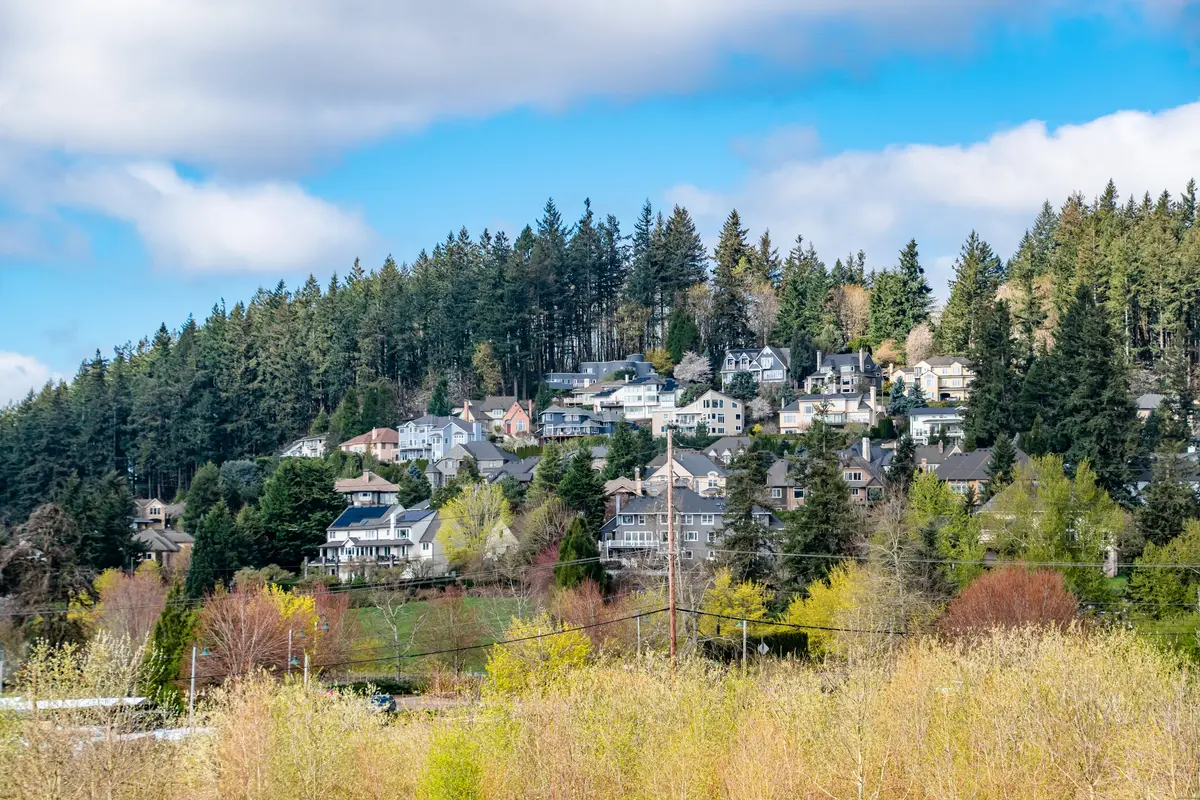
Local Expert Takeaway: Lake Oswego is one of the few Portland-area cities where a California buyer's equity can go in cleanly, the school district delivers what it promises, and the downtown actually functions as a community anchor — not just a row of storefronts. The income tax surprise is real and worth modeling in advance. The gray winter is real and worth accepting before you commit. Everything else — the lake, the trails at Tryon Creek, the farmers market, the proximity to Portland — holds up exactly as advertised. Buyers who do the math first and move with clear eyes tend to stay.
Quick Takeaways & FAQs
✅ The Lake Oswego School District holds an A+ rating according to Niche and has sustained housing demand through multiple market cycles — one of the strongest school-district premiums in the entire Portland Metro.
⚠️ Oregon's income tax brackets are compressed enough that most six-figure earners will owe more in state income tax than they did in California — a counterintuitive reality worth modeling before closing.
📍 Oregon has no sales tax at all, saving a typical household thousands of dollars annually compared to California's statewide base rate of 7.25% plus local add-ons.
Is Lake Oswego more expensive than California?
Will I pay less in income tax if I move from California to Oregon?
What is the property tax rate in Lake Oswego compared to California?
What do California transplants miss most about California after moving to Lake Oswego?
Does Oregon's lack of a sales tax really make a difference for a Lake Oswego household?
Moving to Oregon?
Tell us what you need help with and we'll connect you with local resources.
