What Is Living in Tualatin, Oregon Like?
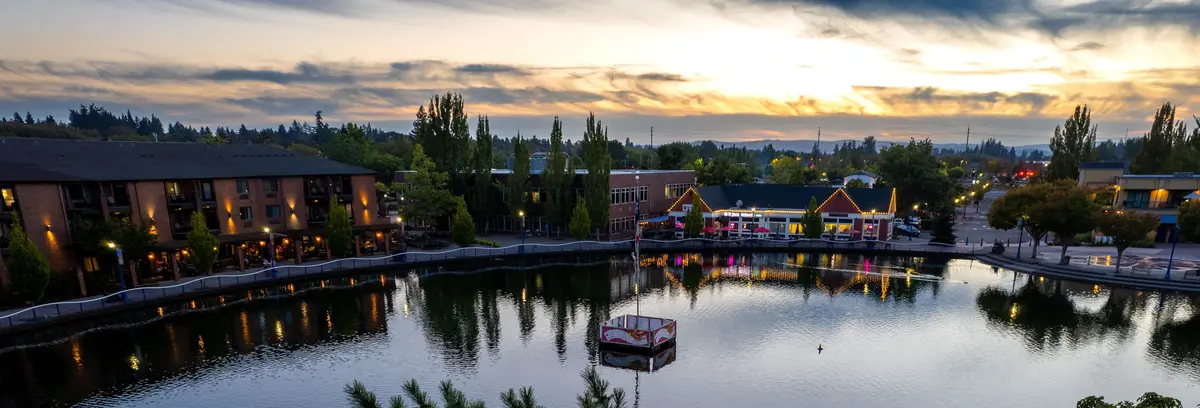
Maybe you've been priced out of Lake Oswego and someone mentioned Tualatin as the smarter move. Maybe your company is relocating you to the Portland metro and you've narrowed it down to the southwest corridor. Either way, the first surprise about Tualatin is usually the same: it doesn't feel like a suburb that grew up around a freeway. The Lake of the Commons sits at the center of a genuine downtown that was rebuilt from scratch — literally on the site of a former pet food factory — and the city of 27,763 has spent three decades quietly building the kind of infrastructure most Portland suburbs are still promising. It sits at the intersection of I-5 and I-205, which makes it one of the most connected communities in Washington County without feeling like a highway town.
The economic backbone here is more diverse than most cities this size. Lam Research anchors the industrial side with semiconductor manufacturing, while the Tigard-Tualatin School District serves the community's 11,041 students enrolled in 2025-26, and a major regional health system rounds out a job base that keeps a median household income of $104,043 well above state and national averages. The WES Westside Express Service commuter rail — with a dedicated Tualatin station and park-and-ride — connects residents to Beaverton's MAX hub and south to Wilsonville, giving the city genuine transit options that most comparable suburbs lack. People who move here tend to be professionals commuting toward Portland or Beaverton, families drawn by the Tigard-Tualatin schools, and remote workers who want a real community without paying Lake Oswego prices.
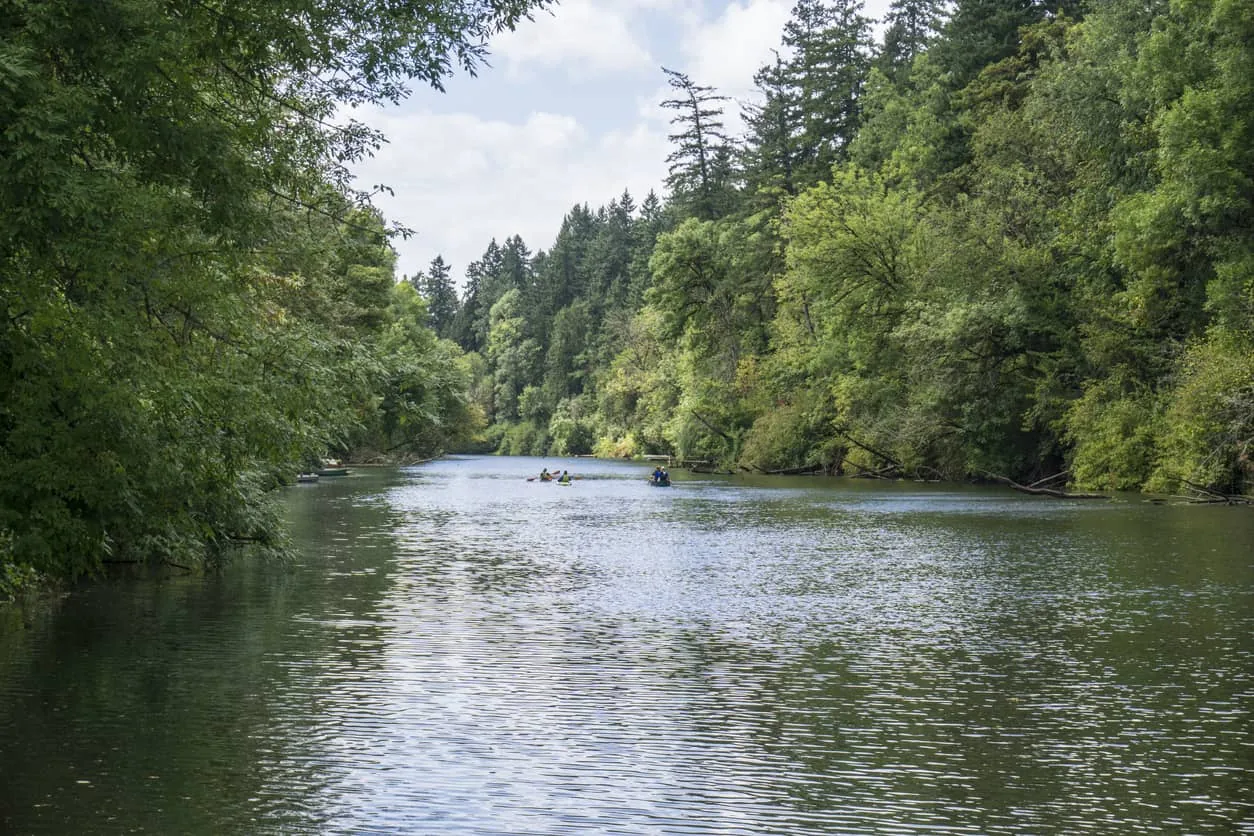
On the cost side, the typical Tualatin home price of $635,314 (Zillow Home Value Index, July 2026) sits noticeably below what you'd pay in West Linn or Lake Oswego, and the city's effective property tax rate of approximately 0.84% is among the more manageable in the metro — Oregon has no sales tax, which softens the daily cost of living considerably. The city maintains 200 acres of parks, trails, and natural areas, and the Tualatin River National Wildlife Refuge — a 1,856-acre wetlands sanctuary hosting over 200 species of birds — is minutes from the most established neighborhoods. The city's most recent resident satisfaction survey found that 91% of residents rated overall quality of life as excellent or good, which is a harder number to dismiss than any marketing tagline.
Whether you're seriously considering a move or just starting to map out the metro, the sections below break down Tualatin's neighborhoods, housing market, commute patterns, local employers, daily life rhythms, and what the weekends actually look like from the inside.
Tualatin at a Glance
Looking to buy in Tualatin? Estimate your payment.
Enter your numbers to see an estimated monthly mortgage payment.
Estimate only. Excludes HOA fees and mortgage insurance. The interest rate above is a starting point, not a quoted rate — replace it with your own to see real numbers. Insurance is a flat placeholder, not a Tualatin quote.
Why Are People Moving to Tualatin?
The case for Tualatin is easy to make: a real employer base, a school district that holds a B+ rating, according to Niche, a connected location between two interstates, and home prices that are meaningfully lower than the closer-in Portland suburbs. The case against it is shorter but worth reading — we'll get to that.
A Job Market That Doesn't Require You to Leave
Lam Research, the semiconductor manufacturer, is the city's most prominent private employer and has kept Tualatin on the map as a serious industrial hub. Nortek Air Solutions adds manufacturing depth, and the city government itself is a stable employer. The Tigard-Tualatin School District is also a significant local employer — relevant if you work in education and want to live close to where you teach.
The 723-acre Southwest and Basalt Creek Development Area, created in 2021 to open industrial land for high-quality jobs, signals that the city is deliberately building a local economy rather than simply housing Portland's overflow. For buyers who want proximity to Beaverton's tech corridor, the WES commuter rail connects to Beaverton Transit Center, where MAX Light Rail takes over — a genuine transit option in a region where most suburbs offer none at all.
The School District Pull
The Tigard-Tualatin School District is the single most common reason parents with school-age children list when explaining why they chose Tualatin over neighboring Sherwood or Wilsonville. The district holds a B+ rating, according to Niche, and covers a geography that gives most Tualatin families walkable or short-drive access to well-regarded elementary schools. For the full picture on boundaries and individual school profiles, see the Tualatin schools page.
The Honest Tradeoff
Tualatin is not walkable in the way that inner Portland neighborhoods are, and most daily errands still require a car. The city is actively investing in its downtown — a multi-phase revitalization project launched in May 2025 is studying 300 acres around the Lake of the Commons, with a planning framework expected by early 2028 — but that investment is still a few years from delivering the kind of pedestrian density that some buyers want right now. If you're arriving from a city where you walked to everything, that adjustment is real.
What you gain in the trade is space, relative affordability within the metro, and a community that genuinely functions. The downtown that exists today — centered on the Lake of the Commons — is already the place residents actually use on warm evenings, not just a placeholder for a future development.
What Daily Life Feels Like in Tualatin
The Rhythm of a Well-Run Small City
Tualatin has the infrastructure of a city that planned ahead. The parks system is real — 200 acres of maintained parks, trails, and natural areas — and Browns Ferry Park along the Tualatin River is the kind of place residents use on a Tuesday morning, not just on summer weekends. The Tualatin River Greenway Trail connects neighborhoods to the water in a way that becomes part of the daily routine faster than most newcomers expect.
The Juanita Pohl Center serves as the city's community and senior hub, running day trips, social programming, and lifelong learning classes throughout the year. The Tualatin Public Library sits alongside it as a genuine civic anchor. These aren't afterthoughts — they're the places where the community actually overlaps across generations.
What Surprises People After Six Months
Newcomers consistently say the same thing around month three: Tualatin is quieter and more functional than they expected, but the grey months — November through February — arrive harder than the Pacific Northwest's reputation prepared them for. The city averages 141 sunny days a year, which is the real number, not the rosier version you'll see in regional marketing. The upside is that the Tualatin River Greenway and Browns Ferry Park are genuinely usable year-round; the downside is that you will spend a lot of weekends in the rain and you should make peace with that before signing.
Where the Community Actually Gathers
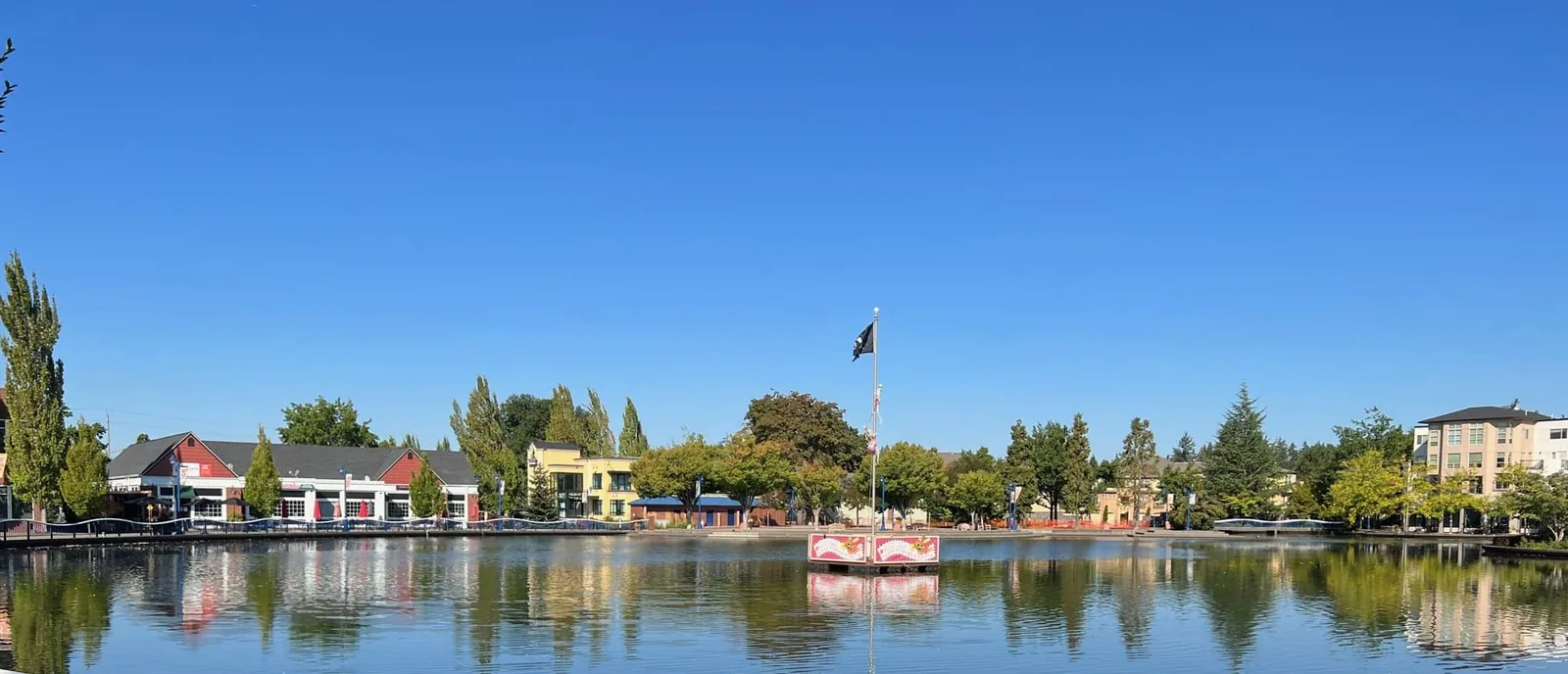
The Lake of the Commons is the social center of downtown Tualatin in a way that is hard to overstate. On warm evenings, it draws residents from across the city for walks, outdoor dining nearby, and the kind of low-key public-space activity that most suburbs spend decades trying to manufacture. The Tualatin Heritage Center anchors the city's civic identity with local history programming and community events. Bridgeport Village — the open-air lifestyle center straddling the Tualatin/Tigard border — pulls residents for shopping and dining in a way that functions more like a town square than a mall, even if it technically is one.
A Seasonal Quirk Worth Knowing
The Tualatin River floods predictably in late winter. If you're looking at homes in lower-lying neighborhoods near the river, this is not a hypothetical — the floodplain maps are worth pulling before you fall in love with a yard that sits below the bank. It's one of the details that separates buyers who did their homework from those who didn't, and it almost never comes up in a showing.
The Tualatin Housing Market Right Now
The typical home in Tualatin is priced at $635,314 (Zillow Home Value Index, July 2026), which puts it in a genuinely accessible range for the Portland metro — noticeably below West Linn, Lake Oswego, and much of the inner westside. For a full cost-of-living comparison including rent, taxes, and day-to-day expenses, see the Tualatin cost of living page.
The rental market runs from roughly $1,740 to $2,120 for a two-bedroom, with the city-wide typical rent sitting at $1,890 per month. That figure reflects a market with real demand — Tualatin draws renters who work locally at Lam Research or the school district and aren't yet ready to buy, alongside remote workers who found the city's combination of space and freeway access hard to replicate at lower rent points closer to Portland.
What the Housing Stock Looks Like
The bulk of Tualatin's for-sale inventory is single-family homes built between the 1970s and the early 2000s — ranch-style and two-story construction on modest lots, with garages, mature trees, and the kind of established-neighborhood feel you don't find in newer-build suburbs. Some areas run above the city median; others are the entry point into Tualatin ownership. For a breakdown of which neighborhoods sit where and who they suit, the Tualatin neighborhoods page covers that in full.
Well-priced homes here rarely sit. The market is not frenzied in the way 2021 was, but buyers who wait on a correctly priced listing in a desirable pocket tend to miss it. Coming in prepared — knowing the area and knowing the stock — is what separates buyers who close on what they wanted from those who end up in their second or third choice.
Property Tax Context
Oregon's effective property tax rate in Tualatin runs approximately 0.84%, which is well below the national average and one of the reasons the monthly cost of ownership compares more favorably here than the sticker price alone suggests. Oregon also levies no sales tax, which compounds the day-to-day affordability in ways that buyers relocating from California or Washington notice quickly — see the moving from California page for that full comparison.
Tualatin Neighborhoods
Tualatin has several distinct areas — each with its own character and appeal. Here’s a breakdown to help you narrow down where to focus your home search.
🏡 Ibach Park Estates
A well-established residential pocket anchored by Ibach Park, Ibach Park Estates draws families with school-age children and longtime Tualatin residents who value proximity to the park system without trading away suburban quiet. The housing stock skews toward solid single-family homes on tree-lined streets.
🏠 Fox Hill
Fox Hill sits on higher ground with a neighborhood feel that rewards buyers who want space between them and the commercial corridors. It suits parents with kids who want a low-traffic residential setting and easy freeway access without the density of closer-in areas.
🌳 Victoria Woods
Victoria Woods is one of Tualatin's more desirable established neighborhoods — mature landscaping, larger lots, and a residential character that has held its appeal across decades. It draws buyers who want an established address without moving to the pricier suburbs to the north.
🏘 Tualatin Village
One of the city's older residential areas, Tualatin Village has the feel of a community that grew organically rather than by master plan — a mix of housing types, long-term residents, and proximity to the commercial spine that makes daily errands shorter than in more outlying parts of the city.
🏔 Hedges Creek
Hedges Creek runs along the natural corridor of the creek it's named for, giving the neighborhood a quieter, greener edge than its location near the freeway would suggest. It suits buyers who want easy commute access without sacrificing the feeling of a residential retreat.
🌆 Atfalati Park
Named for Tualatin's indigenous heritage, the Atfalati Park area is a family-oriented neighborhood with parks access woven into its layout. It draws buyers looking for a grounded, community-feel neighborhood at a price point that remains accessible relative to the city's more premium pockets.
Pros & Cons of Living in Tualatin
The Pros
- Strong local job base anchored by semiconductor and manufacturing employers
- Scenic riverside parks and trails along the Tualatin River
- Walkable town-center lifestyle at Tualatin Commons with lake, shops, and dining
- Quick freeway access to Portland via I-5
The Cons
- Home prices well above the Oregon state median
- Property crime rates elevated due to retail-heavy commercial districts
- Limited walkability outside the town center core
Getting Around & Commuting in Tualatin
The Interstate Advantage
Tualatin's position on I-5 is its single biggest logistical asset. The drive to downtown Portland runs about 25 minutes under normal conditions, which is among the shorter commutes in the southwest metro. I-205 adds an eastern access point that matters for anyone working toward Oregon City, Clackamas, or the airport side of the metro.
The honest version of this commute story: the 25-minute figure assumes you're leaving before the morning rush builds. Once the peak traffic window fills — typically the stretch between Tualatin and Tigard — that number stretches. Buyers who think carefully about their departure time end up much happier than those who move here assuming freeway access equals a stress-free drive every day.
The WES Rail Option
The WES Westside Express Service commuter rail is what distinguishes Tualatin's transit picture from most comparable suburbs. The dedicated Tualatin station has a 129-space park-and-ride, and the line connects north to Beaverton Transit Center — where riders transfer to MAX Light Rail for the broader Portland metro — and south to Wilsonville. The service draws consistent weekday ridership from residents who commute toward Beaverton and Hillsboro, and it's underused by newer residents who default to the freeway without realizing the rail alternative exists.
The catch: WES runs weekdays only, during peak commute windows. It is not a car-replacement for weekend errands or off-peak travel — that still requires a vehicle.
Car Dependency for Daily Life
Outside of the downtown core and the immediate area around the Lake of the Commons, Tualatin requires a car for most daily routines. Grocery runs, school pickups, and the kind of errand-stacking that defines suburban life all happen by car. This is not unusual for a city of this size in the metro, but it's worth naming directly: if you're hoping to park the car and walk to everything, Tualatin in its current form isn't that city yet. The downtown revitalization work underway may change the calculus over the next decade, but the present-day reality is a car-dependent community with improving transit links for the commute itself.
Airport Access
Portland International Airport is approximately 22 miles from Tualatin — a manageable drive that puts most flights within reach without the logistics of parking near the terminal. For frequent fliers, the freeway connections make PDX more accessible from Tualatin than from several closer-in Portland neighborhoods that sit off the direct routing.
Schools in Tualatin
Families relocating to Tualatin have public, private, and higher-education options nearby. Here’s a quick overview.
🎓 School District
Tigard-Tualatin School District 23J serves K–12 students across Tualatin and the surrounding area. Rated B+ (source: Niche.com).
🏆 Graduation Rate
The 4-year high-school graduation rate here is approximately 86.7%.
📚 Higher Education
Oregon’s public universities — the University of Oregon, Oregon State University, and Portland State University — offer four-year degrees statewide, with a network of 17 community colleges providing two-year and workforce programs.
🌐 Online Learning
Oregon State University Ecampus and Portland State University Online offer fully accredited online degrees for remote learners across the state.
Safety in Tualatin
A quick look at how Tualatin compares on the numbers that matter most when weighing a neighborhood or a move.
🛡 Violent Crime
Approximately 2.2 per 1,000 residents.
🔒 Property Crime
Approximately 26.2 per 1,000 residents.
Compared to the most recent national figures from the Bureau of Justice Statistics (2024), Tualatin’s violent crime is below the national average (about 3.7 per 1,000), and property crime is above the national average (about 18.4 per 1,000).
Against Oregon as a whole, Tualatin’s violent crime is roughly two-thirds of the state average, and property crime is about the same as the state average (Bureau of Justice Statistics, Crime Known to Law Enforcement, 2024 (tables 2 and 3)).
Crime rates can vary a lot within a single city, so the citywide numbers above are only a starting point. Some neighborhoods in Tualatin run well below these averages, while others run higher — the kind of block-by-block detail that matters most when you’re actually choosing where to live. The full guide below breaks it down neighborhood by neighborhood.
Working in Tualatin
Tualatin’s largest employers span several industries — here are some of the anchors of the local job market.
💻 Lam Research
Semiconductor manufacturing
🏥 Legacy Meridian Park Medical Center
Healthcare
🏭 Nortek Air Solutions
Manufacturing
🎓 Tigard-Tualatin School District
Education
🏛 City of Tualatin
Municipal government
Parks & Recreation in Tualatin
Some of the outdoor spaces that shape everyday life in Tualatin.
🌱 Tualatin Commons and Lake of the Commons
🌱 Tualatin River National Wildlife Refuge
🌱 Browns Ferry Park
Tualatin residents don’t have to go far for green space — spots like Tualatin Commons and Lake of the Commons and Tualatin River National Wildlife Refuge are part of everyday life here, whether that’s a morning walk, a weekend hike, or just somewhere to unwind outside. The full guide below covers more of what Tualatin has to offer for parks and outdoor recreation.
Retiring in Tualatin
Tualatin draws retirees for its balance of amenities, outdoor access, and cost. Here’s what to weigh.
🌤 Climate
Tualatin shares the Willamette Valley's mild but overcast pattern — wet winters with temperatures that rarely freeze hard, and warm dry summers that stretch into September. The city averages 141 sunny days a year, which means the grey months run November through March and require some psychological preparation. Summers here are genuinely pleasant, with low humidity and long evening light.
🍴 Lifestyle
The Juanita Pohl Center runs an active calendar of day trips, social events, and lifelong learning programs year-round, making it a natural hub for retirees who want community without a long commute to find it. The Tualatin River Greenway Trail, Browns Ferry Park, and the 1,856-acre Tualatin River National Wildlife Refuge put serious outdoor access within minutes of most neighborhoods. The dining and café scene runs to locally owned spots with a neighborhood-regular feel.
🏚 55+ Communities
Angel Haven Mobile Home Park serves as Tualatin's established 55+ housing option — a smaller community without the resort-style amenities of larger active-adult developments, but well-situated within the city. For retirees who want a single-family home rather than a dedicated community, Tualatin's established neighborhoods offer ranch-style and single-level construction that suits aging-in-place planning reasonably well.
✈ Getting Around
Most errands in Tualatin require a car, though the downtown core works on foot once you're in it. The WES commuter rail connects the city to Beaverton and Wilsonville on weekdays, useful for retirees with medical appointments or family in those directions. Portland International Airport is approximately 22 miles away, a manageable drive for the frequent traveler.
🏛 Oregon Taxes for Retirees — What to Know
- Social Security is not taxed — Oregon does not tax Social Security or Railroad Retirement benefits. Any amount included in your federal adjusted gross income is subtracted back out on the Oregon return.
- But other retirement income IS taxed — This is the trade-off that surprises people moving from Washington or Texas. Pension distributions and 401(k)/IRA withdrawals are taxed as ordinary income at Oregon’s regular rates — there is no blanket retirement-income exclusion.
- Graduated income tax — Oregon has four brackets — 4.75%, 6.75%, 8.75% and 9.9%. The 4.75% rate covers the first $10,000 of taxable income for a single filer ($20,000 filing jointly); the 8.75% rate starts at $125,000 ($250,000 jointly); and the top 9.9% rate applies above $250,000 ($500,000 jointly).
- No sales tax — Oregon levies no general sales tax.
- Property taxes, with senior deferral — Oregon’s Senior and Disabled Property Tax Deferral lets qualifying homeowners have the state pay their county property taxes, with a lien recorded against the home. The 2026 household income limit is $70,000, and deferred balances accrue 6% simple interest — it defers the bill rather than forgiving it.
- Estate tax — the one to plan for — Oregon has its own estate tax with a $1 million filing threshold — far below the federal exemption, and NOT indexed for inflation, so it reaches more estates every year in real terms. Retirement accounts and a long-held home count toward the taxable estate, so estates that feel modest can cross the line without the owner expecting it.
- No inheritance tax — Oregon has no separate inheritance tax and no gift tax.
Tax laws change frequently and individual situations vary. This is general information, not tax advice — always consult a qualified Oregon tax professional or CPA for personalized retirement tax planning.
Weekends & Local Favorites in Tualatin
Where Residents Actually Spend Their Time
Tualatin Community Park is the city's largest gathering space — courts, open fields, and enough room that the weekend crowd spreads out rather than stacking up. Browns Ferry Park runs along the Tualatin River and draws the kind of low-key outdoor use that becomes a weekend habit: walking the trail, watching the herons, letting the dog run. The Tualatin River Greenway Trail ties these green spaces together in a continuous corridor that surprises newcomers with how far it actually goes.
The Tualatin River National Wildlife Refuge, a 1,856-acre wetlands sanctuary, is the spot residents bring out-of-town guests to show off what the region's landscape actually looks like before the suburbs arrived. Over 200 species of birds use the refuge, and the trail access is worth timing a trip around.
Food, Coffee, and the Local Scene
The dining and coffee scene in Tualatin is genuinely local in character — not a chain-heavy strip mall situation. La Industria draws a loyal crowd for its Mexican food. 60's Cafe & Diner is the kind of unpretentious breakfast spot that fills up on a weekend morning with regulars who've been coming for years. Roxy's Island Grill covers the Hawaiian side of the menu. Mashita Teriyaki is a neighborhood staple. Ancestry Brewing is the local craft brewery worth knowing — a gathering spot for residents who want something other than a chain happy hour.
On the coffee side, Donut Land has the kind of following that national chains can't manufacture. Artur Café draws the independent-coffee crowd, and Bean to Cup fills out a genuinely solid local options list that punches above what a city this size typically delivers.
Shopping and the Bridgeport Pull
Bridgeport Village, the open-air lifestyle center on the Tualatin/Tigard border, functions as the area's retail anchor — roughly 75 to 82 tenants including national retailers and sit-down restaurants, and Oregon's only Crate & Barrel location. It's not downtown shopping in any traditional sense, but it gives Tualatin residents access to a caliber of retail that most southwest metro suburbs drive significantly farther to reach.
For serious shopping beyond what Bridgeport covers, a drive out of town is part of the routine. Residents who make peace with that early tend to appreciate what the city does have rather than fixating on what requires a trip.
Local favorites in Tualatin
Restaurants
- La Industria
- 60's Cafe & Diner
- Ancestry Brewing
- Mashita Teriyaki
- Roxy's Island Grill
Outdoors
- Tualatin Community Park
- Browns Ferry Park
- Tualatin River Greenway Trail
- Cook Park (nearby Tigard)
- Lake of the Commons
Coffee
- Donut Land
- Artur Café
- Bean to Cup
Top Things Locals Say About Tualatin
The best intel about a city comes from the people who actually live there. Here’s what Tualatin residents say when newcomers ask the questions everyone’s thinking.
“I expected a quiet suburb and got an actual community — the Lake of the Commons draws people out on weeknights in a way I didn't anticipate, and by month two I realized I was spending more time outside than I ever did closer to Portland. What nobody warned me about was how early I'd need to leave for the freeway once everyone else figured out the same on-ramp.”
— Recent Tualatin home buyer
“What's the most surprising thing about living in Tualatin?”
How functional the downtown actually is. The Lake of the Commons doesn't look like much on a map, but it ends up being where you go on a Wednesday evening just because it's there. The fact that it used to be a pet food factory is the detail everyone brings up once they learn it — it makes the whole thing feel more earned.
“What do locals love most about Tualatin?”
The parks system is better than anyone outside the city realizes. Browns Ferry Park along the river and the Tualatin Community Park together give you enough space to feel like you're not stacked on top of your neighbors, even on a crowded weekend. The WES rail is the other thing — once you figure out it exists and actually use it for the Beaverton commute, it changes the math on living here.
“What should newcomers to Tualatin know?”
The I-5 on-ramp situation during morning rush is the thing nobody tells you until you've already moved in. If your job requires a 9 a.m. arrival in Portland, budget more time than the map suggests and find your exit strategy early. The WES station helps if your commute direction lines up with it. And pull the floodplain maps before you fall in love with a house near the river — the Tualatin River floods predictably in late winter, and it affects more properties than most buyers realize during a summer showing.
“How much do you need a car in Tualatin?”
For most of the city, a car is the default for daily life — grocery runs, school pickups, and errands all happen by driving. The area immediately around downtown and the Lake of the Commons is genuinely walkable once you're in it, and the WES commuter rail handles the Beaverton and Wilsonville commute corridor well. But if the plan is to park the car permanently, Tualatin isn't there yet — it's a city in the middle of improving its walkability, not one that's already arrived.
Cities Near Tualatin
Other communities near Tualatin worth a look — each with its own character and price point.
| City | Distance | Best For | Vibe | Median Rent | Median Buy |
|---|---|---|---|---|---|
| Tigard | 4 mi | Commuters & established families | Busy, commercial, well-connected | $1,850 | $607,011 |
| Sherwood | 6 mi | Families with kids, newer homes | Quiet, planned, community-focused | $2,555 | $629,598 |
| West Linn | 7 mi | Premium buyers, river views | Upscale, wooded, established | $2,376 | $779,602 |
More Helpful Guides for Tualatin
Going deeper on Tualatin? Our blog series covers everything from first-time buying to retiring here — explore the guides below.
Local Expert Takeaway: Tualatin is the Portland metro suburb that rewards the buyer who actually visits before deciding. The Lake of the Commons and the Tualatin River Greenway Trail are real assets, not renderings — and the combination of I-5 access, the WES commuter rail station, and a school district that holds a B+ rating on Niche makes the city's value case stronger than the home prices alone suggest. The downtown revitalization work funded by the 2022 Core Opportunity and Reinvestment Area plan is a 30-year, $140 million commitment, which means the city you buy into today is actively becoming a better version of itself.
Quick Takeaways & FAQs
✅ Tualatin's WES commuter rail station is a genuine car-free option for Beaverton and Hillsboro commuters — a transit amenity most comparable Portland suburbs simply don't have.
⚠️ The grey season is longer and darker than the Pacific Northwest's reputation suggests; 141 sunny days a year is the real figure, and buyers who underestimate it often reconsider by February.
📍 The Lake of the Commons at the heart of downtown was built on the site of a former pet food factory — urban renewal done right, and the reason Tualatin's downtown feels earned rather than invented.
What is the typical home price in Tualatin, Oregon?
How long is the commute from Tualatin to Portland?
How are the schools in Tualatin?
Is Tualatin safe?
What is there to do in Tualatin on weekends?
Helpful Links for Moving to Tualatin
Moving to Oregon?
Tell us what you need help with and we'll connect you with local resources.
