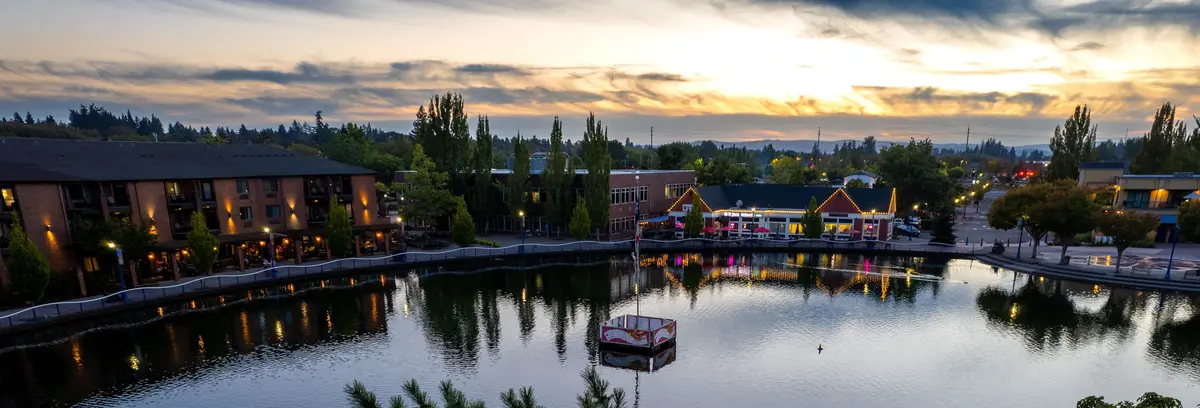
Most people who retire in Tualatin didn't start out planning to. They had a child or grandchild in the area, or they got priced out of Lake Oswego, or they simply drove through one afternoon and noticed that the traffic was lighter and the streets less chaotic than Portland's. A city of 27,763 tucked south of Tigard in Washington County, Tualatin sits along I-5 roughly 25 minutes from Portland — close enough to use the city for culture and medical specialties, far enough to mostly ignore it on a Tuesday afternoon.
What draws retirees, specifically, is the combination of a genuine hospital inside city limits, a price point noticeably below what Lake Oswego and West Linn command, and a pace of life that feels suburban without feeling sleepy. Legacy Meridian Park Medical Center — a full acute-care hospital with cardiology, orthopedics, stroke care, and a cancer center — is a meaningful advantage when healthcare proximity starts to matter. That's not a feature every Portland-area suburb can claim.
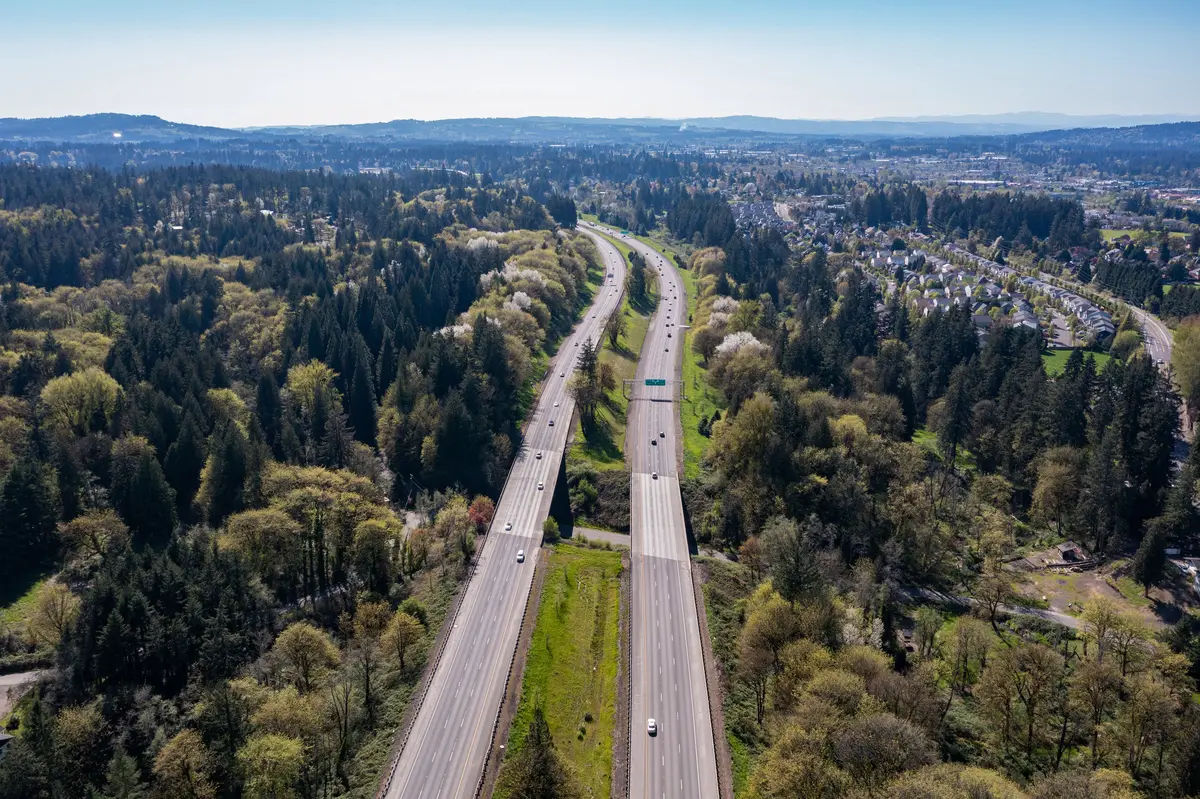
The honest friction point is that Tualatin is a car-dependent city. Most errands, most restaurants, most social engagements require driving, and anyone planning to age in place without a vehicle will find the reality hard. The Tualatin Commons area near the lake offers some genuine walkability, and the Tualatin River Greenway Trail gives flat, accessible walking close to downtown — but those are pockets, not the whole city. Oregon's property tax rate of approximately 0.84% and its complete exemption of Social Security from state income tax soften the fixed-income math, but retirees drawing heavily from IRAs or pensions will feel Oregon's upper income tax rates. Whether Tualatin fits depends on what you need most and how honestly you can evaluate the trade-offs.
Whether you're comparing Tualatin to Wilsonville or weighing it against staying in California, the sections below cover healthcare access, the retirement budget, walkability and community life, downsizing options, and how Tualatin stacks up against the nearby alternatives.
Why Retirees Are Choosing Tualatin
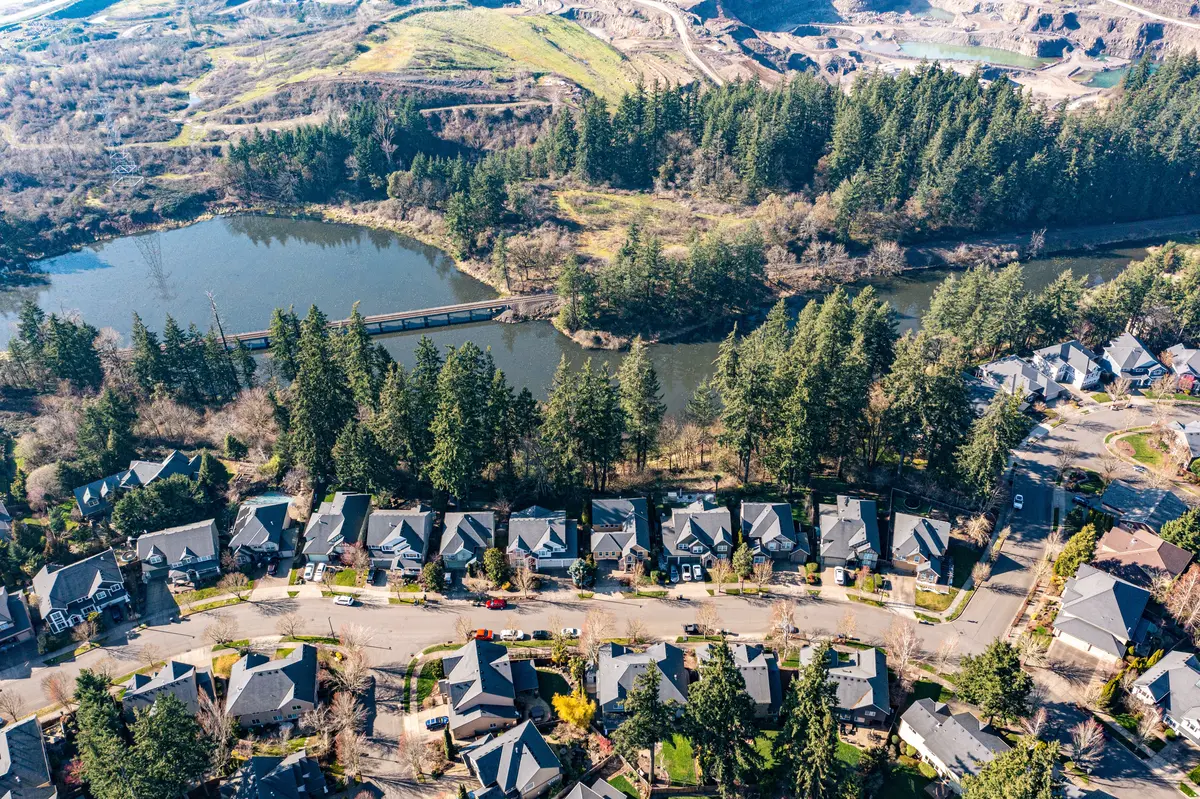
Tualatin fits retirees who want Portland's amenities within reach but prefer a quieter home base — and who still drive. That last part is not negotiable. If your plan involves walking to the grocery store or riding transit for daily errands, Tualatin will disappoint you. But if you have a car and value having a real hospital nearby, a well-maintained network of flat walking trails, and a city that has not been overrun by the luxury price premiums that attach to Lake Oswego and West Linn, Tualatin makes a genuine case.
The typical home price here is $635,314 (Zillow Home Value Index, July 2026), which puts real estate meaningfully below what neighboring lakeside and hillside communities command, and well below what most California metros charge. That gap has brought a steady stream of retirees who sold homes in the Bay Area or Southern California and wanted to land somewhere they could buy without depleting their entire nest egg. See the full cost of living breakdown for how housing costs and daily expenses stack up.
Tualatin is a harder sell for retirees who prioritize a walkable downtown scene, a dense calendar of senior-specific programming, or a warmer, sunnier climate. At 141 sunny days a year, the Pacific Northwest pattern is real — grey winters are not rumor. And Tualatin's social infrastructure, while solid, is not as mature as what larger retirement destinations offer. Retirees who thrive here tend to be self-starters: people who join things, drive to things, and treat proximity to Portland as a genuine asset rather than an afterthought.
Healthcare & Medical Access in Tualatin
A Hospital Inside City Limits
Legacy Meridian Park Medical Center sits inside Tualatin and is one of the city's largest employers. It's an acute-care hospital operated by the Legacy Health system — 150 licensed beds, 128 staffed — and its specialty depth matters specifically to older adults. On-campus services include orthopedics, cardiology, neurology, stroke care, a total joint and spine center, a heart and cancer care center, and advanced imaging.
For retirees, having all of those under one roof in the same city — not a drive to a Portland hospital campus — is a meaningful quality-of-life factor. Hip and knee replacements, cardiac monitoring, imaging for ongoing conditions: these are the repeat visits that accumulate in your sixties and seventies, and Tualatin residents avoid the I-5 trip for most of them.
Coordinated Outpatient Care
Legacy Medical Group–Tualatin operates as a connected outpatient primary-care clinic, certified as a patient-centered medical home. That certification means care is coordinated across a team — primary care provider, nurse, medical assistant, social worker, and counselor — rather than isolated appointment by appointment. For retirees managing multiple conditions, that model tends to produce fewer gaps and better follow-through than a traditional solo-provider setup.
Advanced and Specialized Care
For truly advanced subspecialties — transplant, high-complexity cancer surgery, academic neurology — the major Portland hospital campuses are about 25 minutes north. Legacy's broader system spans multiple Portland-area campuses, meaning a referral from Legacy Meridian Park often lands you within the same network. For the most complex tertiary cases, Portland's academic medical center is accessible without leaving the metro area, and most retirees find the Tualatin base covers the majority of what they need without a long drive.
The Retiree Budget in Tualatin
Oregon's Tax Posture for Retirees
Oregon fully exempts Social Security and Railroad Retirement benefits from state income tax — the state subtracts them entirely from Oregon taxable income, regardless of income level. That's a genuine benefit for retirees whose income is primarily or heavily Social Security-driven.
The catch comes with everything else. Pension income, IRA distributions, and 401(k) withdrawals are taxed at Oregon's regular graduated rates, which run from 4.75% up to 9.9%. Retirees drawing $80,000 or more per year from retirement accounts will feel that upper bracket. Oregon is not a low-tax retirement state for people with substantial non-Social Security income — that's the honest summary.
Oregon also levies its own estate tax with a $1 million exemption, well below the federal threshold. For retirees with appreciated real estate or significant assets, that's worth a conversation with an estate-planning attorney before you move, not after.
Property Taxes and a Deferral Option
The effective property tax rate in Tualatin is approximately 0.84% — below the national average and modest relative to what most California transplants are used to paying in dollar terms. Oregon homeowners aged 62 or older with household income of no more than $60,000 may defer property tax payments entirely until the home is sold. The state pays the county directly and records a lien at 6% simple interest, repaid on sale or death. For cash-flow-constrained retirees on a fixed income, that deferral program is a real tool worth knowing about.
Tualatin sits in Washington County, which means Oregon's Metro and Multnomah County local income taxes do not apply to residents here — a meaningful distinction if you've been comparing costs across county lines.
Day-to-Day Costs on a Fixed Income
Groceries, utilities, and dining in Tualatin run close to the broader Portland Metro average. A serious shopping trip for anything beyond everyday groceries means driving — a fact of life in the suburb that is worth budgeting both in time and fuel. For daily cost of living details including utilities, groceries, and transportation costs, see the full cost of living page.
Looking to buy in Tualatin? Estimate your payment.
Enter your numbers to see an estimated monthly mortgage payment.
Estimate only. Excludes HOA fees and mortgage insurance. The interest rate above is a starting point, not a quoted rate — replace it with your own to see real numbers. Insurance is a flat placeholder, not a Tualatin quote.
Walkability, Community & Staying Active in Tualatin
The Honest Walkability Picture
The city-average walkability score is 29 out of 100 — car dependence is the reality for most neighborhoods. Most of Tualatin was built in the suburban pattern of the 1980s and 1990s: wide arterials, parking lots, and housing subdivisions that were designed around the car rather than the pedestrian. If you are not comfortable driving indefinitely, that deserves serious weight in your decision.
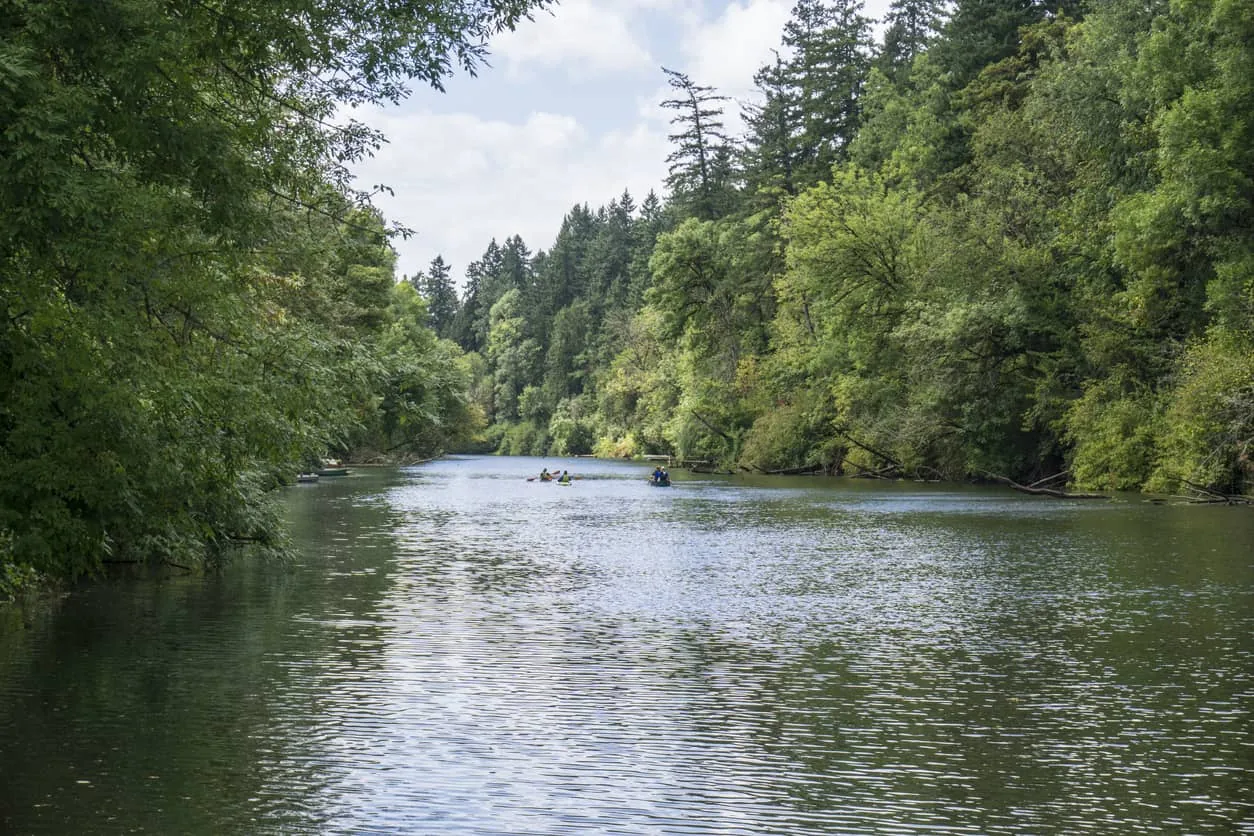
The exception is the Tualatin Commons and Lake of the Commons area. The lake anchors a genuine public gathering space, and the blocks immediately around it give retirees a walkable loop for daily movement. The Tualatin River Greenway Trail connects here too, extending toward Cook Park in neighboring Tigard along a flat, paved route accessible to walkers of nearly any fitness level. That trail runs roughly 5.3 km round-trip and is about as easy an outdoor walk as you'll find in the metro area.
Outdoor Activity and Nature
The Tualatin River National Wildlife Refuge sits within easy reach and is one of only a handful of urban national wildlife refuges in the country. Its year-round trail is a two-mile out-and-back route through oak woodland habitat, ending at a wetland overlook platform — flat, manageable, and genuinely rewarding for birders. More than 200 bird species have been documented there. Ranger-led and volunteer-led programs run throughout the year, including wildlife photography via a reservable photo blind.
Tualatin Community Park and Browns Ferry Park round out the local outdoor options. Neither demands athletic fitness, and both serve as natural gathering spots for the city's everyday social life — the kind of low-key midweek walk that turns into a conversation with a neighbor.
Senior Community and Social Life
Tualatin's social infrastructure for retirees is real but requires initiative. The Tualatin Heritage Center offers cultural programming tied to local history. Volunteering at the wildlife refuge, joining groups that use Browns Ferry Park regularly, and connecting through regional senior programming in Washington County are how most active retirees build their social calendar here. The city is not large enough to have the density of senior clubs and drop-in programming that a city three times its size would generate — but for retirees who prefer a smaller, closer-knit community to a larger institutional one, that can be an asset rather than a gap.
Right-Sizing: Downsizing in Tualatin
What the Market Actually Offers
Tualatin's housing stock skews toward single-family homes built in the 1980s through 2000s, many of which are two-story — which matters if single-level living is a priority. Well-priced single-level ranches do appear in neighborhoods like Ibach Park Estates and Tualatin Village, but they move quickly and represent a smaller share of what comes to market than most downsizers expect. Patience and pre-approval matter more here than in a slower suburban market.
Condos and smaller attached homes exist closer to the Tualatin Commons area and scattered through newer sections of the city. These tend to appeal to downsizers who want lower maintenance without moving to a formal senior community, and they bring you closer to the lake and the trail access that makes the downtown core more livable without a car.
55+ and Continuing Care Options
Angel Haven MHP is the city's established 55+ community — a manufactured housing park that gives retirees a lower cost-of-ownership entry point into a community where neighbors are in a similar life stage. It's a modest option rather than an amenity-heavy resort-style development, but it is the real thing: an age-qualified community inside Tualatin's city limits.
For retirees who want or anticipate needing a higher level of care, Marquis Tualatin is a continuing care retirement community that offers independent living, assisted living, and memory care under one roof — allowing residents to stay in the same community as needs evolve. Brookdale River Valley Tualatin provides assisted living and Alzheimer's care with 24/7 on-site staff, and allows care-level transitions without requiring a move to a different community. Assisted living in Tualatin carries a median monthly rate of approximately $4,975, based on 2025 data.
One honest note: Tualatin does not have a large, amenity-heavy active-adult community of the kind you find built into master-planned developments in warmer Sun Belt markets. Retirees expecting resort-style pools, multiple clubhouses, and dozens of on-site clubs will find the inventory thin. What exists is practical and well-run — it's just not that scale.
Tualatin vs Nearby Retirement Destinations
| City | Cost vs Tualatin | Primary Hospital | Walkability | Senior Living Depth | Overall Retirement Fit |
|---|---|---|---|---|---|
| Tualatin | Anchor | Legacy Meridian Park (in-city, full acute care) | Car-dependent; flat trails near commons | Moderate — CCRC, assisted living, 55+ park | Commuter Quiet |
| Wilsonville | About the same | No in-city hospital; nearest is Tualatin or Salem | More walkable downtown core than Tualatin | Good — several senior communities nearby | Quiet Nature |
| Sherwood | About the same | No in-city hospital; relies on Tualatin or Tigard | Modest; improving downtown area | Limited in-city; growing market | Families Quiet |
| Tigard | About the same | No in-city hospital; proximity to Legacy Meridian Park | Car-dependent; some walkable pockets | Moderate — assisted living options present | Commuter Value |
| Lake Oswego | Noticeably pricier | No in-city hospital; strong specialist access nearby | Genuinely walkable downtown village | Strong — wide range of senior communities | Luxury Walkable |
| West Linn | Pricier | No in-city hospital; relies on Tualatin or Portland | Hilly; limited walkability for daily errands | Limited; mostly single-family stock | Views Privacy |
The clearest advantage Tualatin holds over every other city in this comparison is the hospital: Legacy Meridian Park is inside city limits, and no other town on this list can say that. For retirees who weight healthcare proximity heavily — and most should — that is a real differentiator.
Lake Oswego wins on walkability and the breadth of its senior living market, but it carries a price premium that will price out many buyers who found Tualatin attractive in the first place. Wilsonville competes closely on cost and has a more genuinely walkable downtown core, but lacks an in-city hospital. Sherwood skews younger and family-focused, with a senior living market that is still thin. West Linn has scenery and privacy but is hilly — a practical concern as mobility changes — and relies on Tualatin or Portland for hospital-level care.
For a retiree who drives, wants medical care close, and is not set on a walkable village lifestyle, Tualatin is the most practical choice in this tier. For someone prioritizing on-foot access and a richer senior social scene, Lake Oswego is the better fit — if the higher price point works.
Local Expert Takeaway: Tualatin's retirement story is anchored by Legacy Meridian Park Medical Center — a full acute-care hospital with cardiology, orthopedics, and stroke care that most Portland-area suburbs simply don't have in-city. Pair that with Oregon's full Social Security exemption, an effective property tax rate of approximately 0.84%, and flat walking access along the Tualatin River Greenway Trail and around Lake of the Commons, and the quality-of-life math works well for retirees who drive and value healthcare proximity. The city is not for everyone who retires here expecting a walkable downtown or a dense senior activity calendar — you'll drive more than you might want to, and grey winters are real. But for retirees who enter Tualatin with clear eyes about that trade-off, it holds up remarkably well.
Quick Takeaways & FAQs
✅ Legacy Meridian Park Medical Center sits inside city limits and offers cardiology, orthopedics, stroke care, and a cancer center — a meaningful advantage most nearby suburbs cannot match.
⚠️ Oregon taxes pension and IRA income at rates up to 9.9%, so retirees drawing heavily from retirement accounts beyond Social Security will want to model the state tax impact before committing.
📍 The Tualatin River Greenway Trail and the Lake of the Commons loop give flat, paved walking access near the downtown core — the most walkable pockets in a city that is otherwise car-dependent.
Does Oregon tax Social Security income for retirees in Tualatin?
What hospital is closest to Tualatin, and is it good enough for retirees?
Are there 55+ or active-adult communities in Tualatin?
Is Tualatin walkable enough to retire without a car?
How does Tualatin compare to Lake Oswego or Wilsonville for retirement?
Moving to Oregon?
Tell us what you need help with and we'll connect you with local resources.
