What Is Living in Oregon City, Oregon Like?
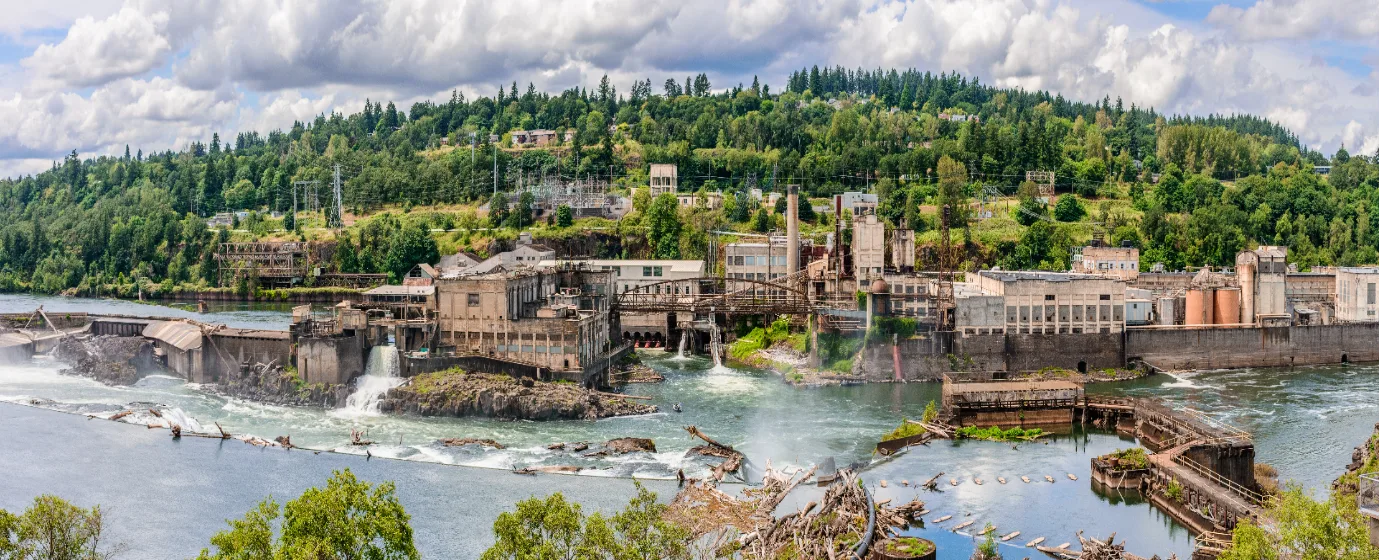
You've probably driven through Oregon City on OR-99E without fully registering what you passed. A bluff rising sharply from the Willamette River. A 130-foot elevator that connects two levels of a city built on geological drama. A waterfall wider than Niagara, tucked behind what used to be a paper mill. Oregon City is the first city incorporated west of the Rocky Mountains — the literal end of the Oregon Trail — and it carries that weight without making a big performance of it. The city sits at the southern edge of the Portland Metro area in Clackamas County, anchored by I-205 and OR-99E, and its topography — bluff neighborhoods above, riverfront districts below — shapes everything from where you park to which neighbors you'll bump into on a walk. That geography is the first thing newcomers underestimate.
The city's economic backbone is public-sector and education-driven. Clackamas Community College, with its 165-acre campus, is one of the largest single employers, alongside Clackamas County government, the Oregon City School District, the City of Oregon City itself, and a major regional health system. That mix creates a stable, if not flashy, local economy. The Oregon City School District, with 6,988 students enrolled in 2025-26, holds a B- rating, according to Niche — a middle-of-the-road mark that keeps some families looking at West Linn while others find it perfectly adequate for their kids. The population of 37,755 skews toward families who moved here specifically for more space, a backyard, and a mortgage payment that doesn't require a second income just to get through the month.
Prices here are noticeably below those of West Linn just across the river, which is what draws a lot of buyers to this side of the bridge. The typical home price sits at $605,330 (Zillow ZHVI, July 2026), and the effective property tax rate runs approximately 0.96% — a combination that makes homeownership feel achievable rather than aspirational for a household earning near the $97,829 median income. Oregon gets more credit for outdoor living than for urban density, and Oregon City fits that pattern: Canemah Bluff, Newell Creek Canyon, and Clackamette Park at the river confluence are genuine green assets, not marketing language. The full breakdown of costs and comparisons is on the cost of living page.
Whether you're being relocated to the Portland Metro and considering this side of the county, coming from California, or just tired of paying a premium for the same square footage across the river, the sections below break down Oregon City's neighborhoods, housing market, commute realities, schools, local favorites, and what daily life here actually looks like in 2026.

Oregon City at a Glance
Looking to buy in Oregon City? Estimate your payment.
Enter your numbers to see an estimated monthly mortgage payment.
Estimate only. Excludes HOA fees and mortgage insurance. The interest rate above is a starting point, not a quoted rate — replace it with your own to see real numbers. Insurance is a flat placeholder, not a Oregon City quote.
Why Are People Moving to Oregon City?
The case for Oregon City is straightforward: you get real history, genuine nature, and prices that don't require you to liquidate your retirement account. The case against it is shorter but worth reading — the bluff-to-river geography creates a two-tier city that confuses people who haven't lived here, the school district is adequate rather than outstanding, and the commute north to Portland requires real planning.
The History Hook Is Real
Oregon City was incorporated in 1844 as the first city west of the Rockies, the endpoint of the Oregon Trail, and the site of the first long-distance commercial electric power transmission in the United States — a line from Oregon City to Portland in 1889. The End of the Oregon Trail Interpretive Center and the McLoughlin House National Historic Site aren't tourist traps; they're operating landmarks in a neighborhood where people actually live. That history shapes the housing stock: the McLoughlin Historic District has genuine 19th-century bones that buyers coming from new-construction suburbs find unexpectedly appealing.
What's Actually Changing Right Now
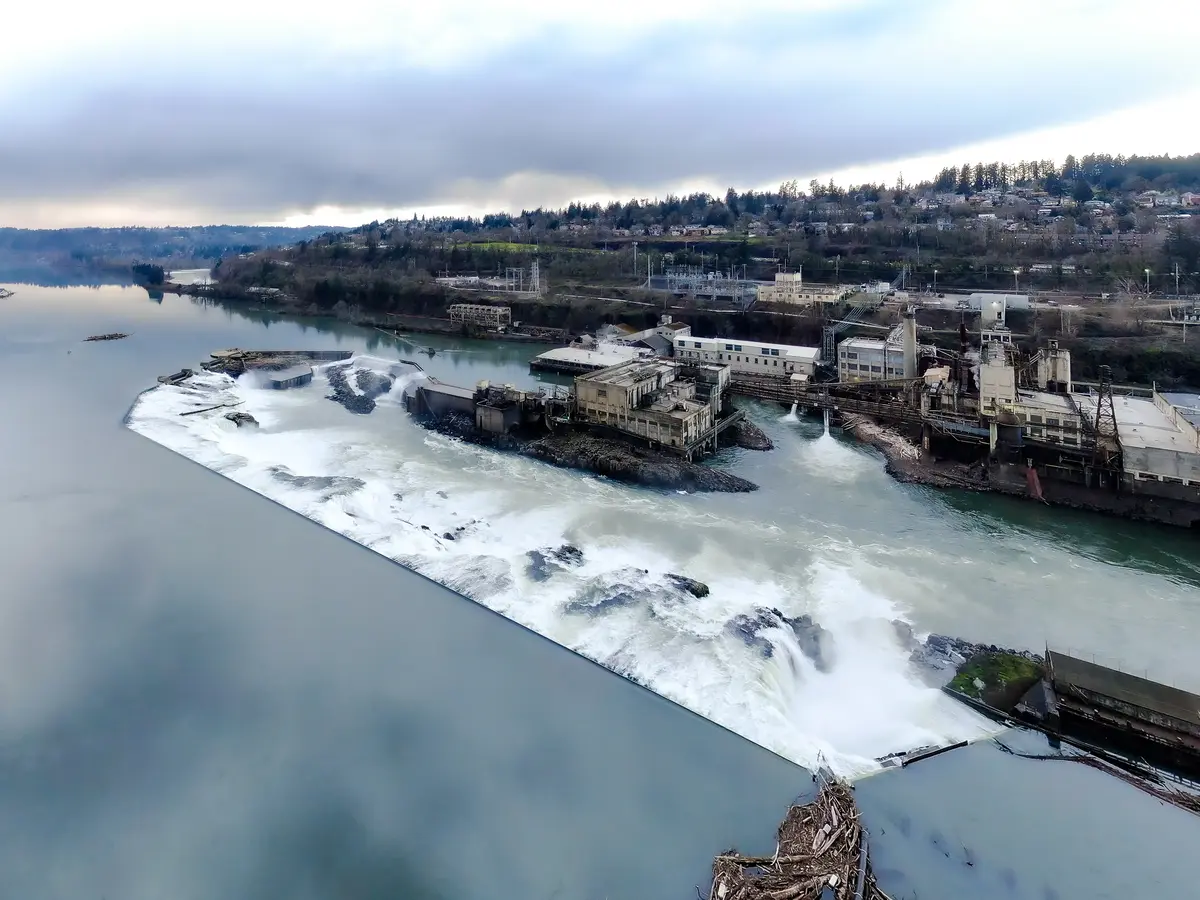
The biggest story in Oregon City right now is the tumwata village redevelopment. The Confederated Tribes of Grand Ronde — whose Chinuk Wawa word for waterfall, tumwata, names the project — purchased the 23-acre former Blue Heron Paper Mill site in 2019 and broke ground on the first development phase in May 2026. The project is designed to pair residential housing, commercial space, and gathering places with environmental restoration, and to restore public access to Willamette Falls for the first time in generations. A design firm was selected in July 2026 for a $12.5-million riverwalk segment funded by Oregon State Parks. Ground was broken in May 2026 — this is a dated decision, not a promise.
Who Is Actually Moving Here
Three buyer types consistently show up: Portland-area renters who ran the numbers and realized owning in Oregon City beats renting in Southeast Portland; California transplants, particularly from the Bay Area and Sacramento corridor, for whom the price point feels like breathing room; and families with school-age children who want a yard, a park trail within walking distance, and the ability to drive to a Saturday soccer game without crossing three jurisdictions. Remote workers are a growing share — the median household income and the home price math work best when at least one partner isn't commuting daily.
For a deeper look at how Oregon City compares for retirees or buyers thinking about the 55+ market, the retiring in Oregon City page covers that in full.
What Daily Life Feels Like in Oregon City
The Geographic Reality
Oregon City's bluff is not a metaphor. The city literally has two levels connected by the Municipal Elevator — a 130-foot lift rebuilt in 1954-55, added to the National Register of Historic Places in 2014, and one of only four outdoor municipal elevators in the world. It is the only vertical street in North America. Residents who live on the bluff and work or shop below use it the way people in other cities use a crosswalk.
The upper bluff neighborhoods — Park Place, Caufield, Tower Vista — have the suburban feel you'd expect: quieter streets, newer construction in pockets, views down toward the river. The lower riverfront area, including the McLoughlin Historic District and Canemah, has older housing stock, more walkability, and a completely different character. Buying without understanding which level you're on is one of the more common mistakes relocating buyers make here.
The Seasonal Surprise
Oregon City averages 143 sunny days a year. That's not what the Pacific Northwest marketing materials suggest, and it catches newcomers off guard around February when the gray stretches into its third week without a break. People who moved here from California in particular tend to recalibrate their expectations around month four. The upside: summers in Oregon City are genuinely excellent, the river access is real, and the green of Canemah Bluff in April rewards anyone patient enough to get through March.
Where People Actually Gather
The Oregon City Farmers Market is where the town takes its pulse on a warm morning — local produce, a recognizable crowd, the kind of event where you start seeing the same faces after a few weeks. Clackamette Park at the confluence of the Clackamas and Willamette is the most-used public green space in the city. The Willamette Falls Overlook offers a viewing experience that still surprises people who've lived here for years — the second-largest waterfall by volume in the United States, 42 feet high and 1,500 feet wide, sitting at the edge of a working city.
For the full picture on trails, parks, and outdoor options, the parks and recreation page goes deeper.
Why People Leave
The honest answer: some buyers, especially those without kids in the local schools, find that Oregon City lacks the restaurant density and cultural programming they expected for a city of 37,755. The dining scene is improving but still thin compared to nearby Milwaukie or Lake Oswego. Others leave because the commute north to Portland, manageable in theory, grinds people down over two or three years — particularly anyone whose office sits in the central city rather than the Clackamas industrial corridor.
The Oregon City Housing Market Right Now
The typical home price in Oregon City is $605,330 (Zillow ZHVI, July 2026). That figure puts the city noticeably below West Linn — where comparable square footage carries a significant premium — and makes it one of the more accessible entry points into the Portland Metro for buyers who still want a detached home with a yard rather than a townhouse.
The city's housing stock is genuinely mixed. The McLoughlin Historic District and Canemah have older craftsman and Victorian homes on smaller lots. Park Place skews newer and sits above the city-wide typical price. Caufield, Hillendale, and Elyville/Barclay Hills offer the kind of suburban inventory — split-levels, ranch homes, newer builds — that families with school-age children typically target. For a neighborhood-by-neighborhood breakdown of character and price tiers, the best neighborhoods page has the full picture.
Rent is competitive for the metro area without being cheap, and the effective property tax rate of approximately 0.96% is moderate by Oregon standards. Homes that are well-priced and in good condition tend to move; buyers who are already pre-approved and ready have the clearest advantage in this market.
The tumwata village redevelopment along the riverfront is worth factoring into any long-range view of the market. Restored public access to Willamette Falls — something the city hasn't had in generations — changes the calculus on lower-bluff and riverfront properties in ways that are genuinely hard to model right now.
Oregon City Neighborhoods
Oregon City has several distinct areas — each with its own character and appeal. Here’s a breakdown to help you narrow down where to focus your home search.
🏡 Park Place
Sitting on the upper bluff above the Willamette, Park Place skews toward newer construction and suburban layouts with longer views — it suits families who want space and quiet over riverfront character, and it runs above the city-wide typical home price.
🏠 McLoughlin / McLoughlin Historic District
The historic heart of Oregon City, with genuine 19th-century homes, the McLoughlin House National Historic Site, and a walkable lower-city feel that surprises buyers who expected generic suburb — it sits below the city-wide typical price and draws buyers who value character over newness.
🌳 Caufield
A mid-bluff neighborhood with a mix of ranch homes and split-levels popular with families — more suburban in feel than the historic district, with school access and park proximity that keeps steady demand, and pricing that runs below the city-wide typical.
🏘 Tower Vista
A residential neighborhood on the upper plateau with a quiet, established character and views that justify the name — it sits right at the city-wide typical home price and appeals to buyers who want settled surroundings without the premium of Park Place.
🏔 Hillendale
One of the more affordable entry points into Oregon City's ownership market, Hillendale has a neighborhood-park atmosphere and single-family homes that attract first-time buyers and families who need room without the upper-bluff price point.
🌆 Elyville / Barclay Hills
A quieter residential area on the south side of the city with a mix of housing stock and a local feel that rewards buyers who want less foot traffic and more yard — less well-known than the bluff neighborhoods, which keeps competition a bit thinner.
Pros & Cons of Living in Oregon City
The Pros
- Historic, walkable downtown with river and waterfall views
- Home to a growing healthcare and small-business economy anchored by Providence Willamette Falls
- Relatively short commute into Portland via I-205
- Below-average property crime paired with a strong sense of community
The Cons
- Home prices have climbed well above the Oregon state average
- Commute traffic on I-205/Abernethy Bridge can be unpredictable during peak hours
- Limited walkability outside the historic core (Walk Score in the 30s)
Getting Around & Commuting in Oregon City
The Drive to Portland
The commute from Oregon City to Portland is about 25 minutes under normal conditions. That qualifier matters. The stretch of I-205 north from Oregon City toward the Clackamas interchange becomes a different road during weekday morning rush hour — stop-and-go through Gladstone and into Milwaukie is the norm, not the exception, and drive times to the central city can double on bad days. OR-99E provides an alternate route but runs through enough traffic lights and slower commercial zones that most commuters treat it as a backup rather than a preference.
OR-43 is the river road route north toward Lake Oswego and Southwest Portland — scenic, but slower, and not a realistic daily option unless your destination is in that corridor. OR-213 (Cascade Highway) runs southeast and east, connecting Oregon City to Molalla, Canby, and the broader Clackamas County interior.
Transit: Real but Limited
Oregon City is not on the MAX light rail network. TriMet bus service does reach the city, and the free Oregon City Connector Shuttle provides last-mile connections — running from Clackamas Community College through stops including the Oregon City Transit Center and City Hall. In August 2024, TriMet extended hourly service on a cross-county bus route to connect West Linn and Oregon City with Washington County, which opened up transit options that hadn't existed before.
For someone whose job is in downtown Portland or the tech corridor along the Westside, a fully car-free lifestyle in Oregon City takes real planning. For someone who works in Clackamas County — the industrial park off I-205, Clackamas Community College, county government — the drive is short and largely avoidable during non-peak hours.
The Employer Geography
Clackamas Community College's 165-acre campus is a major employment anchor and a short drive from most of the city's residential neighborhoods — the bond-funded construction expansion that broke ground in October 2025, including new athletic fields and a grandstand, reflects an institution investing in a long-term local presence. Clackamas County government and the City of Oregon City are downtown anchors, making for short commutes for county employees who live in the city. The Clackamas industrial corridor along I-205, just north of the city, draws a significant share of the local workforce and is genuinely close — often closer than driving to Portland would suggest.
For buyers considering the Clackamas industrial corridor, Happy Valley, or tech employers in Hillsboro and Beaverton, Oregon City's location on the south end of the metro matters. It's a long haul west to Washington County, and factoring that into a housing decision is worth doing before you make an offer.
Schools in Oregon City
Families relocating to Oregon City have public, private, and higher-education options nearby. Here’s a quick overview.
🎓 School District
Oregon City School District serves K–12 students across Oregon City and the surrounding area. Rated B- (source: Niche.com).
🏆 Graduation Rate
The 4-year high-school graduation rate here is approximately 86.1%.
📚 Higher Education
Oregon’s public universities — the University of Oregon, Oregon State University, and Portland State University — offer four-year degrees statewide, with a network of 17 community colleges providing two-year and workforce programs.
🌐 Online Learning
Oregon State University Ecampus and Portland State University Online offer fully accredited online degrees for remote learners across the state.
Safety in Oregon City
A quick look at how Oregon City compares on the numbers that matter most when weighing a neighborhood or a move.
🛡 Violent Crime
Approximately 2 per 1,000 residents.
🔒 Property Crime
Approximately 13 per 1,000 residents.
Compared to the most recent national figures from the Bureau of Justice Statistics (2024), Oregon City’s violent crime is below the national average (about 3.7 per 1,000), and property crime is below the national average (about 18.4 per 1,000).
Against Oregon as a whole, Oregon City’s violent crime is roughly two-thirds of the state average, and property crime is roughly half the state average (Bureau of Justice Statistics, Crime Known to Law Enforcement, 2024 (tables 2 and 3)).
Crime rates can vary a lot within a single city, so the citywide numbers above are only a starting point. Some neighborhoods in Oregon City run well below these averages, while others run higher — the kind of block-by-block detail that matters most when you’re actually choosing where to live. The full guide below breaks it down neighborhood by neighborhood.
Working in Oregon City
Oregon City’s largest employers span several industries — here are some of the anchors of the local job market.
🎓 Clackamas Community College
Education
🏛 Clackamas County
Municipal government
🎓 Oregon City School District
Education
🏥 Providence Willamette Falls Hospital
Healthcare
🏛 City of Oregon City
Municipal government
Parks & Recreation in Oregon City
Some of the outdoor spaces that shape everyday life in Oregon City.
🌱 Willamette Falls
🌱 End of the Oregon Trail Interpretive Center
🌱 Clackamette Park
Oregon City residents don’t have to go far for green space — spots like Willamette Falls and End of the Oregon Trail Interpretive Center are part of everyday life here, whether that’s a morning walk, a weekend hike, or just somewhere to unwind outside. The full guide below covers more of what Oregon City has to offer for parks and outdoor recreation.
Retiring in Oregon City
Oregon City draws retirees for its balance of amenities, outdoor access, and cost. Here’s what to weigh.
🌤 Climate
Oregon City averages 143 sunny days a year, with mild summers and wet, gray winters that run longer than many retirees expect when moving from sunnier states. The river setting moderates temperatures, and the city rarely sees significant snow — but February and March can test anyone's patience for overcast skies.
🍴 Lifestyle
The riverfront, the historic district, the farmers market, and a handful of established local restaurants give retirees a real daily rhythm without the urban density of Portland proper. The McLoughlin House, the Municipal Elevator, and the Willamette Falls Overlook are the kind of landmarks that make a neighborhood feel like somewhere rather than anywhere.
🏚 55+ Communities
Oregon City has 55+ housing options including Cherry Lane Mobile Park and Maple Lane Estates — both modest, affordable communities rather than large amenity-heavy developments. Retirees looking for a resort-style active-adult complex will likely need to look at the broader Clackamas County area, but these options keep ownership accessible at a price point that works on a fixed income.
✈ Getting Around
Most retirees in Oregon City drive. The free city connector shuttle and TriMet bus routes cover key stops, but a car remains practical for most routines. Portland International Airport is approximately 20 miles north — a manageable drive for trips, with I-205 providing the most direct route.
🏛 Oregon Taxes for Retirees — What to Know
- Social Security is not taxed — Oregon does not tax Social Security or Railroad Retirement benefits. Any amount included in your federal adjusted gross income is subtracted back out on the Oregon return.
- But other retirement income IS taxed — This is the trade-off that surprises people moving from Washington or Texas. Pension distributions and 401(k)/IRA withdrawals are taxed as ordinary income at Oregon’s regular rates — there is no blanket retirement-income exclusion.
- Graduated income tax — Oregon has four brackets — 4.75%, 6.75%, 8.75% and 9.9%. The 4.75% rate covers the first $10,000 of taxable income for a single filer ($20,000 filing jointly); the 8.75% rate starts at $125,000 ($250,000 jointly); and the top 9.9% rate applies above $250,000 ($500,000 jointly).
- No sales tax — Oregon levies no general sales tax.
- Property taxes, with senior deferral — Oregon’s Senior and Disabled Property Tax Deferral lets qualifying homeowners have the state pay their county property taxes, with a lien recorded against the home. The 2026 household income limit is $70,000, and deferred balances accrue 6% simple interest — it defers the bill rather than forgiving it.
- Estate tax — the one to plan for — Oregon has its own estate tax with a $1 million filing threshold — far below the federal exemption, and NOT indexed for inflation, so it reaches more estates every year in real terms. Retirement accounts and a long-held home count toward the taxable estate, so estates that feel modest can cross the line without the owner expecting it.
- No inheritance tax — Oregon has no separate inheritance tax and no gift tax.
Tax laws change frequently and individual situations vary. This is general information, not tax advice — always consult a qualified Oregon tax professional or CPA for personalized retirement tax planning.
Weekends & Local Favorites in Oregon City
Where to Eat and Drink
The Highland Stillhouse is the local anchor for whiskey, pub fare, and a room that actually feels like somewhere rather than a generic sports bar. Stone Cliff Inn sits on the river and delivers on the setting — it's the kind of place locals take visiting family. Rivershore Bar & Grill earns its regulars for exactly what the name implies: a casual spot with water views that doesn't overcomplicate things. Ranee's on Main brings something different — a more intimate dining experience with a menu that leans toward comfort done carefully. The Hive Social rounds out the local scene with a laid-back atmosphere that has made it a reliable neighborhood option.
Coffee and Bakeries
Black Ink Coffee has a loyal following for good reason — it's the kind of independent shop that actually knows how to make espresso. Black Rock Coffee is a regional chain with a location here for those who prefer drive-through convenience. Coffee Rush and Lucky Rooster cover different ends of the local coffee spectrum, while Pure Bliss Bakery & Cafe adds a proper bakery element to the morning routine. These are the places where you start recognizing faces after a few weeks of living here.
Outdoors and Open Space
The Willamette Falls Overlook is the most dramatic public viewpoint in the city — and worth revisiting after tumwata village opens, because the access and the experience will be different. Canemah Bluff Nature Park and Newell Creek Canyon Nature Park are the destinations for anyone who wants trails with genuine elevation and tree canopy without driving forty minutes. Clackamette Park at the river confluence is where the city gathers on a warm Saturday — walking, fishing, watching two rivers meet. Molalla River State Park is a short drive south and expands the river corridor options considerably.
The Oregon City Farmers Market runs through the growing season and is genuinely the town square equivalent — not a tourist-facing event but a neighborhood one. It's where you figure out, after a few months of living here, that Oregon City has more of a local identity than its Portland-suburb label suggests.
Local favorites in Oregon City
Restaurants
- The Highland Stillhouse
- Stone Cliff Inn
- Rivershore Bar & Grill
- Ranee's on Main
- The Hive Social
Outdoors
- Willamette Falls Overlook
- Clackamette Park
- Molalla River State Park
- Canemah Bluff Nature Park
- Newell Creek Canyon Nature Park
Coffee
- Black Ink Coffee
- Black Rock Coffee
- Coffee Rush
- Pure Bliss Bakery & Cafe
- Lucky Rooster
Farmers Markets
- Oregon City Farmers Market
Top Things Locals Say About Oregon City
The best intel about a city comes from the people who actually live there. Here’s what Oregon City residents say when newcomers ask the questions everyone’s thinking.
“I knew the commute would be a factor, but I underestimated how much I'd actually love the lower part of the city — the riverfront, the old houses in Canemah, the elevator. I thought Oregon City was just a suburb. It has a lot more going on than that once you're actually living here.”
— Recent Oregon City home buyer
“What's the most surprising thing about living in Oregon City?”
The city literally has two levels. Until you've lived here, you don't fully grasp how different Park Place on the bluff feels compared to Canemah down by the river — they're a 15-second elevator ride apart but they're functionally different neighborhoods. Most people moving here from outside the area pick a house online without registering that distinction, and it shapes everything: where you park, what you walk to, what the view from your window looks like.
“What do locals love most about Oregon City?”
The river access and the history in the same ZIP code. You can walk to the Willamette Falls Overlook, bike to Clackamette Park, and be at a genuine 19th-century landmark — the McLoughlin House — without getting in the car. That combination is harder to find in the Portland Metro than people expect. The farmers market in season is genuinely good and genuinely local, not a tourist production.
“What should newcomers to Oregon City know?”
Build in extra time for I-205 north in the morning, especially if your job is in Portland proper. The drive looks short on a map and it is short on a good day, but the corridor through Gladstone backs up regularly and it adds up over a year. Also: the upper bluff and lower riverfront neighborhoods are different cities in terms of feel — decide which one actually matches how you want to live before you commit to a block.
“How much do you need a car in Oregon City?”
For most errands, a car is the practical reality. The free city connector shuttle and TriMet bus routes cover the basics — getting from Clackamas Community College to City Hall, grocery stores, the transit center — but anything beyond routine errands or a commute to Portland requires a car or a long bus connection. The downtown riverfront area and lower Canemah are walkable once you're in them, but the city as a whole is designed around driving.
Cities Near Oregon City
Other communities near Oregon City worth a look — each with its own character and price point.
| City | Distance | Best For | Vibe | Median Rent | Median Buy |
|---|---|---|---|---|---|
| West Linn | 4 mi | Higher-rated schools, premium feel | Affluent, established, river views | $2,376 | $779,602 |
| Gladstone | 2 mi | Value buyers, small-town feel | Quiet, working-class, riverside | $1,745 | $518,084 |
| Milwaukie | 8 mi | MAX access, urban amenities | Hip, walkable, transit-connected | $1,749 | $522,702 |
More Helpful Guides for Oregon City
Going deeper on Oregon City? Our blog series covers everything from first-time buying to retiring here — explore the guides below.
Local Expert Takeaway: Oregon City rewards buyers who do their research before the showing, not after. The Municipal Elevator divide is real: upper-bluff neighborhoods like Park Place and Caufield feel suburban and disconnected from the riverfront energy, while McLoughlin and Canemah have character and walkability but older housing stock that requires eyes-open inspection. The tumwata village redevelopment is the most significant change to this city in a generation — buyers targeting the lower bluff or riverfront areas right now are making a bet on what that access restores, and it's not an unreasonable one. The commute to Portland is genuinely about 25 minutes on a good day; build in the bad days before you decide how far south you're willing to go.
Quick Takeaways & FAQs
✅ Oregon City is the most affordable entry point into the Portland Metro for buyers who want a detached home, sitting noticeably below West Linn prices across the river.
⚠️ The two-level geography — upper bluff versus lower riverfront — creates meaningfully different neighborhoods that first-time visitors frequently underestimate.
📍 The tumwata village redevelopment broke ground in May 2026 and is set to restore public access to Willamette Falls for the first time in generations, which will change the character of the riverfront permanently.
Is Oregon City a good place to raise a family?
How far is Oregon City from Portland and is the commute manageable?
What is the typical home price in Oregon City right now?
Does Oregon City have MAX light rail access?
What is the big redevelopment happening on the Oregon City waterfront?
Helpful Links for Moving to Oregon City
Moving to Oregon?
Tell us what you need help with and we'll connect you with local resources.
