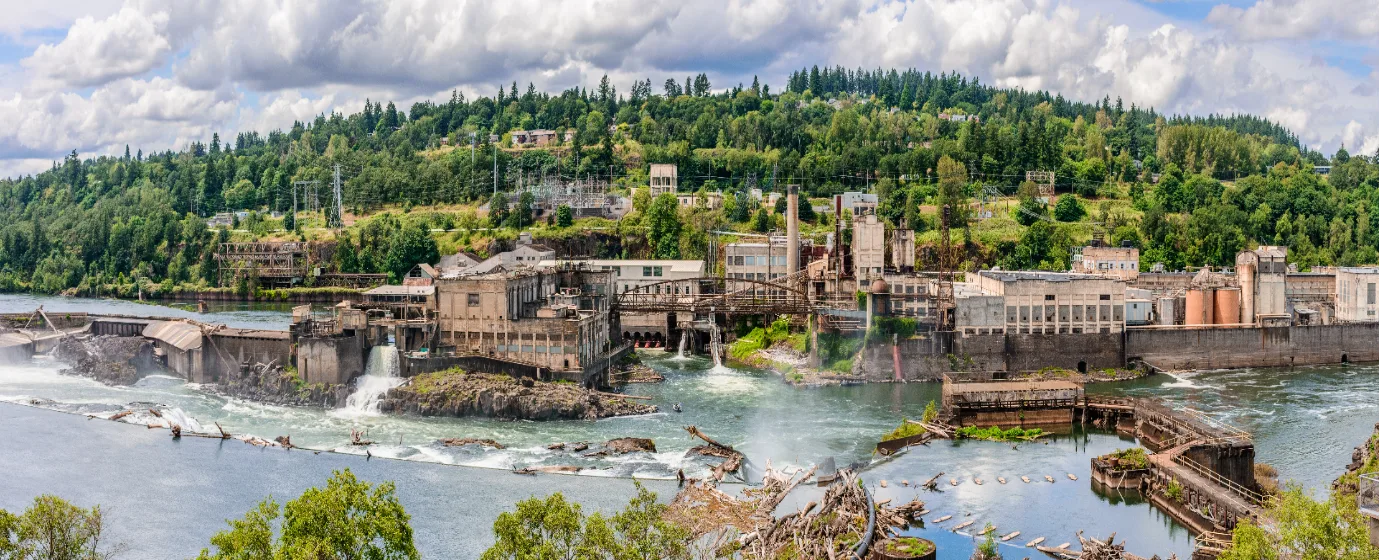
Oregon City sits at one of the most dramatic natural intersections in the Pacific Northwest — where the Clackamas River meets the Willamette, where the second-largest waterfall by volume in the United States drops 42 feet through the center of a working city, and where Metro-managed nature parks begin within a mile of downtown streets. For a city of 37,755 people, the scale of the outdoor infrastructure here is genuinely surprising. Most people who move from the Portland core expect to give something up. In Oregon City, the trade is usually the opposite.
The outdoor identity of Oregon City is shaped by three distinct layers: the urban river parks where families gather on weekends, the Metro nature parks that put mountain biking and canyon hiking inside city limits, and the broader Willamette Valley waterways that draw anglers, boaters, and birders who want more space than the city parks offer. The Willamette Falls Overlook and Clackamette Park anchor the waterfront. Canemah Bluff Nature Park and Newell Creek Canyon Nature Park handle the trail and wildlife side. Molalla River State Park, accessible from here, adds another 567 acres of river confluence habitat for those willing to drive a few more miles.
What surprises most newcomers after a few months is how integrated the outdoor access is — you don't have to leave the city to find a proper hike with elevation gain, creek views, and a reasonable chance of seeing a pileated woodpecker. That kind of proximity matters when Oregon's weather delivers only 143 sunny days a year; you want to be able to act on a clear afternoon without a 45-minute drive. The seasonal rhythm here is real: spring wildflowers on the bluffs, summer fishing and river access at Clackamette, fall color on the canyon trails, and winter walks along the Willamette when the crowds thin out entirely.
Whether you're weighing a move to Oregon City or already under contract and trying to understand daily life here, the sections below cover the signature parks, the trail systems, the water recreation, and the most significant outdoor development currently underway in the city.
Signature Parks: Where Oregon City Actually Gathers
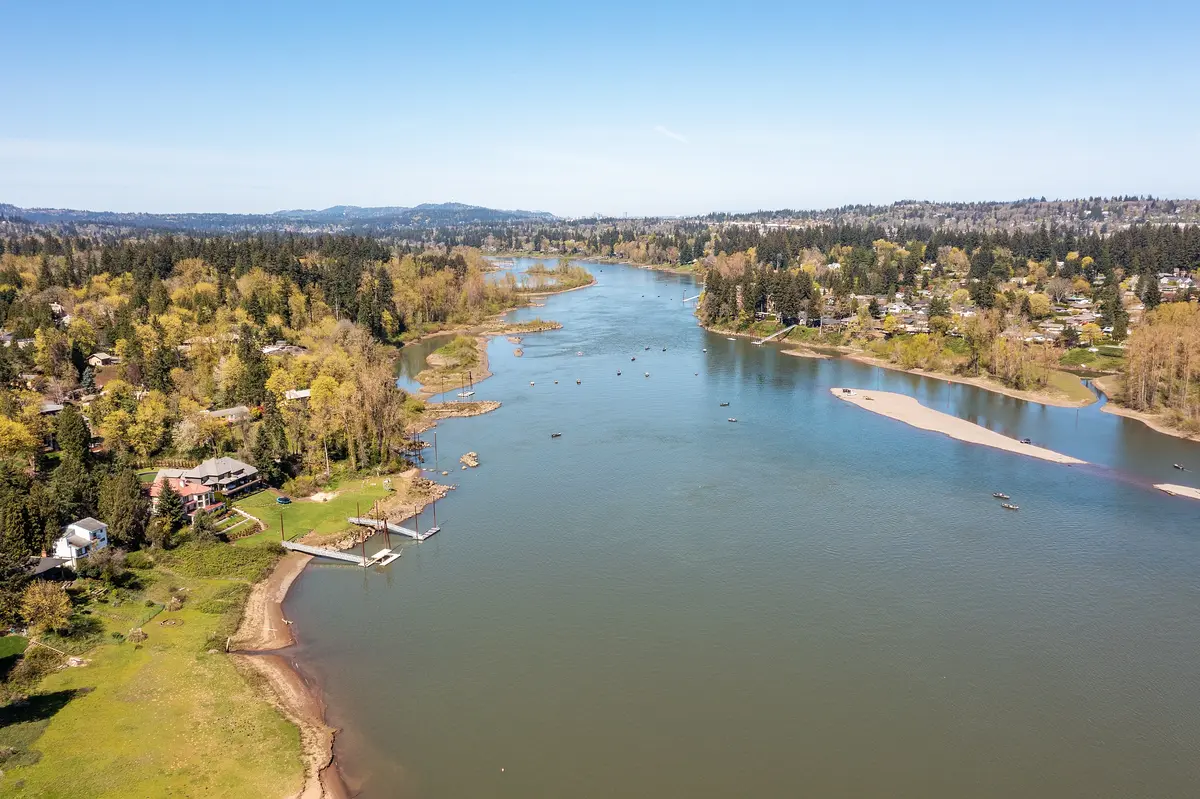
Clackamette Park is the civic anchor of Oregon City's outdoor life. It sits at the literal confluence of the Willamette and Clackamas rivers, and it is the only park in the city designated as a regional park — which means the amenities are built for a metro-wide audience, not just the immediate neighborhood. The facilities reflect that: a boat ramp for river access, a skatepark that draws both skaters and BMX riders, horseshoe pits, a playground, and covered picnic shelters that can be reserved for larger gatherings. An RV park with river frontage rounds it out, with stays limited to 14 nights.
On a warm weekend, Clackamette is where Clackamas County shows up. Families stake out the picnic shelters, anglers work the Clackamas River shoreline, and the skatepark runs steady. The park's location at the river mouth makes it the most accessible piece of genuine waterfront in the city, and it functions as the informal gathering point that downtown Oregon City does not yet fully provide on its own.
Canemah Bluff Nature Park plays a completely different role. It is a 332-acre Metro-managed reserve perched on basaltic bluffs overlooking the Willamette River, just upriver from Willamette Falls. The terrain here is not manicured — unpaved trails wind through oak woodlands, past wildflowers in spring, and out to viewpoints that look straight down at the river below. Admission is free, and the parking area costs nothing. The park connects directly to Canemah Children's Park, run by Oregon City Parks and Recreation, which adds a playground, basketball court, and a covered shelter that can be reserved — making the combined area useful for families who want a trail walk followed by something easier for younger kids.
Best for: Clackamette Park — Families Water Access. Canemah Bluff — Nature Quiet.
Trails Inside the City: Newell Creek Canyon and the Bluff System
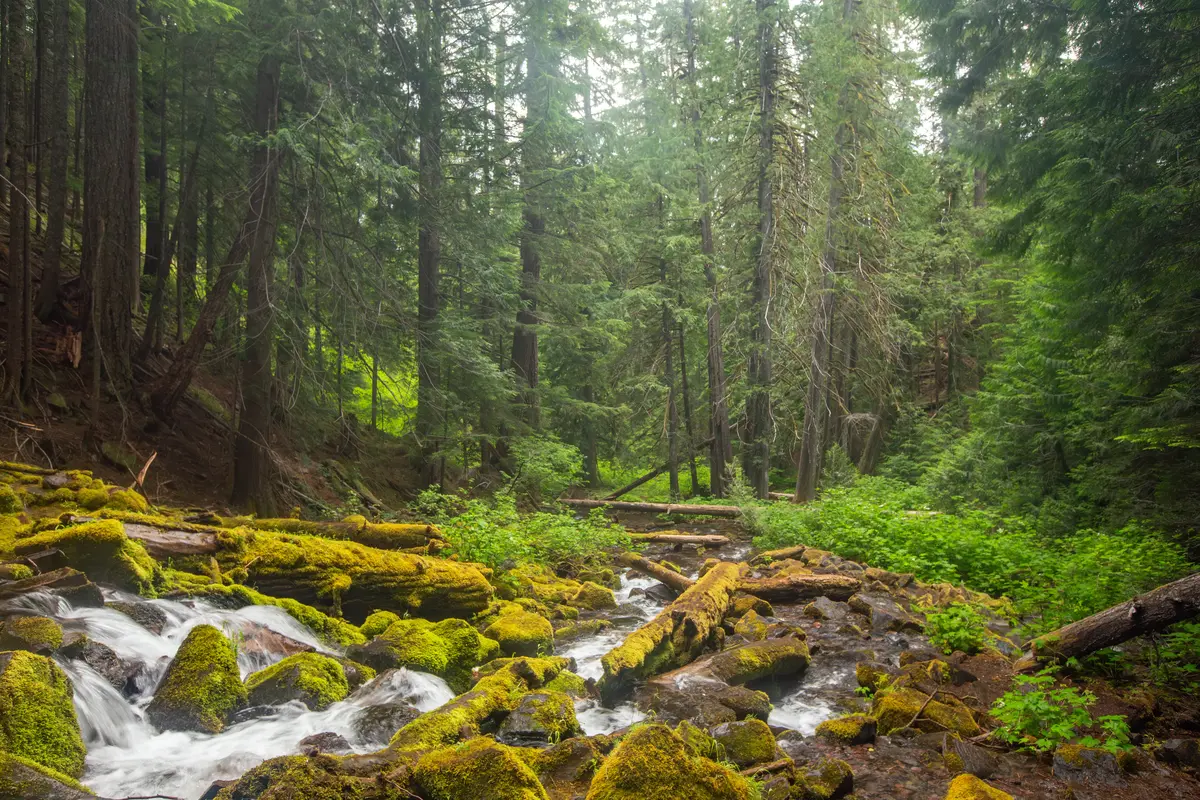
Newell Creek Canyon Nature Park is one of the more underappreciated facts about Oregon City. A 236-acre Metro-managed park that opened in December 2021, it sits inside city limits and offers 2.5 miles of hiking trails plus 2 miles of dedicated mountain-bike trails — with a six-trail system that separates users clearly. Three trails are mountain-bike-only descents. Two — the Tumble Falls trail and the Cedar Grove trail — are shared-use. The Canyon Spring Loop is reserved for hikers. The result is a park where mountain bikers and walkers coexist without the friction that shared singletrack usually produces.
The Tumble Falls waterfall is the visual centerpiece: a creek-fed cascade tucked into the canyon that rewards a short hike with something genuinely worth the trip. Creek views, conifer canopy, and a canopied picnic area make this a workable destination even on the kind of grey, cool afternoon that defines half the Oregon year. Wildlife spotted in the park includes beavers, red fox, black-tailed deer, pileated woodpeckers, and cottontail rabbits — a list that reads as ambitious until you actually walk the canyon and realize how quickly the city disappears behind you.
One honest caveat: dogs are not permitted on Newell Creek Canyon trails. That is a real limitation for a city where most households have one, and it catches people off guard. If you're bringing a dog, Clackamette Park and Molalla River State Park are the better options.
Canemah Bluff's trail network complements Newell Creek Canyon well. The 1.6-mile Canemah Pioneer Cemetery and Licorice Fern Trail loop is the most popular route among local hikers, with elevation gain ranging from 177 to 406 feet — enough to feel like a proper hike, not enough to turn off anyone who isn't a dedicated trail runner. The combination of bluff views, historic cemetery, and fern-covered forest floor is the kind of route that gets walked repeatedly rather than checked off once.
Trail Quick Reference
| Park | Acreage | Trail Miles | Uses | Dogs Allowed |
|---|---|---|---|---|
| Newell Creek Canyon Nature Park | 236 | 4.5 (hiking + biking) | Hiking, mountain biking | No |
| Canemah Bluff Nature Park | 332 | 1+ (primary loop 1.6 mi) | Hiking | Check Metro |
| Clackamette Park | Regional | Riverside paths | Walking, biking, fishing | Yes |
| Molalla River State Park | 567 | Flat riverside | Walking, fishing, birding | Yes (off-leash area) |
Both Metro-managed parks — Canemah Bluff and Newell Creek Canyon — are free to enter, with no parking fees.
Water Recreation: Rivers, Falls, and What's Coming Next
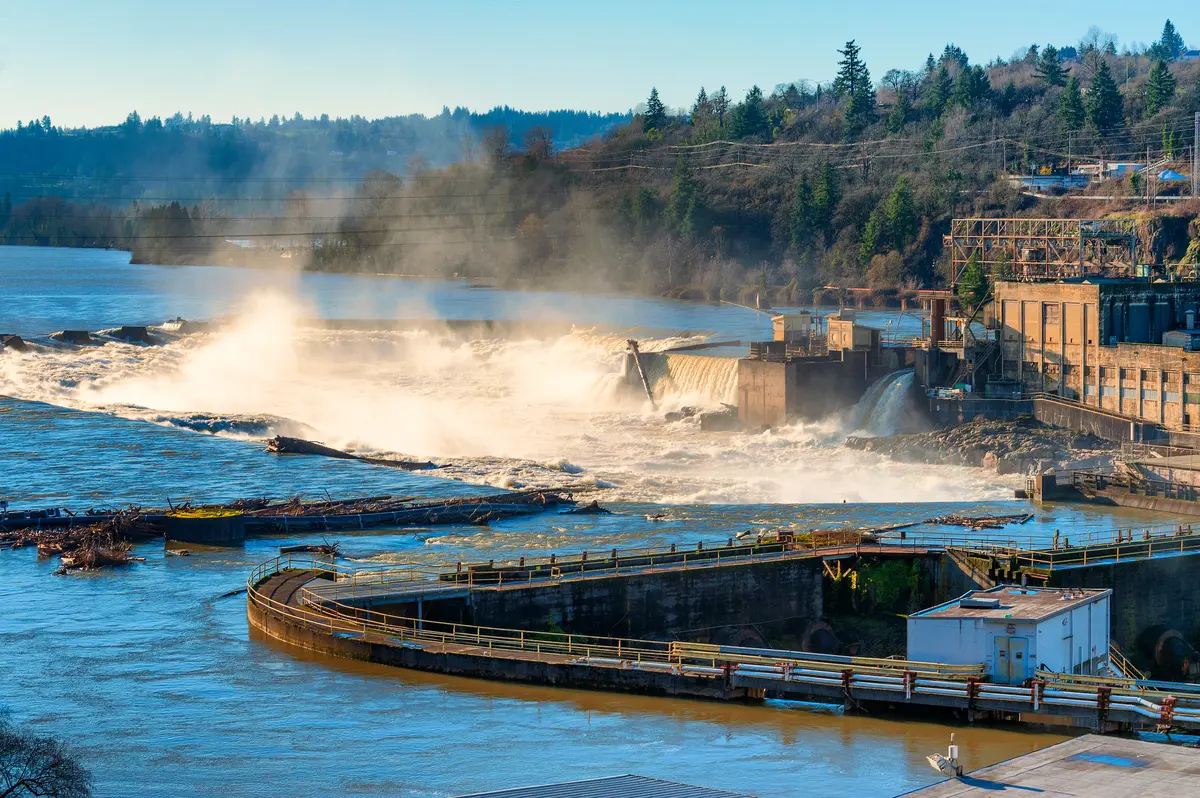
Willamette Falls is the geographic fact that defines Oregon City more than anything else. It is the largest waterfall by volume in the Pacific Northwest and the second-largest by volume in the United States — dropping approximately 42 feet across a width of roughly 1,500 feet. Viewpoints along OR-99E put you close enough to feel the spray on the right day. The I-205 viewpoint near milepost 7.5 sits higher and gives you the full width of the falls and the surrounding basalt bluffs in one frame.
For most of the past century, the industrial site immediately adjacent to the falls has blocked any meaningful riverfront access. That is changing. The Confederated Tribes of Grand Ronde broke ground in May 2026 on Tumwata Village — a mixed-use development on the Oregon City side of the falls that will include a riverwalk, cultural programming, and riverfront access to a site that has been off-limits to the public for decades. This is the single most significant outdoor development in Oregon City right now, and it will fundamentally change how residents interact with the falls over the next several years.
Separately, the Willamette Falls Locks — historic canal locks directly across the river, closed since 2011 — entered active repair in 2023, with a projected reopening that would restore recreational boating passage on the Willamette. Recreational boaters who have been routing around the falls should watch that project closely.
For river access right now, Clackamette Park is the practical answer. The boat ramp handles launches onto both rivers, the Clackamas River shoreline draws consistent fishing activity, and the Willamette frontage gives the park its character. Molalla River State Park — accessible from Oregon City, sitting at the confluence of the Willamette, Molalla, and Pudding rivers — adds a second boat ramp, fishing, and something Clackamette cannot offer: one of the largest great blue heron rookeries in the Willamette Valley. The park's flood-plain habitat supports waterfowl, wading birds, deer, and small mammals, and because it is day-use only with no entrance fee, it sees steady use from Oregon City residents who want water access with more room to spread out. There is also a dedicated dog off-leash exercise area, which matters in a city where Newell Creek Canyon's no-dogs policy sends pet owners looking for alternatives.
Looking to buy in Oregon City? Estimate your payment.
Enter your numbers to see an estimated monthly mortgage payment.
Estimate only. Excludes HOA fees and mortgage insurance. The interest rate above is a starting point, not a quoted rate — replace it with your own to see real numbers. Insurance is a flat placeholder, not a Oregon City quote.
Weekends & Local Favorites: How Residents Actually Use the Outdoors Here
The Oregon City Farmers Market gives the outdoor-oriented part of the week a social anchor during the warm months. Local produce and artisan goods, close to home — it is the kind of weekly rhythm that makes a place feel more like a community than a zip code.
After the market, Clackamette Park is where weekends drift. The Willamette Falls Overlook draws people who want to see the falls without committing to a longer walk. Canemah Bluff fills up on clear mornings when the valley views are sharpest. Newell Creek Canyon is quieter — it is newer, less trafficked, and still discovering its audience, which makes it the local's choice for a weekday trail run or an uncrowded afternoon hike.
For dining and coffee after a morning outside, Oregon City has a handful of solid options. The Highland Stillhouse and Stone Cliff Inn anchor the sit-down end of the scene. Rivershore Bar & Grill suits the post-river-day crowd. For coffee, Black Ink Coffee and Lucky Rooster are the local independents, with Black Rock Coffee and Coffee Rush rounding out the options. Pure Bliss Bakery & Cafe is the spot for something baked. Ranee's on Main and The Hive Social complete the picture for anyone wanting a fuller meal or a more casual setting.
One friction point that catches newcomers: Oregon City's outdoor season is front-loaded. The clearest weather and the best trail conditions arrive in May and June before the summer dryness hits the creek-fed trails, and again in September and October when the heat breaks and the color starts on the bluffs. Summers here are drier than many people expect from a Portland-area city, but with only 143 sunny days a year, you learn quickly to take a clear day when it comes rather than saving it for the weekend.
The Willamette Falls Overlook and Clackamette Park sit within easy reach of the McLoughlin Historic District and Canemah, which means residents in those neighborhoods have walkable access to the most significant outdoor assets in the city. For anyone weighing where in Oregon City to land, that proximity is worth factoring in — see the neighborhoods guide for a fuller breakdown of which areas sit closest to the river and the bluff trails.
Local Expert Takeaway: Oregon City's outdoor scene is better than its reputation suggests, and the gap between what people expect and what they find is widest on the trail side. Newell Creek Canyon put a mountain-bike-ready nature park inside city limits in 2021, Canemah Bluff has one of the better easy-to-moderate hikes in the metro area, and Clackamette Park handles everything that needs a river and a boat ramp. The Tumwata Village groundbreaking in May 2026 is the story to watch — when that riverwalk opens, the falls become something residents can actually stand next to rather than view from a distance. If you're moving to Oregon City and you're outdoors-oriented, you are not making a sacrifice. You are probably getting more than you expected.
Quick Takeaways & FAQs
✅ Canemah Bluff and Newell Creek Canyon — two Metro-managed nature parks — put hiking and mountain biking inside city limits, both free to enter.
⚠️ Dogs are not allowed on Newell Creek Canyon trails, which surprises many new residents — Clackamette Park and Molalla River State Park are the better options for dogs.
📍 The Confederated Tribes of Grand Ronde broke ground in May 2026 on Tumwata Village, which will open a riverwalk and riverfront access at Willamette Falls — a site that has been off-limits to the public for decades.
What is the best hike in Oregon City?
Can I bring my dog to Oregon City parks?
Is there river access or a boat launch in Oregon City?
What is happening at Willamette Falls?
Are Oregon City's parks free?
Moving to Oregon?
Tell us what you need help with and we'll connect you with local resources.
