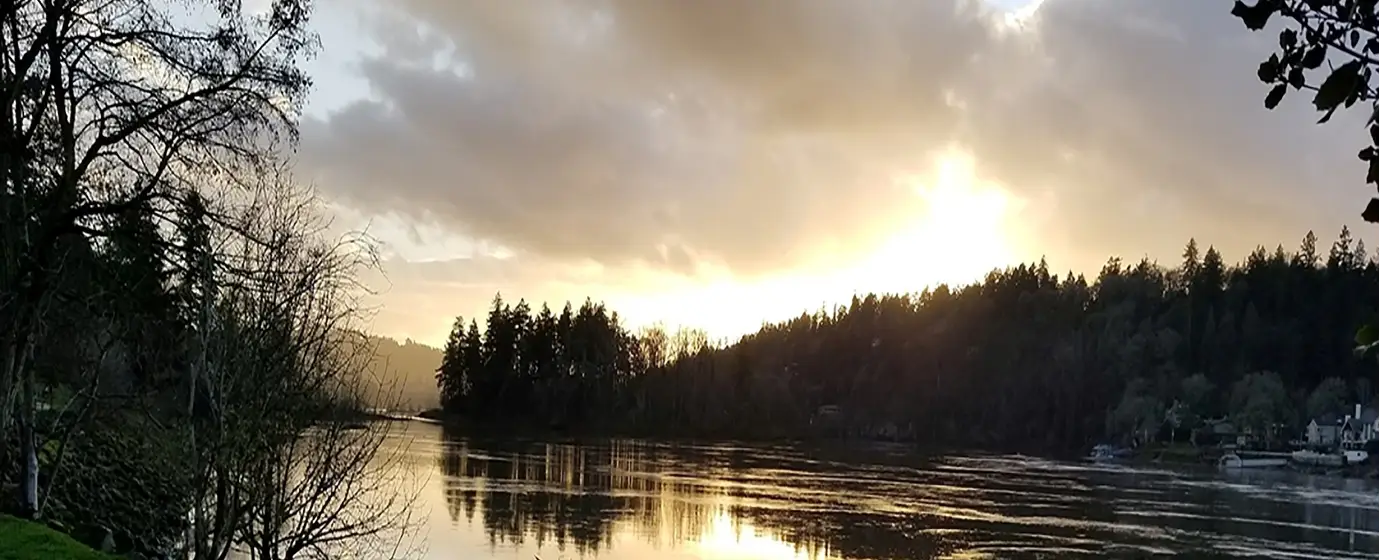
What Is Living in Milwaukie, Oregon Like?
You've probably driven through Milwaukie without realizing it. It sits directly south of Portland on OR-99E — McLoughlin Boulevard — and most people blur past it on their way to Oregon City. That's the city's quiet advantage and, honestly, its central tension: Milwaukie is close enough to Portland to feel like an extension of it, distinct enough to have its own downtown, its own comics empire, and its own weekly farmers market that's been drawing crowds longer than almost any other in the metro. It's a city of 21,620 people that punches well above its size in character.
The economic backbone here is grounded and diverse for a city this small. The North Clackamas School District, which has 16,864 students enrolled in 2025-26, anchors a significant share of local employment. A major regional health system operates inside city limits. Bob's Red Mill — the whole grain brand known nationally — has its headquarters and flagship visitor store here, and Blount Fine Foods rounds out the food-processing sector. Dark Horse Comics, founded here in 1986 and still headquartered downtown, gives Milwaukie an unexpected creative-industry identity that filters into the shops, the murals, and the general tolerance for weirdness that Portlanders expect in their communities. People who move here are often educators, healthcare workers, creatives, or remote workers who want Portland access at a price that doesn't require a second income to manage.
That price is real and worth naming: the typical home price in Milwaukie is $522,702 (Zillow Home Value Index, July 2026), which is roughly at parity with Portland and noticeably below Oregon City and Happy Valley. It's still a stretch — the median household income here, at $86,892, sits below what most lenders would want to see for the typical purchase, so buyers are making it work with savings, dual incomes, or creative financing. Renters have some breathing room, with a typical two-bedroom running $1,610–$1,960 per month. For more on the cost picture, see the full cost of living breakdown. The outdoors are genuinely accessible: Milwaukie Riverfront Park runs along the Willamette with a boat launch and the Trolley Trail, Elk Rock Island is a 13.6-acre wild area reachable on foot, and the MAX Orange Line connects downtown Milwaukie to Portland's city center without a car.
Whether you're considering a move or just researching the area, the sections below break down Milwaukie's neighborhoods, housing market, commute patterns, local employers, and what day-to-day life here actually looks like.
Milwaukie at a Glance
Looking to buy in Milwaukie? Estimate your payment.
Enter your numbers to see an estimated monthly mortgage payment.
Estimate only. Excludes HOA fees and mortgage insurance. The interest rate above is a starting point, not a quoted rate — replace it with your own to see real numbers. Insurance is a flat placeholder, not a Milwaukie quote.
Why Are People Moving to Milwaukie?
The pitch for Milwaukie is straightforward: Portland proximity without Portland prices, in a city that has spent the last decade quietly developing its own identity. What surprises people once they're here is that the identity is real — it wasn't manufactured by a developer.
A Downtown With Genuine Roots
Dark Horse Comics has been headquartered on SE Main Street since 1986, and the founders' long-term investment in commercial property downtown — through their development LLC — means the Main Street corridor has a stakeholder that isn't going anywhere. The 1938 Public Works Administration city hall building was redeveloped and reopened in April 2025 as a mixed-use space with a brewery tasting room, a coffee shop, a restaurant, and community gathering areas. That kind of adaptive reuse is what a lot of Portland buyers have been hoping their suburb would do.
Employers That Actually Live Here
The North Clackamas School District is the city's largest employer and one of the six largest school districts in Oregon — which means a substantial number of the teachers, administrators, and support staff who work in those buildings live in Milwaukie too. A major regional health system with a hospital inside city limits draws clinical and administrative staff. Bob's Red Mill's presence is more than symbolic; the whole grain operation employs local workers and draws visitors who spend money in the neighborhood. For buyers who want to work where they live, the local employer base is more real here than in many comparably sized suburbs.
Who's Actually Moving Here
The buyer mix skews toward people who've been priced out of Southeast Portland and want to stay close to it — teachers, nurses, graphic designers, remote workers at tech companies with Portland offices. Parents with school-age children weigh the North Clackamas School District, which holds a B rating, according to Niche; for more detail on the district's individual schools and boundaries, see the Milwaukie schools guide. Renters who've graduated to buying also land here because the entry point is more accessible than the inner eastside — though accessible is relative, and the affordability gap between median income and median purchase price is something buyers should go into with clear eyes.
What People Don't Expect
After six months here, a lot of newcomers say the same thing: they didn't realize how self-contained the city actually is. The weekly farmers market in Historic Downtown runs through the warm months with over 80 vendors and is widely cited as the longest-running Sunday market in the Portland metro. Milwaukie Fest closes Main Street for a multi-day summer event in July. Elk Rock Island — a 13.6-acre natural area with more than 50 rare plant species — is a short walk from established residential neighborhoods. The city keeps showing you things you didn't look up first.
What Daily Life Feels Like in Milwaukie
Milwaukie's pace is unhurried compared to the inner eastside it borders, but it's not sleepy. The rhythm is set by the Sunday farmers market, the schools, and the Willamette River — which you can see from downtown and walk to in minutes.
The Geographic Reality
OR-99E, McLoughlin Boulevard, bisects the city from north to south and carries most of the through traffic. Neighborhoods that slope toward the Willamette tend to have older housing stock, tree cover, and the parks and natural areas that make the riverfront feel genuinely wild this close to Portland. Areas that run toward Clackamas County flatten out and take on a more conventional suburban feel. Buying without understanding which side of that corridor you're on is one of the more common mistakes people make in this market.
The Weather, Honestly
Milwaukie gets 142 sunny days a year. The rest are overcast, rainy, or both — this is western Oregon and there's no escaping the gray stretch from November through April. People who thrive here either lean into the rain culture or they find something indoors to care about. The summers genuinely compensate: long, dry, mild, and the reason the riverfront park is packed from June through September.
Where Families Actually Land
Linwood, in the northeast corner of the city, runs to North Clackamas Park, and the park's scale makes it a natural gathering point for parents with kids on weekends. The Ardenwald-Johnson Creek neighborhood offers mature trees and a neighborhood feel that's quieter than downtown without being remote. Historic Downtown Milwaukie is where the coffee shops, the market, and the weekend energy concentrate — it's where you go to run into people, not to hide from them.
What You'd Miss From Portland
A serious shopping trip — anything requiring a big-box store or a specialty retailer — means driving out of Milwaukie. The dining scene is real but small; there's no restaurant row with a dozen options on one block. People who moved from inner Portland neighborhoods sometimes need a year to recalibrate their expectations around convenience. The compromise is space, quiet, and a sense that you know your neighbors — which some people find immediately and others never quite do.
For a deeper look at how neighborhoods compare in character and feel, see the Milwaukie neighborhoods guide.
The Milwaukie Housing Market Right Now
The typical home price in Milwaukie is $522,702 (Zillow Home Value Index, July 2026). That puts it roughly at parity with Portland and noticeably below what buyers are paying in Oregon City or Happy Valley. For the full cost picture including rent, taxes, and utilities, see the cost of living page.
What You're Buying at That Price
The housing stock reflects the city's age — most of what you'll find is postwar construction, bungalows and ranch homes from the 1940s through the 1970s, on established lots with mature landscaping. Newer construction exists but is not common; Milwaukie is a largely built-out city. Some sections have seen teardown-and-rebuild activity, but it's not yet the dominant pattern it is in some inner Portland neighborhoods.
Renters and the Path to Buying
The typical two-bedroom in Milwaukie runs $1,610–$1,960 per month, which is meaningful breathing room compared to Portland's inner eastside. Many buyers in this market spend two to three years renting in Milwaukie first, getting to know which neighborhoods they actually want to be in before committing. That's not a bad strategy: the city is small enough to learn quickly, and some of the best pockets aren't obvious from the street.
The Affordability Reality
At the typical home price, the median household income in Milwaukie — $86,892 — falls short of what most lenders want to see for a comfortable purchase. Most buyers here are either dual-income households, bringing significant savings, or both. That's not unusual for the Portland metro, but it's worth being clear-eyed about before you start touring homes. The first-time buyer process in this market has its own specific steps and programs; the first-time homebuyer page covers those in detail.
Neighborhood Price Tiers
Some areas in Milwaukie sit at the city-wide median, others below it. Hector Campbell and Historic Downtown Milwaukie tend to come in below the city figure, making them natural entry points. Linwood, Lake Road, Lewelling, Ardenwald-Johnson Creek, Island Station, and Jennings Lodge generally track at the median. No neighborhood here regularly runs far above it, which is part of what makes Milwaukie feel more internally consistent than cities where one ZIP code costs twice the next.
Milwaukie Neighborhoods
Milwaukie has several distinct areas — each with its own character and appeal. Here’s a breakdown to help you narrow down where to focus your home search.
🏡 Linwood
Linwood anchors the northeast corner of the city and backs up to North Clackamas Park, making it a natural fit for parents with school-age children who want outdoor space within walking distance. The housing stock is mostly postwar single-family homes on established lots, and the neighborhood's proximity to OR-224 makes the Clackamas corridor commute straightforward.
🏠 Hector Campbell
Hector Campbell tends to come in below the city-wide median, making it one of the more accessible entry points into Milwaukie for first-time buyers. It has a quiet, residential feel without much commercial activity of its own, which suits buyers looking for a lower-key neighborhood to put down roots.
🌳 Lake Road
Lake Road runs along the southern edge of the city and has a more spread-out, semi-rural character compared to the neighborhoods closer to downtown. It appeals to buyers who want a larger lot and a quieter setting while remaining within Milwaukie's boundaries and school district.
🏘 Lewelling
Lewelling sits in the southeastern part of the city and carries a working-class residential character with good access to OR-224 and the Clackamas Town Center corridor. It's a practical neighborhood for buyers who commute east rather than north into Portland.
🏔 Ardenwald-Johnson Creek
Ardenwald-Johnson Creek is where Milwaukie starts to feel unmistakably Pacific Northwest — mature trees, established bungalows, and the Johnson Creek greenway running through the neighborhood's edge. It's a quieter pocket that attracts buyers who want character and tree cover without the weekend foot traffic of downtown.
🌆 Historic Milwaukie (Downtown Milwaukie)
Historic Downtown Milwaukie is the city's social and commercial center — the farmers market, the Main St MAX station, the old city hall building, and a growing restaurant and coffee scene are all concentrated here. It comes in below the city-wide median, which makes it a compelling option for buyers who want walkable access to transit and the weekend market scene without paying a premium for it.
Pros & Cons of Living in Milwaukie
The Pros
- Direct MAX Orange Line access to downtown Portland without Portland's price tag
- Willamette riverfront parks and trails including the hidden gem Elk Rock Island
- Historic, walkable downtown with local shops and breweries
- Strong local food and creative-industry identity anchored by Bob's Red Mill and Dark Horse Comics
The Cons
- Property crime, especially auto theft, runs closer to national norms than the low violent-crime rate suggests
- Limited public transit beyond the MAX line means a car is needed for most errands
- Home prices have risen sharply, pricing out some first-time buyers
Getting Around & Commuting in Milwaukie
Milwaukie is one of the few Portland suburbs where you can genuinely choose your commute mode rather than defaulting to a car. That's the MAX Orange Line's doing — and it shapes where people buy and how they spend their mornings.
The Orange Line Advantage
The MAX Orange Line connects downtown Milwaukie directly to Portland State University and Portland City Center. The Milwaukie/Main St station puts riders within walking distance of the farmers market and the Main Street commercial corridor. The line crosses Tilikum Crossing — opened in 2015 as the first major car-free bridge in the country, carrying light rail, buses, bikes, and pedestrians — which means the connection to the west side of Portland is faster and more reliable than any surface route. For buyers who work downtown or at PSU, the train is genuinely the faster option during weekday rush.
By Car
OR-99E (McLoughlin Boulevard) is the primary north-south spine, carrying residents north into Southeast Portland and south toward Oregon City and Clackamas. OR-224 (the Milwaukie Expressway) provides a direct eastward connection toward Clackamas Town Center and the I-205 corridor. The drive to Portland is about 20 minutes under normal conditions; OR-99E through the Sellwood area can back up significantly during morning and afternoon rush, and McLoughlin itself has chokepoints that locals learn to time or avoid. Neither route is a freeway for its full length, which is the catch.
Bus Options
Multiple TriMet bus lines cover the city: Line 70 runs north toward Portland, Line 32 heads south to Clackamas Community College, Line 152 links Milwaukie to Clackamas Town Center, and Line 34 connects Oregon City through Milwaukie to Clackamas Town Center. For trips that aren't well-served by the Orange Line station, bus coverage fills most gaps without requiring a car.
Who Commutes Where
A large share of Milwaukie's workforce commutes into Portland — downtown, the inner eastside employment corridor, and OHSU. A smaller but growing contingent works fully remote and barely leaves the city during the week. Clackamas Town Center and the industrial areas along the OR-224 corridor are also common destinations. Portland International Airport (PDX) is approximately 14 miles away, which puts it inside a 25-minute drive for most of the city — relevant for frequent flyers and one of the underrated perks of the location.
What Locals Know
The stretch of McLoughlin between downtown Milwaukie and the Sellwood neighborhood is where mornings get genuinely slow. Buyers who plan to drive to Portland daily and are looking at homes closer to the river often find they're better off walking to the Orange Line than sitting on McLoughlin. It's one of those patterns that doesn't show up in a map search but becomes obvious inside the first month of living here.
| Destination | Best Route | Typical Mode |
|---|---|---|
| Portland City Center | MAX Orange Line | Light rail |
| Portland State University | MAX Orange Line | Light rail |
| Southeast Portland | OR-99E north | Car or bus (Line 70) |
| Clackamas Town Center | OR-224 east / Line 152 | Car or bus |
| Oregon City | OR-99E south | Car or bus (Line 34) |
| Clackamas Community College | OR-224 / Line 32 | Car or bus |
| Portland International Airport (PDX) | OR-99E north to I-205 | Car (~14 mi) |
Schools in Milwaukie
Families relocating to Milwaukie have public, private, and higher-education options nearby. Here’s a quick overview.
🎓 School District
North Clackamas School District serves K–12 students across Milwaukie and the surrounding area. Rated B (source: Niche.com).
🏆 Graduation Rate
The 4-year high-school graduation rate here is approximately 87.9%.
📚 Higher Education
Oregon’s public universities — the University of Oregon, Oregon State University, and Portland State University — offer four-year degrees statewide, with a network of 17 community colleges providing two-year and workforce programs.
🌐 Online Learning
Oregon State University Ecampus and Portland State University Online offer fully accredited online degrees for remote learners across the state.
Safety in Milwaukie
A quick look at how Milwaukie compares on the numbers that matter most when weighing a neighborhood or a move.
🛡 Violent Crime
Approximately 3.9 per 1,000 residents.
🔒 Property Crime
Approximately 15.4 per 1,000 residents.
Compared to the most recent national figures from the Bureau of Justice Statistics (2024), Milwaukie’s violent crime is above the national average (about 3.7 per 1,000), and property crime is below the national average (about 18.4 per 1,000).
Against Oregon as a whole, Milwaukie’s violent crime is somewhat above the state average, and property crime is roughly two-thirds of the state average (Bureau of Justice Statistics, Crime Known to Law Enforcement, 2024 (tables 2 and 3)).
Crime rates can vary a lot within a single city, so the citywide numbers above are only a starting point. Some neighborhoods in Milwaukie run well below these averages, while others run higher — the kind of block-by-block detail that matters most when you’re actually choosing where to live. The full guide below breaks it down neighborhood by neighborhood.
Working in Milwaukie
Milwaukie’s largest employers span several industries — here are some of the anchors of the local job market.
🎓 North Clackamas School District
Education
🏥 Providence Milwaukie Hospital
Healthcare
🏛 City of Milwaukie
Municipal government
🛒 Bob's Red Mill
Food processing
🛒 Blount Fine Foods
Food processing
Parks & Recreation in Milwaukie
Some of the outdoor spaces that shape everyday life in Milwaukie.
🌱 Milwaukie Riverfront Park
Milwaukie residents don’t have to go far for green space — spots like Milwaukie Riverfront Park are part of everyday life here, whether that’s a morning walk, a weekend hike, or just somewhere to unwind outside. The full guide below covers more of what Milwaukie has to offer for parks and outdoor recreation.
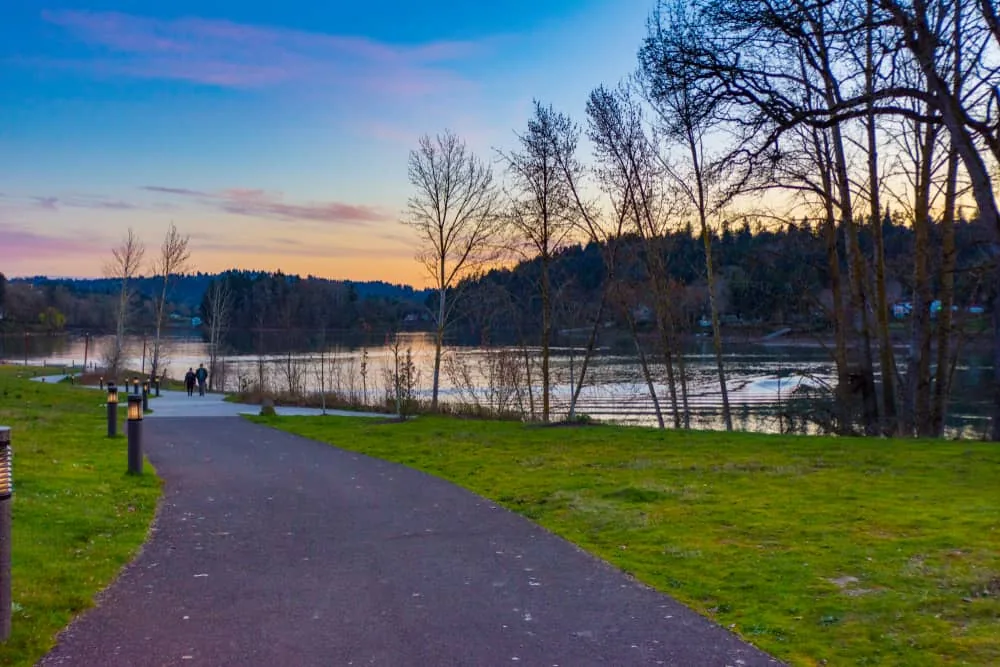
Retiring in Milwaukie
Milwaukie draws retirees for its balance of amenities, outdoor access, and cost. Here’s what to weigh.
🌤 Climate
Milwaukie sees 142 sunny days a year, with mild, dry summers that make outdoor time genuinely pleasant from June through September. Winters are gray and wet — the extended overcast from November through March is real and worth factoring into a retirement decision. The upside is that summer in the Pacific Northwest, with long evenings and temperatures that rarely get oppressive, is among the most comfortable in the country.
🍴 Lifestyle
The farmers market, the riverfront park, the Trolley Trail, and a walkable downtown with independent cafés and dining options give retirees meaningful daily texture without requiring a car for everything. Elk Rock Island is a short walk for nature-oriented residents, and the MAX Orange Line makes Portland's cultural institutions — museums, theater, concerts — accessible without the parking headache. The city is small enough that you'll know your neighborhood within months.
🏚 55+ Communities
No 55+ communities were found in Milwaukie. Retirees here generally purchase single-family homes in established neighborhoods or rent in the city's apartment stock. The retiring page covers the full picture of what Milwaukie offers older residents, including healthcare access.
✈ Getting Around
The MAX Orange Line and several TriMet bus routes make car-free or car-light living realistic for retirees who settle near the downtown station. OR-99E and OR-224 handle most driving needs. Portland International Airport is approximately 14 miles away — close enough that frequent travel to family is genuinely manageable.
🏛 Oregon Taxes for Retirees — What to Know
- Social Security is not taxed — Oregon does not tax Social Security or Railroad Retirement benefits. Any amount included in your federal adjusted gross income is subtracted back out on the Oregon return.
- But other retirement income IS taxed — This is the trade-off that surprises people moving from Washington or Texas. Pension distributions and 401(k)/IRA withdrawals are taxed as ordinary income at Oregon’s regular rates — there is no blanket retirement-income exclusion.
- Graduated income tax — Oregon has four brackets — 4.75%, 6.75%, 8.75% and 9.9%. The 4.75% rate covers the first $10,000 of taxable income for a single filer ($20,000 filing jointly); the 8.75% rate starts at $125,000 ($250,000 jointly); and the top 9.9% rate applies above $250,000 ($500,000 jointly).
- No sales tax — Oregon levies no general sales tax.
- Property taxes, with senior deferral — Oregon’s Senior and Disabled Property Tax Deferral lets qualifying homeowners have the state pay their county property taxes, with a lien recorded against the home. The 2026 household income limit is $70,000, and deferred balances accrue 6% simple interest — it defers the bill rather than forgiving it.
- Estate tax — the one to plan for — Oregon has its own estate tax with a $1 million filing threshold — far below the federal exemption, and NOT indexed for inflation, so it reaches more estates every year in real terms. Retirement accounts and a long-held home count toward the taxable estate, so estates that feel modest can cross the line without the owner expecting it.
- No inheritance tax — Oregon has no separate inheritance tax and no gift tax.
Tax laws change frequently and individual situations vary. This is general information, not tax advice — always consult a qualified Oregon tax professional or CPA for personalized retirement tax planning.
Weekends & Local Favorites in Milwaukie
Milwaukie's weekend life is anchored by the river, the farmers market, and a downtown that's been quietly improving for years. You don't need to drive to Portland for a good Saturday — though plenty of residents do anyway.
The Farmers Market and Downtown
The Milwaukie Farmers Market draws more than 80 vendors weekly during the warm months, with produce, meats, cheeses, baked goods, flowers, and artisan crafts filling the Historic Downtown blocks near SE Main and Harrison. Live music runs every market weekend. It's the kind of gathering point where you start recognizing faces after two or three visits — the neighborhood-identity anchor that a lot of suburbs spend years trying to manufacture and Milwaukie simply has.
Where to Eat and Drink
The local restaurant and café scene is modest in size and specific in character. Gramma's Corner Kitchen draws a loyal breakfast crowd. Coasters Brew Pub is the comfortable neighborhood tavern that most cities want and few have. River Roadhouse brings a casual roadhouse energy near the waterfront. Ohana Hawaiian Cafe offers a genuinely different flavor profile from the typical Portland-suburb dining. Arrivederci Wine & Jazz is a good reason to stay in Milwaukie on a Friday night rather than driving north.
For coffee, the options reflect the city's independent streak. Great American Video & Espresso — the name is not a mistake, and yes, it's still a video store — is the kind of place that exists only in a specific corner of Oregon. Milwaukie Cafe and Bottle Shop combines coffee and bottle shop in a combination that makes more sense once you're there. The Wind Horse, Keeper Coffee - Milwaukie, and Two Sisters Cafe Breakfast & Lunch each draw their own regulars.
Outdoor Life
Milwaukie Riverfront Park runs along McLoughlin Boulevard adjacent to downtown, offering Willamette River access, a boat launch, and the northern start of the Trolley Trail. Elk Rock Island — 13.6 acres of protected natural area with seven distinct habitats and more than 50 rare plant species — is reachable on foot at low water via Spring Park Natural Area, which is itself worth a visit for the wetland boardwalk and the birdwatching. Kellogg Park and North Clackamas Park round out the city's outdoor options with sports fields and green space that see heavy use from local families on weekends.
The Bob's Red Mill Store
Bob's Red Mill Whole Grain Store and Visitor Center is legitimately worth a stop — it stocks the full line of products at retail and draws visitors from outside the metro who want to see where the brand actually lives. For residents, it's just the place you go when you need almond flour, which is a completely normal sentence in Milwaukie.
The Cultural Layer
Dark Horse Comics' presence is felt in the city's design sensibility and in the occasional event or exhibit that wouldn't happen in a typical suburb of this size. Milwaukie Fest in July is the civic celebration that closes Main Street for live music, vendors, and family activities — the kind of event where locals actually show up rather than scroll past it online. The Milwaukie Museum is a small local history operation worth an afternoon if you want to understand how the city got here.
Local favorites in Milwaukie
Restaurants
- Gramma's Corner Kitchen
- Coasters Brew Pub
- River Roadhouse
- Ohana Hawaiian Cafe
- Arrivederci Wine & Jazz
Outdoors
- Milwaukie Riverfront Park
- Elk Rock Island
- Spring Park
- Kellogg Park
- North Clackamas Park
Coffee
- Great American Video & Espresso
- Milwaukie Cafe and Bottle Shop
- The Wind Horse
- Keeper Coffee - Milwaukie
- Two Sisters Cafe Breakfast & Lunch
Farmers Markets
- Milwaukie Farmers Market
Top Things Locals Say About Milwaukie
The best intel about a city comes from the people who actually live there. Here’s what Milwaukie residents say when newcomers ask the questions everyone’s thinking.
“I expected Milwaukie to feel like a quieter version of Portland. What I didn't expect was that it would feel like its own place — the market, the river, the way people actually know their neighbors. Six months in, I stopped thinking of it as a Portland suburb and started thinking of it as where I live.”
— Recent Milwaukie home buyer
“What's the most surprising thing about living in Milwaukie?”
How much is happening in Historic Downtown on any given weekend. The farmers market draws a real crowd — not a token one — and once the old city hall building reopened with the brewery tasting room and coffee shop, there was actually a reason to walk around downtown on a weekday too. Most people who move here assume they'll spend their weekends in Portland, and a lot of them stop doing that within a year.
“What do locals love most about Milwaukie?”
The Willamette River access is the big one — Milwaukie Riverfront Park and the Trolley Trail are right there, and Elk Rock Island is the kind of place you'd drive to if it were farther away. The Orange Line is the other thing people talk about constantly: being able to get to Portland City Center by train, without dealing with McLoughlin, changes how you think about living here. And the farmers market, once you're a regular, becomes a whole social infrastructure.
“What should newcomers to Milwaukie know?”
McLoughlin Boulevard is the road everything else runs off of, and it is not a freeway — it has stoplights and it backs up. If you're driving to Portland in the morning, plan around it or take the MAX. The Ardenwald-Johnson Creek neighborhood is quieter than it looks on a map and worth spending time in before you write it off as unremarkable. And the city is genuinely small — 21,620 people — so you'll start recognizing faces at the market and the coffee shops faster than you might expect.
“How much do you need a car in Milwaukie?”
It depends heavily on where you land. If you're in Historic Downtown or within a short walk of the Milwaukie/Main St MAX station, you can manage a lot of daily life without one — coffee, the market, the riverfront, and a train into Portland are all accessible on foot. But a serious grocery run, anything requiring a big-box store, and most of Clackamas County still mean a car. Most residents drive for some things and walk or train for others — it's less an either-or than it is in most suburbs.
Cities Near Milwaukie
Other communities near Milwaukie worth a look — each with its own character and price point.
| City | Distance | Best For | Vibe | Median Rent | Median Buy |
|---|---|---|---|---|---|
| Portland | 6 mi | Urban amenities, dense neighborhoods | Urban, walkable, dense | $1,723 | $534,270 |
| Oregon City | 8 mi | History buffs, larger lots | Historic, hillside, quieter | $1,955 | $605,330 |
| Happy Valley | 7 mi | New construction, top-rated schools | Newer, suburban, family-focused | $1,903 | $686,520 |
More Helpful Guides for Milwaukie
Going deeper on Milwaukie? Our blog series covers everything from first-time buying to retiring here — explore the guides below.
Local Expert Takeaway: Milwaukie is what you get when a real Portland neighborhood runs out of room and keeps going south. The MAX Orange Line, the farmers market, Elk Rock Island, and the Dark Horse Comics downtown give it an identity that most Portland suburbs never develop. The catch is real: OR-99E gets slow, the housing price-to-income gap requires planning, and serious retail shopping means a drive. But for buyers who want walkable transit access, a city that organizes around a river and a market rather than a mall, and a price point that's honest about what's on offer — Milwaukie is a market worth taking seriously.
Quick Takeaways & FAQs
✅ The MAX Orange Line puts downtown Portland about 20 minutes away without touching OR-99E during rush hour — a genuine advantage most Portland suburbs can't match.
⚠️ The median household income falls short of what most buyers need for the typical home price, so dual income or significant savings are usually part of the equation.
📍 Dark Horse Comics has been headquartered on Main Street since 1986, and the founders' continued investment in downtown commercial property is one of the reasons Historic Milwaukie keeps improving rather than stalling.
Is Milwaukie a good place to live for Portland commuters?
How are the schools in Milwaukie?
What is the typical home price in Milwaukie, Oregon?
What is Milwaukie, Oregon known for?
Is Milwaukie, Oregon safe?
Helpful Links for Moving to Milwaukie
Moving to Oregon?
Tell us what you need help with and we'll connect you with local resources.
