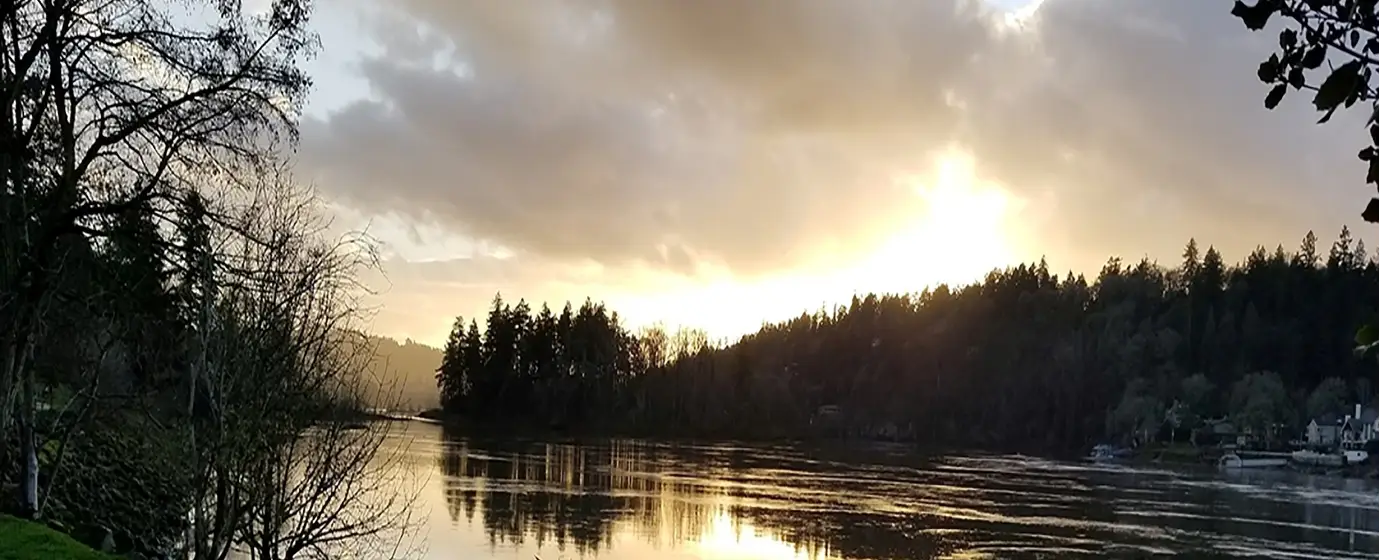
Maybe you've been priced out of inner Southeast Portland and someone mentioned Milwaukie. Maybe you looked at the map, saw it shares a border with Portland, and assumed it was basically the same — just cheaper. It is not basically the same, and understanding why is the whole point of this guide. Milwaukie is a city of 21,620 people in Clackamas County, roughly about 20 minutes to Portland by car or faster by the MAX Orange Line, with OR-99E (McLoughlin Boulevard) as its main north-south spine and OR-224 (Milwaukie Expressway) carrying traffic east toward Happy Valley. The Willamette River is not just scenery here — it actively shapes which neighborhoods feel secluded, which flood, and which carry a riverfront premium.
The economic base is more grounded than you might expect for a city this size. North Clackamas School District, Providence Milwaukie Hospital, Bob's Red Mill, and the City of Milwaukie itself are all genuine local employers. The school district — with 16,864 students enrolled in 2025-26 — holds a B rating, according to Niche, which puts it solidly above many inner-Portland districts for families willing to cross the city line. The people moving here tend to fall into two groups: buyers who want more house than Portland's eastside offers at a similar price, and renters and first-time buyers who need the MAX Orange Line to make a car-light lifestyle work.
The typical home price in Milwaukie stands at $522,702 (July 2026), roughly comparable to Portland and meaningfully below Oregon City or Happy Valley. Entry-level inventory exists, particularly in Hector Campbell and Historic Milwaukie, though the median household income of $86,892 does put a gap between what most households earn and what they need to buy here. For renters, the typical 2BR range of $1,610–$1,960 reflects a market that is affordable by metro standards without being cheap. The parks and trail access — especially the Springwater Corridor Trail through Ardenwald-Johnson Creek and the waterfront greenway at Island Station — make day-to-day life feel more spacious than the city's footprint suggests.
Whether you're narrowing down a move or still comparing options, the sections below break down all eight of Milwaukie's neighborhoods, match them to buyer types, flag the mistakes buyers commonly make, and tell you where renters find the best fit.
The Milwaukie Reality
OR-99E Is the Dividing Line
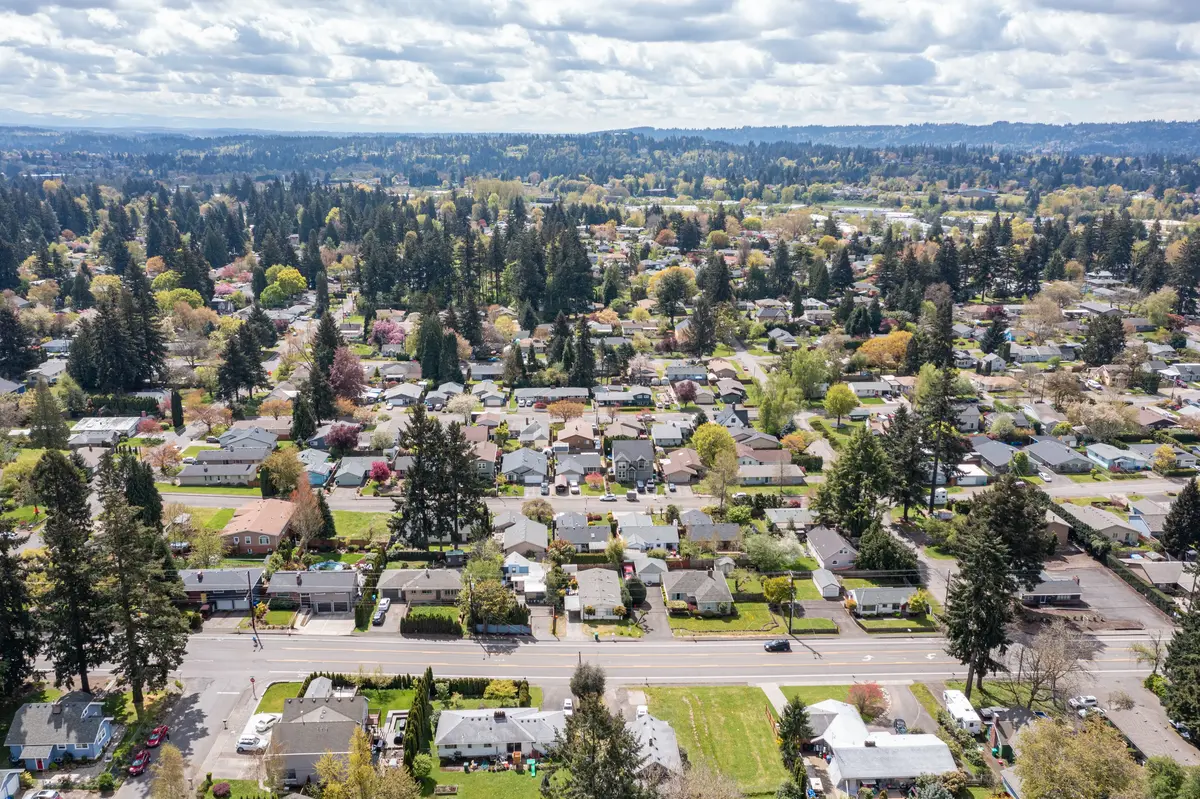
The single most important thing to understand about Milwaukie's geography is OR-99E (McLoughlin Boulevard). It runs the length of the city north to south, and where you land relative to it determines your daily experience in ways that no online listing description will spell out. On the river side of OR-99E, you get the Willamette, the MAX Orange Line, the historic downtown core, and the flood risk that comes with all of it. On the opposite side, the city shifts into quieter, more suburban territory — larger lots, fewer transit options, and an overwhelmingly residential character.
The Transit Divide Is Real
If MAX access is important to your household — whether for a car-free commute to Portland or simply as a backup to driving — you need to be in Historic Milwaukie or close enough to walk to a station. Neighborhoods like Lake Road, Lewelling, and Linwood are comfortable suburban areas, but they are car-dependent in a way that Island Station or Downtown Milwaukie simply are not. This is not a minor lifestyle preference; it is the kind of decision that shapes whether a buyer feels content or constrained after six months.
The Flood Risk That Listings Don't Lead With
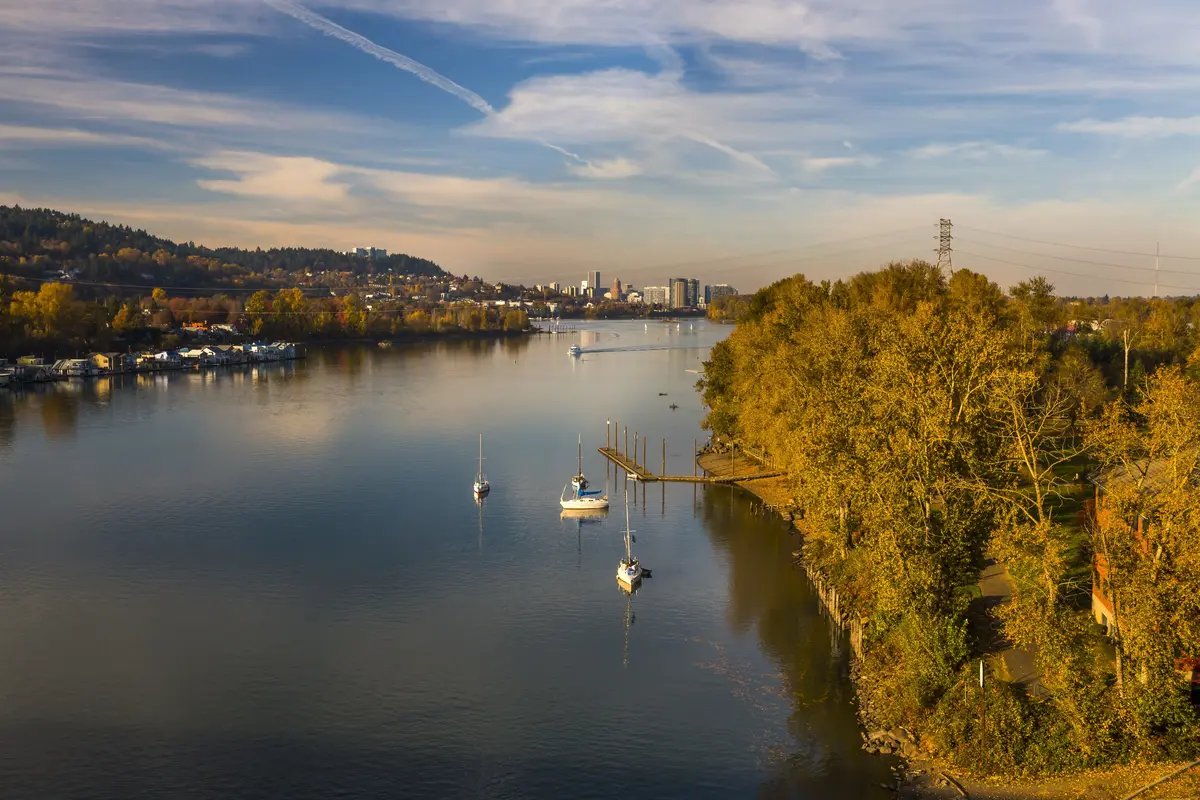
A second divide runs along the Willamette's edge. Island Station and the western fringe of Historic Milwaukie both carry real flood exposure for properties closest to the river, and Kellogg Creek can add a secondary high-water concern in Island Station. Before making an offer on anything within a few blocks of the waterfront, have a serious conversation about flood zone designation and insurance — this is not a distant risk that only affects a handful of fringe properties. The trade-off is that these same streets have some of the most distinctive housing stock and access to greenway parkland in the entire city.
Neighborhoods at a Glance
| Neighborhood | Best For | Vibe |
|---|---|---|
| Linwood | Families Nature | Wooded suburban lots, ranch and split-level homes, active NDA with block parties at Furnberg Park |
| Hector Campbell | First-Time Buyers Value | Dense, walkable streets close to downtown; community garden; ranch cottages on compact lots |
| Lake Road | Families Schools | Quiet and well-kept, bordered by North Clackamas Park; strong neighborhood pride and growing traditions |
| Lewelling | Quiet Commuters | Midcentury homes, tree-lined streets, free summer concerts at Ball-Michel Park |
| Ardenwald-Johnson Creek | Nature Transit | Straddles the Portland border; two Springwater Corridor Trail access points; dual-city NDA |
| Historic Milwaukie (Downtown) | Walkable Transit | Most walkable in the city; MAX Orange Line; brick storefronts and riverfront park; flood-zone caveat near the water |
| Island Station | Views Privacy | 1920s Craftsman and Alpine homes along the Willamette; parkland buffer; Elk Rock Island access |
| Jennings Lodge | Quiet Nature | Historic river-edge community at Milwaukie's southern border; bungalows and newer builds; borders Gladstone |
Milwaukie typical home price: $522,702 (Zillow ZHVI, July 2026). Typical rent: $1,749/mo (Zillow ZORI, July 2026). Neighborhood tiers on this page are relative to these figures.
Best Neighborhood by Buyer Type
| Buyer Type | Best Neighborhood | Why |
|---|---|---|
| First-Time Buyer | Hector Campbell | Sits below the city median and is close enough to downtown to feel connected without paying a downtown premium. |
| Luxury Buyer | Island Station | Distinctive 1920s riverfront homes on large lots with parkland buffers are the closest thing Milwaukie has to a prestige address. |
| Walkability Seeker | Historic Milwaukie (Downtown) | It is the only neighborhood in the city where daily errands, coffee, and a MAX station are genuinely on foot. |
| Families with Kids | Lake Road | Large lots, quiet streets, and direct access to 47-acre North Clackamas Park make it the most family-ready setting in the city. |
| Commuters | Ardenwald-Johnson Creek | The Portland border location and Springwater Corridor Trail access give commuters both driving and active-transit options. |
| Large-Lot Buyers | Linwood | Quarter-acre-plus lots with mature tree canopy are the norm here, not the exception. |
| Renters | Historic Milwaukie (Downtown) | Rental supply is most concentrated near the MAX corridor, keeping options available without requiring a car for the Portland commute. |
Looking to buy in Milwaukie? Estimate your payment.
Enter your numbers to see an estimated monthly mortgage payment.
Estimate only. Excludes HOA fees and mortgage insurance. The interest rate above is a starting point, not a quoted rate — replace it with your own to see real numbers. Insurance is a flat placeholder, not a Milwaukie quote.
Most Popular Neighborhoods
Linwood
Linwood is where Milwaukie's suburban character is at its most pronounced: quarter-acre-plus lots, tall Douglas firs and maples overhead, and ranch, saltbox, and split-level homes that feel genuinely spacious by metro standards. The catch is proximity to the North Milwaukie Business-Industrial corridor along OR-99E, which means some streets trade views of greenery for views of warehouses. The Linwood NDA runs an annual block party at Furnberg Park and an Adopt-a-Road cleanup, both of which give the neighborhood more civic cohesion than its sprawling character might suggest. Homes here sit at the city median.
Best for: Buyers who want genuine lot size and tree canopy without paying a riverfront premium.
Hector Campbell
Named after the first person to open a school in Milwaukie, Hector Campbell is one of the most approachable entry points into homeownership in the city — sitting below the city median and just over a mile from downtown. The lots are compact and the ranch-style housing stock is modest, but the Campbell Community Garden — with 28 rentable plots and four volunteer-tended plots for food sharing — signals the kind of genuine community investment that keeps long-term residents rooted. The trade-off is that smaller lots and a denser street pattern mean less separation between neighbors than you'll find in Linwood or Lake Road.
Best for: First-time buyers and buyers seeking a walkable entry point at a below-median price.
Lake Road
Lake Road sits roughly two miles from downtown and earns its family-friendly reputation with large lots, well-maintained landscaping, and direct access to the 47-acre North Clackamas Park on its border — one of the region's better multipurpose green spaces. Century Park and Bowman-Brae Park round out the neighborhood's recreational footprint, and the NDA runs quarterly volunteer cleanups at both. The main limitation is transit: this is a car-dependent neighborhood, and buyers relying on the MAX for Portland commutes will face a longer walk or a drive to reach a station. Homes sit at the city median.
Best for: Parents with school-age children who want park access, quiet streets, and room to grow.
Lewelling
Lewelling is the kind of midcentury neighborhood that doesn't generate headlines but holds its residents for decades. Tree-lined streets, Lewelling Park and Ball-Michel Park within easy reach, and a NDA that hosts free concerts at Ball-Michel during summer give it a civic rhythm that matters in daily life. Like Lake Road, it is car-dependent — the tradeoff for its quiet residential character. Homes sit at the city median, and the neighborhood's easy access to both downtown Milwaukie and OR-99E makes it one of the more balanced options for buyers who commute by car.
Best for: Buyers who prioritize quiet, community events, and midcentury character over walkability or transit access.
Ardenwald-Johnson Creek
Ardenwald-Johnson Creek is genuinely unusual: it straddles the Milwaukie-Portland border and holds official neighborhood district association status in both cities simultaneously. Two access points for the 21-mile Springwater Corridor Trail sit within the neighborhood, making it the most trail-connected area in Milwaukie for cyclists and runners. The summer concert series at Ardenwald Park adds a community anchor, and the NDA holds monthly meetings at a local gathering spot in the neighborhood. The dual-city designation can create occasional confusion around services and jurisdiction — and school boundary research here warrants extra attention. Homes sit at the city median.
Best for: Trail-oriented buyers and commuters who want Portland adjacency without Portland property taxes.
Historic Milwaukie (Downtown Milwaukie)
This is the only neighborhood in Milwaukie where you can step out the door, walk to a coffee shop, catch the MAX Orange Line to Portland, and still be back in time for a riverfront walk at Milwaukie Riverfront Park before dinner. The Ledding Library, historic brick storefronts, and a genuine pedestrian street scale make it feel like a real downtown rather than an arterial-adjacent strip. The hard conversation for buyers is flood risk: properties closest to the Willamette carry real exposure, and that exposure affects insurance costs and long-term resale dynamics in ways that a walkable commute doesn't fully offset.
Best for: Car-light buyers, transit commuters, and anyone who wants downtown Milwaukie's energy — with a clear-eyed look at flood zone maps first.
Island Station
Island Station is the most distinctive address in Milwaukie: 1920s-era Craftsman and Alpine-style homes along the Willamette's eastern shore, with the neighborhood's western edge functioning almost entirely as parkland. Elk Rock Island — a 13.6-acre natural area accessible through Spring Park — adds genuine ecological interest, with vernal pools and salamander habitat on trails that few visitors find. The catch is the same as anywhere this close to the river: both the Willamette and Kellogg Creek can produce high-water events, and properties nearest the water carry the most exposure. Flood insurance is not optional here — treat it as a line item in your budget before falling in love with the address. Homes sit at the city median.
Best for: Buyers who want riverfront character, historic architecture, and direct access to natural areas and are prepared to carry flood insurance.
Jennings Lodge
Jennings Lodge sits at Milwaukie's southern edge, bordering Gladstone, and has a quiet identity all its own — platted in 1905 and shaped by the historic Portland-to-Oregon City streetcar corridor along OR-99E (McLoughlin Boulevard), which drove the original wave of residential development. Today it is a mix of original bungalows and newer residential builds, with the river, the tree cover, and the low-key pace cited most often by people who choose to stay. Some sources describe Jennings Lodge as unincorporated Clackamas County rather than city-proper Milwaukie, which is worth clarifying with your agent on jurisdiction, services, and potential annexation implications. Homes sit at the city median.
Best for: Buyers who want Willamette-adjacent quiet and a slower pace at the southern edge of the metro.
Common Mistakes Buyers Make in Milwaukie
Treating OR-99E as a Neutral Arterial
OR-99E (McLoughlin Boulevard) is Milwaukie's commercial spine, and properties directly adjacent to it carry traffic noise and a commercial-industrial character that satellite photos significantly underrepresent. Buyers who filter by zip code and square footage without noting how close a listing sits to OR-99E regularly discover, after closing, that the neighborhood feels nothing like what they imagined. Run the address against an aerial view and do a noise-hour drive-by before making an offer.
Assuming the Flood Risk Only Applies to One Neighborhood
Many buyers correctly identify Island Station as the flood-risk area and then make an offer in Historic Milwaukie without checking the specific parcel. Flood exposure in the downtown district is real and varies block by block depending on proximity to the Willamette. The FEMA flood zone map is the right tool here, not the neighborhood's general reputation — two houses on the same street can carry meaningfully different risk profiles.
Chasing Square Footage in the Eastern Neighborhoods Without a Transit Plan
Linwood and Lake Road offer the largest lots and quietest streets in the city, and they are genuinely car-dependent. Buyers moving from inner Portland who expect to maintain a car-light lifestyle — or who have one car-free household member commuting to Portland — regularly underestimate how much this changes daily life. If MAX access is a household requirement, stay within the Historic Milwaukie corridor; if it's optional, the eastern neighborhoods offer real value.
Skipping the Dual-City Boundary Check in Ardenwald-Johnson Creek
Because Ardenwald-Johnson Creek straddles the Milwaukie-Portland border, the school boundary, the jurisdiction for city services, and even the relevant neighborhood association can differ depending on which side of the line a specific address falls. Buyers who assume uniformity across the neighborhood sometimes end up in a different school catchment than they expected, or subject to a different set of city permits and fees. Confirm the exact address's jurisdiction before you go under contract.
Best Areas to Rent in Milwaukie
| Area | Ideal For | Trade-off |
|---|---|---|
| Historic Milwaukie (Downtown) | Car-light renters, transit commuters to Portland | Older rental stock; some units near the Willamette carry flood-zone implications for personal property |
| Hector Campbell | First-time renters, single-person households on a budget | Compact lots and small homes mean limited storage; street parking can be tight |
| Ardenwald-Johnson Creek | Active renters who want trail access and Portland-border proximity | Dual-city jurisdiction creates occasional service ambiguity; confirm which city your address falls in |
| Lewelling | Renters who want suburban quiet and midcentury character | Car-dependent; limited walkable amenities; rental inventory is smaller than in the downtown corridor |
| Jennings Lodge | Renters seeking river-adjacent quiet at Milwaukie's southern edge | Furthest from MAX access; some of the rental stock is older bungalows with limited updates |
Milwaukie's rental market is tighter than its small-city size implies — the proximity to Portland and the MAX Orange Line keep demand from downtown-corridor units consistently solid. The city-wide typical rent reflects a market that is accessible by metro standards, but renters should expect competition for well-located units near the MAX corridor and more flexibility in the car-dependent neighborhoods further from the river.
Local Expert Takeaway: In Milwaukie, the neighborhoods that generate the most buyer regret are the ones chosen purely on lot size or price without accounting for the OR-99E divide. The city's riverfront corridor — Historic Milwaukie, Island Station, and Ardenwald-Johnson Creek — runs on transit access, trail connectivity, and river proximity, and it suits a completely different lifestyle than the quieter, car-dependent neighborhoods to the east. The buyers who land well here are the ones who decide early which side of that divide fits their household, then shop within it. Island Station's Elk Rock Island and the Springwater Corridor through Ardenwald are the two details that consistently surprise newcomers most — neither shows up adequately in a listing description, and both matter to how people actually spend their time here.
Quick Takeaways & FAQs
✅ The MAX Orange Line gives Historic Milwaukie and Island Station residents a direct car-free connection to Portland that few Clackamas County neighborhoods can match.
⚠️ Flood risk in the Willamette-adjacent neighborhoods — Island Station and parts of Historic Milwaukie — is real and parcel-specific; check the FEMA map before falling for a riverfront address.
📍 Ardenwald-Johnson Creek holds official neighborhood district association status in both Milwaukie and Portland simultaneously, which means school boundary and city-service jurisdiction can differ by address within the same neighborhood.
Which Milwaukie neighborhood is closest to MAX light rail?
Are there flood risks in Milwaukie neighborhoods?
What is the most affordable neighborhood in Milwaukie to buy a home?
Is Jennings Lodge actually part of Milwaukie?
Which Milwaukie neighborhood is best for families with kids?
Moving to Oregon?
Tell us what you need help with and we'll connect you with local resources.
