
Maybe you've been watching Portland prices creep beyond reach and someone in your network mentioned Milwaukie as the more sensible alternative. Maybe you already live nearby and you're wondering whether to stay put rather than relocate to a purpose-built retirement town. Either way, the city surprises people. Milwaukie is a genuine small city — population 21,620, the 27th-largest incorporated city in Oregon — sitting flush against Portland's southeast edge. It has its own light rail station, a walkable historic downtown that got a significant boost when a revitalized gathering space opened in April 2025, and a full-service hospital inside city limits. That combination of urban access and small-city feel is exactly what draws retirees here, and it is not accidental.
The economic backbone that makes daily life functional includes Providence Milwaukie Hospital as both a healthcare anchor and one of the city's largest employers. Bob's Red Mill, the North Clackamas School District, and the City itself round out the employer base — none of which is going anywhere. The community that has formed around those institutions is multigenerational and rooted. Retirees who move here are not joining a retirement colony; they are joining a working city where they happen to find the right combination of services, transit, and an Oregon lifestyle they wanted at a price point that Portland proper can no longer offer.
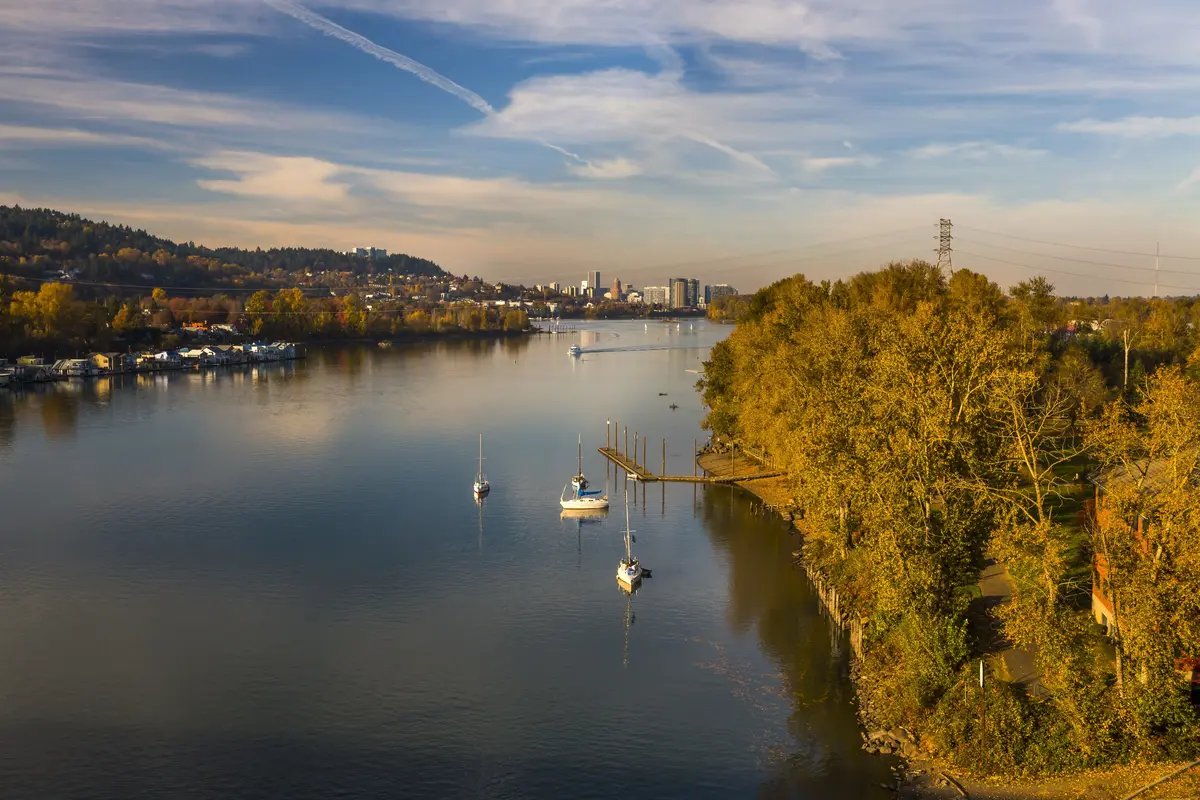
On cost of living, the typical home price of $522,702 (Zillow Home Value Index, July 2026) sits noticeably below what you'd pay in many Portland-area suburbs — see the full breakdown on the cost-of-living page. Oregon's no-sales-tax environment helps daily budget management, and the effective property tax rate of approximately 0.96% is among the more manageable in the region. The Willamette River runs along the city's western edge, Elk Rock Island is reachable on foot from the riverbank, and Milwaukie Riverfront Park gives the downtown a genuine outdoor gathering point that doesn't require a car to reach.
This guide covers the six things retirees most need to evaluate before committing: who Milwaukie genuinely fits, what the healthcare picture looks like up close, the retiree tax environment, how walkable and socially active daily life is, what downsizing inventory actually exists here, and how Milwaukie stacks up against the retirement-relevant towns around it.
Why Retirees Are Choosing Milwaukie
Milwaukie works best for retirees who want Portland-level access without Portland-level prices or Portland-level chaos. If your retirement picture involves a walkable downtown you can reach on foot, a light rail line that connects you to the city without parking, a hospital you can get to in under ten minutes, and a genuine sense of neighborhood — this city delivers all four at once, which is rarer than it sounds in the Portland metro.
The fit is strongest for retirees who have already lived in the Pacific Northwest and know what 142 sunny days a year actually means for lifestyle planning. The gray stretches are real, and people who retire here from sunnier states often underestimate how much the October-through-April overcast shapes daily rhythms. Those who thrive here tend to have indoor hobbies, a tolerance for mild and wet winters, and an appreciation for the long, luminous summers that reward the patience.
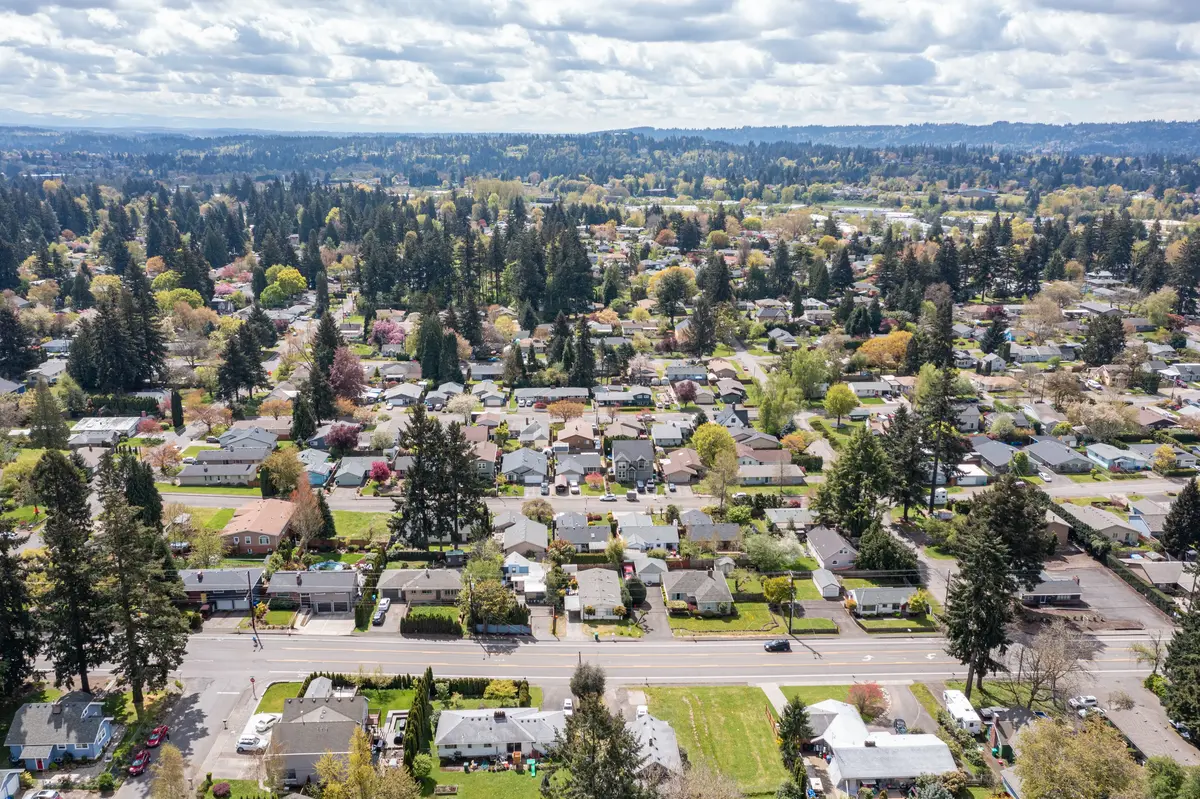
The honest case against Milwaukie: it is not a purpose-built retirement destination. There are no 55+ communities within city limits, the housing stock skews toward older single-family homes that may need updating, and the city does not have the concentrated senior-amenity infrastructure that a planned retirement community provides. If a dedicated active-adult campus with a fitness center, organized programming, and a maintenance-free lifestyle is what you are after, you will need to look at surrounding communities. But if you want a real city — with a farmers market, a riverfront park, an actual neighborhood identity, and a hospital in walking distance — Milwaukie is a more compelling answer than most people expect.
Healthcare & Medical Access in Milwaukie
The Local Anchor
Providence Milwaukie Hospital sits inside city limits — not across a county line, not a twenty-minute drive away. It is a 77-bed acute-care facility with 24/7 emergency medicine, primary and specialty care, general and specialty surgery, radiology, diagnostic imaging, and pathology. The service lines most relevant to retirees — cancer, heart, orthopedics, and rehabilitation — are recognized areas of strength at this hospital, not afterthoughts.
For retirees evaluating a city, proximity to emergency care is not an abstract concern. The fact that Providence Milwaukie is a genuine acute-care hospital rather than an urgent-care clinic distinguishes Milwaukie from smaller suburban cities in Clackamas County that funnel residents to facilities much farther away.
The Distance-to-Advanced-Care Reality
Providence Milwaukie is the right answer for most day-to-day and urgent medical needs. For highly specialized tertiary care — complex cardiac surgery, major trauma, cutting-edge oncology trials — the full Oregon Health & Science University system is the regional answer, and it is in Portland, roughly the distance of the commute that most Milwaukie residents already make casually. That proximity is a genuine asset. Retirees managing serious chronic conditions should map the specific specialists they rely on before committing; the Portland metro has deep specialty depth, and Milwaukie's position inside it means you are never far from it.
The community infrastructure around healthcare is worth noting alongside the hospital itself. The Milwaukie Community Center Foundation runs a Meals on Wheels program that delivers nearly 70,000 scratch-made meals a year to homebound seniors and people with disabilities in the area. The Foundation also supports wellness and respite programs, minor home repair services, legal aid, and health clinics — a support network that matters to retirees at every stage of the aging process, not just the acute-care moments.
The Retiree Budget in Milwaukie
The Oregon Tax Posture
Oregon does not tax Social Security or Railroad Retirement benefits at the state level. The exemption applies fully regardless of total income — a meaningful distinction from states that phase out the exemption as income rises. For retirees whose primary income is Social Security, this is a genuine advantage.
The trade-off is that Oregon taxes most other retirement income. Pension distributions, 401(k) and IRA withdrawals, and investment income are subject to Oregon state income tax at rates that reach 9.9% at higher income levels. If a significant share of your retirement income comes from tax-deferred accounts, Oregon's income tax burden is real and worth modeling carefully with a tax advisor before you move.
Oregon levies no state sales tax. For retirees managing a fixed income, the absence of sales tax on groceries, prescriptions, and everyday purchases adds up meaningfully over the course of a year compared with most other states.
Property Tax and Deferral
The effective property tax rate in Milwaukie is approximately 0.96% — a rate that puts Milwaukie in a manageable range compared with many West Coast markets. Oregon also offers a Property Tax Deferral program for homeowners age 62 or older whose household income does not exceed $60,000 (the 2025 threshold). Qualifying residents can defer county property taxes entirely until they sell the home. For retirees on fixed incomes who own their home outright or are close to it, this program can meaningfully reduce monthly cash-flow pressure — worth a direct conversation with Clackamas County to confirm current qualification terms.
Estate Planning Note
Oregon has its own estate tax with a $1 million exemption — well below the federal threshold. Many estates that would pass free of federal estate tax are subject to Oregon's version. If your estate planning is built around federal exemption levels, it is worth revisiting with an Oregon-licensed attorney after you establish residency here.
The interactive calculator below can help you model ownership costs at current rates.
Looking to buy in Milwaukie? Estimate your payment.
Enter your numbers to see an estimated monthly mortgage payment.
Estimate only. Excludes HOA fees and mortgage insurance. The interest rate above is a starting point, not a quoted rate — replace it with your own to see real numbers. Insurance is a flat placeholder, not a Milwaukie quote.
Walkability, Community & Staying Active in Milwaukie
Getting Around Without a Car
Most of Milwaukie requires a car for routine errands. That is the honest starting point. The most walkable area is Historic Milwaukie — the downtown core — where a concentration of cafés, the weekly Milwaukie Farmers Market, and the transit connection make it genuinely possible to manage daily life with less driving. Hector Campbell and Lewelling neighborhoods also have better on-foot access than the city's outer edges.
The MAX Orange Line light rail connects Milwaukie's downtown station to SE Portland, Portland State University, and Portland City Center — making it realistic for retirees to reach the city's larger cultural and medical institutions without a car. That connection opened in September 2015 and has become a genuine part of how Milwaukie residents move through the region. For retirees thinking about the day they prefer not to drive, the Orange Line is a real answer rather than a theoretical one.
Where the Community Gathers
Milwaukie Riverfront Park along the Willamette is the city's natural gathering point — flat, accessible, and connected to the broader trail network that reaches Elk Rock Island. The Milwaukie Farmers Market draws a regular crowd through the warm months and functions as the social center of downtown as much as it does a food source.
The Milwaukie Community Center Foundation is the civic infrastructure that makes senior life here feel supported rather than ad hoc. Beyond the Meals on Wheels program, the Foundation funds wellness programs, respite care, and minor home repair services that allow older residents to stay in place longer. The old Milwaukie City Hall was redeveloped and reopened in April 2025 as a community gathering space — Keeper Coffee is among the anchors in that space, giving the downtown a genuinely pleasant place for the kind of slow weekday morning that retirement is supposed to enable.
For retirees who want an active social life, the Milwaukie Farmers Market, the riverfront, Spring Park, Kellogg Park, and North Clackamas Park provide a rotation of outdoor settings through the year. The cultural texture — Dark Horse Comics headquarters, the Milwaukie Museum, the dining scene along the main commercial corridor — is specific enough to give the city identity without being overwhelming in the way that a larger city can feel.
Right-Sizing: Downsizing in Milwaukie
What the Inventory Looks Like
Milwaukie's housing stock skews toward mid-century single-family homes — the kind of ranch-style and one-story construction that downsizers often find more manageable than multi-story Craftsman bungalows. Single-level inventory exists here, but it is not abundant, and it competes for buyers who know exactly what they are looking for. If single-level living is a firm requirement rather than a preference, expect a longer search and be ready to act when the right home appears.
Condos and attached-housing options exist in Milwaukie but represent a smaller share of the market than in denser Portland neighborhoods. The trade-off is that those that do come available often sit in the walkable downtown core — a meaningful advantage for retirees who want proximity to transit and the farmers market without the maintenance of a larger lot.
The 55+ Picture
No 55+ communities were found in Milwaukie. This is the most significant gap in the city's retirement-housing landscape. Retirees who want the structure of a purpose-built active-adult community — organized programming, maintenance-free living, an on-site social calendar — will need to look in surrounding communities rather than inside city limits. Never name a manufactured-home or mobile-home park as a retirement alternative; those are different housing categories with different ownership structures.
For retirees weighing a conventional home purchase as their downsizing move, the neighborhoods page covers which areas of the city offer the housing stock most likely to suit single-level or lower-maintenance living, and the buying process page covers the mechanics of purchasing here. The downtown core and the Jennings Lodge area both have character worth understanding before ruling anything out.
Milwaukie vs Nearby Retirement Destinations
| City | Cost vs Milwaukie | Primary Hospital | Walkability | Senior Living Depth | Overall Retirement Fit |
|---|---|---|---|---|---|
| Milwaukie | Anchor | Providence Milwaukie Hospital (in-city, 77-bed acute care) | Moderate; downtown core walkable, MAX Orange Line access | Low — no 55+ communities in city limits; strong community foundation support | Transit Walkable Core Good for independent retirees wanting urban access |
| Portland | About the same | Multiple major systems, including OHSU and Providence Portland | High; most neighborhoods genuinely walkable, extensive transit | High — significant senior living inventory across the city | Walkable Transit Strongest for retirees who want maximum urban amenities |
| Oak Grove | About the same | Served by Providence Milwaukie (minutes away) | Low; car-dependent for most errands | Low — limited senior-specific housing | Quiet Residential feel, good for those who already have community ties |
| Gladstone | About the same | Regional facilities nearby; no in-city acute-care hospital | Low to moderate; small downtown, mostly car-dependent | Low to moderate — smaller city with fewer senior-specific options | Nature Quiet Suits retirees who prioritize riverfront access and slower pace |
| Oregon City | Noticeably higher | Legacy Health system presence in the area | Moderate; historic downtown is walkable, outskirts less so | Moderate — more senior living options than Milwaukie | Community Views Good alternative if 55+ inventory is a priority |
| Happy Valley | Noticeably higher | Regional facilities; no in-city acute-care hospital | Low; designed for car-dependent living | Moderate — newer construction includes some senior-oriented product | Families Better suited to active retirees who drive and value newer construction |
Portland beats Milwaukie on walkability and senior living depth, but at roughly the same cost — the real advantage of Milwaukie over Portland is the smaller-city feel and the in-city hospital that Portland's denser neighborhoods don't provide in the same immediate way. Oregon City and Happy Valley offer more senior housing inventory but come at a noticeably higher price point, which matters on a fixed income. Gladstone is quieter and less expensive in feel, but the lack of an in-city hospital and limited transit make it a weaker choice for retirees who are planning ahead for reduced driving. For independent retirees who want genuine urban access, a walkable downtown within reach, and light rail to Portland — without paying Portland prices — Milwaukie is the most complete answer in its cost tier.

Local Expert Takeaway: Milwaukie is a genuinely practical retirement choice for independent adults who want a real city — Providence Milwaukie Hospital inside city limits, the MAX Orange Line to Portland, Milwaukie Riverfront Park and Elk Rock Island on the doorstep, and a downtown that has become more worth walking since the old City Hall reopened as a community gathering space in April 2025. The gaps are real: no 55+ communities exist within city limits, single-level inventory is limited, and Oregon's income tax on pension and IRA withdrawals is meaningful. But for retirees whose primary income is Social Security, whose mobility is intact, and who want the Pacific Northwest without the Portland price premium, Milwaukie makes a strong, specific case.
Quick Takeaways & FAQs
✅ Providence Milwaukie Hospital is a 77-bed acute-care facility with 24/7 emergency medicine located inside city limits — one of the strongest in-city healthcare assets for retirees in the Portland Metro at this price point.
⚠️ No 55+ communities exist within Milwaukie city limits, and single-level home inventory is limited — retirees with a firm need for either will face a narrower search than in surrounding suburbs.
📍 Oregon exempts Social Security from state income tax entirely, but taxes pension and IRA withdrawals at rates up to 9.9% — a meaningful distinction for retirees whose income comes primarily from tax-deferred accounts.
Is Providence Milwaukie Hospital adequate for retiree healthcare needs?
Does Oregon tax Social Security income for retirees?
Are there 55+ or active-adult communities in Milwaukie?
How walkable is Milwaukie for retirees who want to drive less?
Is Oregon's property tax deferral program available to Milwaukie retirees?
Moving to Oregon?
Tell us what you need help with and we'll connect you with local resources.
