
If you're choosing between staying in California and moving to Milwaukie, the decision usually comes down to one thing: how much of your income goes to housing, taxes, and the general cost of operating a household, and what you get for it. Milwaukie sits along the west bank of the Willamette River about 20 minutes south of downtown Portland, connected by OR-99E (McLoughlin Boulevard) and OR-224 (Milwaukie Expressway). It is a city of 21,620 people — small enough that neighbors know each other, large enough that you are not driving forty minutes for dinner. The Willamette runs along the western edge, Elk Rock Island sits in the river off the city's southern end, and the MAX Orange Line light rail links Historic Milwaukie directly to Portland's core. Those three facts shape daily life here more than almost anything else.
The economic backbone is a mix of public institutions and food manufacturing. The North Clackamas School District anchors the education side of the local economy. Bob's Red Mill — the whole-grain milling company whose store and visitor center sits inside city limits — and Blount Fine Foods both operate here. The city itself and a regional healthcare employer round out the employer picture. Dark Horse Comics, founded here in 1986 and still headquartered downtown after nearly four decades, gives Milwaukie a cultural identity unusual for a city its size — the fourth-largest comic publisher in the United States calling a town this small home is the kind of thing that only happens once. People move here because they can access Portland without paying Portland prices, and because the Willamette Valley's version of Pacific Northwest life — farmers markets, river access, light rail, a genuine independent business culture — is available at a scale that still feels human.
The headline cost-of-living shift is significant. Oregon levies no state sales tax — one of only five states without one — which is an immediate, tangible change from California's daily math. The typical home price in Milwaukie stood at $522,702 as of July 2026, which sits noticeably below California's statewide typical home value of $773,735 (Zillow Home Value Index). Groceries, childcare, and transportation all run lower in Oregon than California on a statewide basis. Health insurance premiums tend to run noticeably below California levels, though you will drive farther for specialist care if you are coming from a large metro. The trade-off on income taxes is real and worth reading carefully before you sign anything — that section is below.
Whether you are already in escrow on a California property and counting the days, or still comparing cities from a spreadsheet, the sections below break down the home price and tax picture, what Californians consistently get wrong about Oregon's income tax, how Milwaukie's neighborhoods compare for a transplant buyer, and what daily life here genuinely looks and feels like once the boxes are unpacked.
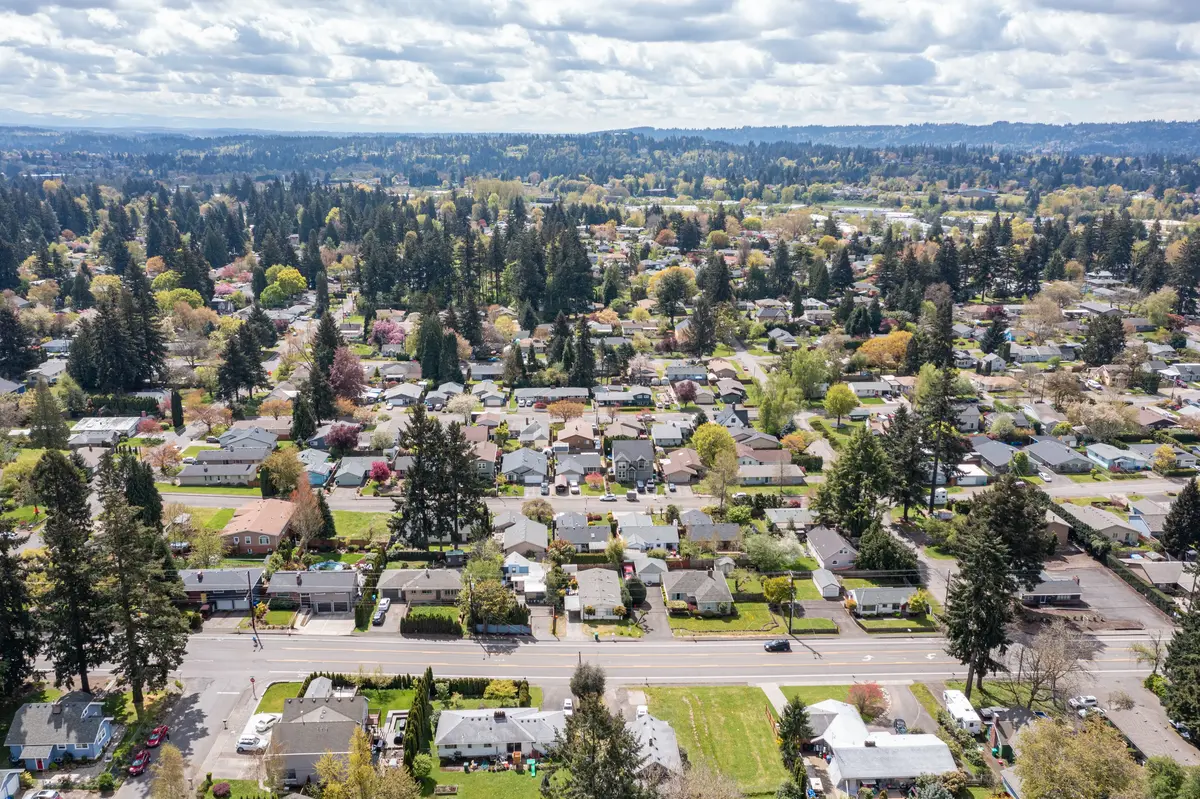
The Home Price Shift: What Your California Equity Buys Here
The most immediate shift — a welcome one — is what happens to your purchasing power. California's statewide typical home value of $773,735 (Zillow Home Value Index) is the statewide figure; what you were actually paying in coastal California or the Bay Area almost certainly exceeded that. Milwaukie's typical home price stood at $522,702 as of July 2026. That gap is not marginal.
For a buyer arriving with California equity, Milwaukie's entry-level inventory is genuinely accessible. Hector Campbell sits below the city median, making it the most accessible entry point for buyers working with a tighter budget. Linwood, Lake Road, Lewelling, Ardenwald-Johnson Creek, Island Station, and Jennings Lodge all cluster near the median — a wide swath of the city is priced consistently, which means you are not hunting for the one affordable pocket. Historic Milwaukie, the downtown corridor anchored by the MAX Orange Line station and Dark Horse Comics' longtime headquarters, has its own distinct character; for neighborhood character and trade-offs by area, the neighborhoods guide goes deeper.
One thing California buyers sometimes miss: Milwaukie's median household income of $86,892 does not comfortably carry the typical home at current prices — the income needed runs about $52,000 higher. That matters if you are relying on a local salary rather than California equity as your primary down payment engine. If you are bringing equity, the math looks very different than if you are starting fresh.
For context: compared with nearby Portland, Milwaukie prices run about the same. Oregon City and Happy Valley both run noticeably higher. That positioning — city-adjacent, under the radar of the more marketed suburbs — is what keeps Milwaukie in the conversation for buyers who want proximity to Portland without the price premium of the suburbs that get more press. The full cost-of-living picture, including utilities, groceries, and transportation, lives on the cost-of-living page.
Property Tax: A Real Advantage Over California
Oregon's effective property tax rate is straightforward by California standards. Milwaukie's effective property tax rate runs approximately 0.96% — noticeably above California's effective property tax rate of 0.71% (Tax Foundation). That gap may feel counterintuitive at first.
The key variable is the assessment base. California's Proposition 13 holds assessments at purchase price, which creates very low effective rates on long-held property — but when you buy at today's prices, your California base resets to full market value. On a $773,735 purchase in California, you would be assessed on that full amount. At Oregon's rate applied to Milwaukie's $522,702 typical price, your annual tax bill is calculated on a meaningfully smaller base, which often produces a lower absolute dollar figure even at the higher rate. The full property tax breakdown lives on the cost-of-living page.
Oregon's Income Tax vs. California's: The Counterintuitive Truth
This is the section most California transplants wish they had read more carefully before moving. The headline comparison is accurate: California's top state income tax rate of 13.3% is the highest in the nation, and Oregon's top rate of 9.9% is meaningfully lower. But the headline comparison is not the whole story, and for most middle-income earners, it is actually misleading.
Oregon's 9.9% bracket kicks in at $125,000 of taxable income for single filers. California's highest rates apply only above $1 million. That means a household earning $100,000–$200,000 will almost certainly pay more Oregon income tax than they were paying in California on the same income. California's top state income tax rate of 13.3% applies only to the highest earners — the bracket structure below that rate is considerably more moderate for middle incomes. Plan your budget around your actual bracket, not the top-line comparison.
Where Oregon Wins on Tax — Clearly and Durably
The sales tax picture is unambiguous. Oregon levies no state sales tax — zero, on everything — while California's statewide base sales tax rate of 7.25% (California Dept. of Tax and Fee Administration) is the highest state-level base rate in the country. Stack on local district taxes and many California cities hit 10% or higher. For a household buying a $40,000 car, that is more than $3,000 in California sales tax and nothing in Oregon. Over time, on groceries, appliances, furniture, and vehicles, the savings compound.
There is a second, less-publicized advantage for buyers choosing Milwaukie specifically over Portland proper. Milwaukie sits in Clackamas County, which places most residents outside Multnomah County's additional 1.5% income tax and the Metro Supportive Housing Services tax of 1%. Both of those levies affect high earners in the Portland core. Milwaukie residents generally are not subject to them, which is a real and ongoing financial difference between living here and living across the county line.
Retirement Income: A Nuance Worth Knowing
Oregon does not tax Social Security benefits at the state level — a genuine advantage over California, which taxes Social Security as ordinary income. However, most other retirement income, including 401(k) withdrawals and IRA distributions, is fully taxable in Oregon at rates up to 9.9%. If you are arriving with a large retirement account balance and plan to draw from it, Oregon's income tax on those distributions can be substantial. This is not a reason not to move — it is a reason to model the numbers with an accountant before you do.
The full income tax breakdown, including Oregon's bracket structure and how it compares to California across income levels, is on the cost-of-living page.

The No-Sales-Tax Reality: What It Actually Means Day to Day
After six months in Milwaukie, almost every California transplant says the same thing about the sales tax: they still reach for the mental math at checkout, adding 8 or 9 percent to a price that was always already the final price. It takes longer to unlearn than you expect.
The practical impact is largest on big-ticket purchases. A new vehicle, a major appliance, building materials for a renovation — these are the categories where the absence of sales tax is not a rounding error but a real dollar figure. For a household spending several thousand dollars per month on taxable goods and services, the annual savings versus California are meaningful. Oregon's zero sales tax is also why bulk-buying trips to warehouse retailers draw shoppers from across the metro — the math works even better without tax layered on top.
Groceries, Childcare, and Transportation
Oregon grocery prices run lower than California's on a statewide comparison basis — and without sales tax on food, the checkout experience is clean. Childcare and transportation costs also favor Oregon over California in the aggregate. These are not dramatic differences on any single line item, but across a full household budget they add up to a cost-of-living profile that most California transplants describe as noticeably more comfortable at the same income level.
For a deeper look at what utilities, groceries, and transportation actually cost in Milwaukie specifically, the cost-of-living page has the full breakdown.
The One Cost That Goes Up: Income Tax on Working Income
To be direct about the trade-off: if you are a working professional earning between $75,000 and $300,000, your Oregon state income tax bill will likely be higher than it was in California. The sales tax savings offset some of that — but they do not fully erase it for high-W2 earners. Where Oregon wins decisively is for households who spend heavily on taxable goods, drive expensive vehicles, or are buying a home at a much lower price point than California. Model your specific situation before assuming the move is a net financial positive. For most buyers arriving with California equity and buying in Milwaukie's price range, it is — but the income tax piece is the variable that surprises people most.
Looking to buy in Milwaukie? Estimate your payment.
Enter your numbers to see an estimated monthly mortgage payment.
Estimate only. Excludes HOA fees and mortgage insurance. The interest rate above is a starting point, not a quoted rate — replace it with your own to see real numbers. Insurance is a flat placeholder, not a Milwaukie quote.
What Californians Should Know About Milwaukie Specifically
Milwaukie is not a suburb of Portland in the sprawling, interchangeable way that phrase sometimes implies. It is a distinct city — historically the Dogwood City of the West and the birthplace of the Bing cherry — with its own waterfront, its own downtown, and a light rail line that connects Historic Milwaukie directly to Portland's core. The MAX Orange Line has carried commuters and errand-runners on that corridor since 2015. If you live in or near downtown Milwaukie, you can reach Portland State University, the South Waterfront, and Portland City Center without a car. That is an unusual amenity for a city this size.
The commute story for drivers is also clean. OR-99E (McLoughlin Boulevard) and OR-224 (Milwaukie Expressway) carry most of the traffic. The drive to Portland takes about 20 minutes under normal conditions — short enough that Milwaukie genuinely functions as a city-adjacent community rather than an outer-ring commuter town. Portland International Airport (PDX) is approximately 14 miles away, which matters for the segment of California transplants who are commuting back to California jobs or clients regularly.
The Seasonal Reality Nobody Mentions in the Listing
Californians relocating to the Willamette Valley tend to underestimate the gray. Milwaukie averages 142 sunny days a year. That is not a misprint, and it is not a rounding down — it is the figure of record. Southern California transplants in particular describe months six through eight as a genuine adjustment. The gray is not dramatic; it is persistent. Winters are mild and rarely drop to extreme cold, but the overcast stretches from November through March can wear on people who grew up in sunshine as a baseline. The flip side is that summers in the Willamette Valley are extraordinary — warm, dry, rarely oppressive — and the river access at Milwaukie Riverfront Park and Elk Rock Island is exactly what you want when those months arrive.
Schools, Safety, and Neighborhood Character
The North Clackamas School District serves Milwaukie's families, and the schools page goes into full detail on ratings, test scores, and individual campuses. For safety context, the safety page covers the numbers in full. On neighborhoods, Milwaukie's eight recognized areas each have a distinct character — Linwood feels established and residential, Historic Milwaukie has the light rail station and the creative energy of Dark Horse Comics' longtime headquarters, and Jennings Lodge borders the river. The neighborhoods guide is the right starting point for matching a specific area to what you are looking for.
Weekends and Local Favorites: What Life Here Actually Looks Like
The Milwaukie Farmers Market runs through the warm months and has a genuinely local character — less tourist-facing than Portland's larger markets, more neighborhood gathering than performance. It is the kind of weekly event where you see the same faces, which is part of what makes Milwaukie feel like a community rather than a transit stop.
Milwaukie Riverfront Park anchors weekend life along the water. Elk Rock Island, accessible from the southern edge of the city, draws hikers and birders. Spring Park, Kellogg Park, and North Clackamas Park give the city a park system that is well-distributed across its neighborhoods — you are rarely more than a few blocks from green space.
The dining and coffee scene punches above its weight for a city of 21,620. Gramma's Corner Kitchen, Two Sisters Cafe Breakfast & Lunch, and Milwaukie Cafe and Bottle Shop anchor the casual breakfast and coffee end of the day. Keeper Coffee - Milwaukie and The Wind Horse draw the morning crowd that prefers a quieter alternative to Portland's busier cafés. Great American Video & Espresso is the kind of place that only exists in a city with enough local identity to sustain it — a coffee shop and video rental operation that Californians find genuinely surprising and locals treat as completely unremarkable.
For evenings: Arrivederci Wine & Jazz brings a wine-bar sensibility to a city that otherwise trends casual. Coasters Brew Pub and River Roadhouse cover the pub-and-grill side. Ohana Hawaiian Cafe represents the range of cuisines that have taken root here. Bob's Red Mill Whole Grain Store & Visitor Center is genuinely worth a visit in the first month — it is not just a retail operation, it is one of those places that tells you something specific about what this city values.
The Dark Horse Comics headquarters in downtown Milwaukie, and Dark Horse founder Mike Richardson's announced plans to open a museum featuring comics, films, and memorabilia, give the downtown a cultural anchor that most Portland-adjacent cities lack. The Milwaukie Museum rounds out the civic history side. None of this is San Francisco — and most people who move here from California are relieved by that. Milwaukie's appeal is that it has enough of what you want from a city without the noise and cost that come with being one.

Local Expert Takeaway: The buyers who thrive in Milwaukie after a California move are the ones who did the tax math honestly before closing. The home price gap versus California is real and significant — $522,702 versus California's statewide typical home value of $773,735 — and the zero sales tax adds up faster than most people expect. The income tax picture is more complicated: Oregon's top rates apply at much lower incomes than California's, and working professionals in the $100K–$300K range often pay more Oregon income tax than they were paying in California. What makes the whole equation work is the combination of lower home prices, no sales tax, Milwaukie's Clackamas County location outside Portland's additional income tax levies, and a cost structure on groceries, childcare, and transportation that runs lighter than California. Run the numbers on your specific income and spending before you move — and then go walk the riverfront at Elk Rock Island on a July afternoon, because that part doesn't show up in the spreadsheet.
Quick Takeaways & FAQs
✅ Milwaukie's typical home price of $522,702 (July 2026) sits noticeably below California's statewide typical home value, giving California equity buyers genuine purchasing power from day one.
⚠️ Oregon's income tax rate hits middle-income earners harder than California's — at $100,000 of income, Oregon's bill runs higher, which surprises most transplants who assumed the lower top rate meant paying less.
📍 Milwaukie sits in Clackamas County, placing most residents outside both Multnomah County's 1.5% income tax and the Metro Supportive Housing Services tax that applies in Portland proper — a quiet but ongoing financial advantage.
Is it cheaper to live in Milwaukie, Oregon than in California?
Does Oregon have lower income taxes than California?
What is Oregon's sales tax, and how does it compare to California?
What surprises California transplants about Milwaukie after they move in?
How does Milwaukie's location in Clackamas County affect taxes compared to living in Portland?
Moving to Oregon?
Tell us what you need help with and we'll connect you with local resources.
