
You've probably run the numbers at least once. Oregon City shows up on the Portland Metro radar for Californians who have been priced out, transferred north, or simply decided that the math no longer makes sense at home. What most people don't expect is the setting: this is a city built on three basalt terraces rising above the Willamette River, served by one of only four municipal elevators in the world, and carrying the distinction of being the first incorporated city west of the Rocky Mountains. It is not a generic suburb. Oregon City has a specific physical character — a downtown perched at the edge of a bluff above Willamette Falls, one of the largest waterfalls by volume in North America — and that character shapes daily life in ways that square footage comparisons cannot capture. The city sits roughly about 25 minutes to Portland via I-205, close enough for a commute, distinct enough to feel like its own place.
Oregon City functions as the county seat of Clackamas County, and that civic identity runs through its employer base: Clackamas Community College, Clackamas County government, the Oregon City School District, and the City of Oregon City itself anchor the local economy. A regional healthcare presence rounds out the major employers. The population stands at 37,755 — not a small town, but not an anonymous suburb either. The Oregon City School District holds a B- rating, according to Niche, with 6,988 students enrolled in 2025-26. For Californians who moved from well-funded districts in the Bay Area or Southern California, that rating lands somewhere in the middle of expectations — worth investigating but not a dealbreaker for most families.
The headline number most Californians focus on is the typical home price: $605,330 as of July 2026, which sits noticeably below California's statewide typical home value of $773,735. That gap is real, and it matters at the kitchen table. Compared with nearby West Linn, Oregon City runs noticeably lower; against Gladstone and Milwaukie, it is somewhat higher — putting it in the middle of the south-metro range. Renters find the city similarly accessible, with a typical two-bedroom running between $1,800 and $2,190 per month. The tax picture is more complicated than it looks on a bumper sticker, and the sections below will work through it honestly — including the parts that don't favor Oregon.
Whether you are relocating for work, for space, or for a change in pace, this guide covers what Californians actually encounter after moving to Oregon City: the home-price and tax reality, the lifestyle trade-offs, the neighborhoods, and the specific friction moments that tend to catch new arrivals off guard.

Home Prices: The Real California Comparison
The straightforward version: Oregon City's typical home value is $605,330 (July 2026 Zillow Home Value Index), while California's statewide typical home value of $773,735 sets the baseline you are leaving behind. That gap is meaningful — Oregon City runs noticeably below what you would pay statewide in California — but it requires context to be useful.
Oregon City is not the cheapest option in the Portland Metro. Nearby West Linn runs noticeably higher, while Gladstone and Milwaukie both come in somewhat lower. Within Oregon City itself, neighborhoods vary considerably in character — Park Place on the upper terraces feels like a different city from Canemah along the river at the south end of downtown. Entry-level inventory exists, but the median household income of $97,829 falls meaningfully short of what a buyer needs to carry the typical home here at current rates — so do not assume Oregon City is automatically affordable simply because it is cheaper than where you came from.
What the price comparison does not capture is the physical product. Oregon City's topography — those three basalt terraces rising above the Willamette River — means some homes have views and elevation changes that simply do not exist in the flat grid of most California suburbs. A hillside home above downtown is a genuinely different purchase than a tract house in a comparable California price range.
What Californians Often Underestimate
The biggest shock is not the sticker price — it is discovering that the gap with California has narrowed faster than most people expected. Oregon City is not the bargain-basement escape from California pricing that it was a decade ago. Well-priced homes in desirable neighborhoods move; buyers who arrive expecting to negotiate aggressively from a position of strength are sometimes surprised. Come prepared rather than casual.
One more note: if you are selling a California home and bringing equity north, you are in a strong position relative to local buyers. That equity advantage is real, and it changes your options in the Oregon City market in ways worth discussing with an agent who knows both sides of the transaction.
The Tax Picture: Where Oregon Wins and Where It Doesn't
Oregon's tax system is the single most misunderstood part of moving here from California, and the misunderstanding usually runs in both directions — people either expect a windfall or expect a disaster. The honest answer is: it depends on what you earn and how you spend.
| Tax Category | Oregon City / Oregon | California |
|---|---|---|
| State Sales Tax | 0% — no sales tax | California's statewide base sales tax rate of 7.25% (avg. combined rate ~8.80%) |
| Top State Income Tax Rate | 9.90% | California's top state income tax rate of 13.3% |
| Effective Property Tax Rate | 0.96% (Oregon City) | California's effective property tax rate of 0.71% |
| Gas Tax (per gallon) | $0.40 | $0.736 (Tax Foundation, highest in nation) |
| Social Security Tax | Not taxed at state level | Not taxed at state level |
| Retirement Income (pension, IRA) | Subject to graduated income tax; federal pension may qualify for partial subtraction | Generally taxed at ordinary income rates |
* Oregon income tax rates per Oregon Dept. of Revenue; California figures per Tax Foundation and California Franchise Tax Board.
The Income Tax Nuance Nobody Mentions
California's top state income tax rate of 13.3% applies only to the highest earners — and Oregon's lower top rate of 9.90% does look better in that bracket. For most working households, though, Oregon's brackets phase in sooner, meaning many middle-income earners actually pay more in state income tax in Oregon than they would have in California. That is counterintuitive and worth sitting with before you celebrate the lower top rate.
The offset is Oregon's 0% sales tax. For a household with significant everyday spending, eliminating sales tax on every purchase — groceries, appliances, furniture, clothing, a car — puts real money back. Households that spend heavily tend to come out ahead overall; those with very high incomes and modest consumption patterns may not see the windfall they expected on income tax alone.
Property Tax: The Proposition 13 Wrinkle
Oregon's effective property tax rate of 0.96% runs noticeably above California's effective property tax rate of 0.71%. On paper, that looks like a disadvantage for Oregon — and for a buyer coming from California without much home equity history, it is. But if you have owned a California home for fifteen or twenty years, your assessed value may be frozen so far below market that your effective rate is far lower than 0.71%. Long-tenured California homeowners sometimes find Oregon's rate is a more significant jump than the statewide California figure implies. That Proposition 13 protection does not follow you across the state line.
Gas and Everyday Costs
Oregon's gas tax of 40 cents per gallon compares favorably with California's 73.6 cents per gallon — the highest gas tax in the nation per the Tax Foundation. For a household with two commuting vehicles, that difference adds up meaningfully over a year. Pair that with no sales tax, and the day-to-day cost of living in Oregon City tends to feel lighter than the headline income-tax numbers suggest.
Lifestyle Reality: What Changes and What Stays the Same
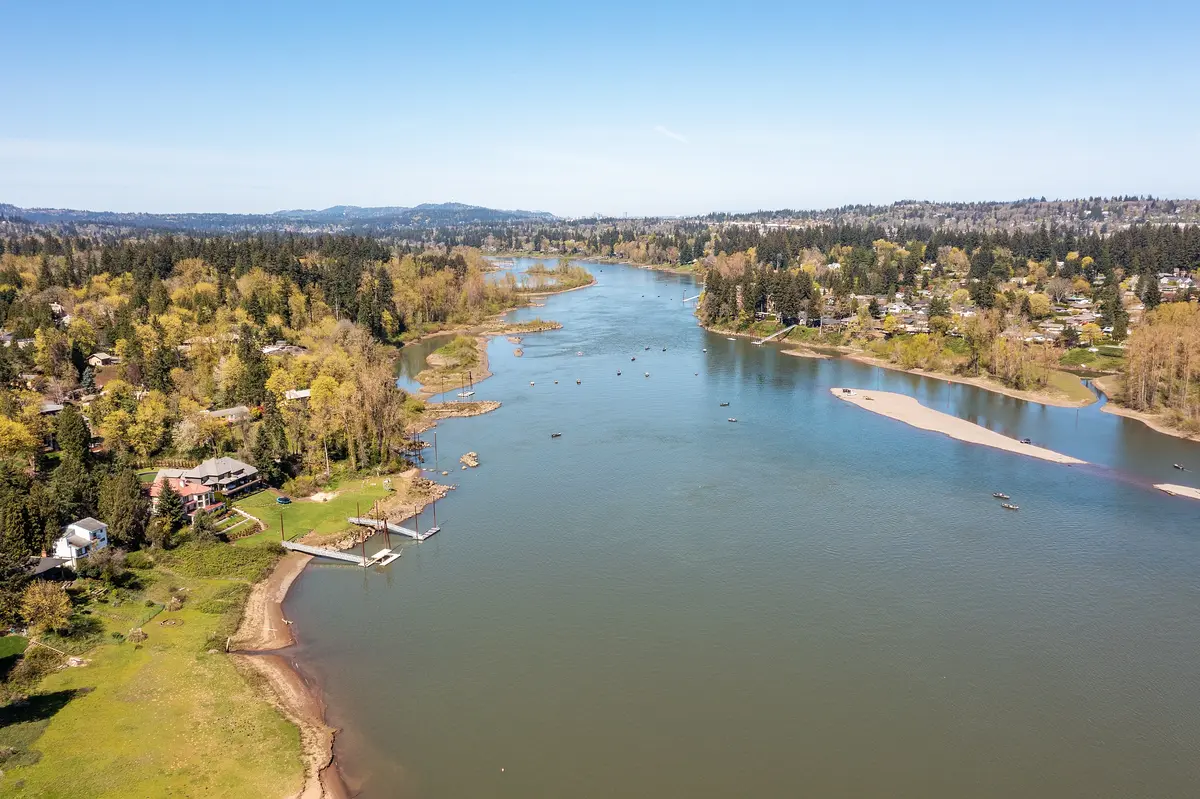
Oregon City is a city of 37,755 people built on a landform that forces you to notice where you are. The Municipal Elevator — one of only four in the world — still runs between the waterfront and the residential terraces roughly 250 feet above downtown, connecting the same two worlds it connected when workers rode it in 1915. Willamette Falls sits just below downtown, and the End of the Oregon Trail Interpretive Center and McLoughlin House National Historic Site give the city a historical density that most Pacific Coast suburbs simply do not have.
What Californians Notice After Six Months
The first thing is the rain — not dramatic storms, but persistent overcast that runs from November through April. Oregon City averages 143 sunny days a year, and for transplants from San Diego, the Central Valley, or the South Bay, that number lands harder than any tax calculation. The second thing is how quickly the city's pace resets expectations. Errands do not involve highway merging and twenty-minute waits at every light. The outdoor access — Canemah Bluff Nature Park, Newell Creek Canyon Nature Park, the trails along the Willamette — is immediately on hand rather than an hour's drive.
Health coverage costs run noticeably below what most Californians were paying, though you will drive farther for specialist care. The trade-off is real and worth factoring if your household has specific medical needs; the retiring page covers healthcare access in detail.
What You Give Up
Oregon City is not Portland. The dining and entertainment density is genuinely smaller. A serious shopping trip often means driving out of town. Portland International Airport (PDX) is approximately 20 miles out, which is manageable but not walking distance. The city's historical significance does not translate into urban amenity depth — it is a place that rewards people who value character and outdoor access over the full menu of a larger metro.
People do move out of Oregon City, and the reason is usually one of two things: the rain accumulates into genuine seasonal depression after a couple of winters, or a job change pulls the household closer to Portland proper and the commute via I-205 starts feeling like the wrong direction. Neither is a dealbreaker for the right buyer, but both are honest and worth naming before you sign.
What Stays the Same
The community texture of a county-seat city — where the government, the college, and the school district are the anchors — tends to produce stable, civic-minded neighborhoods. The Oregon City Farmers Market gives the downtown a seasonal gathering point that California transplants often recognize immediately. The outdoor infrastructure along the Willamette corridor is genuinely excellent.
Looking to buy in Oregon City? Estimate your payment.
Enter your numbers to see an estimated monthly mortgage payment.
Estimate only. Excludes HOA fees and mortgage insurance. The interest rate above is a starting point, not a quoted rate — replace it with your own to see real numbers. Insurance is a flat placeholder, not a Oregon City quote.
Neighborhoods: Where Californians Actually Land
Oregon City's three-terrace topography means neighborhoods feel more distinct from one another than they would in a flat suburban grid. Elevation, views, and proximity to the waterfront are real variables here, not just real estate marketing language.
Park Place sits on the upper terraces and draws families looking for established, wooded streets at a price point above the city median. The McLoughlin Historic District puts you within walking distance of downtown and the waterfront, with older Craftsman and Victorian stock that appeals to buyers who want something with genuine age and character. Caufield offers established residential streets at a lower price point that works well for families prioritizing space over views. Tower Vista and Hazel Grove both land near the city median and attract buyers who want newer construction with good school proximity. Hillendale and Canemah sit below the city median and attract buyers who prioritize quiet, natural access, and a smaller-scale feel — Canemah in particular hugs the river at the southern edge of downtown with Canemah Bluff Nature Park directly accessible on foot.
The Geographic Reality
Californians who come from flat suburbs sometimes underestimate how much the bluff-and-terrace structure shapes daily navigation. A home on the upper terrace with views of the Cascades is a genuinely different daily experience than a home in the McLoughlin Historic District within walking distance of the waterfront. Both are Oregon City — and they feel like different cities. Tour both elevations before committing to a neighborhood.
Canemah in particular tends to surprise California transplants: a small historic neighborhood tucked against the river at the southern edge of downtown, with trail access that would require a significant drive from most California suburbs. It draws buyers who want something older and more specific than the standard suburban offering, and it delivers that at a price point below the city median.
Weekends and Local Favorites in Oregon City
Oregon City's weekend rhythm is shaped by its river, its bluffs, and its history — none of which require a long drive to reach. Clackamette Park sits at the confluence of the Clackamas and Willamette rivers and draws a steady crowd on warm weekends. The Willamette Falls Overlook gives a direct line of sight to one of the most powerful waterfalls in North America. Canemah Bluff Nature Park and Newell Creek Canyon Nature Park offer trail access that would require a significant drive from most California suburbs.
The McLoughlin House National Historic Site and the End of the Oregon Trail Interpretive Center are the two landmarks that most new residents find themselves visiting multiple times — once out of obligation and again because guests keep asking to see them. The Municipal Elevator, short as the ride is, remains genuinely worth riding for the view it delivers of downtown and the river below.
The Food and Coffee Scene
Oregon City's dining and coffee options are concentrated enough to feel curated rather than sprawling. The Highland Stillhouse, Stone Cliff Inn, Rivershore Bar & Grill, Ranee's on Main, and The Hive Social represent the local restaurant anchors — independent operations with distinct identities rather than chain fill. For coffee, Black Ink Coffee, Black Rock Coffee, Coffee Rush, Pure Bliss Bakery & Cafe, and Lucky Rooster cover the spectrum from no-frills espresso to full café experience. The Oregon City Farmers Market runs through the warm months and pulls a strong turnout from residents across all the neighborhoods — it is where you are most likely to meet your neighbors in the first year.
What the City Misses
The honest assessment: Oregon City is not a dining destination for the Portland Metro. The scene is good for a city of 37,755 and thin compared with the options forty minutes up I-205. If weekly access to a wide range of restaurants, live music venues, or cultural institutions is non-negotiable, Oregon City works best as a home base paired with intentional Portland trips — not as a self-contained urban experience. Most residents make peace with that trade-off quickly. Some do not, and they tend to relocate closer to the city within two or three years.
Molalla River State Park sits a short drive from the city and extends the outdoor reach considerably, particularly for paddling and wildlife access along the river corridor. For Californians accustomed to driving an hour to reach wilderness, the proximity of genuine green space is one of the clearest lifestyle upgrades the move delivers.

Local Expert Takeaway: Oregon City is the right move for a Californian who wants genuine history, bluff-and-river scenery, and a meaningful home-price reduction — and who can absorb the nuances of Oregon's tax structure honestly. The 0% sales tax is real money, the income tax picture requires a closer look depending on your income, and the property tax rate runs above what long-tenured California homeowners have been paying under Proposition 13. None of that changes the fundamental appeal: $605,330 buys a substantively different life here than it does almost anywhere in coastal California, and the access to Willamette Falls, the trail network, and the Portland Metro job market via I-205 makes the trade-off work for a wide range of buyers. Tour the upper and lower terraces separately before you decide on a neighborhood — the elevation difference is a lifestyle difference, not just a view.
Quick Takeaways & FAQs
✅ Oregon City's typical home value of $605,330 (July 2026) sits noticeably below California's statewide typical home value of $773,735, with the added benefit of zero state sales tax on every purchase.
⚠️ Oregon's income tax brackets phase in sooner than California's, meaning many middle-income earners pay more in state income tax in Oregon than they did at home — the 0% sales tax offsets this, but only partially for households that don't spend heavily.
📍 The city's three-terrace topography creates genuinely distinct neighborhoods at different elevations; homes on the upper bluff above downtown deliver Cascade views that simply don't exist in a flat California suburb.
Is Oregon City actually cheaper than California for housing?
How does Oregon's income tax compare with California's for someone making $150,000 a year?
What happens to my property taxes if I move from California to Oregon City?
How far is Oregon City from Portland, and what are the commute options?
What should a California transplant know about Oregon City that the listings don't mention?
Moving to Oregon?
Tell us what you need help with and we'll connect you with local resources.
