What Is Living in Molalla, Oregon Like?
Molalla didn't get its first stoplight until 2002. That single fact tells you nearly everything about how fast this small Clackamas County city has had to grow up. Sitting in the Willamette Valley foothills about 48 minutes to Portland, Molalla still carries the bones of the agricultural crossroads it was for most of the 20th century — the rodeo grounds, the grain silos, the two-lane state highways threading through town — while new subdivisions have steadily pushed out from the old core. The central tension for anyone considering a move here is this: you are trading urban convenience for space, quiet, and a price point that is genuinely difficult to find this close to the metro.
The city's economy runs on a relatively small set of anchors. The Molalla River School District and the City of Molalla itself are the dominant employers, joined by Clackamas County government and Safeway. That means most working-age residents commute out — to Oregon City, Woodburn, or Portland — and remote work has become a significant part of how Molalla's households actually make their living. The school district serves 2,519 students enrolled in 2025-26 across its schools, with Molalla High School's Indians competing under OSAA. Molalla draws a specific kind of buyer: families who want a yard and breathing room, people priced out of the inner suburbs, and long-distance commuters who have made the math work in exchange for a fundamentally different quality of life at home.
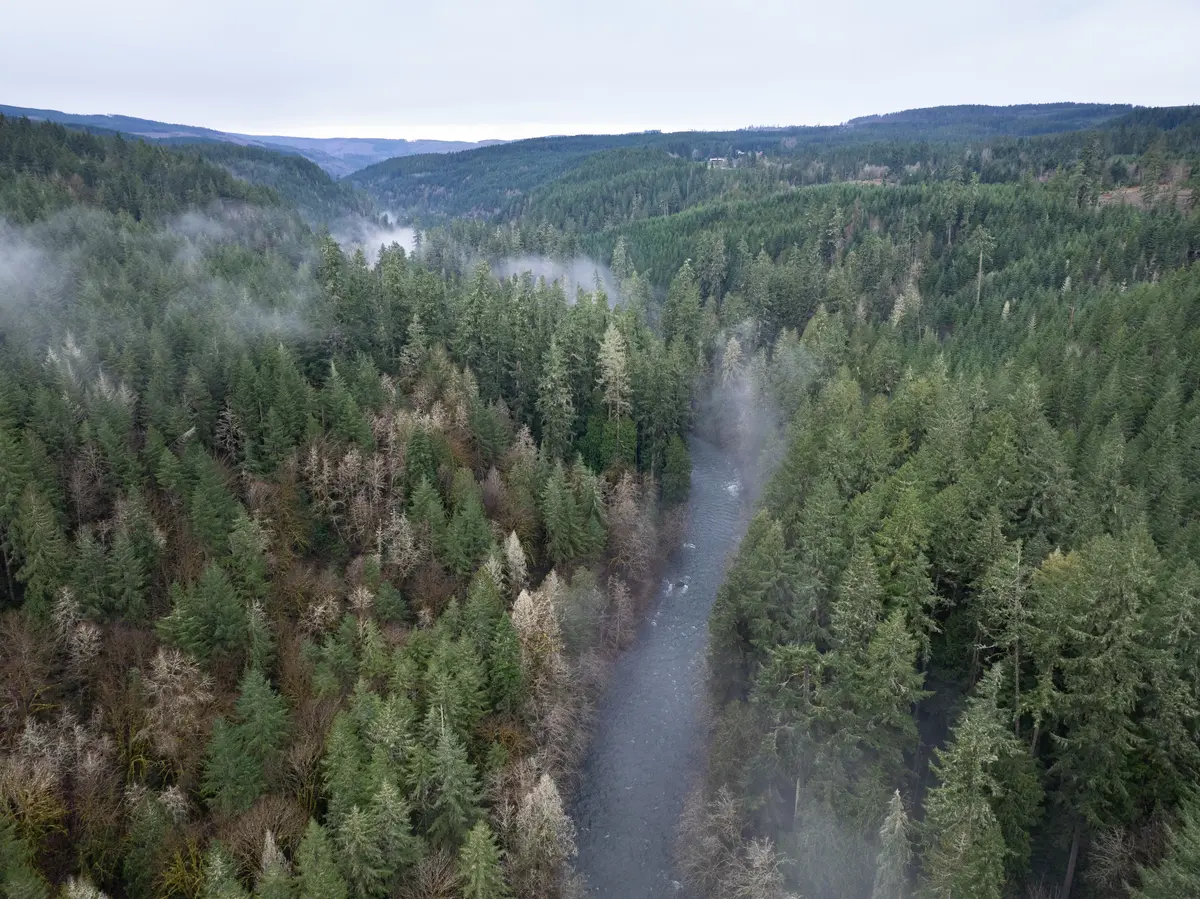
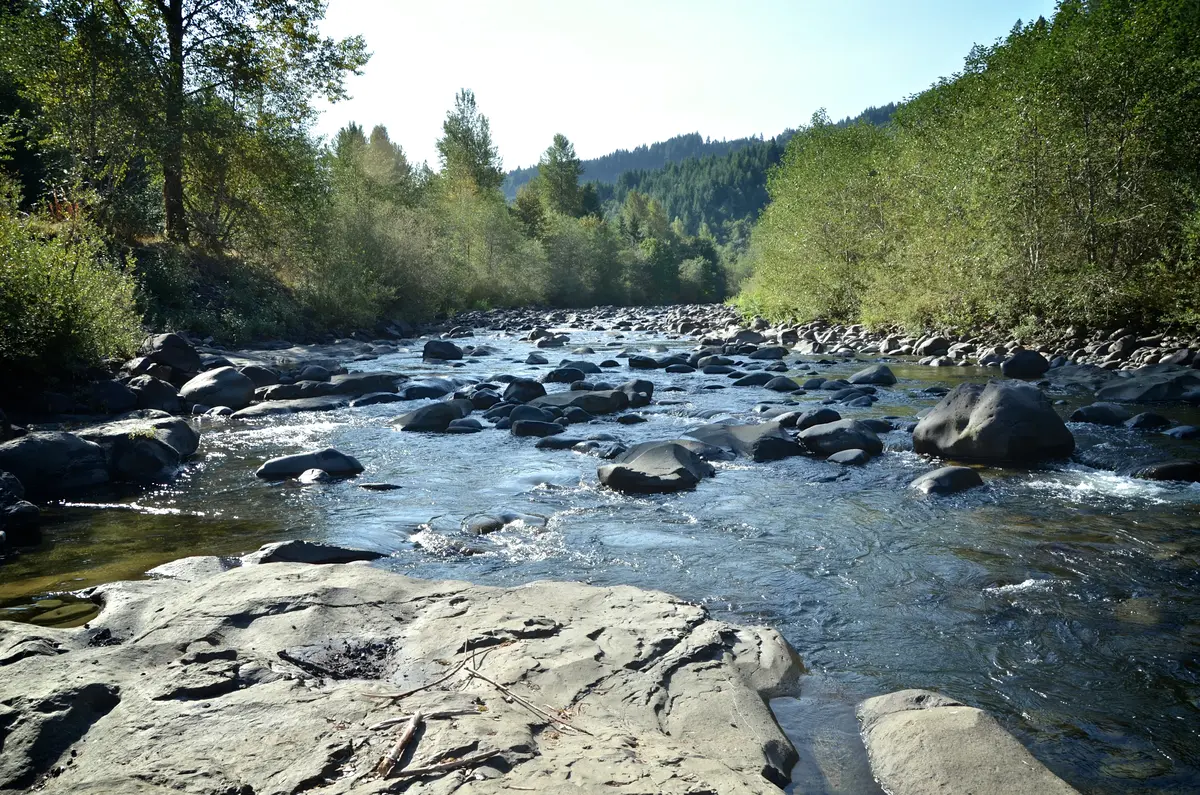
Prices here sit well below what you'd pay in Lake Oswego or West Linn, and even noticeably below Canby and Oregon City. The effective property tax rate runs at approximately 0.96%, which is moderate by Oregon standards. Day-to-day life orbits the Molalla River, which is one of the few undammed tributaries of the Willamette and gives residents access to over 50 miles of trails, summer swimming holes, and some of the better steelhead fishing in the state. Feyrer Park, three miles southeast of town, functions as the city's unofficial backyard — a Clackamas County-run riverside park where families spend summer weekends. With 141 sunny days a year, Molalla winters are gray in the way most of western Oregon is, and that adjustment surprises transplants from sunnier climates more than they expect.
Whether you're seriously considering a move or still in the research phase, the sections below break down Molalla's neighborhoods, housing market, schools, daily commute, and what weekends here actually look like.
Molalla at a Glance
Looking to buy in Molalla? Estimate your payment.
Enter your numbers to see an estimated monthly mortgage payment.
Estimate only. Excludes HOA fees and mortgage insurance. The interest rate above is a starting point, not a quoted rate — replace it with your own to see real numbers. Insurance is a flat placeholder, not a Molalla quote.
Why Are People Moving to Molalla?
The pitch is straightforward: you get more house, more land, and a slower pace, in exchange for a longer commute and fewer amenities within walking distance. For a lot of families, that's the right trade.
The Price-Point Pull
Molalla's typical home price sits at $499,534 (July 2026), which represents real value against the broader Portland metro. For buyers who have been repeatedly outbid in Canby or Oregon City, Molalla opens up the possibility of a single-family home with a real yard — and in some cases, acreage. The city's own 2025 Economic Opportunities Analysis describes local housing as "relatively affordable in comparison to other parts of the region," and that assessment holds up in practice.
The catch, and it's worth being honest about it: you will drive more than you planned. Almost every working household has at least one person commuting out, and the drive times are not short. Budget the commute before you fall in love with a listing. For more on what your dollar gets you here versus nearby markets, the Molalla cost of living page has the full breakdown.
Growth That's Reshaping the Town
Molalla has grown steadily over the past decade, and the city became the first in Oregon to use the state's new process for Urban Growth Boundary amendments in response to that pressure. New construction is visible throughout the outer neighborhoods, and the city's 2025 Housing Production Strategy was adopted specifically to manage affordability and prevent displacement as development accelerates.
What that means for buyers is a mixed picture. Newer inventory exists, especially on the west and north edges of the city. But the infrastructure — roads, services, retail — is still catching up to the population. People who move here expecting a fully built-out suburb find themselves in a small city that is genuinely still figuring out what it wants to be.
Who Actually Moves Here
| Buyer Type | What Molalla Offers | The Trade-off |
|---|---|---|
| Families | Larger lots, newer construction, outdoor access | School district test scores lag state averages |
| Commuters | Below-metro pricing for a longer drive | about 48 minutes to Portland, more in traffic |
| First-Time Buyers | Entry-level homes that pencil out on a median income | Limited walkability; car required for nearly everything |
| Remote Workers | Home offices and elbow room at a sustainable price | Internet infrastructure varies by neighborhood |
| Outdoor Enthusiasts | Trail access, river recreation, mountain proximity | Gray winters; limited local entertainment options |
| Value Seekers | One of the most affordable owner-occupied markets in Clackamas County | Fewer services and retail than larger nearby cities |
The profile that tends to work best here is a household that genuinely values outdoor access, has a clear plan for the commute, and isn't relying on walkable errands as part of daily life.
What Daily Life Feels Like in Molalla
Molalla earned its nickname — "Home of the Buckeroo" — and the identity still fits. This is a town where the annual rodeo during the July 4th holiday week genuinely stops traffic on OR-211, where the high school football bleachers fill on Friday nights, and where the Molalla Indians' orange and black still means something to the older half of town. For newcomers from the Portland suburbs, that cultural texture is either part of the appeal or something they underestimate until they're living in it.
The Rhythm of a Rural Small City
Daily errands in Molalla are fundamentally car-dependent. OR-211 functions as the main commercial spine, with Safeway anchoring the grocery options. A serious shopping run — furniture, specialty groceries, big-box retail — means driving out of town. Most residents have made peace with this, but people who move here from denser suburbs consistently mention it as an adjustment they didn't fully anticipate in month three.
The South Clackamas Transportation District runs bus routes connecting Molalla to Canby and to Clackamas Community College, with a city express and city loop serving local stops. For most Portland commutes, though, the bus isn't the practical solution — those trips are primarily done by car.
The Outdoor Life That Actually Happens Here
The Molalla River Recreation Corridor is not a brochure amenity — it's genuinely used, by locals, on weekdays. The corridor offers over 50 miles of trails for hiking, mountain biking, and horseback riding through the forested Molalla River Valley. In summer, the swimming holes warm to 67–70°F and draw families who would otherwise drive to the coast. Steelhead fishing on the Molalla is considered among the state's best, and coho salmon, Chinook, trout, and bass round out what the river offers.
Feyrer Park, three miles southeast of town on the Molalla River, is where the community actually gathers on warm weekends — fishing, picnicking, playground time, and riverside camping. Clackamas County funded a late-2024 improvement project there, breaking ground on an amphitheater and accessibility upgrades. Clark Park and Wilhoit Springs County Park fill out the local park roster for more casual use.
The Schools Picture
The Molalla River School District holds a C+ rating, according to Niche. On 2024-25 state assessments, 26.2% of students reached math proficiency and 38.7% reached reading proficiency — figures that trail state averages and are worth weighing honestly if you have school-age children. The district's 2,519 students enrolled in 2025-26 are spread across several schools, with Molalla High School as the anchor. For a deeper look at individual schools and boundary details, the Molalla schools page covers the district thoroughly.
What the numbers don't capture: Friday night football at Molalla High is a community event, not just a sporting one. The town shows up for the Indians in a way that's increasingly rare in larger cities.
Safety in Context
Molalla registers a violent crime rate of 1 per 1,000 residents and a property crime rate of 7 per 1,000 residents — both well below Oregon's statewide rates. For the full safety breakdown, see the Molalla safety page.
The Molalla Housing Market Right Now
The typical home price in Molalla sits at $499,534 (July 2026, Zillow Home Value Index). That number has held Molalla in a genuinely accessible range by Clackamas County standards — not cheap, but meaningfully below what Oregon City and Canby command for comparable square footage. The typical city-wide rent runs around $1,945 per month (Zillow ZORI, July 2026), with two-bedroom units generally ranging between $1,790 and $2,180 depending on age and location. For how these figures compare to the broader region, the cost of living page has the full context.
What the Inventory Looks Like
Molalla's housing stock splits fairly cleanly between an older, smaller-lot core near Old Town and the newer subdivisions that have spread outward over the past two decades. The older inventory runs smaller and often needs updating; the newer construction is larger, more energy-efficient, and priced closer to the city median. Some areas on the edges of the Urban Growth Boundary include larger lots and occasional acreage parcels — one of the more unusual features of the Molalla market versus other suburbs at a similar price point.
The market here is not frenzied in the way it was in 2021, but well-priced homes in good condition don't sit long. Buyers who assume a slower small-town market will give them unlimited time to decide are often surprised. Come with a clear sense of your priorities — lot size, commute direction, school proximity — before you start touring, because the inventory window moves faster than it looks from the outside.
The Growth Factor
Molalla's active Urban Growth Boundary expansion and its 2025 Housing Production Strategy signal that more supply is coming, but the timing is still working through state review processes. In the near term, that means buyers should not count on a wave of new inventory to soften the market significantly.
The effective property tax rate of approximately 0.96% is moderate for Oregon and worth factoring into any monthly budget comparison against neighboring cities. For neighborhood-by-neighborhood character differences, the best neighborhoods page breaks down where the distinct areas of Molalla sit and who each suits best.
Molalla Neighborhoods
Molalla has several distinct areas — each with its own character and appeal. Here’s a breakdown to help you narrow down where to focus your home search.
🏡 Bear Creek
Bear Creek draws families who want newer construction with more elbow room — the housing stock here skews toward larger lots and post-2000 builds that reflect Molalla's growth period. It has a quieter, more residential feel that suits households looking to settle in rather than walk to anything.
🏠 River Meadows
River Meadows sits close enough to the Molalla River corridor to make outdoor access genuinely convenient, and that proximity is the main draw for residents who moved here specifically for the trails and the water. The neighborhood has a mix of housing ages and a laid-back character that fits the recreation-first lifestyle well.
🌳 Big Meadow
Big Meadow is one of Molalla's more recently developed areas, with newer single-family homes on comparably sized lots that appeal to buyers moving up from the rental market. The neighborhood's openness and newer streetscape give it a different feel from the older parts of town closer to the historic core.
🏘 Lexington Estates
Lexington Estates has an established, settled quality that appeals to buyers who want a neighborhood that already knows itself — mature landscaping, consistent housing stock, and a community feel that takes longer to develop in newer subdivisions. It suits families with school-age children who want stability and a clear neighborhood identity.
🏔 Forest Haven
Forest Haven lives up to its name in the sense that the surrounding tree cover and relative quiet give it a more removed feeling than the neighborhoods closer to OR-211. Buyers who want distance from the commercial corridor while staying within Molalla's city limits tend to find what they're looking for here.
🌆 Meadow Village
Meadow Village is a practical choice for buyers who want to be close to Molalla's everyday services without paying a premium for the Old Town location — the housing is accessible, the lots are manageable, and the neighborhood functions as a straightforward residential base for working households.
Pros & Cons of Living in Molalla
The Pros
- Home prices well below much of the Portland metro
- Small-town, rural character with rodeo and farm heritage
- Larger lots and acreage properties more available than closer-in suburbs
- Low violent crime rate compared to national and state averages
The Cons
- Long 45-55 minute commute to Portland job centers
- School district graduation rate and test scores trail Oregon averages
- Limited local dining, retail, and public transit options
Getting Around & Commuting in Molalla
Molalla is not a city you can live in without a car. That's the foundational reality, and it shapes everything from where you grocery shop to how you structure your workday. Understanding the road geography before you buy is one of the most important things you can do as a prospective buyer here.
The Road Geography
OR-211 (the Woodburn-Estacada Highway) is the city's primary arterial, running through the entire town east to west. Commuters heading to Portland take OR-211 approximately 14 miles west to Woodburn, where they connect to Interstate 5 for the run north. OR-213 (the Cascade Highway) intersects OR-211 near Molalla and runs north through Mulino toward Oregon City, offering a second path into the metro.
Neither route is without friction. OR-211 west toward Woodburn is a two-lane state highway through agricultural land with limited passing opportunities. Morning traffic toward Interstate 5 backs up reliably during the work week, and the stretch near Woodburn sees the most congestion. OR-213 north through Mulino adds miles but can be the faster choice depending on where in the metro your destination sits.
The Commute Reality
The drive to Portland runs about 48 minutes in typical conditions — and that number should be treated as optimistic for a morning peak-hour trip. Buyers who sketch out their commute using midday Google Maps times, then move in and experience the actual 7:30 a.m. crawl toward Woodburn, are among the most consistent sources of post-move regret in Molalla.
Oregon City is a closer anchor — reachable via OR-213 north — and many Molalla residents work there rather than commuting all the way to Portland. Woodburn to the west is closer still, and its concentration of retail, industrial, and healthcare jobs draws a portion of the workforce. If your job is in the southern suburbs rather than downtown Portland, the commute math improves considerably.
Transit Options
The South Clackamas Transportation District operates several routes serving Molalla, including connections to Canby and to Clackamas Community College. The routes are a genuine option for some trips, but they are not a substitute for car ownership at this point — frequency and coverage are limited by design for a small city of 10,103 residents, and a Portland commute by transit involves multiple transfers and a significantly longer travel time than driving.
Remote Work and the Commute Calculus
A meaningful share of Molalla households have structured their lives around one full-time remote worker and one commuter, or around hybrid schedules that reduce in-office days to two or three per week. That configuration makes the commute more manageable and is increasingly why Molalla works as a primary residence for people who would have been eliminated by the drive in an earlier era. If you're evaluating Molalla seriously, map out which household members need to go where and on what days — that exercise will tell you more than any general commute rating.
| Destination | Typical Route | Approximate Drive |
|---|---|---|
| Woodburn | OR-211 west | ~14 miles, 20–25 min |
| Canby | OR-211 west, then north | ~20 min |
| Oregon City | OR-213 north | ~30 min |
| Portland (central) | OR-211 to I-5 north, or OR-213 to OR-99E | About 48 minutes |
| Portland International Airport (PDX) | OR-211 to I-205 north | ~38 mi, 50–60 min |
| Clackamas Community College | OR-213 north to Oregon City | ~35 min |
Portland International Airport (PDX) is the nearest major airport at approximately 38 miles — a manageable distance for occasional travel, though the drive through the southern metro adds time during peak periods.
Schools in Molalla
Families relocating to Molalla have public, private, and higher-education options nearby. Here’s a quick overview.
🎓 School District
Molalla River School District serves K–12 students across Molalla and the surrounding area. Rated C+ (source: Niche.com).
🏆 Graduation Rate
The 4-year high-school graduation rate here is approximately 78.1%.
📚 Higher Education
Oregon’s public universities — the University of Oregon, Oregon State University, and Portland State University — offer four-year degrees statewide, with a network of 17 community colleges providing two-year and workforce programs.
🌐 Online Learning
Oregon State University Ecampus and Portland State University Online offer fully accredited online degrees for remote learners across the state.
Safety in Molalla
A quick look at how Molalla compares on the numbers that matter most when weighing a neighborhood or a move.
🛡 Violent Crime
Approximately 1 per 1,000 residents.
🔒 Property Crime
Approximately 7 per 1,000 residents.
Compared to the most recent national figures from the Bureau of Justice Statistics (2024), Molalla’s violent crime is below the national average (about 3.7 per 1,000), and property crime is below the national average (about 18.4 per 1,000).
Against Oregon as a whole, Molalla’s violent crime is roughly a third of the state average, and property crime is roughly a quarter of the state average (Bureau of Justice Statistics, Crime Known to Law Enforcement, 2024 (tables 2 and 3)).
Crime rates can vary a lot within a single city, so the citywide numbers above are only a starting point. Some neighborhoods in Molalla run well below these averages, while others run higher — the kind of block-by-block detail that matters most when you’re actually choosing where to live. The full guide below breaks it down neighborhood by neighborhood.
Working in Molalla
Molalla’s largest employers span several industries — here are some of the anchors of the local job market.
🎓 Molalla River School District
Education
🏛 City of Molalla
Municipal government
🏛 Clackamas County
Municipal government
🛒 Safeway
Retail
Parks & Recreation in Molalla
Some of the outdoor spaces that shape everyday life in Molalla.
🌱 Molalla Train Park
🌱 Molalla River State Park
🌱 Feyrer Park
Molalla residents don’t have to go far for green space — spots like Molalla Train Park and Molalla River State Park are part of everyday life here, whether that’s a morning walk, a weekend hike, or just somewhere to unwind outside. The full guide below covers more of what Molalla has to offer for parks and outdoor recreation.
Retiring in Molalla
Molalla draws retirees for its balance of amenities, outdoor access, and cost. Here’s what to weigh.
🌤 Climate
Molalla sits in the Willamette Valley foothills at 361 feet elevation, which means mild but genuinely gray winters — 141 sunny days a year is the honest count, and the November through February stretch is overcast by default. Summers are warm, dry, and genuinely pleasant, with the river providing a natural cool-down option. Snow is infrequent enough to be an event rather than a routine.
🍴 Lifestyle
Retirement life in Molalla centers on outdoor access — river trails, Feyrer Park, and the surrounding Clackamas County parks — rather than a dense dining or arts scene. The local restaurant options are small-town in scale, with a handful of long-running local spots. The Molalla Buckeroo Rodeo in July and the community fabric around Molalla High School's sports programs give the social calendar a distinctly Pacific Northwest rural character.
🏚 55+ Communities
Molalla's senior housing options are modest in scale. Molalla Mobile Manor and Twin Firs Mobile Park are the primary affordable options for older adults in the city. Catholic Charities rehabilitated Molalla Gardens, a 47-unit development with units set aside for seniors, expanding affordable senior-oriented housing within the city. There is no large amenity-heavy active-adult development here, but the options that exist serve a real need in the community.
✈ Getting Around
Driving is the practical reality in Molalla — most daily needs require a car, and the route to larger shopping and medical services runs along OR-211 toward Woodburn or OR-213 toward Oregon City. Portland International Airport (PDX) is the nearest major airport at approximately 38 miles. The South Clackamas Transportation District provides bus service for some trips, but car ownership remains essential for most retirees in this community.
🏛 Oregon Taxes for Retirees — What to Know
- Social Security is not taxed — Oregon does not tax Social Security or Railroad Retirement benefits. Any amount included in your federal adjusted gross income is subtracted back out on the Oregon return.
- But other retirement income IS taxed — This is the trade-off that surprises people moving from Washington or Texas. Pension distributions and 401(k)/IRA withdrawals are taxed as ordinary income at Oregon’s regular rates — there is no blanket retirement-income exclusion.
- Graduated income tax — Oregon has four brackets — 4.75%, 6.75%, 8.75% and 9.9%. The 4.75% rate covers the first $10,000 of taxable income for a single filer ($20,000 filing jointly); the 8.75% rate starts at $125,000 ($250,000 jointly); and the top 9.9% rate applies above $250,000 ($500,000 jointly).
- No sales tax — Oregon levies no general sales tax.
- Property taxes, with senior deferral — Oregon’s Senior and Disabled Property Tax Deferral lets qualifying homeowners have the state pay their county property taxes, with a lien recorded against the home. The 2026 household income limit is $70,000, and deferred balances accrue 6% simple interest — it defers the bill rather than forgiving it.
- Estate tax — the one to plan for — Oregon has its own estate tax with a $1 million filing threshold — far below the federal exemption, and NOT indexed for inflation, so it reaches more estates every year in real terms. Retirement accounts and a long-held home count toward the taxable estate, so estates that feel modest can cross the line without the owner expecting it.
- No inheritance tax — Oregon has no separate inheritance tax and no gift tax.
Tax laws change frequently and individual situations vary. This is general information, not tax advice — always consult a qualified Oregon tax professional or CPA for personalized retirement tax planning.
Weekends & Local Favorites in Molalla
Molalla's weekends have a specific rhythm: outdoors in the morning, local for lunch, and genuinely quiet by evening. This is not a city with a Friday-night restaurant scene or a walkable entertainment district. What it has instead is direct access to one of the best undammed rivers in western Oregon, a set of trails that feel like they belong to a much larger city, and a handful of local institutions that have anchored the community for years.
The River Is the Point
The Molalla River Recreation Corridor draws residents who know it and surprises those who don't. Over 50 miles of trails through the forested river valley mean that mountain biking, hiking, and horseback riding are genuinely on the table on a Saturday morning without driving an hour to reach a trailhead. Summer swimming in the Molalla's naturally warmed holes — reaching 67–70°F — is one of the more underrated seasonal pleasures in Clackamas County.
Feyrer Park functions as the community's default summer gathering spot, with riverside picnic areas, camping, fishing, and a playground. The park's 2024 improvement project, funded by Clackamas County, added an amphitheater and accessibility upgrades that expanded what the space can host. Molalla River State Park and Wilhoit Springs County Park round out the outdoor options for residents who want variety without driving far.
The Buckeroo Week
Every year during the July 4th holiday week, the Molalla Buckeroo Rodeo transforms the city in a way that no other event does. The Buckeroo has run every July since 1913 — founded the same year the railroad arrived and the same year Molalla incorporated — and draws crowds from across the Pacific Northwest. It's a PRCA-sanctioned professional event featuring bull riding, bronc riding, barrel racing, steer wrestling, roping events, fireworks, live music, and a carnival midway. Newcomers consistently say they didn't expect to care about the rodeo, and then they go once. The whole city shows up, and that week tells you more about what Molalla is than any real estate description.
Local Spots Worth Knowing
The local dining and coffee scene is small but genuinely local. El Charrito serves the kind of Mexican food that keeps regulars coming back, and Gene's Hitchin' Post Cafe has been a town institution long enough that longtime residents measure other breakfast spots against it. The White Horse Restaurant and Cindy's Cafe & Catering are the go-to options for sit-down meals, while Burger Shack of Lumberjack handles the casual end of the spectrum in the way that only a locally-owned burger spot can.
For coffee, Cowboy Coffee Inc. and HotShots Coffee & Espresso are where the morning crowd lands. Las Delicias Bakery adds a baked goods and coffee option that reflects the city's Latino community — a part of Molalla's cultural fabric that doesn't always make it into relocation guides but is genuinely present in the local food scene.
A Few More Things Worth Knowing
The Molalla Train Park preserves a collection of historic rolling stock and is one of the more unusual local landmarks — a genuine piece of railroad heritage in a city whose incorporation literally coincided with the arrival of the first train. The Molalla Museum and Dibble House offer the town's historical record for those who want to understand what Molalla was before the subdivisions arrived. And Rosse Posse Acres Elk Farm — an elk farm on the rural edges of the area — is the kind of place that makes visitors do a double-take and residents quietly proud of how different this town is from a standard Oregon suburb.
Local favorites in Molalla
Restaurants
- El Charrito
- Burger Shack of Lumberjack
- Gene’s Hitchin' Post Cafe
- White Horse Restaurant
- Cindy's Cafe & Catering
Outdoors
- Molalla River Recreation Corridor
- Molalla River State Park
- Feyrer Park
- Wilhoit Springs County Park
- Clark Park
Coffee
- Cowboy Coffee Inc.
- HotShots Coffee & Espresso
- Las Delicias Bakery
Top Things Locals Say About Molalla
The best intel about a city comes from the people who actually live there. Here’s what Molalla residents say when newcomers ask the questions everyone’s thinking.
“I knew the drive to Portland was going to be long, but I didn't expect OR-211 toward Woodburn to feel so different in November than it did when we toured in July. The agricultural stretch gets foggy, and the traffic backs up in ways Google Maps doesn't show you until you're living it. That said, by month six I'd figured out the timing, and I genuinely do not miss the Portland neighborhood we came from.”
— Recent Molalla home buyer
“What's the most surprising thing about living in Molalla?”
How much the Buckeroo week actually means to this town. I moved here from the suburbs thinking it was just a local quirk, and by my second year I was helping set up for it. The whole city pauses for that week in a way that you don't find in most Oregon towns anymore. It's also surprising how quickly you start identifying the river — the Recreation Corridor, Feyrer Park — as just your normal weekend, not a day-trip destination.
“What do locals love most about Molalla?”
The river, without question. The Molalla River Recreation Corridor is within a few minutes of most neighborhoods, and the fact that it's undammed makes it feel different from the managed recreation areas you find elsewhere in the region. People also love that they can afford a house with a real yard here — that's not a small thing when you've been looking at what similar money buys in Oregon City or Canby.
“What should newcomers to Molalla know?”
Do the commute on a Tuesday morning before you buy, not on a Saturday afternoon. OR-211 toward Woodburn during morning rush is a different road than it is at noon. Also — plan your big shopping runs. A lot of people move here expecting the retail situation to improve quickly and it hasn't yet; you learn to batch errands efficiently or you end up making a lot of separate drives out of town.
“How much do you need a car in Molalla?”
You need a car for essentially everything. Groceries, school pickup, any errand that isn't on the OR-211 commercial strip — all of it requires driving. The South Clackamas Transportation District bus routes are a genuine option for some trips to Canby or toward Oregon City, but for most households a car is not optional, it's the baseline. People who work fully remotely and structure their life around the river and the local restaurants manage fine, but they're still driving to do it.
Cities Near Molalla
Other communities near Molalla worth a look — each with its own character and price point.
| City | Distance | Best For | Vibe | Median Rent | Median Buy |
|---|---|---|---|---|---|
| Canby | 13 mi | Families wanting more amenities | Small-city feel, more retail | $1,744 | $598,201 |
| Oregon City | 15 mi | Commuters and established families | Historic, hillside, more walkable | $1,955 | $605,330 |
| Woodburn | 14 mi | Value buyers, I-5 commuters | Diverse, commercial, freeway access | $1,733 | $429,908 |
More Helpful Guides for Molalla
Going deeper on Molalla? Our blog series covers everything from first-time buying to retiring here — explore the guides below.
Local Expert Takeaway: Molalla is the right move for buyers who have genuinely done the math on the commute and decided that a larger home, a real yard, and direct access to the Molalla River Recreation Corridor are worth about 48 minutes to Portland each way. The Buckeroo week in July and the Friday night football culture at Molalla High are not marketing talking points — they're the social fabric of a 10,000-person city that still knows its neighbors. The buyers who struggle here are the ones who expected a denser suburb at a small-town price and got a small town instead.
Quick Takeaways & FAQs
✅ The Molalla River Recreation Corridor puts over 50 miles of hiking, biking, and horseback-riding trails — plus summer swimming holes — within a few minutes of most front doors.
⚠️ The commute to Portland runs about 48 minutes under normal conditions, and the two-lane stretch of OR-211 toward Woodburn earns its reputation during weekday morning rush — plan accordingly before you buy.
📍 Molalla became the first city in Oregon to use the state's new Urban Growth Boundary amendment process, which means new construction is available but infrastructure is still catching up to population growth.
Is Molalla, Oregon a good place to raise a family?
How far is Molalla from Portland?
What is the housing market like in Molalla, OR?
What is there to do in Molalla on the weekends?
Is Molalla, Oregon safe?
Helpful Links for Moving to Molalla
Moving to Oregon?
Tell us what you need help with and we'll connect you with local resources.
