What Is Living in Canby, Oregon Like?
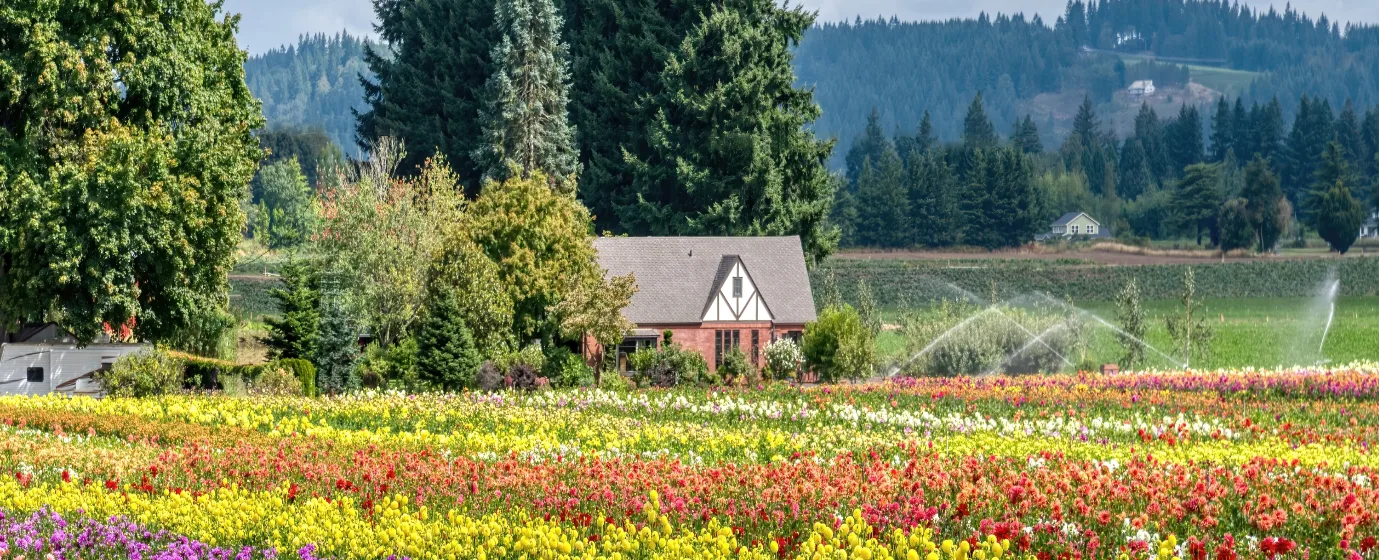
You've probably been priced out of somewhere closer to Portland, or maybe a coworker mentioned Canby and you thought — where exactly is that? It sits about 25 miles south of Portland in the Willamette Valley, incorporated in 1893 and still carrying the feel of a working agricultural town that happens to also have a real housing market, real schools, and real jobs. OR-99E (Pacific Highway East) is the spine that connects Canby to Oregon City to the north and Woodburn to the south. The city covers just 3.78 square miles, which means it feels genuinely contained — not sprawling — and the fields of dahlias, tulips, and nursery stock you drive past on the way in aren't just scenery. They're part of the local economy.
The Canby School District holds a B rating, according to Niche, and with 4,075 students enrolled in 2025-26, it's a district that parents with school-age children take seriously. The district runs a Career and Technical Education Center alongside its core academic programs, and Canby High School's Cougars have active OSAA athletics programs that fill the stands on fall Friday nights. The employer base is anchored by the school district itself, the City of Canby, Marquis Companies in healthcare, and Columbia Employees Federal Credit Union — with the city increasingly positioned as a regional distribution and manufacturing hub. Greater Portland Inc. describes it as a place where Americana meets sophisticated industrial infrastructure, which turns out to be an accurate summary.
The typical home price in Canby sits at $598,201 (July 2026), which puts it noticeably below Wilsonville and roughly on par with Oregon City — making it one of the more accessible entry points in the Portland Metro's southern corridor. The typical 2-bedroom rent runs $1,600–$1,950 per month. The tradeoff is real: the median household income here is approximately $100,989, which falls short of what's needed to carry the typical home at current rates. Most residents drive, though Canby Area Transit (CAT) runs both a fixed commuter route along OR-99E and a free local loop serving stops throughout the city. The climate leans gentler than Portland proper — locals describe it as a banana belt, with warm, dry summers and mild winters.
Whether you're seriously considering a move or just starting to research the area, the sections below break down Canby's housing market, daily life, commute patterns, employer base, neighborhood character, and what weekends here actually look like.
Canby at a Glance
Looking to buy in Canby? Estimate your payment.
Enter your numbers to see an estimated monthly mortgage payment.
Estimate only. Excludes HOA fees and mortgage insurance. The interest rate above is a starting point, not a quoted rate — replace it with your own to see real numbers. Insurance is a flat placeholder, not a Canby quote.
Why Are People Moving to Canby?
The case for Canby is straightforward: it's one of the few towns inside the Portland Metro footprint that still has the feel of a real small town, a housing market that hasn't fully caught up to its neighbors, and room to grow. The city has formally adopted a Cultivating Canby planning initiative — a comprehensive plan update, a transportation system plan update, and an Urban Growth Boundary expansion — designed to add roughly 1,873 new housing units over a 20-year horizon ending in 2043. That's not a marketing slogan. It's a land-use decision, and it means new construction is coming in a mix of single-family, cottage, townhome, and multi-family formats.
Buyers who pay attention to that trajectory tend to arrive before it plays out.
Who Actually Moves Here
Families with kids come for the schools and the space — Canby's residential neighborhoods have room to breathe in ways that inner-ring suburbs do not. Remote workers priced out of Lake Oswego or West Linn find that the trade-off between commute distance and home size works in their favor here. And people with roots in the agricultural economy — the nursery industry, horticulture, distribution — have always been part of the fabric of this city.
Newcomers often say the same thing after a few months: they expected a sleepy rural town and found an actual community with real civic engagement, a weekly farmers market, a local paper that's been covering the city since 1906, and a calendar that revolves around things grown in the ground. The Swan Island Dahlias Dahlia Festival draws visitors from across the region each year, but for residents it's less a tourist attraction and more a fixture of late summer — the thing that signals the season is turning.
The Honest Tradeoffs
Canby is not a city you move to for walkable errands or a dense dining scene. Most of daily life involves a car. The commute to Portland runs about 40 minutes under reasonable conditions on OR-99E — fine once or twice a week, harder as a daily grind for those sensitive to drive time. And while the city's growth plans are real, the infrastructure to support rapid expansion is still catching up.
People also leave Canby, and the reasons are worth knowing: some outgrow the entertainment and retail options and want proximity to Portland's neighborhoods; others find the commute arithmetic no longer works when their job changes. Neither of those is a surprise to anyone who moved here intentionally — they're features of the trade-off, not failures of the city.
What Daily Life Feels Like in Canby
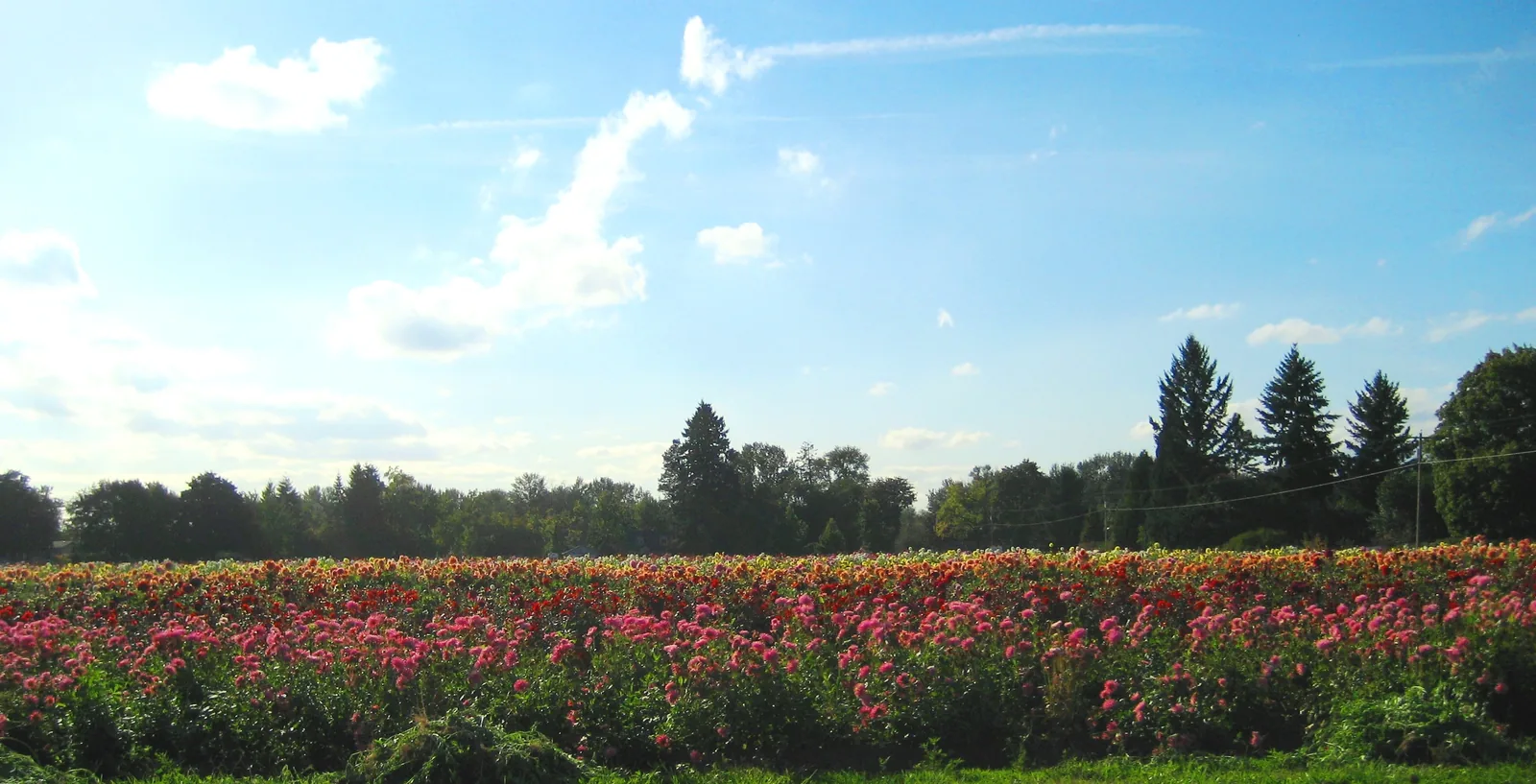
The rhythm of Canby is agricultural in the best sense — slow enough to be livable, grounded enough to feel real. The fields that ring the city aren't backdrop; they shape the seasons. Late summer smells like cut dahlia stems. Early spring means tulips along the roadsides outside of town. The Canby Farmers Market runs through the warm months and pulls residents downtown in a way that feels genuinely communal rather than performative.
The Morning Routine
Coffee before the commute is a well-worn ritual here. A handful of independent options have carved out loyal regulars — the kind of places where the staff knows your order by your second visit. Most residents who work in Portland are on OR-99E by 7:30 a.m., watching the sky lighten over the valley fields. Those who work locally, or from home, get a different version of the morning: quieter, slower, and with more room to notice that the city gets more than 140 sunny days a year — which, in the Pacific Northwest, is a fact worth holding onto.
Where People Actually Gather
Downtown Canby is small and functional rather than destination-worthy — a cluster of local businesses, the Canby Depot Museum, and the Vietnam Era Veterans Memorial anchoring the civic core. The paved community trail runs through town and is the de facto gathering place for families, joggers, and dog walkers on any afternoon with decent weather. Molalla River State Park draws residents to the water — trails, river access, and the kind of open space that doesn't require a long drive to reach.
What Surprises People After Six Months
Newcomers consistently underestimate how much the agricultural calendar shapes community life. Swan Island Dahlias operates fields spanning acres upon acres — the festival draws crowds from across Oregon each year, but residents treat it as a reliable signal that summer is ending and that Canby is, at its core, a place with a very particular relationship to the land it sits on.
The Canby Ferry is the other thing people discover and then can't stop talking about. It's been crossing the Willamette since 1914, carries a handful of cars per trip, and the crossing takes about five minutes. For residents who work near Wilsonville or Stafford, it's an occasional shortcut. For everyone else, it's just one of those things that makes Canby feel unlike anywhere else in the metro.
The Canby Housing Market Right Now
The typical home price in Canby is $598,201 (July 2026, Zillow Home Value Index). That figure positions Canby as one of the more accessible markets in the southern Portland Metro — noticeably below Wilsonville and roughly on par with Oregon City. For the full picture of what that median means across different neighborhoods and housing types, see the cost of living page.
The housing stock here skews toward conventional single-family homes on real lots — the kind of construction that dominated Clackamas County growth in the 1990s and 2000s. Some areas carry newer builds as infill and planned development have continued, while the older established blocks near downtown offer larger lots and more mature landscaping. No single neighborhood dominates the entry point; the variation tends to track age of construction and proximity to the city's core.
What the Growth Plans Mean for Buyers
The city's adopted Housing Needs Analysis calls for 1,873 new units over the next 20 years, with a deliberate mix: roughly a third standard single-family, a third small lots and cottages, and the remainder split between townhomes and multi-family. That's a meaningful signal for buyers weighing whether Canby will feel more urban or more rural in a decade — the answer is: more urban, but gradually, and with a lot of single-family and cottage-scale housing in the pipeline alongside the denser options.
The effective property tax rate runs approximately 0.96%, which is reasonable for Clackamas County. One honest note: the median household income here falls short of what's needed to carry the typical home at current rates, which means many buyers are bringing equity from a prior sale, dual incomes, or both. It's not unusual — it reflects the same affordability gap visible across most of the Portland Metro — but it's worth running the numbers carefully before assuming the price point alone makes it accessible.
Typical 2-bedroom rents range from $1,600 to $1,950 per month. For a more detailed breakdown of the rental market and how costs stack up across housing types, the cost of living page has the full picture.
Canby Neighborhoods
Canby has several distinct areas — each with its own character and appeal. Here’s a breakdown to help you narrow down where to focus your home search.
🏡 Tofte Farms (Mark's Place at Tofte Farms)
A newer planned community with a suburban feel and family-oriented streets — the kind of neighborhood where driveways have basketball hoops and neighbors know each other's kids by name. It suits families with school-age children looking for move-in-ready homes in a structured setting.
🏠 Knights Bridge
Knights Bridge carries a quieter residential character with established streets and a mix of housing that attracts buyers who want proximity to Canby's core without being directly in it. It tends to suit those looking for a settled, low-traffic neighborhood feel.
🌳 Lark Meadows
A residential pocket with a neighborhood-first feel — the kind of area where community trail access matters and the pace is distinctly unhurried. Families and remote workers who want space without distance from everyday amenities tend to land here.
🏘 Territorial Gardens
Territorial Gardens has a cultivated, established feel that fits its name — larger lots, mature plantings, and a sense that the neighborhood has been here long enough to have developed its own character. It draws buyers who value outdoor space alongside residential quiet.
🏔 Laurelwood
Laurelwood is a well-regarded residential area that balances proximity to Canby's amenities with a neighborhood scale that keeps it from feeling like a through-street. It suits buyers looking for a settled community with real daily livability.
🌆 Auburn Farms
Auburn Farms sits toward the agricultural edge of Canby's residential fabric, with a feel that reflects the fertile surroundings more directly than the city's newer subdivisions. Buyers who want a connection to the rural character of the Willamette Valley alongside a Canby address tend to find it fits.
Pros & Cons of Living in Canby
The Pros
- More affordable home prices than closer-in Portland suburbs
- Small-town, agricultural character with a historic Main Street
- Unique commuting option via the century-old Canby Ferry
- Strong sense of community with active local events
The Cons
- Car-dependent commute since there's no MAX light rail service
- Flooding risk for some properties near the Willamette and Molalla rivers
- Longer average home-selling times reflecting a smaller, less liquid market
Getting Around & Commuting in Canby
Canby's location on OR-99E (Pacific Highway East) is its commute lifeline. The route runs north through Oregon City and south toward Woodburn, and it's the road most residents drive every day. The honest commute reality: the drive to Portland runs about 40 minutes in normal conditions, though that number climbs meaningfully during peak hours — especially through the stretch approaching Oregon City, where the road narrows and traffic stacks. Anyone doing this five days a week needs to make peace with it before committing.
Transit Options That Actually Exist
Canby Area Transit (CAT) operates commuter and local bus service. The 99X is a fixed commuter route running along OR-99E between Oregon City, the Canby Transit Center, and Woodburn — useful for riders who don't want to drive and can make the schedule work. The Canby Loop is a free local service covering stops throughout the city, practical for getting around town without a car. These are real, functioning routes — not theoretical options. That said, transit-dependent commuters targeting Portland proper will find the connection requires planning and patience.
The Ferry Shortcut
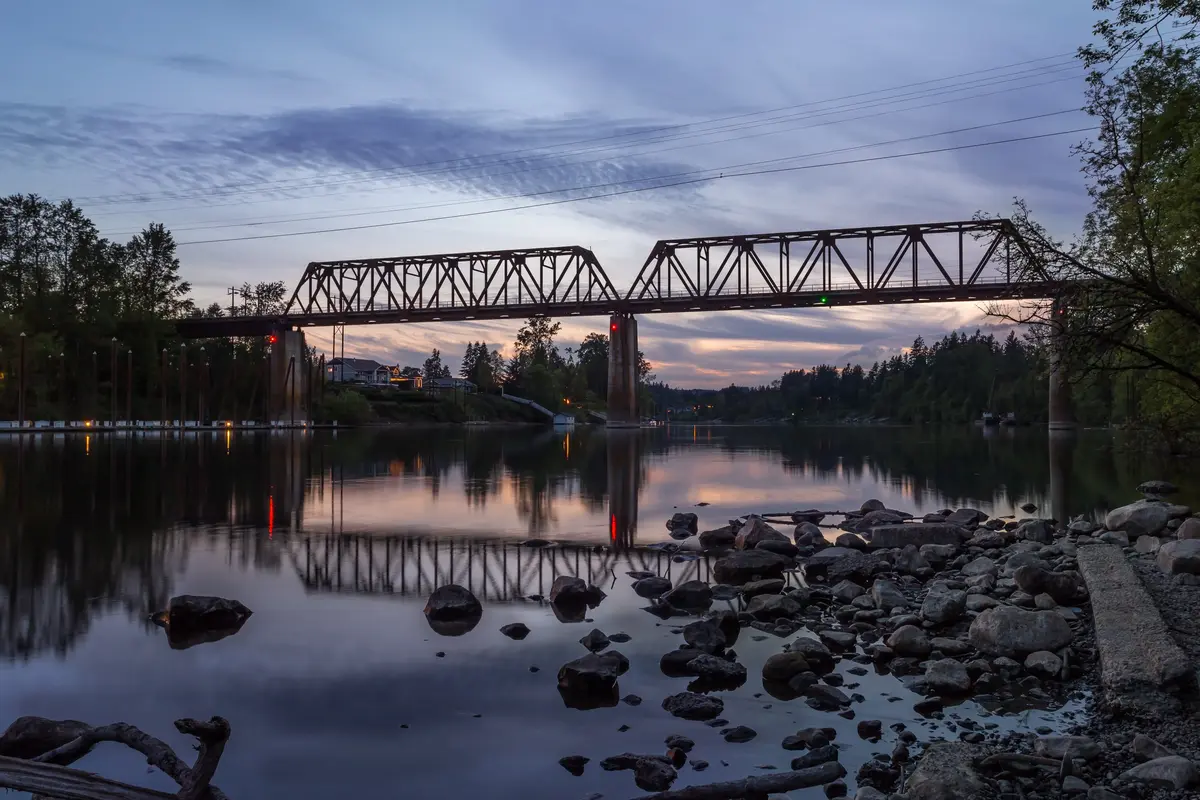
The Canby Ferry is not a daily commute tool for most residents — it runs on weather and river-level conditions, and the hours are constrained. But for those working near Wilsonville or Stafford on the west bank of the Willamette, it's a genuine time-saver, cutting a river crossing down to about five minutes. It's been making that crossing since 1914 and remains one of only three ferries still operating on the Willamette River.
Getting Farther Afield
Portland International Airport (PDX) is approximately 30 miles from Canby — a manageable drive for the occasional work trip or vacation, though residents build in buffer time for the stretch through Oregon City and on toward the metro. Those who fly frequently should factor that into the daily calculus, especially against a remote work schedule that doesn't require the commute every day.
The Employer Picture
Many Canby residents work locally. The school district is the largest institutional employer in the city, followed by the City of Canby itself in municipal roles. Marquis Companies, a healthcare organization, represents one of the significant private employers. Columbia Employees Federal Credit Union anchors the local finance sector. For those working outside the city, Portland, Oregon City, and Wilsonville are the most common destinations — and the commute math to each of those looks different enough that it's worth mapping your specific office location before assuming the drive is uniform.
The city is also expanding its industrial and distribution base. Greater Portland Inc. has flagged Canby as an emerging regional distribution and manufacturing center — a characterization that reflects both its OR-99E corridor location and the mix of light industrial and logistics operations establishing a foothold here. That shift is gradual, but it's creating local employment options that didn't exist in the same volume a decade ago.
Schools in Canby
Families relocating to Canby have public, private, and higher-education options nearby. Here’s a quick overview.
🎓 School District
Canby School District serves K–12 students across Canby and the surrounding area. Rated B (source: Niche.com).
🏆 Graduation Rate
The 4-year high-school graduation rate here is approximately 90.8%.
📚 Higher Education
Oregon’s public universities — the University of Oregon, Oregon State University, and Portland State University — offer four-year degrees statewide, with a network of 17 community colleges providing two-year and workforce programs.
🌐 Online Learning
Oregon State University Ecampus and Portland State University Online offer fully accredited online degrees for remote learners across the state.
Safety in Canby
A quick look at how Canby compares on the numbers that matter most when weighing a neighborhood or a move.
🛡 Violent Crime
Approximately 1 per 1,000 residents.
🔒 Property Crime
Approximately 9 per 1,000 residents.
Compared to the most recent national figures from the Bureau of Justice Statistics (2024), Canby’s violent crime is below the national average (about 3.7 per 1,000), and property crime is below the national average (about 18.4 per 1,000).
Against Oregon as a whole, Canby’s violent crime is roughly a third of the state average, and property crime is roughly a third of the state average (Bureau of Justice Statistics, Crime Known to Law Enforcement, 2024 (tables 2 and 3)).
Crime rates can vary a lot within a single city, so the citywide numbers above are only a starting point. Some neighborhoods in Canby run well below these averages, while others run higher — the kind of block-by-block detail that matters most when you’re actually choosing where to live. The full guide below breaks it down neighborhood by neighborhood.
Working in Canby
Canby’s largest employers span several industries — here are some of the anchors of the local job market.
🎓 Canby School District
Education
🏛 City of Canby
Municipal government
🏥 Marquis Companies
Healthcare
🏦 Columbia Employees Federal Credit Union
Finance
Retiring in Canby
Canby draws retirees for its balance of amenities, outdoor access, and cost. Here’s what to weigh.
🌤 Climate
Canby sits in what locals call a banana belt within the Portland Metro — warmer and drier than the city proper, with an average summer high around 73°F and mild winters averaging lows around 43°F. The long growing season and more than 140 sunny days a year make it particularly appealing for those who want a Pacific Northwest address without the relentless gray of the coast or the valley floor farther north.
🍴 Lifestyle
Daily life in Canby moves at an unhurried pace centered on the farmers market, the community trail, and the agricultural calendar that still shapes the city's seasons. The dining scene is casual and local-facing, and the Swan Island Dahlias Dahlia Festival each August through September gives late summer a communal focal point that draws residents and visitors from across the region.
🏚 55+ Communities
No 55+ communities were found in Canby. Retirees who want to own here typically do so in the city's standard single-family neighborhoods. For more on housing options geared toward older buyers in the area, the retiring in Canby page has the full picture.
✈ Getting Around
Most residents drive, and a car is practical for daily life in Canby. The Canby Loop free bus covers stops throughout the city, and the 99X connects to Oregon City and Woodburn for those who prefer transit for specific trips. Portland International Airport (PDX) is approximately 30 miles away — close enough for the occasional trip, far enough that frequent flyers will want to build in travel time.
🏛 Oregon Taxes for Retirees — What to Know
- Social Security is not taxed — Oregon does not tax Social Security or Railroad Retirement benefits. Any amount included in your federal adjusted gross income is subtracted back out on the Oregon return.
- But other retirement income IS taxed — This is the trade-off that surprises people moving from Washington or Texas. Pension distributions and 401(k)/IRA withdrawals are taxed as ordinary income at Oregon’s regular rates — there is no blanket retirement-income exclusion.
- Graduated income tax — Oregon has four brackets — 4.75%, 6.75%, 8.75% and 9.9%. The 4.75% rate covers the first $10,000 of taxable income for a single filer ($20,000 filing jointly); the 8.75% rate starts at $125,000 ($250,000 jointly); and the top 9.9% rate applies above $250,000 ($500,000 jointly).
- No sales tax — Oregon levies no general sales tax.
- Property taxes, with senior deferral — Oregon’s Senior and Disabled Property Tax Deferral lets qualifying homeowners have the state pay their county property taxes, with a lien recorded against the home. The 2026 household income limit is $70,000, and deferred balances accrue 6% simple interest — it defers the bill rather than forgiving it.
- Estate tax — the one to plan for — Oregon has its own estate tax with a $1 million filing threshold — far below the federal exemption, and NOT indexed for inflation, so it reaches more estates every year in real terms. Retirement accounts and a long-held home count toward the taxable estate, so estates that feel modest can cross the line without the owner expecting it.
- No inheritance tax — Oregon has no separate inheritance tax and no gift tax.
Tax laws change frequently and individual situations vary. This is general information, not tax advice — always consult a qualified Oregon tax professional or CPA for personalized retirement tax planning.
Weekends & Local Favorites in Canby
Canby weekends have a particular texture — unhurried, outdoors-oriented, and anchored by a handful of places that the same people return to every week. The city is small enough that you run into your neighbors; it's a feature rather than a quirk, once you settle in.
Where to Eat and Drink
The local dining scene is casual and unpretentious. Backstop Bar & Grill is exactly what the name suggests — a sports bar that doubles as a neighborhood gathering spot. The Wild Hare Saloon Canby has a Western-tavern feel with a loyal local following. On the Mexican food front, Los Dos Agaves and Nuevo Vallarta both draw regulars, and Roxy's Island Grill rounds out the options with a different flavor profile. None of these are fine-dining destinations, and that's the point — Canby's food culture is built around regulars, not reservations.
Coffee and Bakeries
Willamette Coffee House-Canby is the anchor of the local coffee scene, the kind of place with regulars who have their own corner table. B's Bake Shoppe handles the pastry end of the morning. Zula's Tea & Coffee adds a tea-forward option, and Berni's Barista Barn is one of the drive-through espresso spots that Oregonians have turned into an institution in towns of this size.
Outdoors and Events
Molalla River State Park is the primary outdoor anchor — trails, river access, and enough open space to spend a full afternoon without doubling back. The paved Canby community trail is where residents go for a walk without driving anywhere first. The Canby Ferry crossing is worth doing at least once as a passenger even if it's never part of your commute — the five-minute Willamette crossing, on a ferry that's been running since 1914, is genuinely unlike anything else in the metro.
Swan Island Dahlias is the city's signature seasonal draw. The Annual Dahlia Festival runs from August through September across fields that fill with visitors from across the Pacific Northwest — it's free, draws crowds that surprise first-timers, and features live music, food carts, and classes on weekends. It's the kind of thing that puts Canby on a visitor's map but that residents treat as simply the rhythm of late summer.
The Canby Farmers Market is the weekly social ritual for a significant share of the city's households. The Clackamas County Event Center brings regional events and livestock shows to town — a reminder that Canby's agricultural identity isn't just decorative. And the Canby Depot Museum, small as it is, gives newcomers an efficient orientation in the city's history, from Baker Prairie in 1857 through incorporation in 1893 and forward.
Local favorites in Canby
Restaurants
- Backstop Bar & Grill
- The Wild Hare Saloon Canby
- Los Dos Agaves
- Nuevo Vallarta
- Roxy's Island Grill
Outdoors
- Molalla River State Park
- Canby Ferry crossing
- Swan Island Dahlias gardens
- 3.5-mile paved Canby community trail
Coffee
- Willamette Coffee House-Canby
- B's Bake Shoppe
- Zula's Tea & Coffee
- Berni's Barista Barn
Farmers Markets
- Canby Farmers Market
Top Things Locals Say About Canby
The best intel about a city comes from the people who actually live there. Here’s what Canby residents say when newcomers ask the questions everyone’s thinking.
“I thought the commute would bother me more than it does — but we work from home three days a week, and on the days we drive in, OR-99E isn't bad if you leave before 7:30. What I didn't expect was how quickly the agricultural calendar becomes your calendar. By the second August, the Dahlia Festival felt like a personal event.”
— Recent Canby home buyer
“What's the most surprising thing about living in Canby?”
How much the farming rhythm shapes daily life here. Driving past dahlia fields on the way to grab coffee, watching the Canby Farmers Market grow through the season, knowing what's being harvested a mile from your house — it's genuinely different from living in a suburb that happens to have fields nearby. The fields are part of Canby's identity, not just backdrop.
“What do locals love most about Canby?”
The scale of it. The city is large enough to have real amenities — a community trail, a transit system, a school district with actual programming — and small enough that you recognize faces at the Canby Farmers Market and know your neighbors. The Canby Ferry is something people bring up constantly, even if they rarely use it practically. It's just one of those details that makes the city feel specific to itself.
“What should newcomers to Canby know?”
Plan your commute before you commit to a neighborhood. The OR-99E corridor can back up approaching Oregon City, and the difference between leaving at 7:15 and 7:45 in the morning is significant. Also: summer in Canby leans warmer and drier than Portland — the banana belt reputation is real. The community trail is the best way to get oriented when you first arrive; it threads through enough of the city that one walk gives you a genuine sense of the place.
“How much do you need a car in Canby?”
For most errands, you need a car. The city has a free local bus loop serving stops throughout town, which helps for getting around, and the 99X connects to Oregon City and Woodburn for those who can make the schedule work. But grocery runs, most shopping, and any destination outside the city core will mean driving. The downtown area and the community trail are walkable once you're in them — it's getting to them from most residential neighborhoods that requires wheels.
Cities Near Canby
Other communities near Canby worth a look — each with its own character and price point.
| City | Distance | Best For | Vibe | Median Rent | Median Buy |
|---|---|---|---|---|---|
| Oregon City | 10 mi | History lovers & established neighborhoods | Hilly, historic, river-connected | $1,955 | $605,330 |
| Wilsonville | 8 mi | Commuters & newer construction | Planned, polished, freeway-close | $1,750 | $630,814 |
| Molalla | 13 mi | Rural lifestyle & lower price points | Small-town, agricultural, uncrowded | $1,945 | $499,534 |
More Helpful Guides for Canby
Going deeper on Canby? Our blog series covers everything from first-time buying to retiring here — explore the guides below.
Local Expert Takeaway: Canby rewards buyers who do the commute math honestly and aren't chasing a walkable urban lifestyle. The typical home price of $598,201 (July 2026) puts it within reach for dual-income households bringing Portland-area wages, and the city's long-range growth planning means the housing mix will diversify over the next decade — more cottage lots, more townhomes, more options. The Dahlia Festival, the Canby Ferry, and the Canby Farmers Market aren't curated amenities; they're the actual social infrastructure that keeps residents connected to each other and to the agricultural character of the place. If that rhythm fits your life, Canby tends to hold people longer than they expected.
Quick Takeaways & FAQs
✅ Canby's typical home price of $598,201 (July 2026) makes it one of the more accessible entry points in the southern Portland Metro corridor.
⚠️ The commute to Portland runs about 40 minutes under normal conditions on OR-99E — real and manageable a few days a week, but demanding as a daily grind.
📍 Swan Island Dahlias has operated in Canby since the 1940s and is the largest dahlia grower in the United States — the Annual Dahlia Festival each August through September is free and draws visitors from across Oregon.
How far is Canby from Portland?
Is Canby a good place to raise a family?
What is the housing market like in Canby, Oregon?
Does Canby have public transit?
What is Canby, Oregon known for?
Helpful Links for Moving to Canby
Moving to Oregon?
Tell us what you need help with and we'll connect you with local resources.
