
Most people researching retirement in the Portland metro fixate on the big names — Lake Oswego, West Linn, Wilsonville. Canby, a city of 18,134 in southern Clackamas County, rarely makes the first list. That's partly because it doesn't market itself as a retirement destination and partly because the people who end up here found it a different way: they wanted the Willamette Valley farmland fringe, a genuine small-town center, and home prices meaningfully below the inner suburbs — and someone finally mentioned Canby. The city sits about 40 minutes to Portland along OR-99E (Pacific Highway East), close enough to reach major medical centers, far enough to feel like you've actually left.
The economic backbone here is agriculture, education, and light industry, not the tech corridor that drives much of the metro. Marquis Companies, one of the state's larger healthcare operators, runs senior care on the Hope Village campus — which means skilled nursing, assisted living, and memory care exist right inside city limits, a rare convenience in a city this size. The Canby School District serves the community, and local government is lean and present in a way that residents tend to notice positively. The people who move here in retirement often come from closer suburbs where they watched their property-tax bill and grocery receipt climb alongside everyone else's.
Oregon's tax treatment of retirement income is genuinely favorable in one key respect — Social Security is fully exempt from state income tax — and the absence of a statewide sales tax stretches a fixed income further on everyday purchases. The typical home price here sat at $598,201 as of July 2026 (Zillow Home Value Index), which is noticeably below what comparable suburban homes cost in Wilsonville or Lake Oswego, and the effective property tax rate of approximately 0.96% is modest by Pacific Northwest standards. Daily life involves a car for most errands, but the community trail, the Canby Farmers Market, and a genuine downtown with independent coffee shops and casual dining give retirees reasons to leave the house that don't require a highway.
Whether you're comparing Canby to nearby Oregon City, weighing the senior living landscape, or trying to understand what an Oregon retirement actually costs, the sections below break down healthcare access, the retiree tax picture, walkability, downsizing options, and how Canby stacks up against the towns most retirees consider alongside it.
Why Retirees Are Choosing Canby
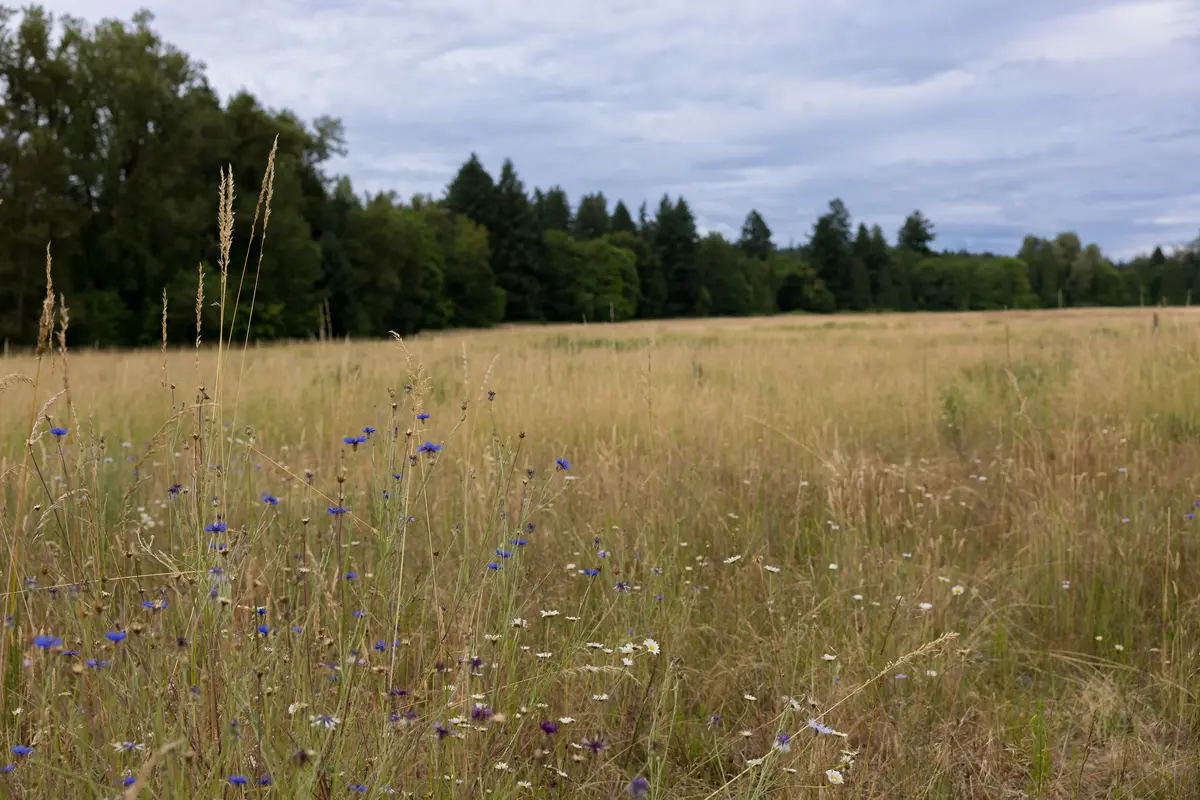
Canby fits a specific kind of retiree well: someone who wants a real town — a downtown they can walk to, neighbors who wave, a farmers market within a mile — without paying the premium that comes with Wilsonville's master-planned feel or Oregon City's historic cachet. The typical home price of $598,201 (July 2026) puts ownership within reach for buyers bringing equity from a larger home in the metro, and the city's pace is genuinely slower without feeling isolated. For retirees who spent careers in the suburbs and want something that feels more like a community than a development, Canby often lands right.
The presence of Hope Village on 56 acres inside city limits is also a real draw. It's a faith-based, not-for-profit senior campus for adults 62 and older — one of very few cities of Canby's size to have independent living, assisted living, and skilled nursing all on one campus. That matters to couples where one partner's care needs may eventually diverge from the other's, and it matters to adult children watching parents age. You don't have to move twice.
Canby is an honest fit for retirees who are comfortable driving for most errands and medical appointments, and who don't need the cultural density of a larger city. It's a harder sell for retirees who want to walk to everything, who rely on public transit, or who need subspecialty medical care on short notice. If daily walkability and immediate access to a major hospital are the non-negotiables, Oregon City or Wilsonville are worth a harder look. But for the retiree who wants acreage, quiet, and a genuine sense of place — and who has already done the equity math — Canby earns a serious look. See the full overview of who Canby suits for the broader picture.
Healthcare & Medical Access in Canby
Canby's nearest hospital is Providence Willamette Falls Medical Center in Oregon City, about 9 miles away. It's a 143-bed, not-for-profit acute care hospital within the Providence Health & Services system, and it covers the core bases a retiree needs nearby: emergency medicine, surgery, rehabilitation, cardiology through the Providence Heart Clinic, neurology through Providence Neurological Specialties, and oncology through the Providence Cancer Institute. For most common acute situations, that's sufficient — and 9 miles is a manageable distance in a non-emergency.
The honest limitation is subspecialty depth. For complex cardiac procedures, major oncology cases, or advanced neurological intervention, Providence Willamette Falls will typically refer patients to a larger Providence campus or to OHSU in Portland. That's not unusual for a community hospital, but it is something retirees with existing complex conditions should plan around. The trip to Portland is real, and it matters when you're managing an ongoing diagnosis. Providence does operate several medical offices and clinics in other parts of Clackamas County, which extends specialist access without requiring a drive to the Oregon City campus every time.
Primary care availability in and around Canby is reasonable for a city this size, and the Hope Village campus includes on-site care coordination for its residents. For retirees living in the broader community, the same pattern applies as almost everywhere in the rural-adjacent Pacific Northwest: establish a primary care relationship early, before you need it urgently, because panels fill. The 9-mile distance to Providence Willamette Falls is genuinely close by rural Oregon standards, and Canby benefits from its position between Oregon City and Woodburn rather than being at the far end of a county road.

The Retiree Budget in Canby
Oregon's tax treatment of retirement income has one major win built into it: Social Security and Railroad Retirement benefits are fully exempt from state income tax, regardless of how high your other income runs. That's a meaningful advantage over states that phase out the exemption at higher income levels. If Social Security is a substantial share of your retirement income, Oregon leaves it alone entirely.
The rest of the picture is less rosy. Pension income, traditional IRA withdrawals, and 401(k) distributions are taxed at Oregon's regular graduated rates — which top out at 9.9%, among the highest in the country. Federal pension income may be eligible for a partial or full subtraction from Oregon taxable income, which is worth confirming with a tax professional before finalizing a retirement budget. Oregon has no statewide sales tax, which does real work on a fixed income when you're buying groceries, household goods, and everyday services — every purchase that would carry sales tax in California, Washington, or most other states simply doesn't here.
The effective property tax rate in Canby is approximately 0.96%, which is modest and one of the reasons the monthly ownership cost here stays manageable. Oregon also offers a property tax deferral program for homeowners age 62 or older with household income at or below $60,000 (the 2025 threshold): if you've lived in the home at least five years, the state pays your county property taxes on your behalf, with repayment — plus 6% simple interest — due upon sale or death. It's not a forgiveness program, but it does preserve cash flow for retirees who need it. The engine's mortgage calculator below can help you model the full ownership picture at current rates. For a deeper look at cost of living, including rent and utility figures, see the cost of living page.
Looking to buy in Canby? Estimate your payment.
Enter your numbers to see an estimated monthly mortgage payment.
Estimate only. Excludes HOA fees and mortgage insurance. The interest rate above is a starting point, not a quoted rate — replace it with your own to see real numbers. Insurance is a flat placeholder, not a Canby quote.
Walkability, Community & Staying Active in Canby
Canby is not a walkers' city in the sense that you'll run errands on foot. Most grocery shopping, medical appointments, and shopping trips require a car, and that's the honest starting point for any retiree evaluating it. What Canby does have is a 3.5-mile paved community trail that connects several parts of the city and works well for daily walks without dodging traffic — flat enough for most fitness levels and genuinely pleasant through the agricultural fringe.
The Canby Adult Center is the social anchor for active retirees here. It sits alongside the city's Swim Center and the public library, and residents near the Hope Village campus can reach all three on foot or by bicycle, or by Canby Area Transit. The Canby Area Parks and Recreation District — which has served the community for over 60 years — runs programs specifically for seniors alongside general adult programming. These aren't afterthoughts; they're a real part of what the district does. Molalla River State Park, at the confluence of the Willamette, Molalla, and Pudding Rivers, is home to one of the largest great blue heron rookeries in the Willamette Valley and offers river access that retirees who kayak or fish return to regularly.
The social texture of retirement in Canby tends to be community-oriented rather than curated-amenity-oriented. The Canby Farmers Market draws a reliable weekly crowd through the growing season. Willamette Coffee House-Canby, Zula's Tea & Coffee, and B's Bake Shoppe are the kinds of places where regulars get recognized — the casual morning-coffee circuit that retirees in smaller towns tend to build their social lives around. For retirees who want structured programming, volunteering with the Clackamas County Event Center or the Canby Depot Museum connects them to the community calendar. One thing that surprises retirees after six months: how quickly the town's pace becomes their pace. People who came from a busier suburb often say they didn't realize how much ambient stress they were carrying until it wasn't there.
Right-Sizing: Downsizing in Canby
No 55+ age-restricted communities were found in Canby. That's the straightforward answer, and it matters for buyers specifically shopping the 55+ category for its HOA protections, community programming, or financing eligibility. Canby's senior housing landscape is built differently.
Hope Village is the city's defining senior living option: a 56-acre, faith-based, not-for-profit campus for adults 62 and older offering independent living through Life Lease garden homes and cottage homes, assisted living through Marquis Vintage Suites, and a genuine on-site community — a 9-hole golf course, community center, raised-bed gardens, a woodshop, and a quilting studio. The board has approved a major remodeling and addition project for the campus Community Center, so the physical infrastructure is actively improving. The Life Lease ownership structure is different from a standard home purchase or rental, and retirees considering it should review the terms carefully with a real estate attorney — but the campus is legitimate, well-regarded, and the only community of its kind in Canby. The Meadows at Hope Village also provides income-restricted senior apartments on the same campus for lower-income seniors who qualify.
For retirees who want to own a conventional home rather than enter a campus community, Canby's housing stock does include single-level ranch homes and newer patio-style construction in neighborhoods like Lark Meadows, Auburn Farms, and Territorial Gardens. The inventory of single-level homes is not deep — this is a smaller city, and the resale market moves — so buyers targeting single-level should be prepared to wait for the right listing rather than assuming one will be available immediately. Those looking for a full continuum-of-care community with a traditional buy-in structure may find Wilsonville's options more aligned with that model. See the neighborhoods page for a closer read on which areas have the most accessible housing stock.
Canby vs Nearby Retirement Destinations
| City | Cost vs Canby | Primary Hospital | Walkability | Senior Living Depth | Overall Retirement Fit |
|---|---|---|---|---|---|
| Canby | Anchor | Providence Willamette Falls (~9 mi) | Car-dependent; good trail | Hope Village campus; no 55+ deeded communities | Strong for small-town pace, moderate healthcare access |
| Oregon City | About the same | Providence Willamette Falls (in-city) | Better on-foot access downtown | The Meadows Courtyard; several assisted living options | Better for walkability and hospital proximity |
| Wilsonville | Somewhat higher | Providence Willamette Falls or Legacy Meridian Park | Good within planned neighborhoods | Springridge at Charbonneau; full continuum of care | Best for continuum-of-care campus living |
| Molalla | Noticeably lower | Providence Willamette Falls (~20+ mi) | Very car-dependent | Limited senior living options | Fits retirees prioritizing affordability and rural character |
| Woodburn | Noticeably lower | Legacy Silverton or Salem Health | Moderate; walkable core | Several care facilities serving largely Latino community | Strong value; different community character |
| Aurora | Noticeably lower | Providence Willamette Falls or Salem Health | Very small; extremely car-dependent | Minimal formal senior living | For retirees who want maximum quiet and rural feel |
* ZHVI = Zillow Home Value Index.
Oregon City is the most direct competition for Canby: prices run about the same, but Oregon City puts you inside city limits of the hospital, which matters when you're weighing the accumulating inconvenience of a 9-mile drive over many years. Wilsonville costs more but offers the most mature continuum-of-care campus infrastructure in this part of the metro — if Springridge at Charbonneau fits your needs, the premium may be worth it. Molalla and Aurora are the choices for retirees who genuinely want rural character and are willing to trade healthcare proximity and senior living options for lower prices and more space. Woodburn lands in an interesting middle: lower cost than Canby, a walkable commercial core, and a distinct community culture centered on its large Latino population — a fit for some retirees and a mismatch for others depending on what they're looking for. Canby's advantage in this field is its combination: a real town with real senior infrastructure on-site, a reasonable drive to a community hospital, and prices that don't punish you for equity you've already built.

Local Expert Takeaway: Canby works well in retirement if your mental model is 'a real small town with genuine senior infrastructure' rather than 'a resort-style retirement community.' Hope Village gives the city something most towns its size don't have — a full care continuum on one campus, inside city limits. The Canby Adult Center, the community trail, the Swim Center, and the Farmers Market fill out the social and physical fabric of daily life. The honest gap is subspecialty medical depth: for anything beyond what Providence Willamette Falls Medical Center in Oregon City handles at the community hospital level, you're driving to Portland. Oregon's Social Security exemption and the absence of a sales tax help the fixed-income math, but pension and IRA withdrawals will be taxed at rates that deserve advance planning. For retirees bringing Portland-metro equity into a calmer pace, Canby is a genuinely credible answer.
Quick Takeaways & FAQs
✅ Hope Village's 56-acre campus offers independent living, assisted living, and skilled nursing all in Canby — rare for a city of 18,134.
⚠️ Oregon fully exempts Social Security from state income tax, but pension and IRA withdrawals are taxed at rates up to 9.9% — retirement income planning matters here.
📍 Providence Willamette Falls Medical Center in Oregon City is about 9 miles away, covering emergency and specialty care, but complex cases will route to Portland.
Is Oregon a tax-friendly state for retirees?
What is the nearest hospital to Canby for retirees?
Are there 55+ communities in Canby?
Does Oregon have a property tax break for senior homeowners?
How does Canby compare to Oregon City for retirement?
Moving to Oregon?
Tell us what you need help with and we'll connect you with local resources.
