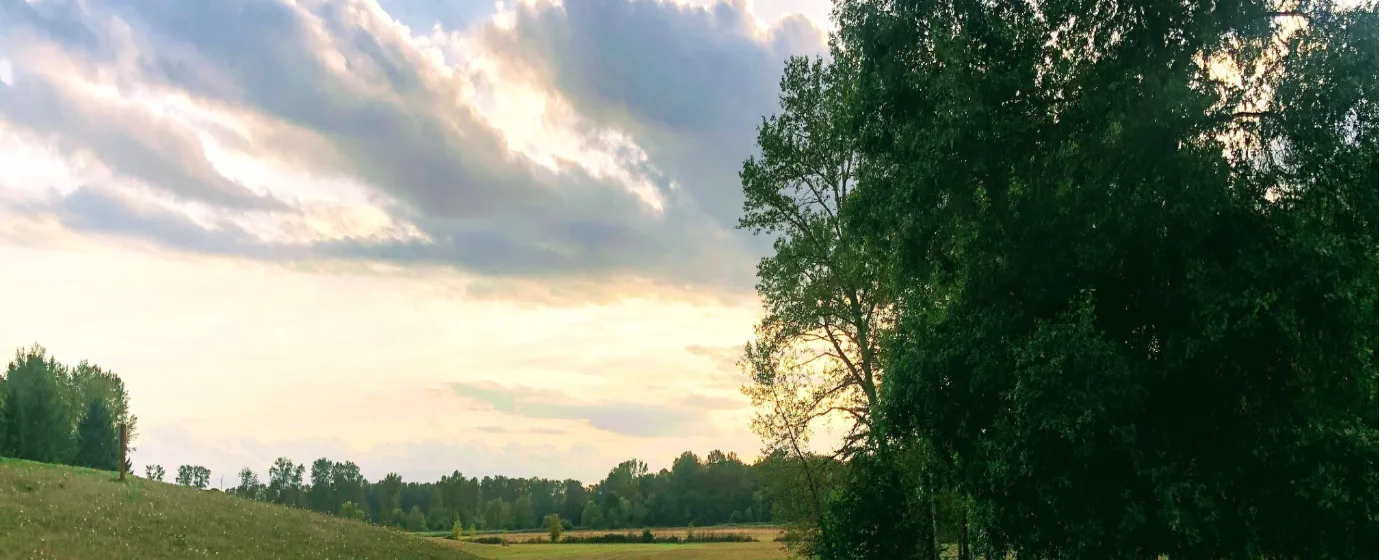
People researching a move to Molalla often arrive with the same question: is this place actually safe, or does the rural setting and small-town feel mask problems the numbers don't show? The honest answer is that the numbers tell a reassuring story. With a population of 10,103 spread across Clackamas County's farmland and timber edge, Molalla is a genuinely small city — and its crime profile reflects that. The figures place it well below state and national benchmarks on both violent and property crime, and that gap is wide enough to be meaningful, not just a rounding difference.
The context matters too. Molalla sits along OR-211 and OR-213, roughly about 48 minutes to Portland, which means it draws residents who want distance from metro density. That self-selection shapes the community: the people who move here are specifically choosing a slower pace, and that shows up in how the city feels day to day. Surrounding farms, rural residential parcels, and private timberlands keep population density low and reinforce a small-town character that residents cite consistently when describing life here.
What the data also shows is a city making concrete institutional investments in public safety — not just coasting on low numbers. In January 2026, Molalla opened its first-ever dedicated police facility: an 18,000-square-foot building that serves as both a functioning police station and an emergency operations center. Voters approved the bond measure in November 2023, groundbreaking came in summer 2024, and the project finished on time and on budget. That sequence matters — it signals a community willing to fund the infrastructure behind safe streets, not just claim them.
Whether you're deciding between Molalla and a nearby city, or simply doing your homework before settling on a neighborhood, the sections below break down what the crime figures actually mean, how different parts of the city compare, what the police department is doing on the ground, and what experienced residents say about living here day to day.
Molalla's Crime Rates vs. Oregon and National Averages
The headline figures are hard to argue with. Molalla carries a violent crime rate of 1 per 1,000 residents — against a state rate of 3.3 per 1,000 and a national rate of 3.7 per 1,000. On property crime, the city records a property crime rate of 7 per 1,000 residents, compared with a state figure of 24.5 per 1,000 and a national figure of 18.4 per 1,000.
Those aren't minor differences. Molalla's property crime rate is less than a third of Oregon's — a state that already has its own challenges with retail theft and auto crime in metro areas. The violent crime gap is equally striking: the city's rate is roughly a quarter of the state figure, and lower still against the national average.
NeighborhoodScout's analysis, reflecting 2024 FBI data, places Molalla's overall crime rate lower than approximately 63% of Oregon communities. That ranking holds up even when adjusted for city size — Molalla compares favorably against similarly sized cities nationwide, not just against large metro areas that naturally skew the averages.
One additional data point worth understanding: CrimeGrade.org estimates the annual cost of crime per Molalla resident at $354 — a figure that is noticeably below both the national and Oregon state averages. This isn't a crime rate, but it functions as a useful proxy for the real-world impact of crime on daily life, and it reinforces what the per-1,000 figures already show.
How Crime Is Distributed Across Molalla's Neighborhoods
City-level averages are useful, but they flatten geography. In Molalla, as in most small cities, incident density is highest where people concentrate — near the retail corridors and commercial areas — rather than uniformly across residential streets. That distinction matters when you're evaluating where to live, not just whether to move.
Old Town Molalla
Old Town anchors the historic downtown core, with a walkable concentration of local shops, services, and eateries along the main streets. Commercial activity means more foot traffic, and more foot traffic means a higher share of the city's reported incidents are logged here — primarily property-related. This is the same pattern found in virtually every small American city: crime follows commercial density, not residential character. Old Town's on-foot access and community feel remain genuine draws, and the area reads as well-used rather than troubled.
Best for: Buyers who want walkable streets and a connected community feel, and who understand the commercial-corridor tradeoff.
Bear Creek
Bear Creek is a master-planned neighborhood developed starting in 2017, positioned near the center of the city and adjacent to the elementary and middle school. Its mix of single-family lots, open space, and mature oak tree groves gives it a defined, intentional layout — the kind of neighborhood where people know their neighbors. Proximity to the schools means consistent family activity in the common areas, which tends to correlate with lower ambient crime. It sits at the quieter end of the city's safety picture.
Best for: Families School proximity
River Meadows and Finneys Landing
Both neighborhoods sit closer to the Molalla River corridor, where residential lots are larger and the surrounding agricultural and natural buffer creates natural separation from the commercial center. The lower population density here means fewer reported incidents simply by virtue of fewer people and businesses in proximity. These areas feel distinctly rural-adjacent, even within city limits.
Best for: Nature Quiet
Lexington Estates, Big Meadow, Forest Haven, and Meadow Village
These are Molalla's newer-growth residential neighborhoods, mostly single-family subdivisions built on the city's outskirts. Their distance from the commercial core means they consistently show lower incident density. If minimizing exposure to property crime — the type most relevant in Molalla's profile — is a priority, the newer subdivisions on the edges of the city are where that calculation tips most favorably.
Best for: Families Value Quiet
For a deeper look at how these neighborhoods differ in character and housing stock, see the Molalla neighborhoods guide.

What Molalla's Police Department Is Actually Doing
The most concrete signal of institutional commitment to public safety in Molalla isn't a statistic — it's a building. In January 2026, the city opened its first dedicated police facility: an 18,000-square-foot structure built from a voter-approved bond measure that passed in November 2023. Before this, the Molalla Police Department operated out of shared city office space. The new facility includes holding cells, a booking area, evidence storage, a secure sally port, and dedicated officer facilities — all capabilities the department previously lacked.
It also serves as an emergency operations center, which matters for a city that sits in Oregon's wildfire-adjacent rural fringe. The project came in on time and on budget, which is notable for a small-city capital project of this scale.
The department runs a community-oriented policing model, with programs that include local safety groups, youth engagement, and victim assistance services. It is a small department that knows the city well — officers aren't navigating a sprawling metro grid, and the compact layout works in the department's favor for response times.
What residents tend to notice is responsiveness. Patrol presence is visible in the commercial core, and the contained geography means coverage feels consistent rather than thin. Molalla's size is an advantage here, not a liability.
Looking to buy in Molalla? Estimate your payment.
Enter your numbers to see an estimated monthly mortgage payment.
Estimate only. Excludes HOA fees and mortgage insurance. The interest rate above is a starting point, not a quoted rate — replace it with your own to see real numbers. Insurance is a flat placeholder, not a Molalla quote.
What Actually Surprises People About Safety in Molalla
The most common surprise for people who move to Molalla from a larger city isn't that crime is high — it's that it's noticeably lower than they expected, and lower than the intuition built from Oregon news coverage would suggest. Portland's property crime struggles get statewide headlines; Molalla's numbers look nothing like them.
The second surprise is seasonal. Molalla draws visitors for the Molalla Buckeroo Rodeo, one of the Pacific Northwest's prominent annual rodeo events, and that concentrated foot traffic means a brief period each summer when the city's commercial areas feel very different from their normal pace. That's not a safety concern in any serious sense — it's a community event — but newcomers who arrive expecting consistent small-town quiet should know the city does have a high-visibility calendar moment.
The honest friction point is this: Molalla's low crime rate reflects its character, but it also reflects its size and isolation. There's less of everything here — less activity, less commercial density, fewer late-night establishments — and some of what reads as "safe" is simply "quiet." That suits many buyers exactly right. For others, especially those accustomed to urban neighborhoods where the streets stay active late into the evening, the quiet can feel like its own kind of adjustment.
A pattern worth understanding before choosing a neighborhood: incidents in Molalla cluster near the commercial corridors, not in the residential areas. If you're researching a specific street or block, look at what's nearby on the commercial side before drawing conclusions about the residential character. A house two blocks from a gas station and a convenience store has a different ambient environment than one backing up to a residential cul-de-sac in Bear Creek or Lexington Estates, even if both sit within the same favorable city-level averages.
The Bottom Line on Molalla Safety — Who This City Suits
Molalla's safety profile is genuinely strong relative to its peer cities and to Oregon broadly. A violent crime rate of 1 per 1,000 residents is not a marketing claim — it's a figure that sits far below what most Oregonians experience in larger cities, and well below the national average. A property crime rate of 7 per 1,000 residents tells the same story: this is a city where the odds of a property crime affecting any given household in a given year are low.
That profile suits specific kinds of buyers very well: families with school-age children who want residential streets where kids move around freely, remote workers who chose Molalla deliberately for its pace, and people relocating from metro Oregon who are specifically exiting higher-crime urban environments. For all of those groups, Molalla's numbers are a genuine draw, not just a talking point.
The city is less likely to suit buyers who conflate safety with amenity density, or who want a walkable urban environment with the crime profile of a small town. Old Town Molalla is the most walkable part of the city and also where incident density is highest — that's not a contradiction, it's just how small-city geography works, and it's worth going in with clear eyes.
The new police facility, the community policing programs, and the city's consistent investment in local infrastructure all point in the same direction: Molalla is a community that takes its safety profile seriously and is building the institutional capacity to maintain it. For a city of this size, that's a meaningful signal.
If you're weighing Molalla against nearby cities, the safety picture compares favorably — and the cost of living page breaks down how the typical home price of $499,534 (July 2026) stacks up against Canby and Oregon City, both of which run noticeably higher. Safety at Molalla's price point is the combination that draws a lot of buyers here, and it's a combination the data supports.
Local Expert Takeaway: Molalla's crime numbers aren't just better than average — they're better by a wide margin, on both violent and property crime, against both Oregon's state figures and national benchmarks. The city's newest infrastructure investment, a brand-new police facility that opened in January 2026, signals that this isn't an accident of geography but a community actively maintaining what it has. The one thing to calibrate: incidents concentrate near commercial corridors, so choosing a residential street in Bear Creek, Lexington Estates, or one of the river-adjacent neighborhoods puts meaningful distance between you and the small portion of activity the city does generate. For families and remote workers leaving denser Oregon metros, Molalla's safety profile is one of its most concrete selling points.
Quick Takeaways & FAQs
✅ Molalla carries a violent crime rate of 1 per 1,000 residents — roughly a quarter of Oregon's state figure and well below the national average, making it one of the safer small cities in the region.
⚠️ Property crime is the more relevant risk here, not violent crime, and it still runs far below state averages — but incidents do concentrate near commercial corridors, so neighborhood selection within the city matters.
📍 Molalla opened its first dedicated police facility in January 2026, a voter-approved 18,000-square-foot building that replaced shared city office space and now serves as a full police station and emergency operations center.
Is Molalla, Oregon a safe place to live?
How does Molalla's crime rate compare to other Oregon cities?
Are some neighborhoods in Molalla safer than others?
Does Molalla have an adequate police presence for a city its size?
How does Molalla's safety profile compare to nearby cities like Canby and Oregon City?
Moving to Oregon?
Tell us what you need help with and we'll connect you with local resources.
