About Elizabeth

Oregon City at a Glance — What the Numbers Actually Mean
Oregon City has a population of 37,755 and sits inside Clackamas County, at the southern end of the Portland Metro. The typical home price as of July 2026 is $605,330 — that figure puts it meaningfully below West Linn and in a different category from the inner-east Portland neighborhoods a lot of my buyers are coming from.
The effective property tax rate runs approximately 0.96%, which is reasonable for this part of Oregon. The median household income in the city is $97,829, and I want to be straightforward about something: that income, on its own, falls short of what's needed to qualify comfortably for the typical home here. That gap is real, and it's why I see a lot of two-income households, buyers bringing equity from a previous sale, or people who've saved deliberately for this market.
On safety, Oregon City carries a violent crime rate of 2 per 1,000 residents and a property crime rate of 13 per 1,000 residents. For context, the Oregon state figures are a violent crime rate of 3.3 per 1,000 and a property crime rate of 24.5 per 1,000, and the national figures are a violent crime rate of 3.7 per 1,000 and a national property crime rate of 18.4 per 1,000. Oregon City's numbers sit noticeably below both benchmarks — that's not something every city in this price range can say.
What the numbers don't capture is character. Oregon City was the first incorporated city west of the Rocky Mountains in 1844, the first capital of the Oregon Territory, and the western terminus of the Oregon Trail. That history is still physically present — in the McLoughlin House National Historic Site, in the End of the Oregon Trail Interpretive Center, in the bones of the downtown. Buyers who respond to that feel tend to be the ones who stay.
Oregon City Neighborhoods — Which Part of Town Is Right for You
The Upper-Lower Divide
The single most useful thing I can tell a buyer is that Oregon City runs on two levels. The lower city hugs the Willamette River and OR-99E. The upper city sits on the basalt bluff above it, connected by the Municipal Elevator — a free, one-of-a-kind civic landmark built in 1915 that is the only outdoor municipal elevator in the United States. Which tier you're on shapes your daily life more than almost any other factor.
Park Place
Park Place is one of my first recommendations for buyers who want established neighborhoods with larger lots and good proximity to Clackamas Community College and I-205. It runs above the city median — expect to pay more here than the citywide figure suggests. The housing stock tends toward mid-century ranches and newer infill, and the neighborhood has a settled, residential feel that draws families with school-age children and remote workers who want space without giving up metro access.
Best for: Families Commuters
McLoughlin / McLoughlin Historic District
The McLoughlin Historic District is where buyers go when they want Oregon City's story in their walls. Craftsman bungalows, Victorian-era homes, and houses with genuine architectural detail. Prices run below the city median, which surprises people — the character is real, but so is the maintenance commitment on older stock. This is a neighborhood for buyers who know how to read an inspection report and aren't afraid of a weekend project.
Best for: First-Time Buyers Value
Caufield
Caufield sits on the upper bluff and offers some of the most suburban-feeling streets in Oregon City — newer construction, cleaner layouts, easier parking. It also comes in below the city median, making it an accessible entry point for buyers who want the Oregon City address without the historic-home responsibility. I show this neighborhood to buyers who are comparison-shopping against Gladstone and want to understand why Oregon City still makes sense at a similar price.
Best for: First-Time Buyers Families
Tower Vista
Tower Vista sits at the city median, which makes it a useful calibration point when buyers are trying to understand what $605,330 actually buys here. The lots tend to be well-kept, the streets are quiet, and the views from the upper portions of the neighborhood remind people why they wanted the bluff in the first place. It's a steady neighborhood — not flashy, not discounted, just solid.
Best for: Quiet Views
Hillendale and Canemah
Both Hillendale and Canemah price below the city median. Canemah is the one that genuinely surprises buyers — it's one of the oldest platted neighborhoods in Oregon, tucked close to the Willamette River and Canemah Bluff Nature Park, and it has a scale and texture that nothing in the suburbs can replicate. Hillendale is more conventionally residential, a quieter neighborhood with modest homes that appeals to buyers focused on getting into the city at the lowest price point.
Best for: Value Nature
Hazel Grove / Westling Farm and Elyville / Barclay Hills
Hazel Grove and Westling Farm sit right at the city median and represent some of the newer residential development on the edges of the upper city. Elyville and Barclay Hills offer a similar feel — newer builds, family-oriented streets, more predictable maintenance profiles. These neighborhoods draw buyers who want Oregon City's price position but prefer not to take on the complexity of older construction.
Best for: Families Schools
Oregon City vs Nearby Cities
| City | Typical Home Price | Typical Rent | Cost vs Oregon City |
|---|---|---|---|
| Oregon City (this city) | $605,330 | $1,955/mo | — |
| West Linn | $779,602 | $2,376/mo | 29% higher |
| Gladstone | $518,084 | $1,745/mo | 14% lower |
| Milwaukie | $522,702 | $1,749/mo | 14% lower |
Source — home prices: Zillow ZHVI, July 2026; rent: Zillow ZORI, July 2026. Nearby-city figures are the same series, refreshed together.
I have this conversation constantly, and the honest version is more nuanced than most online comparisons suggest.
Oregon City vs. West Linn: West Linn is right across the Willamette River — literally minutes away — and the price difference is real and significant. West Linn prices run noticeably higher than Oregon City. What do you get for that premium? Slightly different school boundary assignments, a somewhat different civic character, and neighborhoods that tend toward newer construction on larger lots. Some of my buyers cross that bridge and never look back. Others look at what Oregon City offers at its price point — the history, the trail access, the waterfall at the center of town — and decide the West Linn premium doesn't buy them enough.
Oregon City vs. Gladstone: Gladstone is Oregon City's immediate neighbor to the north and comes in somewhat lower on price. For buyers on a tighter budget, Gladstone is worth understanding. But it's a smaller city with a thinner inventory, less trail infrastructure, and a downtown that doesn't offer what Oregon City's riverfront does. I don't dismiss it, but I make sure buyers know what they're trading when they go there for the price.
Oregon City vs. Milwaukie: Milwaukie also prices somewhat lower than Oregon City and sits closer to Portland, which appeals to buyers whose commute anchors them north. The lifestyle there skews more urban-suburban — a different energy than Oregon City's historic-river-town character. Buyers who end up in Milwaukie usually prioritize the shorter Portland run over everything else.
Oregon City vs. Canby and Happy Valley: Canby pulls buyers who want something genuinely rural in feel without going far out of the metro. Happy Valley runs in a higher price tier and draws buyers who prioritize newer construction, specific school boundary assignments, and a master-planned suburban environment. Oregon City is neither of those things — it sits in the middle of that spectrum by character if not always by price.
The decision usually comes down to this: if you want a city with a genuine identity, a walkable historic core, a waterfall, and prices that still make sense relative to the inner Portland market, Oregon City is the answer. If your priority is maximum square footage on a new-construction lot, you'll probably end up in Happy Valley or Canby instead, and that's the right choice for you.
Looking to buy in Oregon City? Estimate your payment.
Enter your numbers to see an estimated monthly mortgage payment.
Estimate only. Excludes HOA fees and mortgage insurance. The interest rate above is a starting point, not a quoted rate — replace it with your own to see real numbers. Insurance is a flat placeholder, not a Oregon City quote.
Schools in Oregon City — What I Tell Buyers
The Oregon City School District serves 6,988 students enrolled in 2025-26, according to figures the Oregon Department of Education publishes. That makes it a mid-sized district by Oregon standards, with a mix of elementary, middle, and high school options across the city.
On 2024-25 state assessments, 31.6% of students reached math proficiency and 44.6% reached reading proficiency, according to figures the Oregon Department of Education publishes. I'm not going to spin those numbers. They sit below statewide averages, and buyers with school-age children deserve to know that going in rather than discovering it after they've made an offer.
What the aggregate figures don't tell you is that individual schools within the district vary, and which school your child attends depends entirely on the specific address you buy. That boundary question is one of the most important things to resolve before you go into contract — not after. I've seen buyers fall in love with a house and then realize the assigned school wasn't what they assumed.
Oregon City High School runs active OSAA athletics programs, and the community shows up for it — Friday nights in fall have a genuine small-city energy that a lot of my buyers from Portland find unexpectedly appealing. The district also offers a range of programs beyond standard coursework that are worth investigating if you have kids with specific interests.
My honest advice: anyone moving to Oregon City with school-age children should confirm the assigned school for the specific address they're considering directly with the district, and review the data the Oregon Department of Education publishes themselves. I can point you to what to look for, but the due diligence has to be yours — every family weights these things differently, and I'm not in a position to make that call for you.
The Commute and Daily Life in Oregon City
Getting to Portland
The standard commute from Oregon City to Portland runs about 25 minutes to Portland under reasonable conditions. I-205 is the primary route north, and it moves well outside of peak hours. During morning rush, that number stretches — by how much depends on where you're going in Portland and which direction you're traveling. Buyers who work in the Lloyd District or the Pearl tend to feel the commute more than those working in the Clackamas Town Center corridor or at Clackamas Community College, which sits right off I-205 and OR-213 (Cascade Highway).
OR-99E runs through the lower city and is the scenic alternative — slower, but useful for reaching Milwaukie and inner Southeast Portland without the freeway. OR-43 connects to Lake Oswego and West Linn. Buyers who drive those routes daily tell me the variety helps when one corridor backs up.
What Daily Life Actually Feels Like
Oregon City gets approximately 143 sunny days a year. That's the Portland-area reality, and buyers coming from sunnier states find it matters more than they expected. The upside is that those 143 days fall mostly in summer, which is genuinely beautiful here — the river, the falls, the bluff trails — in a way that makes the gray months easier to accept.
The lower city has genuine on-foot access in the historic core. The upper city is car-dependent for most errands, though the Municipal Elevator makes the physical connection between the two levels surprisingly easy. For a serious grocery run or a trip to a larger retailer, most residents drive out of the immediate downtown.
The employment base anchored in Oregon City — Clackamas Community College, Clackamas County, the school district, the city government, and a regional health system — means a meaningful share of residents work locally. But a larger share commutes north to Portland or to the broader Clackamas corridor. That commute reality is something I talk through with every buyer, because where you sit in the city relative to your on-ramp genuinely affects how the decision feels two years in.
What Surprises People After Six Months
The thing that catches most of my buyers off-guard isn't the commute or the rain — it's how much the two-level geography shapes their daily routine. The upper and lower city feel like different neighborhoods, and if you buy on the bluff expecting to walk to the riverfront restaurants regularly, you'll use the elevator more than you imagined or you'll drive more than you planned. Neither is a dealbreaker, but it's a real adjustment that nobody really explains before you close.
Weekends and What Oregon City Actually Offers
Oregon City has a stronger outdoor and cultural infrastructure than buyers expect at this price point. The city manages 26 park sites. Clackamette Park sits at the confluence of the Willamette and Clackamas rivers and is where a lot of residents end up on a warm afternoon. Newell Creek Canyon Nature Park runs four miles of forested canyon trails — genuinely wild-feeling for a city of 37,755. Canemah Bluff Nature Park, managed by Metro, sits less than half a mile upriver from Willamette Falls and offers Oregon white oak prairie habitat and birding that I've heard more than a few buyers describe as the thing that pushed them over the edge on the city.
The Municipal Elevator and the McLoughlin Promenade give the city something no other Portland-area suburb can offer — a free ride to a bluff-top path with panoramic views of the Willamette River and the falls below. I've taken buyers there on a first visit just to let the city make its own case.
The End of the Oregon Trail Interpretive Center and the McLoughlin House National Historic Site give Oregon City a cultural depth that tends to resonate with buyers who care about place. This isn't a city that was built last decade — it was platted before Oregon was a state, and that layering shows.
For the local food and coffee scene, the Oregon City Farmers Market anchors the warm-season social calendar. The Highland Stillhouse is a genuinely well-regarded Scottish pub downtown — one of the better single-malt destinations in the whole Portland area. Stone Cliff Inn, Rivershore Bar & Grill, Ranee's on Main, and The Hive Social round out a dining scene that punches above its weight for a city this size. For coffee, Black Ink Coffee, Black Rock Coffee, Coffee Rush, Pure Bliss Bakery & Cafe, and Lucky Rooster give residents solid independent options. None of this is Portland's density of choices, but most of my buyers who move here stop missing that within a year.
The buyers who thrive in Oregon City are the ones who find something specific to attach to — the trail system, the downtown energy, the falls, the history. The ones who leave are usually the ones who treated it as a budget substitute for somewhere else. If you're buying toward something rather than away from something, this city tends to hold you.

Final Advice From Elizabeth
Quick Takeaways & FAQs
✅ Oregon City is the only city in the Portland Metro with a free outdoor municipal elevator connecting its two-level geography — the lower riverfront and the upper bluff — giving buyers access to trail systems and river views that no comparable suburb offers at this price point.
⚠️ The typical home price of $605,330 (July 2026) puts Oregon City within reach of buyers priced out of West Linn, but the median household income falls short of what's comfortably needed to buy here, making this a market that rewards preparation over impulse.
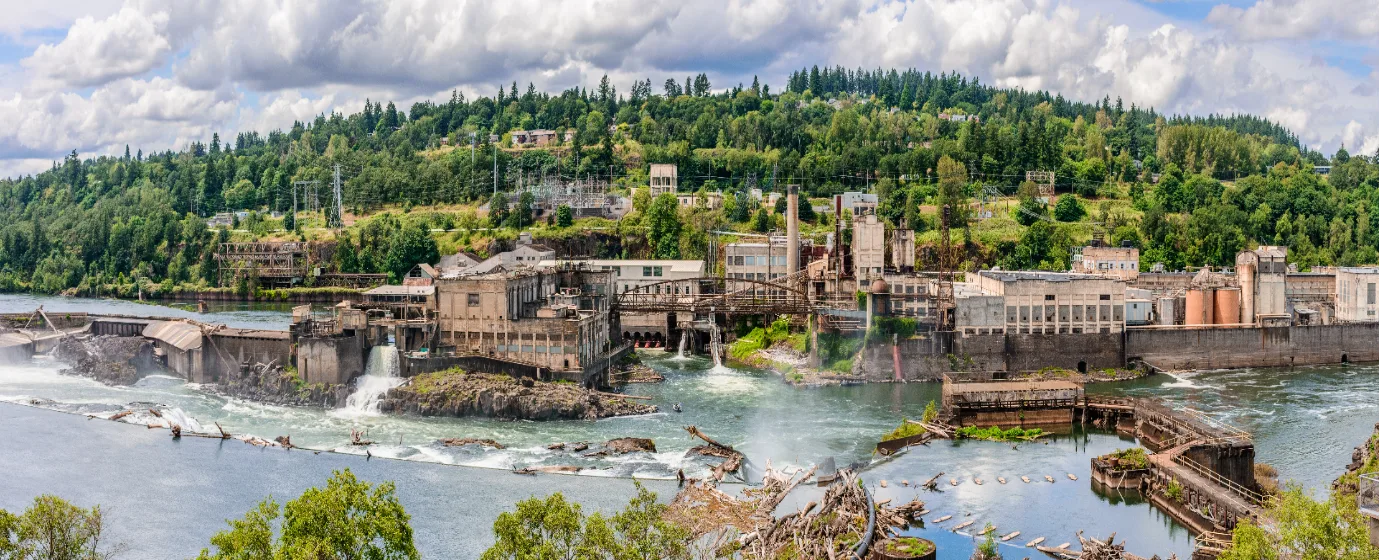
📍 Willamette Falls — the second-largest waterfall by volume in the United States — sits at the heart of the city, and Canemah Bluff Nature Park places you less than half a mile upriver from it, a proximity to raw nature that almost no other incorporated city in the Portland Metro can match.
What is the commute from Oregon City to Portland actually like?
How do Oregon City schools perform, and what should I look into before buying?
Which Oregon City neighborhood is best for families with kids?
What does the typical home price in Oregon City actually buy you?
How does Oregon City compare to West Linn for buyers on a similar budget?
What surprises buyers about Oregon City after they've lived there for a few months?
Is Oregon City a good choice for first-time buyers?
Who tends to thrive in Oregon City, and who tends to move on?
Moving to Oregon?
Tell us what you need help with and we'll connect you with local resources.
