
You've probably done the search already — Portland suburb, good schools, the lake — and landed on Lake Oswego wondering if the numbers actually work. The honest answer: this is one of the more expensive places to live in Oregon, full stop. Overall costs run approximately 25% above the U.S. national average, and housing alone sits around 145% of the national benchmark. That gap isn't incidental. It reflects a city that has deliberately stayed small — 41,474 residents — while sitting about 20 minutes to Portland, keeping its tree canopy intact, and maintaining schools that hold an A+ rating, according to Niche. The median household income of $141,549 is high by any Oregon standard, and it largely reflects who the market has selected over decades of appreciation.
What drives the cost here isn't just proximity to Portland — it's the combination of scarcity and desirability that rarely loosens. The Zillow Home Value Index puts the typical home price at $889,944 as of July 2026. That figure is not a ceiling; it is the middle of the market. The Lake Oswego School District, Oswego Lake at the center of town, George Rogers Park along the Willamette, and the relative calm compared with inner Portland all feed the price. Major employers here — the Lake Oswego School District, the City of Lake Oswego, and Greenbrier Companies among them — are not the dominant income source for most residents. Most people who can afford to own here are earning salaries tied to Portland-area employers, tech, finance, healthcare, or remote work arrangements.
On the positive side of the ledger, Oregon's complete absence of a sales tax means every grocery run, clothing purchase, and household errand costs less than the sticker price in most other states. Utilities run slightly below the national average in practice, because the Willamette Valley climate means neither brutal winters nor air-conditioning-heavy summers. Property taxes, while not trivial, are held in check by Oregon's Measure 50 framework, which limits assessed-value growth to 3% annually — a meaningful structural advantage for long-term owners. The 2BR rental market runs $2,030–$2,470 per month, which is firmly upscale relative to most of the metro but still well below what ownership-level costs demand.
Whether you're comparing Lake Oswego with West Linn and Tualatin nearby, or weighing whether to own versus rent while you get your footing here, the sections below break down housing, utilities, groceries, transportation, taxes, and how the overall cost picture stacks up against the cities buyers most often consider alongside it.

What It Really Costs to Live in Lake Oswego
Lake Oswego is not trying to be affordable, and the market reflects that without apology. At approximately 25% above the U.S. national average for overall costs, it sits comfortably in Oregon's top tier — noticeably more expensive than Tualatin or Tigard, somewhat above West Linn, and in a different financial category than most of the state. The driver is almost entirely housing. Strip that out and the everyday cost of living — utilities, groceries, transportation — is less dramatic than people expect.
The city's Clackamas County address matters more to the bottom line than many newcomers realize. Lake Oswego residents avoid the Multnomah County Preschool for All income surtax and the Metro Supportive Housing Services income tax that apply to Portland residents inside Multnomah County. For a dual-income household earning Portland-area salaries, that distinction can add up to a meaningful annual difference — in Lake Oswego's favor.
What actually sustains these prices is the combination of supply constraint and consistent demand. The city isn't sprawling outward; it's largely built out. That structural scarcity, layered on top of a nationally regarded school district, Oswego Lake as the city's physical and social center, and a commute that typically runs about 20 minutes to Portland, keeps the floor high even in slower markets. Buyers comparing this city with Portland proper are often surprised to find prices in the same range — but with a very different quality of life calculus attached.
Housing: Rent vs Buy in Lake Oswego
The typical home price in Lake Oswego is $889,944 (Zillow Home Value Index, July 2026). That figure lands the city firmly in premium Oregon territory — and it means the median household income of $141,549 falls short of what lenders typically require to carry the typical home here, by roughly $94,000. This is not a market where the median earner buys the median house.
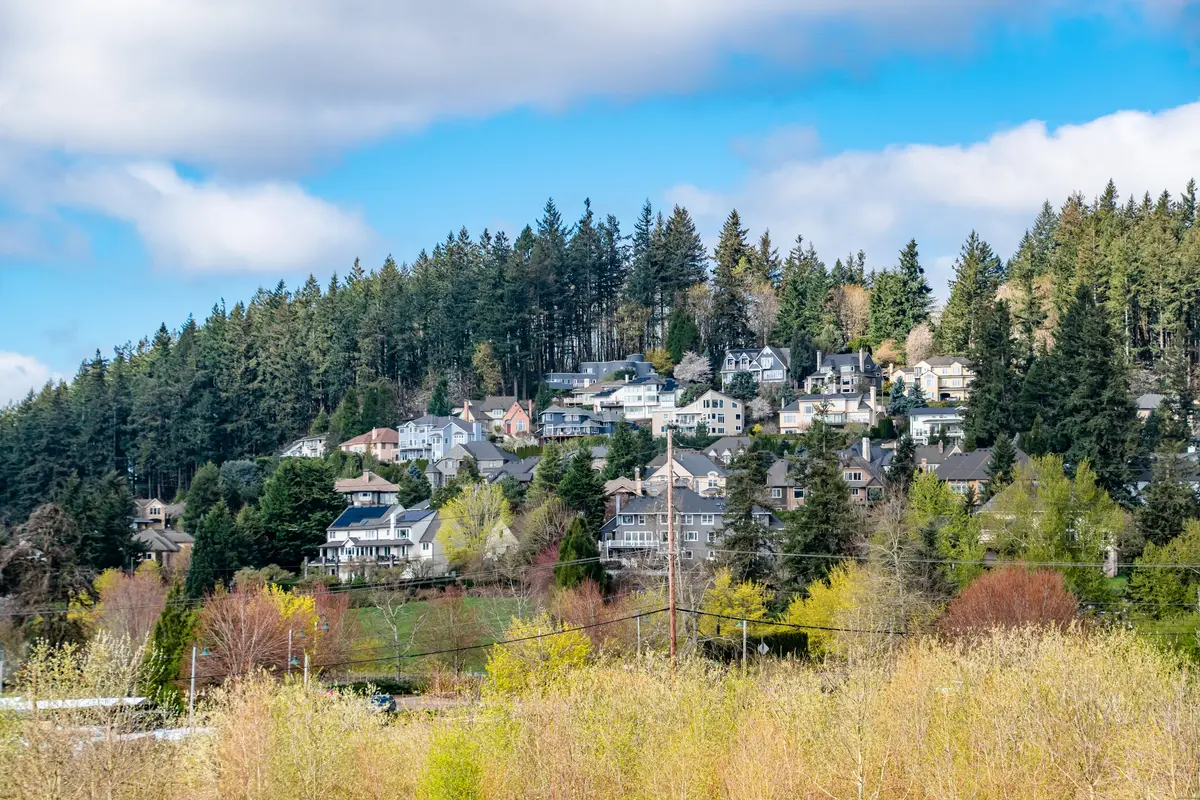
Entry-level ownership exists, but you are looking at older construction, smaller lots, and homes that need updating to access it. Buyers on tighter budgets tend to concentrate in specific parts of the city where the housing stock runs older; the Best Neighborhoods guide covers which areas come in below the city median. Above the midpoint, the price curve steepens quickly — the neighborhoods clustered around the lake and in the hills push well past the typical figure.
The effective property tax rate is approximately 0.98%, which is moderate by national standards and held further in check over time by Oregon's Measure 50 limit on assessed-value growth. Long-term owners often pay taxes against an assessed value substantially below the current market price — a compounding advantage that makes staying more financially rational than leaving, and contributes to the city's characteristically low turnover.
Renting is a genuinely different calculation. The typical 2BR rent runs $2,030–$2,470 per month, which means renting here still costs more than buying in most Oregon cities — but it removes the equity risk, avoids the large down payment, and gives you time to understand which parts of the city actually fit your daily life before committing. For buyers relocating from higher-cost markets, Lake Oswego's prices can look comparable; for first-time buyers coming from within the Portland metro, the gap between qualifying income and purchase price is the central challenge. See the first-time homebuyer guide for a full walkthrough of financing paths available here.

Everyday Costs Beyond Housing in Lake Oswego
| Category | Typical Monthly Cost | Notes |
|---|---|---|
| Housing (typical rent) | $2,209/mo | City-wide typical rent. Buying? Use the calculator above for a mortgage estimate. |
| Utilities | $190–$280/mo | Electricity, gas, water, sewer, trash |
| Groceries | $600–$800/mo | Food at home, household of 2–3 |
| Transportation & Gas | $200–$340/mo | Fuel, and transit where it is a real option |
| Phone & Internet | $110–$180/mo | Mobile plan plus home broadband |
| Misc / Discretionary | $280–$520/mo | Dining out, entertainment, subscriptions |
Non-housing figures are estimates for a household of two to three, not a sourced index; housing is the city-wide typical rent (Zillow ZORI, July 2026). Refreshed with the rest of the city data.
The non-housing cost picture is genuinely more manageable than the housing number implies. Oregon's mild Willamette Valley climate keeps both heating and cooling demands low — winters are wet rather than brutally cold, and the region rarely sustains the kind of heat that drives up air-conditioning bills in inland metros. As a result, utility costs for most Lake Oswego households come in slightly below the national average, even accounting for the Pacific Northwest's electricity pricing structure.
Groceries vary sharply depending on where you shop. Oregon's zero sales tax applies to all grocery purchases, which is a real and daily benefit. The Portland metro supports the full spectrum from discount-focused options like WinCo and Grocery Outlet — both accessible from Lake Oswego — to premium chains. A household that shops deliberately can keep food costs well below the national norm; one that defaults to the closest premium store will spend more. Transportation is where the city's car-dependent nature shows up most clearly: TriMet bus service connects Lake Oswego to Portland via OR-43, but a 2026 restructuring eliminated two lines outright and shifted several remaining routes to peak-hours-only service. For most residents, owning a car is not optional — it is the actual transit plan, and that cost is real.
Looking to buy in Lake Oswego? Estimate your payment.
Enter your numbers to see an estimated monthly mortgage payment.
Estimate only. Excludes HOA fees and mortgage insurance. The interest rate above is a starting point, not a quoted rate — replace it with your own to see real numbers. Insurance is a flat placeholder, not a Lake Oswego quote.
Lake Oswego vs Nearby Cities: Cost Comparison
| City | Typical Home Price | Typical Rent | Cost vs Lake Oswego |
|---|---|---|---|
| Lake Oswego (this city) | $889,944 | $2,209/mo | — |
| West Linn | $779,602 | $2,376/mo | 12% lower |
| Tualatin | $635,314 | $1,890/mo | 29% lower |
| Tigard | $607,011 | $1,850/mo | 32% lower |
Source — home prices: Zillow ZHVI, July 2026; rent: Zillow ZORI, July 2026. Nearby-city figures are the same series, refreshed together.
Lake Oswego consistently comes in as the most expensive of the Portland south-metro options — here's how it lines up against West Linn, Tualatin, Tigard, and Milwaukie on the key numbers buyers compare.
Taxes & the Bottom Line for Lake Oswego
Oregon's Income Tax Structure
Oregon runs one of the steeper state income-tax structures in the country — a four-bracket progressive system with rates of 4.75%, 6.75%, 8.75%, and 9.9% for tax year 2025. Single filers cross into the top 9.9% bracket above $125,000 in taxable income; married joint filers hit it above $250,000. For the household incomes that are common among Lake Oswego homeowners, most will spend meaningful time in the 8.75% or 9.9% brackets. There is no softening that reality.
The Sales-Tax Advantage
Oregon levies no statewide or local sales tax — not at the register, not on groceries, not on clothing or furniture. For a household that spends actively, that adds up faster than most people calculate before moving from a sales-tax state. It doesn't offset the income-tax bite for high earners, but it is a real and daily difference in how far a paycheck stretches on ordinary purchases.
Property Tax and the Clackamas County Position
The effective property tax rate of approximately 0.98% is modest relative to the home values involved, and Measure 50's 3% annual cap on assessed-value growth means long-term owners progressively widen the gap between what they pay and what the home is worth. That structural advantage doesn't help buyers in year one — but it matters a great deal over a ten- or fifteen-year hold.
The Clackamas County location also keeps Lake Oswego residents clear of two income tax surcharges that apply inside Multnomah County: the Metro Supportive Housing Services tax and the Multnomah County Preschool for All tax. For dual-income households earning well into the six figures, these avoided surtaxes represent a real annual savings relative to similarly situated Portland residents.
Who This Budget Fits
The math is fairly direct: Lake Oswego rewards buyers with significant down payments, dual professional incomes, or equity from a prior home sale — particularly from higher-cost markets. The home-price level described earlier puts ownership out of reach for the median Oregon earner without substantial outside equity. Renters with strong incomes who want the school district, the lake-centered lifestyle, and proximity to Portland without locking in at today's prices can make the numbers work — but they will pay a premium over comparable space in Tualatin or Tigard. The city tends to disappoint buyers who arrive expecting Portland prices with a suburb veneer; what they find instead is a market that has its own logic and its own floor, and does not apologize for either. For buyers whose income and equity match the entry bar, the tax structure, climate, and no-sales-tax baseline make the overall picture more livable than the headline home price first suggests. For a full side-by-side on nearby-city prices, the comparison table above is the right place to start.
Local Expert Takeaway: Lake Oswego's cost of living is high by Oregon standards, but the sticker shock on housing tends to obscure some genuine financial advantages: no sales tax on anything, a property tax rate under 1%, Measure 50 protection that compounds over time, and a Clackamas County address that keeps two Portland-specific income surtaxes off your return entirely. The buyers who thrive here financially tend to arrive with equity already in hand — from a prior sale, from a higher-cost market, or from a longer savings runway — rather than trying to qualify their way in from scratch. If you're stress-testing the numbers, price the whole tax picture alongside the home price, not just the mortgage.
Quick Takeaways & FAQs
✅ Lake Oswego's zero sales tax and sub-1% effective property tax rate provide genuine, daily cost advantages that partially offset the city's premium home prices.
⚠️ The typical home price of $889,944 (July 2026) sits roughly $94,000 above what the median household income can typically support — ownership here requires substantial equity or a dual high-income household.
📍 Living in Clackamas County rather than Multnomah County means Lake Oswego residents avoid both the Metro Supportive Housing Services surtax and the Multnomah County Preschool for All income tax that apply to Portland residents.
Is Lake Oswego more expensive than Portland to live in?
What is the effective property tax rate in Lake Oswego?
How much does it cost to rent in Lake Oswego?
Does Oregon have a sales tax that affects Lake Oswego residents?
Can someone earning the median income actually afford to buy in Lake Oswego?
Moving to Oregon?
Tell us what you need help with and we'll connect you with local resources.
