About Elizabeth

What Makes Lake Oswego Different in the Portland Metro
Lake Oswego occupies a specific position in the Portland Metro that no other suburb quite replicates. It sits in Clackamas County — not Multnomah — and that distinction is load-bearing for buyers who've been paying attention to property tax rates. The effective rate here runs at approximately 0.98%, which comes in meaningfully below what comparable homes carry across the county line in Portland proper.
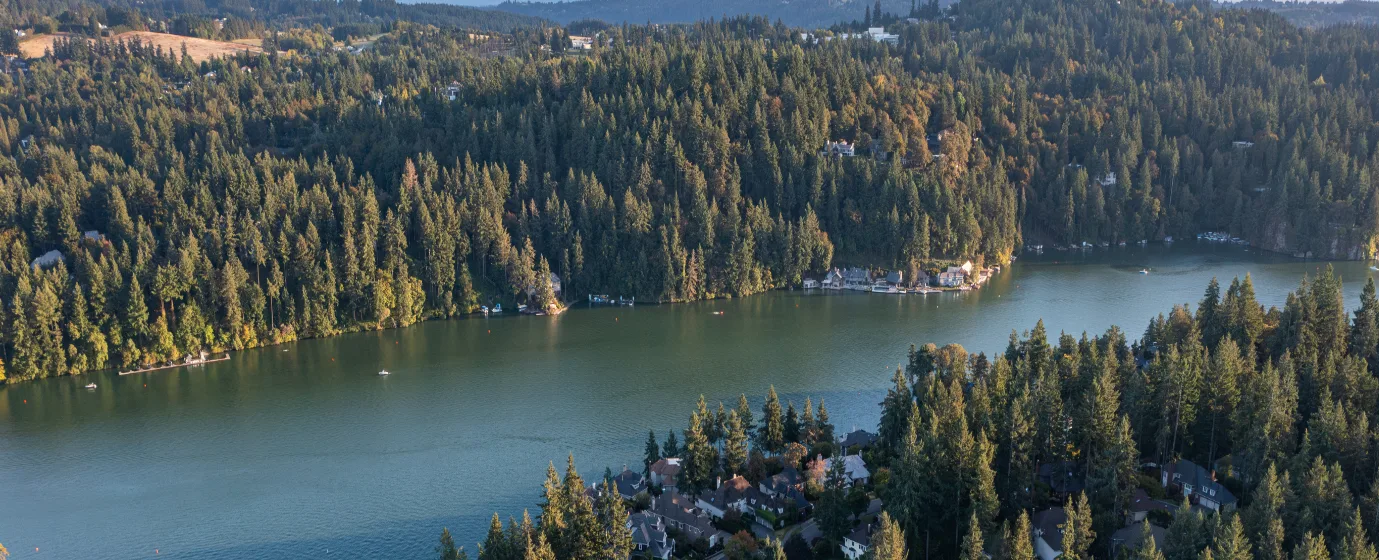
The city's population is 41,474, making it the 13th-largest incorporated city in Oregon. But it doesn't feel like a city of that size. The density is low, the tree canopy is heavy, and Oswego Lake sits at the geographic and social center of everything — the kind of landmark that shapes how people orient themselves and how the city thinks about itself.
Oregon's urban growth boundary is the quiet force behind why this market stays tight. New construction is limited by design, which means the inventory is overwhelmingly existing homes — older Craftsman and mid-century stock alongside renovated contemporaries. Buyers competing for updated homes in desirable locations feel that constraint acutely. Homes that need significant work require sharper pricing from sellers, but the well-positioned, well-maintained properties here still draw genuine interest.
The median household income in Lake Oswego is $141,549 — well above the metro average — and the buyers I work with reflect that. This is a city where the decision to buy is less often a financial stretch and more often a deliberate choice about lifestyle, school district, and proximity to Portland without the Portland tax structure. That's the trade that draws people here, and it's a real one.
Neighborhoods: What Each Part of the City Actually Offers
First Addition
First Addition is where buyers land when walkability is the top priority. It sits closest to downtown Lake Oswego's restaurant row, coffee shops, and the farmers market corridor, and it's the neighborhood where you're most likely to run errands without getting in a car. Homes here run above the city median — you're paying for the location, and most buyers who want this neighborhood know it.
Best for: Walkable Streets Downtown Access
Mountain Park
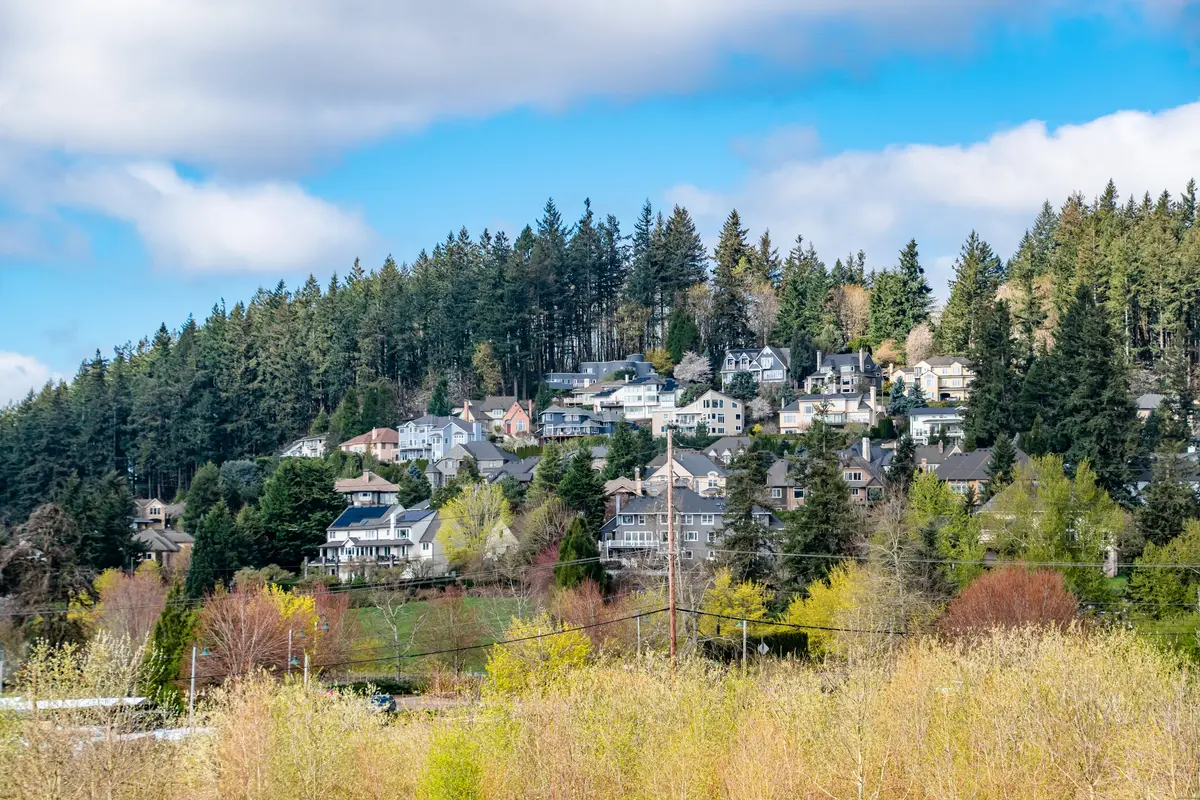
Mountain Park is Lake Oswego's master-planned hillside community — more than 700 acres of wooded terrain with its own HOA, an indoor pool, fitness facilities, and more than eight miles of association-maintained trails winding through the forested common areas. It offers one of the more accessible entry points into Lake Oswego real estate, with homes running below the city median. The catch is the HOA: confirm the dues for any specific property before you fall in love with the number on the listing.
Best for: Nature Value Families
Lake Grove
Lake Grove has a more relaxed, residential rhythm than First Addition — its own pocket of retail and dining, good access to I-5 for south-metro commuters, and a neighborhood feel that draws families who want to be in Lake Oswego without paying the premium for the lakefront zip code. Homes here run above the city median, but the gap to lakefront neighborhoods is noticeable.
Best for: Commuter Families
Westlake
Westlake offers established suburban streets in a quieter corner of the city, drawing buyers who want the Lake Oswego school district and a calmer pace. Homes here price above the city median. It's not a neighborhood with a strong identity in the way First Addition or Mountain Park have one, but that's often exactly what buyers in this pocket are looking for.
Best for: Quiet Families
Uplands, Palisades, and Country Club District
These neighborhoods sit toward the top of the market. Uplands and Palisades both price above the city median — Uplands in particular draws buyers who want larger lots, mature trees, and proximity to Tryon Creek State Natural Area's 645 acres straddling the Portland–Lake Oswego border. The Country Club District is what it sounds like: this is where buyers who've found their budget ceiling and want the best of what Lake Oswego offers tend to end up.
Best for: Luxury Views Privacy
Lake Forest
Lake Forest is one of the two neighborhoods that price below the city median — along with Mountain Park — making it a genuine entry point for buyers who want the Lake Oswego address and school district without the top-of-market sticker price. The housing stock skews toward older homes, and buyers should come in with realistic expectations about condition and update costs.
Best for: First-Time Buyers Value
Lake Oswego Schools: What the State Data Shows
The school district is the single most common reason buyers give me for choosing Lake Oswego over a comparable home elsewhere in the metro. Lake Oswego School District serves a focused area — 6,782 students enrolled in 2025-26, according to figures the Oregon Department of Education publishes — which means the district operates at a scale that supports strong programs without the diffuse resource challenges that come with a much larger enrollment.
On 2024-25 state assessments, 65.6% of students reached math proficiency and 74.9% reached reading proficiency, according to figures the Oregon Department of Education publishes. Those numbers sit well above state averages and give you a real benchmark rather than a reputation. The district also has active OSAA athletics programs, a strong arts presence through Lakewood Center for the Arts, and the kind of community investment in school activities that shows up on a Friday night at the football field.
Here's what I tell every buyer who lists the schools as their primary reason for choosing Lake Oswego: do your own due diligence. Confirm the assigned school for the specific address you're considering directly with the district, and review the data the Oregon Department of Education publishes yourself. School boundaries in any city can produce surprises, and the only way to be certain is to check against your actual address before you're under contract.
The district's reputation is well-earned and durable. But "Lake Oswego schools" is not a monolithic guarantee — it's a starting point for a conversation with the district, and that conversation is worth having early in your search.
Looking to buy in Lake Oswego? Estimate your payment.
Enter your numbers to see an estimated monthly mortgage payment.
Estimate only. Excludes HOA fees and mortgage insurance. The interest rate above is a starting point, not a quoted rate — replace it with your own to see real numbers. Insurance is a flat placeholder, not a Lake Oswego quote.
Lake Oswego vs Nearby Cities
| City | Typical Home Price | Typical Rent | Cost vs Lake Oswego |
|---|---|---|---|
| Lake Oswego (this city) | $889,944 | $2,209/mo | — |
| West Linn | $779,602 | $2,376/mo | 12% lower |
| Tualatin | $635,314 | $1,890/mo | 29% lower |
| Tigard | $607,011 | $1,850/mo | 32% lower |
Source — home prices: Zillow ZHVI, July 2026; rent: Zillow ZORI, July 2026. Nearby-city figures are the same series, refreshed together.
The comparison I walk through most often with buyers is Lake Oswego versus West Linn. Both sit in Clackamas County, both have strong school districts, and both have a residential quality that draws families away from Portland. The real trade is price and identity: West Linn comes in somewhat lower on typical home prices, and it has a quieter, more spread-out character. Lake Oswego has the lake, the walkable downtown core, the arts infrastructure, and a slightly tighter connection to Portland's culture. Buyers who want the lake and the downtown energy tend to stay in Lake Oswego; buyers who want more land for less money often land in West Linn.
Tualatin comes up for buyers who are sticker-shocked by Lake Oswego's numbers. The typical home price in Tualatin is noticeably lower, and I-5 access is the connective tissue between the two cities for south-metro commuters. What you give up is the school district reputation and the lifestyle amenities — Tualatin is a practical, well-run suburban city, but it doesn't have the same draw as a destination.
Tigard is the other city I point buyers toward when Lake Oswego is at the outer edge of their budget. Typical prices in Tigard are noticeably lower than Lake Oswego, and the location works well for buyers whose commute runs toward Beaverton or the tech corridor rather than Portland. The school district is different, the lifestyle is more utilitarian, and most buyers who tour both cities know within an afternoon which one fits them.
Milwaukie and Portland proper come up as comparisons less often in my work, but they're worth naming. Portland offers more neighborhood variety and a genuinely urban experience that Lake Oswego doesn't try to replicate — but buyers weighing Portland are usually weighing a different lifestyle trade, not just a price one. Milwaukie sits closer to Portland on the price spectrum and is a city in its own real estate moment, but it's a distinct market with its own dynamics.
The comparison that doesn't get asked often enough is Lake Oswego against staying in Portland's southwest quadrant. A lot of buyers assume the drive to Lake Oswego adds time to everything. It usually doesn't — OR-43 connects the city directly to Portland's downtown core, and for buyers who work in the south metro or from home, Lake Oswego's location is genuinely convenient rather than a compromise.
The Market: What the Money Actually Buys
The typical home price in Lake Oswego is $889,944 (Zillow Home Value Index, July 2026). That figure is the citywide median, and it covers an enormous range — from older homes in Lake Forest and Mountain Park that represent the genuine entry point into this market, to lakefront and Country Club District properties where new construction routinely clears seven figures even when the broader market softens.
What that number buys in practice depends heavily on condition and location. Updated homes in First Addition or Uplands still draw strong buyer interest and require competitive offers. Older homes or those needing significant work — and there are plenty in the city's mid-century stock — require sharper pricing and sometimes seller incentives before a buyer engages seriously. I tell buyers to think about their renovation appetite before they start touring, because the gap between a turnkey Lake Oswego home and a project home is large, and the cost of bridging it doesn't always close the price difference.
Oregon's urban growth boundary is not an abstraction here — it is why inventory stays constrained year after year. There is no new subdivision land waiting to come online in Lake Oswego. When supply comes to market, it comes from owners deciding to sell, and that keeps the floor high across all price tiers.
One thing I want buyers to understand about affordability: the median household income in Lake Oswego is $141,549, and it falls short of what's needed to carry the typical home here by a meaningful margin. That doesn't mean buyers at the city's income median can't buy in Lake Oswego — many do, with larger down payments, dual incomes, or equity from a prior sale — but it does mean this is not a city where the math works easily at the entry level. Mountain Park and Lake Forest are the neighborhoods where I spend the most time with buyers who are working within a real budget constraint.
The property tax rate — approximately 0.98% effective — is one of the features buyers moving from Portland proper notice immediately. Over the life of a mortgage, the Clackamas County position matters, and it's part of why buyers who might stretch further into Portland's westside often find the Lake Oswego math more compelling once they run the numbers.
Daily Life, Local Character, and What Surprises People
Lake Oswego has 141 sunny days a year — the Pacific Northwest reality that anyone moving here from California or Colorado will feel in October. The gray winters are real, they're long, and buyers who've only visited in summer sometimes need a gentle warning about what January looks like. The upside is that when the sun comes out, this city uses it: Oswego Lake is the center of summer social life, George Rogers Park fills with families at its Willamette River edge, and Tryon Creek State Natural Area — straddling the Portland–Lake Oswego border across 645 acres — offers 14 miles of hiking trails and a paved bicycle path that connects into the broader metro trail system.
The Lakewood Center for the Arts is the city's cultural anchor, and the annual Festival of the Arts at George Rogers Park — free and running for more than 62 years — is the kind of civic tradition that tells you something real about a community's character. The Willamette Shore Trolley, operating along a historic rail corridor dating from the late 1800s and through a tunnel built in 1921, is a seasonal piece of local texture that surprises people who didn't know it existed.
The thing that surprises buyers most after six months here is how contained it is — in a good way and an occasionally limiting one. Lake Oswego is not a city you move through; it's a city you settle into. The commercial footprint is modest relative to the home prices: the Lake Oswego Farmers' Market, a handful of well-regarded local restaurants and coffee spots, and a downtown that rewards on-foot exploration without offering the full urban menu that Portland's central neighborhoods do. Buyers who want to be walkable to a serious restaurant and nightlife scene sometimes find themselves driving into Portland more than they expected.
Employers in the city include the Lake Oswego School District, the City of Lake Oswego, and the Greenbrier Companies — a global designer and manufacturer of freight railcar equipment headquartered here. Most residents who work outside the home commute, with the drive to Portland running about 20 minutes under normal conditions. Remote workers have found Lake Oswego particularly well-suited to what they're looking for: the neighborhood stability, the parks, the school district, and the ability to drive into Portland when they actually need to be there.
People leave Lake Oswego for a few predictable reasons. Some outgrow the limited commercial variety and want a denser urban experience — they usually go back into Portland. Some find that the social environment of a city with this zip code's income profile doesn't fit, even if the home itself does. And some simply discover that West Linn or a Tualatin neighborhood gives them most of what Lake Oswego offered at a price that changes their financial picture meaningfully. All of those are legitimate outcomes, and the buyers who understand the trade-offs before they close tend to be the ones who stay.
Final Advice From Elizabeth
Quick Takeaways & FAQs
✅ Lake Oswego School District serves 6,782 students and posts proficiency rates well above Oregon state averages, making it the most consistently cited reason buyers choose this city over comparable metro alternatives.
⚠️ The typical home price of $889,944 (July 2026) exceeds what the city's own median household income can comfortably support — buyers need to walk in clear-eyed about the financial stretch this market requires.
📍 Mountain Park's 700-acre master-planned community with eight miles of HOA-maintained trails offers one of the most accessible entry points into Lake Oswego, but confirm the HOA dues for any specific property before you make an offer.
What is the realistic commute from Lake Oswego to Portland like day to day?
How does the Lake Oswego School District actually perform, and how do I find out which school my kids would attend?
Which Lake Oswego neighborhood should I start my search in?
What does the typical home price actually get you in Lake Oswego right now?
How competitive is the Lake Oswego market, and how fast do homes move?
What surprises buyers most after they've lived in Lake Oswego for six months?
How does Lake Oswego compare to West Linn for a family looking in this part of the metro?
Is Lake Oswego the right fit for buyers who work remotely or have flexible schedules?
Moving to Oregon?
Tell us what you need help with and we'll connect you with local resources.
