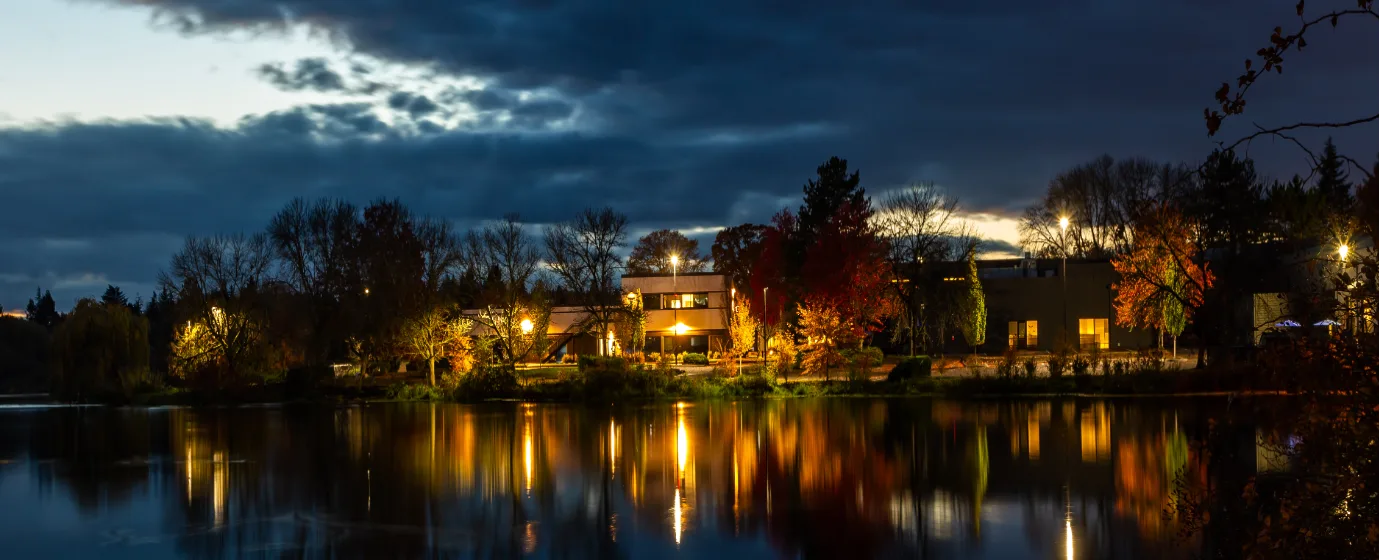
If you're choosing between Beaverton neighborhoods, the decision rarely comes down to price alone — it comes down to which side of OR-8 you can live with. The Tualatin Valley Highway (OR-8, also called Canyon Road through much of Beaverton) divides the city into two fundamentally different living experiences: north and east of it, you get older housing, faster Portland commutes, and walkable retail; south of it, you get newer construction, hillside terrain, larger lots, and a quieter suburban rhythm that trades light-rail access for a garage and a view. Most buyers don't realize how decisively that single road shapes their daily life until they've already made an offer.
Beaverton is the 7th-largest incorporated city in Oregon, home to 97,812 residents and anchored by an employment base that includes Nike, Tektronix, Columbia Sportswear, and the Beaverton School District — which serves 36,959 students enrolled in 2025-26 and holds an A- rating, according to Niche. That employer mix draws a steady stream of tech and apparel industry relocators, many of them arriving from the Bay Area or Seattle with high income expectations and a strong preference for walkable amenities. The city absorbs that demand without the sticker shock of Portland's inner eastside, though the gap is narrowing.
The typical home price sits at $527,947 (Zillow Home Value Index, July 2026) — roughly comparable to Portland and Hillsboro, and somewhat below Tigard. That puts the city within reach for dual-income households, though the median household income here falls meaningfully short of what's needed to carry the typical home at current rates. See the full cost picture at the cost of living page. Day-to-day life leans heavily on cars in the southern neighborhoods, while Central Beaverton and Cedar Hills can genuinely support an on-foot routine around MAX light rail, the Beaverton Farmers Market, and the retail corridor.
Whether you're a commuter weighing the drive to Portland, a family hunting the right school boundary, or a buyer who simply wants to understand how these neighborhoods actually differ from each other, the sections below break down Beaverton's seven key areas — their character, their trade-offs, and who each one suits best.
The Beaverton Reality
OR-8 — the Tualatin Valley Highway — is the fault line of Beaverton real estate. Neighborhoods north of it, like Cedar Hills and Five Oaks, were built earlier, sit closer to MAX light rail, and connect more directly to Portland via US-26 (Sunset Highway) or OR-217. Neighborhoods south of it — Murrayhill, Sexton Mountain, Progress Ridge — were master-planned later, carry a distinctly different architectural vocabulary (think craftsman-influenced detached homes and HOA trail networks), and require a car for almost everything. Buying without understanding which world you're entering is one of the most common mistakes relocating buyers make here.
School boundaries add a second layer of complexity. The Beaverton School District 48J covers the whole city, but boundary lines don't follow neighborhood names in any intuitive way. A few blocks of separation can mean different elementary schools with meaningfully different community feels. Buyers who assume the district rating covers every school equally — and skip the step of verifying which school a specific address feeds into — sometimes discover the mismatch only after closing.
The third reality is commute geometry. Central Beaverton and Cedar Hills sit within MAX light rail's reach, making a car-free or low-car commute to Portland genuinely workable. Progress Ridge and Murrayhill, despite their polish and newer construction, require driving out to OR-210 (Scholls Ferry Road) and then navigating surface streets before you even reach a freeway. The southern neighborhoods are beautiful and well-maintained — but commuters who underestimate that extra leg of the trip often wish they'd chosen differently.
Neighborhoods at a Glance
| Neighborhood | Best For | Vibe |
|---|---|---|
| Cedar Hills | Commuter Walkable | Mid-century suburban with mature trees, direct freeway access, and genuine retail walkability around Cedar Hills Crossing |
| Murrayhill | Families Quiet | Planned master community with HOA amenities, trail networks, and a neighborhood-first social culture |
| Central Beaverton / Downtown Beaverton | Walkable Transit Renter | MAX-connected urban core with condos, food carts, arts venues, and the city's most on-foot-friendly streets |
| Sexton Mountain | Luxury Views Nature | Elevated and quiet, with craftsman homes, rolling terrain, and Cooper Mountain Nature Park as a backyard |
| Progress Ridge | Families School | Newer suburban development anchored by lakeside retail, a movie theater, and a polished, family-oriented atmosphere |
| Five Oaks | First-Time Value | Affordable northern Beaverton with parks, the regional aquatic center, and solid transit access |
| West Beaverton | Families Nature Privacy | Large lots, Tualatin Hills Nature Park on the doorstep, and a well-established neighborhood feel with strong trail access |
Beaverton typical home price: $527,947 (Zillow ZHVI, July 2026). Typical rent: $1,880/mo (Zillow ZORI, July 2026). Neighborhood tiers on this page are relative to these figures.
Best Neighborhood by Buyer Type
| Buyer Type | Best Neighborhood | Why |
|---|---|---|
| First-Time Buyer | Five Oaks | Prices sit below the city median, giving entry-level buyers the best foothold without sacrificing school district quality. |
| Luxury Buyer | Sexton Mountain | Prices run above the city median, the craftsman-influenced detached homes are some of Beaverton's finest, and the hillside setting adds separation and views that other neighborhoods can't match. |
| Walkability Seeker | Central Beaverton / Downtown Beaverton | MAX light rail, The Round's food-and-retail plaza, the Beaverton Farmers Market, and the Patricia Reser Center for the Arts are all within a short walk. |
| Families with Kids | West Beaverton | Large lots, Tualatin Hills Nature Park directly adjacent, Fanno Creek Greenway Trail access, and a community established enough that neighbors tend to know each other. |
| Commuter | Cedar Hills | The US-26 and OR-217 interchange puts Portland about 22 minutes away by car, and MAX light rail access means commuters can skip the drive entirely. |
| Large-Lot Buyer | Murrayhill | The planned community layout delivers genuine lot separation, HOA-maintained trail corridors, and a quieter suburban character that Progress Ridge's denser TownSquare footprint doesn't quite replicate. |
| Renter | Central Beaverton / Downtown Beaverton | The highest concentration of apartment and condo inventory sits here, within walking distance of transit and the city's most active dining and arts corridor. |
Looking to buy in Beaverton? Estimate your payment.
Enter your numbers to see an estimated monthly mortgage payment.
Estimate only. Excludes HOA fees and mortgage insurance. The interest rate above is a starting point, not a quoted rate — replace it with your own to see real numbers. Insurance is a flat placeholder, not a Beaverton quote.
Most Popular Neighborhoods
Cedar Hills
Cedar Hills functions as Beaverton's most commuter-optimized neighborhood, sitting at the convergence of US-26 (Sunset Highway) and OR-217 with MAX light rail access layered on top. The housing stock runs toward mid-century single-family homes and condominiums surrounded by a genuine mature tree canopy — a rarity this close to a major freeway interchange. The trade-off is noise and density: you're not buying into a quiet cul-de-sac neighborhood, and the freeway-adjacent streets can feel relentless during peak hours. Commonwealth Lake Park softens the edges considerably, drawing walkers, anglers, and families throughout the week. Cedar Hills is technically an unincorporated Washington County area that falls within Beaverton School District boundaries and functions seamlessly as a Beaverton neighborhood for all practical purposes.
Best for: Commuters who want MAX light rail access and freeway convenience without sacrificing neighborhood character or walkable retail.
Murrayhill
Murrayhill was designed as a community, not just a subdivision — the distinction shows. Trails run through natural resource corridors into THPRD-managed open space, and the neighborhood's HOA-managed recreational facilities give residents access to swimming pools, tennis, and basketball in a way that most Beaverton neighborhoods simply don't offer. The catch is that you're buying into an HOA, which means dues, rules, and a community culture that thrives on participation. Families with school-age children tend to stay for years; the neighborhood has the feel of somewhere people chose deliberately and then dug in.
Best for: Families with kids who want organized amenities, trail access, and a socially cohesive planned community.
Central Beaverton / Downtown Beaverton
The Round at Beaverton Central is the clearest expression of what downtown Beaverton is trying to become: a 6.5-acre mixed-use plaza with condominiums, office space, restaurants, and a food cart pod arranged around a European-promenade-style walkway. Add the Beaverton Farmers Market (one of the largest in the Pacific Northwest), the Patricia Reser Center for the Arts a short distance away, and MAX light rail service at Beaverton Central station, and this neighborhood carries a level of urban functionality unusual for a Portland suburb. Prices here sit below the city median, which makes it the most accessible entry point for buyers who want walkable streets. The honest caveat: downtown Beaverton is still evolving, and the retail and dining density doesn't yet match its transit infrastructure.
Best for: Transit-dependent commuters, renters, first-time condo buyers, and anyone who wants to walk to the farmers market.
Sexton Mountain
Sexton Mountain occupies the southwestern edge of Beaverton on rolling terrain that immediately signals a different price tier — prices here run above the city median, reflecting the craftsman-influenced detached homes, the separation from the city's busier corridors, and the proximity to Cooper Mountain Nature Park's 230-plus acres of conifer forest, prairie, and oak woodlands. Galena Woods and Morrison Woods add additional natural texture within the neighborhood itself. The trade-off is isolation: Sexton Mountain is car-dependent for nearly everything, and the commute to Portland requires navigating south Beaverton's surface streets before reaching a freeway. Buyers who move here tend to prioritize the natural setting over convenience, and most would tell you that's the right call.
Best for: Move-up buyers and outdoor-oriented households who want craftsman-quality homes, hillside terrain, and Cooper Mountain Nature Park as a near neighbor.
Progress Ridge
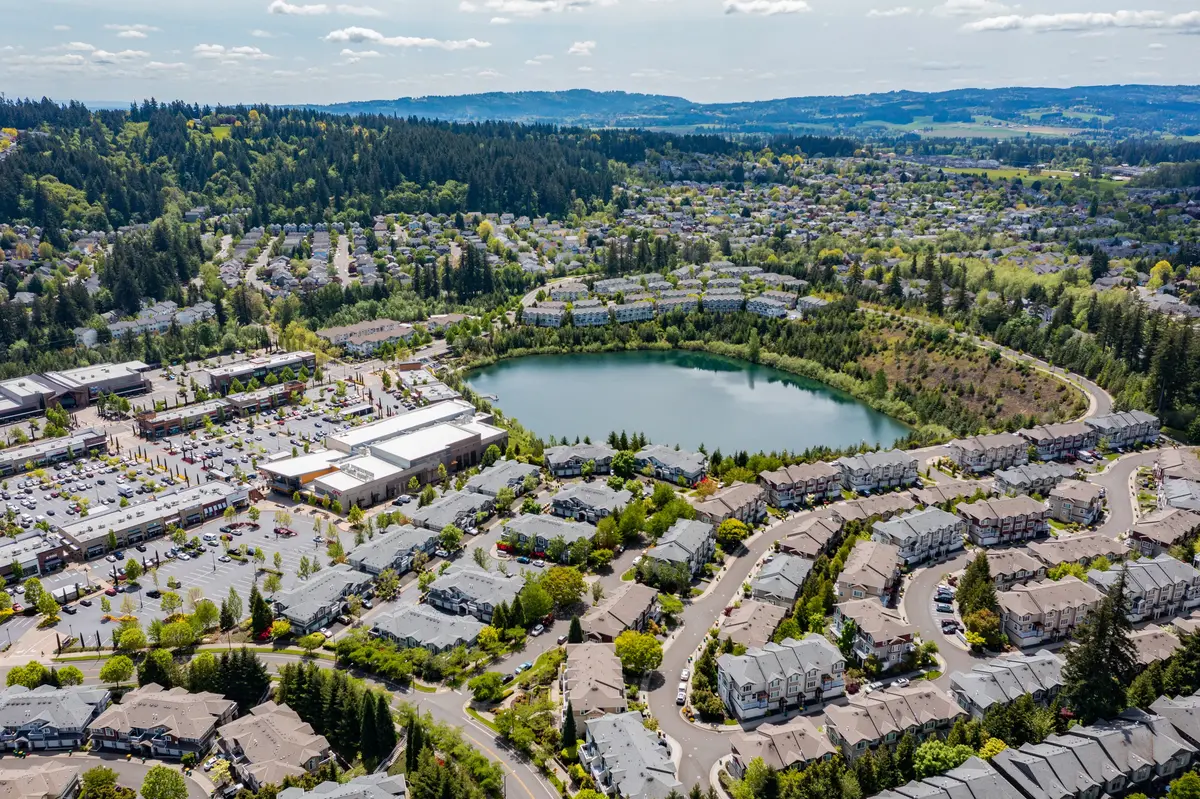
Progress Ridge TownSquare — a lakeside outdoor shopping center with a New Seasons Market and the AMC Progress Ridge 13 theater — gives this southwestern neighborhood an amenity anchor that most suburban areas its age lack. The housing stock skews newer, the streets are clean and well-maintained, and OR-210 (Scholls Ferry Road) connects residents to Tigard and downtown Beaverton without requiring a freeway. The honest friction: Progress Ridge sits at the far end of Beaverton's southern arc, making the commute to Portland meaningfully longer than what Cedar Hills or Central Beaverton buyers experience. It's a neighborhood that rewards families who work locally or from home more than it suits daily Portland commuters.
Best for: Families with kids who want newer construction, a walkable lifestyle centered on the TownSquare, and don't need a fast Portland commute.
Five Oaks
Five Oaks is northern Beaverton's value play — prices sit below the city median, and the neighborhood delivers solid bones: parks, trails, proximity to the Tualatin Hills Aquatic Center (a major regional recreation facility), and OR-8 (Tualatin Valley Highway) access for east-west movement across the metro. The housing stock is older than Progress Ridge or Murrayhill, and the neighborhood has a less curated feel than the master-planned communities to the south. That's exactly why entry-level buyers gravitate here: you get the same school district quality and the same general Beaverton location at a lower starting point.
Best for: First-time buyers and value-conscious purchasers who want northern Beaverton's commute positioning and the district's school quality without a premium price.
West Beaverton
West Beaverton delivers what a lot of Beaverton buyers are actually looking for — larger lots, homes built from the late 1970s through the 1990s with genuine yard space, Tualatin Hills Nature Park directly adjacent, and Fanno Creek Greenway Trail running through the area. Prices run above the city median, reflecting the lot sizes and the park adjacency that makes this one of the most nature-connected residential pockets in the city. The trade-off is the housing vintage: these aren't new homes, and buyers who skip a thorough inspection on a 1985-era house here sometimes encounter the deferred maintenance that comes with that era. Hyland Woods adds another natural corridor for trail runners and families on foot.
Best for: Families with kids and nature-oriented buyers who want large lots, greenway access, and Tualatin Hills Nature Park as an everyday amenity.
Common Mistakes Buyers Make in Beaverton
Assuming Every Part of Beaverton Commutes the Same Way
Buyers who find a home they love in Murrayhill or Progress Ridge sometimes don't test the commute to Portland until after they've made an offer. OR-210 (Scholls Ferry Road) moves well during off-peak hours, but the route to US-26 or OR-217 during morning rush adds real time. If your job is in Portland and you're commuting daily, the northern neighborhoods — Cedar Hills especially — give you a structural commute advantage that no amount of new construction in the south can replicate.
Treating the District Rating as a School-by-School Guarantee
The Beaverton School District holds an A- rating, according to Niche, and that score covers 36,959 students enrolled in 2025-26. It does not mean every school in the district performs identically. School boundaries in Beaverton don't follow neighborhood names in obvious ways, and buyers who assume a given address feeds into a specific elementary school — without running the boundary check — occasionally discover the mismatch post-closing. Verify the assigned school for any specific address before you make an offer, not after. See the schools page for boundary resources.
Chasing Square Footage in Five Oaks While Ignoring OR-8 Traffic
Five Oaks delivers below-median prices and solid lot sizes, which makes it appealing to buyers stretching their budget. What some miss is that OR-8 (Tualatin Valley Highway) — the northern boundary of the neighborhood — carries significant east-west traffic volume, and homes closest to the corridor trade noise for the accessibility. Buyers who prioritize quiet should focus on streets that sit a few blocks south of the highway rather than maximizing square footage right against it.
Underestimating HOA Obligations in Murrayhill
Murrayhill's HOA-managed amenities — pools, courts, trails, community events — are genuinely well-maintained and add real quality of life. They also come with dues and a governance structure that enforces community standards. Buyers moving from areas without HOAs sometimes experience the rules as a surprise after closing. Read the CC&Rs before you make an offer, not as a formality but as a genuine preview of what living there actually requires.
Best Areas to Rent in Beaverton
| Area | Ideal For | Trade-off |
|---|---|---|
| Central Beaverton / Downtown Beaverton | Transit-dependent renters, young professionals, anyone wanting MAX light rail access and walkable errands | Urban feel without urban density — dining and retail options are improving but still thinner than Portland's inner neighborhoods |
| Cedar Hills | Commuters who want freeway access, walkable retail, and apartment options near US-26 | Freeway proximity means noise is a real factor; units closest to the interchange trade convenience for ambient sound |
| Five Oaks | Value-focused renters, families wanting northern Beaverton's park and aquatic center access | Older rental stock compared to newer complexes in the south; the neighborhood has a less polished aesthetic |
| West Beaverton | Renters who want nature access — Tualatin Hills Nature Park and Fanno Creek Greenway Trail — without condo-tower living | Fewer large apartment complexes; rental options here lean toward single-family and smaller multi-unit buildings, which limits availability |
| Progress Ridge | Families and remote workers who want newer construction, lakeside TownSquare walkability, and a quieter southern setting | Car-dependent for commuting to Portland; the farthest rental zone from MAX light rail and the longest drive to the city core |
Beaverton's rental market reflects a city-wide typical rent of $1,880 per month (Zillow ZORI, July 2026), with a two-bedroom generally running somewhere in the $1,730–$2,110 range depending on the unit vintage and location. The tightest inventory tends to cluster around the MAX-connected neighborhoods, where demand from tech and apparel industry workers keeps vacancy low regardless of the season.
Local Expert Takeaway: The buyers who are happiest in Beaverton are the ones who picked a neighborhood based on how they actually live — not just the school district rating or the square footage. If you commute to Portland daily, Cedar Hills and Central Beaverton's MAX light rail access is worth more than any extra bedroom. If your life is local and you want trails out your back door, West Beaverton's Tualatin Hills Nature Park adjacency and Fanno Creek Greenway access deliver something the southern neighborhoods genuinely can't. And if community structure matters to you — pools, organized activities, neighbors who show up to things — Murrayhill's HOA-managed recreational facilities are as good as it gets in this market. OR-8 divides the city; knowing which side suits you narrows the search immediately.
Quick Takeaways & FAQs
✅ Beaverton's school district serves 36,959 students and holds an A- rating, according to Niche — one of the strongest district ratings in the Portland metro.
⚠️ The OR-8 divide is real: southern neighborhoods like Progress Ridge and Murrayhill are significantly more car-dependent and add meaningful time to a Portland commute compared to Cedar Hills or Central Beaverton.
📍 Cedar Hills Crossing gives Cedar Hills buyers walkable access to New Seasons Market and Powell's Books — a retail convenience that most Beaverton neighborhoods can't match on foot.
What is the most affordable neighborhood in Beaverton?
Which Beaverton neighborhood is best for families with school-age children?
Which Beaverton neighborhood has the best commute to Portland?
Is Beaverton walkable, or do you need a car?
Are there good rental options in Beaverton, and where should renters focus?
Moving to Oregon?
Tell us what you need help with and we'll connect you with local resources.
