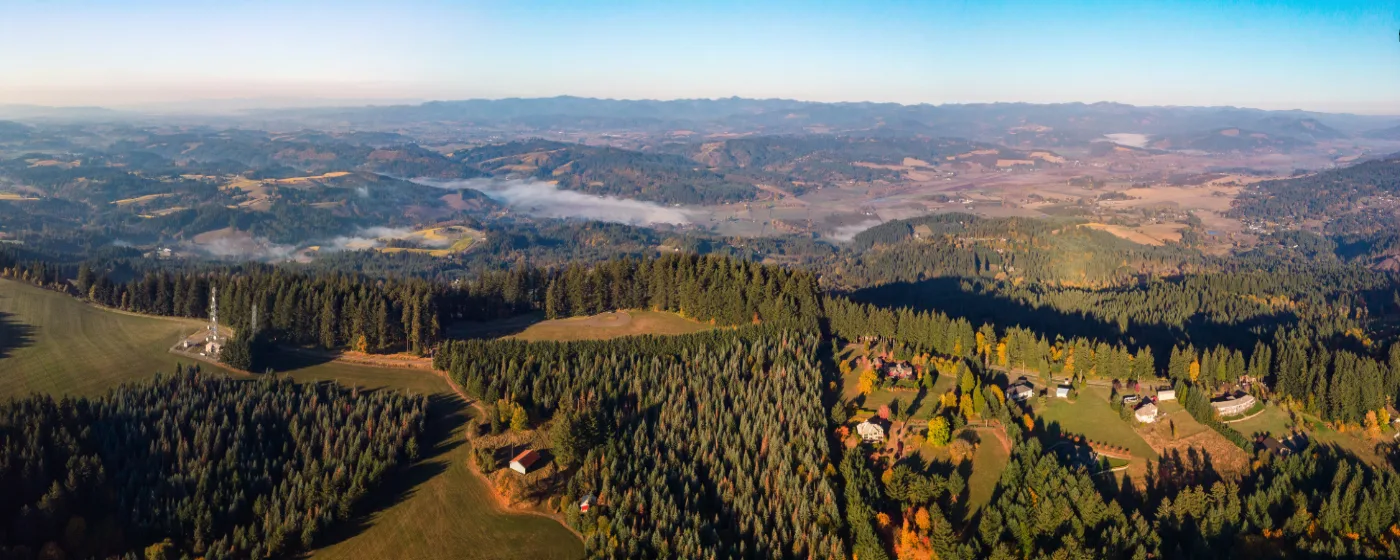
What Is Living in Aloha, Oregon Like?
First things first: it's pronounced a-LOW-ah, not the Hawaiian greeting — and that small correction is often the first thing newcomers learn after signing their lease or closing on a house here. Aloha is an unincorporated community wedged between Beaverton and Hillsboro in Washington County, which means it has no city hall, no mayor, and no city council of its own. County government handles services, and residents vote in Washington County elections. That governance quirk is either a footnote or a dealbreaker depending on your priorities, but the day-to-day reality is a fully functioning dense suburb with a post office, a public library, schools, shops, and restaurants — without the municipal overhead some smaller incorporated cities carry. OR-8, the Tualatin Valley Highway, is the main artery that runs through the heart of the community and defines its commercial spine.
The economic case for Aloha is straightforward: you are sitting in the middle of one of the Pacific Northwest's strongest job corridors. The Beaverton School District employs a large local workforce, and Intel's semiconductor manufacturing campus in Hillsboro is one of the biggest private employers in the entire state — many Aloha residents commute to it in under fifteen minutes. Nike's world headquarters sits just east in Beaverton, and a major regional health system rounds out the anchor employers within easy reach. Aloha High School, home of the Warriors, feeds into the Beaverton School District — a district that holds an A- rating, according to Niche — and serves a genuinely diverse student body that reflects the broader community: Aloha's Latino and Asian residents together make up roughly a third of the population, and minority-owned businesses account for about 28.8% of all employer firms here, well above Oregon's state average.
Pricing is the reason most people seriously consider Aloha after being priced out of Beaverton proper or Portland's west side. The Zillow Home Value Index put the typical home price at $493,280 in May 2026 — meaningfully below comparable neighborhoods closer to Portland's core, and in a county that still benefits from Oregon's absence of a sales tax. The median household income of $101,934 reflects a workforce largely employed in well-paying tech and healthcare sectors, and the community's outdoor amenities are genuine — Cooper Mountain Nature Park's 230 acres of trails and oak woodlands sit just south of the residential core.
Whether you are considering a move or just researching the area, the sections below break down Aloha's neighborhoods, cost of living, schools, local favorites, commute patterns, and what daily life here is really like.
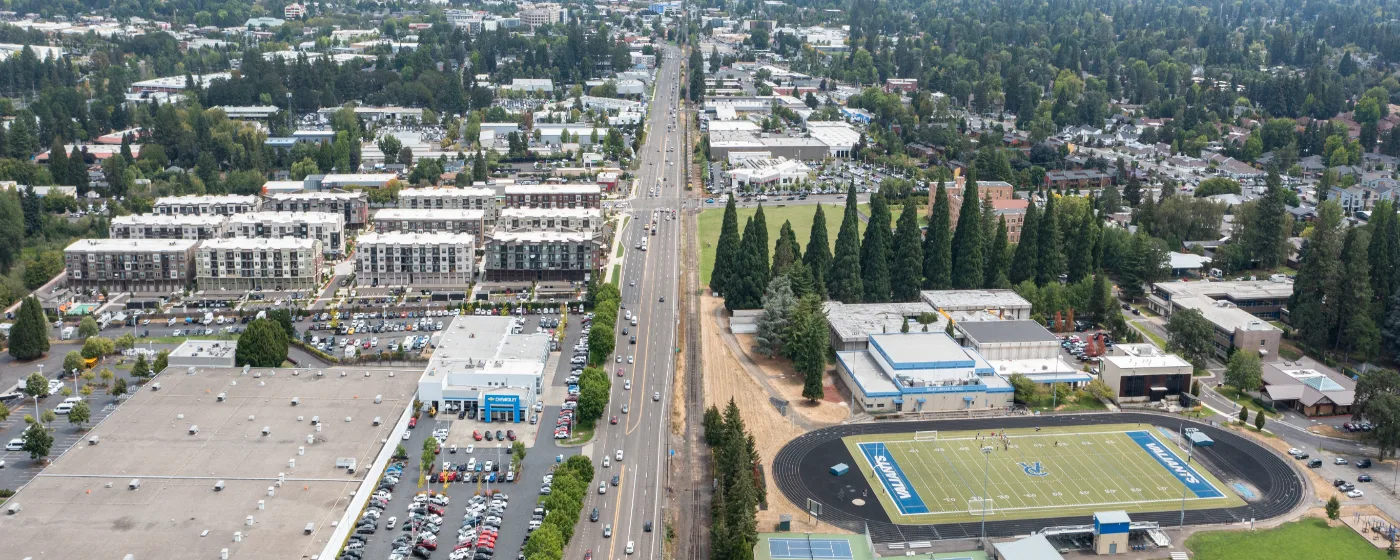
Aloha at a Glance
Looking to buy in Aloha? Estimate your payment.
Enter your numbers to see an estimated monthly mortgage payment.
Estimate only. Excludes HOA fees and mortgage insurance. The interest rate above is a starting point, not a quoted rate — replace it with your own to see real numbers. Insurance is a flat placeholder, not a Aloha quote.
Why Are People Moving to Aloha?
The people showing up in Aloha right now largely fall into two groups: buyers who have been priced out of Beaverton and are moving west along OR-8, and remote workers or tech employees who need proximity to Intel's Hillsboro campus or Nike's Beaverton headquarters without paying for a Beaverton address. A third, smaller group arrives from other states — frequently California — drawn by Oregon's no-sales-tax environment and a price point that still feels reasonable compared to the Bay Area or Los Angeles.
The Diversity Factor
Aloha is one of the more genuinely diverse communities in the Portland metro, and that is not just a demographic stat — it shows up at the Aloha Community Farmers' Market, in the range of cuisines available along the commercial strip, and in the makeup of the public schools. Latino residents make up roughly 23% of the population, Asian residents around 11.5%, and the community's minority-owned business share of 28.8% sits far above Oregon's 12.2% state average. For families relocating from more diverse metro areas who worry about cultural isolation in Pacific Northwest suburbs, Aloha is a meaningful outlier.
The Unincorporated Reality
Being unincorporated means residents get Washington County services rather than a city's — which has practical implications. There is no city-level parks and recreation department; instead, Tualatin Hills Park and Recreation District handles those services, and it does so well. Fire and emergency medical services come from Tualatin Valley Fire and Rescue. For most buyers, this is invisible in daily life. For anyone who cares about local governance — annexation concerns, zoning decisions, urban growth boundary issues — it is worth understanding before you buy.
The community is also actively growing its affordable housing stock. Washington County's Aloha 209 project, funded in part by the voter-approved Measure 26-199, broke ground on 87 new affordable units in the area — a sign that county-level investment in Aloha is real and ongoing. For a safety overview, Aloha posts a violent crime rate of 2.9 per 1,000 residents and a property crime rate of 20.8 per 1,000 residents — both comparing favorably to Oregon state averages of 3.3 and 24.5 per 1,000, respectively.
What Daily Life Feels Like in Aloha
If you are moving from a walkable urban neighborhood, the adjustment to Aloha takes a few months. The community is car-dependent by design: OR-8 (Tualatin Valley Highway) carries the grocery stores, the pharmacies, the fast food, and the strip retail that handles most household errands. Venture one block off that corridor into the residential grid and it is quiet, tree-lined, and suburban in a way that feels genuinely settled — not the raw new-construction feel of outer Hillsboro.
Harvey the Rabbit and the OR-8 Corridor
You will pass Harvey the Rabbit — a large roadside sculpture along Tualatin Valley Highway — more times than you can count once you live here. Longtime residents have a complicated, affectionate relationship with him. He is the most recognizable landmark along the commercial strip, and community identity here gets built through schools, parks, and a handful of recurring events rather than around a single central gathering point.
Where Families Actually Gather
Aloha Community Park is the closest thing to a town commons — a place where youth sports leagues fill the weekends and the Aloha Community Farmers' Market draws regular crowds through the warm months. Cooper Mountain Nature Park, just south of the residential core, is where the hiking and trail-running crowd goes on weekend mornings: 3.5 miles of trails through conifer forest and native oak woodland, with views reaching across the Tualatin River Valley and toward the Chehalem Mountains.
The school calendar shapes the community calendar noticeably. With 36,959 students enrolled in 2025-26 in the Beaverton School District, and Aloha High School as one of the district's six comprehensive high schools, Friday nights in fall mean Warriors football — and the stands fill. On 2024-25 state assessments, 43% of students reached math proficiency and 53.1% reached reading proficiency district-wide. For more detail on school performance and boundaries, the Aloha schools page breaks it down fully.
The Seasonal Surprise
Newcomers from sunnier climates consistently underestimate the grey. Aloha averages 141 sunny days a year — that figure lands harder than it looks when January and February arrive back to back with weeks of low cloud cover and drizzle. The upside is that spring is genuinely beautiful, the summer months are dry and mild, and the Cooper Mountain trails never feel crowded the way Portland's Forest Park does on a warm weekend.
The Aloha Housing Market Right Now
The Zillow Home Value Index placed Aloha's typical home price at $493,280 in May 2026. That figure sits noticeably below what comparable ranch-style and split-level homes fetch in Beaverton's more established neighborhoods closer to Nike's campus — making Aloha a genuine value play for buyers who need the same job access without the premium address. For a full picture of costs including rent, taxes, and utilities, the Aloha cost of living page covers those in detail.
What the Housing Stock Looks Like
Aloha's inventory skews toward single-family homes built between the 1960s and 1990s — ranch-style layouts, modest square footage, and larger lots than you typically find in newer subdivisions. Buyers looking for move-in-ready homes will find some, but cosmetic updates are common in this price range, and competition for well-priced, updated homes tends to be real. The effective property tax rate sits at approximately 0.84%, which is notably low by Pacific Northwest suburban standards.
Affordable Housing Development
Washington County's Aloha 209 project — 87 new affordable units — signals that the county is investing in housing diversity here at a meaningful scale. This is a market being actively shaped by both private buyers and public investment. Some neighborhoods within Aloha run above the city-wide typical price while others represent the entry point into Washington County homeownership — the Aloha neighborhoods page breaks down the character and feel of each area in detail.
Homes at this price point attract a mix of first-time buyers, families trading up from rentals, and buyers relocating from pricier metros who recognize the value. Well-priced homes in good condition rarely sit for long, though this is not the frenzied multiple-offer environment of 2021 either.
Aloha Neighborhoods
Aloha has several distinct areas — each with its own character and appeal. Here’s a breakdown to help you narrow down where to focus your home search.
🏡 Cooper Mountain – Aloha North
The northern edge of the Cooper Mountain area offers established residential streets with easy access to OR-8 and the broader amenity corridor — a solid fit for families who want suburban quiet without sacrificing convenience.
🏠 Cooper Mountain – Aloha South
Sitting closest to Cooper Mountain Nature Park itself, this area draws buyers who prioritize trail access and green space; the neighborhood has a slightly more secluded feel than the OR-8 side of the community.
🌳 Bany Hill
Bany Hill is a quieter residential pocket in Aloha's interior, characterized by older single-family homes and a neighborhood feel that sits removed from the commercial noise of the main corridor.
🏘 Five Oaks
Five Oaks is one of Aloha's more established residential areas, with a mix of housing styles and proximity to Five Oaks Middle School — making it a practical landing spot for families with school-age children.
🏔 East Hillsboro
East Hillsboro sits on the Aloha side of the boundary with Hillsboro, giving buyers access to Washington County's tech job corridor with a neighborhood character that blends Aloha's established residential feel with the growth energy of the broader area.
🌆 Reedville
Reedville is a well-known residential area along Aloha's eastern edge, offering a dense mix of single-family homes and townhomes at a price point that tends to attract first-time buyers and those stepping up from rentals.
Pros & Cons of Living in Aloha
The Pros
- Relatively affordable home prices for the Portland metro area
- Close proximity to major tech employers like Intel and Nike
- Diverse, family-friendly community
- Easy access to nature via Cooper Mountain and the Tualatin River watershed
The Cons
- Unincorporated CDP status means no dedicated city government or downtown core
- Car-dependent with a low Walk Score
- Some crowded/underfunded schools compared to wealthier Portland suburbs
Getting Around & Commuting in Aloha
Aloha sits at the geographic midpoint of Washington County's two largest employment centers. Intel's Hillsboro campus is a short drive west along OR-8 or OR-10, and Nike's Beaverton headquarters is equally close heading east. Either commute runs well under twenty minutes under normal conditions — which is the central reason so many tech and semiconductor workers choose to live here. The drive is about 30 minutes to Portland, putting downtown and the Lloyd District within reasonable reach for hybrid workers who are in the city two or three days a week.
OR-8 and OR-10: The Routes That Matter
OR-8 (Tualatin Valley Highway) is Aloha's main street and its main commute corridor simultaneously. That dual role creates the familiar suburban tension: the road that gets you to work is also the road clogged with school drop-off traffic and grocery-store parking lot queues during peak hours. OR-8 at its worst — weekday mornings heading east, and the return westbound in the evening — is the daily friction most Aloha residents learn to work around by adjusting departure times. OR-10 offers an alternate east-west path and takes some of that load.
TriMet Bus and the BRT Question
TriMet bus service runs along the OR-8 corridor through Aloha, connecting residents to Beaverton's transit center and westward toward Hillsboro. For car-free commuting to Portland, the realistic path is bus to Beaverton, then MAX light rail into the city — a workable combination for office commuters, though not a fast one. Metro, TriMet, ODOT, and Washington County are actively studying bus rapid transit investment along the TV Highway corridor that runs through Aloha; if that study moves to implementation, it would meaningfully upgrade transit options along the community's main spine.
The Airport
Portland International Airport (PDX) sits about 25 miles from Aloha — a drive that takes roughly 30 to 40 minutes depending on time of day. That is not a quick trip, but it is entirely manageable for regular travelers, and far easier than airport access from many closer-in Portland neighborhoods that require navigating the city grid.
The honest commute picture: if you work in Hillsboro or Beaverton, Aloha is an excellent base. If your job is in downtown Portland five days a week, the drive or the bus-plus-rail combination is a real daily commitment worth factoring into your decision.
Schools in Aloha
Families relocating to Aloha have public, private, and higher-education options nearby. Here’s a quick overview.
🎓 School District
Beaverton School District 48J serves K–12 students across Aloha and the surrounding area. Rated A- (source: Niche.com).
🏆 Graduation Rate
The 4-year high-school graduation rate here is approximately 88.9%.
📚 Higher Education
Oregon’s public universities — the University of Oregon, Oregon State University, and Portland State University — offer four-year degrees statewide, with a network of 17 community colleges providing two-year and workforce programs.
🌐 Online Learning
Oregon State University Ecampus and Portland State University Online offer fully accredited online degrees for remote learners across the state.
Safety in Aloha
A quick look at how Aloha compares on the numbers that matter most when weighing a neighborhood or a move.
🛡 Violent Crime
Approximately 2.9 per 1,000 residents.
🔒 Property Crime
Approximately 20.8 per 1,000 residents.
Compared to the most recent national figures from the Bureau of Justice Statistics (2024), Aloha’s violent crime is below the national average (about 3.7 per 1,000), and property crime is above the national average (about 18.4 per 1,000).
Against Oregon as a whole, Aloha’s violent crime is somewhat below the state average, and property crime is somewhat below the state average (Bureau of Justice Statistics, Crime Known to Law Enforcement, 2024 (tables 2 and 3)).
Crime rates can vary a lot within a single city, so the citywide numbers above are only a starting point. Some neighborhoods in Aloha run well below these averages, while others run higher — the kind of block-by-block detail that matters most when you’re actually choosing where to live. The full guide below breaks it down neighborhood by neighborhood.
Working in Aloha
Aloha’s largest employers span several industries — here are some of the anchors of the local job market.
🎓 Beaverton School District
Education
💼 Nike
Footwear and apparel
💻 Intel
Semiconductor manufacturing
🏥 Kaiser Permanente
Healthcare
🎓 Hillsboro School District
Education
Parks & Recreation in Aloha
Some of the outdoor spaces that shape everyday life in Aloha.
🌱 Aloha Community Park
🌱 Rock Creek Trail
Aloha residents don’t have to go far for green space — spots like Aloha Community Park and Rock Creek Trail are part of everyday life here, whether that’s a morning walk, a weekend hike, or just somewhere to unwind outside. The full guide below covers more of what Aloha has to offer for parks and outdoor recreation.
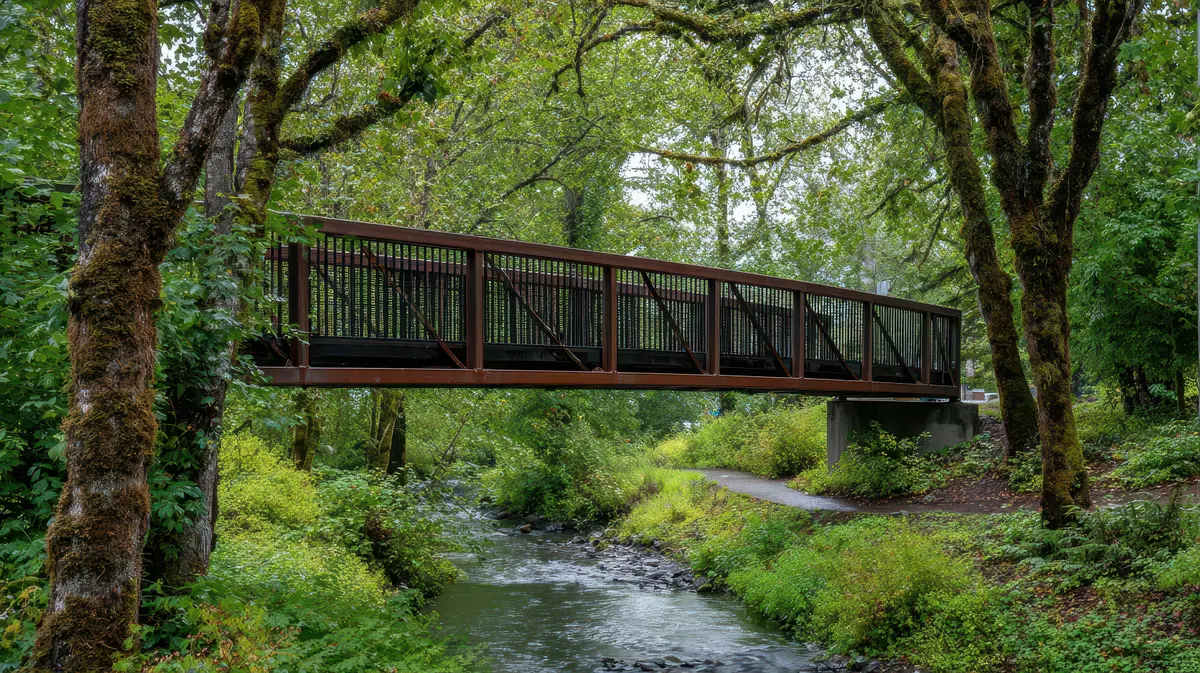
Retiring in Aloha
Aloha draws retirees for its balance of amenities, outdoor access, and cost. Here’s what to weigh.
🌤 Climate
Aloha gets 141 sunny days a year — a figure that feels manageable in summer, when the weather is genuinely mild and dry, but demands adjustment in winter when extended stretches of grey cloud cover and drizzle are the norm. Snow is rare and typically light. Retirees who have spent time in the Pacific Northwest already know the pattern; those arriving from sunnier climates often need one full winter before they recalibrate.
🍴 Lifestyle
Aloha's daily lifestyle is quiet and suburban, with outdoor access that punches above its weight. Cooper Mountain Nature Park and the Rock Creek Trail system offer easy, low-impact walking and hiking within minutes of most residential neighborhoods. The Aloha Community Farmers' Market is a warm-months staple, and The Reserve Vineyards and Golf Club — a 36-hole facility on 330 acres — is the kind of amenity that retirees who play golf tend to cite as a major reason they stayed.
🏚 55+ Communities
There are no dedicated 55+ or active-adult communities in Aloha. Retirees here buy into the general residential market, which at this price point means single-family ranch-style homes — often single-level layouts that work well for aging in place. The housing stock from the 1960s through 1980s tends toward manageable square footage on decent lots, which suits buyers who want space without a large maintenance burden.
✈ Getting Around
Daily life in Aloha requires a car, and most retirees here drive for the majority of their errands along the OR-8 corridor. TriMet bus service along Tualatin Valley Highway is available for those who want a car-free option for certain trips. Portland International Airport (PDX) is roughly 25 miles away — close enough for regular travel without being in the flight path.
🏛 Oregon Taxes for Retirees — What to Know
- Social Security is not taxed — Oregon does not tax Social Security or Railroad Retirement benefits. Any amount included in your federal adjusted gross income is subtracted back out on the Oregon return.
- But other retirement income IS taxed — This is the trade-off that surprises people moving from Washington or Texas. Pension distributions and 401(k)/IRA withdrawals are taxed as ordinary income at Oregon’s regular rates — there is no blanket retirement-income exclusion.
- Graduated income tax — Oregon has four brackets — 4.75%, 6.75%, 8.75% and 9.9%. The 4.75% rate covers the first $10,000 of taxable income for a single filer ($20,000 filing jointly); the 8.75% rate starts at $125,000 ($250,000 jointly); and the top 9.9% rate applies above $250,000 ($500,000 jointly).
- No sales tax — Oregon levies no general sales tax.
- Property taxes, with senior deferral — Oregon’s Senior and Disabled Property Tax Deferral lets qualifying homeowners have the state pay their county property taxes, with a lien recorded against the home. The 2026 household income limit is $70,000, and deferred balances accrue 6% simple interest — it defers the bill rather than forgiving it.
- Estate tax — the one to plan for — Oregon has its own estate tax with a $1 million filing threshold — far below the federal exemption, and NOT indexed for inflation, so it reaches more estates every year in real terms. Retirement accounts and a long-held home count toward the taxable estate, so estates that feel modest can cross the line without the owner expecting it.
- No inheritance tax — Oregon has no separate inheritance tax and no gift tax.
Tax laws change frequently and individual situations vary. This is general information, not tax advice — always consult a qualified Oregon tax professional or CPA for personalized retirement tax planning.
Weekends & Local Favorites in Aloha
Aloha's weekend scene is built around outdoor access, community markets, and a set of local dining anchors — rather than a concentrated restaurant or bar corridor. Residents who know where to look find genuinely good options.
Food and Coffee Worth Knowing
Nonna Emilia Ristorante Italiano is Aloha's standout sit-down dining option — a family-owned Italian restaurant that draws regulars from well outside the neighborhood. The Coffee Station is the local independent café that handles the morning crowd for residents who want something other than a drive-through chain. Both are worth knowing on your first week here.
The Outdoor Circuit
Cooper Mountain Nature Park is the headliner: 230 acres of trails through conifer forest, native oak woodland, and open prairie, with views stretching to the Chehalem Mountains and the Tualatin River Valley below. It is operated by Tualatin Hills Park and Recreation District, and the trail system is well-maintained and genuinely quiet on weekday mornings. Jenkins Estate, nearby, offers wooded walking paths and historic gardens — a pastoral contrast to the suburban grid that surrounds it.
The Rock Creek Trail connects residential neighborhoods to a broader greenway network and is a regular haunt for cyclists and joggers. For golfers, The Reserve Vineyards and Golf Club is a 36-hole facility spanning 330 acres near the Aloha area — both courses are open to the public on a rotating basis, and it is the kind of amenity that residents who play tend to cite as a reason they stayed.
The Farmers' Market
The Aloha Community Farmers' Market is the weekly community gathering point through the warm months — produce, local vendors, and the kind of easy Saturday-morning socializing that Aloha builds through recurring events rather than a concentrated commercial strip. For many residents, it is the most reliably social spot in the community's calendar. Parks, trails, and the full outdoor recreation picture are covered on the Aloha parks and recreation page.
Local favorites in Aloha
Restaurants
- Nonna Emilia Ristorante Italiano
Outdoors
- Cooper Mountain Nature Park
- Rock Creek Trail
- The Reserve Vineyards and Golf Club
- Jenkins Estate
Coffee
- The Coffee Station
Farmers Markets
- Aloha Community Farmers' Market
Top Things Locals Say About Aloha
The best intel about a city comes from the people who actually live there. Here’s what Aloha residents say when newcomers ask the questions everyone’s thinking.
“I expected it to feel like a generic suburb, and it does in some ways — but what surprised me six months in was how much the community actually shows up: the farmers' market draws real regulars, the high school sports bring people together, and Cooper Mountain is a genuinely beautiful place to start a Saturday morning. Nobody warned me it was called 'a-LOW-ah' either.”
— Recent Aloha home buyer
“What's the most surprising thing about living in Aloha?”
How diverse and genuinely community-minded it feels once you are actually living here. The area around OR-8 can look like just another commercial strip from the outside, but the residential neighborhoods off the highway are quiet and well-established, the schools reflect a real mix of backgrounds, and the Aloha Community Farmers' Market draws a crowd every week that feels nothing like a generic suburb.
“What do locals love most about Aloha?”
Cooper Mountain Nature Park comes up constantly. Residents who have lived here for years still talk about it like it is their personal secret — 230 acres of oak woodland and conifer trails with views of the Tualatin Valley, and rarely as crowded as Forest Park on a weekend. The price point relative to Beaverton is the other thing long-timers mention: they got more house for the money and gave up very little in terms of access to jobs and services.
“What should newcomers to Aloha know?”
Learn the OR-8 rhythm quickly. Eastbound on Tualatin Valley Highway on weekday mornings can move slowly, and the strip retail parking lots along that corridor create unexpected friction during school drop-off windows. Most veterans here shift their departure times by 20 minutes and the commute smooths out considerably. Also: Aloha has no city government, which means if you want to advocate for local issues, your path runs through Washington County — not a city hall that does not exist.
“How much do you need a car in Aloha?”
A car is essential for daily life here. Most grocery runs, pharmacy trips, and errands happen along or near OR-8, and the residential streets away from the highway are not set up for walking to much of anything. TriMet bus service runs along the TV Highway corridor and is a real option for commuting toward Beaverton or eventually connecting to MAX light rail for Portland trips — but for the routine day-to-day, plan on driving.
Cities Near Aloha
Other communities near Aloha worth a look — each with its own character and price point.
| City | Distance | Best For | Vibe | Median Rent | Median Buy |
|---|---|---|---|---|---|
| Beaverton | 4 mi | Tech workers, walkable amenities | Established, polished, higher-priced | $1,880 | $527,947 |
| Hillsboro | 6 mi | Intel employees, newer construction | Fast-growing, diverse, family-oriented | $1,946 | $518,047 |
| Cornelius | 9 mi | Value buyers, rural feel | Small-town, affordable, quieter | $2,357 | $485,070 |
More Helpful Guides for Aloha
Going deeper on Aloha? Our blog series covers everything from first-time buying to retiring here — explore the guides below.
Local Expert Takeaway: Aloha is the Portland metro's best-kept open secret for buyers who work in Washington County's tech corridor. The $493,280 typical home price (May 2026 Zillow Home Value Index) puts you within a short commute of Intel's Hillsboro campus and Nike's Beaverton headquarters at a meaningful discount to either city's address premium. Most daily errands run along OR-8, which means a car is essential — but Cooper Mountain Nature Park on a quiet weekday morning, a community farmers' market on weekends, and quick access to two of Oregon's biggest employers add up to a trade-off that works well for a lot of buyers.
Quick Takeaways & FAQs
✅ Aloha offers a genuine price advantage over neighboring Beaverton with nearly identical access to Intel, Nike, and the broader Washington County job market.
⚠️ The community is fully car-dependent — OR-8 handles most daily errands, and the transit connection to Portland requires a bus-to-MAX transfer that adds real time to a downtown commute.
📍 Aloha is pronounced 'a-LOW-ah' — locals will notice immediately if you say it the Hawaiian way, and it is a small but reliable signal of how recently you arrived.
Is Aloha, Oregon a safe place to live?
What school district serves Aloha, Oregon?
How far is Aloha from Portland?
Is Aloha an incorporated city?
What is the typical home price in Aloha, Oregon?
Helpful Links for Moving to Aloha
Moving to Oregon?
Tell us what you need help with and we'll connect you with local resources.
