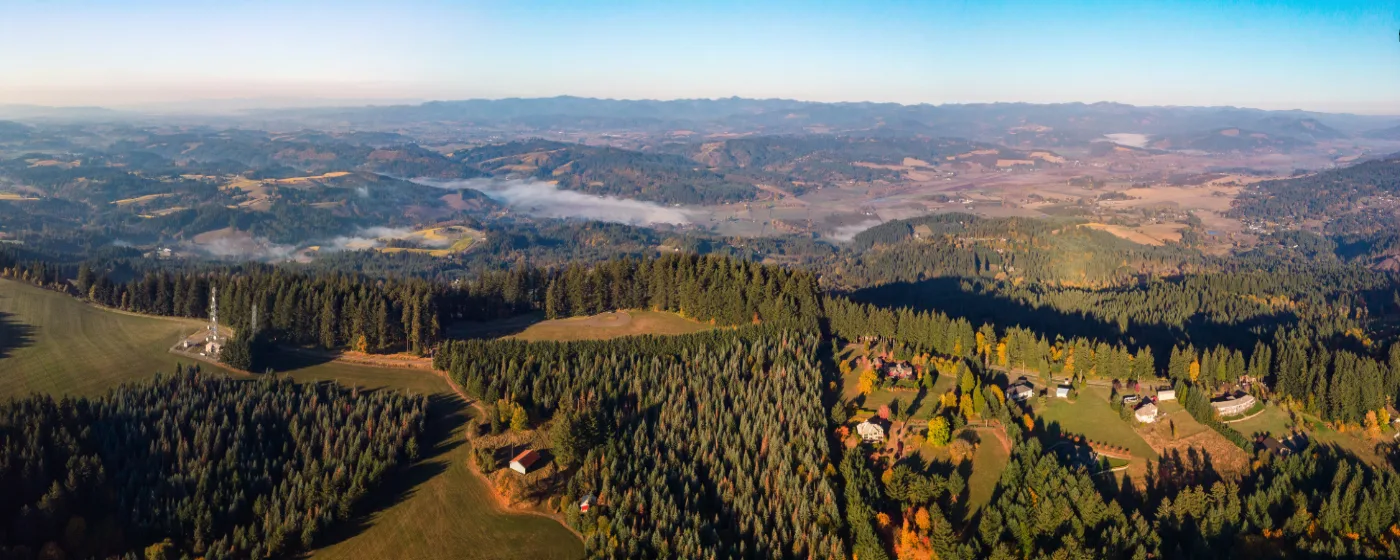
If you have been priced out of retirement-friendly communities closer to Portland and someone told you to look at Aloha, your instinct to investigate is right. Aloha sits in the western Portland Metro, a largely residential community of 52,389 people in Washington County that most outsiders drive through on OR-8 without realizing they are in one of the most affordable pockets of the entire metro. The homes are modest, the lot sizes are generous, and the access to genuine urban infrastructure — hospitals, libraries, transit — is real without the price tag that comes with Beaverton or Lake Oswego.
What draws retirees here specifically is a combination that is harder to find than it sounds: a typical home price that still sits below $500,000 in a county with strong services, a full-service hospital less than three miles away, and easy access to the Portland Metro's parks system. Kaiser Permanente anchors local healthcare, and the broader Washington County network means specialists, imaging centers, and urgent care are woven through the surrounding area. The community itself is working-class and unpretentious — not a resort town, not a lifestyle brand — and many retirees find that refreshing after decades of expensive suburban living.
The honest caveats matter here too. Aloha is car-dependent, and a retiree who plans to age out of driving should factor that in early. Oregon's tax picture for retirees is genuinely mixed — Social Security is fully exempt, but pension and 401(k) income face a graduated rate that climbs to 9.9%. There are no purpose-built 55+ communities within Aloha itself. And with a typical home price of $493,280 (May 2026), affordability is real but not absolute — the entry point is meaningful if you are downsizing from a higher-cost market.
Whether you are weighing Aloha as your primary retirement destination or comparing it against Beaverton, Hillsboro, or somewhere further out, the sections below break down healthcare access, the retiree budget, walkability, downsizing options, and how this community stacks up against nearby alternatives.

Why Retirees Are Choosing Aloha
Aloha makes the most sense for retirees who want Portland Metro access without Portland Metro prices — and who are willing to own a car to get it. The typical home price of $493,280 (May 2026) is below what you will pay in Beaverton or Hillsboro for a comparable house, and Washington County's property tax rate is among the lower effective rates in the metro. For a retiree downsizing from a larger Pacific Northwest home and arriving with equity, that spread matters.
The retiree who thrives here is comfortable in a quiet, residential setting. Aloha is not a walkable town center with coffee shops and a farmers market within strolling distance of every front door — it is a sprawling, neighborhood-first community where daily life runs through a car and a well-stocked home base. Couples who have spent their working years in similar suburbs, who have Kaiser coverage or plan to enroll, and who value proximity to nature without paying for a resort address tend to feel at home quickly.
Who should look elsewhere? Retirees who want to walk to dinner, who need transit-dependent independence within the next five years, or who are specifically seeking the social density of a purpose-built 55+ community will find Aloha a frustrating fit. The community is family-oriented and multi-generational rather than retirement-oriented. If those qualities matter to you, Beaverton and Hillsboro both offer more purpose-built senior living infrastructure, and they are a short drive away.
Healthcare & Medical Access in Aloha
The closest hospital to Aloha is Kaiser Permanente Westside Medical Center, about three miles away — a full-service, non-profit facility with a 24/7 emergency department, surgical services, and specialized programs in cardiology, orthopedics, oncology, and neurology. It also offers palliative care and hospice, which matters more to retirement-age residents than to any other demographic. For a community this size, having a hospital with that breadth of services within ten minutes is a genuine asset.
The specialty depth is real. Kaiser Westside is not a small community hospital routing complex cases elsewhere — it handles cardiac procedures, cancer treatment, and orthopedic surgery on site. Patients enrolled in Kaiser's integrated health plan will find their primary care, specialists, pharmacy, and hospital all coordinated under one roof, which simplifies the administrative burden that multiplies as you age.
Advanced-care and academic-medicine reality is worth naming honestly. Oregon Health and Science University — the state's primary academic medical center, with the fullest concentration of subspecialists in the region — is in southwest Portland, roughly 20 to 25 minutes from most of Aloha under normal conditions. For routine care, Kaiser Westside covers the vast majority of what retirees need. For highly specialized interventions, the drive to OHSU is manageable but real. If you or your spouse has a complex chronic condition requiring frequent subspecialty visits, map that commute before you commit to the zip code.
Washington County also has a dense network of urgent care clinics, outpatient imaging centers, and specialist offices spread through Beaverton and Hillsboro that serve Aloha residents well. The practical experience of healthcare access here is better than the map might suggest for retirees who don't require the most specialized tertiary care on a regular basis.

The Retiree Budget in Aloha
Oregon's tax treatment of Social Security is straightforwardly good news: the state fully exempts Social Security and Railroad Retirement benefits from Oregon income tax — even the portion that gets taxed federally. For a retiree whose income is primarily Social Security, Oregon's headline rates are almost irrelevant.
The picture gets more complicated if your retirement income comes from a pension, 401(k), or IRA. Those distributions are subject to Oregon's graduated income tax, which runs from 4.75% at lower income levels up to 9.9% at the top bracket. That top rate is one of the higher state income tax rates in the country, and retirees with substantial investment or pension income should plan around it — not assume it away. The small Oregon Retirement Income Credit that used to soften this for lower-income retirees age 62 and older has now sunset and cannot be claimed going forward. Federal retirees with pre-October 1991 service may still subtract that portion of their pension, so check with a tax advisor if that applies to you.
Property taxes at Aloha's effective rate of approximately 0.84% are genuinely manageable relative to most western states. Oregon's Measure 50 caps annual assessed-value growth at 3% for all owner-occupied homesteads, which means your tax bill cannot spike dramatically in a single year — a meaningful protection for anyone on a fixed income. Oregon's Senior and Disabled Property Tax Deferral Program (ORS 311.668) is an income-qualified deferral program that lets the state pay your annual property taxes on your behalf, recording a lien repaid when the home sells or passes through your estate. You must have owned and lived in the home for at least five years to qualify, and current income thresholds are worth confirming directly with Washington County, as they are adjusted periodically by the legislature.
One estate-planning note worth flagging: Oregon imposes its own estate tax with a $1 million exemption — far below the current federal threshold. Retirees with significant home equity, investment accounts, or other assets should factor Oregon's estate tax into their planning, ideally with a local estate attorney. Oregon has no general sales tax, which quietly helps stretch a fixed income on everyday purchases. For the full breakdown of cost of living and how those groceries and utilities add up, see the Aloha cost of living page.
Looking to buy in Aloha? Estimate your payment.
Enter your numbers to see an estimated monthly mortgage payment.
Estimate only. Excludes HOA fees and mortgage insurance. The interest rate above is a starting point, not a quoted rate — replace it with your own to see real numbers. Insurance is a flat placeholder, not a Aloha quote.
Walkability, Community & Staying Active in Aloha
Walkability is the most important thing to understand honestly before choosing Aloha for retirement. Most errands require a vehicle — the community is laid out as a classic Pacific Northwest suburb, with arterials connecting commercial strips rather than a pedestrian-scale town center. Retirees who currently drive comfortably and plan to for at least the medium term will not feel constrained. Retirees who are already limiting or planning to give up driving should weigh this carefully.
The terrain is gentle. Much of Aloha is relatively flat, which matters for daily walking even if that walking is recreational rather than errand-based. The Rock Creek Trail offers accessible, low-impact walking close to home — paved and flat enough for most mobility levels. Aloha Community Park anchors the residential core and is an easy walk for many neighborhoods. Jenkins Estate and Cooper Mountain Nature Park provide quieter natural-area options for retirees who want to get outside without the crowds of a regional trailhead.
Social infrastructure for retirees is present but not purpose-built. Washington County operates senior services across the region, and the community center network in the broader area serves Aloha residents. The Aloha Community Farmers' Market is a gathering point through the growing season — a concrete example of the kind of low-key civic social life that runs through this community. It is not the organized social calendar of a 55+ development, but retirees who prefer to build their own routines rather than have them scheduled tend to find enough to work with.
For retirees with outdoor inclinations, the combination of accessible parks, regional trails, and — on the days Oregon delivers them — 141 sunny days a year is genuinely livable. The broader Washington County parks system is well within range for day trips. Staying active here is easier than the car-dependent framing implies, as long as you center your routine on trails and parks rather than walkable errands.
Right-Sizing: Downsizing in Aloha
Aloha's housing stock is predominantly single-family homes built from the 1970s through the 1990s — ranch-style and split-level construction on modest lots. For a retiree seeking single-level living, the ranch homes in this inventory are a real option, though they require careful searching. Many of the split-levels in the area present accessibility challenges that compound over time, so working with an agent who can filter specifically for single-floor layouts is worth doing from the start.
Condominiums and patio homes exist in Aloha but are not abundant. The condo inventory here is thinner than you will find in central Beaverton, which has denser mixed-use development around its light rail corridor. Retirees who want low-maintenance living — no yard work, no exterior upkeep — may find the selection in Aloha itself limiting and will likely need to expand their search into neighboring Beaverton or Hillsboro to find a strong condo or townhome at their price point. Both are a short drive away and both are somewhat higher in typical price, so the trade-off between maintenance convenience and cost is real.
No 55+ communities were found in Aloha. The nearest purpose-built independent senior living options are in Beaverton and Hillsboro. If a deed-restricted 55+ community is a firm requirement, Aloha will not satisfy it — the search starts in those neighboring cities. That is not a knock on Aloha; it simply reflects the community's character as a general-population suburb rather than a retirement-destination market.
The practical downsizing path for most retirees arriving in Aloha from a higher-cost market is to sell a larger home elsewhere, arrive with substantial equity, and buy a well-maintained ranch home here without carrying a significant mortgage. That math works at Aloha's current price level in a way it does not in some surrounding cities. Retirees arriving from within the Portland Metro who are not carrying equity from an outside market may find the options narrower than they expect.
Aloha vs Nearby Retirement Destinations
| City | Cost vs Aloha | Primary Hospital | Walkability | Senior Living Depth | Overall Retirement Fit |
|---|---|---|---|---|---|
| Aloha | Benchmark | Kaiser Permanente Westside (~3 mi) | Car-dependent; flat terrain | Thin — no 55+ communities in city | Good for self-sufficient, car-driving retirees on a budget |
| Beaverton | Somewhat higher | Kaiser Permanente Westside (shared) | Better near MAX corridor; still mostly car-dependent elsewhere | Stronger — multiple senior living options | Strong overall; better for retirees wanting walkable access or a 55+ community |
| Hillsboro | Somewhat higher | Tuality Community Hospital (Providence-affiliated) | Improving downtown core; mostly car-dependent | Moderate — several independent senior living facilities | Good fit if you want a city center feel and plan to stay active |
| Cedar Hills | About the same | Kaiser Permanente Westside (nearby) | Moderate — closer to Sunset MAX | Limited | Reasonable alternative; gains a bit on transit without gaining much on cost |
| Cornelius | About the same | Hillsboro-area hospitals (short drive) | Car-dependent; small-town feel | Minimal | Appeals to retirees wanting a quieter, smaller community at a comparable price |
| Cooper Mountain | About the same | Kaiser Permanente Westside (nearby) | Car-dependent; hillside terrain | Minimal | Best for nature-oriented retirees who want views and proximity to trails |
Beaverton is the clearest upgrade for retirees who want more walkable access to daily services or a purpose-built senior living community — that improved infrastructure comes at a somewhat higher price. Hillsboro makes sense if you want a distinct city center and the hospital variety that comes with a second major facility in the area. Cedar Hills splits the difference geographically, sitting a bit closer to the MAX light rail corridor without moving far on cost. Cornelius and Cooper Mountain appeal to retirees who value quiet and affordability above urban access, though both offer even less senior living infrastructure than Aloha itself. For the retiree who is driving, reasonably healthy, covered by Kaiser, and arriving with equity from a higher-cost market, Aloha beats all of these on one dimension that still matters: the entry price for a solid single-level home.
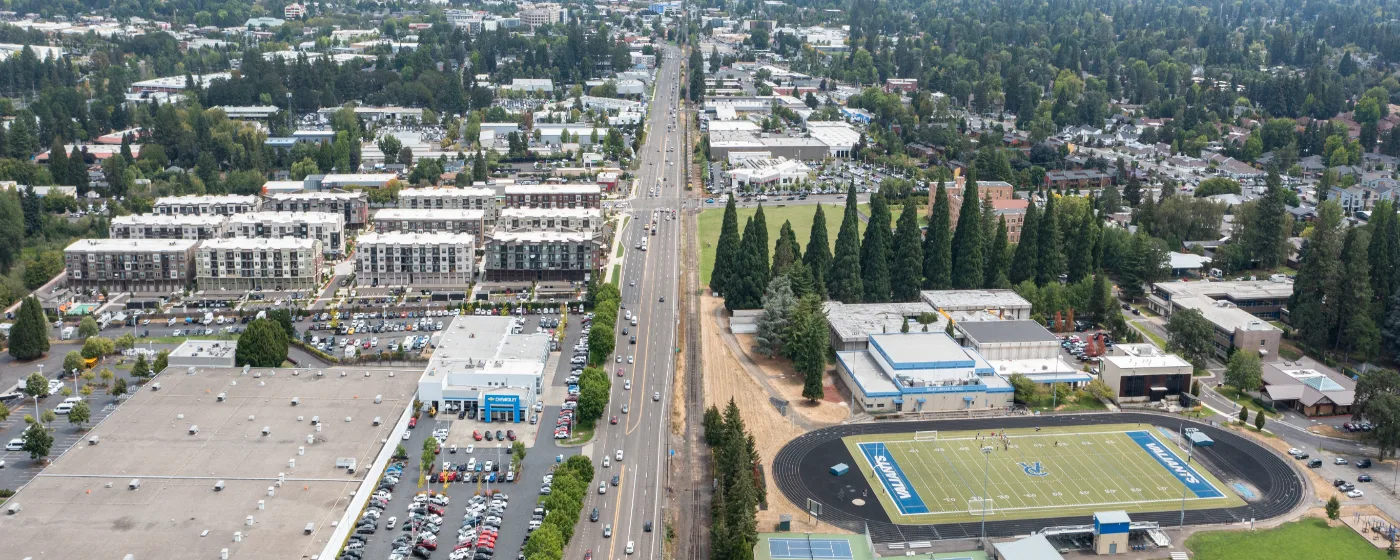
Local Expert Takeaway: Aloha works as a retirement address when you treat it honestly for what it is: a quiet, car-dependent suburb with a full-service Kaiser hospital three miles away, an effective property tax rate of approximately 0.84%, and home prices that are still accessible relative to the broader Portland Metro. Social Security income goes untaxed at the state level, the terrain is flat enough for daily walking on the Rock Creek Trail and through Aloha Community Park, and the absence of a 55+ community is offset by the fact that neighboring Beaverton and Hillsboro are a short drive away when you need more specialized senior services. The retirees who struggle here are those expecting walkable independence or a built-in social scene; the ones who thrive treat Aloha as a well-located home base and build their routines around the parks, the farmers market, and the ease of access to the broader metro.
Quick Takeaways & FAQs
✅ Kaiser Permanente Westside Medical Center is about three miles away — a full-service hospital with cardiology, oncology, neurology, and a 24/7 emergency department, which is exceptional proximity for a community of this size.
⚠️ Oregon does not tax Social Security income, but pension and IRA withdrawals face a graduated state income tax that climbs to 9.9%, making tax planning essential for retirees with significant non-Social Security income.
📍 No 55+ deed-restricted communities exist within Aloha itself — retirees who need that structure will need to look in Beaverton or Hillsboro, both a short drive away.
Does Oregon tax Social Security retirement benefits?
What is the closest hospital to Aloha, and how good is it?
Are there any property tax relief programs for seniors in Oregon?
Are there 55+ communities in Aloha, Oregon?
Is Aloha walkable enough for retirement?
Moving to Oregon?
Tell us what you need help with and we'll connect you with local resources.
