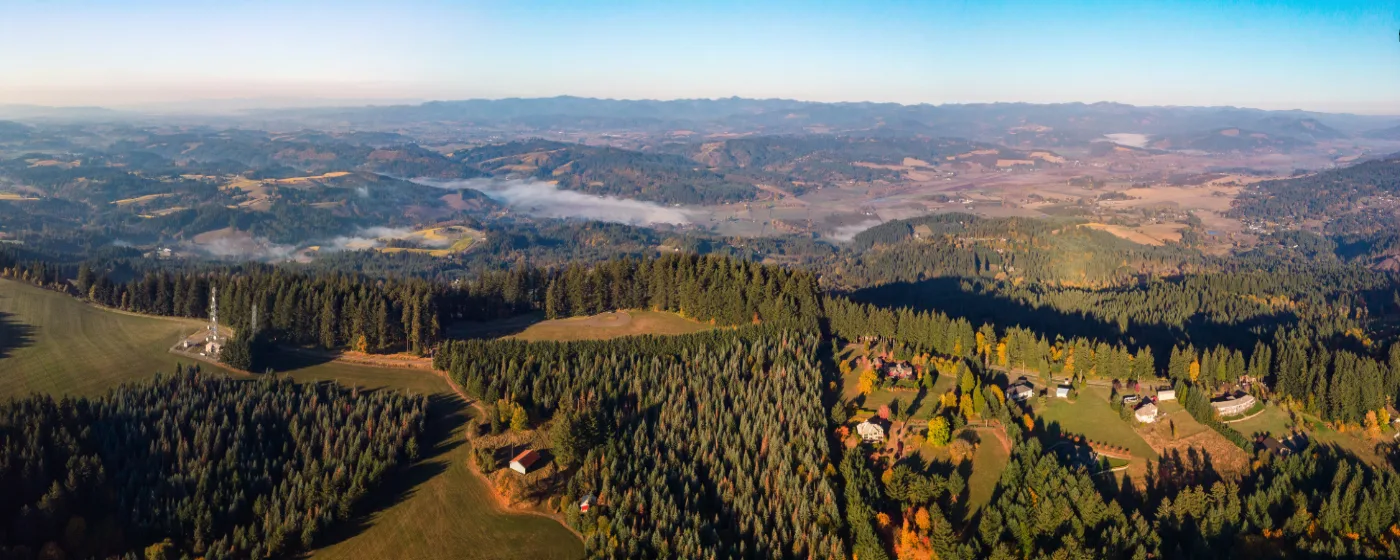
Maybe your company is relocating you to the Portland Metro and someone mentioned Aloha as a place where the prices still make sense. Maybe you have been watching Beaverton and Hillsboro and decided you wanted more square footage for the same budget. Either way, the first thing to understand about Aloha is that OR-8 (Tualatin Valley Highway) and OR-10 do more than move traffic — they organize daily life, carve the community into distinct zones, and determine how easily you can reach the MAX light rail, a Nike campus, or a trailhead on a Tuesday morning. Understanding that corridor logic is the first thing to get right before you start touring homes.
The Beaverton School District 48J serves the entire Aloha area and holds an A- rating, according to Niche — a credential that explains a significant share of why families with school-age children keep showing up here. Intel and Nike are both within commuting range, and the district employs a substantial portion of the local workforce directly. The median household income sits at $101,934, which reflects a community of working professionals, trades workers, and tech employees who have chosen Aloha over the pricier alternatives immediately to the east in Beaverton and to the west in Hillsboro.
The typical home price in Aloha is $493,280 (Zillow Home Value Index, May 2026) — noticeably below what you would pay in Beaverton or Hillsboro for comparable square footage, which is the single clearest reason buyers from those markets end up here. Daily life centers on the OR-8 and OR-10 corridors for most errands, the Rock Creek Trail for recreation, and Aloha Community Park for weekend routines. The commute to Portland runs about 30 minutes, and TriMet bus routes and the MAX Blue Line give the more transit-oriented corners of the community a real car-optional option. For the outdoors-minded, Cooper Mountain Nature Park puts more than 200 acres of forest and meadow within reach of the city's quietest residential pockets. See the full cost of living breakdown for utilities, taxes, and how Aloha stacks up regionally.
Whether you are relocating from within the Portland Metro or moving to Oregon for the first time, the sections below break down Aloha's neighborhoods, who each area suits, the mistakes buyers most commonly make here, and what the rental market actually looks like on the ground.

The Aloha Reality
Aloha divides along corridors, school-boundary assumptions, and a quiet east-west gradient that most buyers from outside the area never see coming. The farther east you go, the closer you get to Beaverton's retail density and the MAX Blue Line. The farther west, the closer you get to Hillsboro, Intel's campuses, and a decidedly more suburban pace.
The school boundary reality is what surprises people most. The entire area feeds into the Beaverton School District, but individual school assignments depend on which pocket you land in — and some streets that look identical on Zillow route to different middle schools. Parents who chase square footage without verifying the specific school assignment often discover the mismatch after the offer is signed.
The other divide worth knowing: the Cooper Mountain side of Aloha feels meaningfully different from the Five Oaks and Reedville side. Cooper Mountain's neighborhoods sit at a slight elevation with tree cover, quieter streets, and trail access that defines weekend life. Five Oaks and Reedville trade that green-belt feel for denser services, shorter commutes to the MAX, and more on-foot access to shops and transit. Neither is the wrong choice — but they are genuinely different places to live, and buyers who treat them as interchangeable tend to end up in the wrong one.
Neighborhoods at a Glance
| Neighborhood | Best For | Vibe |
|---|---|---|
| Cooper Mountain – Aloha North | Commuter Nature | Wooded, active, trail-adjacent with easy OR-8 corridor access |
| Cooper Mountain – Aloha South | Families Quiet | Owner-occupied, low-traffic, anchored by a 200-acre nature park |
| Bany Hill | Quiet Privacy | Small-scale, cul-de-sac living with mature trees and fenced yards |
| Five Oaks | Families Transit | Dense urban-suburban, transit-connected, services within reach |
| East Hillsboro | First-Time Commuter | Newer townhome construction on Aloha's western edge near Hillsboro |
| Reedville | Commuter Families | Single-family dominant, fiercely residential, tech-employer corridor |
| Copperwood | Value Quiet | Established subdivision character, mid-Aloha location |
| Cross Creek | Families Nature | Residential, green surroundings, classic Aloha subdivision feel |
Aloha typical home price: $493,280 (Zillow ZHVI, May 2026). Neighborhood tiers on this page are relative to these figures.

Best Neighborhood by Buyer Type
| Buyer Type | Best Neighborhood | Why |
|---|---|---|
| First-Time Buyer | East Hillsboro | Newer townhome construction offers lower-maintenance entry into homeownership at Aloha's more affordable western edge. |
| Luxury Buyer | Cooper Mountain – Aloha South | Runs above the city median with larger lots, more privacy, and proximity to Cooper Mountain Nature Park. |
| Walkability Seeker | Five Oaks | Dense services, MAX Blue Line access, and TriMet routes make this the most transit-connected pocket in Aloha. |
| Families with Kids | Cooper Mountain – Aloha South | NeighborhoodScout rates it more family-friendly than 98.7% of Oregon neighborhoods, citing schools, safety, and owner-occupied stock. |
| Commuters | Reedville | Positioned between Beaverton and Hillsboro with fast access to Intel, Nike, and the MAX light rail. |
| Large-Lot Buyers | Cooper Mountain – Aloha North | Larger detached homes with mountain views and trail access along the OR-8 corridor. |
| Renters | Five Oaks | The broadest mix of apartment, townhome, and single-family rentals in the Aloha area, with transit access built in. |
Looking to buy in Aloha? Estimate your payment.
Enter your numbers to see an estimated monthly mortgage payment.
Estimate only. Excludes HOA fees and mortgage insurance. The interest rate above is a starting point, not a quoted rate — replace it with your own to see real numbers. Insurance is a flat placeholder, not a Aloha quote.
Most Popular Neighborhoods
Cooper Mountain – Aloha North
This is the neighborhood for buyers who want tree cover and mountain views without giving up corridor access — OR-8 runs through it, cycling paths line the highway, and Beaverton's shopping district is minutes away. The housing stock leans toward three- and four-bedroom detached homes built between 1970 and 1999, with a supporting cast of townhomes and apartments that gives the area more rental density than the neighborhoods to the south. The trade-off is that OR-8 itself carries real traffic noise, and homes closest to the corridor give up the quiet that draws people to this side of Aloha in the first place.
Best for: Commuters, cyclists, and buyers who want established neighborhood trees without sacrificing access to services.Cooper Mountain – Aloha South
This is Aloha's most consistently cited family destination, and the data backs it up: NeighborhoodScout ranks it more family-friendly than 98.7% of Oregon neighborhoods, a figure built on low crime, owner-occupancy rates, and Beaverton School District access. Cooper Mountain Nature Park — more than 200 acres of forest, meadows, and interpretive trails — anchors the neighborhood's identity in a way that no amount of marketing copy could manufacture. The honest compromise: this is not a neighborhood where most errands happen on foot, and the elevation and lower density mean you will drive for groceries. Homes here run above the city median, consistent with the larger lots and green-belt adjacency.
Best for: Families with school-age children, nature-oriented buyers, and anyone prioritizing quiet and owner-occupied community feel.Bany Hill
Bany Hill is small by any measure — a tight collection of single-level homes on cul-de-sacs with mature trees, covered decks, and fenced backyards that read more like a private enclave than a subdivision. The risk profile is notably low for the region: minimal wildfire and wind exposure, with only a minor flooding concern affecting roughly 7% of properties over a 30-year horizon. The catch is that its size limits its amenity base — residents drive to Five Oaks or along OR-8 for most daily needs, and the neighborhood has little commercial presence of its own.
Best for: Buyers wanting a quiet, low-traffic pocket with established landscaping and a strong sense of privacy.Five Oaks
Five Oaks is the densest, most service-connected neighborhood in the Aloha area, with a population that makes it feel more like a small city district than a suburb. TriMet bus routes and the MAX Blue Line are genuinely accessible here, and both Five Oaks Middle School and Aloha High School sit within or adjacent to the neighborhood. The downside is what density always brings: more traffic, less elbow room between homes, and a housing stock that skews toward the 1970s–1990s era of two- to four-bedroom homes with single-car garages that can feel tight against modern storage expectations.
Best for: Families who want school proximity and transit access, young professionals, and buyers who prioritize services over square footage.East Hillsboro
East Hillsboro sits on Aloha's western edge where the boundary blurs into Hillsboro proper, and it shows in the housing stock — newer townhome construction with open-concept layouts, modern kitchens, and covered balconies that are simply not available in Aloha's ranch-era interior. For Intel employees and anyone whose work anchors them to Hillsboro's tech corridor, this location cuts the commute meaningfully. The honest downside: buyers expecting a traditional single-family neighborhood with yards and street parking will find this area lighter on both; the townhome format brings shared walls and tighter outdoor space.
Best for: First-time buyers, Intel and Hillsboro-corridor commuters, and buyers who prefer newer construction over older ranch-style homes.Reedville
Reedville is almost entirely detached single-family homes — NeighborhoodScout describes "the total dominance of detached, single-family homes" here — built mostly between 1970 and 1999, straddling the Aloha-Hillsboro boundary in a way that gives residents access to both communities' services without fully belonging to either. Its position is a genuine asset for tech-industry commuters: Intel, Nike, and the MAX light rail are all within striking distance. The independent identity Reedville shares with Aloha is real and matters to long-term residents, but buyers moving from incorporated cities should understand that this community sits in unincorporated Washington County — services, planning decisions, and zoning all run through the county rather than a city government.
Best for: Buyers who want a purely residential, single-family environment with strong commute access to Hillsboro and Beaverton tech employers.Copperwood
Copperwood is an established Aloha subdivision confirmed in Washington County's neighborhood registry, occupying a mid-Aloha position that keeps it within reach of OR-8 services and the broader community's parks and schools without sitting at any particular corridor's edge. The character is quintessential Aloha: residential streets, mature plantings, and a neighborhood that moves at a pace the more transit-connected areas to the east do not. Limited standalone data means buyers should tour it on foot to gauge its current condition and activity level — it does not have the profiled identity of Five Oaks or Cooper Mountain South, which is either a minus or a plus depending on how much you value quiet anonymity.
Best for: Buyers seeking a lower-profile, established neighborhood in central Aloha without the premium of the Cooper Mountain pockets.Cross Creek
Cross Creek is a residential Aloha subdivision that shares the county registry with Copperwood, carrying the classic Aloha pattern of tree-lined streets, green surroundings, and a community built around single-family living rather than commercial activity. Like Copperwood, its profile in available neighborhood data is modest — what arrives in listings is the feel of an established community rather than a distinct amenity story. The compromise familiar to all of central Aloha applies: you gain residential quiet and the Beaverton School District's coverage, and you give up on-foot errands and transit density.
Best for: Families and buyers who want a traditional subdivision feel with green surroundings and access to the district's school network.Common Mistakes Buyers Make in Aloha
Assuming the School Assignment Matches the Neighborhood Name
The Beaverton School District covers all of Aloha, but individual school assignments depend on the specific parcel — not the neighborhood label. Two homes on adjacent streets can route to different middle schools. Buyers who fall in love with a Cooper Mountain South address without verifying the boundary have occasionally discovered the assignment mismatch after the offer is accepted. Always confirm the specific assignment directly with the district before making an offer.
Treating OR-8 Proximity as a Neutral Feature
OR-8 is Aloha's commercial spine and transit corridor, and homes within a block or two of it come with a real trade-off that listings rarely emphasize. The cycling paths and access to services are genuine assets — but so is the traffic noise, which carries further than buyers from quieter suburban markets tend to expect. Touring a home on a quiet weekend morning and assuming the weekday OR-8 corridor sounds the same is one of the most common mistakes out-of-market buyers make here.
Chasing Square Footage Over Location Within the City
Aloha's price point is genuinely lower than Beaverton and Hillsboro, and that gap tempts buyers to maximize square footage — often pushing them toward larger, older homes deeper in the community's interior that require more driving for every errand. Buyers who prioritize room count over proximity to OR-8 services or the MAX corridor frequently find the car-dependence more taxing than the extra bathroom is worth. Know which compromise you are making before you go under contract.
Underestimating the Unincorporated County Context
Aloha and Reedville are not incorporated cities — they are unincorporated Washington County communities, and that distinction has real consequences. There is no city council to petition, no local land-use hearing process tied to a city, and future development decisions run through county planning rather than a local government that neighbors can hold accountable. Buyers moving from incorporated cities who assume they are buying into a municipality with those governing structures are sometimes surprised when they learn how county-level planning actually works here. The $3.2 million Aloha-Reedville Community Plan exists precisely because this area lacked that formal vision for decades.
Best Areas to Rent in Aloha
| Area | Ideal For | Trade-off |
|---|---|---|
| Five Oaks | Transit users, young professionals, families wanting school proximity | Densest area in Aloha; older rental stock from the 1970s–1990s era |
| Cooper Mountain – Aloha North | Commuters, outdoor enthusiasts, mixed-housing seekers | OR-8 corridor noise for renters in apartment buildings near the highway |
| East Hillsboro | Intel and Hillsboro tech corridor workers, buyers testing the area before purchasing | Limited rental inventory; mostly townhome-format rentals with shared walls |
| Reedville | Single-family renters, families wanting a purely residential environment | Single-family rental homes turn over less frequently; lower inventory than Five Oaks |
| Central Aloha (Copperwood / Cross Creek) | Renters wanting a quiet subdivision feel at Aloha's core price point | Thinner rental inventory; most errands require a car |
Aloha's rental market skews heavily toward single-family homes and older apartment stock, with the broadest selection concentrated in the Five Oaks and Cooper Mountain North corridors. For city-wide typical rent figures, see the cost of living page.
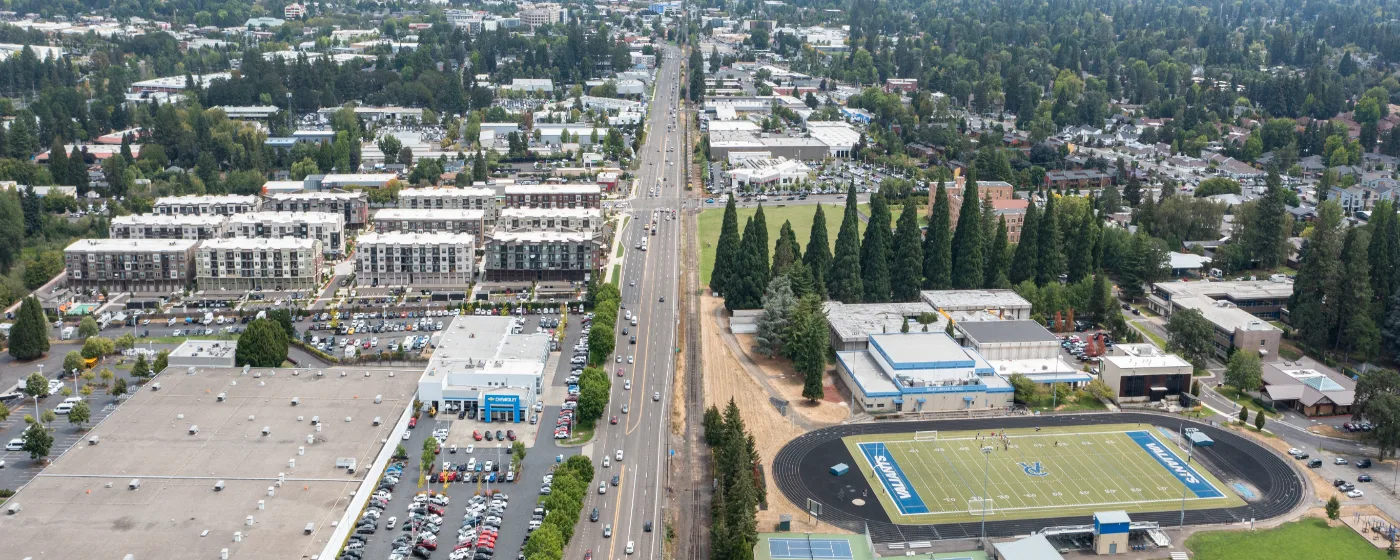
Local Expert Takeaway: The Cooper Mountain side of Aloha — particularly Aloha South — consistently outperforms buyer expectations: the nature park access is real, the ownership culture is real, and the Beaverton School District coverage is the same A- rated district you would pay more for in Beaverton proper. Five Oaks is the practical choice for anyone whose daily life requires transit or on-foot access to services. If you are torn between the two, spend a weekday morning in each — the OR-8 corridor's pace and the Cooper Mountain trails tell you more than any listing photo.
Quick Takeaways & FAQs
✅ Cooper Mountain – Aloha South is rated more family-friendly than 98.7% of Oregon neighborhoods by NeighborhoodScout, with trail access to a 200-acre nature park directly attached.
⚠️ Aloha is unincorporated Washington County — there is no city government, which means land-use decisions and future development run through the county rather than a local city council.
📍 School assignments in Aloha depend on the specific parcel, not just the neighborhood name — always verify the boundary with the Beaverton School District before making an offer.
What is the best neighborhood in Aloha for families with kids?
Is Aloha a safe place to live?
Which Aloha neighborhood has the best access to public transit?
What is the difference between Aloha and Reedville?
Are there any 55+ or active-adult communities in Aloha?
Moving to Oregon?
Tell us what you need help with and we'll connect you with local resources.
