What Is Living in Baker City, Oregon Like?
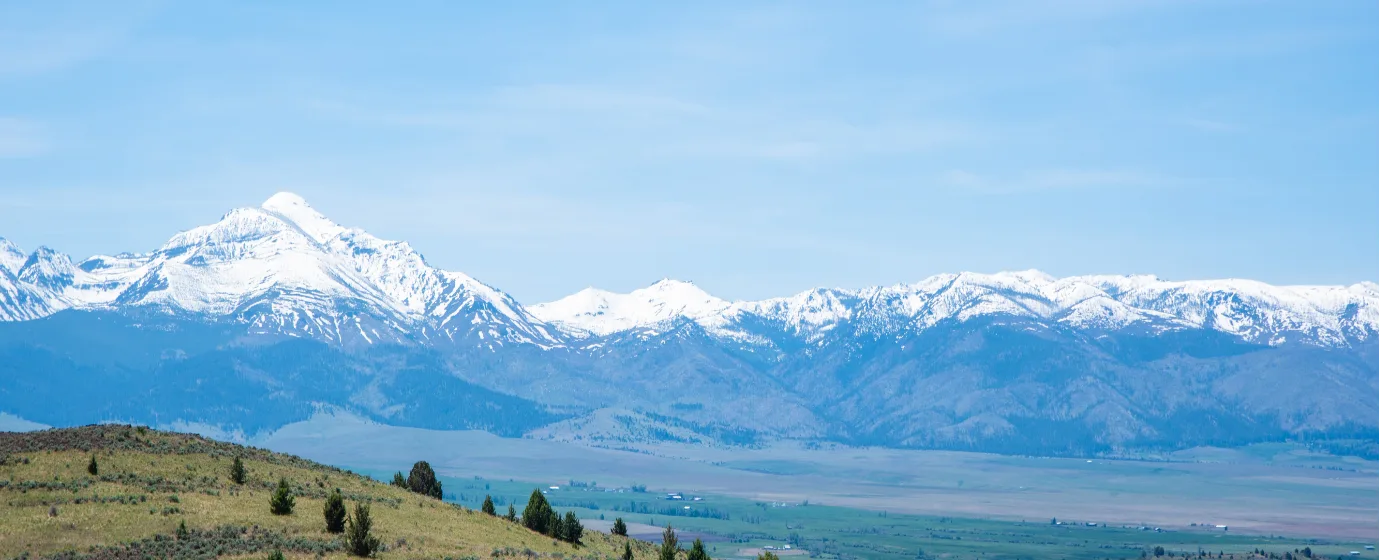
Most people who move to Baker City say the same thing a few months in: they expected a rough-around-the-edges rural town and got something else entirely. What they found was a 42-acre Victorian commercial district on the National Register of Historic Places, a Main Street that Rand McNally and USA Today have twice named among the six most beautiful small towns in America, and a quality of life that would cost three or four times as much in western Oregon. Baker City sits in the Powder River Valley in Baker County, at the eastern edge of the state where I-84 cuts through high desert on its way toward Boise. The Elkhorn Mountains rise immediately to the west; the Oregon Trail literally passed through here. That geography shapes everything — the light, the seasons, the pace, and who ends up calling this place home.
The local economy is anchored by public-sector and healthcare institutions: Baker School District is the largest employer in town, Baker County and the City of Baker City together run much of local government, the US Forest Service has a significant presence in the region, and a major regional health system serves the broader county. With 5,867 students enrolled in 2025-26, the Baker School District 5J is the backbone of the community calendar as much as it is an employer. A growing share of newcomers work remotely — Baker City's affordability and outdoor access have made it a legitimate landing spot for people leaving Portland, Bend, or the Bay Area who can take their job with them. The town of 10,135 people punches well above its size on culture, history, and livability.
Housing here is genuinely affordable by Oregon standards — see the full breakdown on the cost of living page — and the outdoor calendar is relentless in the best sense: Anthony Lakes Mountain Resort is about 35 miles northwest in the Elkhorns, Hells Canyon National Scenic Area is accessible to the east, the Eagle Cap Wilderness is within reach to the north, and the Leo Adler Memorial Parkway runs along the Powder River right through the center of town for daily walks and bike rides. Baker City logs 196 sunny days a year, which makes the high desert winters easier than they sound. What you give up is proximity to a major metro: La Grande is about 45 minutes up I-84, and Boise is roughly two hours east.
Whether you're weighing a move from a larger Oregon city, arriving from out of state, or just starting to research the area seriously, the sections below break down Baker City's neighborhoods, housing market, commute realities, schools, local favorites, and what daily life here is actually like.
Baker City at a Glance
Looking to buy in Baker City? Estimate your payment.
Enter your numbers to see an estimated monthly mortgage payment.
Estimate only. Excludes HOA fees and mortgage insurance. The interest rate above is a starting point, not a quoted rate — replace it with your own to see real numbers. Insurance is a flat placeholder, not a Baker City quote.
Why Are People Moving to Baker City?
The case for Baker City is easy to make. Price. Space. History. Access to wilderness. The case against it is shorter but worth reading: it is genuinely remote, the job market is thin outside the public sector, and if you need a major airport or a Costco on a Tuesday afternoon, you will be doing a lot of driving.
The Remote-Work Effect
The most significant shift in Baker City's buyer pool over the past several years has been remote workers — people who discovered they could trade a Portland apartment or a Bend bungalow for a three-bedroom Victorian with a yard and end up ahead financially every month. That trade works if your broadband works. Fiber and fixed wireless are available in established neighborhoods like the Riverfront District and Grandview, but verify your specific address before closing — rural Baker County addresses vary significantly in actual speeds, and this is one step that has surprised more than a few buyers who assumed city limits meant city-grade internet.
Who Actually Moves Here
Baker City draws a recognizable mix: retiring couples who want a slower pace without sacrificing cultural life, outdoor-obsessed households who want skiing, hiking, and fishing within thirty minutes of the front door, and younger families priced out of western Oregon who are willing to make the trade on metro access. What unites them is a tolerance — often a genuine preference — for a small-town rhythm. The downtown isn't performative small-town charm; it is an actual functioning main street with locally owned businesses, a real arts community, and events that residents actually attend.
The Honest Trade-Off
Employers outside the public sector are limited. Baker School District, Baker County, the City of Baker City, and the US Forest Service are the pillars of local employment, and a major regional health system is one of the larger private-sector anchors. If you need a private-sector job in finance, tech, or professional services and you are not working remotely, Baker City will frustrate you. The people who thrive here either work for one of those anchor institutions, run their own business, or have untethered income.
| Buyer Type | Best Fit? | Key Reason |
|---|---|---|
| Nature Outdoor Enthusiast | Strong yes | Anthony Lakes, Hells Canyon, Eagle Cap Wilderness all within reach |
| Renter Remote Worker | Yes — with caveats | Affordable housing; verify broadband before buying |
| Families Families with Kids | Yes | Tight-knit community, affordable homes, outdoor lifestyle |
| Quiet Retirees | Strong yes | Walkable downtown, low cost of living, scenic setting |
| Commuter Daily Portland/Bend Commuter | No | No practical daily commute to major metro exists |
| First-Time First-Time Buyers | Yes | Entry-level prices well below state norms; see the first-time buyer page |
| Tech Private-Sector Job Seekers | Cautious | Thin private-sector labor market; public sector dominates |
The crime picture adds to the case: a violent crime rate of 1 per 1,000 residents and a property crime rate of 12 per 1,000 residents — both well below state benchmarks. Full context is on the safety page.
What Daily Life Feels Like in Baker City
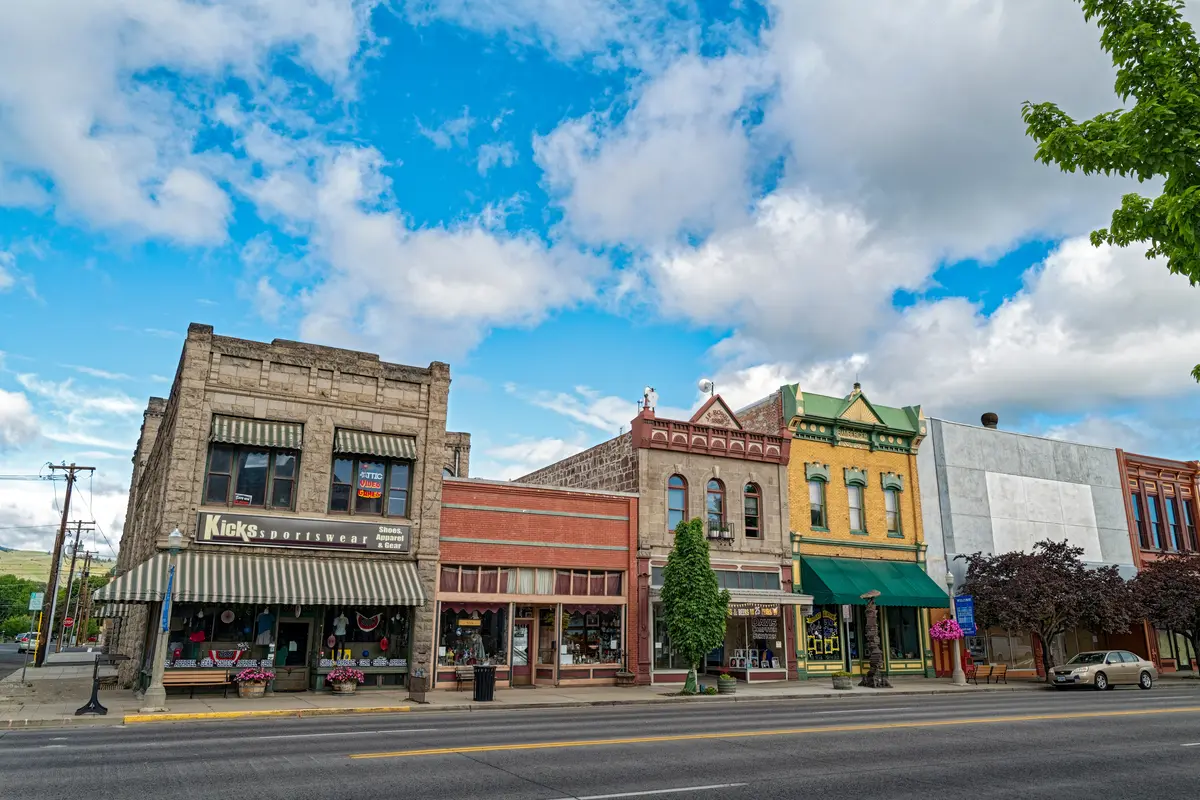
Daily life in Baker City has a texture that is hard to convey from a distance. The downtown is genuinely walkable once you are in it — the Baker Historic District covers more than 130 properties along Main Street, most built between the late 1880s and 1915, and the storefronts are occupied rather than hollow. You walk past the Geiser Grand Hotel and the St. Francis de Sales Cathedral on an ordinary Tuesday and it doesn't feel like a museum; it feels like a functioning town that happened to keep its architecture.
The Powder River Corridor
The Leo Adler Memorial Parkway is the thread that runs through daily life for a lot of residents — a green trail corridor following the Powder River through the center of the city. Joggers, dog walkers, and cyclists use it year-round. For a city of 10,135, having that kind of linear park infrastructure is genuinely uncommon, and it changes how the town feels on a weekday morning.
Seasons and Surprises
Baker City winters are colder and drier than most newcomers expect — this is high desert, not the wet-side Oregon that fills the imagination. Snow falls, but the 196 sunny days a year mean the valley often clears out faster than the Cascades. What surprises people after six months is how much of social life moves outdoors in the warmer months: the Baker City Farmers Market, First Friday Art Walks, the Miners Jubilee, the Taste of Baker City, the Memory Cruise — the event calendar is fuller than a town this size has any right to expect. Newcomers who arrive in winter sometimes misread the pace and leave before they see what summer actually looks like here.
Arts, Culture, and Community
The Crossroads Carnegie Art Center, housed in the 1909 Carnegie Library building, functions as the regional visual arts hub. The Churchill School Arts Center — a converted elementary school — anchors music and performing arts programming. Eastern Oregon Regional Theatre stages community productions. These aren't afterthoughts; they are the reason a portion of Baker City's population chose to retire or relocate here rather than somewhere cheaper and less culturally active.
Schools, parks, and outdoor programming are covered in depth on the schools page and the parks and recreation page.
The Baker City Housing Market Right Now
Baker City is one of the most affordable owner-occupant markets in Oregon. The typical home price stands at $268,574 (Zillow Home Value Index, July 2026) — noticeably below state norms and a figure that genuinely surprises buyers arriving from the Willamette Valley or the Bend area. Single-family detached homes make up approximately 74% of the housing stock, and the dominant type is the owner-occupied three- or four-bedroom home — meaning inventory, when it appears, tends to be the kind of house families actually want rather than a condo or townhouse market.
What the Stock Looks Like
Older character homes with Victorian and Craftsman detailing are common in and around downtown and the older central neighborhoods. Newer construction exists in areas like Sunridge Estates on the south and west edges of the city. The remaining stock splits among apartments (roughly 10%), mobile homes (roughly 8%), and smaller multi-family dwellings. For buyers coming from markets where entry-level means a 900-square-foot condo, the scale here is an adjustment — in a positive direction.
What to Expect as a Buyer
The market is not frenzied, but well-priced homes do not sit indefinitely. Some areas see more competition than others, particularly for move-in-ready homes in walkable proximity to downtown. The effective property tax rate runs approximately 0.78%, which is low relative to most Oregon markets. For a detailed look at cost of living and rent figures, see the cost of living page.
Remote workers buying here should treat broadband verification as a non-negotiable step before committing — fiber and fixed wireless are available in established neighborhoods, but coverage is uneven across the city and patchy in rural Baker County.
Baker City Neighborhoods
Baker City has several distinct areas — each with its own character and appeal. Here’s a breakdown to help you narrow down where to focus your home search.
🏡 Downtown Baker City
The historic core of the city — more than 130 Victorian-era buildings along Main Street — suits buyers who want walkable access to the Farmers Market, the Crossroads Carnegie Art Center, and the Leo Adler Parkway without getting in a car. Housing here tends toward older character homes on compact lots.
🏠 Grandview
An established residential neighborhood with a mix of mid-century and older single-family homes; Grandview is noted for reliable fiber broadband access, making it a practical choice for remote workers who need consistent connectivity.
🌳 Riverfront District
Positioned along the Powder River corridor, this area gives residents immediate access to the Leo Adler Memorial Parkway and is among the neighborhoods with solid broadband infrastructure — a combination that appeals to outdoor-minded remote workers.
🏘 Central Neighborhood
The broad middle of the city between downtown and the outer residential edges, with a mix of Craftsman bungalows and post-war single-family homes; it suits families with school-age children who want proximity to schools without paying a downtown premium.
🏔 Sunridge Estates
One of Baker City's newer residential areas on the south and west edges of the city, offering more contemporary construction for buyers who want updated floor plans and lower maintenance — a contrast to the older stock closer to downtown.
🌆 North Baker City
A quieter, more spread-out residential area on the northern end of the city that tends to attract buyers looking for larger lots and a less dense feel, with easy access to I-84 for the occasional longer-distance drive.
Pros & Cons of Living in Baker City
The Pros
- Among the most affordable home prices in Oregon
- Stunning access to the Elkhorn Mountains, Wallowa-Whitman National Forest, and Anthony Lakes
- A genuinely walkable, well-preserved Victorian downtown
- Low property taxes relative to the rest of the state
The Cons
- Limited local job market and lower median incomes than western Oregon
- Harsh, cold winters with an arid, high-desert climate
- A long drive (2+ hours) to a major metro area like Boise for specialty medical care or big-box shopping
Getting Around & Commuting in Baker City
Baker City is an I-84 town. The interstate runs along the eastern edge of the city and is the primary artery for everything that requires leaving: groceries from a larger store, medical specialists, the airport, and any employment center beyond Baker County. US-30 is the historic route that predates the interstate and still carries local traffic through the Powder River Valley. OR-7 heads south toward Sumpter and the Elkhorns. OR-86 runs northeast toward Halfway and the Hells Canyon corridor.
The Commute Reality
If you work locally, Baker City is easy to navigate — the city is compact, and most residents reach their workplace in under ten minutes. The more important commute question is whether your job is local at all. La Grande, the next significant city up I-84, is about 45 minutes west — manageable for occasional trips but not something most people run daily by choice. Ontario, Oregon sits roughly 75 miles to the east near the Idaho border, where a different job market opens up. Boise, Idaho — about 128 miles east via I-84 — is within driving range for specific appointments, but not a daily commute for anyone.
Driving is the Default
Most errands require a car. The downtown core is genuinely walkable once you are in it, and the Leo Adler Memorial Parkway makes car-free recreation easy within the city. But a serious shopping run, a specialty medical appointment, or anything requiring a retailer beyond local shops means driving. Plan your household's car situation accordingly — one-car households work only if at least one person is remote or works downtown.
Air Travel
The Eastern Oregon Regional Airport (PDT) is approximately 99 miles from Baker City. Boise Airport (BOI) is approximately 128 miles east via I-84 and offers significantly more route options for regional and national travel. Most Baker City residents making a trip that involves flying choose based on destination and fare rather than defaulting to one airport.
| Destination | Route | Approximate Drive | Notes |
|---|---|---|---|
| La Grande, OR | I-84 west | About 45 min | Nearest city with expanded retail and services |
| Ontario, OR | I-84 east | About 75 min | Idaho border region; different job market |
| Pendleton, OR (PDT airport) | I-84 west | About 99 mi | Closest commercial airport |
| Boise, ID (BOI airport) | I-84 east | About 128 mi | More routes; preferred for national travel |
| Hells Canyon (OR-86 corridor) | OR-86 northeast | 60–90 min | Seasonal recreation access |
| Anthony Lakes Resort | US-30 / local roads | About 35 mi northwest | Skiing, snowshoe, and winter trail access in season |
One practical note for households with children involved in OSAA athletics or regional travel: Baker City's distance from other Eastern Oregon communities means road trips for away games are routine — families budget both time and fuel for the sports schedule.
Schools in Baker City
Families relocating to Baker City have public, private, and higher-education options nearby. Here’s a quick overview.
🎓 School District
Baker School District 5J serves K–12 students across Baker City and the surrounding area.
🏆 Graduation Rate
The 4-year high-school graduation rate here is approximately 77.1%.
📚 Higher Education
Oregon’s public universities — the University of Oregon, Oregon State University, and Portland State University — offer four-year degrees statewide, with a network of 17 community colleges providing two-year and workforce programs.
🌐 Online Learning
Oregon State University Ecampus and Portland State University Online offer fully accredited online degrees for remote learners across the state.
Safety in Baker City
A quick look at how Baker City compares on the numbers that matter most when weighing a neighborhood or a move.
🛡 Violent Crime
Approximately 1 per 1,000 residents.
🔒 Property Crime
Approximately 12 per 1,000 residents.
Compared to the most recent national figures from the Bureau of Justice Statistics (2024), Baker City’s violent crime is below the national average (about 3.7 per 1,000), and property crime is below the national average (about 18.4 per 1,000).
Against Oregon as a whole, Baker City’s violent crime is roughly a third of the state average, and property crime is roughly half the state average (Bureau of Justice Statistics, Crime Known to Law Enforcement, 2024 (tables 2 and 3)).
Crime rates can vary a lot within a single city, so the citywide numbers above are only a starting point. Some neighborhoods in Baker City run well below these averages, while others run higher — the kind of block-by-block detail that matters most when you’re actually choosing where to live. The full guide below breaks it down neighborhood by neighborhood.
Working in Baker City
Baker City’s largest employers span several industries — here are some of the anchors of the local job market.
🎓 Baker School District
Education
🏛 Baker County
Municipal government
🏥 Saint Alphonsus Medical Center - Baker City
Healthcare
🏛 City of Baker City
Municipal government
🏛 US Forest Service
Government
Parks & Recreation in Baker City
Some of the outdoor spaces that shape everyday life in Baker City.
🌱 National Historic Oregon Trail Interpretive Center
🌱 Geiser-Pollman Park
Baker City residents don’t have to go far for green space — spots like National Historic Oregon Trail Interpretive Center and Geiser-Pollman Park are part of everyday life here, whether that’s a morning walk, a weekend hike, or just somewhere to unwind outside. The full guide below covers more of what Baker City has to offer for parks and outdoor recreation.
Retiring in Baker City
Baker City draws retirees for its balance of amenities, outdoor access, and cost. Here’s what to weigh.
🌤 Climate
Baker City sits in a high desert valley at roughly 3,400 feet elevation, which means hot, sunny summers and cold, dry winters with real snow. The city logs 196 sunny days a year — more than most of western Oregon — and the low humidity makes both seasons more bearable than the numbers suggest. Spring and fall are short but vivid, with the Elkhorns providing dramatic seasonal backdrop.
🍴 Lifestyle
Retirees drawn to Baker City tend to come for the historic downtown, the arts community anchored by the Crossroads Carnegie Art Center and the Churchill School Arts Center, and the proximity to serious wilderness without the crowds of Bend or Hood River. The Baker City Farmers Market and the annual event calendar — the Miners Jubilee, First Friday Art Walks, the Taste of Baker City — give daily and weekly structure. The pace is genuinely slower; that is the point.
🏚 55+ Communities
There are no age-targeted 55+ or active-adult communities in Baker City proper. Retirees here buy into the general residential market — often single-level homes in established neighborhoods like Grandview or the Central Neighborhood. The absence of a dedicated community is something to factor in if on-site amenities or a built-in social structure are priorities; the city itself, though, provides a lot of that through its civic and arts programming.
✈ Getting Around
A car is essential for anything beyond the walkable downtown core. Most routine errands within Baker City are short drives; La Grande is about 45 minutes west on I-84 for expanded services. The Eastern Oregon Regional Airport (PDT) is approximately 99 miles away, and Boise Airport (BOI) is about 128 miles east — most residents choose based on destination. The Leo Adler Memorial Parkway makes non-car recreation easy within the city year-round.
🏛 Oregon Taxes for Retirees — What to Know
- Social Security is not taxed — Oregon does not tax Social Security or Railroad Retirement benefits. Any amount included in your federal adjusted gross income is subtracted back out on the Oregon return.
- But other retirement income IS taxed — This is the trade-off that surprises people moving from Washington or Texas. Pension distributions and 401(k)/IRA withdrawals are taxed as ordinary income at Oregon’s regular rates — there is no blanket retirement-income exclusion.
- Graduated income tax — Oregon has four brackets — 4.75%, 6.75%, 8.75% and 9.9%. The 4.75% rate covers the first $10,000 of taxable income for a single filer ($20,000 filing jointly); the 8.75% rate starts at $125,000 ($250,000 jointly); and the top 9.9% rate applies above $250,000 ($500,000 jointly).
- No sales tax — Oregon levies no general sales tax.
- Property taxes, with senior deferral — Oregon’s Senior and Disabled Property Tax Deferral lets qualifying homeowners have the state pay their county property taxes, with a lien recorded against the home. The 2026 household income limit is $70,000, and deferred balances accrue 6% simple interest — it defers the bill rather than forgiving it.
- Estate tax — the one to plan for — Oregon has its own estate tax with a $1 million filing threshold — far below the federal exemption, and NOT indexed for inflation, so it reaches more estates every year in real terms. Retirement accounts and a long-held home count toward the taxable estate, so estates that feel modest can cross the line without the owner expecting it.
- No inheritance tax — Oregon has no separate inheritance tax and no gift tax.
Tax laws change frequently and individual situations vary. This is general information, not tax advice — always consult a qualified Oregon tax professional or CPA for personalized retirement tax planning.
Weekends & Local Favorites in Baker City
Weekends in Baker City tend to split between downtown and outdoors, often both in the same day. The pull of the surrounding landscape is constant — and unlike a lot of small towns that claim outdoor access, Baker City's is immediate and varied.
On the Mountain and in the Canyon
Anthony Lakes Mountain Resort, about 35 miles northwest in the Elkhorn Mountains, holds the distinction of the highest base elevation of any ski area in Oregon at 7,100 feet, with a summit at 8,000 feet and roughly 300 inches of annual snowfall. It runs 1,100 skiable acres across 21 runs weighted toward intermediate and expert terrain — a legitimately serious ski hill, not a local rope-tow. Groomed trails extend the winter options for those who prefer snowshoes or cross-country skis. Come summer, the same Elkhorn range opens for hiking and exploration. Hells Canyon National Scenic Area to the east via OR-86 draws anglers, hikers, and off-road enthusiasts, and the Eagle Cap Wilderness to the north rounds out a recreation portfolio that most cities ten times Baker City's size can't match.
Downtown: More Than a Drive-Through
The Baker City Farmers Market is a genuine community gathering point through the warm months — the kind of weekly anchor that becomes part of the routine rather than an occasional outing. Geiser-Pollman Park, the city's central green space, sits within easy walking distance of the historic district. The National Historic Oregon Trail Interpretive Center — a 23,000-square-foot BLM facility atop Flagstaff Hill just off OR-86 — is not just a tourist attraction; it contextualizes why the town exists and draws visitors who then spend time and money in the local economy. Thirteen miles of visible wagon ruts remain in the sagebrush near Baker City, still legible in the landscape.
Food, Coffee, and the Arts
The local food and coffee scene is small but genuine. Baker Truck Corral & Restaurant is a longtime local institution. El Erradero Mexican brings a regional following. Inland Cafe, Eagle Cap Grill, and Oregon Trail Motel & Restaurant round out a dining scene that punches above the city's size. For coffee, Sweet Wife Baking has become a destination stop; Sorbenots Coffee, Coffee Corral Roasters, Matilda's, and The Bean and Bun give the downtown enough coffee options to make the morning routine entirely local. The Crossroads Carnegie Art Center stages rotating exhibitions, and the monthly First Friday Art Walks keep the galleries lit and the sidewalks active. The Baker Artist Studio Tour and annual events like the Miners Jubilee and the Baker City Cycling Classic give the calendar a rhythm that keeps life from feeling too quiet — which, after six months, is exactly what most newcomers say they were afraid of and never experienced.
The Armstrong Nugget
One genuinely unexpected local detail: the downtown U.S. Bank displays the 80.4-ounce Armstrong gold nugget, a Gold Rush–era artifact that anchors Baker City's identity as an Eastern Oregon gold-country town. It is not a replica. Longtime residents take it for granted; newcomers are consistently surprised it's just sitting there on Main Street.
Local favorites in Baker City
Restaurants
- Baker Truck Corral & Restaurant
- El Erradero Mexican
- Inland Cafe
- Eagle Cap Grill
- Oregon Trail Motel & Restaurant
Outdoors
- Anthony Lakes Mountain Resort
- Elkhorn Mountains
- Hells Canyon National Scenic Area
- Geiser-Pollman Park
- Leo Adler Memorial Parkway
Coffee
- Sweet Wife Baking
- Sorbenots Coffee
- Coffee Corral Roasters
- Matilda's
- The Bean and Bun
Farmers Markets
- Baker City Farmers Market
Top Things Locals Say About Baker City
The best intel about a city comes from the people who actually live there. Here’s what Baker City residents say when newcomers ask the questions everyone’s thinking.
“I assumed Eastern Oregon meant compromise — that I'd be giving something up to get the price point. What I didn't expect was the Leo Adler Parkway on my lunch break, a farmers market two blocks away, and a ski hill 35 miles up the road that I'd driven past a dozen times before I actually went. The town surprised me in ways the listings didn't hint at.”
— Recent Baker City home buyer
“What's the most surprising thing about living in Baker City?”
How much there actually is to do. Before you move here, the remoteness sounds like the main story. Once you're here, the main story is the Farmers Market on a summer Saturday, the First Friday Art Walk, a ski day at Anthony Lakes, and the Miners Jubilee — and the fact that you can do all of those things without leaving Baker County. The quiet is real, but it's not empty.
“What do locals love most about Baker City?”
The downtown is the honest answer. The Geiser Grand, the Carnegie Art Center, Main Street on a clear afternoon — it doesn't feel like a town that's trying to be something. It's just what it is, and it has been that way for over a century. The Leo Adler Parkway along the Powder River is the other thing people mention constantly — having that trail right in the middle of the city changes your daily routine in a way that's hard to explain until you live with it.
“What should newcomers to Baker City know?”
Check your internet before you close, not after. Grandview and the Riverfront District have solid fiber access; other parts of the city are more variable, and rural Baker County is a different situation entirely. Also: stock up when you make a trip to La Grande. You'll develop a mental list of things that require a 45-minute drive, and once you accept that as part of the rhythm, it stops bothering you. The people who leave are usually the ones who never quite made that adjustment.
“How much do you need a car in Baker City?”
For daily life within the city, less than you'd think — the downtown core and the Leo Adler Parkway trail are genuinely walkable and bikeable once you're in them, and the city is compact enough that most local errands are short drives. For anything beyond Baker City itself — a larger grocery run, a specialist appointment, the airport — a car is essential. Most households here run two vehicles, and four-wheel drive becomes practical once the Elkhorn roads come into play in winter.
Cities Near Baker City
Other communities near Baker City worth a look — each with its own character and price point.
| City | Distance | Best For | Vibe | Median Rent | Median Buy |
|---|---|---|---|---|---|
| La Grande | 44 mi | Commuters & university access | College town, more services, higher activity | $1,292 | $305,990 |
| Ontario | 65 mi | Idaho border economy & value buyers | Agricultural, practical, border-town energy | $950 | $312,219 |
| Haines | 10 mi | Rural quiet & maximum space | Very small, agricultural, wide-open | $850 | $240,000 |
More Helpful Guides for Baker City
Going deeper on Baker City? Our blog series covers everything from first-time buying to retiring here — explore the guides below.
Local Expert Takeaway: Baker City rewards buyers who do the homework before they arrive and punishes those who don't. Verify your broadband speeds at the specific address before closing — not the neighborhood, the address. Price a vehicle that can handle winter roads to Anthony Lakes if skiing is part of your plan. And spend a summer weekend downtown before you commit: the Farmers Market, a First Friday Art Walk, and dinner on Main Street will tell you more about whether this town fits than any data point will.
Quick Takeaways & FAQs
✅ Baker City's typical home price of $268,574 (July 2026) makes it one of the most affordable owner-occupant markets in Oregon, with a housing stock dominated by genuine single-family homes rather than condos.
⚠️ Remote workers should verify broadband speeds at their specific address before closing — coverage is solid in established neighborhoods but uneven across the city.
📍 The Armstrong gold nugget — all 80.4 ounces of it — sits on display in the downtown U.S. Bank, and yes, it's the real thing.
Is Baker City, Oregon a good place to live?
How affordable is housing in Baker City compared to the rest of Oregon?
What are the schools like in Baker City?
How far is Baker City from Portland and other major Oregon cities?
Is Baker City safe?
Helpful Links for Moving to Baker City
Moving to Oregon?
Tell us what you need help with and we'll connect you with local resources.
