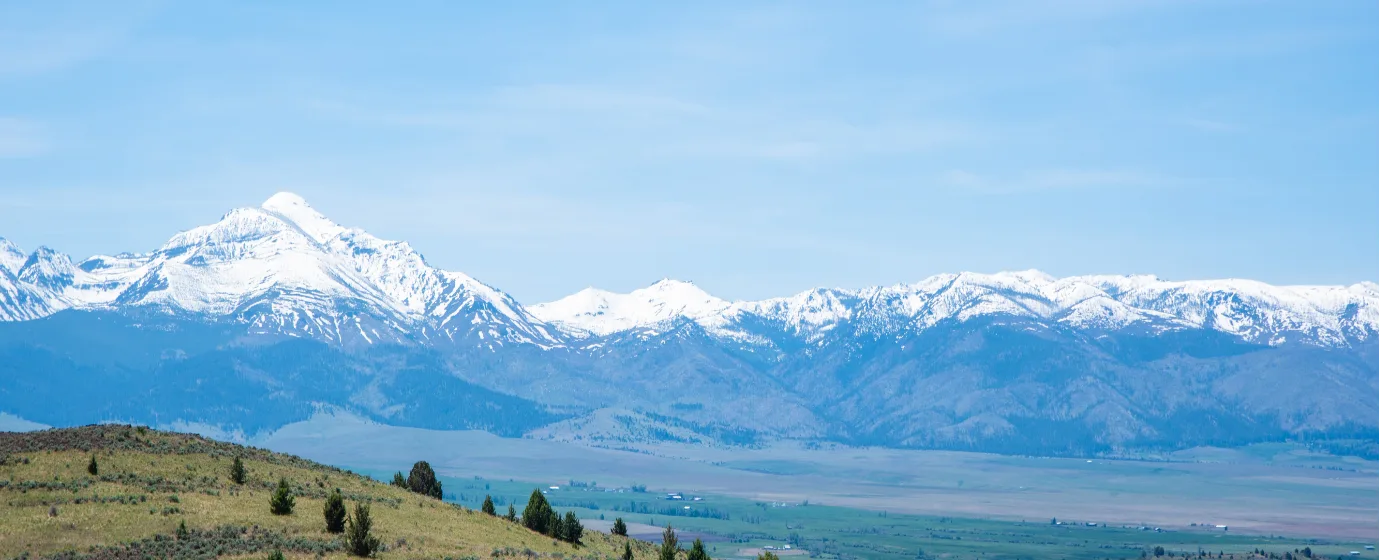
Baker City surprises almost every buyer who drives through on I-84. From the freeway, it reads as a small high-desert stop — a courthouse, a water tower, a cluster of commercial buildings at 3,440 feet. What the freeway doesn't show is that behind those buildings sits one of the most intact Victorian-era Main Streets in the Pacific Northwest, a city of 10,135 people that still has a genuine downtown, and eight distinct neighborhoods that feel nothing like each other. The question isn't whether Baker City is worth considering — it's which part of it matches your life.
The city sits in Baker County in Eastern Oregon, flanked by the Elkhorn Mountains to the west and the Wallowa Mountains to the east. Those peaks aren't just scenery; they shape the weather, anchor the recreation economy, and give virtually every neighborhood a postcard backdrop. The major employers — Baker School District, Baker County, Saint Alphonsus Medical Center - Baker City, the City of Baker City, and the US Forest Service — are all locally rooted institutions, which means the job base is stable but limited. Many residents work remotely or commute; the drive to La Grande along I-84 is the realistic commute corridor for anyone needing a larger regional hub.
Affordability is Baker City's clearest calling card. The typical home price here sits at $268,574 (Zillow Home Value Index, July 2026), making it noticeably more accessible than most Oregon markets west of the Cascades. That said, the median household income is below the income needed to comfortably carry the typical home here, so buyers should go into the process clear-eyed about that gap. The cost-of-living breakdown covers the full picture. On the lifestyle side, 196 sunny days a year, the Leo Adler Memorial Parkway along the Powder River, Anthony Lakes Mountain Resort in the Elkhorns, and direct access to Hells Canyon National Scenic Area mean outdoor recreation is a genuine daily reality rather than a weekend footnote.
Whether you're weighing a relocation, a retirement move, or your first purchase in Eastern Oregon, the sections below break down Baker City's neighborhoods by character, buyer type, and common mistakes — so you can choose the right block before you make an offer.
The Baker City Reality
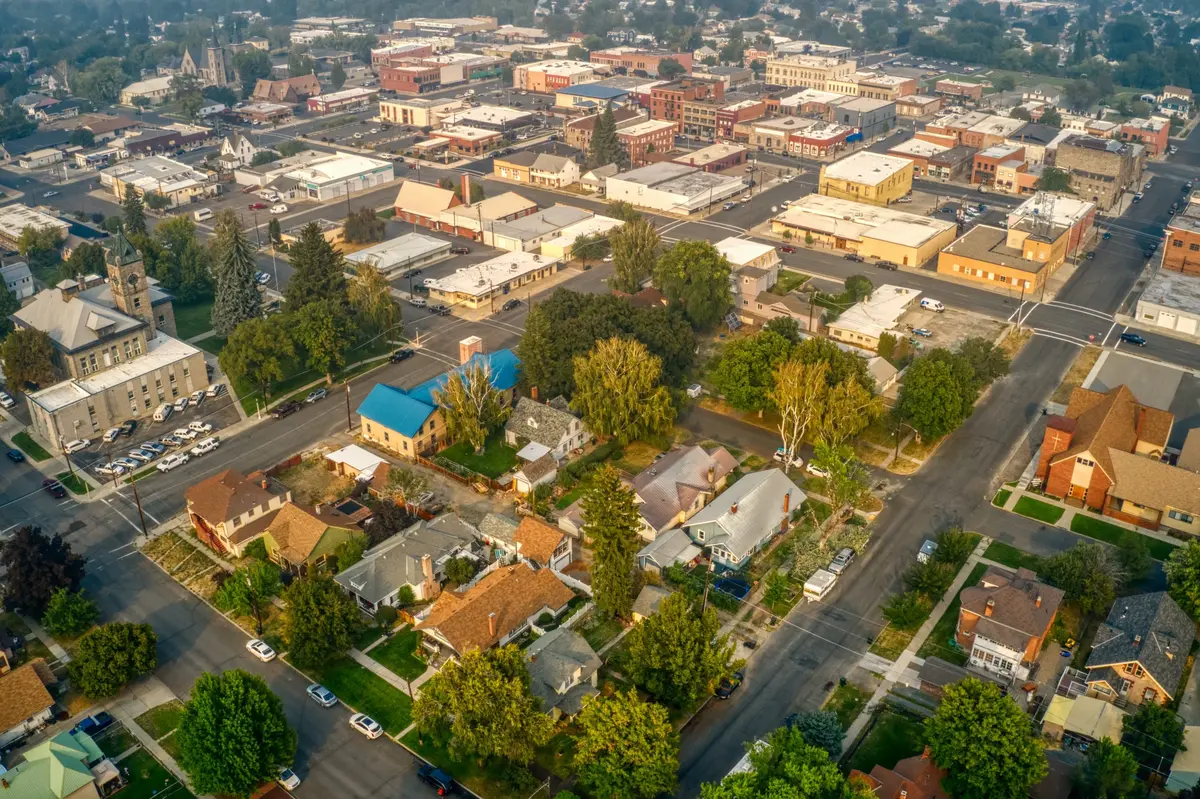
Baker City doesn't have the freeway-vs-west-side divide you find in larger Oregon cities, but it does have a divide that matters just as much: age of housing stock and lot size. The historic grid that covers most of Downtown, Central, and the Riverfront District was platted in the late 1800s — compact lots, back alleys, homes that were built to last but that carry 120 years of deferred maintenance risk. The newer edges of town — Sunridge Estates, the West End, parts of North Baker City — read more like a conventional small-city suburb, with larger lots, attached garages, and mechanicals that don't need immediate attention. Buying without understanding which world you're stepping into is the most consistent mistake relocating buyers make here.
School boundaries matter less in a city this size than in a metro — Baker School District 5J covers the whole city, and most families have one realistic middle and high school regardless of neighborhood. What does vary is walkability to the district's elementary schools, proximity to the Leo Adler Memorial Parkway trail system, and exposure to flood risk near the Powder River. The Riverfront District's charm is real, but some blocks carry flood zone designations that affect insurance costs in ways buyers don't anticipate until they're in escrow.
The other thing to understand before you start touring: Baker City's Vision 2030 plan explicitly identifies the older-grid neighborhoods — Central, Downtown-adjacent blocks, and parts of the Riverfront corridor — as priority zones for infill and first-time-buyer opportunity. That designation signals city investment, but it also means those areas are more likely to see construction activity and gradual change over the next decade. For buyers who want stability and predictability, the newer edges of the city offer that. For buyers who want to be in the middle of what Baker City is becoming, the historic core is where that story is unfolding.
Neighborhoods at a Glance
| Neighborhood | Best For | Vibe |
|---|---|---|
| Downtown Baker City | Walkable Renter | Historic Main Street core; galleries, festivals, the Geiser Grand Hotel, and the Baker Tower as a literal live-downtown option |
| Grandview | Families Quiet | Mid-century ranch homes on tree-lined streets; one of the city's most consistently sought-after residential addresses |
| Riverfront District | Nature Walkable | Powder River corridor, Leo Adler Memorial Parkway access, older homes with green surroundings — and a flood-zone caveat |
| Central Neighborhood | First-Time Value | Bungalows and mid-century stock on the classic Baker City grid; a priority infill zone in the city's own Vision 2030 plan |
| Sunridge Estates | Families Commuter | Newer construction, open layouts, attached garages — the closest Baker City gets to a conventional Oregon suburb |
| North Baker City | Families Quiet | Calm residential streets with school proximity; low foot traffic and a purely residential character |
| South Baker | Privacy Nature | Large lots on the town's edge; pastoral Eastern Oregon views and an agricultural feel without leaving city limits |
| West End | Views Families | Newer development on the western edge with Elkhorn Mountain views and modern home layouts |
Baker City typical home price: $268,574 (Zillow ZHVI, July 2026). Neighborhood tiers on this page are relative to these figures.
Best Neighborhood by Buyer Type
| Buyer Type | Best Neighborhood | Why |
|---|---|---|
| First-Time Buyer | Central Neighborhood | The city's broadest mix of entry-level bungalows and mid-century homes, identified in Baker City's own Vision 2030 plan as a priority infill zone. |
| Luxury Buyer | Grandview | Consistently cited as Baker City's most desirable residential address, with well-maintained mid-century ranch homes that command the city's upper price tier. |
| Walkability Seeker | Downtown Baker City | The only neighborhood where you can walk to locally owned shops, galleries, the Baker City Farmers Market, and recurring festivals without getting in a car. |
| Families with Kids | North Baker City | Quiet streets, proximity to schools, and a calm residential character make it the practical family choice away from downtown noise. |
| Commuters | Sunridge Estates | Newer construction on the city's edge offers straightforward I-84 access for anyone making the drive toward La Grande. |
| Large-Lot Buyers | South Baker | Rural residential lots on the southern edge of town give buyers the space and pastoral views that the historic grid simply cannot offer. |
| Renters | Downtown Baker City | The Baker Tower's residential apartments and the walkable core's rental stock make Downtown the most practical option for renters who want on-foot access to daily life. |
Looking to buy in Baker City? Estimate your payment.
Enter your numbers to see an estimated monthly mortgage payment.
Estimate only. Excludes HOA fees and mortgage insurance. The interest rate above is a starting point, not a quoted rate — replace it with your own to see real numbers. Insurance is a flat placeholder, not a Baker City quote.
Most Popular Neighborhoods
Downtown Baker City
The Baker Historic District covers roughly 42 acres of Main Street-centered development — more than 130 properties, most built between the late 1880s and around 1915, and listed on the National Register of Historic Places. You can walk to independent cafés, the Baker City Farmers Market, the Geiser Grand Hotel, the Baker Heritage Museum, and recurring events like the Baker City Cycling Classic and the Taste of Baker City. The trade-off is that the historic stock here demands attention: older mechanicals, smaller lots with alley access, and the kind of maintenance that surprises buyers coming from newer construction.
Best for: Buyers who want the most walkable, culturally active block in Eastern Oregon and are comfortable with the realities of historic-era homes.
Grandview
Grandview consistently appears at the top of local listing wish lists — a streetscape of mid-century ranch homes, many still carrying original hardwood floors and fireplaces, on streets that feel genuinely settled and cared-for. Homes here run above the city-wide typical home price, which reflects the neighborhood's reputation as Baker City's most sought-after residential address. The downside: inventory turns slowly because owners don't leave often, which means you may wait longer for the right listing to surface.
Best for: Buyers prioritizing established neighborhood character, quality mid-century architecture, and a quiet residential feel without sacrificing proximity to downtown.
Riverfront District
The Leo Adler Memorial Parkway — nearly 3 miles of paved trail along the Powder River — is the Riverfront District's defining feature, connecting residents to Geiser-Pollman Park, the Baker Heritage Museum, and the downtown core along a green corridor that few small cities at this elevation can match. The catch that buyers routinely underestimate: some blocks near the river carry flood zone designations, which means higher insurance costs and lender requirements that can complicate a purchase. Check the flood map before you fall in love with a specific address.
Best for: Outdoor-oriented buyers who want trail access from their back door and don't mind doing the flood-zone homework before submitting an offer.
Central Neighborhood
The Central Neighborhood is where Baker City's classic turn-of-the-century grid is most legible — compact lots, back alleys, bungalows and mid-century homes at multiple price points. The city's Vision 2030 plan identifies this corridor as a priority for infill development and first-time-buyer opportunity, which signals public investment but also means some blocks are mid-transition rather than fully stabilized. For buyers who want to get into Baker City ownership and be part of what the city is actively building toward, this is where that story is most visible.
Best for: First-time buyers and value-oriented buyers who want the historic grid at its most accessible and are comfortable with a neighborhood that is still finding its footing.
Sunridge Estates
If you've been relocating from the Willamette Valley or another larger Oregon market, Sunridge Estates is the neighborhood that will feel most familiar — newer construction, open street layouts, attached garages, and homes with mechanicals that don't carry a century of history. Buyers relocating from Portland or Bend consistently describe it as the least jarring adjustment. The compromise is that it lacks the architectural character and walkability of the historic core; daily errands still require a car, and the neighborhood's personality is more functional than distinctive.
Best for: Buyers relocating from larger Oregon cities who want move-in-ready construction and a conventional suburban layout without giving up the Eastern Oregon setting.
North Baker City
North Baker City is a quietly residential part of town where school proximity is the primary draw — calm streets, low through-traffic, and a neighborhood scale that suits parents with school-age children. It doesn't compete with Downtown for walkability or with Grandview for curb appeal, and that's the point: this is where people who want to stay out of the noise buy. Expect a mix of mid-century and later construction without the price premium of Grandview or the flood risk of the Riverfront District.
Best for: Families with kids who want school proximity, quiet streets, and a straightforward residential purchase without the complications of the historic core.
South Baker
South Baker sits on Baker City's southern edge, where the residential grid gives way to larger lots and Eastern Oregon countryside comes into view almost immediately. The agricultural feel here is genuine — pastoral views, more space between neighbors, and a pace that reflects the rural county surrounding the city. The real trade-off is distance: daily errands, schools, and the amenities of downtown all require a drive, and that adds up quickly when you're making multiple trips a week.
Best for: Buyers who want room to spread out, pastoral views, and a quieter agricultural lifestyle, and who are comfortable with the car-dependent reality that comes with living on the edge of town.
West End
The West End is Baker City's other newer-development option, positioned on the western side of the city with the Elkhorn Mountains as a direct backdrop. Modern home layouts, mountain views, and updated construction make it an appealing alternative to Sunridge Estates for buyers who want newer stock but prefer the western orientation. Like Sunridge, it trades the character and walkability of the historic core for predictability and lower maintenance; like South Baker, it requires a car for most daily needs.
Best for: Buyers who want newer construction, Elkhorn Mountain views, and a quieter residential setting on the western edge of the city.
Common Mistakes Buyers Make in Baker City
Underestimating Flood Zone Costs in the Riverfront District
The Leo Adler Memorial Parkway is genuinely one of Baker City's best assets, and the Riverfront District homes that back up to the Powder River corridor look exceptional in listing photos. What those photos don't show is the flood zone designation that runs through portions of the neighborhood. Buyers who skip a flood-map review before making an offer routinely discover that flood insurance requirements add meaningful costs that weren't in their initial budget — in some cases enough to change the math on the purchase entirely.
Treating the Historic Grid as Low-Maintenance
Central Neighborhood and Downtown-adjacent blocks offer some of Baker City's most accessible price points, and that affordability is real. But buyers who come from newer construction and assume the lower purchase price means lower total cost of ownership are frequently wrong. Homes built in the late 1800s and early 1900s on the historic grid carry risks — knob-and-tube wiring, original plumbing, aging foundations — that a thorough inspection will surface. Budget for that discovery before you're in escrow, not after.
Assuming All Newer Construction Is the Same
Sunridge Estates and the West End are both described as newer development, but they sit on different edges of the city with meaningfully different orientations, street layouts, and commute patterns. Buyers who shop both simultaneously without accounting for which side of Baker City puts them closer to I-84 and the drive toward La Grande sometimes end up in the neighborhood that's geographically inconvenient for their actual daily route. Map the commute before you narrow your search to one side of town.
Confusing South Baker's Lot Size with City Convenience
Large-lot buyers are drawn to South Baker for the right reasons — the space is real, the pastoral views are real, and the price per square foot tends to be more favorable. What catches people off guard after six months is the cumulative time cost of driving to school drop-off, groceries, the Baker City Farmers Market, and any appointment downtown. In a city of 10,135, those drives are short individually, but they compound. Buyers who moved from denser markets consistently underestimate how often they make them.
Best Areas to Rent in Baker City
| Area | Ideal For | Trade-off |
|---|---|---|
| Downtown Baker City | Remote workers, singles, anyone who wants on-foot access to daily life | Older building stock; limited parking; some units in the Baker Tower or converted historic buildings carry character but also quirks |
| Central Neighborhood | Budget-conscious renters, first-year residents testing the city before buying | Variable condition across the rental stock; the historic grid means small lots and close neighbors |
| Riverfront District | Outdoor-oriented renters who want Leo Adler Memorial Parkway access from home | Flood zone exposure on some blocks; worth confirming with a landlord before signing a lease |
| North Baker City | Families with school-age children who want quiet streets and school proximity | Limited rental inventory; what's available turns over infrequently and often rents before it's widely listed |
| Sunridge Estates / West End | Renters relocating from larger Oregon cities who want a familiar suburban layout | Thinner rental supply than the historic core; most housing in these areas is owner-occupied |
Baker City's rental market is small — this is a city of 10,135 with a strong owner-occupancy culture, and rental inventory across all neighborhoods is limited compared to any Western Oregon market. For city-wide typical rent figures, see the cost-of-living page. If you're planning to rent while you decide where to buy, Downtown and the Central Neighborhood offer the broadest selection; the outlying neighborhoods are largely owner-occupied and supply is genuinely thin.
Local Expert Takeaway: Baker City rewards buyers who do their geographic homework before they fall in love with a listing. The historic grid — Downtown, Central, Riverfront — is where the city's identity lives, and where the Geiser Grand Hotel, the Leo Adler Memorial Parkway, and the Baker City Farmers Market make daily life feel genuinely local. But those same neighborhoods carry 120-year-old mechanicals and, in the Riverfront District, real flood-zone costs that catch buyers off guard. If you want newer construction and a familiar suburban layout, Sunridge Estates or the West End deliver that without the maintenance risk. And if you want space — real lot size, pastoral views, room for a workshop or a garden — South Baker is the only part of town that actually offers it. The mistake is treating all eight neighborhoods as interchangeable versions of the same affordable Eastern Oregon market. They're not.
Quick Takeaways & FAQs
✅ Baker City's typical home price of $268,574 (July 2026) makes it one of the most accessible real-estate markets in Oregon, with genuine Victorian-era character in the historic core that you simply cannot find at this price point west of the Cascades.
⚠️ Flood zone designations in the Riverfront District are the single most common surprise buyers encounter in escrow — check the flood map before you make an offer, not after.
📍 The Baker Tower — a nine-story Art Deco landmark built in 1929 and the tallest structure east of the Cascade Range in Oregon — now offers residential apartments with panoramic Elkhorn Mountain and Main Street views, making it the most distinctive live-downtown option in Eastern Oregon.
What is the most walkable neighborhood in Baker City?
Which Baker City neighborhood is best for families with kids?
Are there flood risks in any Baker City neighborhoods?
Which Baker City neighborhood suits first-time buyers?
Is Baker City a good place to rent before buying?
Moving to Oregon?
Tell us what you need help with and we'll connect you with local resources.
