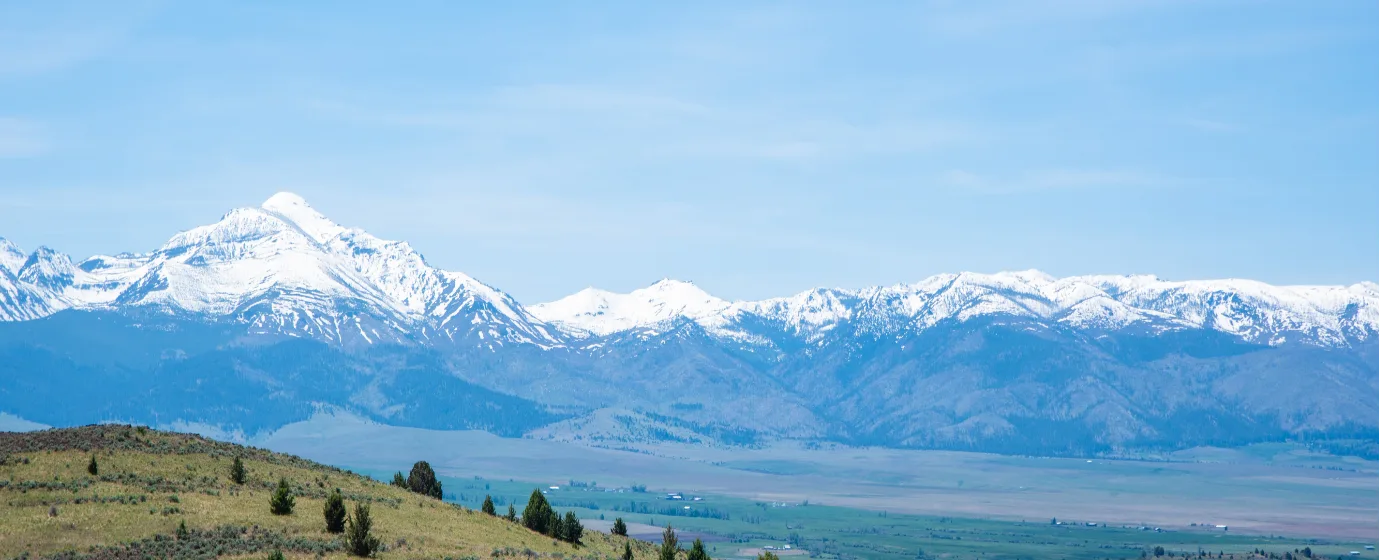
People who retire to Baker City usually arrive the same way — passing through on I-84, stopping for a night at the Geiser Grand Hotel, and then not quite being able to shake the place. A city of 10,135 in the high desert of Eastern Oregon, it sits at roughly 3,400 feet elevation between the Elkhorn Mountains and the Burnt River Range, with more than 100 preserved 19th-century storefronts lining Main Street. The surprise isn't that people move here in retirement. The surprise is that Baker County's 65-and-older population already represents roughly 28.2% of county residents — well above Oregon's 19.9% share — which means the community infrastructure for older adults is genuinely built out, not aspirational.
What drives the decision is almost always the math and the pace. Baker City's overall cost of living runs approximately 15% below the national average and about 20% below the Oregon norm, with housing, food, and transportation all coming in below U.S. benchmarks. The typical home price stood at $268,574 (Zillow Home Value Index, July 2026) — a figure that lets retirees pay cash from a home sale in a pricier market and still have money left over. The full cost-of-living breakdown lays out what a fixed income actually buys here. The city's employers — Baker School District, Baker County, Saint Alphonsus Medical Center – Baker City, and the U.S. Forest Service — anchor a stable local economy without the volatility that can rattle smaller markets.
Outdoor life is the other pull. The Leo Adler Memorial Parkway runs along the Powder River right through town. Anthony Lakes Mountain Resort is about 20 miles out, offering Nordic skiing in winter and hiking once the snow clears. Hells Canyon National Scenic Area — North America's deepest river gorge — sits within a reasonable drive. Baker City gets 196 sunny days a year, which matters more than you'd think when you're deciding whether to walk or drive to lunch. The trade-off is isolation: the nearest major airport is Eastern Oregon Regional Airport, and Boise is about 128 miles out.
Whether you're seriously weighing a move or still comparing options across Eastern Oregon, the sections below cover healthcare access, the retiree tax picture, daily budget realities, walkability and community, downsizing options, and how Baker City stacks up against nearby retirement destinations.

Why Retirees Are Choosing Baker City
Baker City fits a specific kind of retiree well: someone who has spent decades in a faster, more expensive place and wants out without sacrificing a genuine sense of community. The historic downtown gives daily life a texture that most small towns at this price point simply don't have. Walking past the St. Francis de Sales Cathedral, picking up something at the Baker City Farmers Market, stopping for coffee — it feels like a real place, not a suburb that ran out of road.
The typical home price of $268,574 (July 2026) makes it possible to downsize from nearly any Western market and buy outright. That's the version of retirement most people plan for and rarely find. Retirees who move here from Portland, Boise, or coastal Oregon routinely talk about the same thing six months in: the absence of financial pressure. Groceries, utilities, and restaurants all track below the national average, and there's no Oregon sales tax on any of it.
Baker City is not the right call for everyone. If you need frequent access to specialist care — advanced cardiac, neurosurgical, oncology — or if you require urban amenities and walkable density beyond a few blocks of downtown, this city will frustrate you. The isolation is real. Boise is the anchor for anything the local hospital can't handle, and that drive matters more in your seventies than it did in your forties. Retirees who thrive here tend to be self-sufficient, genuinely interested in outdoor life, and comfortable with the trade-off between affordability and access.
Healthcare & Medical Access in Baker City
Saint Alphonsus Medical Center – Baker City is the city's hospital, inside city limits and part of the Trinity Health system. For a city of 10,135, its service depth is notable: emergency care, family medicine, internal medicine, orthopedics, cardiology, radiology (CT, MRI, mammography, ultrasound), physical and occupational and speech therapy, an infusion clinic, sleep studies, surgical services, and telehealth. That covers the vast majority of what most retirees need on a regular basis.
The standout credential for active older adults is an independent certification in advanced total hip and total knee replacement — the only program in Eastern Oregon to hold it. If joint replacement is in your near-term picture, that distinction matters: it means Baker City's hospital has met a rigorous independent standard for exactly that procedure, without requiring a trip to Boise.
The honest caveat is what the local hospital can't do. Complex cardiac procedures, neurosurgery, and advanced oncology care require transport to Saint Alphonsus Regional Medical Center in Boise, roughly 90 minutes via I-84. That is not unusual for a rural Oregon city, but it is a real variable in the retirement calculus. Retirees managing a serious ongoing condition — or anyone with a family history that points toward complex cardiac or neurological care — should factor that drive into the decision honestly, not optimistically. Telehealth partnerships help bridge some of the gap for specialist consultations, but not all of it.
Baker County's established older adult population means the healthcare ecosystem around the hospital has kept pace: home health agencies, physical therapy practices, and support services exist here in greater depth than you'd find in a smaller or newer retirement market.
The Retiree Budget in Baker City
Oregon's tax posture for retirees is mixed, and worth understanding precisely. The state does not tax Social Security or Railroad Retirement benefits — a meaningful advantage for retirees drawing primarily from those sources. The catch is pensions, IRA withdrawals, and 401(k) distributions: those are taxed at Oregon's regular graduated income-tax rates, which run from 4.75% to 9.9%, with no general retirement-income exclusion to soften it. If your retirement income comes mostly from investment accounts rather than Social Security, Oregon is not a low-tax state for you.
The property-tax picture is genuinely favorable. Baker City's effective rate runs approximately 0.78% — one of the lower rates in Oregon, and well below the national norm. Oregon also runs a senior property-tax deferral program: homeowners 62 or older with household income at or below $60,000 may defer county property taxes until the home is sold, with the state covering the taxes and recording a lien at 6% simple interest. That program exists specifically to keep fixed-income homeowners from being squeezed by annual tax bills. Oregon's complete absence of a sales tax also delivers quiet, ongoing savings on groceries, clothing, and everyday purchases that compound meaningfully on a fixed income over time. The cost-of-living page covers the full tax and expense picture in detail.
Day-to-day spending in Baker City tracks well below national benchmarks. Groceries, utilities, and dining out are all below the U.S. average. A retired couple living primarily on Social Security and a modest pension can cover essentials here without the constant arithmetic that defines retirement in Portland or Bend. The interactive calculator below can help you model what ownership looks like at current rates and down-payment scenarios.
Looking to buy in Baker City? Estimate your payment.
Enter your numbers to see an estimated monthly mortgage payment.
Estimate only. Excludes HOA fees and mortgage insurance. The interest rate above is a starting point, not a quoted rate — replace it with your own to see real numbers. Insurance is a flat placeholder, not a Baker City quote.
Walkability, Community & Staying Active in Baker City
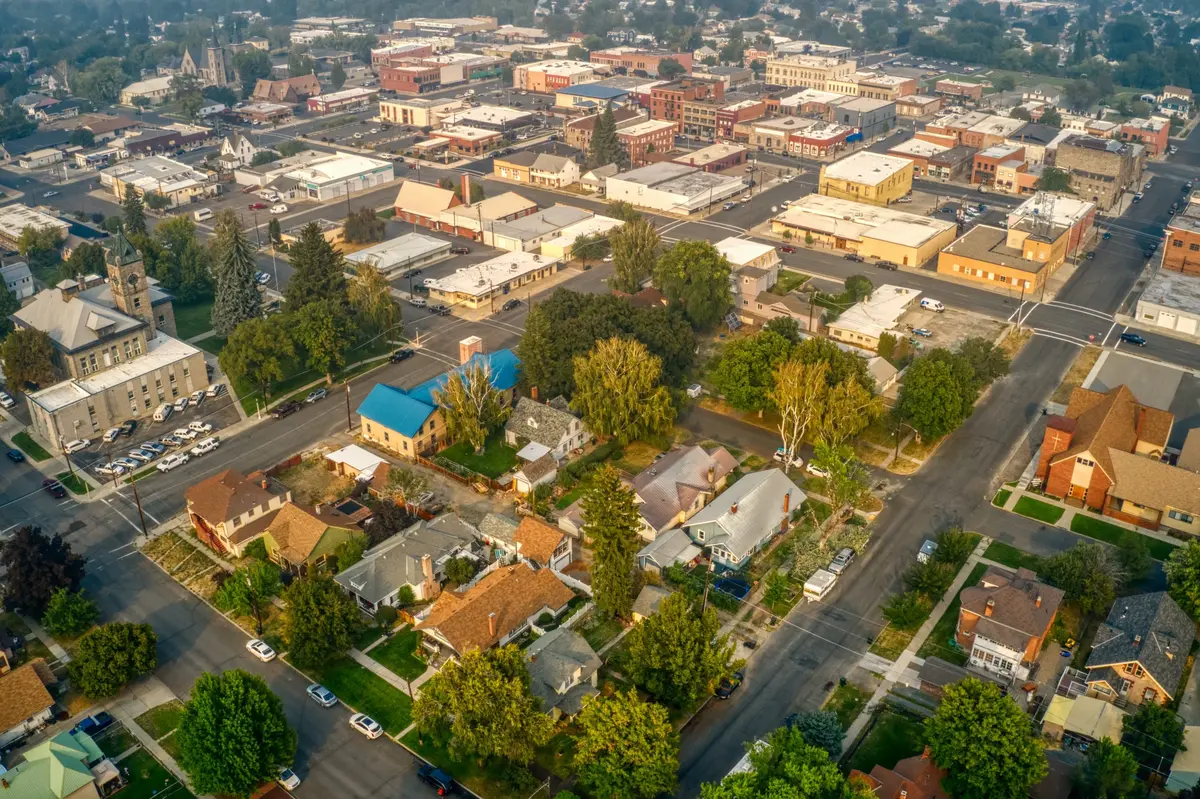
Downtown Baker City is genuinely walkable — one of the few parts of Eastern Oregon where you can leave the car parked and get through a full morning on foot. The historic commercial blocks are flat, the distances are short, and the concentration of independent coffee shops, the Baker Heritage Museum, and the Baker County Library District branch means a real errand or leisure loop is possible without driving. Outside of downtown, you will need a car for most errands. The residential neighborhoods don't have the sidewalk density or commercial clustering to support a car-free lifestyle.
The Leo Adler Memorial Parkway, running along the Powder River through town, is the most-used active-living amenity in Baker City. It is flat, paved, and accessible for walkers at any pace. Geiser-Pollman Park anchors the greenway and gives retirees a genuine gathering point. For those willing to drive a short distance, the National Historic Oregon Trail Interpretive Center offers more than four miles of outdoor trails and rotating living-history programming — it draws a crowd that skews older adult, and the cultural programming is substantial for a city this size.
The Crossroads Carnegie Art Center runs adult art classes, plein air events, and gallery shows that have built a real community among retirees with creative interests. Baker City's older population — the city's median age is 42.6 years, with a noticeably older skew — means you are not the only person in the room looking for this kind of engagement. Anthony Lakes Mountain Resort, about 20 miles out, runs a Nordic ski program that attracts a loyal older adult following in winter. Hells Canyon National Recreation Area is a day trip that never gets old, particularly the jet-boat tours through the gorge.
The social fabric here is worth naming plainly: a city where more than a quarter of the county is 65 or older has figured out how to keep older adults engaged. The Baker City Farmers Market is the warm-weather gathering point the community actually uses, and independent dining spots in town are genuinely local — not tourist-facing.
Right-Sizing: Downsizing in Baker City
No 55+ communities were found in Baker City. That is the honest answer, and it matters to retirees expecting a dedicated age-restricted community with shared amenities and a HOA structure built around their peer group. That product simply doesn't exist here in the way it does in larger retirement markets.
What Baker City does have is a housing stock that naturally suits downsizing. The typical home is a single-family house, and because the city grew mostly in the early-to-mid 20th century, a meaningful share of that stock is single-level — ranches and bungalows on flat lots, priced well below anything comparable in western Oregon. For retirees who want a smaller footprint without the stairs, that inventory exists; the search just requires patience and a buyer's agent who knows which blocks to focus on.
Patio homes and condos are sparse. Baker City's size limits the condo market that larger cities take for granted, and there is no meaningful attached-housing development in the pipeline visible in current data. Retirees who specifically want a lock-and-leave property with no exterior maintenance will find the options limited and will likely need to compromise on one dimension or another.
For those who need assisted living or memory care, Baker City has two facilities worth knowing about. Settler's Park Assisted Living Community offers up to 56 units with Alzheimer's care, walking trails, and around-the-clock staffing. Meadowbrook Place operates with up to 60 units. Both are licensed by the Oregon Department of Human Services Aging and People with Disabilities division. These are not 55+ communities in the active-adult sense — they are care facilities — but they represent meaningful local capacity for retirees planning ahead or supporting a spouse who needs more than independent living. For the neighborhood-level breakdown of where single-level homes tend to cluster, that page goes deeper on character and housing type by district.
Baker City vs Nearby Retirement Destinations
| City | Cost vs Baker City | Primary Hospital | Walkability | Senior Living Depth | Overall Retirement Fit |
|---|---|---|---|---|---|
| Baker City, OR | Anchor | Saint Alphonsus Medical Center – Baker City (Level IV Trauma, independently certified for hip and knee replacement) | Downtown core walkable; car needed elsewhere | Two assisted-living facilities; no 55+ communities | Value Nature Strong for self-sufficient, outdoor-oriented retirees |
| La Grande, OR | Somewhat higher | Grande Ronde Hospital (critical access, broader service depth than Baker City) | Modest downtown; similar car dependence outside core | Slightly more options given larger population base | Commuter Good for retirees wanting a larger small city with a university presence (Eastern Oregon University) |
| Ontario, OR | Noticeably higher | Saint Alphonsus Medical Center – Ontario (closer to Boise specialists) | Commercial strip character; limited walkable core | More senior housing options than Baker City | Commuter Practical for retirees who want Boise proximity without Boise prices |
| Haines, OR | Somewhat lower | Relies on Baker City's Saint Alphonsus for hospital care | Very limited; rural hamlet character | Minimal; rural retirement only | Privacy Quiet Suits retirees wanting extreme quiet and near-zero urban amenities |
| Sumpter, OR | Broadly similar to Haines | No local hospital; depends entirely on Baker City | Essentially none; historic mining town | Very limited | Nature Privacy Weekend-destination character; not a practical primary retirement base |
| Joseph, OR | Noticeably higher for comparable housing | No local hospital; a critical-access hospital nearby | Small but genuinely walkable downtown; arts-oriented | Limited; growing slowly | Views Nature Strong lifestyle appeal but steeper cost and more isolated for medical needs |
For retirees whose primary concern is cost, Baker City and Haines are the clear regional leaders — and Haines trades even lower prices for almost complete reliance on Baker City's hospital and services. La Grande gives you a university town's programming and a hospital with somewhat broader service depth than Baker City, but at a somewhat higher price point; the roughly 45-minute drive is manageable as a day trip rather than a reason to move there. Ontario's advantage is proximity to Boise's specialist network, which matters most to retirees managing a complex chronic condition — the cost premium reflects that access.
Joseph is the choice for retirees who prioritize scenery and an arts-oriented small town above everything else and are willing to pay for it; the healthcare isolation there is more acute than Baker City's. Sumpter functions as a day trip from Baker City, not a retirement base.
Baker City's real competitive position in this field is the combination: a sub-$270,000 typical home price, an independently certified hospital inside city limits, a genuinely historic downtown for daily life, and direct I-84 access to Boise when the hospital's limits are reached. No single nearby city matches all four of those simultaneously.

Local Expert Takeaway: Baker City draws retirees who have done the math on Western retirement markets and decided to stop apologizing for wanting affordability and open space at the same time. The typical home at $268,574 (July 2026), a hospital inside city limits with an independent hip-and-knee replacement certification, the Leo Adler Memorial Parkway for daily walks, and the Crossroads Carnegie Art Center for something to do with your time — these aren't consolation prizes for missing out on Bend. They're the actual point. The honest limit: if your health situation requires specialist care more than once a year, plan around that 90-minute Boise drive before you commit.
Quick Takeaways & FAQs
✅ Baker City's typical home price of $268,574 (July 2026) lets most retirees from pricier Western markets buy outright and retire without a mortgage payment.
⚠️ Complex cardiac, neurosurgical, or advanced oncology care requires a roughly 90-minute drive to Boise — a real variable for retirees managing serious conditions.
📍 Saint Alphonsus Medical Center – Baker City holds the only independently certified hip and knee replacement program in Eastern Oregon, a meaningful credential for active retirees.
Is Baker City a good place to retire on Social Security?
What hospital serves Baker City retirees, and what can it handle?
Are there 55+ communities or active-adult developments in Baker City?
How walkable is Baker City for older adults?
How does Baker City compare to La Grande for retirement?
Moving to Oregon?
Tell us what you need help with and we'll connect you with local resources.
