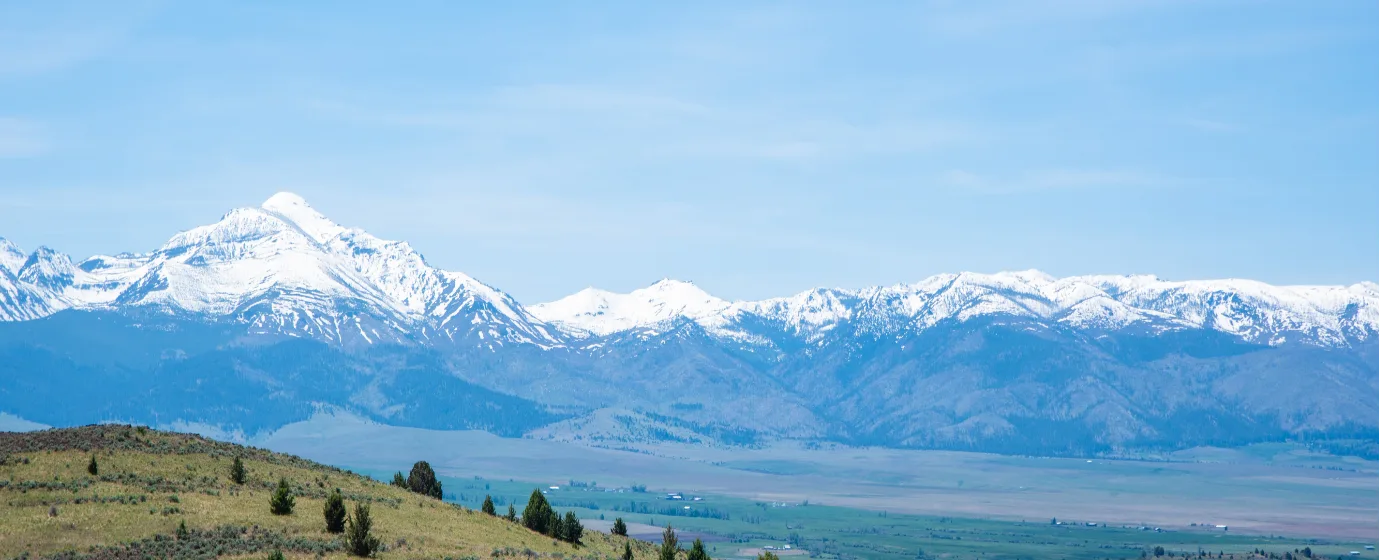
Maybe your company went remote and suddenly living two blocks from a California freeway for $600,000 felt optional. Maybe you drove through Baker City on I-84 and the Elkhorn Mountains stopped you cold. Or maybe you've spent six months on Zillow watching numbers in California climb while Baker City's stayed rooted to something that actually looks like a house payment. Whatever brought you here, the honest version of this decision is worth reading before you make an offer — because Baker City is genuinely different from anywhere you've lived in California, and not always in the ways you expect.
Baker City sits in Eastern Oregon's Baker Valley, about 45 minutes from La Grande and anchored by I-84, the same corridor that carries freight from Portland to Boise. It's a city of 10,135 — small enough that people recognize your truck at the gas station, large enough to have a functioning economy. Baker School District 5J serves the community, the U.S. Forest Service and Baker County are significant employers, and the outdoor tourism economy around the Elkhorn Mountains, the Wallowa-Whitman National Forest, and Hells Canyon National Scenic Area draws a steady stream of visitors who sometimes become residents. Californians are arriving in numbers: Oregon ranked first in inbound moves in 2025, and Oregon DMV records show 22,306 new Oregon licenses issued to former California residents in that period — California was the single largest source.
The financial case is easy to sketch. Baker City's typical home value stands at $268,574 (July 2026) — a figure that sits well below California's statewide typical home value of $773,735. Oregon levies no state or local sales tax, which can save a household spending $40,000 a year on taxable goods roughly $3,600 annually compared with California's statewide base sales tax rate of 7.25%. Total living costs run noticeably below the U.S. average. The trade-off is real, too: you are moving to a rural city where most errands mean a drive, retail options are limited, and anything the local market doesn't carry means planning ahead. Routine care costs tend to run below California levels, though you will drive farther for specialist appointments.
Whether you're still making the spreadsheet or already have a moving date, the sections below break down the home price and tax comparisons, what Californians typically miss before moving, the local job picture, the daily reality of Eastern Oregon life, and what six months in Baker City actually feels like.

The Home Price Gap — and What It Actually Buys
The headline number is real. Baker City's typical home value of $268,574 (July 2026) sits dramatically below California's statewide typical home value of $773,735. That gap doesn't just mean a smaller mortgage — it often means buying free and clear with California equity, or stepping into a four-bedroom home on a lot that would cost seven figures in Sacramento and not exist at any price in coastal markets.
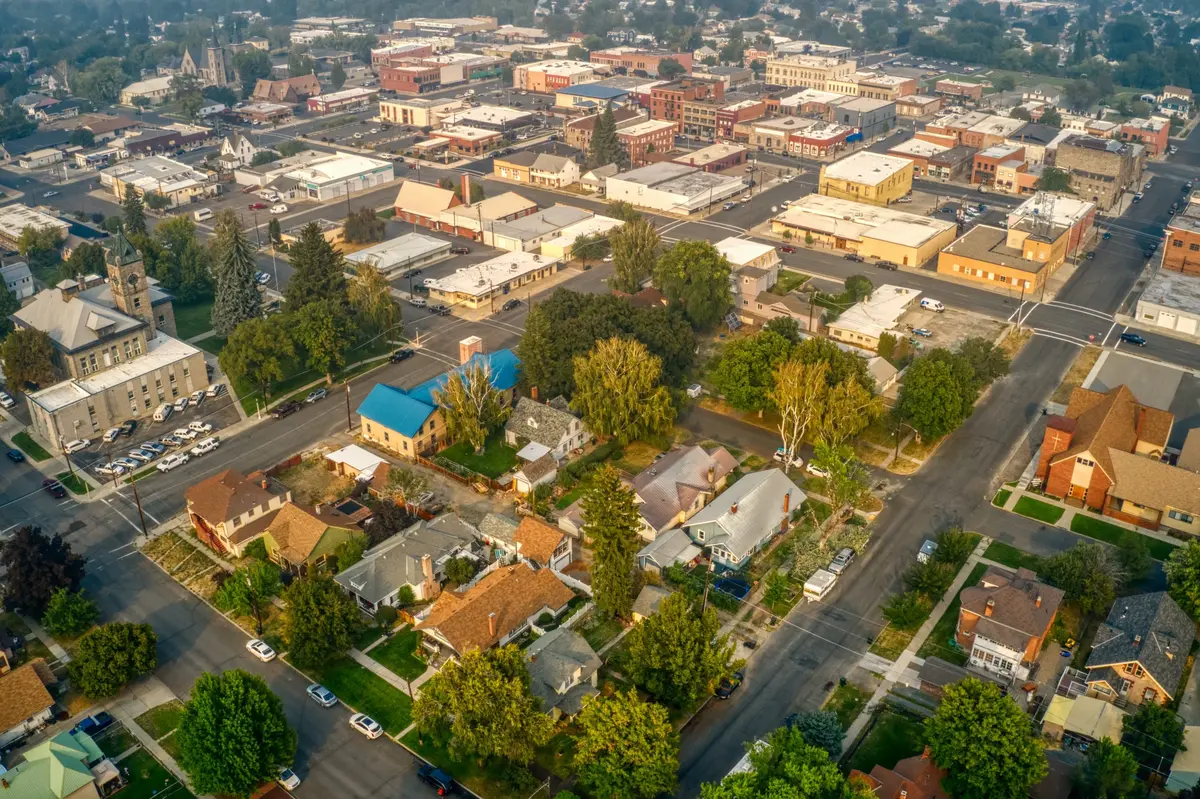
What does that price buy in Baker City? Older craftsman and Victorian-era stock in Downtown Baker City and the Central Neighborhood, mid-century ranches in North Baker City and South Baker, and newer construction in Sunridge Estates where the lots run larger. The Riverfront District and Grandview areas offer their own character — see the neighborhoods guide for a closer look at each pocket of the city. None of those areas carry a price premium that approaches what you paid in California; the spread across Baker City's neighborhoods is measured in tens of thousands, not hundreds.
One structural difference worth understanding: California's Prop 13 locks assessed values to the purchase price, which means longtime California homeowners have often been paying taxes on a value set decades ago. The moment you sell and buy in Baker City, that reset happens anyway — but Baker County simply applies a straightforward effective rate to current market value with no layered assessment mechanics. There is no Mello-Roos, no voter-approved bond stack pushing an effective rate above 2%. Baker City's effective property tax rate of 0.78% compares favorably against what California new buyers typically pay, which runs from 1.15% to 1.35% once local bonds are added — and higher in newer master-planned communities.
One honest note: the cost-of-living breakdown shows that the median household income in Baker City sits below what's needed to comfortably carry the typical home here. That doesn't affect a California buyer converting equity, but it does shape the local economy and the neighbors you'll have.
| Factor | Baker City, OR | California (Statewide) |
|---|---|---|
| Typical home value | $268,574 (July 2026, Zillow ZHVI) | $773,735 (Zillow ZHVI) |
| Effective property tax rate | 0.78% | 1.15%–1.35% for new buyers (Prop 13 base + local bonds) |
| Sales tax | 0% — Oregon has no sales tax | 7.25% statewide base rate (plus local additions) |
| State income tax (top rate) | 9.9% (Oregon) | 13.3% (California) |
| Overall cost of living vs. U.S. average | Roughly 18% below | Noticeably above |
| Housing cost index vs. U.S. average | 35% below | Substantially above |
* ZHVI = Zillow Home Value Index.
The sales tax difference alone is worth pausing on. Oregon is one of only five states with no sales tax at any level — nothing on groceries, clothing, furniture, or a used truck. That changes the mental math on every purchase from the day you arrive.
Taxes: Where Oregon Wins, and Where It Doesn't
The sales tax comparison is the clearest win. California's statewide base sales tax rate of 7.25% is the highest in the country, and local additions push many California counties well above that. Oregon collects nothing. For a household spending $40,000 a year on taxable goods, that's roughly $3,600 annually that stays in your pocket — every year, without doing anything.
Property tax is also favorable. Baker City's effective property tax rate of 0.78% is straightforward: one rate, applied to assessed market value, no surprises at closing. California's effective property tax rate of 0.71% looks similar on paper, but that number reflects the Prop 13 baseline for longtime owners. New buyers in California face an effective rate of 1.15% to 1.35% once local bonds are included — more in communities with Mello-Roos assessments. On a home at California's statewide typical home value, that adds up to a meaningful annual difference.
The Income Tax Catch
Oregon's income tax is the honest counterweight. California's top state income tax rate of 13.3% applies to the highest earners and includes a 1% Mental Health Services surcharge. Oregon's top rate of 9.9% is lower, but Oregon's brackets compress faster than California's. The income-tax savings favor high earners; many middle-income households pay about the same or more in Oregon than they did in California. This is the piece that surprises most transplants who assumed the move was a clean tax win.
Oregon does offer one meaningful offset: residents can deduct a portion of the federal income taxes they paid from their Oregon taxable income. That deduction benefits low- and moderate-income households the most, and it phases out entirely for joint filers with federal adjusted gross income above $290,000. Where you land in the brackets depends on your specific situation, and a CPA familiar with both states — particularly if you're splitting a tax year between California and Oregon — is worth the consultation fee.
The net picture: for most California transplants, the sales tax elimination and lower property tax more than compensate for Oregon's compressed income tax brackets. At very high income levels, the income tax savings become more significant. Run the numbers before assuming the move saves or costs money on taxes.
What Californians Miss Before They Move
The thing nobody warns you about in month one is how much driving shapes daily life. Baker City's transportation cost index runs above the national average, reflecting the vehicle-reliance that comes with rural Eastern Oregon distances. Most errands mean a drive; coming from a place where you could theoretically take the train or call a rideshare at midnight, the adjustment is real.
Within the city itself, getting around is easy — trips across town rarely take more than ten minutes. The scale of Baker City is not the issue. The issue is everything outside it. Eastern Oregon Regional Airport (PDT) is about 99 miles away; Boise (BOI) sits about 128 miles out. A serious shopping trip, a specialist appointment, or a flight means planning ahead in a way California rarely required.
Retail and Dining: Right-Sizing Your Expectations
Baker City has a genuine food scene for its size — local spots like Inland Cafe, Eagle Cap Grill, Baker Truck Corral & Restaurant, and El Erradero Mexican give you real options for a city of 10,135. Coffee options include Sweet Wife Baking, Sorbenots Coffee, Coffee Corral Roasters, Matilda's, and The Bean and Bun. What it does not have is the retail density of California. A serious shopping run means driving out of town; you will be ordering online for anything the local shops don't carry. That adjustment catches people who underestimate it.
The Seasonal Reality
Baker City gets 196 sunny days a year — more than many Oregon residents realize is possible in the state, but still a meaningful shift from Southern California. Eastern Oregon winters are cold and dry rather than wet and mild, with snow in the valley most years. Anthony Lakes Mountain Resort is accessible for skiing, and the Elkhorn Mountains make the winters feel purposeful rather than just grey. But Californians from coastal climates often underestimate the temperature swing: summer days in the high 80s and 90s drop to genuine winter cold, and that first January is an adjustment.
The other seasonal surprise is the quiet. Friday nights in Baker City feel nothing like a California suburb. The Geiser Grand Hotel anchors Main Street in a way that's genuinely historic, and the community gathers around it — but the pace is different in ways that take a few months to either love or struggle with.
Looking to buy in Baker City? Estimate your payment.
Enter your numbers to see an estimated monthly mortgage payment.
Estimate only. Excludes HOA fees and mortgage insurance. The interest rate above is a starting point, not a quoted rate — replace it with your own to see real numbers. Insurance is a flat placeholder, not a Baker City quote.
Jobs, Remote Work, and the Local Economy
Most Californians arriving in Baker City are either remote workers or retirees converting equity — and that's the honest picture of who moves here successfully. The local job market is real but limited: Baker School District, Baker County, the City of Baker City, and the U.S. Forest Service are the anchoring employers. The regional healthcare system draws clinical staff with sign-on incentives including loan repayment programs. Retail, skilled trades, and hospitality tied to outdoor tourism round out the picture.
For remote workers, Baker City is a genuinely functional base. Internet connectivity has improved across Eastern Oregon, I-84 keeps you connected to the Boise and Portland corridors, and getting across town rarely takes more than ten minutes. The drive to La Grande — about 45 minutes — is the nearest secondary hub if you need a larger city for meetings or services.
The Outdoor Economy
Baker City's position between the Wallowa-Whitman National Forest, the Elkhorn Mountains, and Hells Canyon National Scenic Area isn't just scenery — it's an economic engine. Anthony Lakes Mountain Resort draws visitors year-round. Guiding, outfitting, hospitality, and seasonal service jobs circulate through the city's economy in ways that don't show up in traditional employment data but are real to anyone working in the sector. The living in Baker City guide covers the full employer picture.
For Californians with professional-sector careers, the honest answer is: bring your job with you, or be prepared for a significant income adjustment. The trade-off is that your California income stretches considerably farther here — housing costs 35% below the U.S. average, and the absence of sales tax compounds the savings across every category of spending.
Daily Life, Culture, and Whether Baker City Is Actually for You
Baker City is a city that rewards people who came looking for it specifically — not people who landed here because it was affordable and figured they'd make it work. The ones who stay past year two tend to share a few things: they use the outdoors, they engage with the community, and they weren't expecting Portland.
The Leo Adler Memorial Parkway runs along the Powder River and is the kind of green corridor that California cities spend decades and hundreds of millions trying to recreate. Geiser-Pollman Park anchors the city's gathering spaces. The Baker City Farmers Market draws the community together through the growing season. The National Historic Oregon Trail Interpretive Center and Baker Heritage Museum give the city a cultural grounding that's specific to this landscape in a way that no coastal suburb can replicate.
Who Thrives Here
Californians who come from outdoor-adjacent lives — who were driving to Tahoe or hiking on weekends — often find Baker City clicks immediately. The Elkhorn Mountains and Hells Canyon National Scenic Area are not a day trip; they are your backyard. The recreation guide goes deeper on what's accessible year-round.
Families with school-age children should look at Baker School District 5J directly — the schools page covers enrollment, test scores, and activities. On safety, Baker City posts a violent crime rate of 1 per 1,000 residents against a state rate of 3.3 per 1,000 — the kind of number that moves the needle for families coming out of California metros.
Who Finds It Hard
People who move here expecting the food, retail, and cultural density of a California city tend to struggle. The dining and coffee options are genuine for a city this size, but the selection is not comparable to what you had. People who need regular specialist care will feel the distance. And people who underestimate the psychological shift of small-town life — where anonymity disappears and community involvement is not optional if you want to feel at home — often find themselves planning a return move by year three.
The honest version: Baker City is not a compromise destination. It's a specific place that fits specific people very well and doesn't fit others at all. Coming from California with equity, a remote income, and a genuine preference for this landscape is a strong foundation. Coming because you were priced out and hoping it'll feel familiar is a harder path.
Local Expert Takeaway: Baker City's financial case for California transplants is real — the home price difference alone is transformational for buyers bringing California equity, and Oregon's zero sales tax changes the math on every purchase from day one. But the city works best for people who came for it specifically: the Elkhorn Mountains, the quiet, the historic Main Street anchored by the Geiser Grand Hotel, and a pace of life that California genuinely cannot offer. Come with your job already solved and your expectations calibrated, and Baker City tends to exceed them. Come expecting California at Eastern Oregon prices, and the gap between expectation and reality shows up fast.
Quick Takeaways & FAQs
✅ Baker City's typical home value of $268,574 (July 2026) means California equity often buys a home outright — a genuine financial reset that's hard to find anywhere closer to the coast.
⚠️ Oregon has no sales tax, but Oregon's income tax brackets compress faster than California's at moderate incomes — the income-tax savings favor high earners, and many middle-income households pay about the same or more. Run the numbers with a CPA before assuming the move is a clean tax win.
📍 Baker City's transportation cost index runs above the national average — most errands mean a drive, and anything the local market doesn't carry means a long trip or an online order.
How much cheaper is Baker City than California for buying a home?
Does moving from California to Oregon save money on taxes?
Is there enough work in Baker City for someone not working remotely?
What surprises California transplants most after six months in Baker City?
How do Baker City's schools compare to what Californians are used to?
Moving to Oregon?
Tell us what you need help with and we'll connect you with local resources.
