
Maybe your company is relocating you to eastern Oregon. Maybe you've spent the last three years watching Willamette Valley prices climb out of reach and someone finally said: have you looked at Baker City? Either way, you're staring at a market that feels almost disorienting if you've been conditioned by Portland or Bend prices. The Zillow Home Value Index puts the typical Baker City home at $268,574 as of July 2026 — a figure that buys a real single-family house on a real lot, not a condo wedged between a freeway ramp and a parking structure. The city sits along I-84 in the Powder River Valley, flanked by the Elkhorn Mountains to the west and the Wallowa Mountains to the east, and that geography shapes both where people live and how they get around.
Baker City is a small city — population 10,135 — and its economy reflects that. The largest employers are Baker School District, Baker County government, a regional medical center, the City of Baker City itself, and the US Forest Service. A significant portion of residents also work remotely or commute, with the main regional drive running about 45 minutes to La Grande along I-84. That employer mix matters for first-time buyers: incomes here are real but modest, with a median household income of $61,580, and the gap between what most households earn and what's needed to carry the typical home is something to budget honestly around — not paper over with optimism.
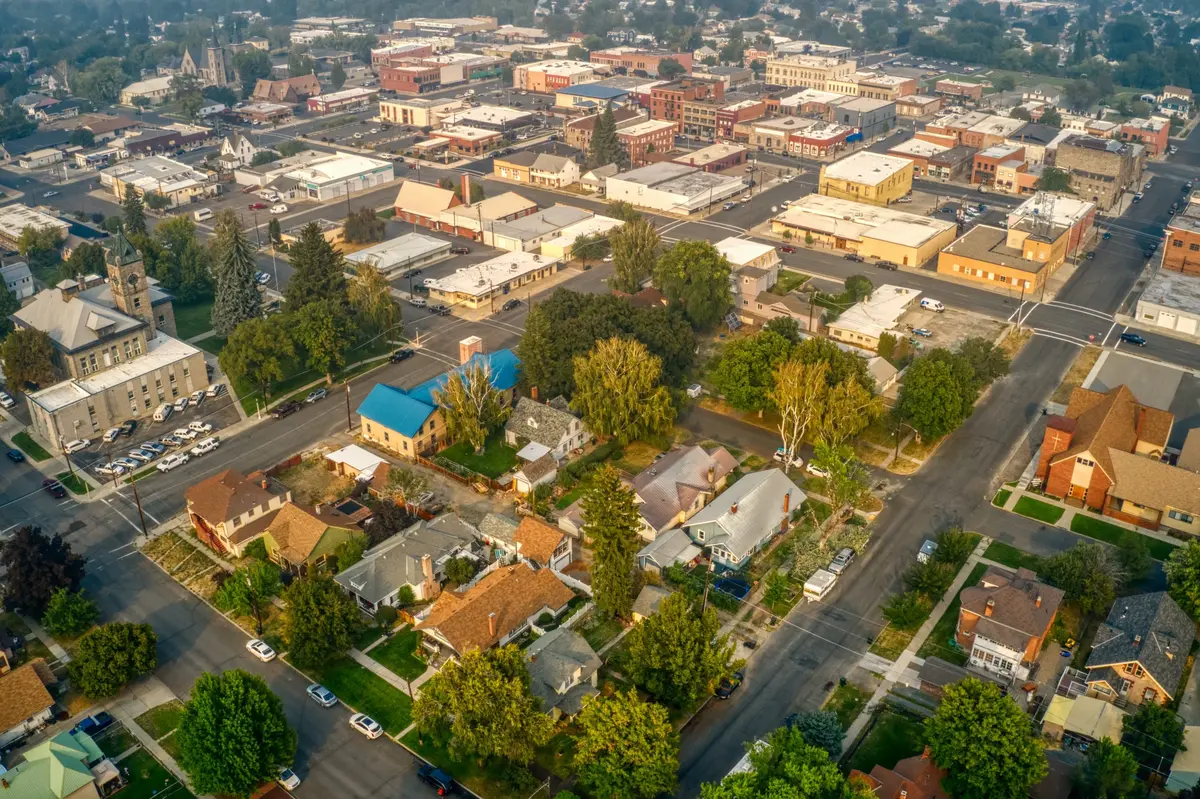
What Baker City offers in return for those income constraints is cost of living that runs well below Oregon's western metros across nearly every category, and a downtown historic district with over 100 buildings on the National Register of Historic Places — Late Victorian commercial architecture that would be gentrified beyond recognition anywhere in the Willamette Valley. Single-family detached homes make up nearly three-quarters of the city's housing stock, which means the classic homeownership picture — yard, garage, a street where kids ride bikes — is genuinely achievable here at price points that have largely vanished from the rest of Oregon. The effective property tax rate sits at approximately 0.78%, which adds meaningful budget headroom compared with higher-tax markets.
Whether you're making your first offer or still figuring out whether Baker City is the right fit, the sections below break down what the market actually looks like for first-timers, how the buying process works here step by step, how to model your budget before you tour a single house, and the specific mistakes that trip up buyers who are new to this market.

The Baker City First-Time Buyer Reality
The typical Baker City home sits at $268,574 (Zillow Home Value Index, July 2026), and that number carries real meaning: it is a market where a first-time buyer with a conventional income can get into a house, not just an entry-level condo. Compared with La Grande, prices run somewhat lower here; compared with Ontario, noticeably lower. That gap is the reason relocators from the Willamette Valley or from out of state keep landing in Baker City searches — see the cost of living page for the full breakdown.
The honest counterweight is the income picture. The median household income of $61,580 is below what's needed to carry the typical home here — a gap of roughly $12,000 annually. That doesn't make homeownership impossible, but it does mean most first-time buyers in Baker City need to be deliberate about their price ceiling, their loan type, and how much of their savings they're actually prepared to commit at closing.
Entry-level options do exist below the city-wide typical. The Central Neighborhood is generally where buyers find the most accessible price points, with older single-family stock on modest lots. Sunridge Estates offers newer construction on the outskirts of the city. The Riverfront District and Grandview pull strong interest from relocators, which means competition in those areas can be real — something to factor in if you're shopping with a tight pre-approval ceiling. For a closer read on how neighborhoods compare in character and who each suits, the neighborhoods page covers the full map.
One buyer-specific detail worth knowing before you even open a listing: properties outside Baker City's municipal boundaries in Baker County may qualify for USDA Rural Development financing, which requires no down payment for eligible buyers. Properties inside city limits generally do not. If you're open to a location slightly outside the city proper — say, in a surrounding unincorporated community — run the address through the USDA's official eligibility map before you fall in love with a house. USDA income limits for Baker County sit at $90,300 for households of up to four people and $119,200 for five to eight, so many first-time buyers here qualify on income even if the city-limits boundary cuts them out geographically.
The Homebuying Process in Baker City, Step by Step
Step 1: Get Pre-Approved Before You Tour Anything
Baker City is a small market. Listing agents know the active buyer pool, and sellers here are not inclined to wait for a buyer who's still figuring out their financing. A pre-approval letter is non-negotiable before your first showing — not a pre-qualification, which is a softer, less verified document. Your pre-approval should state a specific loan amount and come from a lender who has actually pulled your credit and reviewed your income documentation.
Public transit in Baker City is extremely limited. You will be driving to every showing, every inspection, every closing. That's not a hardship — it's just the reality of touring in a small eastern Oregon city, and it's worth knowing before you plan a house-hunting weekend.
Step 2: Find a Local Agent and Start Touring
Baker City's inventory is small enough that a local agent who knows the active listings — and the ones about to come to market — is worth more than trying to navigate this yourself through an app. The historic district in particular has homes that require a knowledgeable eye: properties near the Baker Heritage Museum and the St. Francis de Sales Cathedral may sit in or near historic overlay zones, which can affect what renovations are permissible. Ask your agent directly about historic designation before you make an offer on anything with original Victorian-era detailing.
If you're looking at anything in the Riverfront District or along the Leo Adler Memorial Parkway near the Powder River, confirm the property's FEMA flood zone status before you tour, not after. Flood zone designation affects insurance costs and your lender's requirements, and it's better to know early than to absorb a surprise at underwriting.
Step 3: Making an Offer
Baker City is not a market where everything moves instantly, but well-priced homes in desirable neighborhoods don't sit either. Your offer should include an inspection contingency — this is the one contingency first-timers most often consider waiving to look more competitive, and in Baker City, where a meaningful portion of the housing stock is older, that is almost always the wrong call. The city has homes with real bones and real history, and a thorough inspection protects you from inheriting someone else's deferred maintenance.
Step 4: Inspection, Appraisal, and Underwriting
After an accepted offer, your lender will order an appraisal — typically required before your loan funds. In a market with older housing stock and occasional quirks of valuation, an appraisal that comes in below purchase price is a real possibility. Know in advance whether you can cover an appraisal gap out of pocket, or whether you'll need to negotiate the price down.
The inspection and the appraisal are separate events with separate purposes. The inspection tells you the condition of the home. The appraisal tells your lender what the home is worth as collateral. Both matter, and neither replaces the other.
Step 5: Closing
Oregon closings are handled by escrow and title companies — you won't typically sit across from the seller at a table. Budget for closing costs on top of your down payment; the budget table below gives you working estimates. Closing in Baker City generally follows the same 30-to-45-day timeline as the rest of Oregon once you're under contract, assuming clean title and no underwriting complications.
How Much Home Can You Afford in Baker City
The table below gives you a working framework for what different down payment scenarios actually require in cash at closing. Closing costs are estimated — they vary by lender, loan type, and the specific transaction, so treat these as planning figures, not guarantees. An FHA loan requires a minimum 3.5% down and carries mortgage insurance; a conventional loan at 3% down typically requires private mortgage insurance until you reach 20% equity. The interactive mortgage calculator below this section lets you adjust purchase price, down payment, and rate to model your actual monthly payment.
| Scenario | Purchase Price | Down Payment | Est. Closing Costs | Est. Cash Needed at Table |
|---|---|---|---|---|
| FHA (3.5% down) — entry level | $175,000 | $6,125 (3.5%) | ~$3,500–$5,250 | ~$9,625–$11,375 |
| FHA (3.5% down) — city median | $268,574 | $9,400 (3.5%) | ~$5,370–$8,060 | ~$14,770–$17,460 |
| Conventional (3% down) — entry level | $175,000 | $5,250 (3%) | ~$3,500–$5,250 | ~$8,750–$10,500 |
| Conventional (3% down) — city median | $268,574 | $8,057 (3%) | ~$5,370–$8,060 | ~$13,427–$16,117 |
| Conventional (10% down) — city median | $268,574 | $26,857 (10%) | ~$5,370–$8,060 | ~$32,227–$34,917 |
| Conventional (20% down) — city median | $268,574 | $53,715 (20%) | ~$5,370–$8,060 | ~$59,085–$61,775 |
A 20% down payment eliminates private mortgage insurance and meaningfully reduces your monthly obligation — but it requires cash that most first-timers in Baker City are still building. The 3% and 3.5% scenarios are where most buyers in this price range start.
One planning note specific to Baker City: Oregon has no state income tax on Social Security benefits and no sales tax, which frees up more of a household's monthly budget than buyers arriving from California or Washington often expect. That's not a substitute for a healthy down payment, but it is real money that doesn't appear in a mortgage calculator. The cost of living page walks through the full tax picture.
Looking to buy in Baker City? Estimate your payment.
Enter your numbers to see an estimated monthly mortgage payment.
Estimate only. Excludes HOA fees and mortgage insurance. The interest rate above is a starting point, not a quoted rate — replace it with your own to see real numbers. Insurance is a flat placeholder, not a Baker City quote.
Common First-Time Buyer Mistakes in Baker City
Waiving the Inspection on an Older Home
Nearly three-quarters of Baker City's housing stock is single-family detached, and a meaningful portion of it was built in an era when electrical panels, plumbing, and insulation standards were very different from today. The city's historic district alone contains over 100 buildings on the National Register of Historic Places. That architectural legacy is genuinely beautiful — and it comes with the possibility of knob-and-tube wiring, original cast-iron drains, or roof systems that have outlived two or three previous owners. Waiving your inspection contingency to look more competitive is the single most expensive mistake a first-time buyer can make in a market like this.
Shopping Before You Have a Real Pre-Approval
Touring homes before you have a lender's pre-approval letter in hand is how buyers fall in love with a house they can't actually close on. In Baker City's small market, this mistake has a second cost: word travels fast among listing agents, and a buyer who makes an offer without verified financing is taken less seriously in a multiple-offer situation. Get the letter first. Tour second.
Ignoring Flood Zone Status on Riverfront Properties
The Powder River bisects the city, and the Riverfront District and the stretch along the Leo Adler Memorial Parkway include properties that may carry FEMA flood zone designations. Flood insurance is not optional when a lender requires it, and the annual cost can be substantial enough to change whether a purchase pencils out at your budget. This is not a reason to avoid riverfront properties — it is a reason to pull the flood map data before you make an offer, not after you're already in contract.
Underestimating the Cash Needed at Closing
First-time buyers in Baker City often focus on the down payment and lose track of closing costs, which typically run between 2% and 3% of the purchase price. On a $268,574 home, that's an additional $5,370 to $8,060 on top of your down payment — and it's due at closing, not financed into the loan in most scenarios. Budget for both from the beginning, or you risk arriving at the closing table short. The budget table in the section above gives you working estimates for the most common scenarios.
Misreading the School Boundary Situation
Baker City is served by Baker School District 5J, and with a city of 10,135 people the district's footprint isn't sprawling — but school boundaries still matter if you have school-age children and a strong preference for a particular campus. Confirm which school a specific address feeds before you make an offer, not after. The schools page has the district overview and enrollment context.

Local Expert Takeaway: Baker City is one of the few places left in Oregon where a first-time buyer with a reasonable savings cushion can get into a real house — not a starter condo, not a mobile home on a leased lot — at a price that doesn't require a dual income or a family loan. The catch is honest: the local job market is modest, the income-to-price gap is real, and the older housing stock rewards buyers who invest in a thorough inspection rather than those who try to close as fast as possible. Get your pre-approval sorted before you tour anything, confirm flood zone status on any Riverfront District property before you make an offer, and check USDA eligibility if you're open to a location just outside city limits — the county-level income limits at $90,300 for a household of four cover most first-time buyers in this market.
Quick Takeaways & FAQs
✅ The typical Baker City home at $268,574 (July 2026) puts real single-family homeownership within reach at price points that have largely disappeared from western Oregon.
⚠️ The median household income is below the income needed to carry the typical home by roughly $12,000 — honest budget modeling matters more here than in higher-income markets.
📍 Properties just outside city limits in Baker County may qualify for USDA Rural Development financing with no down payment; verify eligibility address by address before shopping.
What credit score do I need to buy a home in Baker City, Oregon?
Are there USDA loans available for Baker City homes?
How long does it take to close on a house in Baker City?
What should I watch out for when buying an older home in Baker City's historic district?
What are typical closing costs for a home purchase in Baker City?
Moving to Oregon?
Tell us what you need help with and we'll connect you with local resources.
