
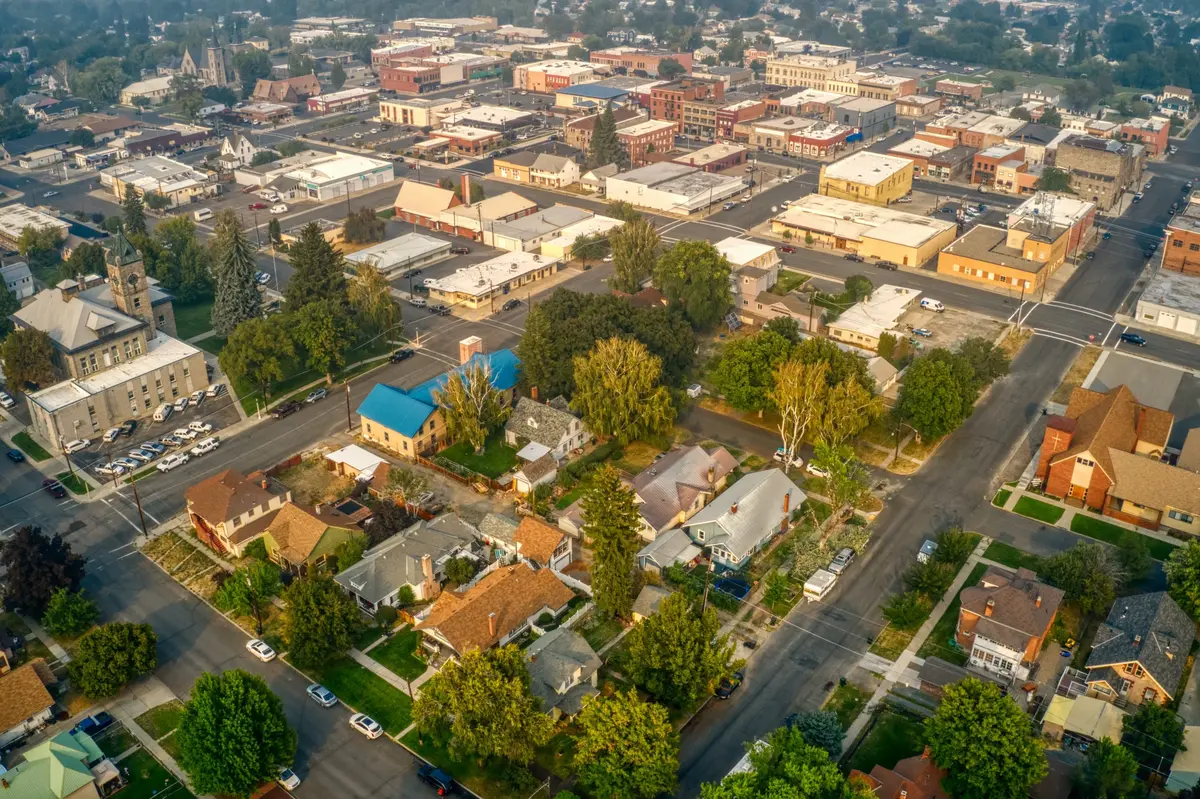
Most people researching Baker City come from somewhere more expensive — a Portland suburb, a California metro, maybe Boise — and they do a double-take at the home prices. The Zillow Home Value Index puts the typical home in Baker City at $268,574 as of July 2026. That figure is not a typo, and it is not a fixer-upper floor. It is a real number for a real small city with a working downtown anchored by the Geiser Grand Hotel, a historic main street, and a surrounding landscape — the Elkhorn Mountains, Hells Canyon — that costs nothing extra to live near.
What actually drives daily life and the local economy here is a cluster of public-sector employers: Baker School District, Baker County, the City of Baker City, the U.S. Forest Service, and a regional health system. These are stable, government-adjacent jobs with modest pay scales, which is part of why the median household income sits at $61,580 — enough to live comfortably in Baker City, though it falls somewhat short of the income needed to buy the typical home here at current rates. The population of 10,135 makes it a genuine small city: not a hamlet, not a suburb, but a self-contained community with its own school system, hospital, and civic infrastructure.
Housing is the primary driver of Baker City's affordability advantage over most of Oregon — the typical home price is dramatically below what buyers find anywhere west of the Cascades. Utilities and groceries also run below Willamette Valley norms. Transportation is the one line item that runs above average, because owning a car is not optional in rural Eastern Oregon, and distances add up fast. Oregon's income tax is among the higher rates in the country, which partially offsets what the sticker price on a house saves you.
Whether you are considering a move or still in the research phase, the sections below break down Baker City's housing market, rent landscape, everyday costs, how this city compares to nearby alternatives, and what the full tax picture looks like for a household landing here.

What It Really Costs to Live in Baker City
Baker City is cheaper than most of Oregon, and dramatically cheaper than the state's western population centers. Housing is the headline, but the advantage runs across most budget categories — groceries and utilities come in below Willamette Valley norms, and the property tax rate is low by any Oregon standard. That single combination is the reason most people end up here financially.
The Zillow Home Value Index puts the typical home at $268,574 as of July 2026, a figure that would represent a starter condo in many Pacific Northwest cities and instead buys a full house on a real lot here. What keeps costs in check is straightforward: Baker City is a small, economically modest Eastern Oregon city with limited population pressure, a local job market anchored in public-sector wages, and no tech or amenity boom pushing prices upward.
That same dynamic is honest about its limits. Specialty retail, dining diversity, and services you take for granted in a larger city require a drive or an online order. The compromise is one you make deliberately, not accidentally. Compared to La Grande — the most common reference point for buyers looking at this corridor — Baker City comes in somewhat lower on housing. For buyers coming from the Willamette Valley or beyond, the gap with Portland-area markets is substantial enough to change what kind of home you can own outright. For a fuller look at who Baker City tends to suit and what the lifestyle exchange looks like, the living in Baker City guide covers the broader picture.
Housing: Rent vs Buy in Baker City
Buying in Baker City puts you well below six figures in entry-level territory. Older single-family homes in more modest parts of the city start in the low-to-mid $100,000s for buyers willing to take on dated interiors or deferred maintenance. The city-wide typical figure — $268,574 (July 2026, Zillow Home Value Index) — reflects mid-range homes in solid condition, and genuinely updated or larger properties push above that without reaching the prices most Oregon buyers are accustomed to budgeting against. For specifics on which parts of the city skew toward which price tier, the best neighborhoods guide breaks that down.
The effective property tax rate in Baker City is approximately 0.78% — below both the national average and the Oregon average. On a home at the city-wide typical price, that rate produces a modest annual tax bill by most standards; the calculator below can run your specific scenario.
Renting is genuinely affordable here. A one-bedroom apartment averages around $543 per month as of May 2025, and a two-bedroom runs around $954 per month — figures that are not found in any other Oregon city of comparable services and infrastructure. The rental stock skews toward older housing, and purpose-built apartment communities are limited; most renters end up in single-family homes or duplexes. If you are newer to the area and want to test Baker City before committing, renting first is financially painless compared to almost every other Oregon market.
The honest tension for buyers: the median household income here falls somewhat short of what a lender typically looks for to carry the typical home price at current rates. That gap is not prohibitive — it is roughly $12,000 — but it means households at exactly the median income may be stretching. Dual-income households, buyers with equity from a previous sale, or anyone arriving with savings from a higher-cost market will find the math much more comfortable. For a full walkthrough of the purchase process and loan programs available in Baker County, the first-time homebuyer page covers options in detail.
Everyday Costs Beyond Housing in Baker City
| Category | Typical Monthly Cost | Notes |
|---|---|---|
| Utilities | $200–$290/mo | Electricity, gas, water, sewer, trash |
| Groceries | $500–$680/mo | Food at home, household of 2–3 |
| Transportation & Gas | $180–$300/mo | Fuel, and transit where it is a real option |
| Phone & Internet | $110–$180/mo | Mobile plan plus home broadband |
| Misc / Discretionary | $200–$400/mo | Dining out, entertainment, subscriptions |
Non-housing figures are estimates for a household of two to three, not a sourced index; housing is the city-wide typical rent. Refreshed with the rest of the city data.
Utilities in Baker City run below the national average — electricity here benefits from the hydropower infrastructure that serves much of Eastern Oregon, keeping residential rates noticeably lower than what households on the West Coast or in the Mountain West typically pay. That matters in Baker City specifically because the city sits at roughly 3,440 feet elevation, and heating loads from November through March are significant. The lower electricity cost softens the seasonal spike somewhat, though households heating with propane face a different calculus and should budget generously for it.
Groceries run slightly below national norms, but the local selection is limited to a handful of conventional grocery stores. Baker City does not have specialty food retail, and if your household depends on a natural foods co-op, an ethnic grocery, or a broad wine selection, you will be supplementing with occasional drives or delivery orders.
Transportation is the one category that runs above national norms, because a personal vehicle is not optional in this city. Community Connection of Northeast Oregon (CCNO) operates a fare-free local bus service in Baker City, and a connector route links Baker City to La Grande on weekdays. For most households, though, a car handles the majority of errands, and driving distances to anything outside the city add up to a real monthly fuel cost that west-side Oregon residents are not used to factoring in. Budget fuel, insurance, and maintenance as significant line items — this is the cost that surprises newcomers most reliably in their first six months here.
Looking to buy in Baker City? Estimate your payment.
Enter your numbers to see an estimated monthly mortgage payment.
Estimate only. Excludes HOA fees and mortgage insurance. The interest rate above is a starting point, not a quoted rate — replace it with your own to see real numbers. Insurance is a flat placeholder, not a Baker City quote.
Baker City vs Nearby Cities: Cost Comparison
| City | Typical Home Price | Typical Rent | Cost vs Baker City |
|---|---|---|---|
| Baker City (this city) | $268,574 | — | — |
| La Grande | $305,990 | $1,292/mo | 14% higher |
| Ontario | $312,219 | $950/mo | 16% higher |
| Haines | $240,000 | $850/mo | 11% lower |
Source — home prices: Zillow ZHVI, July 2026. Nearby-city figures are the same series, refreshed together.
Baker City holds a clear price advantage over most of the small cities buyers weigh it against along the I-84 corridor. La Grande, the nearest city of comparable scale, comes in somewhat higher on both home prices and rents — a meaningful difference given that La Grande is only about 40 miles away and the two cities draw from similar buyer pools. Pendleton and Ontario both sit noticeably higher on home prices. Burns, farther south and with a much thinner job market, comes in below Baker City, but buyers who price-shop Burns are usually making a different set of lifestyle tradeoffs. The Portland metro comparison is stark enough that buyers arriving with equity from the west side often find they can pay cash or carry a minimal mortgage here.
The engine's comparison table below shows the current figures side by side, sourced from the same underlying data as the rest of this guide and refreshed on the same cycle. Baker City's rental figures are among the lowest in Oregon for a city with full civic infrastructure — a hospital, a school district, and a functioning downtown — which is the combination that makes the numbers meaningful rather than just cheap-on-paper.
What the table does not show is the lifestyle delta. La Grande has Eastern Oregon University and a slightly broader commercial base. Ontario is closer to Boise for anyone who needs a real metro periodically. Pendleton has stronger rodeo and event culture. Baker City has the Geiser Grand, the Elkhorns, and one of the most intact small-city historic districts in the Pacific Northwest — and its prices reflect a market that has not yet drawn the second-home or remote-work premium that some of its neighbors have begun to see.
Taxes & the Bottom Line for Baker City
Oregon has no state or local sales tax — none. Groceries, vehicles, appliances, clothing, building materials: everything costs exactly the listed price at the register. For a household moving from California, Washington, or most other states, this is an immediate and tangible difference in how spending feels month to month, and it partially offsets other cost pressures.
State income tax is the counterweight. Oregon uses four progressive brackets for tax year 2025, starting at 4.75% and rising to a top marginal rate of 9.9% on taxable income above $125,000 for single filers. That top rate is among the higher marginal rates in the country, and it is not an abstract concern for dual-income households or remote workers earning Willamette Valley wages while living in Baker City. Most Baker City households at the local median income land in the middle brackets, where the effective rate is manageable — but buyers arriving with higher incomes should run the math before assuming Oregon is a low-tax state. It is not, on income.
The effective property tax rate of approximately 0.78% is genuinely low, and it is one of the more durable financial advantages of buying here. Combined with the home price range described earlier, the annual tax obligation stays modest even as a home appreciates.
Who the Baker City Budget Fits
Baker City fits buyers and renters who want a real house — not a condo, not a compromise — at a price that does not require a decade of savings to reach. It fits remote workers who can earn outside-market wages while keeping local expenses. It fits retirees arriving with equity from a more expensive market, for whom the home price and the low property tax rate combine well; the retiring in Baker City page covers that picture in more depth.
Who tends to find it a stretch: single-income households at or below the local median who need to buy into the market without an equity cushion from a previous home. The income-to-price gap is real, even if it is narrower than in most Oregon cities. And buyers who underestimate transportation costs — particularly those accustomed to living where a car is occasionally optional — often find that fuel, maintenance, and distance spending closes more of the affordability gap than the housing headline suggested.
On balance, Baker City is genuinely affordable by Oregon and national standards. The housing cost advantage is structural, not cyclical. The question is not whether it is cheap — it is — but whether the Eastern Oregon lifestyle, the distances, the winters, and the limits of a 10,135-person city fit how you actually want to live.

Local Expert Takeaway: Baker City's cost of living advantage is real and structural: the typical home price sits at $268,574 (July 2026), electricity runs well below national norms thanks to Eastern Oregon's hydropower infrastructure, and property taxes are low by any Oregon standard. The catch that first-timers miss is transportation — owning a reliable vehicle and driving meaningful distances is not optional here, and that line item climbs faster than most people from larger cities expect. The no-sales-tax benefit is genuine but Oregon's income tax brackets are steep at higher income levels, so remote workers earning outside-market salaries should model the full tax picture before assuming this is a low-tax move. For buyers arriving with equity from a pricier market, Baker City is one of the few places in Oregon where a real house on a real lot is still well within reach.
Quick Takeaways & FAQs
✅ The typical home price in Baker City is $268,574 (July 2026) — one of the lowest in Oregon for a city with its own hospital, school system, and full civic infrastructure.
⚠️ Transportation costs run above the national average because personal vehicle ownership is essential in rural Eastern Oregon, which partially offsets the housing and utilities savings.
📍 Oregon levies no sales tax, but its income tax tops out at 9.9% — remote workers earning high out-of-state salaries should model their Oregon income tax liability before relocating.
Is Baker City, Oregon an affordable place to live?
What is the average rent in Baker City, Oregon?
Does Oregon have a sales tax that affects the cost of living in Baker City?
How do property taxes in Baker City compare to the rest of Oregon?
Is there public transit in Baker City, or do you need a car?
Moving to Oregon?
Tell us what you need help with and we'll connect you with local resources.
