What Is Living in Burns, Oregon Like?
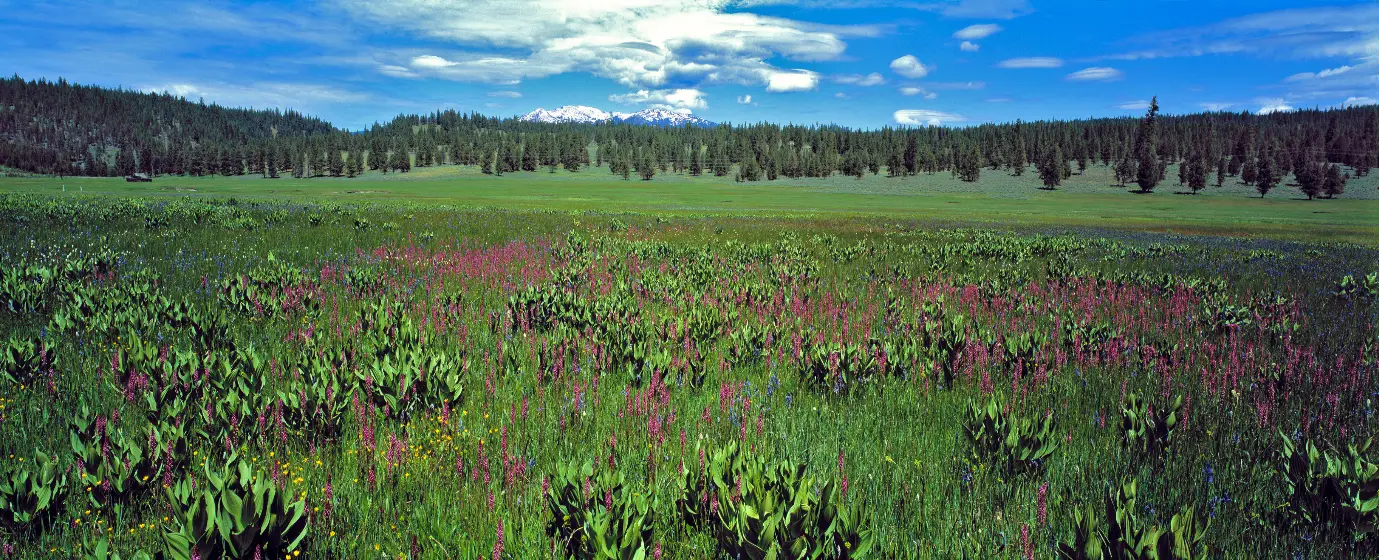
Burns is one of those places that stops people mid-sentence when they say where they're moving. It is the county seat of Harney County — Oregon's largest county by land area at roughly 10,226 square miles, a footprint bigger than Connecticut and Rhode Island combined — and it anchors a high desert basin at 4,118 feet with roughly 2,723 people and no major city within easy reach. US-20 and US-395 meet here, and that crossroads geography is not incidental: Burns exists because of those routes, and daily life still revolves around the rhythms of a true ranching and government town rather than a bedroom community for somewhere larger.
The economic backbone here is public service in the broadest sense. Harney County municipal government, the Burns Paiute Tribe, Harney County School District 3, and a major regional health system are the largest institutional employers. Federal and conservation agencies — the Bureau of Land Management, U.S. Forest Service, U.S. Fish & Wildlife Service, and Oregon Department of Fish & Wildlife — add a significant layer of rangeland managers, conservation scientists, and field crews who are drawn specifically to this landscape. Safeway anchors retail employment. Remote workers have increasingly found Burns workable now that fiber internet is available in the city, giving the town a modest but real new demographic of people who want the lifestyle without sacrificing connectivity.
The cost of living here is genuinely low. The typical home price sits at $191,972 (July 2026), a figure that would be unrecognizable to anyone shopping in Bend or Portland. Groceries and utilities run below what most Western Oregon residents pay, and housing costs are the most dramatic gap of all. The tradeoffs are real too: services are limited, the nearest major airport is Redmond Municipal Airport at roughly 130 miles, and a serious shopping trip or a specialist medical appointment means planning ahead. Burns offers 211 sunny days a year across wide-open high desert terrain, with cold winters averaging around 27°F in January and mild summers near 69°F, and annual precipitation of about 10 inches. For the right person, that calculus is a feature, not a bug.
Whether you are considering a move or just starting to research the area, the sections below break down Burns's neighborhoods, cost of living, schools, local favorites, and what daily life here is really like.
Burns at a Glance
Looking to buy in Burns? Estimate your payment.
Enter your numbers to see an estimated monthly mortgage payment.
Estimate only. Excludes HOA fees and mortgage insurance. The interest rate above is a starting point, not a quoted rate — replace it with your own to see real numbers. Insurance is a flat placeholder, not a Burns quote.
Why Are People Moving to Burns?
People do not stumble into moving to Burns. You come here because you have made a deliberate choice — about cost, about space, about a slower pace that the Willamette Valley and the Oregon coast have essentially priced out of reach. The most common profiles arriving in Burns are federal agency hires, remote workers who discovered fiber internet exists here, and people leaving expensive metros who want acreage and a real house at a price that does not require a second income.
The Affordability Case
The typical home price of $191,972 (July 2026) is the headline, but the full picture matters too. The effective property tax rate runs at approximately 0.97% — reasonable by Oregon standards — and groceries and utilities run noticeably below what most Willamette Valley households pay. For a buyer priced out of Central Oregon, that gap is not small. See the full cost-of-living breakdown for utility, grocery, and income context.
Who Actually Moves Here
The median age in Burns is 52.8 years, which tells you something honest about who already lives here and who keeps arriving. Retirees and near-retirees make up a large share of in-movers, drawn by low housing costs and quiet surroundings. Federal agency employees — particularly those taking postings with the BLM, Forest Service, or Fish & Wildlife — represent another reliable stream. And a smaller but growing cohort of remote workers has found that fiber-connected Burns lets them keep a tech-sector salary while living on a half-acre with room for horses.
The Honest Trade-off
Burns rewards self-sufficiency and punishes reliance on urban services. If your lifestyle depends on walkable restaurant variety, a gym with specialized classes, or convenient access to specialists, the adjustment will be steep. What you give up in convenience, you tend to get back in cost, space, and a community where people actually know each other.
The neighborhoods page covers the geographic character of Burns in more detail, including how the different parts of town feel day to day.
What Daily Life Feels Like in Burns
Six months in, nearly everyone says a version of the same thing: the quiet is more profound than they expected, and so is the sense of participation. In a town of 2,723 people, you run into the same faces at the farmers market, at a Library Concert Series at Arrowhead Plaza, and at the Harney County Fairgrounds. That is not a metaphor for community — it is the literal mechanism of it.
The Rhythm of the Week
Mornings in Burns move at a ranch-country pace. A handful of independent coffee options serve the early crowd before the workday begins. Errands happen on a single loop: Burns is compact enough that most things you need day-to-day are within a short drive, and most of them are along the main commercial corridors. The farmers market runs through the warm months and pulls together locally grown produce, farm-raised meats, handmade breads, and artisan goods — it functions as much as a social event as a shopping one.
Civic and Seasonal Life
The Harney County Fair & Rodeo, now more than a century old, is the community's signature event each September at the Harney County Fairgrounds. The 2025 edition was the 101st fair, featuring NPRA rodeo, parimutuel horse racing, and livestock shows. It also hosts Oregon's only Queen's Race, in which rodeo queens of all ages compete in a straightaway — a detail that signals exactly how distinct this community's traditions are. The Burns Lions Club, a summer concert series, and weekly arts gatherings fill out the civic calendar.
What Surprises People After Six Months
Newcomers consistently underestimate how much the Malheur National Wildlife Refuge becomes part of their routine. The refuge sits roughly 32 miles south of town, covers over 187,000 acres, and hosts more than 340 bird species along the Pacific Flyway. People who moved here for the affordable house find themselves driving out on a Tuesday afternoon just because the light is right. It recalibrates what "things to do on a weekend" means in a way that no one fully anticipates.
For outdoor recreation and parks within the city, the parks and recreation page goes deeper.
The Burns Housing Market Right Now
The Burns housing market operates on a scale that Western Oregon buyers find genuinely disorienting — in the best possible way. The typical home price sits at $191,972 (July 2026), which means you are looking at a real house, often with real land, at a price point that barely covers a down payment in Portland.
What the Inventory Looks Like
Housing stock in Burns skews older, with a mix of modest single-family homes, ranch-style properties, and a smaller number of larger parcels on the edges of town. New construction is limited. The market moves slowly relative to urban Oregon — well-priced homes attract attention, but this is not a market where buyers are routinely competing against a dozen offers. That gives buyers with financing in order some room to be deliberate.
Who the Market Suits
The price point makes Burns accessible to first-time buyers, retirees downsizing from more expensive markets, and remote workers who can bring their income with them. Some areas command prices noticeably above the city-wide figure, while entry-level options run below it — the neighborhoods page covers those character differences without price speculation. For buyers considering the broader cost picture, the cost-of-living page breaks down rent, taxes, and household income context in full.
One Thing to Know Before You Offer
Burns is a small market with limited comparable sales, which means appraisals can be complicated and lenders who are unfamiliar with rural Eastern Oregon may require more documentation than you'd expect. Work with a lender who has closed loans in Harney County before — that distinction matters more here than in a high-volume metro market. The first-time homebuyer page covers financing mechanics in detail.
Burns Neighborhoods
Burns has several distinct areas — each with its own character and appeal. Here’s a breakdown to help you narrow down where to focus your home search.
🏡 Downtown Burns
The commercial and civic core of the city, where the Harney County Courthouse and Harney County Historical Museum anchor a walkable main street with independent coffee shops and the town's primary dining options. Housing here tends to be older and compact, suiting buyers who want to be in the middle of what Burns offers.
🏠 North Burns
The northern part of the city sits adjacent to the Burns Paiute Indian Reservation and carries a quieter, more residential character than the downtown core. Single-family homes on established lots define the streetscape, and it suits buyers who want to be close to services without being on the main commercial strip.
🌳 South Burns
South Burns spreads toward the edge of the city and offers more space between properties, with a mix of older homes and larger lots that appeal to buyers who want room to spread out. The Harney County Fairgrounds anchor the south end of the city, making this area a natural gathering point each September.
🏘 Egan (South Egan area)
The South Egan area sits at the outer edges of the Burns footprint and has a rural-transitional feel, with properties that blend into the surrounding high desert landscape. It suits buyers comfortable with a little more distance from the downtown core in exchange for more space and a quieter setting.
Pros & Cons of Living in Burns
The Pros
- Very low cost of living and home prices compared to state and national averages
- Low property tax burden relative to national median
- Abundant outdoor recreation (wildlife refuges, high desert, hunting/fishing)
- Tight-knit small-town community feel
The Cons
- Very isolated location with long drives to larger cities and airports
- Limited job market and lower median household income than state average
- Below-average school district performance ratings
Getting Around & Commuting in Burns
Burns sits at the intersection of US-20, US-395, and OR-78 — three federal and state routes that make it a genuine crossroads for Eastern Oregon. That access sounds reassuring until you realize all three routes run through high desert with long stretches between services, and none of them connect you quickly to a major city.
The Geographic Reality
Burns is genuinely remote by Oregon standards. The drive to Bend takes about 130 minutes along US-20 — and that is on a clear day with no weather. That commute is not compatible with a daily schedule. Ontario to the east is a closer option for some services, and the route along US-20 is well-maintained, but it is still a significant drive. The nearest major airport is Redmond Municipal Airport at approximately 130 miles — plan on that being an overnight or a very early start.
Driving Within Burns
Inside the city, a car is essential for almost everything. The commercial core is compact, and some residents manage daily errands on foot or by bike in good weather, but the distances between neighborhoods and services make a vehicle the practical default. Most errands mean a drive, and residents plan their weekly loops accordingly.
Who This Commute Profile Suits
Burns works best for people whose job is here, in Harney County, or is fully remote. Federal agency employees posted to the BLM or Forest Service district offices work locally by design. Remote workers with fiber internet at home have no commute to negotiate. The profile that struggles most is someone trying to maintain a regular job in Bend or another city while living in Burns — the drive is too long to be a daily reality, and that is worth being honest about before making an offer.
What Locals Know
Winter driving on US-20 west toward the Cascades deserves real respect. The passes can close or become hazardous quickly, and conditions that look manageable on a weather app can deteriorate fast at elevation. Burns residents who travel regularly to Bend keep an eye on ODOT road conditions before committing to a trip between November and March.
Schools in Burns
Families relocating to Burns have public, private, and higher-education options nearby. Here’s a quick overview.
🎓 School District
Harney County School District 3 serves K–12 students across Burns and the surrounding area. Rated C- (source: Niche.com).
🏆 Graduation Rate
The 4-year high-school graduation rate here is approximately 76%.
📚 Higher Education
Oregon’s public universities — the University of Oregon, Oregon State University, and Portland State University — offer four-year degrees statewide, with a network of 17 community colleges providing two-year and workforce programs.
🌐 Online Learning
Oregon State University Ecampus and Portland State University Online offer fully accredited online degrees for remote learners across the state.
Safety in Burns
A quick look at how Burns compares on the numbers that matter most when weighing a neighborhood or a move.
🛡 Violent Crime
Approximately 1.9 per 1,000 residents.
🔒 Property Crime
Approximately 13.7 per 1,000 residents.
Compared to the most recent national figures from the Bureau of Justice Statistics (2024), Burns’s violent crime is below the national average (about 3.7 per 1,000), and property crime is below the national average (about 18.4 per 1,000).
Against Oregon as a whole, Burns’s violent crime is roughly half the state average, and property crime is roughly half the state average (Bureau of Justice Statistics, Crime Known to Law Enforcement, 2024 (tables 2 and 3)).
Crime rates can vary a lot within a single city, so the citywide numbers above are only a starting point. Some neighborhoods in Burns run well below these averages, while others run higher — the kind of block-by-block detail that matters most when you’re actually choosing where to live. The full guide below breaks it down neighborhood by neighborhood.
Working in Burns
Burns’s largest employers span several industries — here are some of the anchors of the local job market.
🏛 Harney County
Municipal government
🏛 Burns Paiute Tribe
Government
🎓 Harney County School District
Education
🏥 Harney District Hospital
Healthcare
🛒 Safeway
Retail
Retiring in Burns
Burns draws retirees for its balance of amenities, outdoor access, and cost. Here’s what to weigh.
🌤 Climate
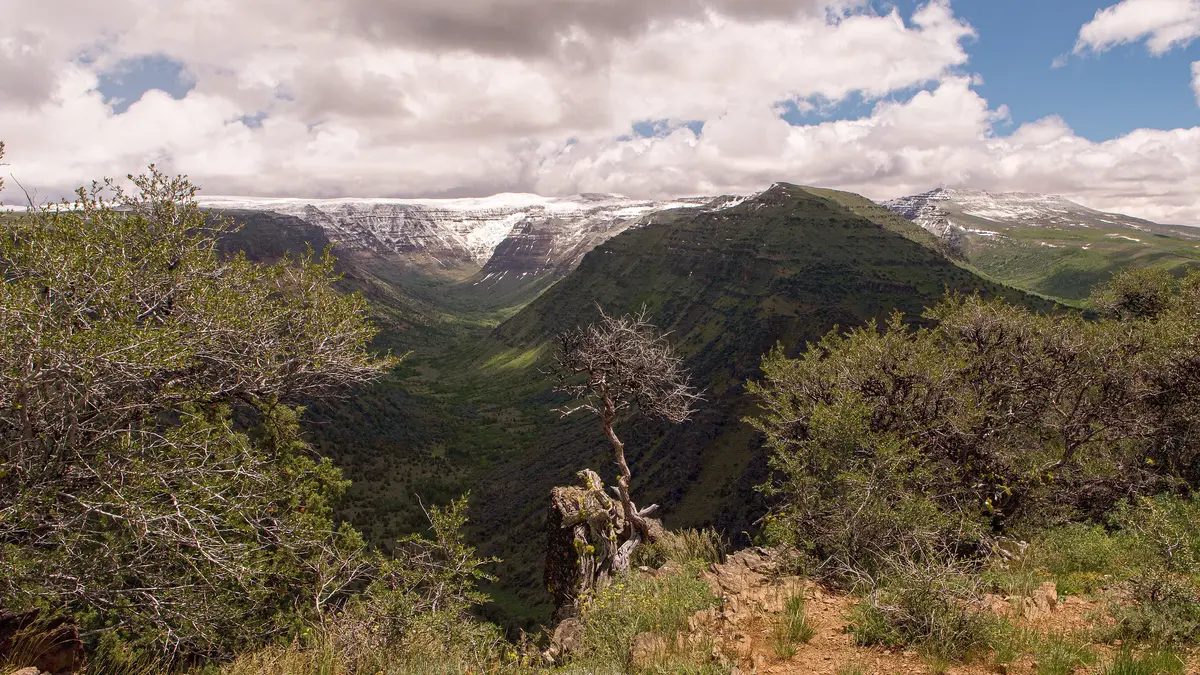
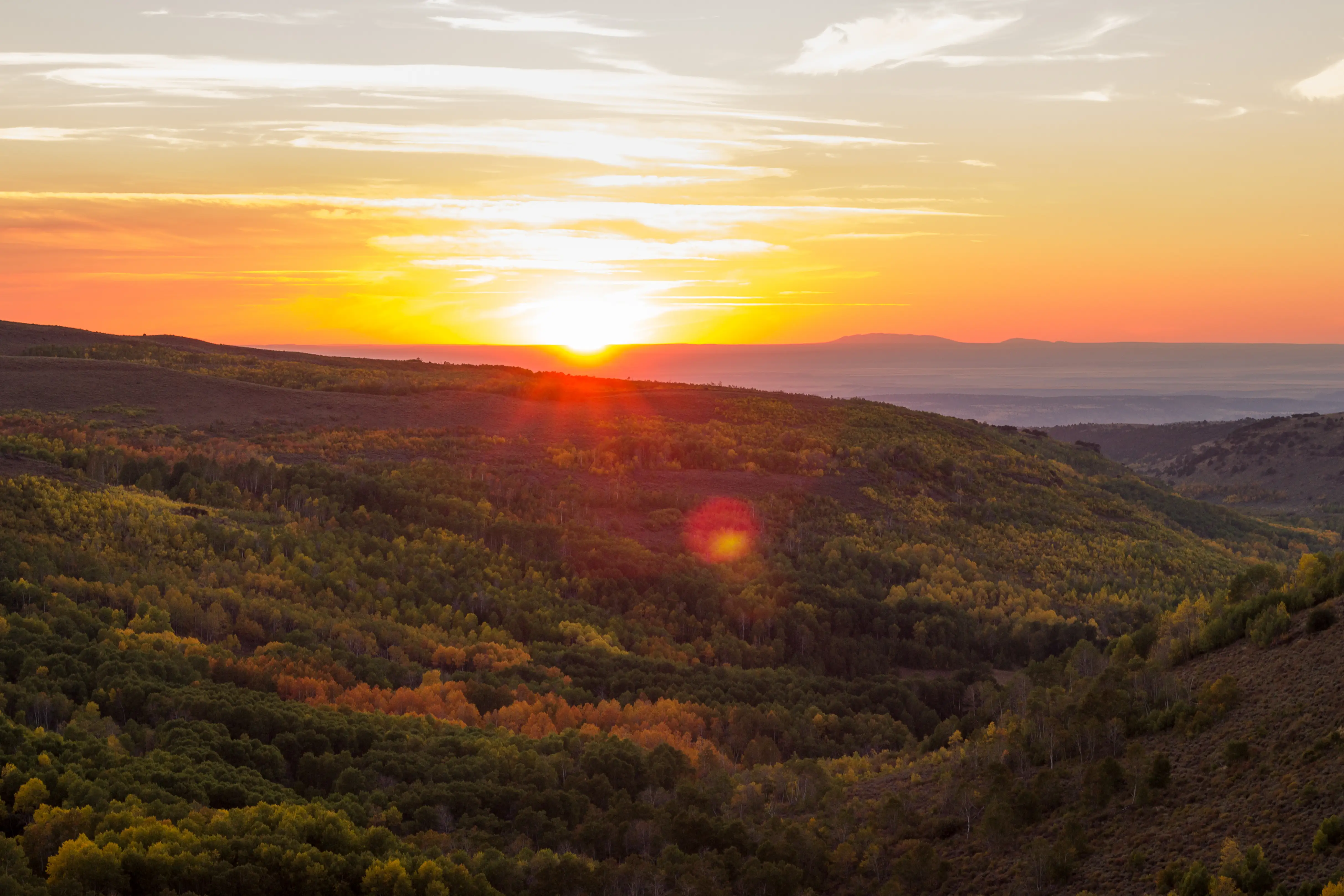
Burns sits at 4,118 feet in Oregon's high desert, which means four genuine seasons. Winters are cold — averaging around 27°F in January — with snow that sticks, and summers are mild and dry, averaging near 69°F in July. Annual precipitation runs about 10 inches, and the area averages 211 sunny days a year. Retirees who grew up in snowy climates often find the winters manageable; those expecting a mild Pacific Coast experience should adjust their expectations.
🍴 Lifestyle
Daily life in Burns is unhurried and community-scaled. The restaurant scene is small but consistent — The Pine Room, El Toreo, and Broadway Deli anchor the options — and a handful of independent coffee spots like Bella Java and Annie's Bakery serve the morning routine. The Malheur National Wildlife Refuge, the Harney County Fairgrounds, and a farmers market through the warm months provide the social and recreational anchors. For retirees who want quiet, space, and a genuine sense of knowing their neighbors, the lifestyle fits well.
🏚 55+ Communities
There are no dedicated 55+ or active-adult communities in Burns. Retirees here buy into the general residential market, which largely means single-level ranch-style homes and older single-family properties on real lots — often the most accessible option for buyers who don't want stairs. The low price point means budget goes further than in most Oregon retirement destinations. The retiring page has more detail on what that market looks like in practice.
✈ Getting Around
A personal vehicle is the only practical way to get around Burns and to travel regionally. The nearest major airport is Redmond Municipal Airport at approximately 130 miles, making air travel a planned event rather than a casual option. US-20 connects Burns westward toward Bend and the Cascades; US-395 runs north-south. Winter road conditions on US-20 over the passes deserve respect from November through March. For retirees comfortable with driving and experienced in rural living, the logistics are manageable — but they are real.
🏛 Oregon Taxes for Retirees — What to Know
- Social Security is not taxed — Oregon does not tax Social Security or Railroad Retirement benefits. Any amount included in your federal adjusted gross income is subtracted back out on the Oregon return.
- But other retirement income IS taxed — This is the trade-off that surprises people moving from Washington or Texas. Pension distributions and 401(k)/IRA withdrawals are taxed as ordinary income at Oregon’s regular rates — there is no blanket retirement-income exclusion.
- Graduated income tax — Oregon has four brackets — 4.75%, 6.75%, 8.75% and 9.9%. The 4.75% rate covers the first $10,000 of taxable income for a single filer ($20,000 filing jointly); the 8.75% rate starts at $125,000 ($250,000 jointly); and the top 9.9% rate applies above $250,000 ($500,000 jointly).
- No sales tax — Oregon levies no general sales tax.
- Property taxes, with senior deferral — Oregon’s Senior and Disabled Property Tax Deferral lets qualifying homeowners have the state pay their county property taxes, with a lien recorded against the home. The 2026 household income limit is $70,000, and deferred balances accrue 6% simple interest — it defers the bill rather than forgiving it.
- Estate tax — the one to plan for — Oregon has its own estate tax with a $1 million filing threshold — far below the federal exemption, and NOT indexed for inflation, so it reaches more estates every year in real terms. Retirement accounts and a long-held home count toward the taxable estate, so estates that feel modest can cross the line without the owner expecting it.
- No inheritance tax — Oregon has no separate inheritance tax and no gift tax.
Tax laws change frequently and individual situations vary. This is general information, not tax advice — always consult a qualified Oregon tax professional or CPA for personalized retirement tax planning.
Weekends & Local Favorites in Burns
The honest social life of Burns is not centered on a restaurant row or a packed weekend calendar — it is built around the landscape, the fairgrounds, the farmers market, and a small core of genuinely good local spots that regulars cycle through in a comfortable rotation.
Where People Eat and Drink
The Pine Room is the kind of place that anchors a small town's social life — the spot where ranchers, federal employees, and newcomers end up at the same table. Glory Days Pizza handles the casual end of the week reliably. El Toreo Family Restaurant draws a steady local crowd, and Broadway Deli is a workday lunch fixture. Central Pastime Restaurant rounds out the sit-down options. None of these are destination dining in the Willamette Valley sense — they are good, consistent, local, and that is exactly what a town of 2,723 needs.
Coffee and Morning Spots
Bella Java on North Broadway is the closest thing Burns has to a civic gathering point — the Burns Lions Club meets there, and it pulls the morning crowd reliably. Jitters Revolution, Annie's Bakery, and Steens Mountain Coffee Co. fill out the coffee landscape and each have their regulars. People find their spot and return to it; that is how small-town coffee culture works.
The Outdoor Draw
Malheur National Wildlife Refuge is the reason a lot of people discover Burns in the first place and, for many, the reason they stay. The refuge covers over 187,000 acres, hosts more than 340 bird species along the Pacific Flyway, and offers an experience that birders and naturalists travel significant distances to access. For residents, it is simply out the back door. The Harney County Fairgrounds host the annual fair and rodeo each September, the region's biggest community gathering, and functions as an events anchor through the rest of the year as well.
The Seasonal Quirk Newcomers Don't Expect
Spring migration at Malheur draws birders from across the country in numbers that genuinely surprise new Burns residents. Suddenly the motels are full, the coffee shops have lines, and the town has an energy it doesn't carry at other times of year. If you move here without knowing about the spring birding season, your first April will be a revelation.
Local favorites in Burns
Restaurants
- The Pine Room
- Glory Days Pizza
- Central Pastime Restaurant
- El Toreo Family Restaurant
- Broadway Deli
Outdoors
- Malheur National Wildlife Refuge
- Harney County Fairgrounds
Coffee
- Bella Java
- Jitters Revolution
- Annie's Bakery
- Steens Mountain Coffee Co.
Top Things Locals Say About Burns
The best intel about a city comes from the people who actually live there. Here’s what Burns residents say when newcomers ask the questions everyone’s thinking.
“I knew it was rural, but I didn't realize how much I'd actually love the quiet until I'd been here about three months. The surprise wasn't the isolation — it was how quickly you stop noticing it, because your whole social life starts happening within a few blocks and a few familiar faces.”
— Recent Burns home buyer
“What's the most surprising thing about living in Burns?”
Most people expect the remoteness to feel limiting. What actually surprises them is how much the Malheur National Wildlife Refuge becomes part of ordinary life — not a destination you plan around, but a place you drive to on a Wednesday afternoon because you have an hour free. It resets what recreation means. Also: spring migration brings birders from all over the country, and your first April here genuinely catches you off guard.
“What do locals love most about Burns?”
The combination of real affordability and real space. You get a house — often with a yard or acreage — at a price that stopped making sense anywhere west of the Cascades a decade ago. And the community is small enough that you actually know people. The Harney County Fair each September, the farmers market through the warm months, the concerts at Arrowhead Plaza — these aren't supplemental; they are the social calendar.
“What should newcomers to Burns know?”
Take winter driving on US-20 seriously. The route west toward the Cascades can turn hazardous quickly, and conditions that look manageable from inside town can be genuinely dangerous once you're at elevation. Check ODOT conditions before committing to a trip to Bend between November and March. Beyond that: bring patience for the pace, embrace the limited dining options as a reason to cook more, and don't underestimate how much a small town rewards showing up — to the market, to civic meetings, to the fair.
“How much do you need a car in Burns?”
A car is essential. Burns is compact, and some residents manage local errands on foot or by bike in good weather, but the distances between neighborhoods and services make driving the practical default for almost everything. Any trip beyond daily basics — a major shopping run, a specialist appointment, the airport — means significant road time on US-20, US-395, or OR-78. Plan your errands in batches and keep your vehicle maintained; this is not a place where a breakdown is a minor inconvenience.
Cities Near Burns
Other communities near Burns worth a look — each with its own character and price point.
| City | Distance | Best For | Vibe | Median Rent | Median Buy |
|---|---|---|---|---|---|
| Hines | 2 mi | buyers wanting slightly more amenities nearby | adjacent, quiet, residential feel | $850 | $224,000 |
| Crane | 25 mi | ranchers and rural acreage buyers | agricultural, sparse, deeply rural | $800 | $190,000 |
| Riley | 20 mi | buyers seeking true rural isolation | small, remote, ranching community | $750 | $175,000 |
More Helpful Guides for Burns
Going deeper on Burns? Our blog series covers everything from first-time buying to retiring here — explore the guides below.
Local Expert Takeaway: Burns is not a town you settle for — it is a town you choose, deliberately. The typical home price of $191,972 (July 2026) buys something real here: a house, often with land, in a county so large it dwarfs some states. The Malheur National Wildlife Refuge is a world-class outdoor resource that sits 32 miles from your front door. Bella Java on North Broadway and the farmers market are where the social life actually happens. The commute to anywhere urban is long and needs to be respected, winter driving on US-20 toward the Cascades demands real preparation, and services are limited enough that self-sufficiency is a prerequisite. For remote workers, retirees, federal agency employees, and people who want the kind of quiet that Western Oregon no longer offers at this price, Burns delivers exactly what it promises.
Quick Takeaways & FAQs
✅ The typical home price of $191,972 (July 2026) puts Burns among the most affordable owner-occupied markets in the Pacific Northwest — real houses at prices that are disappearing everywhere west of the Cascades.
⚠️ The drive to Bend is about 130 minutes with no nearby urban fallback — Burns works for people whose job or income is already here, not for those planning a daily or even weekly commute to a larger city.
📍 Burns sits at the center of Harney County, the largest county by area in Oregon at roughly 10,226 square miles — larger than Connecticut and Rhode Island combined — which means the outdoor scale on your doorstep is genuinely without peer in the state.
How affordable is housing in Burns, Oregon compared to the rest of Oregon?
What are the schools like in Burns, Oregon?
Is Burns, Oregon a safe place to live?
What jobs are available in Burns, Oregon?
How far is Burns, Oregon from Bend and other major cities?
Helpful Links for Moving to Burns
Moving to Oregon?
Tell us what you need help with and we'll connect you with local resources.
