
You've probably looked at Bend, maybe Ashland, maybe the Oregon coast — and then someone mentioned Burns and the numbers stopped you cold. A typical home priced at $191,972 (July 2026), groceries and utilities that run noticeably below what most Willamette Valley residents pay, and a town where roughly a third of the county's residents are already aged 60 or older. Burns isn't a compromise you settle for; it's a deliberate choice made by people who want the high desert, real quiet, and a dollar that stretches further than it does anywhere west of the Cascades. It sits at the junction of US-20 and US-395 in the middle of Harney County — the largest county in Oregon by land area — with Redmond Municipal Airport about 130 miles away as the closest commercial flight option.
The economic backbone is small and honest: Harney County government, the Burns Paiute Tribe, Harney County School District, Harney District Hospital, and Safeway anchor the local employment picture. That same hospital is the only one inside city limits and the provider retirees depend on most. The community skews older — a population of 2,723 with one of the highest senior-population shares in rural Oregon — which means the infrastructure, the pace, and the social fabric all tilt toward people who've left the career sprint behind. The Harney County Bird Festival each spring pulls visitors from across the country, and the Malheur National Wildlife Refuge sits about 32 miles south: 187,000 acres of wetlands, meadows, and migratory bird habitat that gives serious outdoor hobbyists a reason to come back every season.
Oregon exempts Social Security from state income tax entirely and levies no statewide sales tax — two facts that land differently when you're on a fixed income. The full cost-of-living breakdown covers groceries, utilities, and what those figures mean month to month. What they add up to on the ground is a place where a modest retirement income actually supports a house, a yard, and room to breathe — something that's increasingly rare in Oregon's more popular corners.
Whether you're seriously weighing a move or still comparing options, the sections below cover the real healthcare picture, how Burns taxes retirees, what daily life looks like on foot or behind the wheel, downsizing options, and an honest side-by-side with the towns nearby.
Why Retirees Are Choosing Burns
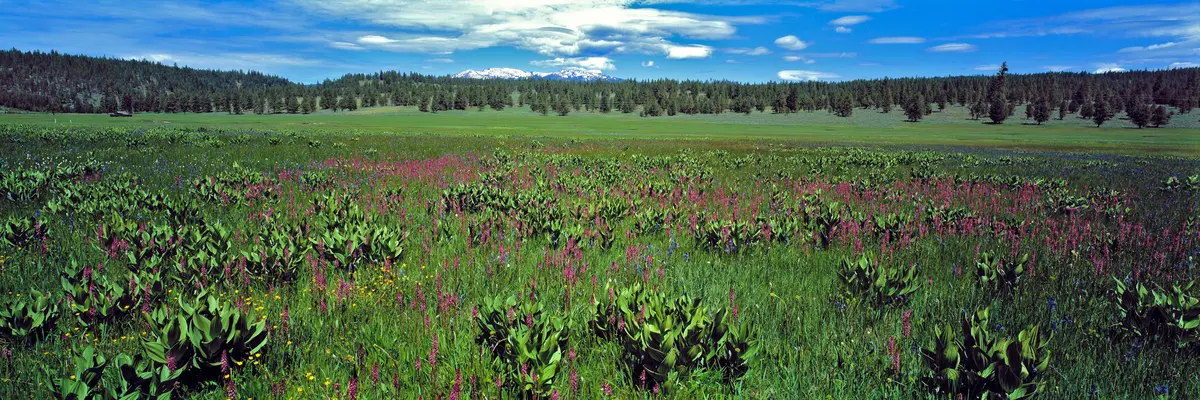
The retirees who land in Burns and stay tend to share a few traits: they wanted out of the urban sprawl, they're comfortable driving for anything they can't find locally, and they genuinely want the high desert rather than just tolerating it. At a typical home price of $191,972 (July 2026), a paid-off home from a higher-cost market can fund a significant chunk of retirement here without a mortgage at all. That's a real reason people come, and it's why the math often looks better on paper than Bend, Redmond, or anywhere on the Oregon coast.
The honest flip side: Burns is remote in a way that is meaningful, not picturesque. Advanced medical care, specialist appointments, and larger retail shopping all require a drive. If a health condition demands frequent specialist visits, that distance becomes a recurring burden rather than an occasional inconvenience. Retirees who've spent decades in a walkable suburb and expect that kind of daily on-foot access will find Burns a significant adjustment — most errands require a car and the commercial corridor is compact.
Burns fits best for retirees who are reasonably healthy and mobile, who want lower housing costs, who find meaning in the outdoors and the birding community, and who can honestly say they prefer the quiet of eastern Oregon over the amenities of a larger city. It is not the right fit for someone who leans heavily on cultural institutions, dense dining options, or reliable transit. The compromise is clear and worth naming before you make an offer.
Healthcare & Medical Access in Burns
Harney District Hospital is the anchor of healthcare in Burns — a federally designated Critical Access facility inside city limits, operating with 24/7 emergency and surgical services, medical-surgical inpatient care, and rehabilitation. It serves a population spread across roughly 10,000 square miles of Harney County. For a rural frontier hospital, that scope is real, and the facility's designation as a Critical Access provider reflects the federal recognition that this community has no easy alternative nearby.
The honest picture on specialist care: Harney District Hospital runs a visiting-specialist schedule through partnerships with providers in Central Oregon, which means you may be able to see a specialist locally on a rotating basis rather than driving every time. But the depth of that rotating schedule varies, and complex or ongoing specialty care — cardiology, oncology, neurology — typically means traveling to a larger regional medical center. Redmond Municipal Airport is about 130 miles away, which makes reaching Bend or the Willamette Valley medical centers a significant half-day commitment.
For retirees in good general health who need primary care, urgent care, and the occasional procedure, Harney District Hospital is a capable and community-rooted provider. For anyone managing a serious chronic condition that requires frequent specialist intervention, that distance-to-advanced-care reality is the single most important factor to weigh honestly before committing to Burns. It's not a dealbreaker for everyone — but it's the question every retiree here has to answer for themselves.
What Locals Learn Quickly
Many longtime Burns residents build a relationship with both the local hospital and a specialist in Bend, scheduling preventive appointments and annual check-ins during the same trip. Planning care around the drive — rather than reacting to it — is the practical adaptation that makes the distance manageable for most people here.
The Retiree Budget in Burns
Oregon's tax posture for retirees has genuine bright spots and at least one recent change worth knowing. Social Security and Railroad Retirement benefits are fully exempt from Oregon state income tax — a meaningful advantage for retirees whose income leans heavily on those sources. Oregon also allows a subtraction against federal taxes, capped at roughly $8,500 for the 2025 tax year, which is an unusual feature among states. The downside: pensions, 401(k) distributions, and IRA withdrawals are taxed at Oregon's regular graduated rates, which run from 4.75% to 9.9%, so retirees drawing primarily from pre-tax retirement accounts will feel that bite.
One specific change to factor in if you're moving to Oregon: the Retirement Income Credit — a 9% credit on eligible pension income for lower-income seniors — sunset after tax year 2025 and cannot be claimed for 2026 or later returns. If your retirement planning assumed that credit, revisit those projections with an Oregon-licensed tax advisor before you finalize the move.
Oregon levies no statewide sales tax, which quietly reduces the daily cost of groceries, medications, and household goods in a way that adds up on a fixed income. The effective property tax rate in Burns is approximately 0.97% — among the lower end of Oregon county rates — and homeowners aged 62 or older with household income under $60,000 may qualify for Oregon's Senior Property Tax Deferral program, under which the state pays county property taxes directly and records a lien repaid at 6% simple interest on sale or death. That program can meaningfully protect cash flow for retirees on tight budgets. The cost-of-living breakdown on the Burns cost of living page goes deeper on utilities and daily expenses. The engine's calculator below this section can model what ownership costs look like at current rates.
Looking to buy in Burns? Estimate your payment.
Enter your numbers to see an estimated monthly mortgage payment.
Estimate only. Excludes HOA fees and mortgage insurance. The interest rate above is a starting point, not a quoted rate — replace it with your own to see real numbers. Insurance is a flat placeholder, not a Burns quote.
Walkability, Community & Staying Active in Burns
Burns is a driving town. The commercial core along Broadway Avenue is compact enough that errands within a few blocks of downtown are manageable on foot when the weather cooperates, but the flat high-desert terrain means the bigger challenge isn't hills — it's distance between destinations and the lack of sidewalk continuity in residential areas. Most retirees here own a car and plan their day around it. If you're in a part of town without reliable personal transportation, daily life becomes genuinely difficult.
The community infrastructure for older residents is more developed than the town's size might suggest. The Harney Hub — the operating name for the Harney County Senior and Community Services Center — provides cooked, on-site meals served fresh, public transportation, energy assistance, and a range of support services for seniors, veterans, and low-income residents. The Hub coordinates with a tribal transit program, sharing stops throughout Burns, Hines, and the Burns Paiute Tribe reservation. For retirees who eventually reduce their driving, that connection matters.
The social fabric leans heavily on the outdoors. The Malheur National Wildlife Refuge, about 32 miles south, is a serious draw year-round for birders — over 340 species use the refuge, and the Pacific Flyway migration draws national and international visitors each spring. The annual Harney County Bird Festival transforms Burns for a week, bringing guided field trips, art shows, author talks, and identification workshops that retirees with a birding interest find genuinely enriching, not just touristy.
Roughly 33% of Harney County's population is aged 60 or older — one of the highest senior shares in rural Oregon. That demographic reality shapes the social scene in Burns more than any single amenity. Neighbors in Burns tend to know each other. Community events at the Harney County Fairgrounds, the Harney County Historical Museum, and local gathering spots fill the calendar at a pace that suits people who aren't looking to be overwhelmed. Volunteering, service clubs, and church communities are active and genuinely welcoming to newcomers.
Right-Sizing: Downsizing in Burns
The housing stock in Burns skews older and single-story — which is actually an advantage for retirees focused on single-level living. Ranch-style homes from the mid-20th century make up a significant share of the inventory, and at the typical home price of $191,972 (July 2026), entry into that market doesn't require a heavy mortgage for buyers arriving with equity from a higher-priced city. Many retirees who've sold in the Willamette Valley or the coast arrive in Burns with enough to buy outright, or close to it.
Patio homes and condominiums are limited. Burns is not a condo market in any meaningful sense, and buyers looking for a lock-and-leave property with HOA maintenance will find the options thin. The practical reality for most downsizers is a single-family home — smaller footprint, one level, manageable lot — rather than the kind of purpose-built maintenance-free housing that exists in larger retirement destinations.
No 55+ communities were found in Burns. Retirees seeking that kind of curated environment — common amenities, age-peer neighbors, structured activities within a gated or planned development — will need to look at larger markets like Bend or the Willamette Valley. What Burns offers instead is a genuinely affordable, genuinely quiet single-family home in a community where older residents are the norm rather than a demographic niche. For retirees who don't need the 55+ wrapper, that can be a better outcome.
For anyone considering the neighborhood breakdown in Burns, North and South Burns both have established single-story residential stock, while Downtown Burns offers the tightest proximity to the Harney Hub, the hospital, and daily errands.
Burns vs Nearby Retirement Destinations
| City | Cost vs Burns | Primary Hospital | Walkability | Senior Living Depth | Overall Retirement Fit |
|---|---|---|---|---|---|
| Burns, OR | Anchor | Harney District Hospital (in city) | Limited; flat terrain, car-dependent | Harney Hub; no 55+ communities | Strong for low-cost, outdoors-focused retirees |
| Hines, OR | Noticeably higher | Harney District Hospital (adjacent) | Similar; small residential community | Shares Burns services | Quieter feel, same healthcare access, higher cost |
| Crane, OR | About the same | Dependent on Burns/Harney District | Very limited; truly rural | Minimal local services | Best for deeply rural buyers; limited services |
| Riley, OR | Somewhat lower | Dependent on Burns/Harney District | Minimal; unincorporated area | No local senior services | Entry-level rural; requires full self-sufficiency |
| Bend, OR | Substantially pricier | Multiple regional hospitals and specialty centers | Genuinely walkable in core areas | Multiple 55+ communities; full senior services | Best for retirees prioritizing healthcare depth and amenities |
| Ontario, OR | Moderately cheaper | Regional medical center; closer to Boise specialists | Limited; car-dependent | Some senior housing options | Better healthcare access than Burns; less scenic draw |
The clearest winner on healthcare depth and amenities is Bend — but retirees already know that, and the price gap is substantial. For anyone whose retirement income doesn't support Bend's market, Burns offers the same eastern Oregon character at a fraction of the cost.
Hines is effectively Burns with a slightly higher price tag and a quieter residential feel — it shares the same hospital, the same senior services through the Harney Hub, and the same geographic isolation. Crane and Riley are for buyers who genuinely want to leave the town behind entirely; services there are minimal and the distance to the hospital is a real factor.
Ontario is the practical alternative for retirees who need more reliable access to specialist care — its proximity to Boise's medical infrastructure is a meaningful advantage — but it lacks the birding culture, the high-desert scenery, and the tight community feel that draw people to Burns specifically. The honest answer is that Burns suits retirees who have made their peace with distance, who are drawn to the landscape, and who want a small-town community where their presence is noticed and their neighbors know their names.

Local Expert Takeaway: Burns works in retirement when you go in clear-eyed: the hospital is inside city limits and genuinely capable for primary and emergency care, but a serious specialist appointment means a real drive. The Harney Hub is the social and logistical anchor for older residents — meals, transportation, and services that matter. The Harney County Bird Festival each spring, the Malheur National Wildlife Refuge a short drive south, and a community where a third of residents are already over 60 make the daily texture of life here richer than the size of the town suggests. What you are trading for all of it is convenience, specialist depth, and the 55+ development options that larger markets offer.
Quick Takeaways & FAQs
✅ Oregon fully exempts Social Security from state income tax, and Burns's effective property tax rate of approximately 0.97% keeps ownership costs among the lower end of Oregon counties.
⚠️ Advanced specialist care requires driving — Redmond Municipal Airport is about 130 miles away, and complex medical needs will mean regular half-day trips out of the region.
📍 Roughly a third of Harney County residents are aged 60 or older, giving Burns one of the highest senior-population shares in rural Oregon — and a social fabric that reflects it.
Is Burns, Oregon a good place to retire?
Does Oregon tax Social Security benefits for retirees?
What is the closest hospital to Burns, Oregon?
Are there any 55+ communities or senior living options in Burns, Oregon?
Is there a property tax break for seniors in Oregon?
Moving to Oregon?
Tell us what you need help with and we'll connect you with local resources.
