What Is Living in Ashland, Oregon Like?
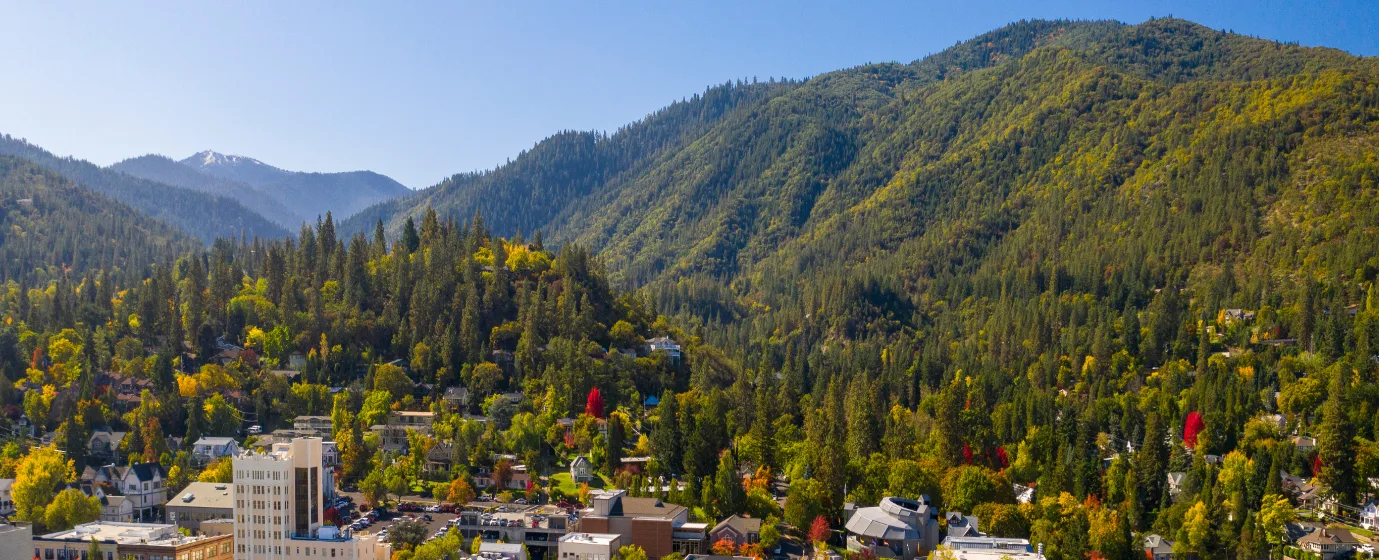
Maybe you've driven through Ashland on I-5 and thought it looked too small to take seriously. Or maybe you've heard people describe it as a Shakespeare town and assumed that meant tourist traps and nothing else. The reality is more complicated — and more compelling. Ashland sits at the southern end of the Rogue Valley in Jackson County, tucked against the Siskiyou Mountains with I-5 running along its eastern edge. What actually shapes daily life here is not one thing but three: a nationally recognized arts festival that fills the city from spring through fall, a university campus that keeps the culture younger and more restless than the median home price might suggest, and a small-city scale that means you genuinely know people at the farmers market.
Southern Oregon University anchors the economy and the social fabric — the 175-acre campus is part of the neighborhood in a way that a commuter school never would be. The Oregon Shakespeare Festival, founded in 1935 and among the oldest professional non-profit theatres in the country, is not just a tourist draw; it is the city's largest arts employer and the reason Ashland has the restaurant scene and the hotel infrastructure of a city twice its size. The Ashland School District holds a B rating, according to Niche, and with 2,454 students enrolled in 2025-26, it is a compact district where individual schools get real attention. Families relocating from larger metros are often surprised by how much program variety fits into a district that size.
The trade-off for all of this is cost. Ashland runs noticeably above neighboring Medford and Talent in home prices, and well above the Southern Oregon average — a reflection of the lifestyle premium that OSF tourism, SOU proximity, and Lithia Park create. The typical 2BR rents at $1,950–$2,370 per month, which strains budgets at the city's median household income of $68,028. On the other side of the ledger: 198 sunny days a year, a nearly 100-acre park at the center of downtown, a 20-mile greenway trail connecting you to the rest of the valley, and ski runs on Mount Ashland less than an hour from the plaza. For a city of 21,259, the amenity list is unusually long.
Whether you are considering a move or just starting your research, the sections below break down Ashland's neighborhoods, housing market, commute patterns, local employers, and what daily life here actually feels like once the novelty wears off.
Ashland at a Glance
Looking to buy in Ashland? Estimate your payment.
Enter your numbers to see an estimated monthly mortgage payment.
Estimate only. Excludes HOA fees and mortgage insurance. The interest rate above is a starting point, not a quoted rate — replace it with your own to see real numbers. Insurance is a flat placeholder, not a Ashland quote.
Why Are People Moving to Ashland?
People come to Ashland for the lifestyle and stay because the economics eventually make sense — or they leave because the economics never do. That is the honest version of the Ashland pitch.
The Cultural Pull
The Oregon Shakespeare Festival, running productions from early spring through late October across three theatres, draws audiences from across the region and well beyond. That tourism engine funds the restaurant and hospitality scene that full-time residents use every day. A city of 21,259 that can sustain multiple independent restaurants, coffee roasters, a craft brewery, and a tea house is doing so largely because OSF keeps the customer base artificially large for eight months of the year.
Southern Oregon University adds a second layer. With a walkable campus that puts students in the middle of the city rather than behind a perimeter fence, SOU brings in visiting artists, public lectures, and athletic events that residents can access without driving to Portland or Eugene. The university consistently ranks among the top public schools in the region by U.S. News, which matters when professors, researchers, and arts professionals choose where to buy.
Who Actually Moves Here
| Buyer Type | What Draws Them | Best For |
|---|---|---|
| Remote workers from California | Price relief vs. Bay Area, year-round sunshine, arts access | Views Nature |
| Arts and education professionals | OSF employment, SOU faculty roles, creative community | Walkable Transit |
| Families with school-age children | B-rated district, outdoor access, smaller-city feel | Families School |
| Retirees and 55+ buyers | Climate, walkable downtown, Mountain Meadows community | Quiet Views |
| First-time buyers priced out of Portland | Lower entry points than the metro, lifestyle value | First-Time Value |
| Outdoor-focused buyers | Mount Ashland skiing, Lithia Park, Bear Creek Greenway | Nature Privacy |
What connects most of these groups is that they are making a deliberate choice — nobody ends up in Ashland by accident.
The Honest Case Against
Service-industry wages dominate the private sector, with a significant share of private jobs in hospitality, food service, and retail. If you are not bringing remote income, a university salary, or a professional skill set, the math between Ashland wages and Ashland housing is genuinely difficult.
Wildfire risk is also a real factor that the lifestyle brochure skips. Ashland sits in fire-prone terrain, and insurance costs have been climbing as carriers reassess Southern Oregon exposure. Budget extra time on due diligence and get insurance quotes before you make an offer — not after. For more on how the school district breaks down, see the Ashland schools guide; for the full cost picture, see cost of living in Ashland.
What Daily Life Feels Like in Ashland
The first thing newcomers notice is scale. Downtown Ashland is genuinely compact — the Plaza, Lithia Park, the OSF theatres, and a full range of independent shops sit within a few blocks of each other. Running an errand on foot is not aspirational here; it is just what you do if you live near the center.
The Morning Routine
The coffee and breakfast scene benefits directly from the tourist economy. You will find independent cafés along the main commercial streets rather than the chain-dominant strips that define most Oregon cities at this population. The Rogue Valley Growers & Crafters Market runs through the warm months downtown and at a second location in the valley — and residents actually shop there, not just browse.
One thing that surprises people after six months: the festival crowd changes the rhythm of downtown more than expected. From April through October, the Plaza fills with visitors, restaurant waits get real, and parking near the theatres requires planning. Longtime residents simply time their errands around matinees. It is not a complaint, exactly — but it is a seasonal adjustment nobody fully anticipates until they live it.
The Outdoors as Infrastructure
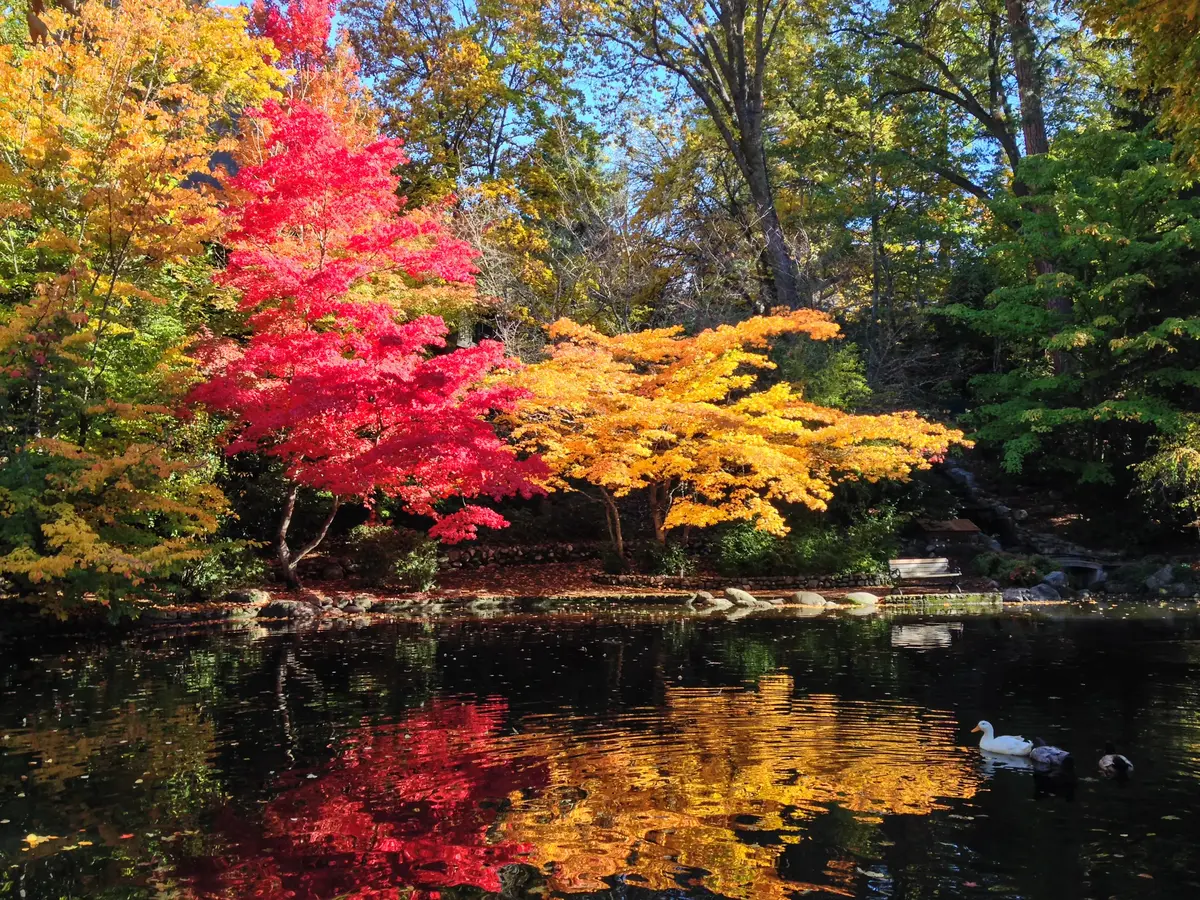
Lithia Park is nearly 100 acres of public green space designed by John McLaren — the same landscape architect behind San Francisco's Golden Gate Park — running along Ashland Creek from the downtown Plaza into the hills. It has a rose garden, a Japanese garden, a duck pond, tennis and pickleball courts, and trails that connect to longer routes above the city. For most residents it functions less like a destination and more like a backyard.
The Bear Creek Greenway adds 20 paved miles of car-separated trail connecting Ashland to Talent, Phoenix, Medford, and Central Point — a genuinely useful route for cyclists and joggers, not just a weekend amenity. For a full look at Ashland's parks and trails, the recreation guide goes deeper.
Community Texture
Ashland High School Grizzlies football draws the kind of crowd that fills the stands on a Friday night — this is still a small Oregon city where local sports matter, and the school competes under OSAA with the whole town paying attention. The ScienceWorks Hands-on Museum and the Schneider Museum of Art give parents real options beyond the park on a rainy Saturday. The city actively funds programming through slower months to sustain the cultural calendar year-round.
What people move OUT over, honestly: the gap between Ashland's lifestyle and Ashland's wage base. Teachers, service workers, and young professionals who love the city often find that the cost of staying outpaces their income growth. It is a genuine tension, not a solvable one in the short term.
The Ashland Housing Market Right Now
The typical home price in Ashland is $559,336 (Zillow Home Value Index, July 2026) — noticeably above neighboring Talent and Phoenix, and well above Medford. That premium reflects the OSF tourism draw, the SOU campus, and the walkable downtown that buyers in the Rogue Valley consistently pay up for.
Entry-level options exist, mostly older construction on the north and east sides of the city, but they move. Well-priced homes in good condition rarely sit — buyers competing in this market need to be ready to act. Some areas of the city carry meaningfully higher price points than others; the best neighborhoods guide breaks down the geographic divides and what each area feels like to live in.
What Buyers Should Know Right Now
Lifestyle-driven markets like Ashland tend to attract committed buyers rather than casual ones, so competitive pressure on desirable properties stays real. Buyers who come prepared — clear on budget, familiar with the neighborhoods, ready to move — are the ones who land the homes they actually want.
Wildfire risk and insurance availability deserve serious attention before closing. Ashland's terrain puts parts of the city in higher-exposure zones, and insurance costs have been trending up as carriers reprice Southern Oregon exposure. Get multiple quotes early — this is not a detail to sort out at the end of the process.
The effective property tax rate in Ashland runs approximately 0.74%, which is relatively low by Oregon standards and helps offset the carrying cost of higher purchase prices. For context on the full cost picture — rent ranges, taxes, and how Ashland compares to the rest of Southern Oregon — see the cost of living page.
Ashland Neighborhoods
Ashland has several distinct areas — each with its own character and appeal. Here’s a breakdown to help you narrow down where to focus your home search.
🏡 Railroad District
A compact, walkable neighborhood adjacent to the historic downtown with a mix of craftsman bungalows and smaller lots — popular with buyers who want to live close to OSF and Lithia Park without paying full Historic Downtown prices. The street-level energy leans residential and quiet compared to the Plaza blocks.
🏠 Downtown Ashland (Historic Downtown District)
The social and cultural center of the city, with the Plaza, Lithia Park, OSF theatres, and the highest concentration of restaurants and independent shops all within a few walkable blocks. Buyers here pay a meaningful premium for proximity — and most find it worth it.
🌳 University District
Framed by the Southern Oregon University campus, this neighborhood draws faculty, graduate students, and buyers who want a walkable, intellectually active block without the full tourist overlay of the Historic Downtown. The housing stock leans toward older single-family homes and smaller rentals.
🏘 North Ashland
A larger, more suburban stretch of the city along the valley floor, with more recent construction and easier access to North Mountain Park and the Bear Creek Greenway. Families with kids and Mountain Meadows residents anchor the community feel here.
🏔 Northwest Ashland
Quieter and more spread out than the city center, with hillside lots and views toward the Siskiyous — this is where buyers trade on-foot access for space, privacy, and scenery. A car is necessary for most daily errands.
🌆 Mountain Meadows
Ashland's established 55+ active-adult community on the north side of the city, with a neighborhood scale and access to North Mountain Park, the Bear Creek Greenway, and a short drive to Lithia Park. Well-suited to retirees who want community without the resort-campus feel.
Pros & Cons of Living in Ashland
The Pros
- World-renowned Oregon Shakespeare Festival and vibrant arts scene
- Walkable historic downtown anchored by Lithia Park
- Mild Mediterranean-style climate with warm, dry summers
- Strong sense of community tied to Southern Oregon University
The Cons
- Home prices well above the Oregon state median
- High wildfire risk in summer/fall months
- Limited large-scale employment outside education, healthcare, and tourism
Getting Around & Commuting in Ashland
Ashland's location on I-5 is its single most practical geographic fact for anyone who works outside the city. The freeway puts Medford about 15 minutes to the north, which is where most of the region's medical facilities, big-box retail, and professional job base are concentrated. That drive is easy enough that many Ashland residents do it daily without much thought.
The Commute Reality
OR-99, the Pacific Highway, runs parallel to I-5 and carries the slower local traffic between Ashland, Talent, and Phoenix. It is the more human-scale route — useful for errands in the valley but not a time-saver for longer commutes. OR-66, the Green Springs Highway, heads east toward Klamath Falls and is the route for anyone commuting to the high desert side of the Cascades or accessing trailheads in that direction.
The core of downtown Ashland is genuinely walkable once you are in it. The Plaza, Lithia Park, SOU, and the main commercial streets are all within comfortable walking distance of each other, and many residents in the Railroad District and Historic Downtown never move their car on a typical day. The further north and northwest you go, the more a car becomes necessary for daily errands.
Getting Out of the Valley
Rogue Valley International-Medford Airport (MFR) is approximately 18 miles from Ashland — close enough that early morning flights are manageable without an overnight stay. For anyone working remotely but traveling for business, or for retirees who travel frequently, that proximity matters more than it might in a city with stronger transit options.
Portland is roughly four and a half hours north on I-5. Eugene is the halfway point if you need a university hospital or a larger regional airport. Ashland is genuinely connected to the interstate corridor, but it is a Southern Oregon city — the Cascades and the Siskiyous shape the geography, and some seasonal passes can close in winter, particularly on OR-66 heading east.
Commuter Patterns Worth Knowing
| Destination | Route | Typical Drive | Notes |
|---|---|---|---|
| Medford (daily anchor) | I-5 North | About 15 minutes | Most jobs, hospitals, retail; easy daily commute |
| Talent / Phoenix | OR-99 North | 5–10 minutes | Bedroom communities; many residents commute to Ashland instead |
| Jacksonville | OR-99 / local roads | 10–15 minutes | Historic district, wine country; local tourism circuit |
| Klamath Falls | OR-66 East | Approximately 60–70 minutes | Seasonal road; can close in heavy snow |
| Grants Pass | I-5 North | Approximately 40 minutes | Regional services; some residents commute for work |
| Portland | I-5 North | 4+ hours | Not a commute — a day trip or overnight |
For remote workers, the commute question mostly becomes about airport access, and MFR at 18 miles handles that well for most travel schedules.
Schools in Ashland
Families relocating to Ashland have public, private, and higher-education options nearby. Here’s a quick overview.
🎓 School District
Ashland School District serves K–12 students across Ashland and the surrounding area. Rated B (source: Niche.com).
🏆 Graduation Rate
The 4-year high-school graduation rate here is approximately 87.2%.
📚 Higher Education
Oregon’s public universities — the University of Oregon, Oregon State University, and Portland State University — offer four-year degrees statewide, with a network of 17 community colleges providing two-year and workforce programs.
🌐 Online Learning
Oregon State University Ecampus and Portland State University Online offer fully accredited online degrees for remote learners across the state.
Safety in Ashland
A quick look at how Ashland compares on the numbers that matter most when weighing a neighborhood or a move.
🛡 Violent Crime
Approximately 2.6 per 1,000 residents.
🔒 Property Crime
Approximately 17.9 per 1,000 residents.
Compared to the most recent national figures from the Bureau of Justice Statistics (2024), Ashland’s violent crime is below the national average (about 3.7 per 1,000), and property crime is about the same as the national average (about 18.4 per 1,000).
Against Oregon as a whole, Ashland’s violent crime is somewhat below the state average, and property crime is roughly two-thirds of the state average (Bureau of Justice Statistics, Crime Known to Law Enforcement, 2024 (tables 2 and 3)).
Crime rates can vary a lot within a single city, so the citywide numbers above are only a starting point. Some neighborhoods in Ashland run well below these averages, while others run higher — the kind of block-by-block detail that matters most when you’re actually choosing where to live. The full guide below breaks it down neighborhood by neighborhood.
Working in Ashland
Ashland’s largest employers span several industries — here are some of the anchors of the local job market.
🎓 Southern Oregon University
Education
💼 Oregon Shakespeare Festival
Arts and entertainment
🎓 Ashland School District
Education
🏛 City of Ashland
Municipal government
🏥 Rogue Valley Manor
Healthcare, located in Medford
Parks & Recreation in Ashland
Some of the outdoor spaces that shape everyday life in Ashland.
🌱 Lithia Park
Ashland residents don’t have to go far for green space — spots like Lithia Park are part of everyday life here, whether that’s a morning walk, a weekend hike, or just somewhere to unwind outside. The full guide below covers more of what Ashland has to offer for parks and outdoor recreation.

Retiring in Ashland
Ashland draws retirees for its balance of amenities, outdoor access, and cost. Here’s what to weigh.
🌤 Climate
Ashland gets 198 sunny days a year, with warm, dry summers and mild winters compared to the Willamette Valley to the north. Snow in the city itself is light and infrequent, though Mount Ashland above the valley gets meaningful snowpack. Spring and fall are the seasons that convert most retirees — long, temperate, and genuinely pleasant.
🍴 Lifestyle
The Oregon Shakespeare Festival, Lithia Park, the Schneider Museum of Art, and a walkable downtown dining scene give retirees an unusually rich cultural calendar for a city this size. Independent coffee shops and the Rogue Valley Growers & Crafters Market anchor the weekly social rhythm, and the SOU campus brings public lectures and events that residents can attend freely.
🏚 55+ Communities
Mountain Meadows is Ashland's established active-adult community, situated on the north side of the city with access to North Mountain Park and easy reach of the Bear Creek Greenway and Lithia Park. It is a well-regarded option, though Ashland does not have a large amenity-heavy resort-style development — Mountain Meadows has a more neighborhood feel than a campus feel.
✈ Getting Around
Downtown Ashland is walkable for daily errands if you live near the center, and the Bear Creek Greenway offers a car-free route north into the valley. Rogue Valley International-Medford Airport (MFR) is approximately 18 miles away — close enough for regular travel without an overnight stay before an early flight. Most medical specialty care and major retail requires the short drive to Medford.
🏛 Oregon Taxes for Retirees — What to Know
- Social Security is not taxed — Oregon does not tax Social Security or Railroad Retirement benefits. Any amount included in your federal adjusted gross income is subtracted back out on the Oregon return.
- But other retirement income IS taxed — This is the trade-off that surprises people moving from Washington or Texas. Pension distributions and 401(k)/IRA withdrawals are taxed as ordinary income at Oregon’s regular rates — there is no blanket retirement-income exclusion.
- Graduated income tax — Oregon has four brackets — 4.75%, 6.75%, 8.75% and 9.9%. The 4.75% rate covers the first $10,000 of taxable income for a single filer ($20,000 filing jointly); the 8.75% rate starts at $125,000 ($250,000 jointly); and the top 9.9% rate applies above $250,000 ($500,000 jointly).
- No sales tax — Oregon levies no general sales tax.
- Property taxes, with senior deferral — Oregon’s Senior and Disabled Property Tax Deferral lets qualifying homeowners have the state pay their county property taxes, with a lien recorded against the home. The 2026 household income limit is $70,000, and deferred balances accrue 6% simple interest — it defers the bill rather than forgiving it.
- Estate tax — the one to plan for — Oregon has its own estate tax with a $1 million filing threshold — far below the federal exemption, and NOT indexed for inflation, so it reaches more estates every year in real terms. Retirement accounts and a long-held home count toward the taxable estate, so estates that feel modest can cross the line without the owner expecting it.
- No inheritance tax — Oregon has no separate inheritance tax and no gift tax.
Tax laws change frequently and individual situations vary. This is general information, not tax advice — always consult a qualified Oregon tax professional or CPA for personalized retirement tax planning.
Weekends & Local Favorites in Ashland
Ashland's weekend culture is built around the outdoors, the arts, and an independent food and coffee scene that runs deeper than a tourist town has any right to support. The combination works because OSF and SOU keep the demand high enough to sustain it year-round.
Where Residents Actually Go
Lithia Park is the anchor — nearly 100 acres along Ashland Creek, free, and genuinely beautiful in every season. The rose garden peaks in early summer, the duck pond draws families with young children, and the upper trails connect to Ashland Creek Trail for anyone wanting a longer run. On a warm Saturday morning it is where the whole city seems to end up.
Mount Ashland provides the winter counterpoint. The ski area sits above the valley on the Siskiyou crest, close enough for a day trip without advance planning. Emigrant Lake, a few miles east of the city, is the warm-weather alternative — swimming, boating, and a more local crowd than the tourist spots downtown. The Bear Creek Greenway stretches 20 miles north into the valley, and it is genuinely useful infrastructure for cyclists and joggers who want a car-free route.
Food, Coffee, and Evenings Out
The restaurant scene punches well above Ashland's population. Alchemy Restaurant and Bar is the special-occasion standard — refined cooking in a room that takes the meal seriously. Brickroom draws a younger crowd with a focused menu and good natural wine. Louie's Ashland has the neighborhood-bar energy that makes it a reliable weeknight option. Skout Taphouse & Provisions hits the craft beer and casual food niche, while Caldera Brewery & Restaurant is the local institution with its own production brewery and a patio that fills up on good weather days.
For coffee, Noble Coffee Roasting is where serious coffee drinkers go — roasting in-house with a spare, precise approach. Morning Glory Cafe has the long-running neighborhood breakfast feel, and Mix Bakeshop does pastries that draw a line on weekend mornings. Vida Baking is a quieter find for afternoon pastries, and Dobrá Tea brings a genuine tea house experience that is unusual anywhere in Oregon at this scale.
Arts and Community Events
The Oregon Shakespeare Festival is the obvious entry point — nine productions across three theatres from early spring through late October, with a community that treats opening nights as civic events. The Schneider Museum of Art on the SOU campus and ScienceWorks Hands-on Museum round out the cultural calendar for families and art-minded residents who want something beyond theatre. The Rogue Valley Growers & Crafters Market runs downtown and is the weekly gathering point that locals use as much as visitors — produce, crafts, and the kind of informal social infrastructure that makes a small city feel like a community.
The honest seasonal note: Ashland in November and December is a different city. The festival wraps, the tourist crowd thins dramatically, and the restaurants ease into a quieter rhythm. Longtime residents tend to love it — fewer people, easier parking, a chance to actually get a table somewhere good. Newcomers sometimes find it emptier than they expected. Both reactions are reasonable.
Local favorites in Ashland
Restaurants
- Brickroom
- Louie's Ashland
- Caldera Brewery & Restaurant
- Skout Taphouse & Provisions
- Alchemy Restaurant and Bar
Outdoors
- Lithia Park
- Ashland Creek Trail
- Mount Ashland
- Emigrant Lake
- Bear Creek Greenway
Coffee
- Morning Glory Cafe
- Mix Bakeshop
- Vida Baking
- Dobrá Tea
- Noble Coffee Roasting
Farmers Markets
- Rogue Valley Growers & Crafters Market
- Rogue Valley Growers & Crafters Market Downtown Ashland
Top Things Locals Say About Ashland
The best intel about a city comes from the people who actually live there. Here’s what Ashland residents say when newcomers ask the questions everyone’s thinking.
“I knew about the Shakespeare Festival before I moved here, but I didn't expect how much the festival season would reshape the rhythm of everything — restaurants, parking, the energy on the Plaza. Once I learned to work with that cycle instead of against it, the rest of the year felt like living in the best-kept secret in Oregon.”
— Recent Ashland home buyer
“What's the most surprising thing about living in Ashland?”
How genuinely walkable the core of the city is — not in a theoretical sense, but in a 'I haven't moved my car in four days' sense if you live near the Railroad District or downtown. Lithia Park is basically your backyard. The other surprise is how much the festival crowd changes things from April through October versus November through March. Both versions of Ashland are real; they just feel like different cities.
“What do locals love most about Ashland?”
Lithia Park on a Tuesday morning with nobody else around. The Bear Creek Greenway for a bike commute that actually makes sense. The fact that you can walk to a world-class theatre production, a good independent coffee shop, and a farmers market within the same half-mile. For a city this size, the density of good things is hard to explain until you live it.
“What should newcomers to Ashland know?”
Get your wildfire insurance situation sorted before you close — don't leave it for after. Also: North Ashland along the foothills can feel like a completely different city from the Historic Downtown, and the drive to I-5 and Medford matters a lot if you're going there regularly. Finally, November through March is quieter than most people expect, especially near the Plaza — some newcomers find it deflating; locals tend to call it the best part of the year.
“How much do you need a car in Ashland?”
It depends entirely on where you live. The Historic Downtown, Railroad District, and University District neighborhoods are genuinely walkable for daily life — groceries, coffee, the park, dinner out. Once you move into North Ashland, Northwest Ashland, or Mountain Meadows, most errands mean a drive. And for anything that Ashland doesn't carry — a Costco run, a specialist medical appointment, the airport — you are driving to Medford, which is about 15 minutes on I-5.
Cities Near Ashland
Other communities near Ashland worth a look — each with its own character and price point.
| City | Distance | Best For | Vibe | Median Rent | Median Buy |
|---|---|---|---|---|---|
| Talent | 5 mi | value-seekers, young families | small-town, unpretentious, recovering | $1,500 | $420,000 |
| Phoenix | 7 mi | first-time buyers, working families | rebuilding, affordable, community-focused | $1,600 | $400,000 |
| Medford | 13 mi | jobs, retail, practical living | urban hub, sprawling, car-dependent | $1,687 | $412,596 |
More Helpful Guides for Ashland
Going deeper on Ashland? Our blog series covers everything from first-time buying to retiring here — explore the guides below.
Local Expert Takeaway: Ashland rewards buyers who are genuinely moving here — not hedging, not treating it as a stepping stone. The lifestyle is real: Lithia Park, OSF, Mount Ashland, and an independent food scene that most Oregon cities four times this size can't match. But the numbers only work if you come in clear-eyed about the wage base. If your income travels with you — remote work, a university or festival job, a professional practice — Ashland's $559,336 typical home price (July 2026) sits in a range where the quality of life per dollar is hard to beat in the Pacific Northwest. If you're counting on finding well-paying local employment in the private sector, the math gets harder fast.
Quick Takeaways & FAQs
✅ Ashland has a nearly 100-acre downtown park, a nationally recognized Shakespeare festival, and a university campus — an amenity stack rare for a city of 21,259.
⚠️ The service industry dominates private-sector employment, and the gap between local wages and local home prices is a genuine challenge for buyers without remote or professional income.
📍 Wildfire insurance costs are rising in Southern Oregon — get insurance quotes before making an offer, not after, because coverage availability varies significantly by location within the city.
Is Ashland, Oregon expensive to live in?
What are the best neighborhoods in Ashland, Oregon?
How are the schools in Ashland, Oregon?
What is the commute like from Ashland to Medford?
Is wildfire risk a concern in Ashland, Oregon?
Helpful Links for Moving to Ashland
Moving to Oregon?
Tell us what you need help with and we'll connect you with local resources.
