What Is Living in Grants Pass, Oregon Like?
Most people who move to Grants Pass from the Bay Area or the Willamette Valley say the same thing a few months in: they didn't expect to feel this far from everything and this content about it at the same time. Grants Pass sits on the Wild and Scenic Rogue River in Josephine County, right on I-5 about 60 miles north of the California border. It's the 14th-largest incorporated city in Oregon — a genuine small city, not a suburb — and daily life here is shaped more by the river, the canyon terrain, and 196 sunny days a year than by anything happening in Portland or Sacramento. The 'It's the Climate!' sign that engineer John Hampshire donated in 1920 is still standing downtown, and the city still means it.
The economic backbone is public sector and healthcare. Josephine County and the City of Grants Pass are the largest employers, with Grants Pass School District 7 and a major regional health system rounding out the top tier. That concentration means wages are modest — the median household income sits at $59,646 — and the city has been deliberate about diversification, commissioning a full Economic Opportunities Analysis in 2026 to guide growth planning through 2046. Families with school-age children enroll in a district serving 5,562 students enrolled in 2025-26, which holds a B- rating, according to Niche. Remote work has changed the picture considerably: a growing share of residents work from home and chose Grants Pass precisely because the cost of living allows it.
Housing here is genuinely more accessible than most of coastal Oregon or the Portland metro. The typical home price was $404,270 as of July 2026, which puts real homeownership within reach for buyers arriving from higher-cost markets — though the median household income is below what's needed to comfortably carry a home at that price, which is worth understanding before you start shopping. See the full cost-of-living breakdown for context. Day-to-day life leans outdoors: the Cathedral Hills trail system is minutes from downtown, Riverside Park puts the river right in the center of the city, and Oregon Caves National Monument is about 24 miles southwest. If you want whitewater rafting, fishing, and hiking as genuine weekend routines rather than vacation itineraries, Grants Pass delivers.
Whether you're weighing a move from California, leaving a more expensive Oregon market, or simply researching the area, the sections below break down Grants Pass's neighborhoods, housing market, commutes, schools, local favorites, and what daily life here is really like.
Grants Pass at a Glance
Looking to buy in Grants Pass? Estimate your payment.
Enter your numbers to see an estimated monthly mortgage payment.
Estimate only. Excludes HOA fees and mortgage insurance. The interest rate above is a starting point, not a quoted rate — replace it with your own to see real numbers. Insurance is a flat placeholder, not a Grants Pass quote.
Why Are People Moving to Grants Pass?
The case for Grants Pass starts with affordability and ends with the river. Buyers priced out of the Portland metro or coastal markets find that the typical home price here — $404,270 as of July 2026 — opens doors that felt closed elsewhere. That figure sits noticeably below what comparable markets in the Willamette Valley are asking, and for remote workers who no longer need to live within commuting distance of a tech hub, it's a genuinely compelling entry point into Oregon homeownership.
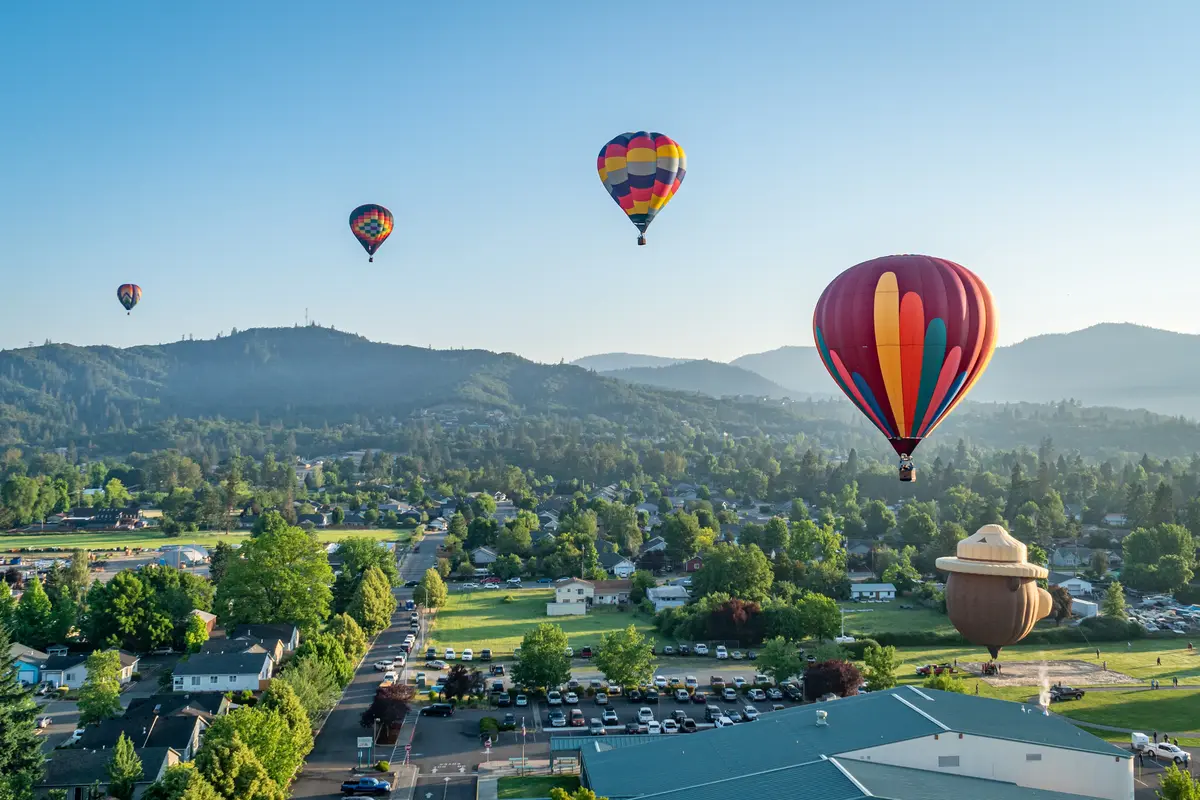
But price alone doesn't explain who keeps coming. The Rogue River isn't scenic backdrop — it's the city's organizing principle. More than 25 outfitters operate river trips out of Grants Pass, and the area has earned a reputation as Oregon's whitewater rafting center. People arrive for a weekend trip, float the canyon, and start mentally rearranging their finances. The annual Boatnik festival on Memorial Day weekend, running since 1959, is the clearest expression of how deeply the river is woven into community identity.
The Local Pride Factor
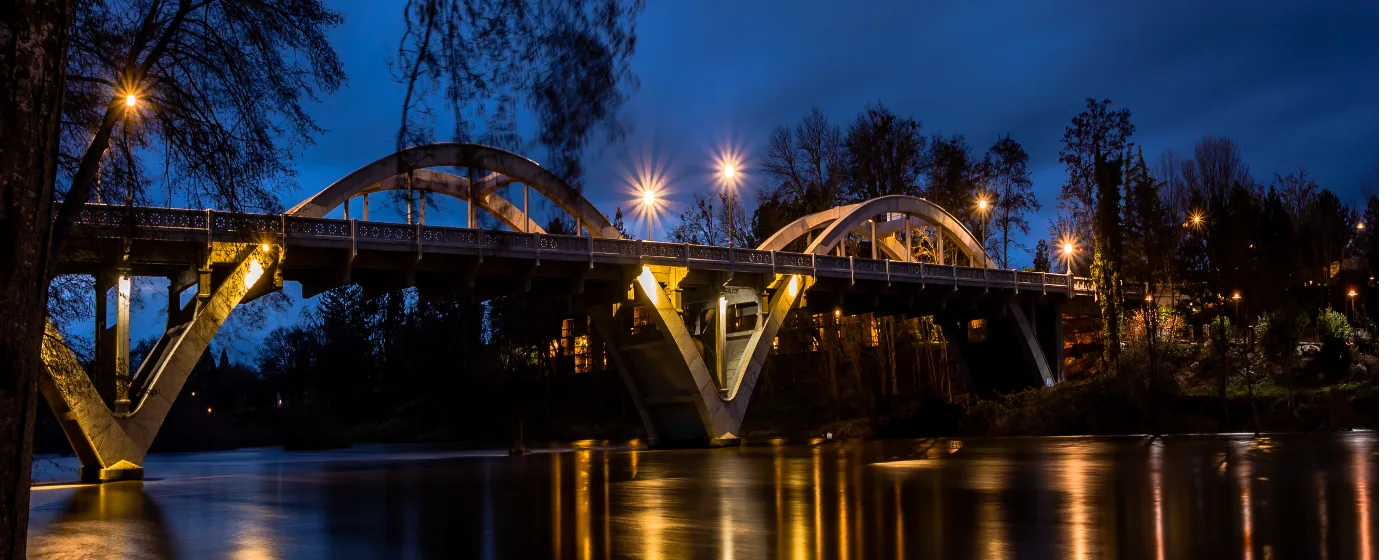
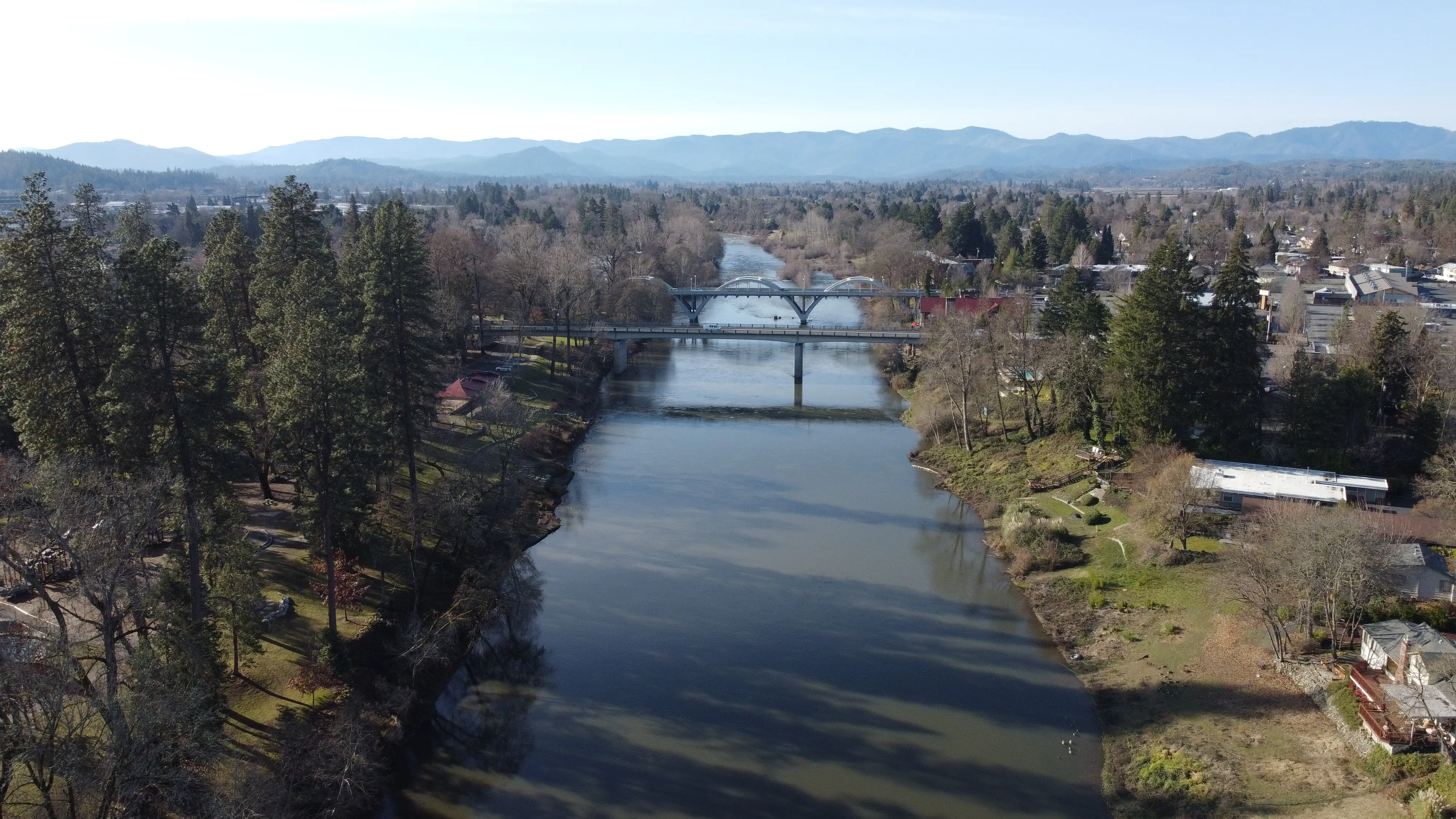
Grants Pass has a sense of place that's harder to find in faster-growing Oregon cities. The Historic Downtown Grants Pass National Historic District is a functioning commercial core, not a museum piece — locals actually shop and eat there. The Caveman Bridge, a reinforced-concrete arch span built in 1931 by bridge master Conde B. McCullough, still carries traffic across the Rogue. The 17-foot fiberglass caveman statue and the restored Redwood Empire neon sign are the kinds of things that either win you over immediately or confirm this isn't your city.
Dutch Bros. Coffee was founded here in 1992 by brothers Dane and Travis Boersma — a fact longtime residents mention with genuine pride. Cartoonist Carl Barks, who created Uncle Scrooge, grew up here. Actor Ty Burrell is from Grants Pass. The city has an outsized cultural footprint for its size, which is 39,311 people.
What the Move Actually Looks Like
Most people who land here are trading commute time and square footage for outdoor access and a slower pace. Families with kids come for the relative affordability and the room to breathe. Retirees come for the climate and the river. Remote workers come for all of it. For a deeper look at who Grants Pass suits — and who tends to leave — see the neighborhoods guide.
The honest counterpoint: Josephine County has a lean public-services history, the result of years of reduced federal timber payments. That context shapes everything from library hours to road maintenance in rural parts of the county. Moving to the city proper buffers some of this, but it's part of the regional reality that newcomers should understand before they arrive.
What Daily Life Feels Like in Grants Pass
Mornings in Grants Pass often start before the heat arrives — and in July and August, the heat is real. The Mediterranean-style climate that gave the city its motto means summers run hot and dry, with temperatures regularly pushing into the 90s. Locals adapt: errands happen early, afternoons involve the river, and the long evenings are when the city comes alive.
Downtown is walkable in the sense that it's a real, functioning downtown — not a strip mall with a parking lot in front. The Historic District has independent shops, a weekly farmers market, and restaurants that have been there for years. It's not Portland's Pearl District. It has its own character, and that's the point.
The Seasonal Surprise
Newcomers who arrive in spring or fall often underestimate summer. The 196 sunny days a year that locals brag about are real, but they're concentrated in a summer that runs long and dry. Wildfire smoke from regional fires has become a regular seasonal feature — some years worse than others — and buyers moving from the Pacific Northwest coast or from Northern California should factor in air-quality days when picturing outdoor life here. By October, when the smoke clears and the hills turn, residents tend to feel this is the best-kept secret in Oregon.
Where People Actually Gather
Riverside Park is the city's living room — it runs along the Rogue and is the obvious answer to where families end up on a warm afternoon. Reinhart Volunteer Park is the quieter counterpart on the south end of downtown. Whitehorse County Park draws people further out toward the river canyon. The Cathedral Hills trail system is where serious hikers go before work; the 10 miles of trails through 400 acres of Douglas-fir and ponderosa pine have a loyal daily-user community that newcomers tap into quickly.
The school district runs active OSAA athletics programs, and Friday night football at the high school fills the stands in a way that matters to the community. For families with school-age children, that community connection is often the thing that seals the decision to stay — see the full schools guide for what the district looks like on the inside.
The Car Reality
Most errands need a car. The downtown core works on foot once you're in it, but the city spreads out along US-199 and OR-99 in ways that make driving the default for anything beyond a short radius. Grocery runs, big-box shopping, and medical appointments are all driveable — but you're driving. A serious shopping trip for things the local stores don't carry often means heading out of town entirely.
The Grants Pass Housing Market Right Now
The typical home price in Grants Pass was $404,270 as of July 2026 (Zillow Home Value Index). That figure reflects a market that is meaningfully more accessible than much of Oregon — but it doesn't mean buying here is simple. The median household income in the city is below what's needed to comfortably carry a home at that price, which matters when you're running the math. Buyers arriving with equity from a higher-cost market are in a different position than local first-time buyers. For a closer look at income, tax rates, and what the numbers actually mean month to month, see the cost-of-living page.
The effective property tax rate here is 0.60% — low by national standards and one of the genuine advantages of buying in Oregon rather than California. That rate, applied to the typical home price, keeps carrying costs more manageable than the purchase price alone might suggest.
What You're Buying at This Price Point
At the typical price point, buyers are mostly looking at older ranch-style homes, modest mid-century construction, and some newer infill in and around the city's established neighborhoods. Some areas command more — Cathedral Hills and West Hills, where the terrain and views push values higher — while the Redwood corridor and parts of Colonial Valley offer more affordable entry points. The neighborhoods guide covers the geographic character of each area without putting a price on individual streets.
Typical two-bedroom rents run $1,490–$1,820 per month, with the city-wide typical rent at $1,621 per month (Zillow ZORI, July 2026). That rent range and the ownership market tell a consistent story: this is a city where buying makes financial sense for people who can get there, but the gap between median income and home price means many residents are renters by necessity rather than choice.
Comparing Nearby Markets
Medford, about 30 minutes south on I-5, comes in at about the same price level as Grants Pass. Rogue River, the smaller town to the east along OR-99, runs somewhat lower. Merlin, out US-199 toward the river canyon, is noticeably lower — though that gap comes with tradeoffs in services and commute. For buyers weighing these options, the moving from California page puts the price and tax picture in fuller context.
Grants Pass Neighborhoods
Grants Pass has several distinct areas — each with its own character and appeal. Here’s a breakdown to help you narrow down where to focus your home search.
🏡 Downtown Grants Pass
The heart of the city, anchored by the Historic Downtown National Historic District and Riverside Park along the Rogue — best for buyers who want walkable access to restaurants, the farmers market scene, and the river without needing a car for every errand.
🏠 Fruitdale
A residential area northwest of downtown that draws families with kids and buyers looking for more space at a more accessible price point, with a suburban feel and easy access to the city's commercial corridors.
🌳 Redwood
Spread along the US-199 corridor, Redwood is a practical, established neighborhood with a mix of older homes and newer construction — a solid entry point into the city for first-time buyers and those prioritizing value.
🏘 Cathedral Hills
Named for the trail system that borders it, Cathedral Hills offers elevated terrain, valley views, and a quieter residential character that appeals to outdoor-oriented buyers who want proximity to the trail system without leaving the city.
🏔 West Hills
Perched on the hillside west of downtown, West Hills attracts buyers drawn to views, larger lots, and a sense of separation from the commercial activity below — the neighborhood where the Rogue Valley landscape is most visible from your own yard.
🌆 Meadow Wood
A quieter, more suburban pocket that suits families with school-age children and buyers who want a neighborhood feel with manageable proximity to downtown and to the city's main school and commercial infrastructure.
Pros & Cons of Living in Grants Pass
The Pros
- Rogue River access with riverfront parks and jet-boat excursions right downtown
- Sunnier, warmer climate than most of western Oregon (~196 sunny days a year)
- Lower cost of living and home prices than the Willamette Valley or Oregon Coast
- Easy I-5 access halfway between Portland and San Francisco
The Cons
- Property crime rates run notably above national and state averages
- Limited large-employer base means many residents commute to Medford for higher-paying jobs
- Hot, dry summers with highs regularly near 90°F
Getting Around & Commuting in Grants Pass
Grants Pass sits at the intersection of I-5 and US-199, which makes it a genuine regional hub rather than a dead end. I-5 (the Pacific Highway) is the spine of the city's commuter geography, running north toward Eugene and south into California. US-199 (the Redwood Highway) heads southwest through the river canyon toward the Northern California coast. OR-99 (the Rogue River Highway) connects east toward Rogue River and Medford, and OR-238 runs south through the Applegate Valley toward Jacksonville.
The Medford Commute
The most common commute out of Grants Pass is the run to Medford — about 30 minutes on a normal day via I-5. That drive is the commute anchor for residents who work in Medford's larger job market, including its retail, healthcare, and professional services sectors, while choosing to live in Grants Pass for the lower home prices or the river-town character. On a bad weather day or during peak summer tourist traffic, that half-hour expands, and the two-lane sections through the canyon approaches require attention. Locals know to leave early.
Within the City
Getting around Grants Pass itself is almost entirely by car. The downtown core is compact enough to navigate on foot once you're parked, and Riverside Park and the pedestrian bridge over the Rogue give the city a walkable waterfront feel. But neighborhood-to-neighborhood travel, school runs, and grocery trips all assume a vehicle. The city is not built for anything else, and that's worth understanding before you commit to a neighborhood far from whatever you need most.
Longer Hauls
The nearest major airport is Rogue Valley International-Medford (MFR), about 28 miles from Grants Pass. For regional flights, most residents use MFR. Longer trips — especially to the Bay Area, Seattle, or across the country — sometimes mean driving to Portland or flying through a connecting hub. That's the reality of being midway between two major metros without being close to either one's airport infrastructure.
Remote Work Changes the Calculation
A significant share of the people who've moved to Grants Pass in recent years work remotely full-time and have no regular commute at all. For them, the I-5 corridor is a convenience for occasional travel rather than a daily grind. That shift has changed who buys here and what they're willing to pay, and it's part of why the market has held up despite the gap between local incomes and home prices.
Schools in Grants Pass
Families relocating to Grants Pass have public, private, and higher-education options nearby. Here’s a quick overview.
🎓 School District
Grants Pass School District 7 serves K–12 students across Grants Pass and the surrounding area. Rated B- (source: Niche.com).
🏆 Graduation Rate
The 4-year high-school graduation rate here is approximately 83.6%.
📚 Higher Education
Oregon’s public universities — the University of Oregon, Oregon State University, and Portland State University — offer four-year degrees statewide, with a network of 17 community colleges providing two-year and workforce programs.
🌐 Online Learning
Oregon State University Ecampus and Portland State University Online offer fully accredited online degrees for remote learners across the state.
Safety in Grants Pass
A quick look at how Grants Pass compares on the numbers that matter most when weighing a neighborhood or a move.
🛡 Violent Crime
Approximately 4 per 1,000 residents.
🔒 Property Crime
Approximately 29 per 1,000 residents.
Compared to the most recent national figures from the Bureau of Justice Statistics (2024), Grants Pass’s violent crime is above the national average (about 3.7 per 1,000), and property crime is above the national average (about 18.4 per 1,000).
Against Oregon as a whole, Grants Pass’s violent crime is somewhat above the state average, and property crime is somewhat above the state average (Bureau of Justice Statistics, Crime Known to Law Enforcement, 2024 (tables 2 and 3)).
Crime rates can vary a lot within a single city, so the citywide numbers above are only a starting point. Some neighborhoods in Grants Pass run well below these averages, while others run higher — the kind of block-by-block detail that matters most when you’re actually choosing where to live. The full guide below breaks it down neighborhood by neighborhood.
Working in Grants Pass
Grants Pass’s largest employers span several industries — here are some of the anchors of the local job market.
🏛 Josephine County
Municipal government
🎓 Grants Pass School District
Education
🏥 Asante Three Rivers Medical Center
Healthcare
🏛 City of Grants Pass
Municipal government
Parks & Recreation in Grants Pass
Some of the outdoor spaces that shape everyday life in Grants Pass.
🌱 Riverside Park
Grants Pass residents don’t have to go far for green space — spots like Riverside Park are part of everyday life here, whether that’s a morning walk, a weekend hike, or just somewhere to unwind outside. The full guide below covers more of what Grants Pass has to offer for parks and outdoor recreation.
Retiring in Grants Pass
Grants Pass draws retirees for its balance of amenities, outdoor access, and cost. Here’s what to weigh.
🌤 Climate
Grants Pass earns its motto. The Mediterranean-style climate delivers 196 sunny days a year, hot dry summers, and mild winters that rarely bring significant snow to the city proper. Wildfire smoke in late summer has become a seasonal consideration in recent years, but for retirees who want genuine sunshine without the coast's fog or the valley's rain, this is one of the more appealing climates in Oregon.
🍴 Lifestyle
Daily life for retirees here centers on the river, the historic downtown, and the outdoor recreation that comes with both. Riverside Park and the Cathedral Hills trail system provide accessible outdoor activity year-round. The downtown dining and coffee scene — independent, locally owned, unhurried — suits a pace that doesn't need to rush. Oregon Caves National Monument is a short drive for the days you want something different.
🏚 55+ Communities
Grants Pass has two established 55+ communities: Horizon Village and Kinsington Court. Both are within the city, offering the convenience of proximity to downtown and to a major regional medical center. The full picture on retiring in Grants Pass, including healthcare and cost-of-living context, is on the retiring page.
✈ Getting Around
A car is necessary for most of daily life in Grants Pass, and most retirees here drive without issue — the city is not demanding to navigate. For medical travel or flights, Rogue Valley International-Medford Airport (MFR) is about 28 miles away, the closest major airport. I-5 access makes regional travel straightforward, and the drive to Medford for specialists or a broader range of services is about 30 minutes on a typical day.
🏛 Oregon Taxes for Retirees — What to Know
- Social Security is not taxed — Oregon does not tax Social Security or Railroad Retirement benefits. Any amount included in your federal adjusted gross income is subtracted back out on the Oregon return.
- But other retirement income IS taxed — This is the trade-off that surprises people moving from Washington or Texas. Pension distributions and 401(k)/IRA withdrawals are taxed as ordinary income at Oregon’s regular rates — there is no blanket retirement-income exclusion.
- Graduated income tax — Oregon has four brackets — 4.75%, 6.75%, 8.75% and 9.9%. The 4.75% rate covers the first $10,000 of taxable income for a single filer ($20,000 filing jointly); the 8.75% rate starts at $125,000 ($250,000 jointly); and the top 9.9% rate applies above $250,000 ($500,000 jointly).
- No sales tax — Oregon levies no general sales tax.
- Property taxes, with senior deferral — Oregon’s Senior and Disabled Property Tax Deferral lets qualifying homeowners have the state pay their county property taxes, with a lien recorded against the home. The 2026 household income limit is $70,000, and deferred balances accrue 6% simple interest — it defers the bill rather than forgiving it.
- Estate tax — the one to plan for — Oregon has its own estate tax with a $1 million filing threshold — far below the federal exemption, and NOT indexed for inflation, so it reaches more estates every year in real terms. Retirement accounts and a long-held home count toward the taxable estate, so estates that feel modest can cross the line without the owner expecting it.
- No inheritance tax — Oregon has no separate inheritance tax and no gift tax.
Tax laws change frequently and individual situations vary. This is general information, not tax advice — always consult a qualified Oregon tax professional or CPA for personalized retirement tax planning.
Weekends & Local Favorites in Grants Pass
Grants Pass has a specific kind of weekend culture — river-first, locally rooted, and not especially interested in pretending to be somewhere else. The Boatnik festival on Memorial Day weekend has been the city's annual high point since 1959, a celebration of the Rogue that draws the whole community to the water. Oregon Caves National Monument is about 24 miles southwest, and the 40-mile Rogue River National Recreation Trail starts at Grave Creek and runs through remote canyon country that most visitors never see.
The Cathedral Hills Park trail system — eight loops, 10 miles, 400 acres of Douglas-fir and ponderosa pine — is where the city's outdoor regulars go before most people have had coffee. Riverside Park is the social center for everything from informal afternoon gatherings to organized events. Reinhart Volunteer Park handles the quieter end of the spectrum, and Whitehorse County Park draws people out toward the river canyon on longer weekend days.
Food, Coffee & Local Anchors
The dining and coffee scene in Grants Pass is built around a handful of independent spots that have earned genuine loyalty. Cartwright's Taprock Northwest Grill sits right on the river and is the kind of place locals bring visitors who need to understand what Southern Oregon actually tastes like. Si Casa Flores is the local Mexican standard — the lines tell you everything. River's Edge Restaurant keeps the riverside dining tradition going with a more relaxed feel. The Laughing Clam LLC is where the casual end of the local food scene lives, reliably good and unpretentious. Ma Mosa's has built a following for weekend brunch that feels like a Grants Pass institution even if it's still relatively young.
On the coffee side, Powderhorn Café & Pies is the kind of place that makes you glad chains don't win everywhere — pies that locals talk about and coffee that justifies the stop. Babe's Bakery is the early-morning option for people who take their pastries seriously. The Wonder Bur Steakhouse & Lounge shifts into evening territory with a decidedly local character. Wheelhouse and The Lonely Pine both carry the independent coffee-shop culture that newcomers from larger cities are relieved to find here.
It's worth knowing that Dutch Bros. Coffee — now a chain with more than 1,000 locations nationwide — was founded right here in Grants Pass in 1992. That's a piece of local history the city wears with deserved pride, even as the brand has grown far beyond its hometown roots.
Culture & Community
The Historic Downtown Grants Pass National Historic District is more than a designation — it's the reason the city feels coherent on foot. The Caveman Bridge and the restored Redwood Empire neon sign are landmarks that genuine locals reference without irony. The weekly farmers market gives the growing season a community rhythm that matters to residents who moved here specifically for this kind of life. Grants Pass is also the birthplace of cartoonist Carl Barks (Uncle Scrooge's creator) and actor Ty Burrell — the kind of cultural footnotes that make a small city feel like it has always punched above its weight.
Local favorites in Grants Pass
Restaurants
- Cartwright's Taprock Northwest Grill
- Si Casa Flores
- River's Edge Restaurant
- The Laughing Clam LLC
- Ma Mosa's
Outdoors
- Cathedral Hills Park trail system
- Riverside Park
- Reinhart Volunteer Park
- Whitehorse County Park
Coffee
- Powderhorn Café & Pies
- Babe's Bakery
- The Wonder Bur Steakhouse & Lounge
- Wheelhouse
- The Lonely Pine
Farmers Markets
- Applegate Evening Market @ The Lindsay Lodge
- Bell & Bloom Farmstand
Top Things Locals Say About Grants Pass
The best intel about a city comes from the people who actually live there. Here’s what Grants Pass residents say when newcomers ask the questions everyone’s thinking.
“I had done all the research and thought I understood what I was moving into — but I didn't expect how much the river would change my daily schedule. You start organizing your whole week around when you can get on the water or down to Riverside Park, and suddenly the commute trade-offs feel a lot more worth it.”
— Recent Grants Pass home buyer
“What's the most surprising thing about living in Grants Pass?”
How real the seasons are. You move here for the sunshine and the river, and both deliver — but summer is genuinely hot, and wildfire smoke has become a factor that nobody warns you about in the listings. September and October, when the smoke clears and the hills go gold, is when most people decide they're never leaving. The Cathedral Hills trails at sunrise on a clear October morning are hard to describe to someone who hasn't done it.
“What do locals love most about Grants Pass?”
The river, consistently. Riverside Park on a warm afternoon, the Boatnik weekend every Memorial Day, the fact that you can be in a legitimate river canyon within 20 minutes of downtown — that access is real and it shapes how people spend their time. There's also genuine community pride in the historic downtown, in the Caveman Bridge, in the 'It's the Climate!' sign. People here know what makes this place specific and they're attached to it.
“What should newcomers to Grants Pass know?”
The drive to Medford is about 30 minutes on a good day, and a lot of people underestimate how often they'll make it. Medical specialists, certain stores, airport runs — Medford is the anchor city for a lot of what Grants Pass doesn't have. Plan your week around that commute rather than being surprised by it. Also: summer comes early and hot. If your plan involves being outdoors all summer, you'll want to shift your outdoor hours earlier in the day by late June.
“How much do you need a car in Grants Pass?”
A car is essential. The downtown core is walkable once you're parked in it, and Riverside Park and the pedestrian bridge give the waterfront a genuinely on-foot feel. But most errands — groceries, school runs, medical appointments, anything outside a tight downtown radius — mean driving. The city is spread out along the highway corridors in ways that make a car the only practical option for day-to-day life in most neighborhoods.
Cities Near Grants Pass
Other communities near Grants Pass worth a look — each with its own character and price point.
| City | Distance | Best For | Vibe | Median Rent | Median Buy |
|---|---|---|---|---|---|
| Medford | 29 mi | jobs, retail & larger city amenities | busier, more commercial, regional hub | $1,687 | $412,596 |
| Rogue River | 12 mi | small-town quiet & value buyers | rural, slower-paced, river-adjacent | $1,300 | $350,000 |
| Merlin | 8 mi | canyon living & outdoor privacy | remote, rugged, tight-knit | $1,250 | $340,000 |
More Helpful Guides for Grants Pass
Going deeper on Grants Pass? Our blog series covers everything from first-time buying to retiring here — explore the guides below.
Local Expert Takeaway: Grants Pass is a city that rewards the buyer who understands what they're actually choosing. The Rogue River, the Cathedral Hills trails, and a genuine historic downtown make day-to-day life more interesting than the price tag suggests. The honest catch: the gap between median household incomes and home prices means a lot of buyers here are arriving with outside equity or remote-work income — local wages alone are a stretch at the typical price point. The city is not Medford, and it's not trying to be. If you want the river as your backyard, independent coffee shops instead of chains, and a community that shows up for Boatnik every Memorial Day weekend, Grants Pass is the one.
Quick Takeaways & FAQs
✅ The Wild and Scenic Rogue River runs through the center of the city, making outdoor recreation — rafting, fishing, riverside walking — a genuine part of daily life rather than a weekend drive.
⚠️ The median household income is meaningfully below what's needed to carry the typical home price, so local buyers without outside equity or remote-work income face a real affordability gap.
📍 Dutch Bros. Coffee, now a chain with more than 1,000 locations, was founded in Grants Pass in 1992 — a point of local pride that signals the city's outsized identity for its size.
What is the typical home price in Grants Pass, Oregon?
How are the schools in Grants Pass?
Is Grants Pass safe?
How far is Grants Pass from Medford?
What is Grants Pass known for?
Helpful Links for Moving to Grants Pass
Moving to Oregon?
Tell us what you need help with and we'll connect you with local resources.
