
Most people who move to Grants Pass from a larger metro are genuinely surprised — not by the statistics, but by what daily life actually feels like. A city of 39,311 tucked into the Rogue River Valley along I-5 in Josephine County, Grants Pass has a reputation that runs ahead of its reality. The crime numbers are real and worth understanding, but they sit alongside a community that is smaller, more neighborly, and far more geographically varied than a raw rate can convey. Where you land in this city matters enormously, and that distinction is something the headline numbers alone will never tell you.
The economic backbone here is Josephine County government, Grants Pass School District 7, Asante Three Rivers Medical Center, and the City of Grants Pass itself — a public-sector-heavy employer base for a city this size. That shapes the population: working families, long-term residents, retirees, and a growing contingent of remote workers drawn by Southern Oregon's relative affordability. The typical home price of $404,270 (July 2026) puts ownership within reach for many, even as the median household income of $59,646 leaves a real gap between what most households earn and what the market asks. For a full cost picture, see the cost of living page.
Grants Pass averages 196 sunny days a year — a genuine draw in a region that earns its outdoor reputation. Riverside Park hugs the Rogue River through downtown, the Cathedral Hills Park trail system puts serious hiking minutes from residential streets, and US-199 opens the door to the Illinois Valley and the coast. This is a city where people are outdoors constantly, and that daily rhythm matters for how safe public spaces actually feel to the people using them.
Whether you're weighing a move or trying to understand what the crime statistics mean for a specific part of town, the sections below break down Grants Pass's safety picture by the numbers, by neighborhood, and by what residents experience on the ground.
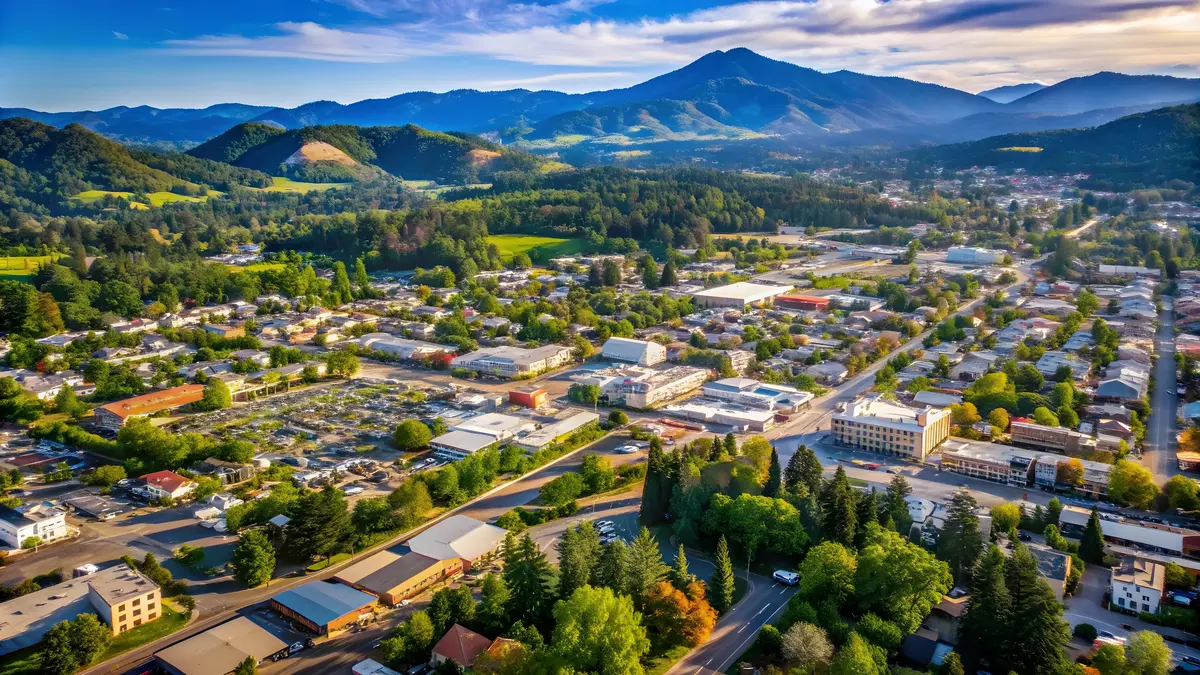
The Numbers in Context: How Grants Pass Compares
| Measure | Grants Pass | Oregon | National | vs. national |
|---|---|---|---|---|
| Violent crime (per 1,000) | 4 | 3.3 | 3.7 | 8% higher |
| Property crime (per 1,000) | 29 | 24.5 | 18.4 | 58% higher |
State and national figures — Bureau of Justice Statistics, Crime Known to Law Enforcement, 2024 (tables 2 and 3). City figures — NeighborhoodScout. City rates come from a different reporting series than the state and national benchmarks, so read the comparison as a direction, not a precise multiple.
Grants Pass carries a violent crime rate of 4 per 1,000 residents and a property crime rate of 29 per 1,000 residents, based on Bureau of Justice Statistics data, Crime Known to Law Enforcement, 2024 (tables 2 and 3). The engine renders a full comparison table immediately below this section, so the discussion here is about what those figures actually mean rather than repeating them.
On violent crime, the city sits modestly above the Oregon state rate of 3.3 per 1,000 and just slightly above the national rate of 3.7 per 1,000. That gap is real but not dramatic — and 2024 data shows the overall crime index fell meaningfully compared to the prior year, with the city recording one homicide in 2024. Context matters here: Grants Pass is a regional hub for Josephine County, drawing people from surrounding unincorporated areas for commerce, services, and healthcare. A city that functions as a county seat and commercial center will always absorb more reported incidents than a purely residential community its size.
Property crime is the more pressing concern. At 29 per 1,000 residents, the city runs noticeably above both the Oregon state rate of 24.5 per 1,000 and the national rate of 18.4 per 1,000. Larceny and theft drive the bulk of those figures — the same pattern seen in most U.S. cities of this size and function. That means unlocked cars, packages on porches, and opportunistic theft are the day-to-day risk, not the kind of violent crime that dominates news coverage. It is also the kind of risk that responds directly to basic precautions.
One important nuance: reported crimes in Grants Pass are concentrated in and around high-traffic commercial corridors. Downtown counts are shaped in part by the volume of visitors and tourists moving through the historic district and along the Rogue River — a pattern analysts note tends to inflate urban core totals relative to what residential neighborhoods actually experience.
Safest Neighborhoods and Where the Risk Is Concentrated
The west side of Grants Pass is consistently where residents point when asked about safety. That directional signal holds across multiple data sources: the northwest part of the city logs roughly half the total annual reported incidents of the north side. On violent crime specifically, the spread is wide — victim likelihood in western areas runs significantly lower than in northern ones. For families researching neighborhoods, West Hills and the hillside pockets near Starlight offer that quieter, more separated character: larger lots, winding streets, and genuine distance from the commercial core. Some of those ridge properties participate in Firewise programs given their wildland-urban interface position — which is its own consideration, separate from crime, worth researching before settling on a specific parcel.
Fruitdale, on the south side near the Rogue River, is one of the most consistently cited neighborhoods for families and retirees. Flat streets, well-kept homes, and minimal through-traffic give it a removed-from-the-action feel even though it sits within the city limits. Cathedral Hills, to the west, draws a different buyer — larger properties, natural surroundings, and the Cathedral Hills Park trail system literally accessible from residential streets. Both neighborhoods sit well away from the commercial corridors where property crime concentrates.
Colonial Valley and the Redwood corridor carry a suburban feel that works well for households wanting newer construction and a straightforward residential environment. The Redwood area, running along US-199, has absorbed most of the city's recent residential growth. Downtown and the areas immediately adjacent to the historic core carry the highest crime density — not because residents there are necessarily at greater risk at home, but because the commercial activity and foot traffic bring reported incidents that drag the figures upward.
The practical takeaway for anyone choosing between neighborhoods: the east-to-west gradient is real and consistent. Neighborhoods to the west and southwest — Fruitdale, West Hills, Cathedral Hills — tend toward lower incident counts. Areas closer to the city's main commercial spine and the downtown core show higher numbers, weighted heavily toward property crime rather than violence.
Best for families: Families Fruitdale, Cathedral Hills
Best for quiet/privacy: Quiet Privacy West Hills, Starlight
Best for walkable access: Walkable Downtown Grants Pass (with eyes open on property crime)
Newer suburban feel: Commuter Colonial Valley, Redwood corridor
For a deeper neighborhood-by-neighborhood character breakdown, see the best neighborhoods guide.

What the Downtown Safety Picture Actually Looks Like
Downtown Grants Pass is a genuine asset — the Historic Downtown Grants Pass National Historic District, Riverside Park along the Rogue, the Caveman Bridge, and the iconic Redwood Empire neon sign give it more character than most Southern Oregon towns this size. It is also where the city's crime concentration is highest, and that is a tension worth naming directly rather than glossing over.
The honest picture is that downtown is busy, commercial, and draws a wide cross-section of the county. Daytime foot traffic through the farmers markets, the restaurants, and along the river is active and largely unremarkable. The issues that show up in the numbers — and in community conversations — are more about visible homelessness, opportunistic property crime, and the friction points that come with a commercial hub serving a regional population. The 2024 Downtown Roadmap, produced by more than 70 community members and business leaders, named safety explicitly as a priority alongside business mix, events, and public spaces. That document is now the foundation for Main Street Grants Pass, an official member of the Oregon Main Street Network.
That organizational investment matters. The downtown is not stagnant — there is an active, named effort underway to improve both the reality and the perception of safety in the core. Visitors who arrive expecting a depressed downtown are often surprised by the dining scene along the main streets and the activity around Riverside Park. What you give up in a downtown location is the lower incident environment of the residential westside neighborhoods. What you gain is proximity to everything the city offers at street level.
One thing people rarely expect after moving near downtown: the difference between weekday mornings and weekend afternoons is significant. The market days and summer river season bring genuine energy — and genuine crowds. That seasonal swing catches newcomers off guard, and it colors their read of how the area feels in its quieter months.
Looking to buy in Grants Pass? Estimate your payment.
Enter your numbers to see an estimated monthly mortgage payment.
Estimate only. Excludes HOA fees and mortgage insurance. The interest rate above is a starting point, not a quoted rate — replace it with your own to see real numbers. Insurance is a flat placeholder, not a Grants Pass quote.
Wildfire Risk, Police Presence, and What Residents Think About After Year One
Crime is only part of the safety calculus for Grants Pass. Wildfire risk is the variable that most newcomers underestimate, particularly those drawn to the hillside neighborhoods that offer the best views and the most separation from the city core. Properties near Starlight and in the West Hills foothills sit at the wildland-urban interface — which is exactly why some of them participate in Firewise community programs. Before settling on any hillside parcel, it is worth researching the property's fire hazard severity zone designation specifically. This is a Southern Oregon reality, not a Grants Pass-specific one, but the city's position in the Rogue River Valley surrounded by forested terrain makes it relevant in ways it would not be in a flat, urban setting.
The Grants Pass Police Department is a small department that knows the city well, and patrol presence is visible downtown and along the main commercial corridors. That said, Josephine County's broader fiscal history has meant that county-level law enforcement services have operated under constraints for years. City policing and county coverage are separate systems here, and that distinction is worth understanding if you are looking at properties outside city limits in the surrounding areas of Merlin, Murphy, or Wilderville.
What people tend to say after living here for six months or more is that the property crime numbers felt abstract until something happened to a neighbor — an unlocked car rifled through, a package taken. It rarely escalates beyond that, and most longtime residents develop practical habits around it. What surprises people more is how safe the city feels in the places they actually spend time: Riverside Park on a summer evening, the Cathedral Hills Park trail system on a weekday morning, the Applegate Evening Market atmosphere. The numbers and the lived experience are not the same thing, and both are worth holding at the same time.
How to Research Safety Before Choosing a Specific Area
The city-wide crime rate is a starting point, not an answer. Two neighborhoods in Grants Pass can sit miles apart on the safety spectrum while both technically falling inside the same set of statistics. Before deciding on a specific part of the city, the most useful research moves are also the most practical ones.
Drive the neighborhood at different times
A Saturday afternoon in Fruitdale feels different from a Saturday afternoon near the commercial stretch of US-199. A morning in Cathedral Hills has a different character than an evening in the blocks adjacent to downtown. No heat map substitutes for thirty minutes in the actual streets at different hours and days. The geography of Grants Pass is varied enough that five minutes of driving can shift the neighborhood character significantly.
Look at the specific corridor, not just the neighborhood name
The Redwood corridor and Colonial Valley both carry suburban character, but their relationship to commercial traffic differs. Similarly, properties that sit on or near the main arterials tend to show higher incident counts simply by virtue of proximity to activity — that does not mean residential streets one block off are equivalent. Ask which specific streets and blocks are being described when a neighborhood is called safe or not.
Check wildfire hazard zone separately from crime data
For hillside properties near West Hills or Starlight, the Oregon Department of Forestry's fire hazard severity zone map is a distinct and important data source. It does not show up in crime statistics, and most errands-and-lifestyle research leaves it out entirely. It is a factual, parcel-level designation that affects insurance, defensible space requirements, and community programs like Firewise. Looking at it before choosing a lot is the kind of due diligence that residents who moved here wish someone had told them about earlier.
Understand what the downtown numbers represent
If you are considering the Historic Downtown area — close to Riverside Park, the Rogue River Pedestrian Bridge, and the dining and activity that makes Grants Pass's core genuinely interesting — go in knowing that the crime figures for that zone are shaped by commercial foot traffic and regional draw, not solely by neighborhood character. That context doesn't make the numbers irrelevant, but it does make them more interpretable. The community's active investment in downtown improvement through the Main Street Grants Pass program is a signal worth factoring in alongside the raw statistics.
For a neighborhood-by-neighborhood character comparison, the best neighborhoods guide goes deeper on each area's feel, housing stock, and who tends to land there.

Local Expert Takeaway: Grants Pass is a city where geography does a lot of the work on safety. The west side — Fruitdale, Cathedral Hills, West Hills — carries meaningfully lower incident rates than the city's commercial corridors and downtown core. Property crime, primarily larceny and theft, is the dominant concern citywide; violent crime is modest and fell in 2024. The community has named downtown safety as a priority and is actively working on it through a formal, organized effort. For most residential neighborhoods west of the city's commercial spine, day-to-day life feels quieter and safer than the headline figures suggest. Wildfire risk is the variable the crime stats don't capture — and for hillside properties, it deserves equal attention before you decide on a specific area.
Quick Takeaways & FAQs
✅ The west side of Grants Pass — Fruitdale, Cathedral Hills, and West Hills — consistently shows the lowest violent crime incident counts in the city.
⚠️ Property crime runs above both state and national averages, and the city's downtown commercial corridors carry the highest concentration of reported incidents.
📍 Hillside neighborhoods near Starlight and West Hills offer the quietest residential character but sit at the wildland-urban interface — wildfire hazard zone designation is worth checking for any specific parcel there.
Is Grants Pass, Oregon a safe place to live?
Which neighborhoods in Grants Pass have the lowest crime rates?
Is downtown Grants Pass safe to live near?
How does Grants Pass crime compare to other Oregon cities?
Is wildfire risk something Grants Pass residents have to worry about?
Moving to Oregon?
Tell us what you need help with and we'll connect you with local resources.
