
Here is the honest version of the Grants Pass pitch: it is meaningfully cheaper than Portland and noticeably cheaper than the Willamette Valley — but it is not cheap. Housing is the dominant cost driver, utilities run a bit above the Oregon city average, and groceries add modest pressure on top of that. What you get in return is a small city of 39,311 people, surrounded by the Rogue River and the Siskiyou foothills, with I-5 access and a downtown that still has an actual civic identity rather than just a strip of national chains. Southern Oregon's climate is genuinely mild by Oregon standards, and that keeps heating bills low for most of the year — but the summer heat in the Rogue Valley is real, and air conditioning is not optional from June through September.
The economic backbone here is the public sector — Josephine County, the City of Grants Pass, and Grants Pass School District 7 are among the largest employers — supplemented by a regional health system. That job base produces a median household income of $59,646, which matters because it sits meaningfully below the income you would need to comfortably carry the typical home at current prices. A lot of buyers here come from the Bay Area or Southern California, where Grants Pass reads as extraordinarily affordable by comparison, and that migration pressure is part of what has pushed prices upward from the city's own economic baseline. The full picture on who is hiring and what wages look like is on the living in Grants Pass guide.
Day-to-day life is livable on a working-class or middle-class budget, but you need to go in with clear eyes about what the numbers look like. The zero-sales-tax advantage is real — Oregon collects nothing at the register — but Oregon's income tax is steep, and it takes back a meaningful slice of what the grocery receipt gives you. The biggest savings most newcomers find over their previous home is in housing itself, particularly if they are arriving from a coastal Oregon city or a California market. Whether you're buying or renting, the sections below break down Grants Pass's housing costs, everyday expenses, how the city compares with nearby communities, and what the tax picture really means for your take-home budget.
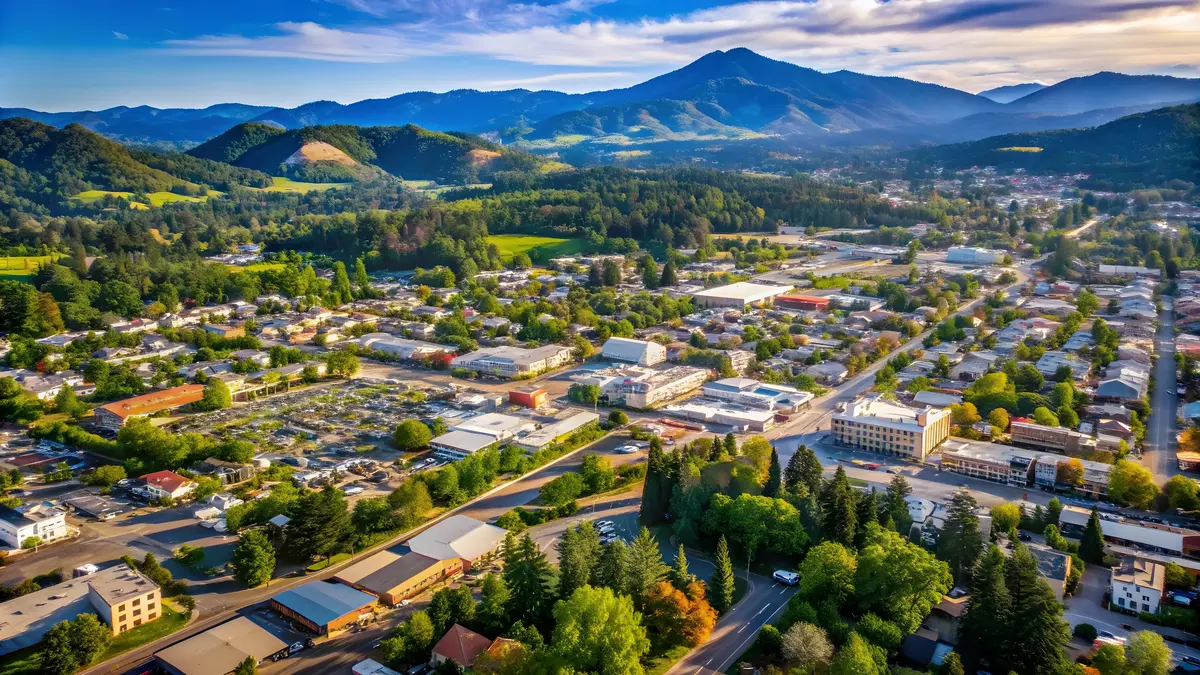
What It Really Costs to Live in Grants Pass
Grants Pass occupies an interesting middle zone: noticeably more affordable than Portland and the Willamette Valley, but priced above the national midpoint. Southern Oregon in general sits below the cost pressure of Oregon's coastal and metro markets, and Grants Pass benefits from not being one of them — but it is not a low-cost outlier either. Housing is what moves the needle most, with groceries and utilities adding modest pressure above the national norm.
The typical home price of $404,270 (Zillow Home Value Index, July 2026) is the figure that determines whether Grants Pass works for your budget. That number reflects real demand from in-migration — particularly from California — that has outpaced local wage growth. What makes the cost picture complicated is the income side: the median household income of $59,646 supports a comfortable renting budget but falls short of the income a lender would want to see for the typical purchase.
The comparison that matters most depends on where you are coming from. Against Medford — the nearest city of regional significance — prices land at roughly the same level. Against Portland, Grants Pass reads as a significant discount. Against the national average, it reads as modestly above, driven primarily by housing rather than by everyday expenses.
Housing: Rent vs Buy in Grants Pass
The typical home price of $404,270 (July 2026) is the anchor number. Entry-level homes — older construction, smaller lots, some deferred maintenance — generally start somewhere below that figure, though well-priced entry-level inventory moves quickly and the gap between asking and entry has narrowed in recent years. The best neighborhoods guide covers where those more accessible price points tend to cluster.
The effective property tax rate in Grants Pass is approximately 0.60% — one of the lower rates in the Pacific Northwest, and well below what buyers in California, Washington, or Texas typically pay. The interactive calculator below will give you a payment estimate based on your actual down payment and current rates.
The affordability gap is real and worth naming plainly: the median household income of $59,646 falls short of the income most lenders want to see for the typical home here. That does not mean buying is impossible, but it does mean a meaningful down payment, a dual income, or earnings well above the local median makes the math work much more cleanly. First-time buyers should review the first-time homebuyer guide for program options that can help close that gap.
Renting is a workable alternative, especially for newcomers still learning the city. The typical 2-bedroom rent runs $1,490–$1,820 per month, with the city-wide typical rent sitting at $1,621 per month (Zillow ZORI, July 2026). That range is below what comparable units cost in Medford's tighter rental market and well below Portland's metro figures. The honest calculus: if you are confident about staying for several years and have the down payment, buying at Grants Pass's effective property-tax rate makes long-term financial sense. If you are arriving from out of state and want 12 months to learn the city before committing, the rental market here gives you a reasonable runway to do that without burning money on an overpriced lease.
One friction point that surprises buyers arriving from larger markets: homes in Grants Pass that are well-priced and in move-in condition do not linger. The inventory at the entry level is thin relative to demand, and buyers who approach this market with a "we'll see what comes up" posture often spend longer searching than they expected. Coming in pre-approved and ready to move makes a real difference here.

Everyday Costs Beyond Housing in Grants Pass
| Category | Typical Monthly Cost | Notes |
|---|---|---|
| Housing (typical rent) | $1,621/mo | City-wide typical rent. Buying? Use the calculator above for a mortgage estimate. |
| Utilities | $190–$270/mo | Electricity, gas, water, sewer, trash |
| Groceries | $520–$720/mo | Food at home, household of 2–3 |
| Transportation & Gas | $160–$300/mo | Fuel, and transit where it is a real option |
| Phone & Internet | $110–$180/mo | Mobile plan plus home broadband |
| Misc / Discretionary | $200–$420/mo | Dining out, entertainment, subscriptions |
Non-housing figures are estimates for a household of two to three, not a sourced index; housing is the city-wide typical rent (Zillow ZORI, July 2026). Refreshed with the rest of the city data.
Southern Oregon's climate shapes the utility bill in ways newcomers do not always anticipate. Grants Pass sees around 196 sunny days a year, which keeps summer cooling costs genuine — air conditioning runs hard from June through September in the Rogue Valley heat. Winter heating is relatively mild compared with higher-elevation Oregon cities, but the bundled city utility bill covers water, wastewater, transportation, stormwater, and public safety charges all in one monthly statement. City utility rates increased 2.71% on January 1, 2026, with water carrying an additional separate increase on top of that. Combined monthly utility costs — electricity, water, sewer, and trash — run approximately $325 at typical household usage, roughly 10% above the Oregon city average, driven mainly by water costs. Natural gas is available through Avista Utilities for those who want it for heating or cooking.
Groceries in Grants Pass run a small but noticeable premium over lower-cost U.S. markets — the city does not have the competitive grocery landscape of a larger metro, which keeps prices from being driven down aggressively. Typical monthly grocery spending for a household of two falls in the range of $600–$750 depending on diet and shopping habits. Transportation costs depend heavily on whether you work locally or commute. Josephine Community Transit (JCT) runs fixed routes within Grants Pass and a commuter route connecting to Rogue River, Gold Hill, and Medford — with a transfer to the Rogue Valley Transportation District available for onward travel. For most residents, though, a personal vehicle is the practical reality for most errands. Rogue Valley International-Medford Airport (MFR) is approximately 28 miles away, which is the reference point for flights out of the region.
Phone and internet costs in Grants Pass land close to the national average. Monthly phone service for a single line typically runs $50–$80, and home internet through the available providers runs in the $60–$100 range depending on speed tier. These costs are not an outlier here relative to comparably sized Oregon cities.
Looking to buy in Grants Pass? Estimate your payment.
Enter your numbers to see an estimated monthly mortgage payment.
Estimate only. Excludes HOA fees and mortgage insurance. The interest rate above is a starting point, not a quoted rate — replace it with your own to see real numbers. Insurance is a flat placeholder, not a Grants Pass quote.
Grants Pass vs Nearby Cities: How Costs Compare
| City | Typical Home Price | Typical Rent | Cost vs Grants Pass |
|---|---|---|---|
| Grants Pass (this city) | $404,270 | $1,621/mo | — |
| Medford | $412,596 | $1,687/mo | About the same |
| Rogue River | $350,000 | $1,300/mo | 13% lower |
| Merlin | $340,000 | $1,250/mo | 16% lower |
Source — home prices: Zillow ZHVI, July 2026; rent: Zillow ZORI, July 2026. Nearby-city figures are the same series, refreshed together.
Among the communities in southern Oregon's Rogue Valley, Grants Pass and Medford sit at roughly the same price level for both homes and rentals — close enough that the choice between them comes down to lifestyle and commute rather than cost. Ashland, just south of Medford along I-5, runs noticeably above both, driven by its arts and university identity and the competition for a limited housing stock.
Below Grants Pass in price, Rogue River offers a quieter alternative a short drive to the east, with a smaller inventory and a more rural feel. Cave Junction and Merlin come in well below the Grants Pass median and attract buyers who prioritize land and privacy over walkability or services — though a serious shopping trip from either place means driving back toward Grants Pass. The engine-generated comparison below this section gives current figures for each city side by side.
The practical takeaway: if you are choosing between Grants Pass and Medford, the cost difference is modest enough that it should not drive the decision. If you are choosing between Grants Pass and Ashland, the price premium in Ashland is real and should factor into your budget before you fall in love with the downtown.
Taxes & the Bottom Line for Grants Pass
Oregon's No-Sales-Tax Advantage
Oregon collects no statewide sales tax, and Grants Pass has no local sales tax of its own. Every grocery run, clothing purchase, and hardware store visit happens at the listed price — no percentage added at the register. For a household spending $2,500 a month on taxable goods, this is a real and recurring saving relative to Washington, California, or Idaho.
State Income Tax: The Other Side of the Ledger
Oregon's income tax is progressive, running four brackets from 4.75% to 9.9% for tax year 2025. The top marginal rate is among the highest in the nation, and most working households in Grants Pass will land in a bracket that meaningfully reduces take-home pay. The state does not tax Social Security income, which matters considerably for retirees — though most other retirement income, including pensions, 401(k)s, and IRAs, is subject to Oregon income tax. Federal pension income may qualify for a partial or full subtraction; the retiring in Grants Pass guide covers the retiree tax picture in more detail.
Property Tax: A Genuine Bright Spot
The effective property tax rate of approximately 0.60% is one of the more favorable rates in the region. Oregon's property tax system limits annual assessment growth in ways that keep longtime homeowners' bills from escalating sharply year to year — a structural advantage that does not show up in the sticker price but compounds meaningfully over time.
Who the Budget Works For
Grants Pass fits households with dual incomes, remote workers earning above-median wages, retirees with home equity from a higher-cost market, and buyers who can bring a substantial down payment to the closing table. The city is a harder fit for single-income households earning at or near the median, who will find the rent-to-own transition difficult without financial assistance or a significant down payment. For safety and school context before you commit, see the safety overview and the schools guide.

Local Expert Takeaway: Grants Pass is cheaper than Portland and substantially cheaper than California — but it is not a bargain market, and the median local income does not carry the median local home price. The zero-sales-tax environment helps at the grocery store, the low 0.60% property tax rate helps after closing, and the mild winters help with the heating bill. What bites is Oregon's income tax on the earning side and a utility cost that runs above the Oregon city average. Buyers who arrive with equity or a healthy down payment will find the numbers workable. Those expecting to buy on a single local salary should run the full calculation carefully before making an offer.
Quick Takeaways & FAQs
✅ Oregon's zero-sales-tax policy saves Grants Pass households real money every month — no tax added at the register on groceries, clothing, or most everyday purchases.
⚠️ The median household income of $59,646 falls meaningfully short of what's typically needed to buy the city's typical home, making the affordability picture more complicated than the home-price headline suggests.
📍 City utility bills in Grants Pass are bundled into a single monthly statement covering water, wastewater, stormwater, and public safety charges — budget approximately $325 per month for combined utilities, about 10% above the Oregon city average.
Is Grants Pass, Oregon expensive to live in?
What is the typical home price in Grants Pass right now?
Does Oregon have a sales tax that affects my budget in Grants Pass?
How much should I budget for utilities in Grants Pass?
Is there public transit in Grants Pass, or do I need a car?
Moving to Oregon?
Tell us what you need help with and we'll connect you with local resources.
