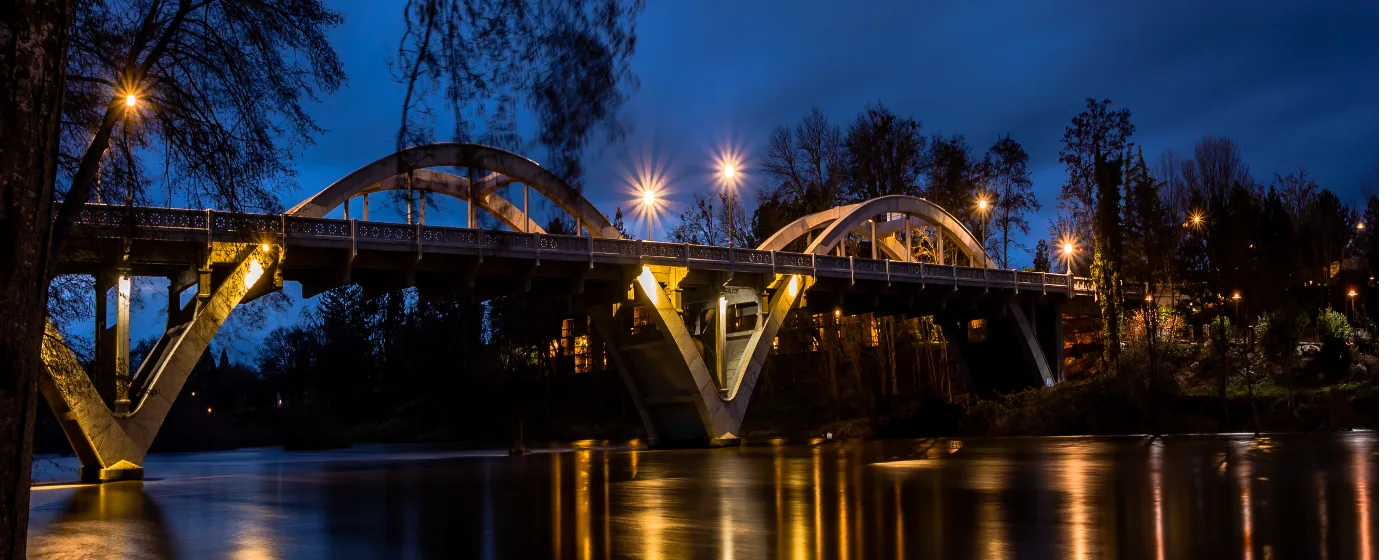
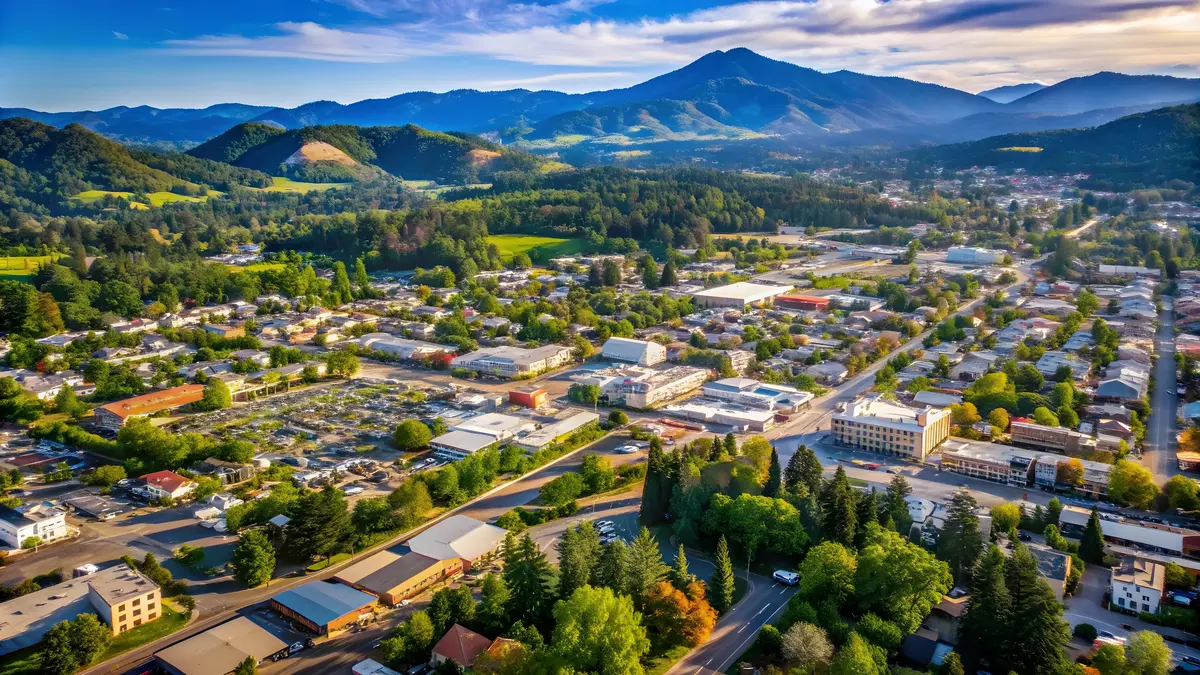
You've probably heard that Southern Oregon is where Californians go when they're priced out of everywhere else — but the people quietly moving to Grants Pass in retirement aren't making a desperation move. They're making a deliberate one. The city of 39,311 sits at 935 feet on the banks of the Rogue River, flanked by the Cascade, Siskiyou, and Coast ranges, and it pulls retirees who want genuine outdoor access, a real downtown, and a hospital worth trusting — without paying Ashland prices or tolerating Medford's sprawl.
The economic reality is straightforward. The typical home price stands at $404,270 (Zillow Home Value Index, July 2026) — noticeably below what comparable river-town retirement markets charge in other western states, and well within reach for buyers selling equity out of California or the Pacific Northwest. What surprises most newcomers isn't the affordability; it's how complete the city feels. Asante Three Rivers Medical Center sits inside city limits, and Josephine County's recreation infrastructure — five public golf courses, a YMCA, indoor pools — is built for people who actually use it daily rather than occasionally.
Roughly 22% of Grants Pass residents are already 65 or older, well above the national share, which means the city's pace, services, and social fabric have quietly organized themselves around retirement-age residents. The Growers Market at Riverside Park, the Cathedral Hills trail system, the compact Historic Downtown National Historic District — these aren't amenities bolted on for tourists. They're the fabric of daily life for a community that skews older. Oregon's zero sales tax helps a fixed income stretch further than it would in most states, and the climate delivers 196 sunny days a year, which places Grants Pass in a different category than western Oregon's reputation for rain would suggest.
Whether you're comparing Grants Pass to Medford, weighing the tax picture, or trying to figure out what downsizing here actually looks like, the sections below walk through healthcare access, the retiree budget, walkability, the 55+ housing landscape, and how this city stacks up against its Southern Oregon neighbors.
Why Retirees Are Choosing Grants Pass
The case for Grants Pass in retirement comes down to three things that rarely line up in one place: a hospital rated among the best in the state, a downtown you can actually walk, and home prices that don't require liquidating everything you own. The typical home at $404,270 (July 2026) is low enough that many buyers arriving with equity can purchase outright or carry a minimal mortgage — which changes the math on a fixed income dramatically.
Who fits here? Retirees who want year-round outdoor access without moving to a resort town. The Rogue River runs through the city, the Cathedral Hills trail system is genuinely hikeable, and ocean beaches and mountain skiing are within a two-hour drive. Grants Pass also suits people who want a real community rather than an age-segregated compound — at 22% seniors, the city has critical mass for every social interest without feeling like a retirement enclave.
Who should look elsewhere? If you need a major academic medical center within twenty minutes — for complex oncology, transplant programs, or highly specialized cardiac care — Grants Pass isn't the answer on its own. The drive to Medford is about 30 minutes, which adds up if appointments are frequent. And if you want an urban core with walkable retail density on the scale of Portland's inner neighborhoods, this is a smaller, quieter city — honest about that, and better for it.
Healthcare & Medical Access in Grants Pass
The Hospital Inside City Limits
Asante Three Rivers Medical Center is the anchor fact of retirement planning in Grants Pass, and it earns that role. The Centers for Medicare & Medicaid Services awarded it a five-star Overall Hospital Quality rating — the highest the agency issues, reached by fewer than one in ten Medicare-certified hospitals nationally — making it one of only two hospitals in all of Oregon to hold that distinction. That designation reflects sustained performance across multiple quality measures, not a single good year.
The practical translation for retirees: this is not a pass-through facility where you stabilize and get sent somewhere else. Asante Three Rivers is a full-service hospital with strong cardiac care, capable orthopedic services, and solid respiratory medicine — three areas that matter disproportionately to people over 65. The hospital also operates an Immediate Care clinic for same-day walk-in treatment of non-emergency conditions, which means minor illness or injury doesn't mean an ER wait.
Nursing Quality
The American Nurses Credentialing Center awarded Asante Three Rivers its Pathway to Excellence® designation — for the fourth time, placing the hospital among only 23 worldwide to have earned the distinction three or more times. Nursing quality is what determines your actual experience as a patient, not the building. The repeat designation reflects a sustained institutional commitment rather than a single good year.
The Honest Gap
For highly specialized procedures — organ transplants, advanced cancer surgery, pediatric subspecialties — Grants Pass refers patients to larger systems in the region. Medford is about 30 minutes away on I-5, where additional regional facilities operate. For most retirees, this gap is manageable and rarely triggered. For those managing a complex, ongoing condition that requires frequent specialist visits to a major academic center, it's worth factoring into the decision.

The Retiree Budget in Grants Pass
How Oregon Taxes Retirement Income
Oregon fully exempts Social Security and Railroad Retirement benefits from state income tax — a meaningful advantage for retirees whose income skews toward those sources. The catch is that pension distributions, 401(k) withdrawals, and IRA income are taxed at Oregon's regular graduated rates, which run from 4.75% to 9.9%. If your retirement income is heavily weighted toward qualified accounts, Oregon is not the most tax-friendly landing spot in the West. Consult a tax professional to model your specific picture before committing.
Property Taxes and the Deferral Option
The effective property tax rate in Grants Pass runs approximately 0.60% — among the lower rates in the Pacific Northwest, and well below what most California or Washington retirees are accustomed to paying. Oregon also offers an income-qualified property tax deferral program for homeowners aged 62 or older: if you meet the income threshold and have owned and occupied your home for at least five years, the state pays your property taxes and records a lien at 6% simple interest, repaid when the home is sold. For retirees on a tight monthly budget, this program can meaningfully reduce cash outflow in the early retirement years. Income limits and qualification details are administered through the Oregon Department of Revenue and should be confirmed directly, as program rules can change.
No Sales Tax, Every Day
Oregon has no state sales tax. On a fixed income where every dollar of grocery, clothing, and household spending is real money, this is a genuine daily advantage — not a theoretical one. For a full picture of how daily costs, rent, and utilities compare, see the cost of living in Grants Pass page.
Looking to buy in Grants Pass? Estimate your payment.
Enter your numbers to see an estimated monthly mortgage payment.
Estimate only. Excludes HOA fees and mortgage insurance. The interest rate above is a starting point, not a quoted rate — replace it with your own to see real numbers. Insurance is a flat placeholder, not a Grants Pass quote.
Walkability, Community & Staying Active in Grants Pass
The Geographic Reality of Getting Around on Foot
Grants Pass is not a car-free city, and most errands outside the downtown core require driving. The city spreads across low hills on both sides of the Rogue River, and neighborhoods like Cathedral Hills, West Hills, and Redwood are residential in character — pleasant streets, but not walking distance to daily services. If you're buying in those areas, a car is essential.
The exception is the Historic Downtown National Historic District, where Riverside Park, Reinhart Volunteer Park, and the Growers Market form a genuinely walkable core. The riverfront is flat and accessible, and the Rogue River Pedestrian Bridge connects the two banks. For retirees who want to reduce car dependence, buying within walking range of downtown is the move that makes it possible.
Active Life Without Long Drives
Josephine County supports an active retirement with five public golf courses, indoor swimming pools, tennis courts, and a YMCA — all within the county, meaning none of this requires a long commute to Medford. The Cathedral Hills park trail system offers hiking with real elevation change for those who want it. The Rogue River is immediately accessible for fishing — steelhead, salmon, and trout are native to the river — as well as kayaking. Hellgate Canyon is one of the more dramatic stretches of inland river landscape in Southern Oregon and it's a short drive from town.
A planned 30-mile paved corridor, the Rogue River Greenway, would eventually link Grants Pass to Central Point and connect onward to the Bear Creek Greenway for a continuous 50-mile path to Ashland — a significant low-impact recreation asset for cyclists and walkers once completed. For outdoor recreation details, see the parks and recreation page.
Community and Social Life
With 22% of city residents over 65, the social infrastructure here isn't accidental. The Growers Market at Riverside Park draws a consistent crowd through the warm months, and the weekly rhythm of the market functions as one of the city's main gathering points. Volunteering opportunities through Josephine County and the school district are real and visible — this is a community small enough that individual effort is noticed. For retirees coming from larger cities, the social landscape here requires some initiative, but the raw material is present.
Right-Sizing: Downsizing in Grants Pass
What the Housing Stock Actually Looks Like
Grants Pass has a meaningful share of single-level homes built during the 1960s through 1980s ranch-home era, which is exactly what most downsizers are looking for. The challenge is that single-level inventory moves and doesn't sit long — well-priced examples in neighborhoods like Fruitdale, Colonial Valley, and Meadow Wood attract motivated buyers quickly. A buyer who needs single-level living should make it a primary search filter from the start, not an afterthought.
Condos and patio homes exist in Grants Pass but in limited numbers relative to the demand from retirement-age buyers. The downtown and near-downtown areas have some attached and low-maintenance options that appeal to downsizers who want proximity to the riverfront and the Growers Market without a large yard to maintain. For neighborhood-level detail on housing character and price positioning, see the best neighborhoods page.
Named 55+ Communities
Two age-restricted communities operate in Grants Pass: Horizon Village and Kinsington Court. Both serve the 55-and-older market and represent the city's dedicated active-adult inventory. The supply of purpose-built 55+ communities in Grants Pass is limited relative to larger retirement markets like the Phoenix metro or the Willamette Valley corridor, which means buyers targeting this specific product type may face competition or may need to widen their search to nearby areas.
One honest friction point: retirees who move here expecting a large, amenity-rich active-adult campus — poolside lifestyle, on-site dining, organized activities every day — will find that Grants Pass isn't built that way. What it offers instead is integration with a real city, a real river, and real community infrastructure. For some buyers, that's the upgrade; for others, it's the wrong fit entirely.
Grants Pass vs Nearby Retirement Destinations
| City | Cost vs Grants Pass | Primary Hospital | Walkability | Senior Living Depth | Overall Retirement Fit |
|---|---|---|---|---|---|
| Grants Pass | Anchor | Asante Three Rivers Medical Center — five-star CMS rating, inside city limits | Walkable downtown core; car needed elsewhere | Moderate — two named 55+ communities, single-level inventory | Strong for active, outdoors-oriented retirees |
| Medford | About the same | Larger regional hospital network; broader specialty depth | More commercial sprawl; less walkable downtown | Deeper — more 55+ options, larger senior living market | Better for retirees needing frequent specialist access |
| Ashland | Pricier | Relies on Medford for hospital-level care | Among the most walkable small cities in Oregon | Limited — small city, boutique options | Best for arts-focused retirees; steeper price of entry |
| Rogue River | Somewhat lower | Depends on Grants Pass and Medford facilities | Minimal — small town, car essential | Very limited | Suits self-sufficient retirees wanting a quieter, smaller footprint |
| Merlin | Noticeably lower | Depends on Grants Pass facilities | Rural — car required for nearly everything | Minimal | Works for retirees prioritizing land, privacy, and low cost over services |
| Jacksonville | Pricier | Relies on Medford for hospital care | Compact historic village; very walkable within it | Very limited — small historic town | Niche fit: retirees who want quiet, history, and walkable village scale |
Among these options, Grants Pass sits in a genuinely strong position for most retirees: it is the only city in the group with a five-star CMS-rated hospital inside city limits, which is a material advantage that neither Ashland nor Rogue River can match. Medford edges it on specialty depth and senior living volume, and costs about the same — making Medford the better call for anyone managing a complex chronic condition that demands frequent specialist visits.
Ashland and Jacksonville offer superior walkability and cultural density in their historic cores, but both carry higher price tags and depend on Medford for hospital-level care. Rogue River and Merlin trade healthcare and service access for significantly lower cost and a quieter rural pace — the right answer for retirees who are genuinely self-sufficient and not planning to lean on local services heavily. For most active adults who want a complete community rather than a trade-off, Grants Pass is the most balanced option in Southern Oregon.

Local Expert Takeaway: Grants Pass earns its reputation as a retirement destination on the strength of one fact that rarely gets stated plainly: Asante Three Rivers Medical Center is one of only two Oregon hospitals to hold a five-star CMS overall quality rating, and it sits inside city limits. Pair that with a typical home price of $404,270 (July 2026), no state sales tax, a property tax rate of approximately 0.60%, and a Rogue River setting that makes outdoor living genuinely easy — and the math works for retirees who want a real community rather than a resort. The honest caveat is that this is a mid-size city, not an urban one: social life here requires initiative, the walkable zone is concentrated around the Historic Downtown, and the 55+ housing supply is limited. Come for the river, the hospital, and the cost structure; adjust expectations about condo inventory and specialty care depth before you close.
Quick Takeaways & FAQs
✅ Asante Three Rivers Medical Center holds a five-star CMS Overall Hospital Quality rating — one of only two hospitals in Oregon to do so — and it sits inside Grants Pass city limits.
⚠️ Oregon taxes pension, 401(k), and IRA income at rates up to 9.9% — retirees with significant qualified-account withdrawals should model the state income tax picture carefully before committing.
📍 The Growers Market at Riverside Park and the walkable riverfront of the Historic Downtown National Historic District are where active retirees in Grants Pass actually spend their Saturday mornings — not in a gated campus.
Is Grants Pass a good place to retire on Social Security alone?
How good is the hospital in Grants Pass for retirees?
What are the property tax benefits for retirees in Oregon?
What 55+ communities exist in Grants Pass?
How does Grants Pass compare to Ashland for retirement?
Moving to Oregon?
Tell us what you need help with and we'll connect you with local resources.
