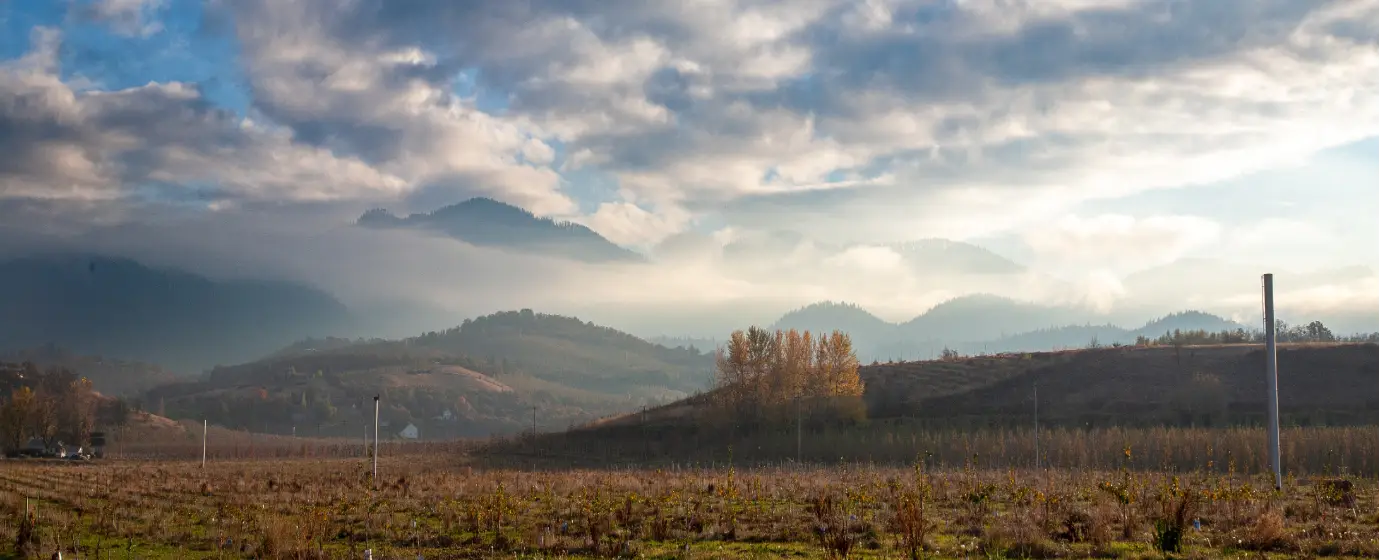
What Is Living in Jacksonville, Oregon Like?
The railroad's decision to bypass Jacksonville in the 1880s was, by every economic measure, a blow to the town. It was also the best thing that ever happened to it. Because the freight lines went to Medford instead, Jacksonville's Gold Rush-era brick storefronts, Victorian homes, and Greek Revival commercial buildings were never bulldozed to make way for something newer. Today the result is a 326-acre National Historic Landmark District — the kind of intact 19th-century downtown that most American towns lost to urban renewal — sitting just about 15 minutes to Medford along OR-238. Jacksonville has a population of 2,991, and that smallness is the whole point. You don't move here because it's convenient. You move here because it's irreplaceable.
The economic backbone is not Jacksonville itself — it's the broader Rogue Valley. The Medford School District 549C, with 13,602 students enrolled in 2025-26, is among the largest employers for residents who work in education. Jackson County government and the City of Jacksonville employ a smaller core of municipal workers locally, while a major regional health system anchors healthcare employment in neighboring Medford for a significant share of Jacksonville residents. The town draws remote workers, retirees, artists, and wine-country converts who want a specific quality of life: no chain stores, a walkable historic core, and the Britt Music & Arts Festival running each summer in a naturally formed hillside amphitheater among ponderosa pines. That last detail is not a footnote — the Britt has been bringing world-class classical, jazz, and folk performances to this small town since 1963, and it shapes the cultural identity of Jacksonville as much as anything else.
On cost, Jacksonville runs noticeably above the Southern Oregon average, and the gap relative to Medford is real — though it's still a fraction of what you'd pay in the Bay Area or Portland's close-in neighborhoods. The typical home price of $612,322 (July 2026) reflects the premium buyers assign to the historic character and the lifestyle, not a frothy speculative market. The effective property tax rate sits at approximately 0.74%, which is among the lower rates in Oregon. For day-to-day life, 199 sunny days a year and a Mediterranean-leaning climate — hot, dry summers and cool, wet winters — mean outdoor recreation is genuinely year-round. The Jacksonville Woodlands Trail System puts over 16 miles of forested trail within walking distance of downtown. The Applegate Valley wine country starts at the city's western edge.
Whether you're considering a move or just researching the area, the sections below break down Jacksonville's neighborhoods, housing market, commute realities, local employers, and what daily life here is really like — the things that don't show up in a Zillow listing.
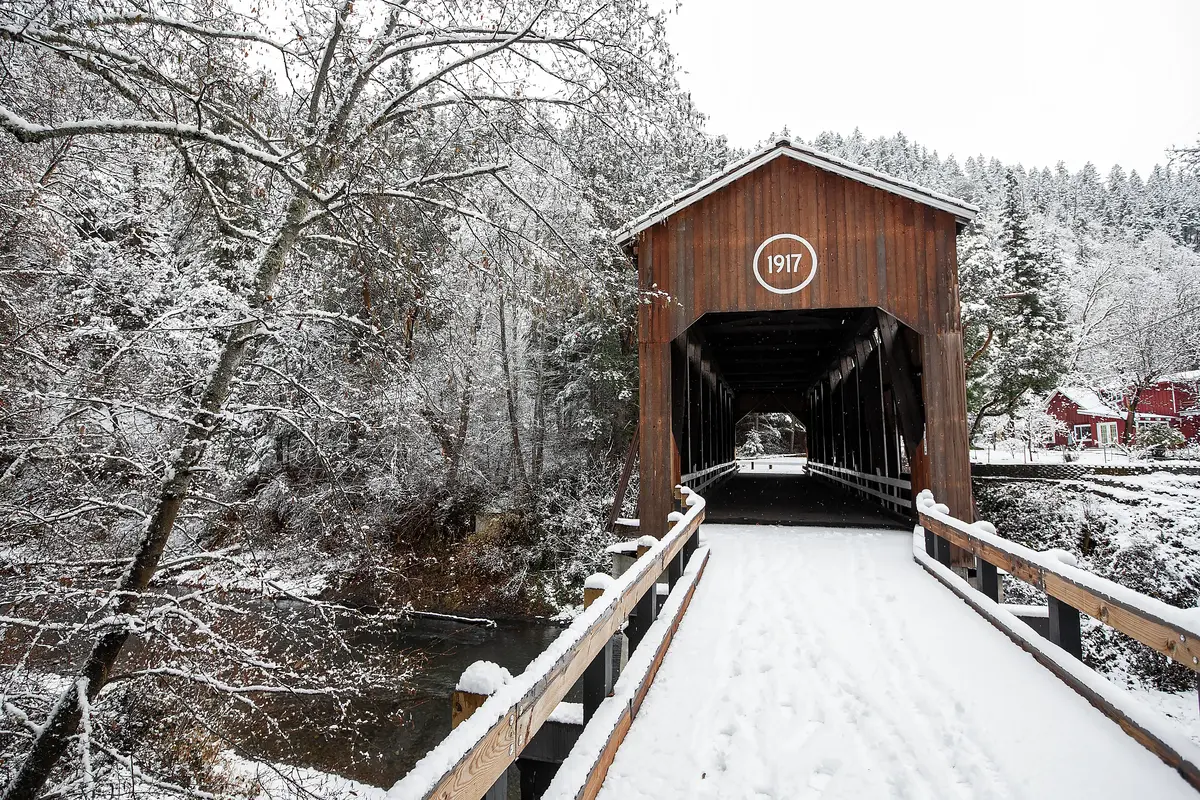
Jacksonville at a Glance
Looking to buy in Jacksonville? Estimate your payment.
Enter your numbers to see an estimated monthly mortgage payment.
Estimate only. Excludes HOA fees and mortgage insurance. The interest rate above is a starting point, not a quoted rate — replace it with your own to see real numbers. Insurance is a flat placeholder, not a Jacksonville quote.
Why Are People Moving to Jacksonville?
Most people who move to Jacksonville have already talked themselves into it and are looking for a reason to walk away. They don't usually find one.
The pull is specific: a National Historic Landmark town of under 3,000 people, no chain stores anywhere in the commercial core, a summer performing arts festival that draws talent from across the country, and wine tasting rooms within walking distance of the post office. That combination does not exist anywhere else in the Pacific Northwest at this scale or price point.
Who Moves Here — and Why
Remote workers make up a growing share of recent arrivals. If your income isn't tied to a Southern Oregon employer, Jacksonville offers a lifestyle that most comparable historic towns on the West Coast price out of reach. The median household income of $90,341 is higher than both Medford and the state average, which tells you something about who's already here: professionals who've chosen this place deliberately.
Retirees from California — particularly the Bay Area and Southern California — are the other dominant buyer type. The price delta relative to where they're coming from is substantial, the climate is milder than the high desert alternatives, and the cultural amenities (the festival, the historic district, the wine country) make the lifestyle argument easy. The moving from California page covers that specific transition in more depth.
What People Discover After Six Months
The surprise most newcomers mention isn't the winters — it's how socially connected the town is. At 2,991 people, Jacksonville is small enough that you recognize faces at the farmers market within a month. The Victorian Christmas celebration, the Chinese New Year events honoring the town's Gold Rush-era immigrant community, the Historic Home Tour, the 'Meet the Pioneers' cemetery tours — these aren't tourist attractions. They're the town's actual social calendar, and locals show up.
The honest downside: Jacksonville is not a city that grows on you over time if you need urban density. If you move here expecting the restaurant variety or the retail convenience of even a mid-sized city, you'll feel the constraints quickly. A serious shopping run means driving to Medford. That's not a problem for the buyers this town suits — but it's a real consideration for households that haven't thought it through.
Jacksonville suits buyers who are choosing a lifestyle, not just a location. The historic character, the outdoor access, the arts scene, and the wine country are not perks layered on top of a normal suburb — they are the entire value proposition.
What Daily Life Feels Like in Jacksonville
On a Tuesday morning, you can walk from a Victorian-era brick storefront to a trailhead in about five minutes. That spatial compression — where history, outdoor access, and a coffee shop are all within the same short walk — is what longtime residents point to when they try to explain why they stayed.
The Historic Core
Jacksonville's downtown is genuinely walkable in a way that most small Oregon towns are not. The absence of chain stores isn't a marketing line — it's enforced by the character of the buildings themselves, most of which date from the 1850s through the 1880s and are within the National Historic Landmark District. Boutiques, art galleries, wine tasting rooms, and independent coffee shops occupy spaces where the architecture itself is the backdrop.
The Beekman House and Bank Museum, the U.S. Hotel, and the Jacksonville Cemetery are within easy walking distance of the commercial core and are part of daily life in a way that history museums in larger cities rarely are. The town is also home to what was Oregon's first Chinatown, founded by Gold Rush-era immigrants from San Francisco — a history the community actively commemorates.
Seasons and What They Bring
Summers are long and dry, with 199 sunny days a year across the calendar. The outdoor performing arts festival has run each summer since 1963 at a naturally formed hillside amphitheater on the estate of 19th-century photographer Peter Britt — presenting classical, jazz, blues, folk, and world music to audiences in one of the more unusual outdoor venues in the country. The Chamber Music Series extends programming into the cooler months as well.
Winters are wet and cool but rarely severe at town elevation. The Victorian Christmas celebration transforms the historic district into something that feels genuinely period-appropriate rather than manufactured, which catches newcomers off guard in the best way. Spring brings wildflowers on the Woodlands trails — including the endangered Fritillaria gentneri, which grows here and almost nowhere else.
The Schools Picture
Jacksonville falls within the Medford School District 549C, which serves 13,602 students enrolled in 2025-26. On 2024-25 state assessments, 28.9% of students reached math proficiency and 40.3% reached reading proficiency — figures that are broadly in line with Oregon's overall trends but below what families relocating from higher-performing districts may expect. The schools page breaks down the individual school options and what parents with school-age children should know before committing to a neighborhood.
The practical reality for families: many parents here are highly engaged with the schools precisely because the community is small enough for that engagement to matter. Class sizes and individual teacher relationships look different in a town of 2,991 than they do in a larger suburb.
The Jacksonville Housing Market Right Now
Jacksonville's typical home price of $612,322 (July 2026, Zillow Home Value Index) is the premium you pay to live inside — or adjacent to — a National Historic Landmark District. That figure reflects a market with very low turnover and a constrained supply of period homes.
Entry-level options in Jacksonville proper are limited. The historic core is dominated by restored Victorian and Greek Revival homes that carry corresponding prices. Some areas run well above the city-wide typical home price; others, particularly newer residential developments on the town's edges, sit closer to it. For a full breakdown of what different neighborhoods offer and how they compare in character, the best neighborhoods page goes deeper.
What the Market Feels Like
This is not a market where well-priced homes sit for months. Jacksonville has a small, devoted buyer pool — people who have decided they want this specific town — and a housing stock that doesn't replenish quickly. When something appropriate comes to market, it tends to move.
Typical 2-bedroom rents run $2,010–$2,450 per month, reflecting both the limited rental inventory and the desirability of the location. The effective property tax rate of approximately 0.74% is on the lower end for Oregon, which partially offsets the higher purchase prices relative to a straight cost-of-living comparison. For a full look at taxes, utilities, and ongoing costs, see the cost of living page.
The Safety Context
Jacksonville records a violent crime rate of 1 per 1,000 residents and a property crime rate of 5.65 per 1,000 residents — both significantly below state benchmarks of 3.3 and 24.5 per 1,000, respectively, and below national figures as well. The safety page has the full breakdown and context.
Jacksonville Neighborhoods
Jacksonville has several distinct areas — each with its own character and appeal. Here’s a breakdown to help you narrow down where to focus your home search.
🏡 Historic District (Downtown Jacksonville)
The heart of the National Historic Landmark designation — Victorian homes, 19th-century brick commercial buildings, and the most walkable streets in the city. Buyers here are choosing the full Jacksonville experience: the hillside amphitheater within walking distance, coffee shops and wine tasting rooms at street level, and architecture that can't be replicated anywhere else in Southern Oregon.
🏠 Nunan Square
A residential area close to the historic core that gives buyers proximity to downtown character with slightly more separation from the festival crowds. The housing stock is a mix of period homes and more recent construction, suited to buyers who want the Jacksonville identity without being in the thick of concert traffic.
🌳 Pheasant Meadows
One of Jacksonville's newer residential pockets, with housing stock that skews more contemporary than the Victorian-era core. Parents with school-age children often look here for larger floor plans and a quieter setting while staying within easy reach of the Woodlands trails.
🏘 Stagecoach Hills
A hillside neighborhood above the historic district with views over the valley and the Siskiyou foothills — the kind of setting that makes the short drive into downtown feel worth it. The elevated position means some streets are steeper, which buyers should factor in for winter months.
🏔 Coachman Hills
Positioned on Jacksonville's residential edges, Coachman Hills offers a quieter, more spread-out feel compared to the downtown-adjacent neighborhoods. It suits buyers looking for more space and privacy while remaining connected to the town's historic core by a short drive.
🌆 Red Tail Heights
One of Jacksonville's higher-elevation residential areas, where the views and the sense of seclusion are the primary draw. The surrounding foothills character — ponderosa pine, open sky, proximity to the Woodlands trail network — makes it a natural fit for outdoor-oriented buyers.
Pros & Cons of Living in Jacksonville
The Pros
- Nationally designated historic district with well-preserved Gold Rush architecture
- Home to the renowned Britt Music & Arts Festival
- Surrounded by Applegate Valley wineries and hiking trails
- Notably low violent crime rate
The Cons
- Home prices run well above the county and state median
- Very limited local job base means most residents commute to Medford
- Small-town scale means fewer big-box retail and service options
Getting Around & Commuting in Jacksonville
Jacksonville is a small town with no local transit and a geography that makes driving the default for nearly everything beyond the historic core. Understanding that before you move — rather than six months after — is one of the most useful things this guide can do for you.
The Medford Commute
Most working residents commute out. The primary destination is about 15 minutes to Medford along OR-238, the state highway that connects Jacksonville directly to Medford's commercial and employment centers. That drive is easy and scenic under normal conditions — OR-238 runs through farmland and Applegate Valley wine country — and it's one of the more pleasant commutes in Southern Oregon.
Remote work has changed the calculus significantly. A growing share of Jacksonville residents have structured their lives around working from home precisely because the town's character suits that lifestyle and the commute math, when you only have to make it occasionally, works well. If you're in an office five days a week in Medford, the 15-minute drive is genuinely manageable. If you're in Portland or the Bay Area, you're looking at a different conversation entirely.
Ashland and the Rest of the Valley
Ashland — home to the Oregon Shakespeare Festival and its own distinct cultural identity — is a reasonable drive south, making the southern Rogue Valley a practical commute zone for Jacksonville residents. Central Point and Phoenix lie between Jacksonville and Medford and are accessible along the same OR-238 corridor.
For air travel, Rogue Valley International-Medford (MFR) is approximately 9 miles from Jacksonville — close enough that flights don't require an overnight stay the night before. That proximity matters more than it might seem for remote workers and retirees who travel frequently.
Within Jacksonville
Inside the historic core, you genuinely don't need a car. The boutiques, restaurants, coffee shops, tasting rooms, and trailheads are all within walking distance of each other — and that walkable quality is a real daily benefit, not just a tourism talking point. But for grocery runs, school pickups in Medford, and anything requiring a big-box store, you're driving. Most households here run two cars. Plan accordingly.
| Destination | Drive Time from Jacksonville | Primary Route |
|---|---|---|
| Medford (downtown / employment core) | About 15 minutes | OR-238 |
| Rogue Valley International-Medford (MFR) | ~20 minutes | OR-238 east to Medford |
| Ashland | ~30 minutes | OR-238 to I-5 south |
| Central Point | ~20 minutes | OR-238 east |
| Applegate Lake | ~35 minutes | OR-238 west into Applegate Valley |
| Portland | ~4.5 hours | I-5 north |
The OR-238 corridor is Jacksonville's only highway connection — there's no freeway access from within the city limits themselves, which keeps through-traffic low and preserves the town's quiet character, but also means every trip out routes through the same road.
Schools in Jacksonville
Families relocating to Jacksonville have public, private, and higher-education options nearby. Here’s a quick overview.
🎓 School District
Medford School District 549C serves K–12 students across Jacksonville and the surrounding area.
🏆 Graduation Rate
The 4-year high-school graduation rate here is approximately 88.1%.
📚 Higher Education
Oregon’s public universities — the University of Oregon, Oregon State University, and Portland State University — offer four-year degrees statewide, with a network of 17 community colleges providing two-year and workforce programs.
🌐 Online Learning
Oregon State University Ecampus and Portland State University Online offer fully accredited online degrees for remote learners across the state.
Safety in Jacksonville
A quick look at how Jacksonville compares on the numbers that matter most when weighing a neighborhood or a move.
🛡 Violent Crime
Approximately 1 per 1,000 residents.
🔒 Property Crime
Approximately 5.65 per 1,000 residents.
Compared to the most recent national figures from the Bureau of Justice Statistics (2024), Jacksonville’s violent crime is below the national average (about 3.7 per 1,000), and property crime is below the national average (about 18.4 per 1,000).
Against Oregon as a whole, Jacksonville’s violent crime is roughly a third of the state average, and property crime is roughly a quarter of the state average (Bureau of Justice Statistics, Crime Known to Law Enforcement, 2024 (tables 2 and 3)).
Crime rates can vary a lot within a single city, so the citywide numbers above are only a starting point. Some neighborhoods in Jacksonville run well below these averages, while others run higher — the kind of block-by-block detail that matters most when you’re actually choosing where to live. The full guide below breaks it down neighborhood by neighborhood.
Working in Jacksonville
Jacksonville’s largest employers span several industries — here are some of the anchors of the local job market.
🎓 Medford School District
Education
🏛 City of Jacksonville
Municipal government
🏛 Jackson County
Municipal government
🏥 Asante Rogue Regional Medical Center
Healthcare, located in Medford
🏥 Rogue Valley Manor
Healthcare, located in Medford

Retiring in Jacksonville
Jacksonville draws retirees for its balance of amenities, outdoor access, and cost. Here’s what to weigh.
🌤 Climate
Jacksonville's Mediterranean-leaning climate delivers 199 sunny days a year, with hot and dry summers and cool, wet winters — rarely severe at town elevation. For retirees, the long sunny season makes outdoor activity genuinely year-round, and the absence of extreme cold or snow at the valley floor is a draw for those leaving harsher climates.
🍴 Lifestyle
The Britt Music & Arts Festival, an intact National Historic Landmark downtown with art galleries and wine tasting rooms, annual cultural events like the Victorian Christmas and Historic Home Tour, and over 16 miles of Woodlands trails give retirees a cultural and outdoor calendar that punches well above the town's size. Independent dining and coffee are walkable; a serious shopping run means a drive to Medford.
🏚 55+ Communities
Royal Mobile Estates is Jacksonville's established 55+ community option — a smaller, community-oriented setting rather than a large amenity-heavy development. The broader Southern Oregon region, including neighboring Medford, offers additional active-adult and senior-living options for those who want more scale. The retiring page covers healthcare access and senior living in more depth.
✈ Getting Around
The historic core is walkable on foot; everything beyond it requires a car. OR-238 connects Jacksonville to Medford in about 15 minutes, where the full range of medical services, retail, and services are available. Rogue Valley International-Medford Airport (MFR) is approximately 9 miles away — a practical proximity for retirees who travel to see family.
🏛 Oregon Taxes for Retirees — What to Know
- Social Security is not taxed — Oregon does not tax Social Security or Railroad Retirement benefits. Any amount included in your federal adjusted gross income is subtracted back out on the Oregon return.
- But other retirement income IS taxed — This is the trade-off that surprises people moving from Washington or Texas. Pension distributions and 401(k)/IRA withdrawals are taxed as ordinary income at Oregon’s regular rates — there is no blanket retirement-income exclusion.
- Graduated income tax — Oregon has four brackets — 4.75%, 6.75%, 8.75% and 9.9%. The 4.75% rate covers the first $10,000 of taxable income for a single filer ($20,000 filing jointly); the 8.75% rate starts at $125,000 ($250,000 jointly); and the top 9.9% rate applies above $250,000 ($500,000 jointly).
- No sales tax — Oregon levies no general sales tax.
- Property taxes, with senior deferral — Oregon’s Senior and Disabled Property Tax Deferral lets qualifying homeowners have the state pay their county property taxes, with a lien recorded against the home. The 2026 household income limit is $70,000, and deferred balances accrue 6% simple interest — it defers the bill rather than forgiving it.
- Estate tax — the one to plan for — Oregon has its own estate tax with a $1 million filing threshold — far below the federal exemption, and NOT indexed for inflation, so it reaches more estates every year in real terms. Retirement accounts and a long-held home count toward the taxable estate, so estates that feel modest can cross the line without the owner expecting it.
- No inheritance tax — Oregon has no separate inheritance tax and no gift tax.
Tax laws change frequently and individual situations vary. This is general information, not tax advice — always consult a qualified Oregon tax professional or CPA for personalized retirement tax planning.
Weekends & Local Favorites in Jacksonville
Jacksonville's weekend life is concentrated and self-contained in a way that larger towns can't replicate. You can cover a meaningful amount of it on foot — coffee, a trail, lunch, wine tasting — without ever getting in your car.
Coffee and Morning Stops
GoodBean Jacksonville has been the anchor of the morning coffee scene for years, and Pony Espresso occupies a spot in the historic core that feels like it's been there as long as the brick buildings. Code 3 Coffee & Snacks, Cerberus Coffee, and The Miners' Bazaar round out the options — more coffee variety than a town of under 3,000 has any right to expect, and all of it independent.
Food and Drink
Bella Union Restaurant is the kind of place where locals bring out-of-town guests when they want to make a point about the town. Back Porch Bar & Grill is the more casual end of the same argument. The Jacksonville Inn has been an institution since the Gold Rush era's echoes were still fresh; J'Ville Tavern is where the less-formal end of the social life happens. South Stage Cellars brings the Applegate Valley wine focus into town, with tasting poured in a historic setting.
The broader wine picture is worth understanding: Jacksonville is the gateway to the Applegate Valley AVA, with a growing number of member wineries producing Chardonnay, Viognier, Syrah, and Bordeaux-style reds from granite soils. Several tasting rooms are walkable from the downtown core, and the wine country extends west along OR-238 for those willing to drive deeper into the Applegate.
Farmers Markets
The Jacksonville Farmers Market and the Jville Market keep local produce and artisan goods in the weekly routine. These aren't weekend tourist events — they're where residents shop, and they reflect the agricultural seriousness of the surrounding valley.
Trails and Outdoors
The Jacksonville Woodlands Trail System — a 320-acre community park adjoining the downtown — gives you over 16 miles of all-weather trails passing historic mining sites, native wildflowers, and views back over the town. The Woodlands Association, formed in 1989, protected these hillsides from development, which is why a town of 2,991 has a trail system that most cities ten times its size would envy.
The hillside trails around the festival grounds are worth exploring outside of concert season — the ponderosa pine and madrone forest is the same in July as in October, but without the crowds. Applegate Lake, farther west along the Applegate Valley, is the destination for a longer day out.
Arts and Events
The Britt Music & Arts Festival is the cultural event of the year — dozens of concerts each summer in the hillside amphitheater, ranging from orchestral performances to blues, folk, and country acts. The festival has run since 1963, and the Chamber Music Series extends programming into winter. Tickets and season passes are how many residents structure their summer social calendar.
The Victorian Christmas celebration, the Chinese New Year events, the Historic Home Tour, and the 'Meet the Pioneers' cemetery tours fill out the rest of the calendar in ways that feel genuinely local rather than staged for visitors. Historic Jacksonville, Inc. is also developing the 1881 Old City Hall building as an accessible museum hub with walking tours and GPS self-guided options — a project that will add another layer to an already deep cultural inventory.
Jackson Creek, which runs through the historic district and gave the town its name and its first gold claim, is the geographic thread connecting most of what makes Jacksonville's outdoor and historical character inseparable from each other.
Local favorites in Jacksonville
Restaurants
- Bella Union Restaurant
- Back Porch Bar & Grill
- Jacksonville Inn
- J'Ville Tavern
- South Stage Cellars
Outdoors
- Jacksonville Woodlands Trail System
- Britt Gardens & hillside trails
- Applegate Lake
- Jackson Creek
Coffee
- GoodBean Jacksonville
- Pony Espresso
- Code 3 Coffee & Snacks
- Cerberus Coffee
- The Miners' Bazaar
Farmers Markets
- Jacksonville Farmers Market
- Jville Market
Top Things Locals Say About Jacksonville
The best intel about a city comes from the people who actually live there. Here’s what Jacksonville residents say when newcomers ask the questions everyone’s thinking.
“I knew Jacksonville was historic — I'd visited for Britt concerts. What I didn't expect was how quickly the town became my actual community. Within two months I knew the names of people at the farmers market, recognized the same faces on the Woodlands trails, and had been invited to the Victorian Christmas. It's not a place you observe from the outside for very long.”
— Recent Jacksonville home buyer
“What's the most surprising thing about living in Jacksonville?”
How genuinely walkable the historic core is — not as a talking point, but as a daily reality. You can walk to coffee, to the trail, to dinner, and to a concert without ever moving your car. In a town this small, that kind of compactness creates a social life almost automatically. The downside surprise is the same coin flipped: when you need something the historic district doesn't have, you're driving to Medford every time.
“What do locals love most about Jacksonville?”
The Britt summers, but also the quieter parts of the year. The Woodlands trails in spring, when the wildflowers are out. The Victorian Christmas in December, which feels like the town actually meant it rather than assembled it for tourism. The fact that you can walk the entire commercial core in ten minutes and know that none of it is a chain store. People who stay here past the first year tend to stay for a long time.
“What should newcomers to Jacksonville know?”
OR-238 is your lifeline. Learn it, time it, and don't underestimate the frequency with which you'll be on it — every major grocery run, medical appointment, or school pickup routes through there. The historic core is the town's strength, but the surrounding foothills mean some of the residential streets are genuinely steep, which matters in winter. And festival weekends at the hillside amphitheater bring crowds that make parking in the downtown core a different experience — plan around it if you live nearby.
“How much do you need a car in Jacksonville?”
For anything within the historic downtown — coffee, lunch, the farmers market, a walk on the Woodlands trails — you genuinely don't need one. For everything else, you do. Grocery shopping, school runs in Medford, healthcare, and big-box retail all require driving. Most households in Jacksonville run two vehicles as a practical matter. The town rewards the on-foot experience in its core, but it is not a car-optional lifestyle once you step outside that zone.
Cities Near Jacksonville
Other communities near Jacksonville worth a look — each with its own character and price point.
| City | Distance | Best For | Vibe | Median Rent | Median Buy |
|---|---|---|---|---|---|
| Medford | 5 mi | Jobs, services & urban amenities | Regional hub, commercial, convenient | $1,687 | $412,596 |
| Central Point | 10 mi | Families & affordable new construction | Suburban, growing, value-oriented | $1,920 | $423,657 |
| Talent | 9 mi | Artists & small-town character seekers | Eclectic, tight-knit, recovering | $1,600 | $424,550 |
More Helpful Guides for Jacksonville
Going deeper on Jacksonville? Our blog series covers everything from first-time buying to retiring here — explore the guides below.
Local Expert Takeaway: Jacksonville is one of the few towns in Oregon where the lifestyle case for moving there is easier to make than the financial one — and the financial one is already solid. The hillside amphitheater, the Woodlands trails, the Applegate wine country, and a genuine historic downtown with no chain stores are all within a 15-minute walk of each other. The catch is that Jacksonville doesn't grow on you if you need urban infrastructure: grocery runs, big-box retail, and most medical appointments mean a drive about 15 minutes to Medford along OR-238. Buyers who move here knowing that are almost universally glad they came. Buyers who discover it afterward sometimes aren't.
Quick Takeaways & FAQs
✅ Jacksonville's 326-acre National Historic Landmark District is the most intact Gold Rush-era downtown in the Pacific Northwest — and the town built its entire identity around protecting it.
⚠️ With only one highway connection (OR-238) and no chain stores, Jacksonville is genuinely small-town life: the charm is real, but every major errand requires a drive to Medford.
📍 The Britt Music & Arts Festival has run each summer since 1963 in a hillside amphitheater among ponderosa pines — it's not a regional festival that happens to be in Jacksonville; it's the reason many residents' social calendars exist.
Is Jacksonville, Oregon a good place to raise a family?
What is the cost of living like in Jacksonville, OR?
How far is Jacksonville from Medford?
What is the Britt Music & Arts Festival and how does it affect life in Jacksonville?
What neighborhoods are in Jacksonville, Oregon?
Helpful Links for Moving to Jacksonville
Moving to Oregon?
Tell us what you need help with and we'll connect you with local resources.
