
Maybe you've been priced out of the Bay Area or San Diego. Maybe you stumbled onto Jacksonville during a road trip through Southern Oregon and couldn't stop thinking about it. Whatever brought you here, the first thing most Californians say after spending a weekend in this town is that it doesn't feel like anywhere they've ever considered living — and they mean that as the highest possible compliment. A population of 2,991, a main street lined with 19th-century brick storefronts, and a summer performing arts festival that draws tens of thousands of visitors from across the West: Jacksonville is genuinely unlike the California towns people typically flee to escape.
What drives daily life here is a combination of small-town permanence and surprising cultural depth. The Britt Music & Arts Festival — staged at Britt Pavilion on the former hillside estate of photographer Peter Britt — has been running for over six decades, presenting orchestral music, jazz, blues, and folk under ponderosa pines each summer. The major employers within Jacksonville itself are the City of Jacksonville and Jackson County government; residents who need a broader job market drive about 15 minutes to Medford, where Medford School District 549C — the district serving this area — anchors the education sector. Many transplants from California arrive already working remotely, which is exactly the profile Jacksonville suits.
On price, Jacksonville sits well below what most Californians left behind. The typical home value here was $612,322 as of July 2026, compared with California's statewide typical home value of $773,735 — a meaningful gap, though the more dramatic relief for most Californians is in taxes rather than sticker price. Oregon charges no sales tax at all, against California's statewide base sales tax rate of 7.25%; on a household spending $40,000 a year on taxable goods, that difference adds up to roughly $3,600 annually. Property taxes are capped under Oregon's Measure 50, which limits assessed-value increases to 3% per year, providing a level of predictability that California homeowners rarely experience. For the full cost picture, see the cost of living in Jacksonville page.
This guide covers the financial comparison California transplants care most about — home prices, taxes, and what your money actually buys here — alongside the lifestyle realities, the honest trade-offs, and what Jacksonville looks like after the novelty of the move wears off. The sections below walk through the home price reality, the tax picture, what the town offers day to day, the one thing most Californians don't expect, and what to know before you make an offer.

What Your California Home Equity Actually Buys Here
The most common move from California to Jacksonville is equity-driven: someone sells a house in Sacramento, the East Bay, or coastal Southern California and arrives with cash. That equity goes much further here than in most Western cities, but Jacksonville is not the bargain some Californians imagine.
The typical home in Jacksonville was $612,322 in July 2026 — below California's statewide typical home value of $773,735, but well above what that figure suggests to someone whose frame of reference is Medford or Grants Pass. Jacksonville carries a premium rooted in scarcity. The National Historic Landmark District, designated in 1966 as Oregon's first, covers 326 acres and contains 98 buildings constructed between 1850 and 1900. Preservation rules strictly limit exterior changes and new construction within the district. Supply cannot expand the way it can in a conventional suburb, and tourism-driven demand for the town's historic character keeps prices elevated relative to neighboring communities.
For context: Medford's typical home price runs noticeably lower, as does Central Point's and Talent's. If your budget is stretched by Jacksonville's price point, those cities offer a commute of about 15 minutes to Medford and a meaningful reduction in what you pay per square foot. What you give up is the walkable historic core and the particular feeling of living inside a National Historic Landmark.
The Equity-Purchase Reality
Many California sellers arrive with enough equity to buy in Jacksonville outright or with a very modest loan. That changes the calculus significantly — you are no longer comparing monthly payments against California rents, you are comparing what a paid-off historic property produces in lifestyle terms against what you left behind.
The honest caution: the median household income here, $90,341, falls below the income needed to carry the typical home at current rates by a meaningful margin. Jacksonville is not a city where local wages support local home prices. Buyers who succeed here are almost always bringing capital from elsewhere — equity, retirement savings, or remote-income streams that are calibrated to California earning levels. If you are relocating for a local job rather than bringing income with you, run the numbers carefully before committing to the Jacksonville price point rather than a neighboring city's. See the Jacksonville neighborhoods guide for a look at what each area of town actually feels like.
What the Historic District Means for Buyers
If you are buying inside the Historic District — the core of downtown Jacksonville — understand before you make an offer that the oversight process for exterior work is substantive. Replacing a window, changing paint colors, or altering a roofline requires review. For Californians accustomed to HOA review processes, this is not entirely unfamiliar territory, but the standard here is architectural preservation rather than neighborhood aesthetics, and the bar is different. A pre-purchase conversation with the city planning office about any renovation plans you have in mind is not optional — it is one of the most important steps you can take.
The Tax Picture: Where Oregon Wins and Where It Doesn't
The tax comparison between California and Oregon is genuinely more complicated than the headlines suggest. Two things are unambiguously better in Oregon for most Californians. One thing is worse, and it catches people off guard.
| Tax Category | Oregon / Jacksonville | California |
|---|---|---|
| Sales tax | 0% — no sales tax | California's statewide base sales tax rate of 7.25% (plus local additions) |
| Property tax effective rate | 0.74% (Jacksonville) | California's effective property tax rate of 0.71% |
| Property tax assessed-value growth | Capped at 3%/yr under Measure 50 | Subject to broader fluctuation |
| Top state income tax rate | 9.9% | California's top state income tax rate of 13.3% |
| Income tax bracket structure | Compressed — near-maximum collected from six-figure earners | Highest rates reserved for seven-figure earners |
| Federal tax deduction | Oregon allows a partial deduction of federal taxes paid (phases out above $290K AGI) | Not available |
The Sales Tax Win Is Real
Oregon is one of only five states with no sales tax. On a household spending $40,000 a year on taxable goods, the absence of California's statewide base sales tax rate of 7.25% — before local additions — translates to roughly $3,600 back in your pocket annually. This is not a small number compounded over years of home ownership.
The Income Tax Surprise
California's top state income tax rate of 13.3% applies only to the highest earners — those with seven-figure incomes. Oregon's top rate of 9.9% is lower in absolute terms, but Oregon's brackets are compressed: most six-figure earners hit rates close to that maximum, while a California resident at the same income level pays a lower effective rate. For a single filer earning $100,000, the Oregon income tax bill typically runs higher than California's. Oregon does allow a partial deduction of federal income taxes paid, which reduces the effective burden — particularly for lower and moderate earners — but the deduction phases out entirely for joint filers with federal adjusted gross income above $290,000.
The honest summary: if you earned over $500,000 in California, Oregon is a significant income-tax improvement. If you earned $100,000 to $300,000, the income-tax picture may be roughly a wash or slightly worse in Oregon — the sales-tax savings and property-tax stability are what tip the overall package in Oregon's favor. Consult a CPA who works with Oregon transplants before you finalize the move.
Property Tax Stability
Jacksonville's effective property tax rate of 0.74% is nearly identical to California's effective property tax rate of 0.71%. On paper, this looks like a draw. In practice, the difference is in predictability: Oregon's Measure 50 caps assessed-value increases at 3% per year, which means your property tax bill grows slowly and predictably after purchase. That stability is something California homeowners haven't experienced since Proposition 13, and it's meaningful for long-term household budget planning.
What Daily Life in Jacksonville Actually Looks Like
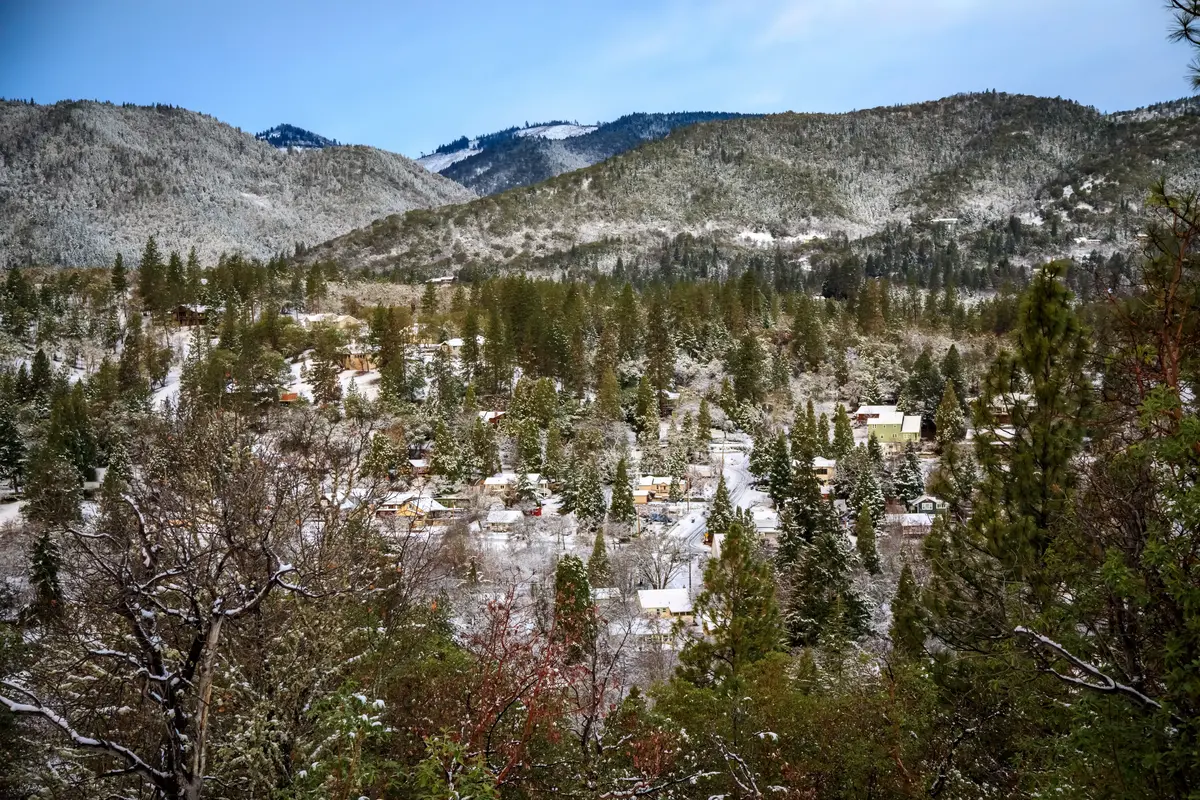
California transplants often describe a version of the same realization around the six-month mark: the pace is different in a way that takes getting used to, and then becomes the thing they'd least want to give up. Jacksonville has 2,991 residents. There is no big-box retail in the city. A serious shopping trip means driving to Medford — about 15 minutes — which most people fold into a weekly errand run rather than treating as an inconvenience.
The Cultural Anchor
The Britt Music & Arts Festival is not a minor regional event. The naturally formed amphitheater at Britt Pavilion seats 2,200 among ponderosa pines and native madrones, and the Britt Festival Orchestra completed its 63rd season in 2025. Orchestral concerts, jazz, blues, folk, bluegrass, pop, and country run through the warm months, drawing audiences from across the West. For Californians who moved specifically because they wanted culture without urban density, this is the deal-closer.
Outdoors and Wine Country
The road south of Jacksonville connects residents to the Applegate Valley wine country, where a collection of wineries along the Applegate Wine Trail grow pinot noir, chardonnay, zinfandel, and sangiovese in one of Oregon's oldest wine-growing regions. Applegate Lake — a 988-acre no-wake lake — draws paddleboarders and kayakers through the warmer months. The Jacksonville Woodlands Trail System puts miles of accessible hiking within the city itself, and Jackson Creek runs through the same corridor where gold was discovered in 1851 and started this whole town.
What the Town Does Not Have
There is no movie theater in Jacksonville. Nightlife beyond a few taverns and the wine-bar end of the restaurant scene is limited. Routine care coverage is adequate in the broader Rogue Valley; health insurance premiums generally run noticeably below what you were paying in California, though you will drive farther for specialist care. For Californians moving from a neighborhood where everything is within a mile, the adjustment is real. For those who moved precisely to escape that kind of density, it is the point.
The weather brings 199 sunny days a year — fewer than coastal California but more than most of Western Oregon, and summers here are genuinely warm and dry. Wildfire smoke is a seasonal reality in Southern Oregon that Californians will recognize, though it may arrive more consistently than in coastal markets they left.
Looking to buy in Jacksonville? Estimate your payment.
Enter your numbers to see an estimated monthly mortgage payment.
Estimate only. Excludes HOA fees and mortgage insurance. The interest rate above is a starting point, not a quoted rate — replace it with your own to see real numbers. Insurance is a flat placeholder, not a Jacksonville quote.
The One Thing Most Californians Don't Expect
Almost everyone who moves to Jacksonville from California says the same thing eventually: they did not expect to feel so immediately welcomed into something genuinely old. Not performed-old. Not renovated-to-look-old. The 98 brick and wooden commercial buildings in the Historic District were preserved largely by economic accident — when the railroad bypassed Jacksonville in the 1880s, the town stopped growing, and nothing was torn down to make room for something newer. That economic stagnation, sometimes called 'preservation by neglect,' is why Jacksonville looks the way it does in 2025 rather than looking like every other small Western town.
The Historic District Is Not a Theme Park
This distinction matters to Californians deciding where to live. Medford has the services, the chains, the sprawl. Jacksonville has the 326-acre National Historic Landmark that Oregon first designated in 1966. People live inside it. They run businesses out of it. The Beekman House and Bank Museum, the Jacksonville Cemetery, the U.S. Hotel — these are not reconstructions. The weight of that is something you either respond to or you don't, and most people figure out which category they fall into on the first afternoon they spend walking the main street.
The Human Friction Moment Most Buyers Miss
What catches buyers off guard is not the price or the taxes or the commute — it is the pace of the real estate market itself. Because the Historic District's preservation rules constrain what can be built and what can be altered, the inventory of move-in-ready homes that can be modified to a buyer's taste is genuinely limited. When something well-priced comes to market, it does not sit. Californians who are accustomed to extended due-diligence windows and multiple rounds of counter-offers sometimes find that Jacksonville's market moves on a different rhythm. Getting clear on financing and having a local buyer's agent who knows the Historic District review process in depth is not a suggestion — it is the difference between buying and watching someone else buy. See the buying process guide for what the transaction looks like here.
People also leave. The honest version of that: residents who move out of Jacksonville most often cite the gap between the town's cultural life in summer and its quieter cadence in winter, the distance from extended family in California, and the limited local job market for anyone not already working remotely or in government. Those are real constraints, not exaggerations. If your social world is tied to career networking events, a restaurant scene with genuine range, or cultural programming that runs twelve months a year rather than concentrating in summer, Jacksonville will eventually feel small in a way that its square footage alone doesn't explain.
Before You Make an Offer: What to Know as a California Buyer
The practical checklist for a California buyer landing in Jacksonville is different from the one that applies in most Oregon cities, because of the Historic District overlay, the constrained supply, and the income-tax nuance that the headline Oregon-vs-California comparison tends to obscure.
Understand the Full Tax Picture Before You Arrive
Oregon has no sales tax — that is real and immediate. But Oregon's income tax brackets will affect you differently depending on your income level, and you should model the comparison against your own numbers rather than the general narrative. A CPA who works specifically with Oregon transplants is worth the cost before the move, not after. The property tax rate on Jacksonville's typical home, at 0.74%, is nearly identical to what you paid in California; the advantage is the Measure 50 growth cap, not the base rate itself.
Historic District Purchase Specifics
If you are buying inside the Historic District, factor review timelines into any renovation plan. The City of Jacksonville's process for exterior modifications is thorough, and 'thorough' means time. A buyer who purchases a historic property expecting to replace windows or repaint the facade on a California-style quick-turn schedule will find the process moves differently here. Budget time as a real cost alongside materials and labor.
Remote Work Infrastructure
Jacksonville's economy is small by design. The employers anchoring the city are the City of Jacksonville and Jackson County government; Medford's job market — about 15 minutes away — is where most employed residents work. If your livelihood depends on local employment rather than remote work, check the specific field carefully before committing. If you are already working remotely, Jacksonville's infrastructure is generally adequate for standard professional use, though it is worth confirming service availability at any specific address before signing a purchase agreement.
The Neighborhood Question
Jacksonville's neighborhoods range from the Historic District core and Nunan Square — where the town's walkability and preserved character are most concentrated — to areas like Stagecoach Hills and Red Tail Heights, which offer a more conventional residential feel on the town's edges. Each serves a different kind of buyer. The neighborhoods guide walks through the character of each area. What the map does not show is the difference in what the Historic District overlay means day to day: proximity to the Britt Pavilion, the Jacksonville Farmers Market, and the main street businesses versus the quieter, more private feel of the hillside and meadow neighborhoods is the real trade-off buyers are making.
For families weighing the school question alongside the move: Jacksonville students attend Medford School District 549C, with 13,602 students enrolled in 2025-26. The district's academic profile, test scores, and what the schools feel like for kids arriving from California are covered in detail on the Jacksonville schools page. On safety, Jacksonville's numbers are well below state and national averages — the full breakdown is on the safety page.
Local Expert Takeaway: Jacksonville rewards Californians who are buying with equity rather than income — the town's prices sit below California's statewide typical, but local wages don't carry local home prices, and the Historic District's preservation rules mean you can't renovate your way into equity the way you might elsewhere. The genuine wins are structural: no sales tax, Measure 50's 3% annual cap on assessed-value growth, and a quality of life anchored by the Britt Festival, the Applegate Valley wine trail, and 199 sunny days a year in a town that looks exactly like it did 130 years ago. The catch is income tax — Oregon's compressed brackets mean most six-figure earners pay more, not less, than they did in California on that line item alone. Model your own numbers, talk to a CPA before you close, and if you're buying inside the Historic District, meet with Jacksonville's planning office before you fall in love with a renovation plan.
Quick Takeaways & FAQs
✅ Oregon charges no sales tax, which saves a typical household roughly $3,600 a year compared with what they paid under California's statewide base rate — one of the clearest and most immediate financial wins of the move.
⚠️ Oregon's income tax brackets are compressed enough that most six-figure earners pay more Oregon income tax than California income tax on income alone — the overall picture favors Oregon, but the income-tax line often doesn't.
📍 Jacksonville's National Historic Landmark District is Oregon's first and most intact — but buying inside it means exterior renovations and additions face substantive review, a step that California buyers often underestimate before making an offer.
Is Jacksonville, Oregon cheaper than California to buy a home?
How does Oregon's income tax compare to California's for someone earning $100,000 to $200,000?
Does Jacksonville have a sales tax?
What do Californians find hardest about living in Jacksonville after they move?
Can I renovate a historic home in Jacksonville the same way I would in California?
Moving to Oregon?
Tell us what you need help with and we'll connect you with local resources.
