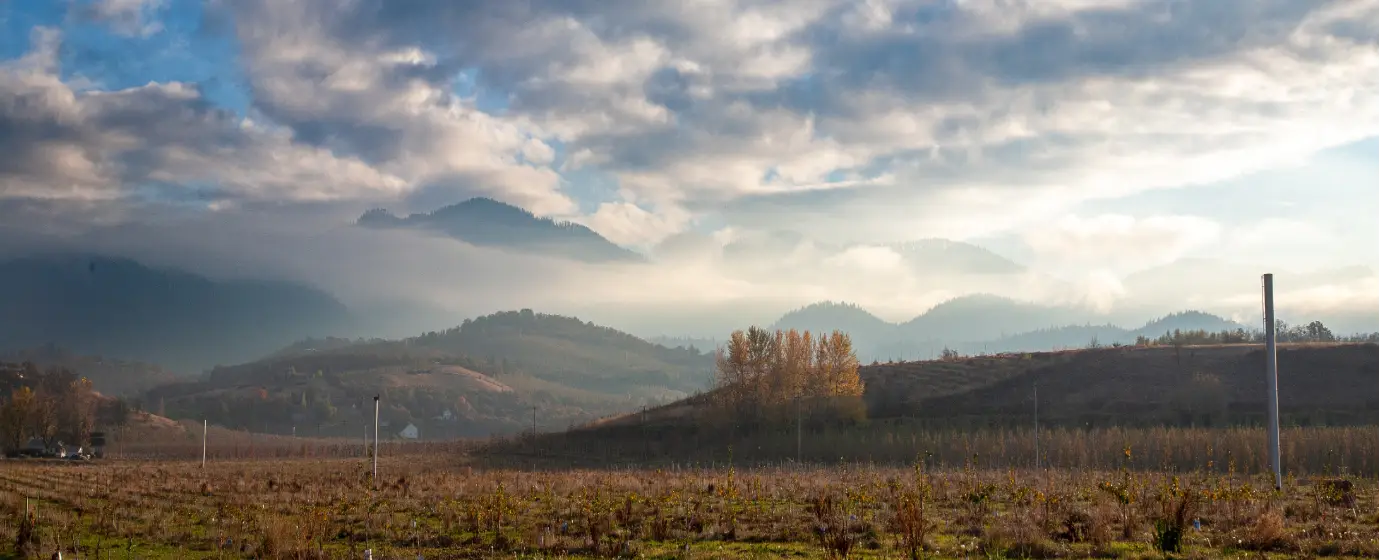
Maybe your company is relocating you to Southern Oregon and someone mentioned Jacksonville as an alternative to Medford. Maybe you drove through California Street on a summer afternoon, saw the 19th-century storefronts, heard music drifting down from Britt Pavilion, and thought — what would it actually cost to live here? Jacksonville sits just about 15 minutes from Medford along OR-238, a two-lane state highway that also functions as the town's quiet psychological boundary from the metro. With a population of 2,991, it is one of Oregon's smallest incorporated cities, but it carries a cultural footprint far larger than its size suggests.
The economic backbone here is unusual for a town this small. Jacksonville's largest employers are the Medford School District 549C, the City of Jacksonville, and Jackson County — meaning a meaningful share of local workers are government employees or educators whose jobs are in neighboring Medford. The school district 13,602 students enrolled in 2025-26, and on 2024-25 state assessments, 28.9% of students reached math proficiency and 40.3% reached reading proficiency — figures the district is actively working to improve. People move to Jacksonville for the historic fabric, the Britt Music & Arts Festival season, and a pace of life that Medford simply cannot replicate.
The typical home price here is $612,322 (July 2026, Zillow Home Value Index) — noticeably higher than both Medford and Central Point — and the median household income of $90,341 sits below what it takes to carry that price comfortably, which is the market's central tension. For more on how costs stack up day to day, see the cost of living in Jacksonville page. What buyers get for that premium is 199 sunny days a year, direct trail access into the 320-acre Jacksonville Woodlands Trail System, and a downtown that is a U.S. National Historic Landmark — not a historic-district overlay, but the real designation, recognized since 1966.
Whether you're considering a move or researching the area from out of state, the sections below break down Jacksonville's neighborhoods, which buyer types fit each one, common purchasing mistakes, and the honest rental picture in a city where most people come to own.
The Jacksonville Reality
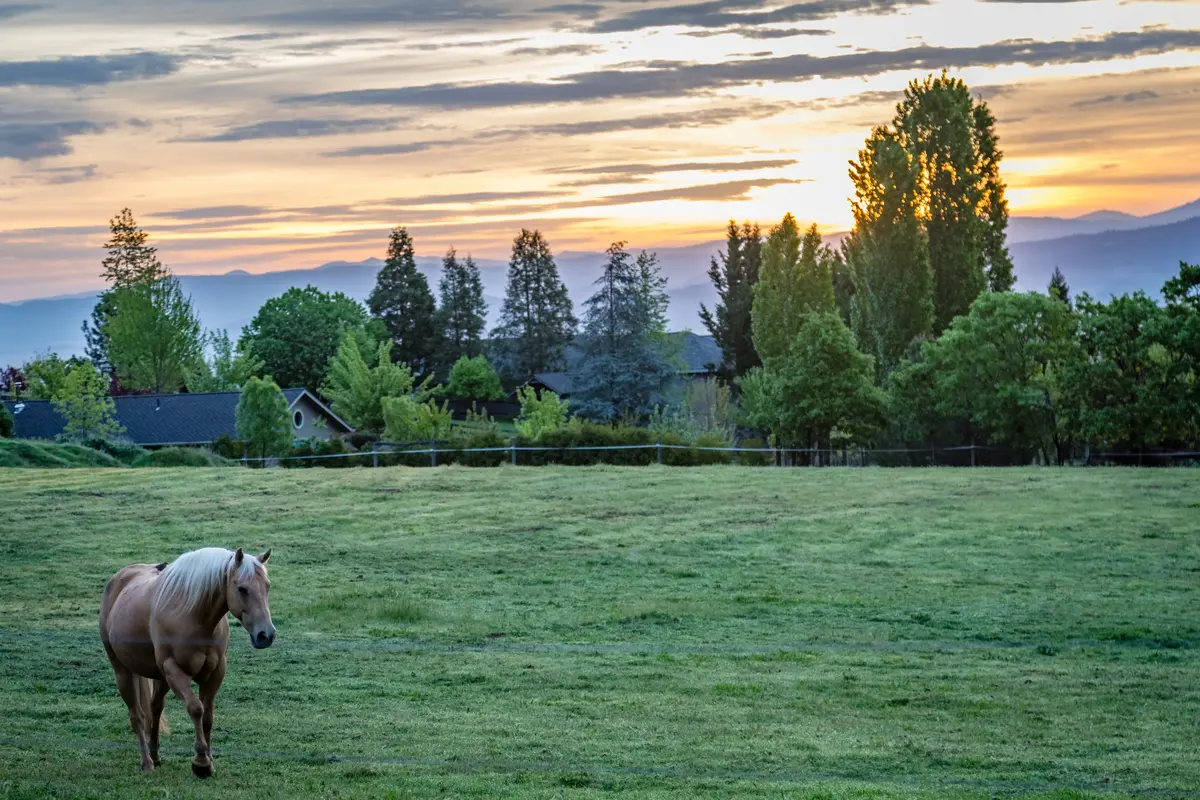
Jacksonville is so small that buyers sometimes treat it as a single, uniform market and make their purchase decision entirely on price. That is a mistake. The town divides meaningfully between its flat, walkable historic core and its ring of hillside neighborhoods — and those two zones deliver fundamentally different daily lives, fire-risk profiles, and resale dynamics.
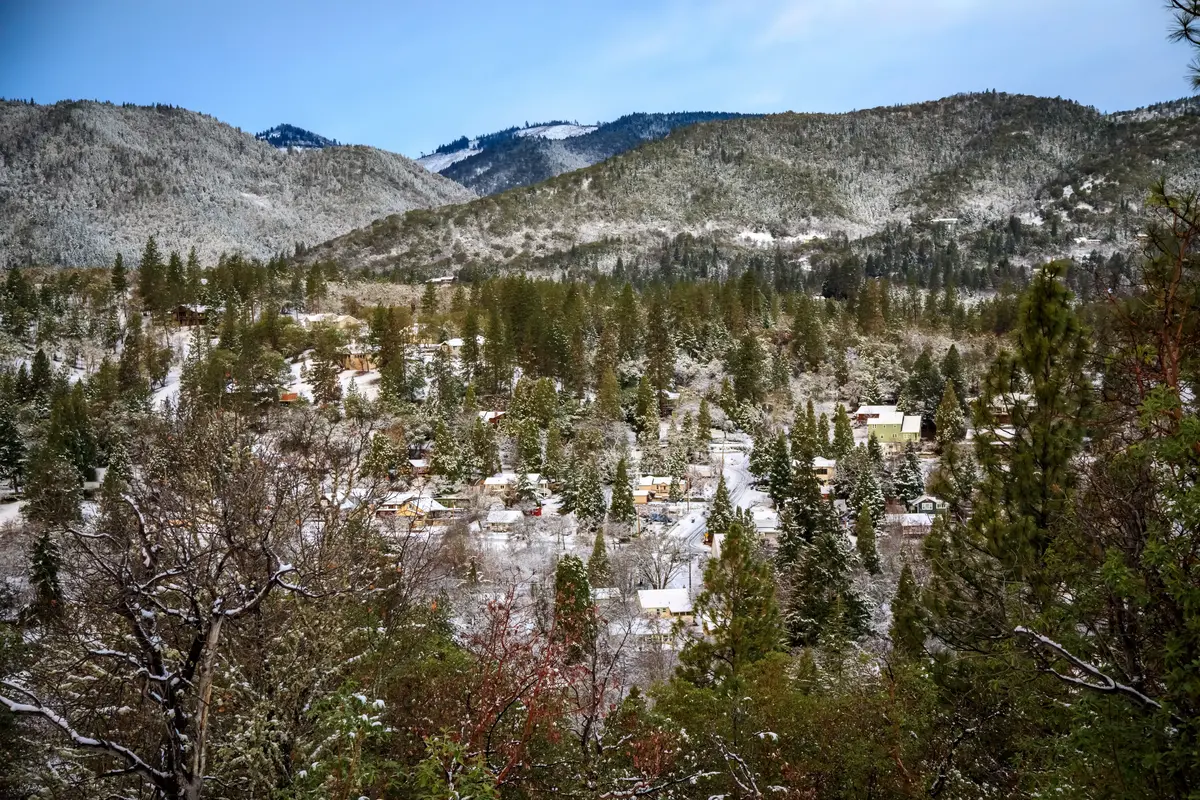
The historic core — roughly the National Historic Landmark district and the planned neighborhoods immediately adjacent to it — offers on-foot access to restaurants, coffee shops, the farmers market, and the Britt Pavilion festival grounds. The hillside neighborhoods (Stagecoach Hills, Coachman Hills, Andrews Place, Red Tail Heights) offer mountain views, larger lots, and custom construction, but they require a car for everything and carry heightened wildfire exposure. Jacksonville has 32 recognized Firewise communities citywide, including Pheasant Meadows, Nunan Square, Stagecoach Hills, Coachman Hills, and Royal Mobile Estates — so fire preparedness is not an edge-case concern here; it shapes neighborhood governance and insurance conversations across the entire city.
The school boundary question is simpler than in larger cities: nearly all Jacksonville addresses feed into Medford School District 549C. Where buyers err is in assuming that paying Jacksonville prices buys Jacksonville schools — the district is Medford's, not Jacksonville's, and performance figures should be evaluated on that basis. For a full breakdown, see the Jacksonville schools page. The one divide that truly matters when you are choosing between neighborhoods is walkability to the historic core versus elevation and views — and that trade-off runs through every section that follows.
Neighborhoods at a Glance
| Neighborhood | Best For | Vibe |
|---|---|---|
| Historic District (Downtown Jacksonville) | Walkable Culture | 19th-century storefronts, festival season energy, and genuine on-foot access to everything Jacksonville is known for |
| Nunan Square | Families Quiet | Victorian and Craftsman-inspired homes built around a central park; modern construction with a deliberately historic feel |
| Pheasant Meadows | Families Value | Conventional suburban residential on the flatter edge of town; practical, low-drama, Firewise-registered |
| Stagecoach Hills | Views Luxury | Multi-level custom homes on hillside lots with panoramic mountain and valley views; elevated in every sense |
| Coachman Hills | Luxury Privacy | Spacious custom homes, well-regarded among local agents, with room between neighbors and a quieter hillside setting |
| Red Tail Heights | Views Nature | Hillside residential with proximity to the Woodlands trail network; limited public profile but solid elevation and open-space access |
| Royal Mobile Estates | Renters Value | Mature-tree setting near a creek in north Jacksonville; the most accessible price point in the city with a short walk to the historic core |
| Andrews Place | Luxury Privacy | Small, exclusive hillside subdivision surrounded by mature trees and dedicated open space; limited homesites, maximum seclusion |
Jacksonville typical home price: $612,322 (Zillow ZHVI, July 2026). Typical rent: $2,186/mo (Zillow ZORI, July 2026). Neighborhood tiers on this page are relative to these figures.
Best Neighborhood by Buyer Type
| Buyer Type | Best Neighborhood | Why |
|---|---|---|
| First-Time Buyer | Pheasant Meadows | More conventional suburban housing stock gives first-time buyers the best shot at finding something without competing against custom-home premiums. |
| Luxury Buyer | Andrews Place | The most exclusive subdivision in Jacksonville — a limited number of hillside homesites surrounded by mature trees and private open space, with no comparable inventory anywhere else in the city. |
| Walkability Seeker | Historic District (Downtown Jacksonville) | The only neighborhood in Jacksonville where coffee, dinner, the farmers market, and the Britt Pavilion festival grounds are genuinely reachable on foot. |
| Families with Kids | Nunan Square | Craftsman and Victorian-inspired homes built around a central park give parents with school-age children a neighborhood-scale gathering point that the hillside areas lack. |
| Commuters | Pheasant Meadows | Flatter location keeps the OR-238 route to Medford as straightforward as it gets in a hilly small town. |
| Large-Lot Buyers | Stagecoach Hills | Hillside lots with panoramic views of the Siskiyous and the Rogue Valley deliver the space and separation that the historic-core neighborhoods simply cannot match. |
| Renters | Royal Mobile Estates | The most accessible monthly cost in the city, combined with a mature-tree setting and a short walk to the historic downtown amenities that draw people to Jacksonville in the first place. |
Looking to buy in Jacksonville? Estimate your payment.
Enter your numbers to see an estimated monthly mortgage payment.
Estimate only. Excludes HOA fees and mortgage insurance. The interest rate above is a starting point, not a quoted rate — replace it with your own to see real numbers. Insurance is a flat placeholder, not a Jacksonville quote.
Most Popular Neighborhoods
1. Historic District (Downtown Jacksonville)
Oregon's most complete 19th-century inland commercial district — designated a National Historic Landmark in 1966 — puts you within walking distance of the Beekman House & Bank Museum, the U.S. Hotel, Jackson Creek, and the Britt Pavilion amphitheater where the Pacific Northwest's premier outdoor performing arts festival has run since 1963. The trade-off is that homes here are constrained by historic preservation guidelines that govern exterior changes, and the summer festival season brings genuine foot traffic and noise to what is otherwise a very quiet town. Inventory here is among the least available in any given season, and homes command a premium that reflects both the address and the preservation constraints.
Best for: buyers who want to live inside the reason Jacksonville exists — culture, walkability, and architecture you cannot replicate in a new subdivision.
2. Nunan Square
Developed in the early 2000s, Nunan Square was deliberately designed to feel like it has always been here — Victorian and Craftsman-inspired facades surround a central park, and the neighborhood fits Jacksonville's architectural character more convincingly than most planned communities manage. The catch is that you are paying for that fit: construction is modern but the price reflects the address. It is also a Firewise-registered neighborhood, so residents participate in organized wildfire preparedness programs — a genuine community asset, but also a signal about where Jacksonville sits on Oregon's fire-risk map.
Best for: parents with school-age children who want a neighborhood with a park at its center and a walkable feel without the preservation restrictions of the historic core.
3. Pheasant Meadows
Pheasant Meadows is Jacksonville's most conventionally suburban neighborhood — lower-profile than the hillside custom-home areas, less architecturally distinctive than Nunan Square, but practical in a way that buyers relocating from larger metro areas will recognize immediately. It sits on flatter ground, which simplifies the OR-238 commute, and its Firewise registration means the community takes organized fire preparedness seriously. For buyers who want a Jacksonville address without competing against view premiums or historic-fabric scarcity, this is the starting point.
Best for: first-time buyers, commuters to Medford, and anyone who wants suburban predictability inside a city with a genuinely unusual character.
4. Stagecoach Hills
Stagecoach Hills delivers the view that Southern Oregon real estate is sold on — panoramic sightlines across the Rogue Valley to the Siskiyou and Cascade ranges, from multi-level custom homes on lots that have actual separation between neighbors. The trade-off is elevation in both senses: prices run above the city median, and the hillside location means wildfire risk is a real insurance and preparedness conversation, not a theoretical one. Buyers who overlook that and focus only on the view sometimes find themselves underestimating the cost and logistics of hillside ownership.
Best for: buyers seeking mountain views, larger lots, and custom construction, who are prepared to engage seriously with wildfire mitigation as part of ownership.
5. Coachman Hills
Local agents consistently place Coachman Hills among the most sought-after addresses in Jacksonville — custom homes with spacious layouts, a quieter hillside setting, and the kind of lot privacy that disappears entirely in the historic core. Like Stagecoach Hills, it is a Firewise community, and the hillside location requires a car for all errands. What distinguishes it from Stagecoach Hills in practice is a slightly more settled, less visually dramatic feel — the homes here are substantial without always leading with a panoramic view as the primary selling point.
Best for: buyers who want custom-home quality and lot privacy in a neighborhood with a strong local reputation, and who are comfortable with the fire-preparedness culture that hillside Jacksonville requires.
6. Red Tail Heights
Red Tail Heights sits on Jacksonville's hillside with proximity to the Jacksonville Woodlands Trail System — 18 miles of interpretive and recreational trails that wind through 320 acres of preserved forested open space, including Panorama Point with its sweeping views of the historic district and surrounding ranges. Sourced neighborhood details are thinner compared with Stagecoach Hills or Coachman Hills, which tends to mean lower public profile and occasionally more negotiating room. The fire-risk profile here, as throughout the hillside, demands the same preparedness conversation as any other elevated address in the city.
Best for: trail-focused buyers and nature-oriented households who want direct access to the Woodlands network and are comfortable with a neighborhood that keeps a lower profile than its hillside neighbors.
7. Royal Mobile Estates
Situated in north Jacksonville with a mature tree canopy and a creek nearby, Royal Mobile Estates offers the city's most accessible price point and a short walk to the restaurants, coffee shops, and historic amenities of downtown. That proximity is the neighborhood's genuine asset — very few places in Oregon at this price level put residents within walking distance of a National Historic Landmark district and a world-class outdoor performing arts festival. Buyers considering this area should understand what kind of housing stock they are evaluating; it is distinct from the single-family and custom-home inventory found in the rest of the city's neighborhoods.
Best for: buyers and renters prioritizing proximity to downtown Jacksonville at the most accessible cost in the city.
8. Andrews Place
Andrews Place is Jacksonville's most private address — a small, exclusive hillside subdivision with a limited number of homesites surrounded by mature trees, abundant wildlife, and dedicated open space that includes hiking trail access. The exclusivity is literal: there are simply not many homes here, which means inventory appears rarely and competition can be sharp when it does. Every element of hillside ownership applies — fire preparedness, car dependence, premium pricing — but Andrews Place adds a layer of seclusion that even Coachman Hills and Stagecoach Hills do not fully replicate.
Best for: buyers seeking maximum privacy and natural surroundings within Jacksonville's city limits, with the patience to wait for the right home to come available.
Common Mistakes Buyers Make in Jacksonville
Assuming Every Address Delivers the Same Walkability
The Britt Pavilion, the farmers market, the independent cafés and restaurants along California Street — everything that defines the Jacksonville experience is concentrated in and immediately around the historic core. Buy in Stagecoach Hills or Andrews Place for the view and the lot, and you will drive to all of it, every time. Buyers who move here expecting to replicate the walkable lifestyle they toured on California Street, then purchase a hillside home because the square footage penciled out better, often feel the gap within the first few months.
Underestimating the Wildfire Insurance Conversation
Jacksonville's Firewise designation covers 32 communities citywide, which signals how seriously the city takes fire risk — but it does not make that risk disappear. Hillside neighborhoods like Stagecoach Hills, Coachman Hills, and Red Tail Heights carry steeper insurance conversations than the flat historic core, and buyers who research the home price carefully but skip the insurance conversation until after escrow opens sometimes face real sticker shock. Get the insurance picture before you are emotionally committed to a hillside address.
Treating Jacksonville Prices as Medford Prices
Buyers relocating from Medford or Central Point sometimes expect Jacksonville to price similarly, since the commute on OR-238 is short and the school district is shared. It does not. The typical home price here sits noticeably higher than in Medford or Central Point, and the median household income of $90,341 runs below what it takes to carry that price comfortably. The premium is real and largely reflects the historic character and the cultural amenities — if those are not genuinely important to your daily life, the math deserves a hard look before you commit to a Jacksonville address over a Medford one.
Skipping the Drive at Your Actual Departure Time
OR-238 is Jacksonville's named highway connection to the rest of the Rogue Valley, and it functions as a two-lane state road rather than a commuter freeway. The about-15-minutes-to-Medford figure assumes off-peak conditions. Buyers who choose a hillside neighborhood assuming the commute is identical to a flat historic-core address often find that the extra elevation adds meaningful time on foggy winter mornings or in fire-season smoke events. The commute is genuinely short for most buyers — but it is worth driving at your actual departure time before you make an offer on a hillside property.
Best Areas to Rent in Jacksonville
| Area | Ideal For | Trade-off |
|---|---|---|
| Historic District (Downtown Jacksonville) | Walkability seekers Culture | On-foot access to everything; rental inventory is extremely thin and turnover is low |
| Nunan Square | Families Quiet | Central park setting and neighborhood feel; rentals here are uncommon and command a premium when they surface |
| Pheasant Meadows | Commuters Entry-level | Most practical rental option for Medford commuters; limited rental supply in a predominantly owner-occupied neighborhood |
| Royal Mobile Estates | Renters Value | Most accessible monthly cost in the city with genuine proximity to downtown; housing stock is distinct from single-family and custom homes elsewhere |
| Hillside Neighborhoods (Stagecoach Hills / Coachman Hills) | Views Luxury | Occasional luxury rentals with mountain views appear; fire-season logistics and car dependence for all errands are non-negotiable realities |
Jacksonville is overwhelmingly an ownership market — 2,991 residents spread across a National Historic Landmark city means rental turnover is genuinely slow, and the city-wide typical rent of $2,186 per month (Zillow, July 2026) reflects demand that consistently outpaces supply. Renters who want to stay long-term in Jacksonville should treat any available unit as a real find, and should understand that the rental picture here is meaningfully different from neighboring Medford or Central Point, where supply is deeper. For a broader look at what renting versus buying costs across Southern Oregon, see the Jacksonville cost of living page.
Local Expert Takeaway: Jacksonville rewards buyers who are honest with themselves about why they want to live here. If the answer is the Britt Festival season, the California Street storefronts, and the independent dining and coffee scene of the historic core, then a historic-core or Nunan Square address is the only one that actually delivers that life. If the answer is views and acreage, Stagecoach Hills or Andrews Place makes sense — but buy it knowing you are choosing a hillside property in a Firewise community, not a scenic version of a Medford suburb. The OR-238 corridor makes the commute manageable, but Jacksonville's character comes entirely from its small, walkable historic center, and the farther uphill you go, the more you are purchasing the idea of Jacksonville rather than the daily experience of it.
Quick Takeaways & FAQs
✅ Jacksonville's Historic District is a U.S. National Historic Landmark — one of the most architecturally intact 19th-century communities in the entire Pacific Northwest, and a genuine daily amenity for residents who live in or near it.
⚠️ The typical home price of $612,322 (July 2026) sits noticeably higher than neighboring Medford and Central Point, while the shared school district means buyers pay a Jacksonville premium for access to the same district performance figures.
📍 The Jacksonville Woodlands Trail System puts 18 miles of forested trails and the Panorama Point viewpoint within reach of hillside neighborhoods — a detail that rarely shows up in listing descriptions but shapes daily life for residents who use it.
What is the most walkable neighborhood in Jacksonville, Oregon?
How do Jacksonville, Oregon home prices compare to Medford?
Which Jacksonville neighborhoods have the highest wildfire risk?
Is Jacksonville, Oregon a good place to rent, or is it mostly an ownership market?
Do all Jacksonville neighborhoods feed into the same school district?
Moving to Oregon?
Tell us what you need help with and we'll connect you with local resources.
