
Most people who retire to Jacksonville did not plan to. They passed through on their way to Crater Lake or stopped for the Britt Music & Arts Festival and made an offer six months later. That is not an accident — this is a National Historic Landmark town of 2,991 people with a genuinely walkable brick-and-board historic core, 199 sunny days a year, and a cultural calendar that punches far above its size. But the same things that make it singular also make it demanding: the typical home price is $612,322 (July 2026), there are no 55+ communities in town, and the nearest trauma center is a drive away.
Who this town fits in retirement is specific. If you want a small, culturally alive community where you can walk to dinner, stroll to a summer concert under the pines, and explore 18 miles of forested trails from your doorstep, Jacksonville rewards that life deeply. If you need a CCRC, want neighbors your own age in a purpose-built community, or require specialist care you can reach in minutes, the picture is more complicated — and the sections below address that honestly.
The cost reality is worth naming early. Oregon exempts Social Security from state income tax entirely, levies no sales tax, and offers a property tax deferral program for qualifying seniors — all meaningful to a fixed-income budget. The effective property tax rate here is approximately 0.74%, which is well below the national average. Day-to-day expenses reflect a smaller Southern Oregon city rather than the Portland metro, though housing prices have moved well above what local incomes alone would support. For a fuller breakdown of daily costs, the cost of living in Jacksonville page covers groceries, utilities, and a direct comparison to neighboring markets.
Whether you are weighing a full-time move, a seasonal arrangement, or simply researching Southern Oregon retirement options, this guide covers healthcare access, the retiree tax picture, walkability, downsizing realities, and how Jacksonville stacks up against nearby towns including Medford, Ashland, and Central Point.

Why Retirees Are Choosing Jacksonville
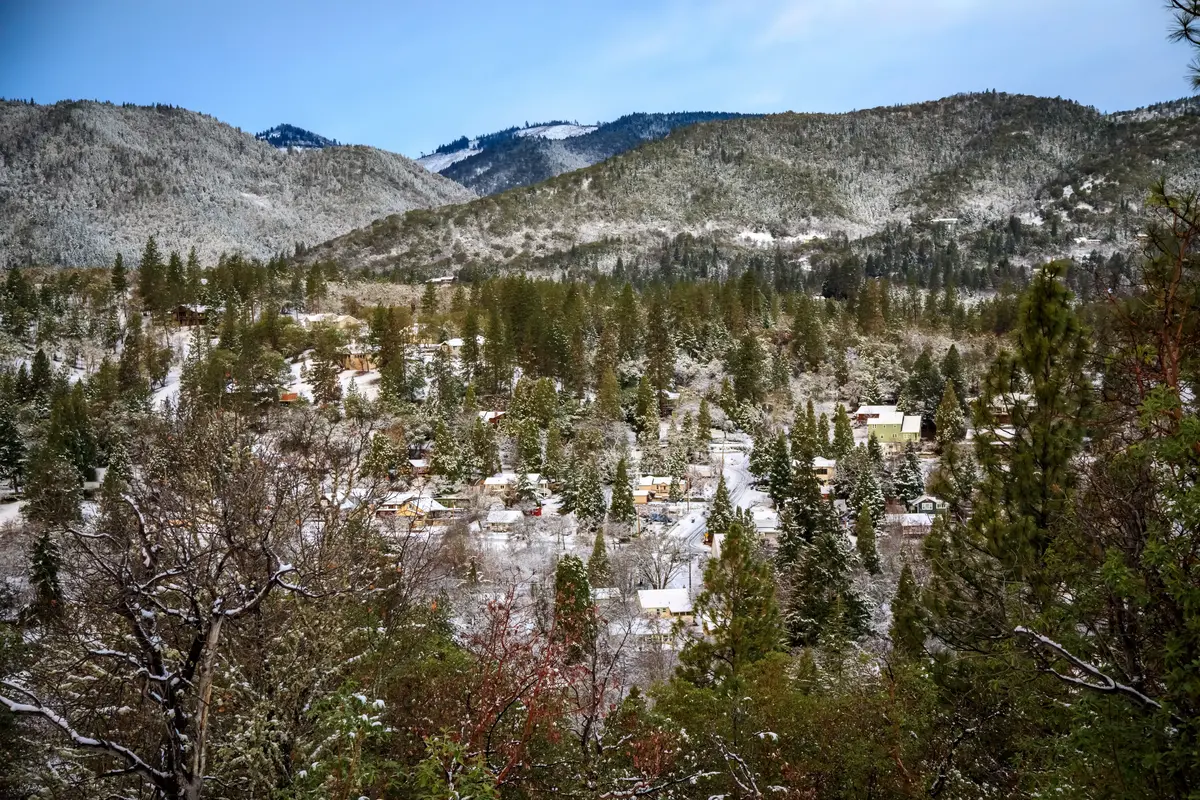
Jacksonville attracts a specific type of retiree: culturally engaged, outdoors-oriented, and willing to trade urban convenience for something harder to quantify. The historic district, the Britt Pavilion amphitheater set among ponderosa pines, the weekly Jacksonville Farmers Market — these are not amenities that showed up recently. They have been the fabric of this town for decades, and they draw people who have lived in larger cities and are done with the pace.
The size — 2,991 residents — is genuinely small. That means you recognize faces at GoodBean Jacksonville or the Back Porch Bar & Grill within a few weeks. It also means the restaurant rotation is short, specialist medical care is not local, and a serious shopping trip means driving out of town. Retirees who last here long-term tend to be people who have already solved the urban-amenity question in their lives and now want the opposite.
The honest counterpoint: Jacksonville is not for retirees who need a 55+ community structure, whose health requires frequent specialist visits, or who are working with a limited housing budget. The typical home price of $612,322 (July 2026) is real, and the inventory of single-level homes is modest. Medford, Central Point, and Talent all offer noticeably lower home prices, more housing variety, and proximity to the same regional hospital — worth considering seriously if budget or medical access is the primary driver. The neighborhoods page breaks down the character of specific areas within Jacksonville for buyers doing deeper research.
Healthcare & Medical Access in Jacksonville
The anchor of healthcare for Jacksonville retirees is Asante Rogue Regional Medical Center in Medford — about 6 miles from Jacksonville. It is a 378-bed regional referral and trauma center, and its proximity matters: this is not a rural community driving 60 miles to a small community hospital. Asante Rogue Regional is consistently recognized as one of Oregon's stronger regional medical centers, with depth across cardiac, pulmonary, and cancer programs that exceeds what you typically find in a market this size.
For cardiac care specifically, the picture is stronger than many retirees expect from a Southern Oregon market. The facility completed more than 1,700 cardiac catheterization lab procedures in 2024, including STEMI interventions and transcatheter aortic valve replacements. A capital investment program that broke ground on cardiac facility expansion — with an additional phase funded as part of the 2024-25 capital plan — reflects a system growing capacity rather than contracting it. Specialty depth also extends to COPD management, colon cancer surgery, aortic valve surgery, and heart arrhythmia treatment, areas where the hospital has invested in dedicated programs and equipment.
The honest limitation is tertiary and quaternary care. For complex neurosurgery, organ transplant, or cutting-edge oncology clinical trials, Medford is a regional center — not an academic medical center. Oregon Health & Science University in Portland is the state's primary teaching hospital. Retirees managing serious or complex conditions should weigh that distance carefully and discuss care continuity with their specialists before committing to this region.
Within Jacksonville itself, there is no hospital and no urgent care clinic in town. For anything beyond a primary care visit or a telehealth appointment, you are driving to Medford. That is a manageable reality for most healthy retirees — it is a different calculation for someone who expects frequent acute care needs. Rogue Valley Manor, located in Medford, offers a full continuum of care from independent living through memory care and skilled nursing — a meaningful option for Jacksonville retirees whose care needs evolve over time.
The Retiree Budget in Jacksonville
Oregon's tax treatment of retirement income has both a standout benefit and a real cost. Social Security benefits are fully exempt from Oregon state income tax at every income level — no means testing, no threshold. That is a genuine advantage over many states. The catch is that most other retirement income is not exempt: 401(k) withdrawals, IRA distributions, and pension payments are taxed at Oregon's graduated rates, which run from 4.75% to 9.9%. A retiree drawing $60,000 a year from a traditional IRA will feel that.
Oregon's zero sales tax provides consistent daily spending relief — every grocery run, hardware purchase, and restaurant meal costs the listed price, nothing more. Over a full year on a fixed income, the absence of sales tax adds up in a way that is easy to underestimate before you move here.
The effective property tax rate in Jacksonville is approximately 0.74% — below the national average and manageable on most retirement budgets when expressed as a rate. Oregon also offers a Property Tax Deferral program for qualifying seniors: the state pays your property taxes directly to the county on your behalf, with the deferred balance (plus 6% simple interest) repaid when the home is sold or upon the owner's death. For a retiree who is house-rich but cash-flow constrained, this program can meaningfully reduce monthly pressure without requiring a sale. Ask Jackson County's assessment office about eligibility specifics — income and equity thresholds apply.
Daily life costs in Jacksonville run closer to a smaller Southern Oregon city than to Portland or Bend. Independent coffee shops, the farmers market, and the restaurant lineup along California Street reflect a local economy rather than a resort-town premium. For a detailed breakdown of groceries, utilities, and how Jacksonville compares to neighboring markets, the cost of living page has the full picture. The engine's mortgage calculator below will let you model monthly housing costs at current rates for any purchase price you are considering.
Looking to buy in Jacksonville? Estimate your payment.
Enter your numbers to see an estimated monthly mortgage payment.
Estimate only. Excludes HOA fees and mortgage insurance. The interest rate above is a starting point, not a quoted rate — replace it with your own to see real numbers. Insurance is a flat placeholder, not a Jacksonville quote.
Walkability, Community & Staying Active in Jacksonville
The Walkable Core
Jacksonville's historic downtown is genuinely walkable in a way that most small Oregon cities are not. The compact grid of the historic district puts Bella Union Restaurant, South Stage Cellars, Pony Espresso, the Jacksonville Inn, and the Jacksonville Farmers Market all within a short flat walk of each other. For a retiree who wants to age without a car for daily errands and meals, the downtown core makes that possible in a way that outlying neighborhoods like Stagecoach Hills or Coachman Hills do not — those areas require a car for most trips.
The terrain beyond the immediate downtown is hilly. The Jacksonville Woodlands Trail System, which covers 320 acres of forested open space directly accessible from downtown, includes everything from easy creekside paths along Jackson Creek to challenging ridge climbs. The 18 miles of trails are rated for all abilities, built and maintained by the nonprofit Jacksonville Woodlands Association. Retirees who are fit and active will find this trail system is a daily asset rather than a weekend destination. Those with mobility limitations should walk the terrain themselves before buying — the grade changes quickly once you leave the flat historic core.
Culture and Community
The Britt Music & Arts Festival is the social anchor of Jacksonville summer. Founded in 1963 and running continuously since, Britt presents dozens of concerts each season at the open-air Britt Pavilion, with genres ranging from classical and jazz to blues, folk, and country. In January 2026, Britt named Norman Huynh as its next Music Director, signaling sustained investment in the classical program. The Britt Festival Orchestra completed its 63rd season in 2025. For retirees who moved here partly for the cultural life, this festival is not a bonus — it is a reason.
Beyond the festival, community texture in Jacksonville runs through the Jacksonville Farmers Market, the Jville Market, the Beekman House & Bank Museum, and the Jacksonville Cemetery (a surprisingly active heritage site). Volunteering with the Jacksonville Woodlands Association draws a committed group of residents, and the small-town scale means organizations notice new members quickly. What Jacksonville lacks is a purpose-built senior center in the traditional sense — activities and social life here are more integrated into the general community than age-segregated, which suits some retirees perfectly and leaves others wanting more structured programming.
Right-Sizing: Downsizing in Jacksonville
No 55+ communities were found in Jacksonville. That is the plain reality, and it shapes the downsizing conversation here more than anything else. Retirees seeking a purpose-built active-adult community with HOA-managed grounds, age-qualified neighbors, and amenity packages will need to look to Medford or beyond — Rogue Valley Manor in Medford is among the most substantial continuing care retirement communities in the Pacific Northwest and is worth a visit regardless of where you ultimately land.
What Jacksonville does have is Pioneer Village Independent and Assisted Living, located within the historic town itself. It offers independent and assisted living with on-site staff, programming, and dining — the primary in-town senior care option. It is not a 55+ community by the standard definition, but for a retiree who wants to remain in Jacksonville specifically and needs some level of on-site support, it is the in-town answer.
For buyers purchasing a private home, the inventory of single-level properties in Jacksonville is modest. The historic district's older construction trends toward multi-story Victorian and Craftsman homes — beautiful, and not always practical for aging in place. Pheasant Meadows and Andrews Place tend to have more ranch-style and lower-profile construction than the historic core, though supply in those areas is limited and the city's overall housing stock is small. A buyer specifically seeking single-level living should work with a local agent familiar with what actually comes to market here — and be prepared to wait. The neighborhoods page gives a fuller read on the character of each area. For context on the buying process, the first-time homebuyer page covers inspection, financing, and closing steps that apply equally to downsizers.
Jacksonville vs Nearby Retirement Destinations
| City | Cost vs Jacksonville | Primary Hospital | Walkability | Senior Living Depth | Overall Retirement Fit |
|---|---|---|---|---|---|
| Jacksonville | Anchor | Asante Rogue Regional (Medford, ~6 mi) | Strong in historic core; hilly beyond it | Pioneer Village only; no 55+ communities | Best for active, culturally engaged retirees |
| Medford | Noticeably lower | Asante Rogue Regional (on-site) | Car-dependent outside core corridors | Rogue Valley Manor CCRC; multiple senior options | Best for budget-conscious buyers or those needing frequent care |
| Ashland | About the same | Asante Rogue Regional (Medford, ~20 mi) | Very walkable downtown; hilly residential areas | Limited 55+ inventory; some independent living | Best for arts-focused retirees with flexible budgets |
| Central Point | Noticeably lower | Asante Rogue Regional (Medford, ~5 mi) | Mostly car-dependent | Modest; improving | Best for value-oriented buyers who want Medford proximity |
| Talent | Noticeably lower | Asante Rogue Regional (Medford, ~15 mi) | Moderate; some walkable corridors | Very limited | Best for buyers who want a smaller community at lower cost |
| Phoenix | Noticeably lower | Asante Rogue Regional (Medford, ~10 mi) | Limited; primarily car-dependent | Very limited | Best for buyers prioritizing affordability in the Rogue Valley |
The clearest advantage Jacksonville holds over every nearby option is the quality of its daily environment: the historic streets, the festival grounds, the Woodlands trails accessible from downtown, and the concentrated dining and coffee scene. No other town in the Rogue Valley offers that combination at scale.
Where Jacksonville loses ground is cost and senior-living infrastructure. Medford is the pragmatic choice for retirees who want the same regional hospital on their doorstep, noticeably lower home prices, and access to Rogue Valley Manor's full continuum of care. Ashland competes directly with Jacksonville on culture and lifestyle — the Oregon Shakespeare Festival gives Ashland a year-round arts identity — and prices run roughly comparable, so the choice between them often comes down to which community's personality fits better. Central Point and Phoenix offer the most straightforward value play: lower prices, good Medford proximity, and fewer of the lifestyle premiums Jacksonville commands. Talent is worth considering for buyers who want a smaller-town feel at lower cost, though it is still rebuilding community infrastructure after a major wildfire reshaped the town in 2020. For a retiree whose priority is cultural richness, walkable daily life, and a town that feels historically rooted, Jacksonville is the answer in Southern Oregon — with the clear-eyed understanding that the price and the limited senior-living options come with it.
Local Expert Takeaway: Jacksonville retirement works best when you treat Medford as your extended neighborhood rather than a distant errand. The regional hospital is about 6 miles away, the larger grocery stores and specialist clinics are there, and the noticeably lower home prices in Medford or Central Point are always on the table if the Jacksonville market feels stretched. What you stay in Jacksonville for is specific and real: walking to Pony Espresso in the morning, catching a Britt concert on a warm July evening, and running the Woodlands trails on a Tuesday with more herons than cars. That is the trade — and for the right retiree, it is an easy one.
Quick Takeaways & FAQs
✅ Oregon exempts Social Security from state income tax entirely and levies no sales tax, giving Jacksonville retirees meaningful daily and annual budget relief.
⚠️ No 55+ communities exist within Jacksonville, and the historic district's older multi-story homes mean single-level downsizing inventory is limited and competitive.
📍 Asante Rogue Regional Medical Center in Medford — about 6 miles away — is a full-service regional trauma center with strong cardiac and cancer programs, making it a genuinely capable anchor for Jacksonville retirees.
Is Jacksonville, Oregon a good place to retire?
Does Oregon tax retirement income or Social Security?
What hospital do Jacksonville retirees use?
Are there any 55+ or active-adult communities in Jacksonville, Oregon?
What is the property tax rate for retirees in Jacksonville, Oregon?
Moving to Oregon?
Tell us what you need help with and we'll connect you with local resources.
