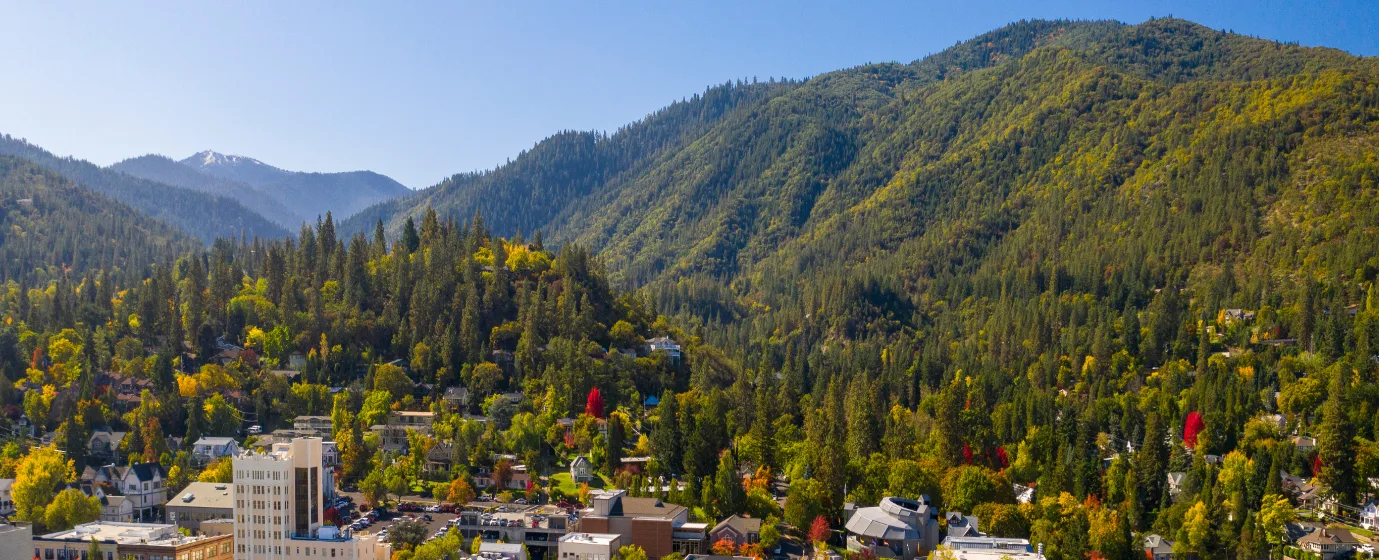
Most cities in Southern Oregon can point to a decent park. Ashland has a National Historic Landmark in its backyard, a 20-mile paved trail connecting it to the rest of the valley, a reservoir-fed swimming hole fed by mountain water, and a ski area that doubles as a disc golf course in summer — all within a city of 21,259 people. What surprises newcomers isn't that the outdoor infrastructure exists; it's how completely it shapes daily life here. The parks aren't destinations you drive to on weekends. They're the connective tissue between neighborhoods, commutes, and routines.
The outdoor scene draws two very different crowds to Ashland: people who want the cultured, walkable downtown anchored by the Oregon Shakespeare Festival, and people who want immediate access to the Siskiyou Mountains. The city's geography means you don't have to choose. Lithia Park begins at Ashland Plaza — literally steps from the Shakespeare stages — and unfolds into 100 acres of creek-side woodland. Mount Ashland is roughly a half-hour climb from the same plaza. That compression of culture and wilderness into a small city is the thing longtime residents mention first when someone asks why they stayed.
The trade-off is honest: Ashland has 198 sunny days a year, which is more than Portland but less than Southern California, and the mountain skiing is genuinely variable from season to season. A spectacular year and a historically short one can arrive back-to-back. The parks budget and the parks programming — youth bike instruction, adaptive trail chairs, free summer concerts — reflect the priorities of a community that treats recreation as civic infrastructure rather than an amenity. That's a meaningful distinction if you're deciding where to plant roots.
Whether you're considering a move or just researching the area, the sections below break down Ashland's signature parks, trail network, water recreation, and mountain access — what each one offers, what locals actually use them for, and what to know before you arrive.
Lithia Park: The City's Living Room
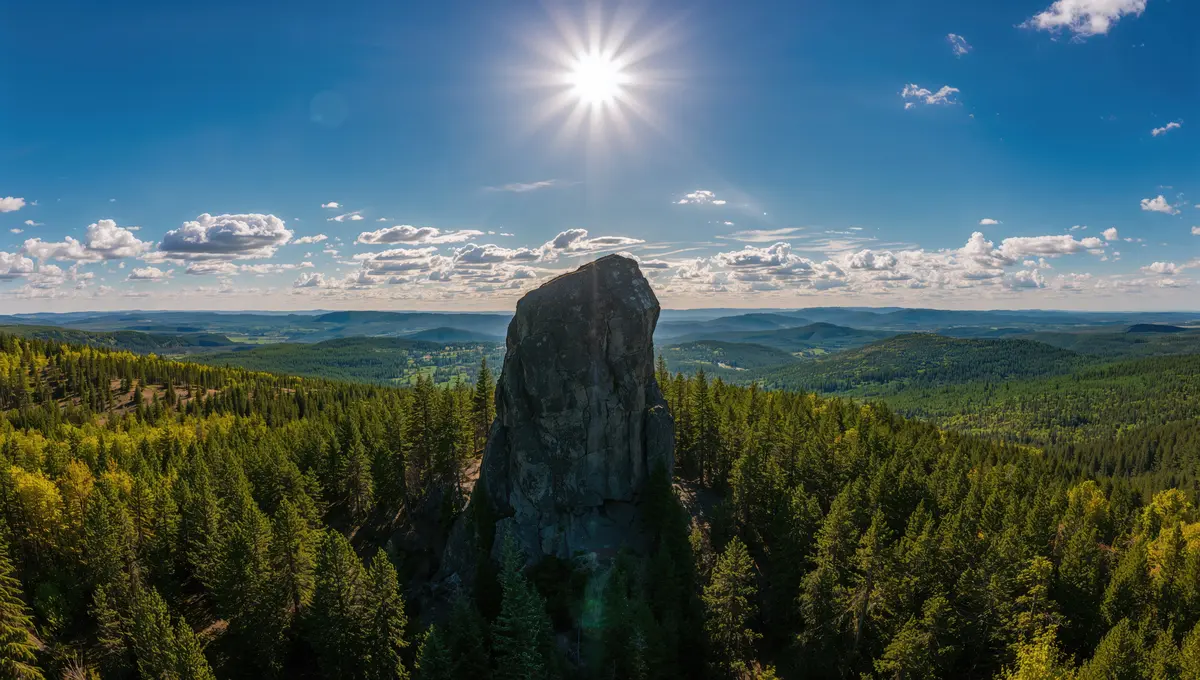
Lithia Park doesn't feel like a municipal amenity. It feels like the reason the city exists. At 100 acres stretching along Ashland Creek from the Plaza into undeveloped woodland, it was designed in the early twentieth century by John McLaren — the same landscape architect who shaped San Francisco's Golden Gate Park — and it shows. The creek corridor, the duck ponds, the rose garden, and the Japanese garden donated to the city in 1995 all feel composed rather than assembled.
The practical facilities are more extensive than most people expect from a city this size. Pickleball courts, tennis courts, a sand-pit volleyball court, a children's playground, picnic areas with reservable fire pits, and a Granite Swim Reservoir fed directly by Ashland Creek's mountain water. The reservoir is the summer draw that nobody who grew up in the Pacific Northwest can explain to someone from elsewhere: cold, clear, mountain water in the middle of a downtown park.
What the park is NOT, and this matters if you're moving here with a dog: dogs are not permitted inside Lithia Park, with the exception of ADA-compliant service animals. Leashed dogs are welcome on the outer perimeter and along the Old Pioneer Street trail, but the interior is dog-free. More than one person has arrived with their dog expecting a park day and had to rethink.
Four Seasons, One Park
The Butler Bandshell hosts free concerts on summer evenings and First Friday Silent Disco events throughout the warm months — the park is a cultural anchor as much as a recreational one. Come November, the Ashland Rotary Centennial Ice Rink sets up in the park, giving it a genuine four-season profile that few small-city parks can match.
The accessibility program here is worth calling out specifically. The city offers adaptive track chairs — called David's Chair — free of charge to visitors with mobility challenges, reservable through the Parks and Recreation Department. It's the kind of program that signals what a community actually values, not just what it markets.
A note for families considering a move with school-age kids: the Ashland Parks Foundation runs a PedalPower Youth Bike Program that now reaches every 4th and 5th grader in the Ashland School District, providing on-bike skills instruction through volunteers and donations. It connects directly to the trail network that starts at the park's edge. For more on youth programming and the school district overall, see the Ashland schools page.
The Bear Creek Greenway: Ashland's Trail Spine
The Bear Creek Greenway is the kind of infrastructure that changes how a city functions. At 20 miles of paved, two-lane, multi-use trail linking Ashland to Talent, Phoenix, Medford, and Central Point, it's less a recreational path and more an alternative transportation corridor — with only two at-grade road crossings along its entire length.
The Ashland Dog Park, a two-acre fenced off-leash area managed separately from Lithia Park, serves as the Greenway's northern trailhead. That's a meaningful detail: Ashland's dog infrastructure is concentrated here, not at Lithia Park. New residents who move here with dogs figure this out quickly; the pairing of the Dog Park and the Greenway trailhead gives them a genuinely good setup, just not the one they assumed.
What Locals Actually Use It For
Commuters on bikes use it to reach jobs in Medford without touching I-5 or OR-99. Runners use it for long weekend miles. Families use it for the kind of bike ride where you don't have to worry about intersections every few blocks. Community parks along the route provide restrooms, drinking water, and picnic areas, which makes longer trips genuinely comfortable.
The Greenway runs roughly parallel to both I-5 and OR-99, and to Bear Creek itself. That alignment means it also serves as a wildlife corridor and a quiet counterpoint to the highway noise just beyond the tree line. On a weekday morning it's the place Ashland residents go when they want to move through the valley rather than sit in it.
| Feature | Detail |
|---|---|
| Total length | 20 miles, paved |
| Cities connected | Ashland, Talent, Phoenix, Medford, Central Point |
| At-grade road crossings | 2 along the full route |
| Trail configuration | Two lanes, bi-directional |
| Ashland trailhead | Ashland Dog Park (northern end) |
| Uses | Cycling, running, walking, skating, commuting |
| Amenities along route | Restrooms, drinking water, picnic areas at community parks |
The Greenway connects directly to the Ashland Creek Trail within the city, which feeds back into Lithia Park — so a single unbroken route can take you from the valley floor all the way into the park's creek corridor without crossing a single meaningful road.
Emigrant Lake: Summer Water Recreation
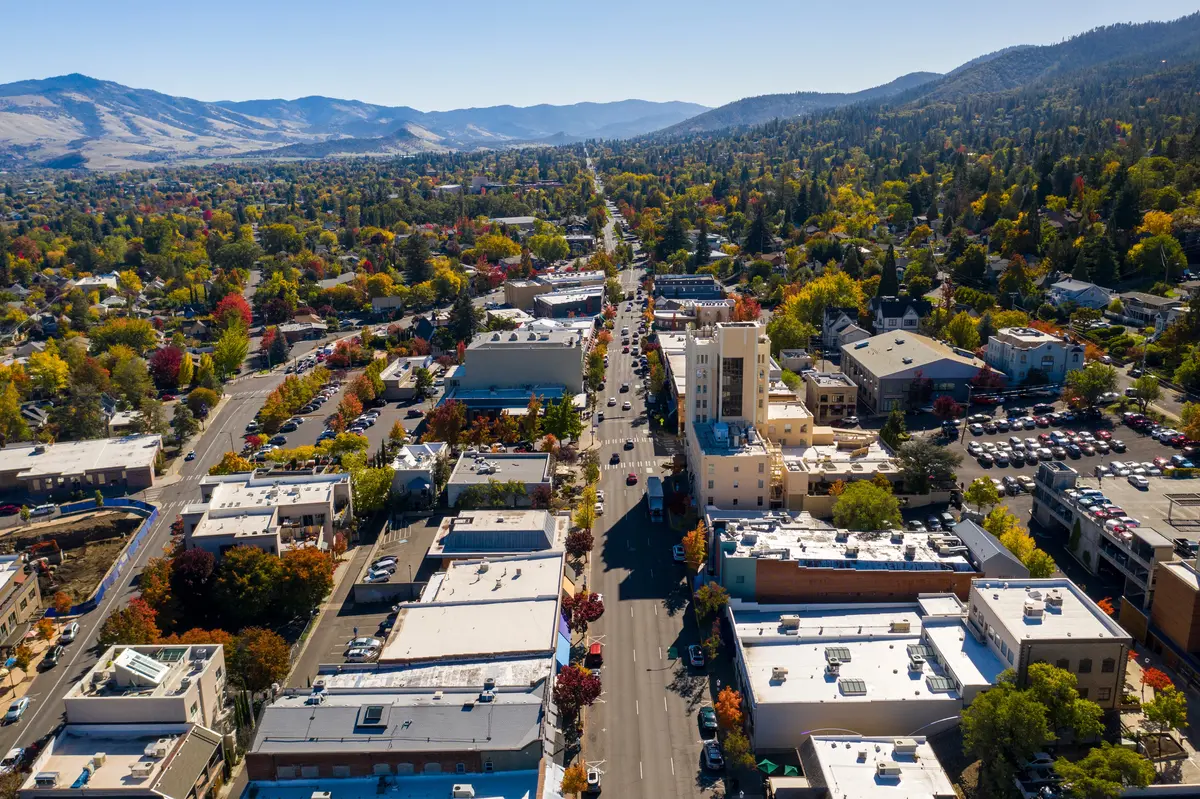
The valley gets hot in July and August — regularly above 90 degrees — and Emigrant Lake is where Ashland residents go when the Granite Swim Reservoir is too small for the crowd. Located a short drive southeast of downtown off OR-66 (Green Springs Highway), Emigrant Lake Recreation Area is managed by Jackson County Parks and operates at a scale that surprises people who assume a small-city lake means a small experience.
The numbers are substantial: 1,467 acres, 12 miles of lake frontage. The activities list covers swimming, fishing for bass, crappie, and trout, boating, canoeing, kayaking, water skiing, hiking, and picnicking. RV and tent camping round out the options for people who want to extend a weekend rather than drive home at sunset.
The Waterslide Is Not a Rumor
The signature attraction is a 280-foot twin-flume waterslide. It's the kind of thing you hear about before you move here and assume is being oversold. It isn't. On a hot August afternoon, Emigrant Lake is where the whole valley converges, and the waterslide is the organizing principle for anyone under 14.
| Activity | Available at Emigrant Lake |
|---|---|
| Swimming | Yes — designated swim area |
| Waterslide | Yes — 280-foot twin-flume |
| Fishing | Yes — bass, crappie, trout |
| Boating / water skiing | Yes — motorized boats permitted |
| Kayaking / canoeing | Yes |
| Hiking | Yes — within the recreation area |
| Camping | Yes — RV and tent sites |
| Picnicking | Yes — tables and facilities on site |
The lake sits at a lower elevation than downtown Ashland, which means it warms faster in the season and stays swimmable well into September. For families with school-age children, Emigrant Lake effectively functions as the city's summer recreation anchor — the place that makes a hot Southern Oregon summer livable rather than something to endure.
Looking to buy in Ashland? Estimate your payment.
Enter your numbers to see an estimated monthly mortgage payment.
Estimate only. Excludes HOA fees and mortgage insurance. The interest rate above is a starting point, not a quoted rate — replace it with your own to see real numbers. Insurance is a flat placeholder, not a Ashland quote.
Mount Ashland: Skiing, Disc Golf & Mountain Access
Mount Ashland is a nonprofit ski area in the Siskiyou Mountains — the tallest peak in the Siskiyou Range — and the kind of local ski hill that residents feel a proprietary affection for. It's not Bend. It's not a destination resort. It's the mountain that belongs to this specific city, and the community that runs it and supports it reflects that.
The ski season here is genuinely variable, and anyone moving to Ashland for the skiing should understand this before signing a lease. The 2024–25 season produced 318 inches of total snowfall and became the longest ski season in 30 years, staying open through late April. The 2025–26 season, by direct contrast, logged just 17 operating days due to low snowfall and warm temperatures. Those two seasons bracket the realistic range. Plan for variability and the good years feel like a gift; plan for the good year every year and the short seasons are a grievance.
Infrastructure Investment
The mountain's nonprofit board made a significant capital commitment for spring 2026: replacing the Ariel chairlift (installed 1963) and the Windsor chairlift (installed 1978) with new fixed-grip triple chairlifts. The work is happening in existing lift corridors with no new terrain development. Better wind resistance, shorter lines, and improved access to the upper mountain are the practical results — a meaningful upgrade for a facility that has operated on community donations and lift tickets rather than corporate capital.
Year-Round Mountain Access
Mount Ashland isn't only a winter destination. Summer brings youth Alpine Adventure camps and a newly updated Siskiyou Crest Disc Golf Course. The disc golf course winds through mountain terrain at elevation and draws players from across the valley who want something other than a flat municipal layout. Seasonal events — Oktoberfest in September, a Halloween-themed mountaintop event in the fall — extend the mountain's social calendar beyond the ski season.
For families thinking about what to do with kids on the mountain when snow conditions are poor, the summer programming answers the question directly. The Ashland Parks Foundation's PedalPower program handles on-bike skills at the school level; Mount Ashland's Alpine Adventure camps address the upper-elevation outdoor education gap. Together they sketch the outline of a community that takes youth recreation seriously enough to fund it specifically, not just generally.
For a broader look at how Ashland's neighborhoods relate to park access and outdoor proximity, see the Ashland neighborhoods guide. For cost-of-living context on what living in a city with this recreation profile actually runs, the cost of living page covers the full picture.
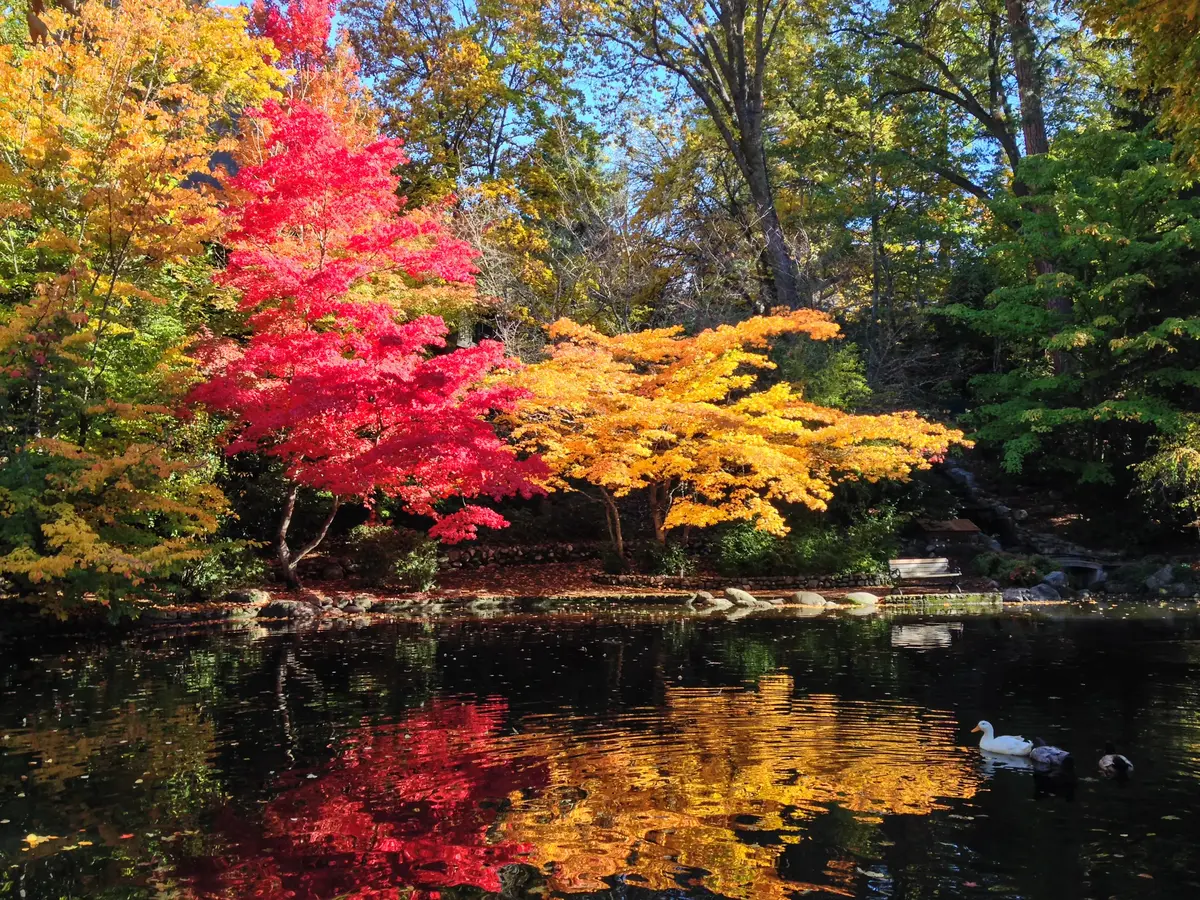
Local Expert Takeaway: Ashland's outdoor infrastructure is unusual for a city of 21,259: a National Historic Landmark park with a cold-water swim reservoir, a 20-mile paved trail that connects the entire valley, a lake with a 280-foot waterslide a short drive out OR-66, and a community-owned ski mountain with year-round programming. The catch is that the skiing is genuinely variable — the same mountain that ran a 30-year record season in 2024–25 managed just 17 days in 2025–26. Move here for the Lithia Park lifestyle and the Bear Creek Greenway access; treat Mount Ashland skiing as a welcome bonus in a good snow year rather than a reliable annual given.
Quick Takeaways & FAQs
✅ Lithia Park is a 100-acre National Historic Landmark designed by the same landscape architect behind San Francisco's Golden Gate Park — with a mountain-water swim reservoir, pickleball courts, a Japanese garden, and a winter ice rink, all free and within walking distance of downtown.
⚠️ Mount Ashland's skiing ranges from a 30-year record season (318 inches of snow through late April) to just 17 operating days the following year — the variability is real and worth understanding before you move here expecting a reliable ski commute.
📍 Dogs are not permitted inside Lithia Park — the Ashland Dog Park, which is also the northern trailhead for the 20-mile Bear Creek Greenway, is the go-to for residents with dogs.
Is Lithia Park free to use?
Can I bring my dog to Lithia Park?
How reliable is the skiing at Mount Ashland?
What is the Bear Creek Greenway and where does it go?
What water recreation options are near Ashland?
Moving to Oregon?
Tell us what you need help with and we'll connect you with local resources.
