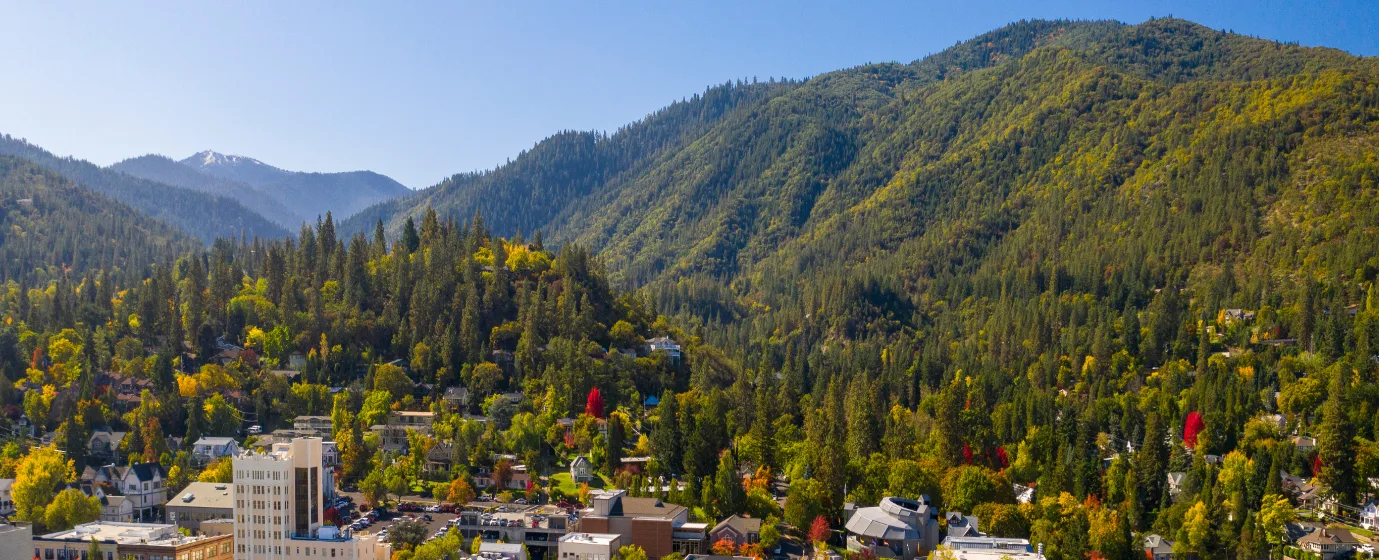
Ashland is the kind of place that people fall for on a visit to the Oregon Shakespeare Festival and then spend the next two years engineering a way to stay. With a population of 21,259 tucked against the Siskiyou Mountains in southern Jackson County, this is a genuinely small city — the 29th-largest incorporated city in Oregon — with an outsized cultural footprint. I-5 and OR-99 run through the city's bones, and those corridors quietly dictate the difference between neighborhoods that feel like a walkable arts town and ones that feel like a quieter residential escape.
The economy here is built on Southern Oregon University, the Oregon Shakespeare Festival, and the Ashland School District — three institutions that between them shape who moves here, what the housing market does, and what daily life looks like. The Ashland School District holds a B rating, according to Niche, and serves 2,454 students enrolled in 2025-26. Those numbers attract families who in other markets might be priced into a larger, more generic suburb, and who instead choose Ashland because the school quality and the cultural offerings come packaged together.
The city-wide typical home price sits at $559,336 (Zillow Home Value Index, July 2026) — well above what the median household income of $68,028 can comfortably carry. That gap is the central financial reality of buying here, and it's worth understanding before you start touring. By comparison, neighboring Medford, Talent, and Phoenix are all noticeably lower, which is why some buyers land in Ashland's orbit and end up settling one town over. For those who do commit to Ashland, the trade is access: to Lithia Park, the Bear Creek Greenway, Mount Ashland, Emigrant Lake, and a genuine downtown that works on foot.
Whether you're narrowing a shortlist or just starting to research the area, the sections below break down Ashland's eight neighborhoods by character, buyer type, common mistakes, and where the rental market makes sense — so you can move from curiosity to a real decision.

The Ashland Reality
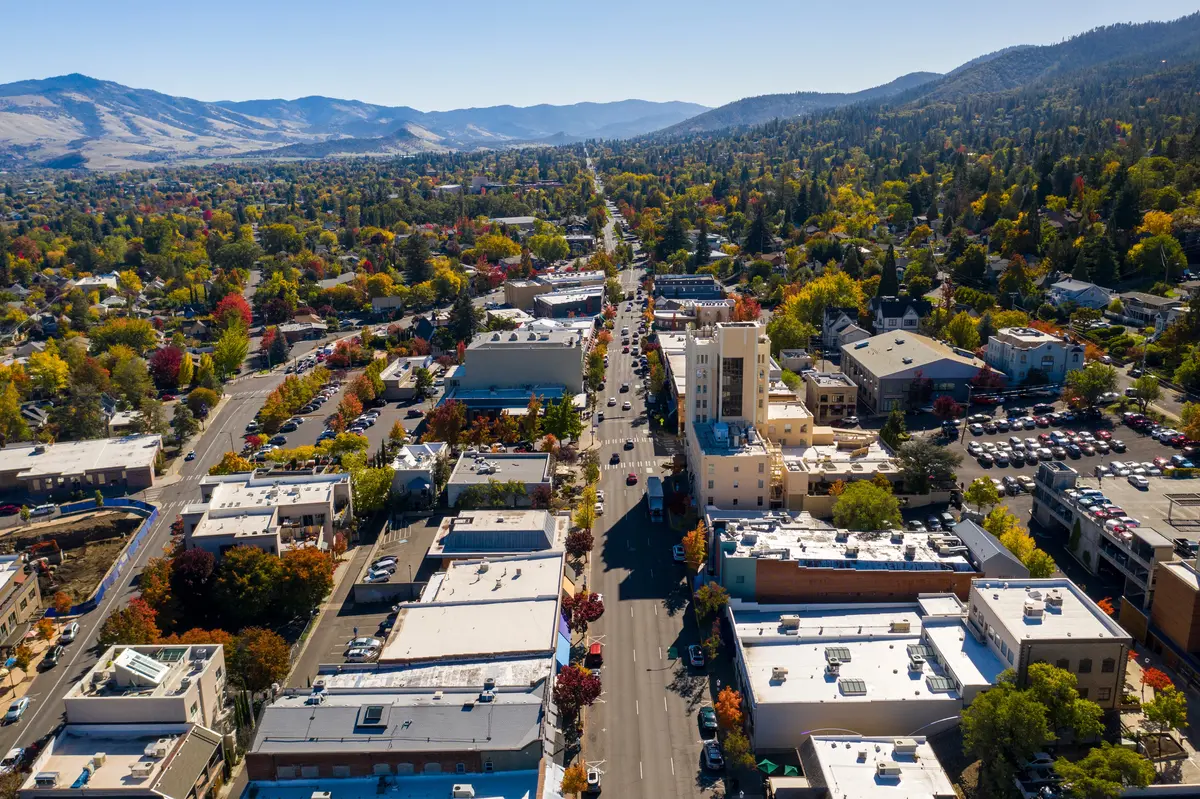
The divide that matters most in Ashland is not east versus west — it's elevation and proximity to the Plaza. Neighborhoods close to the Historic Downtown core and Lithia Park sit at a premium not just because of walkability but because of what you're walking to: the Oregon Shakespeare Festival theaters, the Rogue Valley Growers & Crafters Market Downtown Ashland, independent coffee shops and restaurants, and Ashland Creek itself. The closer you are to that nucleus, the more you pay — and the more likely you are to be living in a home built in an earlier era of the city's history.
Move north or northwest and the character shifts. North Ashland and Northwest Ashland sit on hillier terrain, with larger lots, newer construction, and more separation from the festival crowds that descend every summer. For buyers who want Ashland's school district and relative safety without the foot traffic of a tourist season, these neighborhoods offer a different version of the same city. The catch is that errands and evening plans require a drive rather than a walk.
The other reality to absorb early: Ashland's school boundaries are drawn within a single district, so chasing a specific elementary school boundary matters less here than in larger metro districts. What matters more is whether you want walkable access to downtown culture, large-lot privacy on the hills, or a purpose-built community like Mountain Meadows. Those three orientations map cleanly onto the eight neighborhoods — and getting that orientation right before you make an offer is the most important decision a buyer here will make.
Neighborhoods at a Glance
| Neighborhood | Best For | Vibe |
|---|---|---|
| Railroad District | Walkable Renter | Historic character, art galleries, walkable streets — majority renter-occupied, mostly older homes |
| Downtown Ashland (Historic Downtown District) | Walkable Luxury | The Plaza, the Festival, Lithia Park all within steps — the most walkable and most storied block in Ashland |
| University District | Views Nature | Hillside Craftsman and modern homes above Siskiyou Boulevard, trail access to 300 acres of open space |
| North Ashland | Quiet Families | Hilly residential streets off OR-99, scenic Rogue Valley views, bungalows and ranch homes |
| Northwest Ashland | Privacy Nature | Large lots, ponderosa pines, custom Craftsman and midcentury homes — one of the city's quieter pockets |
| Mountain Meadows | Quiet | Resident-owned 55+ community on 27 acres with fitness center, indoor pool, and a four-acre park |
| Oak Knoll / Oak Knoll Meadows | Families Schools | Tree-lined streets, Craftsman and traditional homes, low crime scores, near the golf course |
| Quiet Village | Families Commuter | Mid-century to modern mix, Bear Creek Greenway access, solid school district connection |
Ashland typical home price: $559,336 (Zillow ZHVI, July 2026). Typical rent: $2,117/mo (Zillow ZORI, July 2026). Neighborhood tiers on this page are relative to these figures.
Best Neighborhood by Buyer Type
| Buyer Type | Best Neighborhood | Why |
|---|---|---|
| First-Time Buyer | Quiet Village | More accessible entry into the Ashland School District with Bear Creek Greenway access and a range of housing styles that gives first-timers options without locking into one architectural era. |
| Luxury Buyer | Northwest Ashland | Half-acre-plus lots, custom Craftsman and contemporary builds averaging around 2,600 square feet, and a private feel that the downtown-adjacent neighborhoods simply cannot offer. |
| Walkability Seeker | Downtown Ashland (Historic Downtown District) | The Plaza, Lithia Park, the Festival theaters, and the Rogue Valley Growers & Crafters Market are all reachable on foot — this is the only neighborhood in Ashland where a car is genuinely optional for daily life. |
| Families with Kids | Oak Knoll / Oak Knoll Meadows | Tree-lined streets, low crime scores, and proximity to the Ashland School District's offerings make this one of the steadier family-oriented pockets in the city. |
| Commuters | North Ashland | Quick access to OR-99 and I-5 keeps the drive to Medford — about 15 minutes — straightforward on a weekday morning. |
| Large-Lot Buyers | Northwest Ashland | Lots of half an acre or more are the norm here, with stone-and-wood homes set among ponderosa pines — the most space per dollar you'll find within Ashland's city limits. |
| Renters | Railroad District | The majority of housing is renter-occupied, supply of rental stock is higher than anywhere else in the city, and walkable streets mean daily errands don't require a car. |
Looking to buy in Ashland? Estimate your payment.
Enter your numbers to see an estimated monthly mortgage payment.
Estimate only. Excludes HOA fees and mortgage insurance. The interest rate above is a starting point, not a quoted rate — replace it with your own to see real numbers. Insurance is a flat placeholder, not a Ashland quote.
Most Popular Neighborhoods
Railroad District
The Railroad District earned its name from the Oregon and California Railroad Company, whose tracks first reached Ashland in 1884 — and the bones of that era are still visible in the neighborhood's older homes. The neighborhood is listed on the National Register of Historic Places as the Ashland Railroad Addition Historic District, which means renovation decisions carry preservation considerations that buyers in newer parts of town never face. Most properties here are renter-occupied, so owner-occupant inventory tends to move quickly when it surfaces.
Best for: Renters, walkability seekers, and buyers who want historic character within reach of downtown without paying full Historic Downtown prices.Downtown Ashland (Historic Downtown District)
The 32.2-acre Ashland Downtown Historic District — listed on the National Register of Historic Places in 2000 — is the city's most walkable zone, where the Oregon Shakespeare Festival, Lithia Park, independent cafés, and the Ashland Plaza stack on top of each other within a compact grid. Buying here means accepting that summer festival season brings genuine crowds and parking pressure to your immediate neighborhood. This is also where Ashland's price premium is most pronounced, running well above the city-wide typical home price of $559,336 (July 2026).
Best for: Buyers who want full on-foot access to Ashland's cultural core and can absorb the premium that comes with it.University District
Sitting on the hills above Siskiyou Boulevard, the University District is shaped by Southern Oregon University's presence — a designated Center of Excellence in the Fine and Performing Arts — and by trail access into Oredson Todd Woods and Siskiyou Mountain Park, which together cover roughly 300 acres. Homes here mix reimagined Craftsman and modern architecture, and many sit on hilly lots with sweeping views of surrounding evergreen forests. The trade-off is that the terrain that creates those views also makes some streets steep enough to complicate winter driving.
Best for: Buyers who want views, nature access, and proximity to Southern Oregon University without being in the tourist-season thick of downtown.North Ashland
North Ashland sits just off OR-99 on hilly terrain that opens up to Rogue Valley and mountain views — a residential pocket of bungalows and ranch-style homes that feels quieter than the downtown-adjacent neighborhoods without sacrificing easy I-5 access. It reads as one of the city's safer areas by crime score, which attracts families with school-age children who want the Ashland School District without the price premium of the historic core. The honest downside is that the walk to downtown takes real effort from the steeper parts, and most daily errands still mean getting in the car.
Best for: Families and commuters who want Ashland's school district and safety profile with faster freeway access and lower street-level foot traffic.Northwest Ashland
Northwest Ashland is the neighborhood for buyers who want space — lots that typically run half an acre or more, single-family homes averaging around 2,600 square feet, and a mix of contemporary, custom Craftsman, and midcentury construction set among ponderosa pines and maple groves. Hald Strawberry Park's two miles of hilly trails connect to the Acid Castles Rocks trailhead, and Lithia Park sits less than a mile away, which is a short drive rather than a walk from most of the neighborhood. Homes.com consistently identifies this as one of Ashland's safer pockets, and the large lots mean you're unlikely to be looking at a neighbor's living room from your kitchen window.
Best for: Buyers prioritizing privacy, lot size, and outdoor access — and who are comfortable with a car-dependent daily routine.Mountain Meadows
Mountain Meadows is a specific proposition: a resident-owned, 55+ active adult community developed in 1996 on 27 acres, comprising roughly 226 properties ranging from single-family homes to condominium clusters. The community's amenities include a fitness and wellness center with indoor pool, a clubhouse with dining room, a community garden, and a four-acre park with a pond — and residents own and govern the whole thing through an owners association, with exterior maintenance handled collectively. It was voted America's Best Small Active Retirement Community by the National Council on Senior Housing in 1999, and the structure hasn't changed: you're buying into a community with real rules and real governance, not just a neighborhood.
Best for: Buyers 55 and older who want a purpose-built active adult community with built-in social infrastructure and maintenance simplicity.Oak Knoll / Oak Knoll Meadows
Oak Knoll's tree-lined streets and mix of Craftsman and traditional homes sit near the Oak Knoll Golf Course area, giving the neighborhood a settled, established feel that newer parts of Ashland haven't developed yet. It consistently scores among the lower-crime neighborhoods in the city, and the housing stock tends to attract families looking for something more suburban in texture than the dense historic core. The limitation is that on-foot access to downtown requires a real commitment — Oak Knoll is a drive from the Plaza, not a stroll.
Best for: Families and established buyers who want quiet streets, lower crime scores, and the Ashland School District without the density of the historic neighborhoods.Quiet Village
Quiet Village lives up to its name in texture if not always in price — a range of mid-century to modern homes that gives buyers more architectural variety than the Craftsman-heavy parts of town, with the Bear Creek Greenway and Ashland Creek Park providing genuine recreation access without requiring a drive. It's one of the more practical choices for buyers who need the Ashland School District but find the historic core's price point out of reach. The trade-off is that Quiet Village doesn't have the walkable street life of the Railroad District or Downtown — it's a neighborhood you come home to, more than one you go out from.
Best for: First-time buyers and families who want Ashland's school district and greenway access at a somewhat more accessible price point than the historic core.Common Mistakes Buyers Make in Ashland
Treating Ashland as One Uniform Market
The gap between a renter-dominated block in the Railroad District and a half-acre custom Craftsman in Northwest Ashland is enormous — in character, in price, and in daily life. Buyers who tour one or two properties without mapping the city's geographic logic often make offers in neighborhoods that don't fit how they actually want to live. Walk the Railroad District on a summer afternoon and then drive out to Northwest Ashland the same day — the contrast makes the decision much cleaner.
Underestimating Festival-Season Impact
The Oregon Shakespeare Festival runs from February through October, and buyers who tour Downtown Ashland and the Railroad District in January or March are seeing a quieter version of those neighborhoods than they'll actually own. Summer brings real pedestrian traffic, parking pressure, and street-level activity around the Plaza. For buyers who want Ashland's cultural energy, that's the point — for buyers who want quiet evenings, it's worth visiting in July before making an offer anywhere within easy walking distance of the theaters.
Chasing Square Footage Over School District Fit
Because Ashland School District serves the whole city, some buyers assume that any home in Ashland gets them the same school access — and they stretch into the largest footprint they can find in the outer residential areas. The district's single-community size means boundary nuances matter less here than in a large metro, but proximity to Southern Oregon University's arts programming, the Schneider Museum of Art, and ScienceWorks Hands-on Museum is meaningfully different depending on where you land. Families who move to North Ashland or Oak Knoll for the space and then find that most enrichment activities are concentrated downtown sometimes wish they'd made a different call on square footage versus location.
Skipping the Affordability Math
The typical home price in Ashland sits at $559,336 (July 2026), and the median household income is meaningfully below what's needed to carry it. Buyers moving from a lower-cost market sometimes see Ashland as affordable relative to Portland or the Bay Area and skip a real underwriting conversation. Neighboring Talent, Phoenix, and Medford are all noticeably lower — and for buyers whose budget is genuinely stretched, living just outside Ashland and commuting the short distance can be the decision that makes the whole lifestyle work rather than stressing it. The drive to Medford is about 15 minutes, and the savings can be substantial.
Best Areas to Rent in Ashland
| Area | Ideal For | Trade-off |
|---|---|---|
| Railroad District | Walkable Renter Renters who want walkable streets, historic character, and the highest supply of rental stock in the city | Older construction means some units have aging systems; summer festival foot traffic is part of daily life |
| Downtown / Historic Core | Walkable Renters who want Lithia Park, the Plaza, and the Oregon Shakespeare Festival on foot | Highest rent pressure in the city, limited inventory, and seasonal crowds are a feature — not a bug — of this location |
| University District | Views Graduate students, university faculty, and renters who want trail access to Siskiyou Mountain Park and Oredson Todd Woods | Hilly terrain means some units are harder to reach in winter; the area competes with student rental demand during the academic year |
| North Ashland | Commuter Renters prioritizing OR-99 and I-5 access for a Medford commute, with quieter residential streets | Car-dependent for most errands and evening plans; less rental inventory than the Railroad District |
| Quiet Village | Families Families and longer-term renters who want greenway access, a range of housing styles, and the Ashland School District without downtown pricing | Less street-level energy than the historic core; a drive rather than a walk for most cultural amenities |
The city-wide typical 2BR rent range runs $1,950–$2,370, which reflects a market with limited supply and sustained demand from university employees, festival staff, and remote workers drawn by Ashland's quality of life. For context, see the full cost of living breakdown. Renters new to the area consistently underestimate how quickly available units move, particularly between February and May when festival-season workers are arriving and the university's spring semester is still running.

Local Expert Takeaway: The single most useful thing to know before touring Ashland neighborhoods: the walkable historic core and the quieter residential hillsides are fundamentally different cities wearing the same name. If you want to walk to Lithia Park, catch a show at the Oregon Shakespeare Festival on a weeknight, and hit the Rogue Valley Growers & Crafters Market on a weekend morning, you belong downtown or in the Railroad District — and you'll pay for that access. If you want a half-acre lot, ponderosa pines outside the window, and a ten-minute drive to the Plaza on your terms, Northwest Ashland or North Ashland will serve you better. Mountain Meadows is its own category entirely: a resident-governed 55+ community that requires you to want a community as much as a home. Get that orientation right first, and the rest of the decision gets much simpler.
Quick Takeaways & FAQs
✅ Ashland's School District holds a B rating, according to Niche, and its walkable historic core — anchored by Lithia Park and the Oregon Shakespeare Festival — gives the city a cultural density rare for a city of 21,259.
⚠️ The typical home price of $559,336 (July 2026) sits well above what the median household income can comfortably support, making affordability a real constraint — neighboring Medford, Talent, and Phoenix are all noticeably lower.
📍 Mountain Meadows is the only purpose-built 55+ community in Ashland's city limits — a resident-owned, self-governed development on 27 acres that was voted America's Best Small Active Retirement Community in 1999.
Which Ashland neighborhood is best for families with school-age children?
Is Mountain Meadows open to buyers under 55?
What is the most walkable neighborhood in Ashland?
How do Ashland's home prices compare to nearby cities?
Where should I rent in Ashland if I'm new to the area and not ready to buy?
Moving to Oregon?
Tell us what you need help with and we'll connect you with local resources.
