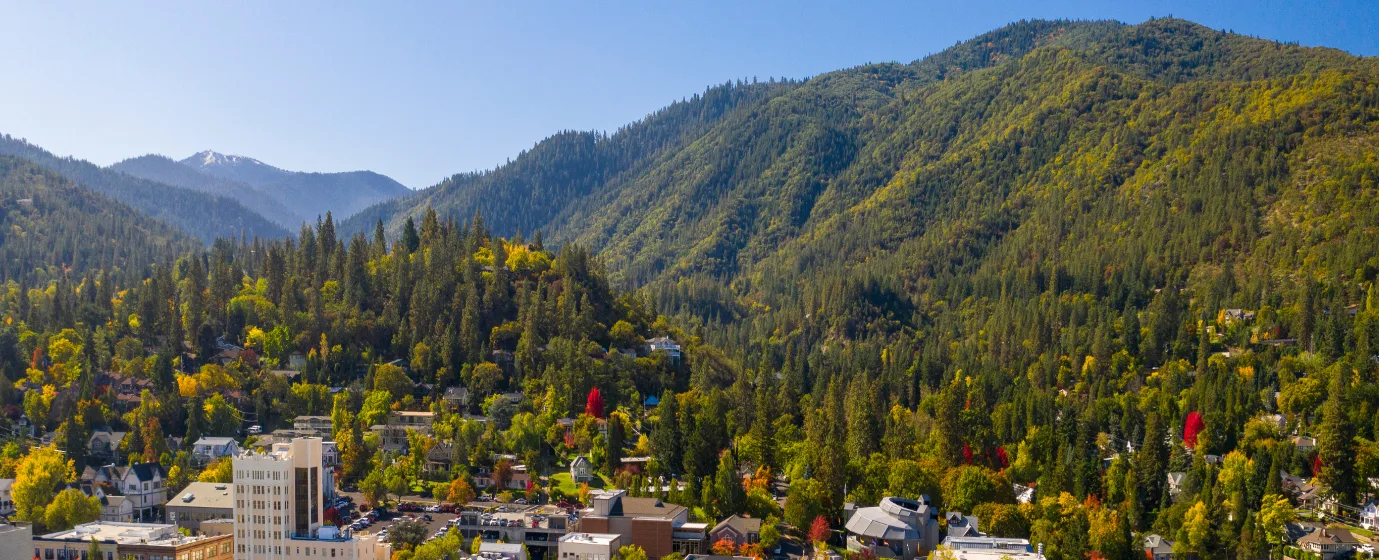
Drive north on I-5 from the California border and you hit Ashland in about fifteen minutes. Physically, the transition is subtle — same Siskiyou foothills, same dry summer air, same familiar wildfire smoke in August. But the city you land in is a genuine surprise. Ashland has a population of 21,259, a world-class repertory theater that draws crowds from across the region, a liberal arts university, and a downtown that functions on foot. It is nothing like the corridor cities on either side of it, and that is precisely why Californians who discover it keep coming back — and eventually move here.
The economic and cultural backbone is unusual for a city this size. Southern Oregon University anchors the northwest edge of town and shapes the city's demographic mix. The Oregon Shakespeare Festival, founded in 1935 and now one of the largest repertory operations in the country, is the single largest driver of the local economy and the reason Ashland has restaurants and arts programming that would be at home in a city three times larger. The Ashland School District, with 2,454 students enrolled in 2025-26, holds a B rating, according to Niche — a small but capable district. The families moving here tend to be drawn by the schools, the outdoor access, and a pace of life that feels genuinely different from California's faster metros.
On cost of living, Ashland sits above the national average — roughly 7% higher — but well below the California metros most transplants are leaving. The typical Ashland home value stood at $559,336 as of July 2026, a meaningful step below California's statewide typical home value of $773,735. That gap funds the move for a lot of buyers. Renting is also a real option: the typical two-bedroom runs $1,950 to $2,370. The full cost picture — groceries, utilities, transportation — is covered on the cost of living page.
Whether you are being drawn by the theater scene, the proximity to Mount Ashland, or simply the ability to buy a house without a seven-figure budget, the sections below break down what the California-to-Ashland move actually looks like on paper and in practice — home prices, taxes, the job reality, what the lifestyle trade-offs are, and what most transplants get wrong in the first year.

The Home Price Reality: What Your California Equity Buys Here
The most common move Californians make when they land in Ashland: they pull up the listings and immediately start doing the math on what their equity will buy. It is usually a good conversation.
Ashland's typical home value was $559,336 as of July 2026. California's statewide typical home value of $773,735 puts that gap in concrete terms — you are looking at a meaningful difference in favor of Ashland, and that is the statewide California figure, not a coastal one. Buyers leaving the Bay Area or Los Angeles are often arriving with equity that covers the entire Ashland purchase outright, or close to it.
Ashland does carry a notable premium over the rest of Oregon. The statewide Oregon median runs well below Ashland's figure, so do not walk in expecting deep-discount Pacific Northwest pricing. This is one of the more expensive small cities in the state, partly because of the university, partly because of the festival economy, and partly because of consistent demand from exactly the demographic you represent.
What the Equity Gap Actually Buys
Buyers stepping down from a California sale often find they can move into the Railroad District or the University District with either no mortgage or a very modest one. Entry-level properties — older ranch homes in North Ashland or smaller lots in Quiet Village — tend to sit at the more accessible end of the market. The Historic Downtown District and areas near Lithia Park command a premium that reflects walkability and the festival-adjacent lifestyle.
One thing worth understanding before you make an offer: the median household income in Ashland is $68,028, which falls short of what is needed to carry the typical home here. That gap means the market is sustained in large part by buyers arriving with out-of-state equity, remote incomes, or retirement savings. You are not an outlier for doing this; you are the typical buyer. For a deeper look at neighborhood character and how the geographic divides play out, that page covers it in full.
Property Tax: The Proposition 13 Reset
If you have owned your California home for more than a decade, you are about to experience a jolt that catches almost every long-time California homeowner off guard. California's Proposition 13 caps property taxes at 1% of assessed value and limits annual increases to 2% — meaning a homeowner who bought in 2005 has been paying taxes on a value that bears no resemblance to what the house is worth today. That bill resets the moment you sell.
Ashland's effective property tax rate is 0.74%, which is actually slightly above California's effective rate of 0.71%. The two are close. What changes is that in Ashland, your assessed value will reflect your purchase price from day one — there is no Proposition 13 shield waiting for you in Oregon. For buyers arriving with a large equity check and purchasing in the $500,000s, the effective annual tax burden will likely feel familiar within a year or two. The surprise is not the rate; it is the honest assessed value.
Income Tax, Sales Tax, and the Oregon Trade-Off Most Californians Miss
The headline comparison is easy to misread. California's top state income tax rate of 13.3% is the highest in the nation. Oregon's top rate is 9.9%. That looks like a clear win for Oregon, and for high earners it genuinely is. But the nuance matters enormously for most transplants.
Oregon's income tax brackets reach the higher rates earlier than California's do. For most middle-income households, Oregon's effective income tax rate tends to run higher than California's for the same income level. The income-tax savings favor high earners; many middle-income households pay about the same or more here. This is not a reason not to move — it is a reason to run the actual numbers for your specific income with a tax professional before you assume Oregon is cheaper on income tax.
Where Oregon Wins Clearly: No Sales Tax
Oregon is one of only five states with no state sales tax, while California's statewide base sales tax rate of 7.25% can climb to 10.25% with local surcharges. For a household spending heavily — on a home renovation, a new car, furnishings after the move — Oregon's zero sales tax saves real money. The offset can run meaningfully per year for active spenders, which narrows the income tax gap for many households.
The practical picture for most California transplants: income tax goes up for most earners, sales tax goes to zero, property tax rate stays similar. Whether you come out ahead depends almost entirely on your income and your spending patterns. Someone on a pension or investment income should model it carefully with a tax advisor before the move year.
A Quick Comparison at a Glance
| Tax Type | California | Ashland / Oregon | Who Benefits |
|---|---|---|---|
| Top income tax rate | 13.3% (Tax Foundation) | 9.9% top rate; effective rate higher for many earners | High earners |
| Sales tax | 7.25% base, up to 10.25% locally | 0% — no state sales tax | Most buyers |
| Effective property tax rate | 0.71% — but Prop 13 shields long-time owners | 0.74% on current assessed value | Similar; long-time CA owners face a reset |
| Local income tax | Varies by city | None in Ashland | Most buyers |
| Estate / inheritance tax | None at state level | Oregon estate tax applies above $1M threshold | Relevant for retirees with larger estates |
| Overall verdict | Lower effective income tax for most earners; significant sales tax burden | Higher effective income tax for many; no sales tax; similar property rate | Run the numbers for your income level |
The Oregon estate tax is worth flagging for retirees moving with a larger asset base — it kicks in at the $1 million threshold, which is lower than the federal exemption and relevant to anyone arriving with home equity plus retirement accounts. A conversation with an estate planner before the move is worth the time.
Jobs, Remote Work, and the Career Reality Check
This is the section most California transplants wish someone had handed them before they signed the lease.
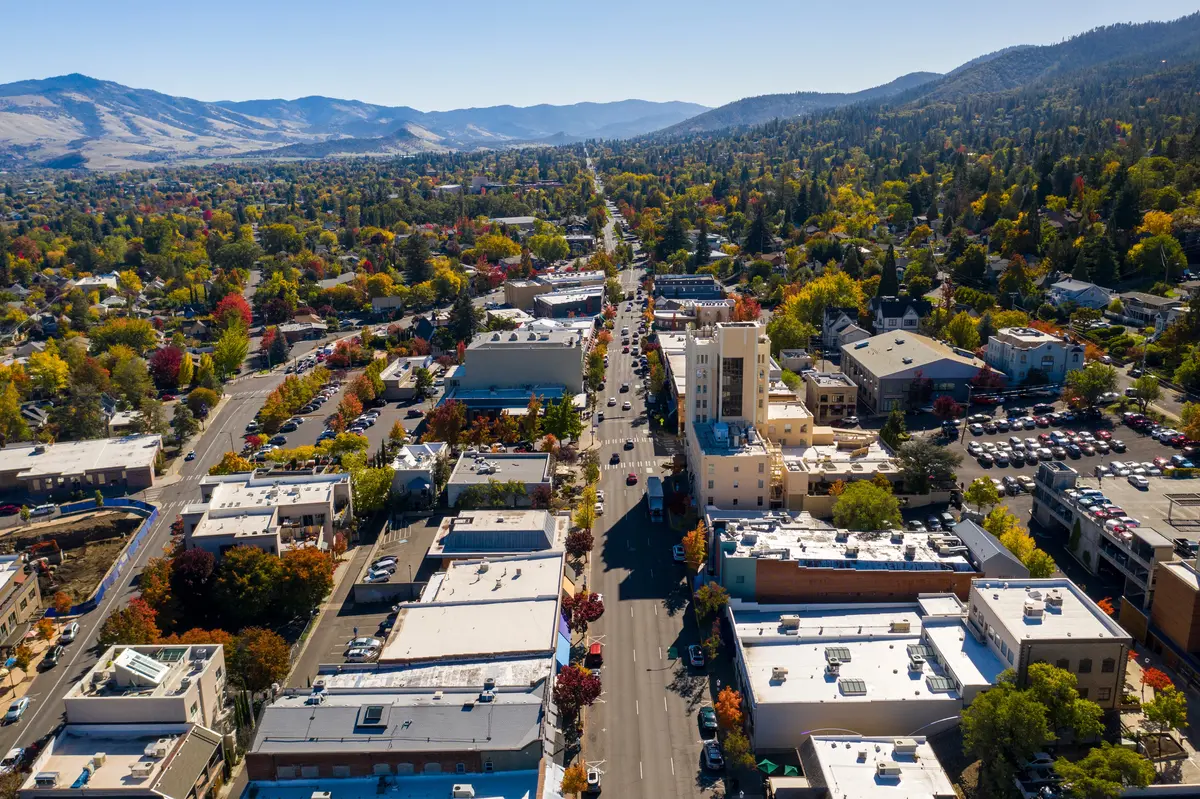
Ashland's local employer base is anchored by Southern Oregon University, the Oregon Shakespeare Festival, the Ashland School District, and the City of Ashland. A significant regional employer — a large healthcare organization — is located in Medford, not Ashland itself, so residents who work there commute out. Outside of education, arts and entertainment, tourism, and municipal government, local employment options are genuinely thin.
If you are moving here in a field other than those four, the honest answer is: you will commute to Medford or work remotely. Medford is about 15 minutes to the north and is the commercial and medical hub of the Rogue Valley. Many Ashland residents treat it as their employment center while living in Ashland for the quality of life.
The Remote Worker Advantage
Remote work is not a workaround here — it is the dominant strategy for the California transplant demographic. A household with one or two remote incomes, arriving with California equity, is exactly the profile that the Ashland market has been absorbing for several years. Ashland captures a specific slice of regional inbound migration: buyers who want culture, outdoor access, and a small city that functions on foot, and who have the flexibility to bring their income with them.
The catch is infrastructure. Ashland is a small city of 21,259 with a limited commercial base. A serious shopping run means driving to Medford. Advanced career networking in most industries requires at minimum a Portland trip, more likely travel back to California. If you are used to a dense professional ecosystem within a few miles, Ashland's isolation will take adjustment — usually about six months before the trade-offs feel settled.
What to Expect If You Work In-Person
Healthcare, education, and hospitality are the three sectors with meaningful local employment. Southern Oregon University generates adjunct and staff positions, though many are competitive and lower-paying than comparable California roles. The festival economy creates seasonal hospitality work. The school district is a stable employer for credentialed teachers — Oregon credentials are separate from California's, so factor in that process if you are moving mid-career in education. For everything else, budget for a commute or budget for a job search before the move date. See the living in Ashland page for the full employer and commute picture.
Looking to buy in Ashland? Estimate your payment.
Enter your numbers to see an estimated monthly mortgage payment.
Estimate only. Excludes HOA fees and mortgage insurance. The interest rate above is a starting point, not a quoted rate — replace it with your own to see real numbers. Insurance is a flat placeholder, not a Ashland quote.
Lifestyle, Culture, and What Californians Are Actually Moving For
Californians who move to Ashland are not fleeing California so much as choosing something specific. The profile is consistent: outdoors access, a functioning arts scene, a walkable downtown, and a community that takes both seriously. Ashland delivers on all four, with some honest asterisks.
The Oregon Shakespeare Festival is the cultural anchor, and it is legitimately world-class — not regional theater with aspirations, but one of the largest repertory operations in the United States, founded in 1935 and running across multiple downtown theaters. The largest share of out-of-state visitors consistently comes from California, which means the festival is already part of the social fabric for many buyers before they arrive. Attending a production on a weeknight and walking home through Lithia Park afterward is the specific quality-of-life moment that keeps coming up in conversations with transplants.
The Outdoor Picture
Mount Ashland anchors the skiing and hiking in winter and early summer. The Bear Creek Greenway connects Ashland to the broader valley trail system. Emigrant Lake draws families in the warmer months. Lithia Park — 93 acres running along Ashland Creek through the center of the city — is where daily life actually happens for most residents: the morning run, the dog walk, the kids' afternoon. The parks and recreation page covers the outdoor options in full.
The Smoke Caveat
Summer wildfire smoke is a recurring seasonal reality in Ashland. The Siskiyou and Cascade ranges create a valley that traps smoke effectively during fire events, and the dry months — typically July through September — can bring stretches of poor air quality. Californians moving from Northern California or the Central Valley will recognize the experience; those from coastal Southern California may find it more jarring. An air purifier and an air quality monitor are standard household equipment here, not optional accessories. Plan for it rather than hoping for a better year.
What the Downtown Actually Offers
Ashland Plaza and the surrounding blocks form a downtown that functions at a scale most small cities cannot sustain. Independent coffee, restaurants across price points, live music venues, and the festival theaters sit within a few walkable blocks. The Rogue Valley Growers & Crafters Market runs through the warmer months and is a genuine weekly gathering point, not a tourist amenity. The neighborhoods page breaks down where to live relative to all of this.
Health insurance premiums in Oregon generally run noticeably below what you were paying in California, though you will drive farther for specialist care — advanced treatment options require a trip to a larger city rather than being minutes away as they might have been in a major California metro.
Ashland averages 198 sunny days a year — and it is worth sitting with, because Southern Oregon is often marketed with sunnier numbers. It is sunnier than Portland by a wide margin, but it is not the desert Southwest. Winters are mild compared to most of Oregon, but overcast and wet by California coastal standards.
What to Get Right Before You Move
The California transplants who settle into Ashland quickly tend to have done three things before the moving truck arrived. The ones who struggle tend to have skipped at least one of them.
Run the Tax Numbers for Your Specific Situation
The headline — lower top income tax rate than California — does not tell your story. California's top state income tax rate of 13.3% applies only to the highest earners. For many households, Oregon's earlier bracket structure produces a higher effective rate on income. Combined with the zero sales tax and the similar property rate, the net picture varies significantly by income level and spending pattern. Do this calculation with actual numbers before the move year, not after. The year you move involves both states, and partial-year filing in each adds complexity that surprises most people.
Settle the Job Question Before You Land
If your income requires local employment, have the job before you arrive. Ashland's local market is thin outside education, healthcare, the arts, and municipal roles. Medford is about 15 minutes up I-5 and has a meaningfully larger employment base. Many transplants underestimate how often "I'll figure it out when I get there" becomes six months of frustration. Remote workers have a structural advantage here and should protect it — confirm your employer's Oregon remote-work policy before the move, not after.
Understand the Prop 13 Reset
Long-time California homeowners are often genuinely startled by their first Ashland tax bill — not because the rate is higher (it is actually similar), but because the assessed value is their purchase price, not a figure limited to 2% annual increases from years past. Budget for the honest tax bill from day one, not the one your California muscle memory suggests.
The Six-Month Mark
Almost everyone who moves from a major California metro reports the same experience around month six: the isolation becomes real. Ashland is a city of 21,259 with a drive to Medford for anything resembling a wide retail selection. The arts scene is excellent; the professional networking ecosystem is thin; the population is small enough that social circles form slowly. The transplants who thrive tend to plug into something early — the university community, the festival volunteer network, the trail running groups, the farmers market regulars. The city rewards engagement and punishes waiting for the community to come to you.
School Enrollment Timing Matters
The Ashland School District is small — 2,454 students enrolled in 2025-26 — and desirable enough that certain programs fill quickly. If you are moving with school-age children, start the enrollment conversation well before the move date. The district's size means a single popular program can have a meaningful waitlist. The schools page has the full picture on academics and what parents moving from California should expect. For safety context, Ashland's crime and safety page covers the specifics.

Local Expert Takeaway: The Californians who do best in Ashland arrive with equity, a portable income, and realistic expectations about isolation. The city is genuinely exceptional — Lithia Park, the Oregon Shakespeare Festival, Mount Ashland, a walkable downtown — but it is a city of 21,259, and the nearest thing resembling a full urban amenity set is about 15 minutes north in Medford. The tax math is not the slam dunk the headline suggests: the income-tax savings favor high earners, while many middle-income households pay about the same or more than they did in California, offset partly by zero sales tax and a similar property rate. Run the numbers for your actual income, get the job question answered before the truck leaves California, and plan for wildfire smoke season the same way you would at home.
Quick Takeaways & FAQs
✅ Ashland's typical home value of $559,336 (July 2026) sits meaningfully below California's statewide typical home value of $773,735, giving most California sellers real purchasing power on arrival.
⚠️ Oregon's income tax savings favor high earners — many middle-income households pay about the same or more than they did in California, though the zero sales tax partially offsets this depending on your spending patterns.
📍 Local employment outside education, healthcare, and the arts is limited; most California transplants who work in-person commute about 15 minutes to Medford, while remote workers have a clear structural advantage living here.
Is Ashland actually cheaper than California?
How does Oregon's property tax compare to Proposition 13 in California?
What is the job market like in Ashland for someone moving from California?
Does wildfire smoke affect Ashland the same way it does parts of California?
How are the schools in Ashland compared to what I am used to in California?
Moving to Oregon?
Tell us what you need help with and we'll connect you with local resources.
