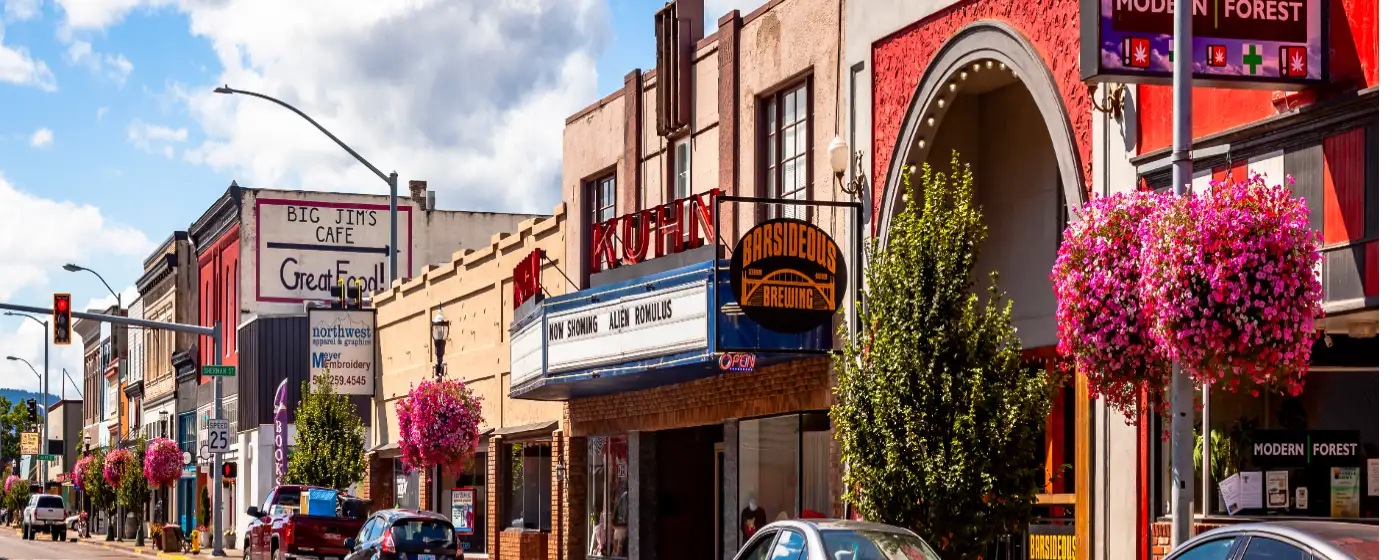
Lebanon doesn't announce itself the way Bend or Ashland does. It sits in the South Willamette Valley at the junction of US-20 and OR-34, a working-class city of 19,950 where the pace is genuinely unhurried and housing hasn't been priced into a different stratosphere. Retirees who land here often say they stumbled onto it — they were looking at Albany, or maybe Sweet Home — and then noticed that Lebanon had a hospital inside city limits, a senior center run by the city itself, and a price point that left room in the budget for the rest of life. That combination is rarer than it sounds in western Oregon.
The economic backbone here is institutional: Linn-Benton Community College, Samaritan Lebanon Community Hospital, and Western University of Health Sciences collectively keep a steady professional presence in a small city. That matters in retirement because it means some specialist care, continuing-education programming, and a community clinic presence tied to the university — not just a gas station and a dollar store. The Lebanon Community School District serves 3,888 students enrolled in 2025-26, which tells you this is a city with families and kids, not a retirement enclave — which is either a feature or a drawback depending on what you want from daily life.
The typical home price in Lebanon sits at $397,559 (Zillow Home Value Index, July 2026), making it noticeably more affordable than Corvallis and meaningfully below the statewide median — important context for anyone downsizing from a higher-cost market and trying to make the math work on a fixed income. Oregon's tax picture is mixed for retirees: Social Security is fully exempt from state income tax, but pension and IRA withdrawals are taxed at rates that climb steeply. The city gets 157 sunny days a year, and the South Santiam River runs along the edge of town, giving outdoor-minded retirees a genuine backyard. Lebanon is not a destination retirement town. It's a practical one — and for the right person, that's exactly the point.
The sections below cover Lebanon's healthcare infrastructure, the retiree tax and budget picture, walkability and community life, downsizing options, and how the city stacks up against nearby alternatives for retirement.
Why Retirees Are Choosing Lebanon
The case for Lebanon in retirement starts with price and hospital access — two things that, in most Oregon cities, you have to trade against each other. Here they coexist. The typical home price of $397,559 (July 2026) puts a mortgage-free or low-mortgage purchase within reach for retirees arriving from higher-cost markets, and Samaritan Lebanon Community Hospital sits inside city limits rather than a thirty-minute drive away.
Lebanon suits retirees who want a quiet, unhurried pace without full rural isolation. The Historic Main Street has a working small-town character — independent shops, a handful of local dining spots — and the Strawberry Festival at Cheadle Lake Park, running since 1909, is the kind of community event that tells you something real about a town's social fabric. If you want walkable boutique streets, a buzzing arts scene, or a retirement community with a pool and a pickleball league, Lebanon will frustrate you. The city's infrastructure is oriented around cars, and the social scene is built around local institutions rather than lifestyle amenities.
Retirees who tend to be happiest here are those who already have a connection to the Willamette Valley — a family member in Albany or Corvallis, a history in the region — or those who prioritize affordability and proximity to a hospital over urban convenience. People who move here expecting a scaled-down version of Eugene or Ashland often reconsider within a year. That's an honest read, and it's worth sitting with before you make an offer. For more on whether Lebanon's character fits your buyer profile, see the living in Lebanon overview.
Healthcare & Medical Access in Lebanon
The anchor of Lebanon's healthcare picture is Samaritan Lebanon Community Hospital — a full-service, 25-bed critical access hospital recognized as a Level IV trauma center, with a 24-hour emergency room, surgical services, rehabilitation, maternity care, and radiology all on site. It is the nearest hospital to Lebanon residents, and unlike many cities this size in rural Oregon, it's inside city limits rather than a county road away.
For older adults specifically, the hospital's strengths are well-matched to common needs: diabetes education, rehabilitation and therapy, and nursing services are areas the staff covers directly. A healing garden on the grounds is available to patients and visitors alike. The hospital partners with the Lebanon Senior Center on wellness programming, meaning some of the coordination between medical care and daily senior services already exists at an institutional level rather than relying on individuals to piece it together.
The honest limitation is specialty depth. Samaritan Lebanon is part of the Samaritan Health Services network — a regional system spanning multiple hospitals across Oregon — which gives residents a pathway to specialists without driving to Portland. That network announced a 2025 intention to be acquired by Washington-based MultiCare Health System, a development worth following for anyone making long-term healthcare decisions here. For cardiac, oncology, or complex surgical cases, the practical reality is that Lebanon residents will travel, most often to Albany or Corvallis. That is not unusual for a city of this size, but retirees managing chronic or complex conditions should plan for it rather than be surprised by it.
What This Means Day-to-Day
For routine care — primary care visits, lab work, imaging, short-stay rehab after a procedure — Lebanon functions well. The Senior Center's Wellness Room, with fitness equipment available at no cost and on-site blood pressure monitoring, keeps preventive care accessible without an insurance copay. The gaps show up when you need a subspecialist or a second opinion on a serious diagnosis. Building a relationship with the hospital's network early, rather than after a health event, is the practical move.

The Retiree Budget in Lebanon
Oregon's tax posture for retirees is a study in contrasts. Social Security and Railroad Retirement benefits are fully exempt from Oregon state income tax — that's a meaningful benefit for retirees whose income is primarily Social Security. The problem is everything else. Pension distributions, IRA withdrawals, and 401(k) income are subject to Oregon's graduated income tax, with rates running from 4.75% up to 9.9%. At moderate retirement income levels, most retirees will land in the middle brackets, but the top rate is among the highest in the country, and it arrives sooner than many people expect. A tax advisor familiar with Oregon's structure is worth the conversation before you file your first state return here.
One relief valve for homeowners: Oregon allows residents age 62 or older to defer county property taxes until they sell. The income threshold for eligibility is $60,000 (2025 figure), and the homeowner must have owned and occupied the property for at least five years. The state pays the taxes, which accrue interest and are repaid at sale — it's not forgiveness, but it's a meaningful cash-flow tool for retirees on fixed incomes who own their home outright or close to it. Separately, Oregon's estate tax carries a $1 million exemption that is not indexed to inflation, which means retirees with significant accumulated assets — even those well below the federal threshold — may owe Oregon estate tax. Worth flagging to an estate planner.
At the property level, Lebanon's effective tax rate runs approximately 0.87% — on the lower end for Oregon. Daily costs on a fixed income are broadly in line with a mid-size Willamette Valley city: groceries, utilities, and services are not dramatically cheaper than Eugene or Albany, but housing is the dominant variable, and Lebanon's price point gives retirees the most margin there. For the full cost-of-living picture, including utilities and transportation, see the Lebanon cost-of-living page. The engine's mortgage calculator below shows how the housing numbers translate at current rates.
Looking to buy in Lebanon? Estimate your payment.
Enter your numbers to see an estimated monthly mortgage payment.
Estimate only. Excludes HOA fees and mortgage insurance. The interest rate above is a starting point, not a quoted rate — replace it with your own to see real numbers. Insurance is a flat placeholder, not a Lebanon quote.
Walkability, Community & Staying Active in Lebanon
Lebanon is car-dependent. Most errands require a drive, and the city's layout — residential neighborhoods spreading out from a small commercial core — is not built for on-foot access in the way a denser downtown community would be. That's the honest starting point, and it matters more in retirement than it did during the commuting years.
The practical mitigation is LINX transit. The city operates both the LINX Dial-A-Bus and LINX Loop services, giving residents who prefer not to drive — or who reach a point where driving is no longer practical — a real option for getting around. That's not a given in small Oregon cities, and it's one of Lebanon's understated advantages for aging in place.
The Lebanon Senior Center
The Lebanon Senior Center, operated by the City of Lebanon, serves residents 50 and older and is genuinely substantive — not just a room with folding chairs. Educational programs, arts and cultural events, social gatherings, transportation assistance, and a nutrition program all run through it. Some programming is arranged in partnership with Linn-Benton Community College and Samaritan Lebanon Hospital, which means the connections between civic, academic, and medical life in Lebanon are more integrated than they might appear from the outside.
The center's Wellness Room — with treadmills, an elliptical, a stationary bicycle, and other equipment — is available at no cost to members. Diabetes screenings, nutritional talks, and blood pressure monitoring bring preventive health into the same building as the social calendar. For retirees who want a structured social anchor beyond the golf course or the hiking trail, this is it.
Getting Outside
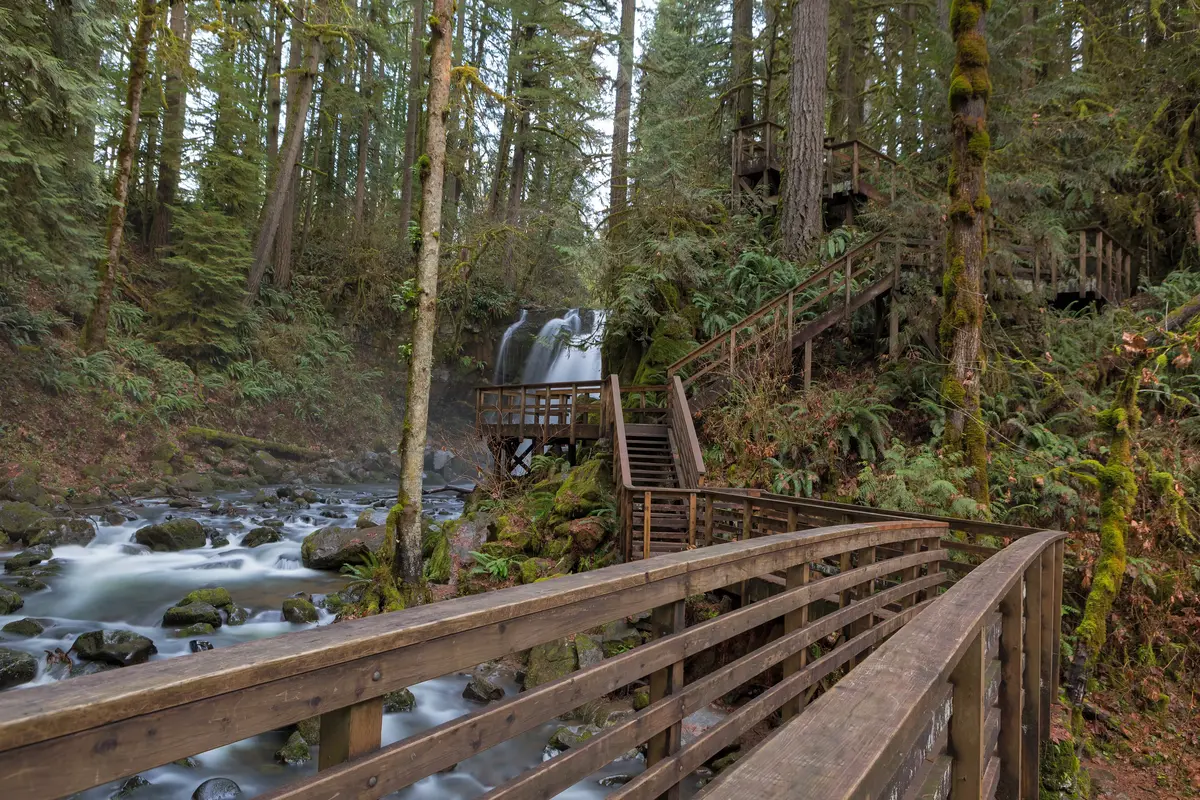
The South Santiam River is the natural backdrop for active retirement in Lebanon. River Park and Cheadle Lake Park give residents accessible green space without driving out of town, and Waterloo County Park is within reasonable reach for a longer outing. The terrain is flat to gently rolling — no steep climbs that make trails difficult as mobility changes. The annual Strawberry Festival at Cheadle Lake Park, running since 1909, is the community gathering that most retirees mention within their first year as the moment Lebanon started to feel like home. For the full parks and recreation picture, see Lebanon's parks page.
Right-Sizing: Downsizing in Lebanon
The single-level home inventory in Lebanon is real but not abundant. The city's housing stock skews toward older ranch-style construction — practical for aging in place, accessible, and relatively low-maintenance — and that's exactly the segment many downsizers are targeting. The trade-off is that the supply of move-in-ready, updated single-level homes is modest, and well-priced options in established neighborhoods like South Lebanon or Cheadle Lake tend to move before buyers who are still researching have finished their due diligence.
Patio homes and smaller-footprint single-family properties exist across the city's residential fabric, though Lebanon does not have the density of purpose-built active-adult subdivisions found in larger metro areas. Condos are limited — this is not a condo market in any meaningful sense — so retirees who want a lock-and-leave situation will find fewer options than they might in Albany or Corvallis.
55+ Communities
No 55+ communities were found in Lebanon. The city does have senior living facilities: The Oaks at Lebanon and Meadowlark Senior Living both offer independent and assisted living for residents who need more support than a private home provides, but neither is an age-restricted 55+ community in the ownership sense. Retirees seeking that specific product — deed-restricted, owner-occupied, with shared amenities — will need to look at Albany or beyond.
For retirees arriving with equity from a higher-cost market, Lebanon's price point creates real flexibility. Buying without a mortgage, or with a very small one, changes the fixed-income math substantially. What you give up is the curated amenity package of a planned 55+ development. What you gain is a genuine neighborhood — with families, longtime residents, and a community that isn't organized around any single demographic. Whether that's a feature or a limitation depends entirely on what retirement looks like to you. The neighborhood breakdown is covered in more detail on the Lebanon neighborhoods page.
Lebanon vs Nearby Retirement Destinations
| City | Cost vs Lebanon | Primary Hospital | Walkability | Senior Living Depth | Overall Retirement Fit |
|---|---|---|---|---|---|
| Lebanon | Anchor | Samaritan Lebanon Community Hospital (in city) | Car-dependent; LINX transit available | Senior center, independent/assisted living; no 55+ communities | Value Quiet Solid for budget-focused retirees with moderate health needs |
| Albany | Somewhat higher | Regional hospital access; Samaritan network | More walkable downtown core than Lebanon | More senior housing variety including some 55+ options | Walkable Good step up in amenities; still affordable by Oregon standards |
| Sweet Home | Noticeably lower | No hospital in city; Lebanon is the nearest | Very car-dependent; minimal transit | Limited; fewer organized senior services | Nature Privacy Rural feel; best for self-sufficient retirees near the Cascades |
| Corvallis | Noticeably higher | Large regional medical center; strong specialty depth | Genuinely walkable in core; bike-friendly | Strong — multiple 55+ communities and continuing-care options | Walkable University Town Best healthcare and walkability; significantly higher cost |
| Salem | Noticeably higher | Major regional hospital system; full specialty access | Mixed; suburban sprawl offsets downtown walkability | Wide range of senior communities, including CCRC options | Connected Best for retirees who want urban services and I-5 access |
| Eugene | Noticeably higher | Major academic medical center; broadest specialty access in region | Strong downtown and university-area walkability | Deep — 55+ communities, CCRCs, urban senior apartments | Full-Service The most complete retirement infrastructure in the region; priced accordingly |
Lebanon's clearest edge over its neighbors is the combination of in-city hospital access and a price point well below Corvallis and Eugene. Albany is the most direct comparison — it offers more walkability and slightly more senior living variety at a somewhat higher cost, and for retirees who want a bit more urban energy, it's the natural next step. Sweet Home is cheaper still, but without a hospital inside city limits, the healthcare calculus changes significantly for anyone managing ongoing health conditions.
Corvallis and Eugene both beat Lebanon on healthcare depth, walkability, and senior living infrastructure — and they price that advantage into their housing market. For retirees who need subspecialty care regularly or who want a truly walkable lifestyle, the premium is arguably worth it. Salem offers the broadest transit connections and the most diverse senior housing stock, but it's also a substantially larger city with a more urban character than Lebanon.
The honest read: Lebanon is the right call for retirees who want to own their home outright, prefer a quieter pace, and have relatively stable health that doesn't demand weekly specialist visits. It's the wrong call for retirees who expect to age in place through significant mobility or health changes without a robust local support ecosystem — those residents will likely end up in Albany or Corvallis eventually anyway.

Local Expert Takeaway: Lebanon's retirement case rests on three things that rarely overlap at this price point in western Oregon: a hospital inside city limits, a city-run senior center with real programming, and housing that lets retirees arrive without a mortgage. The LINX transit system covers the car-dependency gap better than most cities this size, and the Lebanon Senior Center's partnership with Linn-Benton Community College and Samaritan Hospital means your doctor and your continuing-education class are already connected. What Lebanon doesn't offer is a curated retirement lifestyle — no 55+ community, limited condo inventory, and a daily social scene built around community institutions rather than resort-style amenities. If the Strawberry Festival at Cheadle Lake Park and a manageable property tax rate sound like retirement, this city delivers. If you need subspecialty care weekly or want a lock-and-leave condo above a wine bar, Albany or Corvallis is the more honest match.
Quick Takeaways & FAQs
✅ Samaritan Lebanon Community Hospital sits inside city limits — one of the few small Oregon cities where retirees don't have to drive thirty minutes for emergency care.
⚠️ Oregon exempts Social Security from state income tax, but pension and IRA withdrawals are taxed at rates up to 9.9% — the tax picture rewards Social Security-heavy retirees and punishes those drawing heavily from traditional retirement accounts.
📍 No 55+ communities exist in Lebanon; retirees seeking age-restricted ownership communities will need to look to Albany or Corvallis, both about 20 minutes away.
Is Lebanon, Oregon a good place to retire on a fixed income?
What hospital serves retirees in Lebanon, Oregon?
Does Lebanon have a senior center?
Are there any 55+ communities in Lebanon, Oregon?
How does Lebanon compare to Albany for retirement?
Moving to Oregon?
Tell us what you need help with and we'll connect you with local resources.
