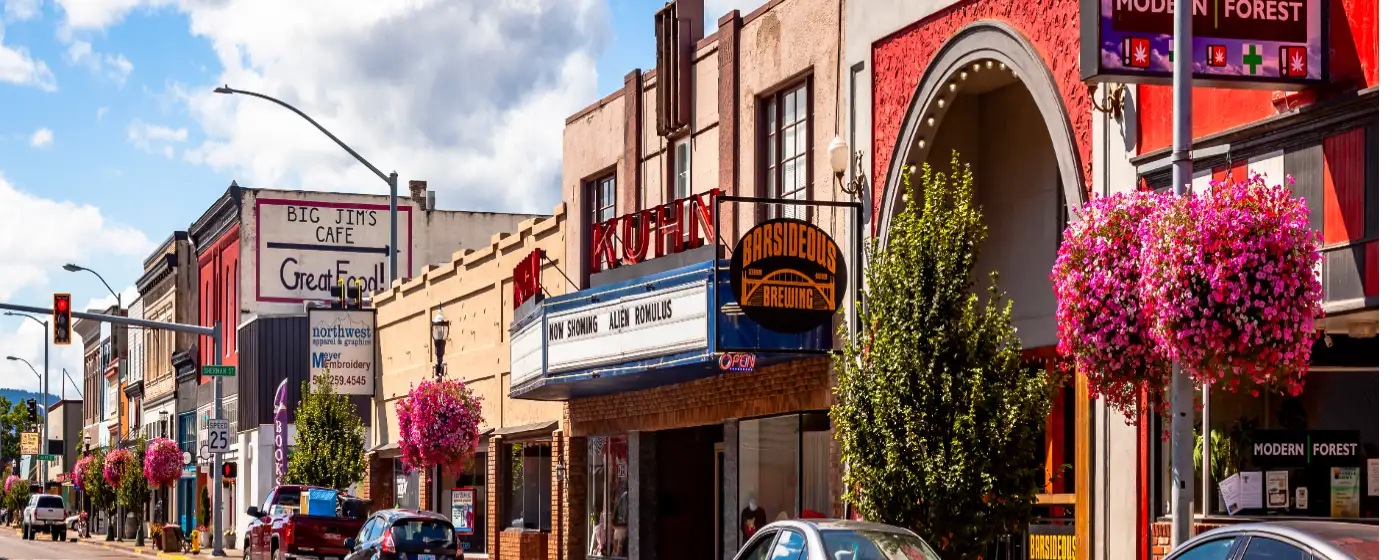
Lebanon sits in the Willamette Valley in Linn County, anchored by US-20 heading east toward the Cascades and OR-34 running west toward Corvallis. For buyers priced out of the college towns or the Salem metro, Lebanon gets mentioned often — and for good reason. The typical home price here is meaningfully below what you'd pay in Corvallis and noticeably below Albany, and the city of 19,950 still has the bones of a real community: an active hospital, Linn-Benton Community College, and a downtown that's working its way back. But the cost picture has one honest wrinkle worth understanding upfront.
Lebanon's cost of living runs roughly 4% above the national average overall, while sitting about 6% below the Oregon state average. That split matters. You're paying less than you would in Eugene or Corvallis, but Lebanon isn't a discount town in any simple sense. The median household income of $63,176 falls short of what's needed to comfortably carry the typical home here — a gap that shapes who buys, who rents, and who finds Lebanon a stretch rather than a stepping stone. Major employers include Linn-Benton Community College, Samaritan Lebanon Community Hospital, Western University of Health Sciences, Lebanon Community School District 9, and the City of Lebanon itself — a public-sector mix that means stable but not high-wage employment for most local households.
The no-sales-tax reality of Oregon helps on everyday spending, and grocery costs in Lebanon run at or slightly below the national average. Where the budget takes a hit is transportation: Lebanon is car-dependent, the regional bus options are limited, and anyone commuting out of town — about 20 minutes to Albany, OR for the nearest concentration of jobs — logs real fuel and maintenance costs over a year. Oregon's electricity rates are among the lower ones nationally, kept down by hydroelectric generation, which moderates the utility load even through the gray Willamette Valley winters.
Whether you're comparing Lebanon to nearby cities or trying to figure out what a real monthly budget looks like here, the sections below break down housing costs, everyday expenses, the tax picture, and how Lebanon stacks up against the other mid-valley cities buyers typically consider.

What It Really Costs to Live in Lebanon
Lebanon reads as affordable relative to the Oregon cities most buyers are fleeing — and that framing is accurate, as far as it goes. The typical home is priced well below Corvallis and noticeably below Albany, and the day-to-day cost of groceries and utilities tracks close to the national middle. But Lebanon is not cheap in the way that some rural Oregon towns are. It runs a few points above the national average overall, which means buyers relocating from the Midwest or rural South may find prices less dramatic than they expected.
What drives Lebanon's position in the cost hierarchy is housing, full stop. The typical home price is the largest single variable, and at the level the Zillow Home Value Index records for July 2026, it exceeds what the city's median household income can comfortably support. That affordability gap is the defining tension of Lebanon's housing market — not unmanageable for dual-income households or buyers coming in with equity from a more expensive market, but real for anyone relying on a single mid-valley wage.
The rest of the ledger is more favorable. Oregon charges no state sales tax, so nothing adds to the sticker price at the register. Electricity costs lean lower than the national norm thanks to Oregon's hydroelectric grid. And food is one of the budget-friendlier line items for Lebanon households. The catch is transportation: without a car here, daily life becomes genuinely difficult, and the cost of owning and operating a vehicle — especially for those commuting out of town — pushes total transportation spending above the national average.
Housing: Rent vs Buy in Lebanon
The typical home in Lebanon was priced at $397,559 as of July 2026 (Zillow Home Value Index). That figure is the starting point for any honest budget conversation here — not a ceiling, and not a floor. Entry-level homes do exist below that number, particularly older construction on the east side of the city and on quieter residential streets away from the more established neighborhoods. For specifics on where those concentrations sit and what the housing stock looks like area by area, the best neighborhoods guide covers that ground in detail.
The effective property tax rate in Lebanon is approximately 0.87% — slightly above Oregon's statewide average of around 0.81%, but still moderate by national standards. On a home near the city-wide typical price, that rate keeps annual tax costs in a range that won't shock buyers arriving from California or the Pacific Northwest's pricier markets. The engine's calculator below this section will give you a real monthly payment estimate based on current rates and your own down-payment assumptions — the number that matters most for your actual budget decision.
Renting makes the most sense for people in Lebanon who expect to stay fewer than three to four years, who are waiting out a job transition, or who want to understand the city before committing to a neighborhood. The typical two-bedroom rent runs $1,440–$1,750 per month, and the city-wide typical rent sits at $1,565 per month (Zillow ZORI, July 2026). That's a workable entry point for households earning near the city median, and it leaves more flexibility than owning if circumstances change.
Buying makes stronger financial sense for anyone with a stable employment anchor — one of the colleges, the hospital, or a remote position — and a long enough horizon to let equity build. The gap between the median household income and what's needed to carry the typical home means buyers often come in with help: a larger down payment from prior equity, a co-borrower, or a first-time buyer assistance program. See the first-time homebuyer page for the programs available to Lebanon buyers specifically.

Everyday Costs Beyond Housing in Lebanon
| Category | Typical Monthly Cost | Notes |
|---|---|---|
| Housing (typical rent) | $1,565/mo | City-wide typical rent. Buying? Use the calculator above for a mortgage estimate. |
| Utilities | $160–$240/mo | Electricity, gas, water, sewer, trash |
| Groceries | $520–$720/mo | Food at home, household of 2–3 |
| Transportation & Gas | $200–$340/mo | Fuel, and transit where it is a real option |
| Phone & Internet | $110–$180/mo | Mobile plan plus home broadband |
| Misc / Discretionary | $200–$420/mo | Dining out, entertainment, subscriptions |
Non-housing figures are estimates for a household of two to three, not a sourced index; housing is the city-wide typical rent (Zillow ZORI, July 2026). Refreshed with the rest of the city data.
The Willamette Valley's climate shapes one of Lebanon's more notable non-housing costs: heating. The valley runs cool and wet from October through April, and natural gas heating is common in the older housing stock that makes up much of Lebanon's residential supply. Oregon's electricity rates are below the national average — the state's hydroelectric capacity keeps the per-kilowatt-hour cost well below what households in most other states pay — but heating a drafty older ranch through a full Willamette winter still adds up. Lebanon's local electric utility is Consumers Power, Inc., and monthly electric bills for a typical residence run in the range of $150–$165, consistent with broader Oregon averages.
Groceries are a relative bright spot: food costs in Lebanon track at or just below the national average, which is better than what residents pay in Corvallis or the Portland suburbs. The catch, as noted above, is transportation. Lebanon operates LINX Transit, a local bus and Dial-a-Bus program serving city limits, and the Linn Shuttle connects Lebanon to Sweet Home and Albany on weekday schedules. For most residents, though, these services cover specific trips rather than replacing a car entirely. Anyone commuting regularly — the drive is about 20 minutes to Albany, OR — adds fuel, insurance, and maintenance costs that push total transportation spending above the national norm. Budget for a car as a necessity here, not an option.
Looking to buy in Lebanon? Estimate your payment.
Enter your numbers to see an estimated monthly mortgage payment.
Estimate only. Excludes HOA fees and mortgage insurance. The interest rate above is a starting point, not a quoted rate — replace it with your own to see real numbers. Insurance is a flat placeholder, not a Lebanon quote.
Lebanon vs Nearby Cities: Cost Comparison
| City | Typical Home Price | Typical Rent | Cost vs Lebanon |
|---|---|---|---|
| Lebanon (this city) | $397,559 | $1,565/mo | — |
| Albany | $439,047 | $1,744/mo | 10% higher |
| Sweet Home | $320,000 | $1,300/mo | 20% lower |
| Corvallis | $565,289 | $1,731/mo | 42% higher |
Source — home prices: Zillow ZHVI, July 2026; rent: Zillow ZORI, July 2026. Nearby-city figures are the same series, refreshed together.
Lebanon sits in a mid-valley range that makes it meaningfully more affordable than Corvallis and modestly more affordable than Albany, while Sweet Home comes in noticeably lower — a tradeoff that involves fewer services and a smaller job base. The table below shows how the full cost picture compares across the cities Lebanon buyers most often consider.
Taxes & the Bottom Line for Lebanon
Oregon's tax structure has one clear win and one honest cost. The win: there is no state sales tax. Nothing is added to your grocery bill, clothing purchase, or hardware run at the register — a genuine day-to-day savings that compounds over a year in ways that are easy to underestimate if you're arriving from California, Washington, or most other states.
The cost is Oregon's income tax, which is progressive with four brackets running from 4.75% to 9.9%. For single filers, the top 9.9% rate kicks in above $125,000 in taxable income — a threshold most Lebanon households won't approach, given the city's median income. Most working households in Lebanon will land in the middle brackets, paying a rate that is higher than many states but offset by the sales-tax savings and the lower housing costs relative to the metro.
Oregon does not tax Social Security benefits, which is a meaningful advantage for retirees considering the Willamette Valley. For more on how that plays out in a retirement budget, the retiring in Lebanon page covers the full picture.
The effective property tax rate here is approximately 0.87% — slightly above the Oregon statewide average, but well within the range buyers from high-tax states will recognize as moderate. As noted earlier, no dollar figures attach to a specific home here; the calculator handles that based on your purchase price and assumptions.
The honest bottom line: Lebanon fits buyers and renters who have a stable income anchor, are willing to own a car, and don't need the amenity density of a larger city. Dual-income households, remote workers, and anyone bringing equity from a more expensive market will find the numbers workable — sometimes comfortably so. Single-income households earning near the city median will find buying a stretch, particularly for homes at or above the typical price discussed in section one. Renters in that position may find Lebanon livable but not as financially easy as the headline cost-of-living numbers suggest.

Local Expert Takeaway: Lebanon's cost of living is lower than most Willamette Valley college towns, but the gap between the city's median household income and the typical home price is real — budget carefully if you're relying on a single local wage. The no-sales-tax environment helps on groceries and everyday purchases, Oregon's electricity rates keep utility bills manageable, and the drive to Albany for a wider job market is about 20 minutes. The residents who make Lebanon work financially tend to be dual-income households, remote workers, or buyers arriving with equity from a pricier market.
Quick Takeaways & FAQs
✅ Lebanon's typical home price of $397,559 (July 2026) runs noticeably below Corvallis and somewhat below Albany, making it one of the more accessible entry points into the mid-Willamette Valley.
⚠️ Transportation costs run above the national average — Lebanon is car-dependent, and anyone commuting out regularly will feel it in annual fuel and maintenance spending.
📍 Oregon charges no state sales tax, which trims everyday spending costs in ways that are easy to overlook but add up meaningfully over a full year of groceries, clothing, and household goods.
What is the typical home price in Lebanon, Oregon?
Is Lebanon, Oregon cheaper than Corvallis or Albany?
Does Oregon have a sales tax that affects Lebanon residents?
What is the property tax rate in Lebanon, Oregon?
Can a median-income household in Lebanon afford to buy a home there?
Moving to Oregon?
Tell us what you need help with and we'll connect you with local resources.
