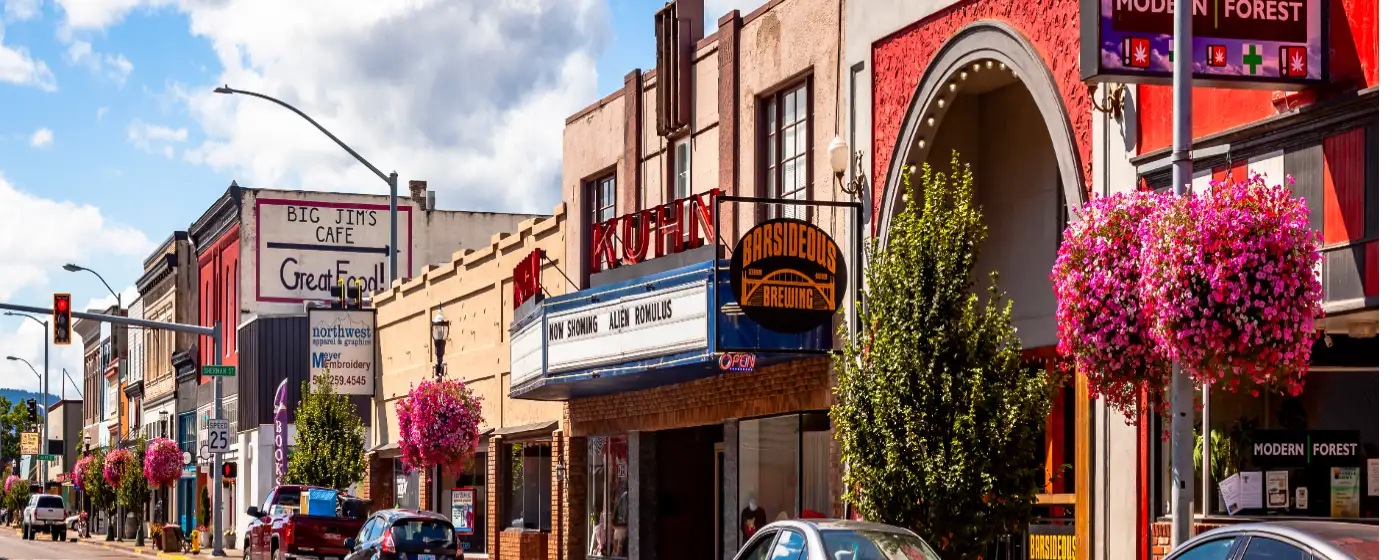
You've probably done the math already. Your California paycheck buys a house in Lebanon, Oregon that would cost three times as much back home — and that math is correct. Lebanon sits at the eastern edge of the Willamette Valley in Linn County, connected to the rest of Oregon by US-20 (Santiam Highway) and OR-34 (Corvallis-Lebanon Highway). It is a working city of 19,950 people, not a suburb of anything larger, and daily life here moves at a pace that genuinely surprises most California transplants. The Oregon Coast is a day trip. The Cascades are closer still. And the cost of getting here — financially — is lower than almost anywhere else in the state.
Oregon earned recognition as America's number-one moving destination for 2025 according to United Van Lines' annual study, with Californians making up 22% of all inbound movers. Lebanon draws a specific slice of that migration: buyers priced out of the Bay Area or Sacramento corridor who want real acreage, a detached house, and a community small enough to know its neighbors. The city's economy runs on healthcare, education, and manufacturing. Linn-Benton Community College and Western University of Health Sciences anchor the education sector. The Lebanon Community School District 9 holds a C rating, according to Niche — worth knowing before you finalize a neighborhood. Many residents commute about 20 minutes to Albany, OR, where the commercial corridor is broader and the retail options expand considerably.
The headline number: Lebanon's typical home value stood at $397,559 as of July 2026 (Zillow Home Value Index). Compare that with California's statewide typical home value of $773,735 and the gap speaks for itself — but home price is only one chapter of the financial story. Oregon's property tax rate, income tax structure, and complete absence of sales tax each cut differently than California's system, and a Californian who only models the housing delta will be surprised by their first Oregon tax return. The full cost-of-living picture lives at the cost of living page, but the tax mechanics are covered in depth here because they're the piece most California buyers get wrong.
Whether you're comparing Lebanon against Albany, weighing the Willamette Valley against the Rogue Valley, or just trying to understand what $400,000 actually buys here, the sections below walk through the home price reality, the tax comparison, what daily life in Lebanon looks and feels like, the honest trade-offs, and the local texture that no spreadsheet captures.
The Home Price Reality: What $400,000 Actually Buys
Lebanon's typical home value of $397,559 as of July 2026 puts real homeownership within reach for buyers who spent years watching California's market recede. California's statewide typical home value of $773,735 means the median California home costs roughly double what a comparable Lebanon property does — and in the Bay Area or coastal Southern California, the gap is far wider still.
In Lebanon, $397,559 gets you a detached single-family home — typically three bedrooms, a garage, and a yard. Entry-level properties in older neighborhoods near Historic Main Street start below that figure. South Lebanon sits at the city median, making it a representative starting point for buyers modeling their budget. Cascade Estates and Wagon Wheel Estates offer newer construction and larger lots for buyers seeking more space and more recent builds. See the full neighborhood breakdown at the neighborhoods page.
The property tax structure is also favorable relative to California, though the gap is narrower than most transplants assume. Lebanon's effective property tax rate of 0.87% is actually higher than California's effective property tax rate of 0.71%. California's Proposition 13 caps assessments at purchase price plus a modest annual increase — a system that effectively subsidizes long-term homeowners at the expense of new buyers. Oregon has no equivalent cap, so your assessment can move more freely with the market. For a California buyer who has been renting and never benefited from Prop 13 protections, this distinction matters less. For a homeowner selling a long-held California property and expecting similarly suppressed taxes in Oregon, it is worth modeling carefully. The full property tax breakdown is on the cost of living page.
One honest note on affordability: Lebanon's median household income of $63,176 falls well short of what is needed to comfortably carry the city's typical home at current rates. That gap matters if you're arriving on a local salary. California buyers arriving with equity from a sale are in a structurally different position: a paid-off or substantially reduced mortgage changes the monthly math entirely, which is precisely why so many California transplants find Lebanon genuinely affordable when locals still feel the squeeze.
What Equity Unlocks
A California homeowner who bought a decade ago in a major metro and sells today may arrive in Lebanon with enough equity to buy outright or put down a substantial sum. That dynamic — equity migration — is a real driver of Lebanon's buyer pool and one reason the city has attracted buyers who earn modest local wages but carry California-scale balance sheets.
Nearby Albany runs somewhat higher than Lebanon's median. Corvallis runs noticeably higher. Sweet Home runs noticeably lower. Lebanon sits in a range that delivers genuine value relative to the broader Willamette Valley without pushing buyers into the most rural tier of the market.
The Tax Comparison: Where You Win, Where You Don't
The sales tax comparison is the clearest win for Oregon. California's statewide base sales tax rate of 7.25% is the highest state-level rate in the country, and local add-ons push combined rates in many California cities significantly higher than that. Oregon has no sales tax — not state, not county, not city. The rate is 0.00% on every purchase, everywhere in the state. For a family spending heavily on furniture, vehicles, electronics, or home improvement after a move, that difference is immediate and meaningful.
| Tax Category | California | Oregon / Lebanon | Who Benefits |
|---|---|---|---|
| Sales Tax | 7.25% statewide base rate (plus local add-ons) | 0% — no sales tax at any level | Every buyer |
| State Income Tax (top rate) | 13.3% — applies only to very high earners | 9.9% — kicks in at $125K taxable income | Very high earners favor OR |
| State Income Tax (middle income) | Lower marginal rates for most middle earners | Near-top rate applies broadly; most middle earners pay more than in CA | CA wins for middle earners |
| Effective Property Tax Rate | 0.71% (Prop 13 caps apply) | 0.87% effective rate; no assessment cap | CA wins for long-term owners |
| Assessment Protections | Proposition 13 limits annual increases | No equivalent cap; market-linked | New buyers — no legacy advantage |
| Social Security Income Tax | Fully taxed at state level | Not taxed at state level | Retirees |
The Income Tax Surprise
This is the counterintuitive finding that catches most California transplants flat-footed: Oregon's state income tax is higher for most middle-income earners than California's, not lower. California's top rate of 13.3% applies only to the highest earners — middle-bracket earners pay a meaningfully lower marginal rate than the headline suggests. Oregon compresses its brackets sharply, with the near-top rate of 9.9% kicking in at just $125,000 of taxable income for a single filer. The income-tax savings favor only very high earners; many middle-income households pay about the same or more in Oregon than they did in California.
The no-sales-tax advantage is real and offsets this for heavy spenders. A family buying a vehicle, renovating a kitchen, and outfitting a new home in the first year will recover meaningful ground through sales tax savings. The long-run picture depends on your income level and spending patterns — a high earner who shops modestly will feel the income tax bite most; a moderate earner who makes large purchases frequently may come out close to even.
The Full Picture
Oregon also levies no tax on Social Security income, which matters for retirees arriving from California. The state taxes most other retirement income, but the Social Security carve-out is a meaningful benefit for that specific population. For employed transplants, the practical summary is: expect lower housing costs, zero sales tax friction, and a higher-than-expected state income tax bill for most earners. Model all three before you finalize a budget.

Daily Life in Lebanon: What California Didn't Prepare You For
Lebanon is not a suburb. There is no larger city just across the city limits absorbing its identity — it is its own place, with its own rhythms, and the adjustment for California transplants coming from Sacramento, the Bay Area, or Southern California is real and specific.
The Seasonal Reality
Lebanon averages 157 sunny days a year. Transplants from Southern California find this the sharpest adjustment. The Willamette Valley's gray season runs roughly from October through March — not the dramatic storms of coastal Oregon, but a persistent overcast that is low-key and unrelenting. By February, newcomers from California are either fine with it or actively planning their exit. Locals treat it as unremarkable. If you bought the house in June, make sure you've spent a January or two in the region before committing.
What the Town Actually Offers
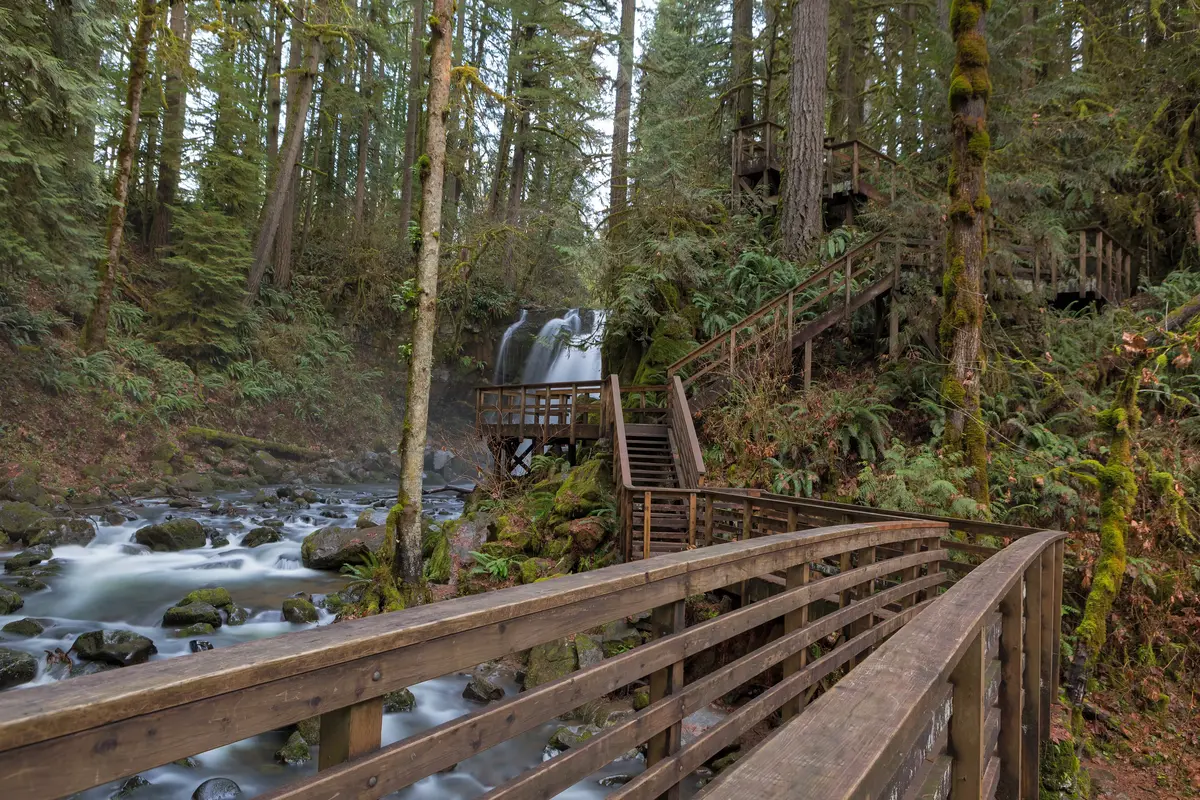
The outdoor infrastructure is genuinely strong for a city of this size. Cheadle Lake Park — a 100-acre lake converted from a former mill pond, fed by the South Santiam River — received a completed multi-million-dollar improvement project that added a fully accessible off-road trail system connecting south to River Park. The South Santiam River runs along the eastern edge of the city and provides boating and fishing access without a drive. Ralston Park holds the city's historic founders' log cabin. There are approximately 15 city parks total, with sports fields, playgrounds, and picnic areas distributed across the neighborhoods.
The Lebanon Strawberry Festival is the city's signature annual event — a community celebration featuring parades, a carnival, and the World's Largest Strawberry Shortcake, which doubles as a point of local pride and a reliable source of first-summer culture shock for transplants who didn't know small cities still do this. It is also genuinely fun.
Retail and Services
Lebanon's retail footprint is modest. A serious shopping run means driving — about 20 minutes to Albany, OR covers most needs, and Corvallis is accessible via OR-34 for anything requiring a larger commercial corridor. Online ordering fills the gap for most households. The Eugene Airport (EUG), roughly 45 miles out, handles most regional air travel. If you were relying on an airport within 20 minutes of home, that changes.
Health insurance premiums run noticeably below what most California transplants were paying, and routine care costs follow a similar pattern. The honest trade-off is access to specialist care: more complex needs typically involve a drive, which is a different proposition than living three miles from a major medical center in a California metro.
Looking to buy in Lebanon? Estimate your payment.
Enter your numbers to see an estimated monthly mortgage payment.
Estimate only. Excludes HOA fees and mortgage insurance. The interest rate above is a starting point, not a quoted rate — replace it with your own to see real numbers. Insurance is a flat placeholder, not a Lebanon quote.
Weekends and Local Favorites in Lebanon
Lebanon's food and coffee scene is small, independent, and decidedly unhurried — which is either exactly what you want or the thing you'll miss most about California. There are no franchise-dominated dining corridors here.
For casual dining, Schmizza Public House anchors the pub-and-pizza end of the spectrum. 1847 Bar & Grill runs a step more polished and draws a steady local crowd. Alex's Eats is the kind of neighborhood spot where regulars know each other's orders. Barsideous Brewing covers the craft beer angle with a laid-back taproom feel. Appletree Restaurant rounds out the sit-down options with a menu that skews toward comfort classics.
Coffee in Lebanon runs deeper than you'd expect for a city this size. Hazella Baking School doubles as a café and a genuine culinary education space. Sugar Vibes and Darkbloom Coffee Company each bring distinct personalities to the independent coffee scene. Mugs Coffee House and Perky Pony Coffee cover the neighborhood-anchor role — the kind of places where people set up laptops and stay two hours.
For outdoor weekends, Cheadle Lake Park and River Park are the default gathering points when the weather cooperates. The South Santiam River corridor and Waterloo County Park extend the range for day trips without leaving Linn County. The Boulder Falls Inn Japanese Garden is a quieter off-the-beaten-path discovery that surprises most new residents.
Historic Main Street has a handful of independently owned shops and the kind of slow-walk browsing that larger cities have mostly lost. It is not a dining destination in the way California transplants might define one — think community fabric, not culinary scene.
The Honest Trade-Offs: What California Transplants Get Wrong
The Things People Don't Expect
Six months in, the conversation California transplants have most often with each other is about the gray. The second conversation is about driving. Lebanon is a self-contained small city, which means nearly everything beyond the basics requires a car trip. Albany is about 20 minutes away for most commercial needs. Corvallis is farther but reachable via OR-34 when the day calls for it. There is no walkable urban core in the way a California neighborhood might offer one — the on-foot access here is for parks and a modest stretch of downtown, not errands.
The School Question
The Lebanon Community School District 9 holds a C rating, according to Niche, with 3,888 students enrolled in 2025-26. On 2024-25 state assessments, 29.9% of students reached math proficiency and 40.5% reached reading proficiency. Families moving from strong California districts — particularly from areas served by high-performing suburban systems — will notice the difference. This is one of the most common sources of second-guessing among transplants with school-age children. The district supports active OSAA athletics programs and the community shows up for Friday night football in a way that reinforces Lebanon's small-city identity, but the academic metrics require honest evaluation. The full school picture is at the schools page.
Why People Leave
The transplants who move back — or move on to Albany or Corvallis — usually cite one of three things: the distance from specialist care and amenities starts to feel like an inconvenience rather than a trade-off; the school ratings make families reconsider as kids approach middle and high school; or the gray winters compound with limited nightlife and cultural programming into something that feels like isolation by year two. None of these are surprises in the abstract — they're the known costs of a small Willamette Valley city — but they land differently once you're living them.
What You Would Not Do
If you're buying here primarily for the commute to Corvallis and need fast access to OR-34, understand that Lebanon's street network concentrates that access in specific corridors — not every neighborhood has equal proximity. Don't pick a neighborhood based solely on the map without driving the actual route during peak hours. The commute reality is covered at the living-in-Lebanon hub.
The Case for Staying
The buyers who root here and don't look back tend to share a profile: they came with equity, they value outdoor access over urban amenity, they work remotely or have found local employment, and they were genuinely ready for a pace change rather than just a price change. Lebanon rewards that combination. It is a real community — one where the Strawberry Festival fills the streets and Cheadle Lake draws people on a warm Saturday afternoon not because there's nothing else to do, but because it's genuinely where people want to be.

Local Expert Takeaway: Lebanon makes the most sense for California transplants who arrive with equity and a clear-eyed picture of the trade-offs. The home price gap versus California's statewide typical home value is real and substantial. The sales tax savings are immediate. But Oregon's income tax will likely be higher than what you paid in California if you earn in the middle-income range, the school district's C rating on Niche is a genuine consideration for families, and the gray winters and modest retail footprint require advance acceptance rather than mid-year discovery. Come in summer, spend a weekend at Cheadle Lake Park and walk Historic Main Street, eat at Barsideous Brewing and grab coffee at Darkbloom — then come back in February before you sign anything.
Quick Takeaways & FAQs
✅ Lebanon's typical home value of $397,559 (July 2026) is dramatically below California's statewide typical home value of $773,735, making equity-funded ownership genuinely accessible for California transplants.
⚠️ Oregon's state income tax is counterintuitively higher than California's for most middle-income earners — the income-tax savings favor only very high earners — so model the full tax picture before assuming you'll save on taxes.
📍 Lebanon averages just 157 sunny days a year, and most California transplants name the gray Willamette Valley winters as the adjustment they underestimated most — visit in February, not just June, before committing.
How much cheaper is it to buy a home in Lebanon, Oregon than in California?
Does Oregon really have no sales tax?
Will I pay less income tax in Oregon than in California?
What are the schools like in Lebanon, Oregon?
What do California transplants wish they had known before moving to Lebanon?
Moving to Oregon?
Tell us what you need help with and we'll connect you with local resources.
